Loading...
businessentrepreneurshipeducation
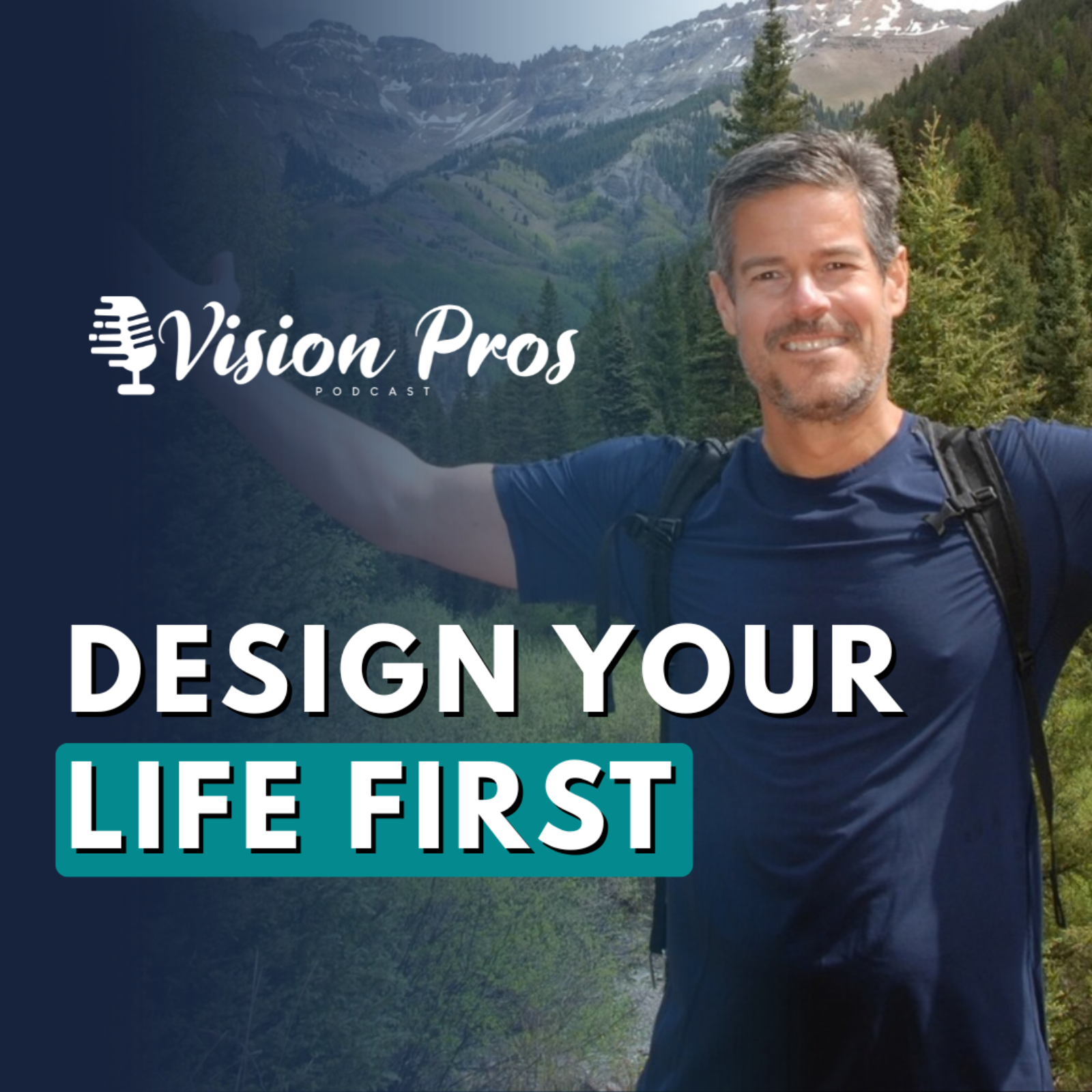
Design Your Life First: The Leadership Shift Behind Real Freedom Ft. Mike Deaton
About this Episode
Most entrepreneurs start by building a business.
The problem is… many realize later that the business they built now controls their life.
What if the real leadership move is to design your life first, and then build the business that supports it?
In this live episode of Vision Pros Live, Mike Deaton joins us for a powerful conversation about intentional leadership, disciplined systems, and building a life that aligns with your values, relationships, health, and long-term vision.
Because the truth many entrepreneurs learn late is this:
The business you build often becomes the life you live.
We’ll explore how leaders can move from reactive growth to intentional design, creating businesses that generate sustainable revenue while protecting what matters most: time, focus, and personal freedom.
This conversation will also touch on an important truth about entrepreneurship:
It’s not a sprint. It’s an ultramarathon.
Success comes from pacing, discipline, resilience through setbacks, and raising your personal standards over time.
📌 What We’ll Cover
– Designing your life before designing your business
– Building systems that support freedom, not burnout
– Moving from reactive growth to intentional leadership
– Entrepreneurship as an ultramarathon: discipline and endurance
– Creating sustainable revenue without sacrificing what matters most
If you're building a business and want it to support the life you actually want to live, this conversation will challenge how you think about leadership, success, and freedom.
🔔 Subscribe for weekly conversations on leadership, visibility, and business growth.
#Entrepreneurship #Leadership #BusinessGrowth #VisionProsLive #IntentionalLeadership #MikeDeaton
Hosts & Guests
Transcript
Hey, what's up?
I'm already welcome into Vision Pro's live.
I'm your show host, Jackson Callum, founder and CEO,
first class business.
And I've got my Deaton in the house.
This guy is a model to emulate, not just because he's good looking
and because his wife's good looking as well,
but because they actually emulate leadership to its core.
And so we're going to be talking about designing your life first,
the leadership shift behind real freedom.
My friends, if you're looking to launch a business right now,
I'm not saying throw the business to the side completely,
but definitely consider the reality of what Mike and I are going to talk about
because it's so easy to get involved in something that we're told to do
or that we feel the world wants us to do,
but may not be aligned with their inner passions and purpose.
And so Mike and I are going to be talking a lot about how to make sure
that we align for our own life's sake,
so that we can then enjoy the types of businesses that we launch.
He's got a background in business and real estate.
He's got a, excuse me, a book as well.
He's got a company called Flipping Dirt with Mike and,
oh, what's her name?
Ligia.
Ligia, Deaton.
And they help us, they coach us how to confidently create cash flows
simply by flipping land.
And that's one of those unique aspects to my friends real estate.
There's so much money to be made in it, but there's so many people
who are, I don't want to say blowing smoke,
but creating smokes and mirrors.
And it's hard to know who's really, really great at it and not
to do your research.
I've done mine and I'm in Mike's corner on this.
So I'm really excited.
I'm going to show Mike, welcome back to Vision Pro's Life.
Man, Jackson, thanks so much for having me on.
I'm excited.
This is going to be a fun one.
It's a little bit different than I'm on several podcasts.
And it's a lot of,
a lot of just in the lane of land flipping itself.
And I really love to venture out and talk about,
you know, land is a vehicle for us.
It's not exactly, and we'll get into all of that here.
But yeah, I'm excited to venture out and talk about things
that I'm truly passionate about.
So this will be fun.
Okay.
And I love that.
In fact, I want to argue fully with that.
What are some of the most passionate things you want to talk about?
Because we can fit those into with our,
with our schedule for the audience.
What are you most passionate about, Mike?
Yeah.
For me, really, it's, it's, it's at the macro metal level.
I just, you know, I'm aged.
But I've always since probably 19 or so,
kind of been interested in life and what drives life and what,
what's our purpose and what fulfills us.
And I'm, I'm kind of a seeker in that way.
I really like to be out there and personal development has always just fascinated me.
We can get into any and all of my story that you, that you want to.
But I went to university and to college to be a medical doctor.
And this was back in the 90s.
And I ultimately mid, mid college career shifted gears.
And really the shift was more away from medicine as I just,
the whole process of getting a degree didn't fulfill me in that way.
Or I didn't think it was going to.
I got walking 0.37 GPA.
So I kind of know what that felt like.
I didn't do too well in the university.
Yeah, I did a little better than that.
But I actually got out with a degree.
It's hard to beat my score.
I'm on a different level of honorable.
You set a bar for sure.
That's a definite man.
Back in those days, there weren't all of the alternative aspects of things
that I'm fascinated by these days in terms of mindset and everything there.
But anyway, for me, it's really those types of things.
And that can apply in all domains in life, right?
Relationships, business, life, just the people that we want to be,
all of the things you can find ways to find and seek those high standards.
And I lived the hamster wheel kind of getting into something just to pay bills.
And ultimately it wasn't fulfilling and kind of shifted gears out of that.
But yeah, I mean, so the domain list is wide open in terms of,
of any and all errors that we can go.
Well, for sure, man, and I'm excited for the team to pull up your website
because we actually did an internal experiment or rather a study as a team.
And I pulled your website up and pulled a whole team together.
And I said, guys, I want you to dissect what,
what do you recognize about this photo that emulates success?
And that shows how successful Mike has been in his life.
And we were talking about things like the genuine smiles,
the you and your wife both have the closeness that you have,
the fact that you care about nature, the exercise, you're obvious.
And you've got this, the hairdo that obviously it's not too hard to come over
because you've been so consistent and reliable at it.
You know, you've taken care of your health again.
That there was so many things that we looked at or like, guys,
this is, this is somebody who really cares about purpose in life.
And I highlight that once more for all you visionary leaders out there.
Look, we may not be as put to you.
Like, if I took my shirt off next to Mike,
you everybody would want to cover up half the screen.
I'm not, I'm just not chiseled like Mike, you know,
and that discipline that you've put into your health and wellness.
It's yet just another emulator of like, oh,
this guy really cares about maximizing his experiences in the world.
So same thing with this one.
It's like this picture right here of you and your wife.
We brought up a little things with the team.
I was like, look at how she's holding his hand.
You know, that, that takes a proactive action on her part in this.
And so, and you got her in a, in a, in a UFC position.
So somebody could easily be like, oh, man, like,
but she trusts you that much.
They all have that happy in that picture.
And so these things, these are the essence of leadership
that lead to creating businesses that we're, that we can care about,
that we love.
It all starts with our relationships in our personal life.
So Mike, do you want to speak to that a little bit?
I put you on a huge pedestal just now.
Yeah, really.
I don't know that I didn't live to that standard.
But no, this is fascinating exercise.
Like we were talking about just before the show.
I mean, I love the fact that you, you guys kind of dig in at that level.
And in particular, we've been coaching in this lane for two and a half,
maybe three years and putting this website together.
We wanted it to feel very personal and to somehow exude.
And what we are.
And you nailed a lot of those things.
I mean, we love.
I've been health-minded.
Gosh, since I was probably a teenager, I really kind of fell in love with fitness
and that stuff.
Oh, I've been plant-based for like 15 years.
We just, you know, everything, every edge we can get to do things that we think are healthy.
I have, Lydia is my second wife.
And so I have experienced as I kind of teased a little bit ago.
This first chapter of my adult life anyway was dysfunctional in many ways.
I mean, I got into work on the hamster wheel just and got into debt and got into paying bills.
And, you know, my wife and I just kind of went, I think down a fairly normal path
for my first wife at the time, like, of, I did it too.
So paying attention to things outside of the relationship, right?
I mean, you become a parent and you become an employee and you climb the corporate ladder.
And suddenly the relationship takes, you know, not even second place,
but just kind of goes down.
And so all of that fell apart.
And so that for me was an awakening.
And I'm so fortunate to have found Lydia in this next chapter of my life because we do have,
you know, just a really standard of excellence in our relationship.
I think we truly care about one another.
Part of why we chose to leave corporate America and start our own business was so that we could work together.
And we spend almost 24 seven, you know, together other than, you know, there's, I go for runs or whatever.
But we genuinely like challenging and taking on life as a team.
And this phase of our life is, is amenable to that because I have adult children.
And so we're not active parents.
And we are able to then focus on, on other things and set goals and chart courses and check it with one another.
But our personalities are such that our personal life and our business life really complement and work well together.
And so we're able to, to really one plus one is kind of the classic one plus one.
It goes more than two that we're able to, to really help each other grow.
Oh, nice. Yeah, I like that.
But yeah, I mean, the website, the website is intended to be, I mean, coaching is a very, we've done a lot of coaching as a coach.
And I've had experience of coaches we liked and coaches we didn't necessarily like.
And it's a, it's a very intimate, or it can be an intimate relationship because you're, you're kind of vulnerable in that.
And so, yeah, we, we wanted people to feel a certain presence with our website before they ever speak to us and hopefully encourage, you know, they always say your tribe finds you or you find your tribe or kind of thing.
And I truly believe that.
And so, yeah, the energy we wanted to put forth with all of that was a lot of what you describe being, being caring and empathetic and really invested in someone's success.
And we exhibit that in our, we run our own land business where we buy and sell the vacant land and we have a lot of clients and we try to form relationships with them and be a partner for them.
And then in our coaching business, it's the same. And so, yeah, I really appreciate the effort that you guys took to digest some of that.
Well, absolutely. And it's, it's great to have individuals to model and my friends Mike and I, we're still figuring our paths out to, you know, we're not Jesus.
We got a ways to go and we have an opportunity, but I think there's so many opportunities to learn from where both of us have come from in terms of vision.
And we want to make sure that you get to move towards more of the good and more of the great than that we did perhaps you can learn from some of our downfalls in the process.
But also, I think more importantly, if we want to move forward, we can't be looking in the river near too much.
We need to be looking at what which direction are we headed and how we're going to head there the best way possible.
So we're going to come right back.
We're going to dive into how leaders can move from reactive growth to intentional design as well.
We'll both throw some thoughts on that and we'll continue this process of lighting up.
How do you create the best best vision possible for yourself?
All right. Welcome in to Vision Pro's Live with Jackson Kalam on your show host.
We'll be doing interviews for visionary entrepreneurs and guest leaders who are building fantastic visions out there.
Hey guys, welcome in to Vision Pro's Live.
I've got Mike Deaton in the house.
As I said, he's emulating what we're talking about today designing your life first.
I love having somebody who's living breathing example that so well.
You can see it all over his LinkedIn page and all of us have the opportunity to lean into.
How do we maximize and enjoy this journey?
We call life while we build businesses and while we create our legacies.
Before I bring Mike back on real quick, a couple of opportunities for all of you journey to wellness plan.com with Dr. Justin and Dr. Shannon Pierce.
I highly recommend checking out what they've built.
I've sent three friends and family members to them who were in health situations where their doctors just didn't know what to do and kind of left them feeling hopeless.
Shannon is not a miracle worker. She just does the right tests.
All three of those people came back with such ravine results and I was like, okay, I'm just going to send everybody to Shannon from here on out.
Again, I don't know much about how the doctor's side of it works and it's not my call.
My hope is that if you don't know where to send your loved ones that you can send them to Shannon and get more hope like my family did.
And there's practice makes permanent with Jennifer Reed.
Jennifer Reed has been training for more than two decades in government environments.
There's a lot of bureaucracy that goes on in government environments. She never talks negatively about it.
I love how she is a bright shining light of emotional intelligence and spiritual intelligence.
And she's earned that again, also through good bad and ugly.
I want to diminish the power and value of her story.
In fact, I'm not even going to share it, but what I will invite you to do is anytime you're looking not bring somebody in for leadership or culture as a facilitator as a coach.
I would always ask them what their personal reason is as to what, why do they do it? They do just ask that question. Why is it?
And with Jennifer, have a tissue box, whether you're going to need it.
She has a very sincere reason for wanting to bring EQ and ask you to the entire world and she's phenomenal what she does.
And there's a water project. I have a glass of water right here by my side. I have never been thirsty in my life.
And I'm sure some of you have also never understood what there's this and my hope is that this little conversation will lead you to think through what if I pay attention to this water project thing and start looking at it and share it with my friends and family, even if you don't donate to it.
I will also share why donating is so cool.
When I picked the first project to donate to for the water project, they got to learn about sandams and borehole wells a little bit.
And I got to see that there was going to be 500 people affected by this. And by giving that $10 donation or $20 donation, I remember what my first one was.
But they actually sent me a report of what was going on with this project. And I was like, this is one of the most transparent causes of ever seen in my life. How cool is that?
And then I started realize there's millions of people who don't have access to clean drinking water, something that again, I take for granted.
And this next picture here reminds me of my own children on Christmas day, or this is their children celebrating clean water, how humbleness that.
So my hope is again, talk to your friends with family about it. If there's another cause that's near and dear to your heart, it's actually how the water project came up for me. I was promoting another cause when one of my co-workers says, Jackson, we need to switch gears and support the water project.
And we did. I still promote the other cause as well. But my point is, if you know of a cause you want us to support, just drop the link in the comments. Give me the chance to look at all. Look at all of those personally, and I'll see what I can do to help or support those causes as well.
We've got 8 billion people to help on this world, my friends. And as long as I'm going to rock this mic, I'm going to lean right into doing just that.
So let's go back to helping each and you, each one of you, figure out, well, what is your purpose and your passion and how do you lean into business ownership in a way that also unlocks your life to new levels. Mike Deaton, thanks for being here to rock the mic with me on this.
Right, I'm happy to be here.
Absolutely. So let's dive right into this leadership shift we talked about from being reactive with our growth to being intentional by design. What are your thoughts on that?
Yeah, it's, it's so many thoughts on it. But I would say for me, I, I fell into, as I was talking about really just a minute ago, I kind of fell into the normal American path, I would say, and I don't know if it's the normal global path.
But, you know, there's these rights of passage you, you grow up as a child, you, you become a dependent into a dependent and ideally into an interdependent being.
But there's this, there's this pressure, I would say, at least historically, there has been, I think things change with generations as we, as we get more to the present.
But at least for me, there was this pressure just to get out of school, get a job, start contributing to society, do all the things, get a wife, have children, do, do all those things.
And that inherent pressure really is relentless. I mean, parents are pushing societies, pushing, there's, there's very little breathing room. I mean, I, I think there's some more and more openness for people to take these gap years or, or, that's the crazy thing about it. You're right, I hadn't thought about this, but, you know, the pressure exists, but now there's more freedom.
And so when you pressure and push somebody and now there's more doors to escape through, it's like now, now we create a little bit more chaos or turmoil.
So, yeah, so for me, the whole intentionality thing comes down to somehow stopping or slowing down such that you can be present and aware.
And there's a lot of different ways to do that. There, you know, there's meditation and journaling and just slowing down. I really never did it.
And very quickly, I got myself into a situation where I almost felt like I couldn't do it because I had bills to pay, I had that, that to climb out of, you know, I'm trying to get the next promotion and not take time off.
And so I didn't really have this bandwidth to do things until I was almost forced to do it in the form of a layoff, right? I got laid off.
My knee jerk reaction was to get right back into the workforce, but my body started reacting like I was just nauseous, I had anxiety, what was I going to step into.
And fortunately, I listened and was able, and also I was in a financial and a personal situation such that I could afford to do it.
But I was able to slow down and pause and give thought to forward, what was something that I wanted out of life?
What did I, and so Lidgen, I sat down and we did core values exercises where we mapped out, you know, what are our core values?
We ranked them, right? We went through an exercise of a forced ranking to understand, you know, what's your top of the list?
And are we living in alignment with those values? And especially vocationally, and though everything pointed us down to we should do something different.
And for us, that was entrepreneurship because it gave us the flexibility and the freedom to do a lot of the things that we wanted to.
We did a vision casting type exercise where we imagined our perfect day, five or ten years in the future.
All those things helped give us the clarity of, okay, this is more what we want out of life.
How do we then go about achieving that? And there's multiple vehicles to go about.
Even working, you know, in a W2 job, you can do that. You just have to have the awareness of what you're moving toward.
So, yeah, I think it all starts to be hard to figure out. Go ahead, continue.
No, I was just going to say it all starts with that slowing down or tuning in to what is going on, right?
What am I feeling? And taking the, I mean, we all spend so much time on distractions with social media and television and streaming.
And there's so much time that we just kind of waste that could, I mean, it didn't take us long to do any of these exercises, right?
I mean, we're talking an hour or if you want to spend an afternoon, you can do it an afternoon, but it's not hard to really figure out what are the things that you want if you put intentional time in it.
We just don't necessarily many of us slow down to do that.
And I think a lot of people never get invited, you know, and they don't realize that they can make that big of a difference.
So I'll share a resource with my friends with the guys.
And this is something that we've created years ago. I give it to all of my team members when they come on board first class business.
We call it the passion pro assessment. And I redesigned it right before my call with Mike most talking to Rich Potter, big shout out to him.
He wanted to license the assessment that we give our team members. And I said, wait a second. Let me like create something that's far easier for people to value and understand.
We're talking about finding your passion, living the purpose, leading the love. And anybody who wants to do that can come in here.
You can check out how this works. You can understand how how the guide goes into play, but it's actually a five minute assessment that then helps you go into finding out clarity for yourself.
Anybody who's a coach or therapist or wants to be can also wants to be a coach for these processes can come in here and understand how we're building that out as well.
So I'm going to go over to the assessment real quick. You can see it's got seven questions. It takes less than five minutes.
And it starts to walk you through some self-awareness questions that again, if nobody's open the door for you regarding this stuff, don't feel bad about yourself.
Don't act like you should feel stupid. No, some people never get the chance to talk about things like why it's so important to dive into significance and why it matters so much to our souls to contribute.
And so Mike gets that. And I'm going to go right back to Mike on this because I'm not here to tell you guys like, hey, come my way.
I mean, I'm not his. No, no, no, go both ways. Like go try this assessment out. Get yourself rooted in some of this.
Then go work with Mike stuff as well because he talked about even if we just spend a few hours on these processes.
And I recommend maybe one to two hours max per day because it's deep diving stuff and it's exercise. Right.
And but try to try to always intentionally align your life and your purpose with what it is that you're doing.
And over time, what you will see is your life's probably going to have more peace.
You're probably going to have less anxiety. You're probably going to have a little bit more happiness.
And you're probably going to start to uncover some things that make you go like, wow, I really enjoy this.
And so that's exactly what I want. I think Mike and Mike and his wife are two people that can also help further with that.
Like switching gears for entrepreneurship directly for just a little while. Well, you know what?
You went and grabbed something. I think you did on purpose. So before I switch gears, did you have something you wanted to share?
Do you want to dive into entrepreneurship?
Just a few months ago, my wife and I put together a journal finding your purpose.
It's a guided journal. And really what I wanted, what made me think of it. I forgot all about it, honestly.
What made me think about it was just that there are different vehicles to do it.
This particular journal, we put in some QR codes that will take you to a chat GPT guided prompt where you can like it'll act as your coach and tease out.
Yes.
You know, some of the things about Ike guy process and trying to find where things dovetail or some of the questions that you were showing on that on that page.
Yeah, there are so many ways that you that you can achieve this clarity in terms of what are your passions?
What do you like to do? What do you want to achieve in this world? And so that's all I just dropped my memory and I was like, oh, we just put this together.
So it was kind of a warning on size.
I'm going to put a warning on it real quick, my friends, because there are those who will guide you as an invitation.
And then there are those who will take control of your vision and tell you what to do.
And I think it's a very dangerous reality to recognize anybody who tells you what you should do or what you have to do or what you need to do.
Be careful because they can be very convincing and they can help you find a path, but that doesn't make it your path.
And so I love that Mike has that open into nature and he's like, well, you know, this is what you might want to do.
And here's another resource that exists. There are people who are abundant in mindset will also help lead you to abundance.
And so again, I just, I mean it out, not just bromancing, but helping you guys catch these things too.
So yeah, entrepreneurship. I'm going to say it flat out. It is not a sprint.
And even if I helps you create the sprint, you're going to lose control.
It's not a good idea to have a system that doesn't have a break process on it.
This is an ultra marathon as Mike and I both talked about Mike lean in, man. What are your thoughts on the ultra marathon of entrepreneurship?
Yeah, you know, you know, I'm a fan.
I fully agree. I mean, there are things that you can do for short bursts in life.
They also need to be intentional. But if you want to create a business or something that's going to endure, then there are certain tenants that need to be in place.
Right. You have to build a foundation, which in ultra running or ultra endurance sports is your aerobic engine.
And you need to be able to sustain long bouts and then be able to react with strength with agility to with speed or whatever to different things.
But yeah, I mean, entrepreneurship, you were going to face ups and downs. We go through them.
It was not an easy start. I mean, it wasn't necessarily hard, but there were doubts.
There were stumbles. One of my fundamental values, actually, that I consciously leaned into was the first, I don't know, 40 years of my life was through a lens of mistakes or failures.
And as I became an entrepreneur, I have had to instill today work on mistakes.
Yeah, it is all mistakes.
And learning, I have to embrace and almost seek out the mistakes and the lessons.
And so that has been a real, that's been one of my probably biggest personal development pursuits, as I've shifted from a first child who was praised.
You know, grades equal performance and athletic performance equal, you know, all the things that like if you make a mistake or something, it was seen as a failure through to the to the business world where as an employee, you are not encouraged to make many mistakes.
So, yeah, that's been a big shift for me, but business itself, I mean, yes, if you're going to endure, you touched on it at the beginning, but you're really encouraged to find things that you do enjoy or reframe things in such a way that you do enjoy them, because I think we can all find beauty in certain things.
I didn't mean just because I'm doing something that I didn't think I was going to enjoy or that I haven't predefined that I can't also find value out of anything, right, doing the dishes or whatever.
There's a way to find the beauty and the service and the gratitude from all of that.
That's an amazing realization that I think as I get older, it gets a little bit harder to remember that that's not a natural reality.
I remember being so excited to be a dad, and I remember also like within a few weeks being like, oh crap, now I don't get to do this.
Like, oh crap, now I don't get to do this.
And then you learn things like, you know, over time, maybe it takes a few children, but like, oh, I'm not going to sleep tonight because my child sick.
The first time you do that, it can be very hard, and I'm sure there's seasons and spells are different for everybody.
But as I got older and as my parenting opportunities evolved, it was like dang, this is like one of the most sacred and important moments of my life.
I want to be here and I want to be in this moment more than anywhere else in any other time of my life.
And so that evolution came about by like what you said, intentionally reframing the thing to be able to enjoy it.
You also brought up something that caught my attention, not in this podcast, but prior to it.
Success comes from pacing discipline resilience through setbacks, and I love this part, raising your personal standards over time.
What does that mean to you Mike?
Yeah, so I mean, I do a fair amount of long distance running more for fun than which is, but it's my way of getting out and escape and kind of disconnecting, but also being intentional and being present.
But in that arena, you do have to pace things out and you can't just go burning out the door and not take water and not have fuel along the way.
Entrepreneurship is very much the same way I love the parallel between sport and business in general, but for me, it resonates in this way.
But all of those things are just, and maybe more than anything, I really like the raising your standards. It's one that I struggle with.
It's easy to say and it's easy to even conceive, but what are the tangible steps to doing that?
And you just mentioned a minute ago, but how do you keep it front and center, or at least bring it more into awareness so that it's more constant in your everyday being.
And those are the challenges for me, and that's what I really like to try and dig into.
The internet's full of people that speak in platitudes and say certain things, but it's like, okay, what's the reality of how I can go about and achieve some of these things.
And so I think across your life, there are areas where you can raise your standards, you have to be aware of where you are, and then intentionally set something.
Like I want my relationship to go from this level to that level, and I'm going to do it by this one or two or three things.
Same with our business.
Which are often easier on businesses that think you have tangible, you know, like in a business, you have revenue or you have clients or you have surveys.
We don't often do that in the softer areas of life.
Well, I love that you mention it because you you unveiled one of my secret weapons, one of my secret tools for it that I get to bring up and I don't often bring this up.
My team knows this. I also often ask them to remind them what's the best business book that I've ever come across.
And the best business book I've ever come across and most people are going to be like, no way.
Preach my gospel.
Preach my gospel is the missionary training handbook for the church of Jesus Christ about a distance.
And that's where most of my all the business stuff that I've done.
Everything goes back to what I learned in that in that book.
It's 300 page manual. I mean, this thing is massively and an amazing of all aspects.
But specifically for this topic, they have something in there called the Christlike attribute assessment.
And so it's a little self assessment you can take that you can that gives you questions about how are you doing it with love?
How you doing with charity? How you doing with service? How you doing kindness? How you doing the patients?
It is so neat to be able to go through that and write yourself on the scale of one to five.
And then it's got little exercises or scriptures to help you understand like where can you go back to applying this for yourself?
And I've done that like probably six times throughout my life.
I probably do like a hundred times in the mission, but the ones want to go back to it.
So that is one of those elements. And then on the business side, my friends, I believe building in eight principles for business eight.
We call it the eight foundations of foundational layers of a strong business and its vision, culture, leadership, marketing, fulfillment, operations, and in scaling sales and support.
And so each one of those categories gives me a chance to look at my business more holistically and say, okay, how are we doing with our clarity of our vision?
You know, for our culture, how are we doing with relation to belonging in our culture and the values that we've set for it?
Well, leadership, what are we doing to develop ourselves as leaders, marketing, and etc.
And as long as I've got those those eight pillars on my on my heart and mind, then it makes it a little bit easier every week to stay focused on moving, moving forward the productivity that drives our brand.
So glad you glad you mentioned that Mike because it's sometimes for granted.
What a beautiful framework on both on both sides. I love those.
Yeah, I'm a systems and a framework guy. So I love anything that gives some structure to the way of thinking.
Well, speaking of that, so building systems that support freedom, not burnout, right? We've both been there and every single one of us can reach a burnout point at any given hour of any given day.
And so why don't you talk to us, Mike, a little bit about some of your systems that create freedom in your life.
Yeah, well, on the on the business side of things, we found land and land flipping in that moment that I spoke about where my wife and I actually both were laid off in virtually the same moment from different companies.
And we faced this, I don't want to say crisis, but we faced a moment of decision and we chose entrepreneurship and really I would say through a little bit of coincidence or that's maybe too light of a word, but we had already land and land investing had already come into my consciousness a year or two earlier.
And so it had it had planted a seed and this just opened a window of opportunity or a door for us to step through.
Let me ask you a quick question pre-qualify me in my audience.
Do I have to have a hundred million dollars to land investing or like where does that starting point safely been?
Yeah, one of the best things about land relative to the other real estate asset classes or the businesses in general is the flexibility.
So we have bought and sold properties for hundreds of dollars and we have bought and sold properties for six figures and up.
And so there is a way to do it for any budget.
And that was one of the things that felt safer about it for me anyway was the fact that I didn't have to allocate large sums of money and put those at risk to get things started.
And so we were able to get some proof of concept and really dial in our processes in a very, very low risk way and that's one of the many things that I love about land relative to other types of real estate.
The other aspect that I'll just call out really is the fact that from an into in perspective in our business, we're simply buying properties that we can get at a discount.
So we're buying them below the market value and we're reselling them.
That's it versus other forms of even land and but especially other forms of real estate, you start to add complexity along the whole into in chain.
So if you're renovating or doing a fix and flip, there's everything that comes along with all of that.
If it's a short term rental or even a long term rental, there's, you know, all the myriad of complexities that go with maintaining all of that.
And so at its essence, it already is a business model that enables such a high degree of freedom and it's very low touch for us in terms of being able to run it.
Within that, there is obviously a business to run, you have to find a market.
First of all, like we have a framework we call the dirt framework, which is basically define the strategy, identify the market, reach out to owners and transact.
And it keeps things very, very simple and there are processes to do that.
As with any business, you can automate things, you can delegate things, you can eliminate processes and this is no different.
And so we have set up our business over the years such that it is as much as we want it to be.
We're full time in it. We do some coaching on the side as well, but you know, it's probably five or 10% of our time and income.
And so for us, we'd like to be hands-on in the business. We also enjoy, I don't know if the audience exactly, but there's a classification, a real estate professional status that the government you can use for taxes and it gives you some extra benefits in terms of being able to offset different tax incomes.
So it requires you be a certain amount of hours a year in the business. And so to maintain that, we stay active as well.
But the point is, you know, we've designed this business with automation and systems such that we are able to do other things with our time.
We're next week, we're going to go to England for several weeks to visit Ligius family.
We do that every year almost. We go and it's not a short trip to get overseas. And so we'd like to be able to take five or six weeks at a time and get a good visit in.
She doesn't get to see her family so often. Many times it's just that one touch point each year. And so, you know, we want to get the time in to be able to do that.
And this allows us that freedom and flexibility. If we were working for someone, we can do that every year. I mean, it would be really hard to take that long of a block of time.
And also, like most Western companies, if you do take time off, you're not truly taking time off. You're, you know, that's fine. But still check in or maybe I'll sit on a meeting or something. And so, yeah, land itself.
I mean, we've been very fortunate that we stepped into it. We have done many other and still do many other real estate ventures.
But they're all so overly complicated relative to this that we just continue to go back and mainly traffic and land. We land doesn't give you tax benefits like other structural forms of real estate, because you can take the depreciation, which is a passive loss on your taxes.
So we do those really to just optimize our income. We'll do rentals or multi-family deals or storage or things like that. But it's as minimal as possible so that we can just, you know, grow long term wealth, but also offset the taxes.
Yeah, and all that makes perfect sense. And this is something that again, my friends, I've talked to a lot of real estate people and I just maybe you guys meet better real estate people than I do.
But I have a really hard time finding people like Mike who are willing to look at things openly and they're not, he's not hyper inflating processes or realities. And you've got the you've got this depth on about you to be on the real estate side, which I really admire.
Mike, I'll ask him another question about the real estate side. We talked about maybe there's there's some deals out there that might be in the hundreds versus those that are in the thousands or the same figures.
What does the, what does like the typical turnaround look like on land? My grandpa owned a bunch of land in Farmington, New Mexico and was able to sell it to Ford and Lincoln and and Home Depot and a few other places. So nice.
But I know you held it for years. I know there's taxes that had to be paid on that as well. And so if somebody wanted to get into land flipping, what should they be aware of going into that to protect their own current reality? How well should they be prepared for it?
Or is it one of those things that's like, no, if you can get a network marketing, you can get into land flipping.
You know, I'm just stored on a credit card. What are your thoughts? I want to get you in trouble. Guys, we're not, we're not financial advisors. You know, we need to put the disclaimers out there. Mike's not telling you what to do as much as I'm just trying to see like, what can he help us see?
Because I'm super intrigued.
I can speak from our experience and from those of our clients as well as we have a good network of other people in the real estate industry. And yes, you will find a lot of people.
It does people a disservice, but there's a lot of people that in order to get business, they overhype or they, you know, promote maybe the best case scenarios, things like that.
And so land flipping is purely flipping. And so we're looking to be in and out of properties quickly. Same day in some cases. And so the fact that we're, let's just, let me just give you a case example in New Mexico, there's a lot of 40 acre parcels of land.
A lot of bigger ones, but, but there's a decent amount of 40 acre parcels. There's also like five and 10 or whatever, but let's just take a 40 acre parcel that might sell for around $40,000 on the open market.
Well, our process is we would go direct to the owner and we would make them an offer of say 20 or maybe 25 or so.
So we're talking 40 to 45 cents on the dollar. That can be more or less depending on the market and the pricing and the dynamics. There's some some factors that go into assessing what kind of offer we're going to make.
But we're buying it and such that we, when we close on a deal, we can immediately turn around and resell it and we have that profit locked in.
Land is a pretty special asset class, especially once you get outside of the metro areas, it's not subject to a lot of dynamics. There's not a lot of ups and downs.
Property taxes are generally not oppressive on land unless you get into really high value areas or metro areas and things like that. It can be.
But I would say really for and so on average, I would say we're looking at seven to eight weeks on on a deal. So we'll buy a property. We'll be marketing it and it'll take some time to sell that obviously swings up and down.
We've bought some really some six figure deals hundreds of acres. Those might take a little bit longer. You're looking for just the right buyer to come along and and you're buying pool is smaller than it is for a one acre parcel somewhere that some.
Right. You know hundreds of thousands of people can afford. And so there's obviously variability within that. But really the only risk in our business is buying it wrong. So the wrong price and it's not too hard to assess in most markets.
What the pricing is, it's not like housing or anything like that. I mean, it's five acre properties in a similar area are selling for around the same price. And so also we're making like a 35 or 40% offer. And so even if we're wrong, there's a lot of room for us to be inaccurate and still make money.
So that that's a primary risk. I would say is just getting your pricing wrong. There's only a few things that are can be catastrophic in a deal.
If the taxes, if somebody has a back tax situation and you don't catch it, it can be more than the property in some cases. There's not a whole lot of counties that let back taxes accumulate so so much.
There's only leans on a property. And so a lot of times we like to leverage title companies just to do all that work. They find things. But that's about it. We don't buy properties that are landlocked. It don't have access to them. But there's a lot of those out there, especially in New Mexico and Utah and Arizona.
And those people will buy and sell them. It just gets a little shady sometimes. Those are really.
Can you do this remotely? We do it all remotely. Like there's there's mapping. If you use the title company, there's local title companies.
Properties of a certain value. Let's say $10,000 in above or maybe $15,000 in above. We leverage realtors to do a lot of the marketing and sales.
And so they'll go take photos. They'll put up listings. And so yeah, there's there's we buy and sell property across the nation. We concentrate in Colorado.
Just because we love it and we're familiar with it. But we buy in the Mexico, Arizona, Texas, Utah last question from me on this. Do you have properties currently that you've been stuck with for a while?
You don't have to say where, but any deals that you're like dang it. We still own the species of America. We have we have not.
I mean, we have properties that we've held for maybe five or six months. But we just see it as part of the normal sales cycle.
Also, we're to place in our business where early days of our business, we had a very aggressive pricing model.
Where when we bought a property, we would put it at a certain price. We would go for a month or so. And then we'd either drop the price or we'd look for a wholesale buyer.
We had a we had a series of waterfall, if you will, of ways that we wanted to move that property because we really want to keep our cash flow moving.
Now we're in a position where we just hold out for for good pricing on our deals mostly. We'll get to a point eventually where we'll say, okay, let's just kind of get this one moved.
I would say our longest deal hold was maybe 11 months. And it was all one of those hundred acre type properties where we had to find the right hunter that wanted in this market.
And you know, we found a deal. It was great. We don't sit too long. One of the factors that allows us to do that is we will owner finance personally deals like if you bought a property from us and you wanted to pay an installments, we would finance your deal.
And so that makes properties much more affordable, especially for people that maybe can't get alone at the bank or credit. And so it opens up the buying pool and allows us to move properties much more quickly, as well as we get to charge a premium then.
And we build up passive income for five, you know, if it's a five year note, I know for five years. And so we're at such a place in our in our business now where we have years of income mapped out and gives an extra sense of security.
It also enables you to be a little more bold in your business and take risks, if you will, or do things that you might otherwise, if money is really tight. And so that's a strategy that we use and that we help teach some of our clients to go through that process.
It's just, you know, it's a different strategy, but it's a way to generate passive income from land. It's obviously finite because somebody's going to pay it off and they're going to be done with it.
But it's a, it's a great method that we have employed to give us longevity in our business. We've been able to weather some ups and downs in market cycles.
That's amazing. My friends, we've had the opportunity to see somebody who represents the American dream and hear about how he's living in the American dream. And he's not holding it hostage. That's also really cool. Mike's leading by example, you can reach out to him as a mentor. You can reach out to him as an entrepreneur. You can reach out to him.
And if you're looking at getting into land flipping as well, there's just so many opportunities with this. And I can tell you the type of person that I want to be around a campfire with.
Let's do it. You guys got so much going on. And so if you're also ever coming down to South America or I can get you down here, Mike, there's just, there's so many things that can be done. And I'm also hoping that you guys are starting to lean on my AI mind is going nuts right now.
Oh, man, time this to perplexity computer, for instance, there's so many things that can be done. And at the end of the day, my friends, visionaries, this is about helping you guys fulfill your visions. And there, we probably all have multiple visions.
So if Mike can be a vehicle for you to unlock your next visions, just like first class business is a vehicle to help our team members unlock their next visions and by all means join us for this ride.
Come and be a part of it. Mike, thank you for all the wisdom that you shared the tone, the cadence, how you lead the way that you show up. I'll give you one final minute on this. If this was your last chance to talk to visionary leaders out there, what would your final thoughts be.
I have always been of the mind, and I learned this early in my days, and I really appreciate my corporate career for giving me a lot of leadership lessons. I had the fortune to work for a lot of great companies that invested in leaders.
I would, I have always embraced this concept of servant leadership. And I just, you know, the upside down pyramid, I fully believe that as much as you can focus outward on whoever you're leading in whatever capacity, you're going to be, you know, okay, just keep leveling up, but I just, you know, that for me for any leader out there, it's easy to get caught up in how am I performing. Am I, do I have the right answer?
Do I do, I mean, just if you're, if you're focused outward, and this applies really in any domain of leadership, right, where leaders as, as family members, as community members and those kind of things, but just I love this outward philosophy and just giving, giving value, giving help, being of service. So that that kind of would be, I guess, my overarching message that I would love to, to get out to as many people as possible.
I love the visionaries. Let's go serve my friends. We heard from Mike Deaton. We'll see in the next episode. Thank you for being here today. I'm really happy that you tuned in to Vision Pro's Live. I'm looking forward to seeing your reactions as these episodes continue to move forward. This is going to get more and more fun. We'll have more and more engagement as well, one by people to participate in the show. And thank you for giving us your time and attention. Have an excellent time building out your vision and becoming a vision pro yourself.
More from Vision Pros Live Podcast
View all episodes →
Your Credentials Are a Cage. Here's How to Break Free Ft. Dr. Maureen Gibbons
Vision Pros Live Podcast
Apr 2, 2026·48:52·failed

Supercharge Your Content Results with Actionable, Strategic AI Systems Ft. Scott...
Vision Pros Live Podcast
Apr 1, 2026·54:19·failed

