Loading...
newspoliticsreligion
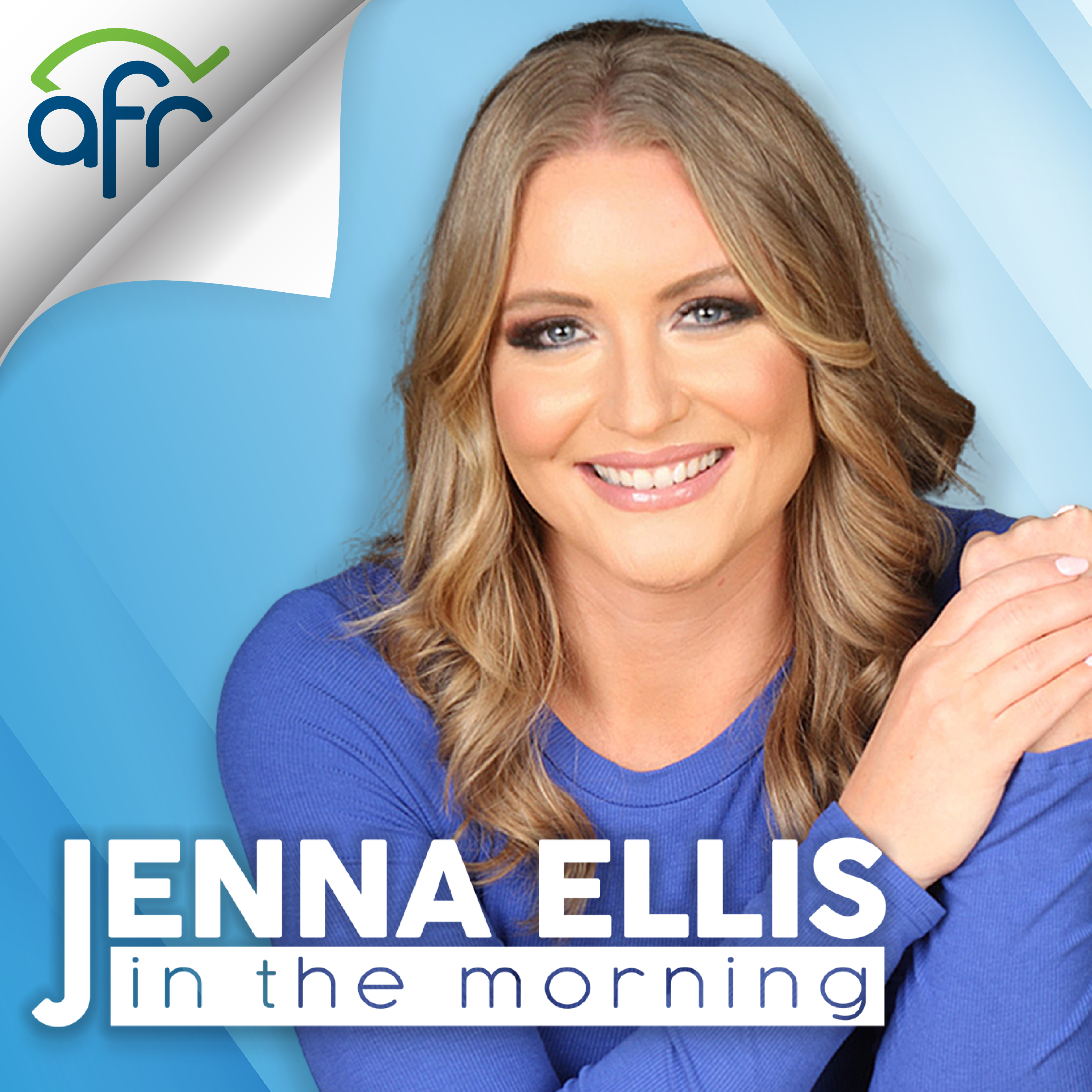
Discover the True Meaning of Freedom
About this Episode
00:00 - 41:10 | Jenna shares her recent experiences at the Lincoln Day Dinner in Spokane, Washington
41:42 - 49:10 | Chelsea Wildmon joins to the show to discuss the AFA Foundation
Hosts & Guests

Transcript
We would like to take a moment to thank our sponsor pre-born.
When a mother meets her baby on ultrasound
and hears their heartbeat, it's a divine connection.
And the majority of the time, she will choose life.
But she can't do it without our help.
Pre-born needs us, the pro-life community,
to come alongside her.
One ultrasound is just $28.
And to donate, dial pound 250 and say the keyword baby,
or visit pre-born.com forward slash AFR.
Jonah Ellis in the morning on American Family Radio.
I love talking about the things of God
because of truth and the biblical worldview.
The U.S. Constitution obligates our government
to preserve and protect the rights that our founders recognize
come from God our creator, not our government.
I believe that scripture in the Bible is very clear
that God is the one that raised up each of you
and God has allowed us to be brought here
to this specific moment in time.
This is Jonah Ellis in the morning.
Good morning and happy Friday.
Today is Friday, March 27th.
And this past weekend, I had the opportunity
to be in Spokane, Washington, yes, all the way from Florida
for a fantastic Lincoln Day dinner
at the Spokane County GOP.
And our theme for this dinner was Freedom's Framework.
And it's such an important theme because, you know,
we look at the news of the day
and we tend to just focus on foreign policy
or the political policy or just, you know,
kind of the nitty-gritty of what exactly is going on
in our elections and obviously things
that are incredibly important.
Sometimes we need to take a bigger, more 30,000-foot perspective
and kind of reorient our understanding and our framework
to align with the truth of not just the conservative worldview,
but built upon a foundation of a Biblical worldview and truth.
And so I had the opportunity to be the keynote speaker
at that event, along with my very good friend, Coach Kennedy,
who some of you will remember was the plaintiff
in the Kennedy versus Bremerton school district case
that went up to the Supreme Court about the football coach,
Coach Kennedy, who just took a knee silently
after those high school football games
and was off the bat.
High school football games and was fired by his school district.
So went all the way up to the Supreme Court
on a religious liberty issue and ultimately prevailed.
And it had the effect of overturning a really bad precedent
since the 1970s about religious freedom
and just a really good outcome.
So he was also at this event and you can actually go online
and listen to his story and all of the speeches
if you'd like to at this great event.
I just Google Spokane GOP.
But for the next two segments,
I want to give you an opportunity to listen
to what I had to say at this Lincoln Day dinner
about freedom's framework.
It is such an honor to be here and to listen
to all of the wonderful stories that are in this room
and Coach Kennedy, of course,
who I've had the privilege of knowing for, you know,
probably since maybe after the first loss.
That's about it, but we go way back.
And all of the stories that are in this room
are a reminder of why our fight matters.
And my story started in, of course, my home
where the blessing of a Christian home
was the greatest gift that my parents could have given me.
I was homeschooled all the way through K through 12
and, you know, back in that day,
it wasn't quite as popular as it is today.
And so we were kind of on the forefront of advocacy
for homeschooling.
And my parents who were not raised in Christian homes,
my mom became a Christian in second grade
when her daycare provider
read Little Pilgrim's Progress to her.
And then my dad became a Christian in high school,
where they met.
They purposed to do things differently.
And they did.
And my parents purposed that no matter what
I or my two brothers would accomplish in life,
whatever our ministry are calling,
our careers, all of that,
paled in comparison to leaving our home
with an understanding of who God is,
why we believe what we believe,
and that we could defend it.
And that substantive theology
mattered.
And I would not be standing here today
with the amazing knowledge
that my parents passed on to me
and the opportunities that God ultimately gave me
but for their discipleship.
They took that seriously.
And I am incredibly indebted to my family
for that gift that they gave.
And so my story and my testimony
is not one of hitting rock bottom
and finding the Lord.
And some of these amazing stories
that you hear, a light coach Kennedy as well.
My testimony is that the Christian life works.
And when you raise your children
to understand theology,
then you are giving them a huge head start.
And so I found my calling in life at age 14
when I went to a government class
that was teaching on the legislative branch,
the executive, and then the judiciary.
And so the opportunity to participate
in a court competition,
and this was a camp those about a week,
I came home from that,
and I said to my parents,
I want to be a lawyer.
And I had no idea what God was setting me up for.
I just knew that I loved the way
that law works in society.
It's the basis of what our society
either prohibits or what we incentivize.
The way that things work,
there is a philosophy, there is a beauty in it.
And I just fell in love with it.
And I had no idea what God had for me in law.
I didn't even know what area of law I wanted to practice.
You know, none of that.
But I prayed the same prayer that Isaiah did in Isaiah 68,
which is, here I am, Lord, send me.
And my testimony as well is,
do not pray that prayer,
unless you are ready for God to answer it in wild ways.
I was not prepared for God to answer in the way that He did,
because I went on to law school.
And with the basis of theology
and the study of the knowledge of God and who He is,
and the way that His morality is objective,
His truth is the basis of the reality to which we're all presented.
All of that I carried to law school.
And law school teaches you
that whatever the legislature or the king
or whatever government you're presented with,
whatever they say,
that is the boundary of morality.
That's the measurable difference between right and wrong
is whatever a given government sets.
Well, the homeschool girl and me said,
that doesn't work.
And I asked my professor who is a Christian.
I said, well, okay, that's not what our founding was built upon.
We are a Christian nation.
Our declaration has a beautiful worldview statement
that says we hold truth to be self-evident.
That means truth is objective.
So how can I go into a courtroom today and argue that?
His response to me was, well, you can't.
Because we have a certain set of case law precedent.
So we have our constitution,
but then we have all of these miles and miles and miles of cases
that actually is operative as basically our second constitution.
That did not sit well with me.
And so as I went on to legal practice as a prosecutor
than a defense attorney,
and I set out to argue and defend basically
an apologetic of the law.
And that's what I knew God had called me to.
So in 2014, I was invited actually to a conference
here in Spokane, so this is kind of coming home for me,
and it was the first opportunity I had
at an apologetics conference to talk about the law
from a Christian perspective.
And I built my case and I gave this presentation
having no idea how it would go over.
And everyone, afterward, said,
do you have a book?
We want more of this.
How can you do this?
And Erie, how can we learn more?
And I had been praying, Lord,
I don't know how I would ever be able to do this
as a full-time ministry.
I don't know what opportunities you have,
but I know that this is my calling.
Even more than the practice of law,
I want to teach your truth and the law.
And so I set out to write a book,
which I published in 2015 having no idea how to write books.
And so my title was Way Too Academic,
but it was called the legal basis for a moral constitution.
And it was meant to be a guide for Christians
to understand our constitution in context.
You see because we've been sold this lie
that in order to have freedom,
and the freedom to do what we're doing right now,
which is speaking together about truth,
and those are our first freedoms
that are enshrined in our very first amendment, right?
The right to speak together,
association, and our right to religious freedom,
that in order to exercise those rights,
we have to approach this from a completely secular,
pluralistic society.
And what does pluralism actually mean?
pluralism means that we approach a debate validating
anyone's viewpoint.
It's a secular humanist theory.
It's suggesting that there is no central moral truth
to law.
That idea is false.
And so I wanted to argue against that idea,
which I did in that book,
and we'll circle back to that idea.
And so I took advantage of every opportunity
I could to promote the book.
I called my local radio stations.
It said, would you have me on?
And everyone did.
And to my surprise, they invited me to come back.
And to talk about cultural events
and explain legal concepts.
And suddenly, I found myself as a contributor
to the Washington Examiner.
And then with that, with writing about law,
I was invited onto national cable news networks,
like Fox News.
And this was around 2016.
And President Trump got elected in 2016.
So here I am on the news.
And defending the truth of the Constitution
in the context of the Trump administration.
I had no idea.
I was still praying.
Lord, how can I make this a full-time ministry?
And one day, my phone rings.
And I was actually in Portland visiting my cousins.
And it was a Sunday afternoon.
And I remember this because it was a 202 number.
And I knew that to BDC.
And I thought, it's a robo call, whatever.
It's a Sunday afternoon.
I let it go to voicemail.
Thankfully, I listened to the voicemail.
Because it said, hi, Miss Ellis.
This is the White House operator.
The president's reaching out to you.
Would you please call us back at your earliest convenience?
And if you've ever seen that movie, the American president,
that was kind of a deja vu moment where I was like,
this has got to be some kind of, like this was not meant for me.
But I called back and I said, hi, I got this voicemail.
Yeah, we'll put you right through.
So I'm sitting here literally in my pajamas on the couch
at my uncle's house.
And President Trump is on the other end of the phone.
Jenna, how's it going?
I see you on TV.
You have this big, beautiful title.
Constitutional law attorney.
I love it.
It's huge.
You know, in his Trumpian way, Michael, thank you.
No idea.
He had been watching.
And he said, I'm probably getting impeached.
That's going to happen.
And I want to know what you think about it.
I want to know what you think about my lawyers.
I want to know what you think about a lot of different things, right?
And I thought, well, this is the only time I'll ever get to talk
to the president of the United States.
So I'm going to tell him what I really think.
And that turned out to be exactly what Donald Trump likes to hear.
So at the end of about an hour long conversation,
he says, well, you know, when are you in DC?
Come see me.
Come visit.
And of course, I said, I will be there any time that you invite me.
So when would you like me there?
That was Sunday.
Wednesday.
I walked into the Oval Office with my book that I had written.
And I have a picture today with me and President Trump
with that book on his desk.
Those are the kinds of opportunities that open
when you pray, here I am, Lord, send me.
I could not have opened that door at all myself.
And when I walked into the Oval Office and he stands up
and he greets me and being, you know, the nerd that I am.
I was like, there's the resolute desk.
That's awesome.
And that was like more overwhelming to me even than seeing the president.
And he comes over and he shakes my hand.
He says, Jenna, you're a great lawyer.
You work for me now.
And I said, OK.
So I moved to DC.
And for the rest of his term, I represented him as one of his personal counsel
through the Russian collusion hoax, the first impeachment, the second impeachment,
COVID, and ultimately the 2020 election.
And that was a completely wild experience.
It was a great experience.
And ultimately, obviously, ended in a way that none of us preferred.
But then after that, I prayed to the Lord, OK, what's next?
Because my conclusion of representation of him ended with his first term.
And so, you know, I was invited to be a contributor on news networks and all those things.
But that wasn't my calling and my passion.
My calling and my passion is to teach the truth of God as applied to law.
So when the American Family Association called me and they said,
our drive time morning show that's nationally syndicated, our host is retiring,
and we're looking for someone to replace her, and we'd love for that to be you.
That's what I get to do now every single day is to wake up Monday through Friday
and for an hour on a national airwaves that reaches about three million people.
I get to talk about the things of God and truth.
And if I had ever thought in my 2016 mind that writing that book
would lead to the opportunities that I've had, I wouldn't have believed it.
And so what I get to do every day is speak about the things of truth.
And that brings us to this concept of freedom.
That I was talking about when my professor said, well, you can't go into a courtroom
and you can't advocate for freedom because we live under a Supreme Court.
And we have to approach this as a religious freedom which means that anyone's idea
is just as valid as anyone else.
When we're talking about consent of the governed, for example,
what the three of you ladies who are up here, you just did a phenomenal job.
And what consent of the governed means in context is that we, the people,
are the very same people that our declaration acknowledged have rights that are God given.
You see, because we are not actually a pluralistic society.
We don't approach the topic of freedom from a secular humanist playing field.
We don't approach this with your idea of freedom is equally as valid as mine.
We don't approach morality in society from the perspective that your truth
is the same as my truth in terms of moral validity.
That's called standpoint epistemology or standpoint perspective.
That your perspective, your experience is equally valid as mine.
If we legislate according to that worldview, then consent of the governed is distorted.
We then have a nation that suggests that just because roughly 78% believe that abortion
in most circumstances in the first trimester should be legal.
That's over a majority, right?
Is that okay in our nation? Well, no.
So how do we advocate for freedom in a society that we as Christians
have basically conceded is secular?
Well, the answer to that is freedom's framework.
Because freedom doesn't start with a government definition.
If we understand freedom only in relationship to civil government, then we're getting it all wrong.
Because you see freedom is part of those pre-political rights that are endowed by God our creator.
Freedom is not a matter of a government construct.
It's not a matter of what the moral majority may believe.
It's not a matter of what the legislature designates or Trump might sign with his executive order or Joe Biden with the auto pen.
Freedom is a definition that is God given.
And so when we approach our rights as pre-political,
we don't mean that man is free literally to do anything.
We know by the truth of the reality to which we're presented that man has natural constraints.
We have the law of gravity.
We have the first law of thermodynamics.
We didn't get together in Congress and say, well, we all agree that in all 50 states,
the sun should rise in the east and set in the west because we want uniformity across the country.
There are some things that are outside of what a legislature or king or any government system can designate.
And freedom and moral law are also outside of what a legislature can define.
So when we understand freedom, we first have to agree unanimously, again,
on what our founders recognized 250 years ago that we will celebrate this July 4th.
They crafted that worldview statement that said, we hold these truths to be self-evident.
And they went on to explain those truths, but that basic assumption is that truth is objective, it's discoverable,
and it's outside of man's consent or objection.
I may not like the law of gravity.
I may not like that we only have 24 hours in a day.
I may not like certain things about the reality to which I'm presented,
but every human being enters this world already confined to freedom's framework, boundaries, laws of nature.
And if we understand freedom within a civil government framework,
we are seeding our freedom to the government to redefine and to tell us that we can only exercise it
when the government says that it is your privilege, not your right.
And so we have to understand freedom's framework as being part of that pre-political, God-ordained reality.
Our founders understood that we all have to, by definition of being a human,
consent to the reality to which we're presented.
Those contours include moral boundaries.
We are not free to commit evil acts.
That's what the law actually still represents.
There's a difference between what's called malinense and malinprohibitum.
Malinense are those acts that are so evil and reprehensible that by their very intrinsic nature,
they are evil and they are wrong.
That is outside of what any legislature or executive order or any judicial order can set.
And then malinprohibitum are things like the speed limit.
Things that we would all determine are for the public good, right?
But our law and our society and we as Christians have lost that understanding
that there is a measurable difference between right and wrong and good and evil.
And that the only purpose of government as our founders understood
was to preserve good, promote good, and restrain evil.
That's what the Bible says in Micah 6-8,
do justice, love, mercy, walk humbly with your God.
All right, well, we have to take a break here and pause,
but when we come back, we will finish the speech that I gave,
the keynote speech at the Spokane County GOP on Freedom's Framework.
So we will be right back with more.
Abortion moves fast and right now in our communities,
women are being pressured to make irreversible decisions
in moments of fear and panic.
They're told to act quickly or risk losing support.
Many feel that they have no other option.
But because of you, they do.
At pre-born network clinics, a woman receives what the abortion industry will never offer,
compassion without pressure, clarity about the life growing inside her,
real support to welcome her baby and the hope of the gospel.
She's given a free ultrasound and space to breathe.
And more than 80% of the time when a mother sees her baby on a pre-born ultrasound,
she chooses life.
This March, pre-born is hoping to save 6,800 babies.
Yes, 6,800 babies.
But it will take 124 partners saying yes every single day.
So here's my ask.
Pause your busy day for just a moment and become a yes right now.
Just $28 provides one ultrasound.
$140 helps five mothers.
Every dollar helps save babies and share hope.
To donate, dial pound 250 and say the keyword baby.
That's pound 250 baby or visit pre-born.com forward slash AFR.
That's pre-born.com forward slash AFR.
Welcome back to Jenna Ellis in the morning on American Family Radio.
Welcome back. We are in the midst of listening to the speech that I gave at the Lincoln Day dinner
at the Spokane County GOP this past weekend on Freedom's Framework.
So let's continue to listen.
The purpose of civil government is to promote good and restrain evil.
That is objective.
And so if we seed freedom to the government to define for us,
and we only think about it in relationship to civil law,
then suddenly we're arguing things like, well, I should have the religious freedom to kneel on a football field
because this is America, right?
That's by the way why you lost about eight times because they didn't understand Freedom's Framework, right?
Because they're arguing this within the context of pluralism.
We need to say instead of, I have a First Amendment right to exercise my liberties.
I have a First Amendment right to speak publicly.
But I have a God-given, pre-political, inalienable right that is so intrinsic to who I am as a human being
that my government is obligated to preserve and protect it.
And they did that through the First Amendment.
Do you see how much more powerful that is?
Because if tomorrow, somehow, and this could happen, I could see this happening in a crazy society that we have,
if somehow tomorrow, the First Amendment was repealed, do my rights change at all?
No.
Because see, that was what Alexander Hamilton wrote in Federalist 84.
When he said, we don't even need a bill of rights.
Because a bill of rights in the sense and context which the founders were arguing at the Constitutional Convention
was suggesting that in order to have security and protection from the government,
we give up all of our rights and we only receive back the things that we have reserved to ourselves in our bill of rights.
And I even had my constitutional law professor started out the class saying, look at China's Constitution.
How many more rights they protect than the U.S. does?
Really?
We only have a bill of rights because our founders found it so necessary to at least enumerate specifically
the rights which governments most often in French.
But those weren't all of our rights.
If we understand natural law and we start with the premise that truth is discoverable
as our founders unanimously agreed, then they debated how do we best protect it all of that stuff.
But they unanimously agreed in our declaration that truth is self-evident, that our rights are God-given,
then nothing that is against God's natural law can be fabricated by a civil government.
Nothing that goes against the right to life, we shouldn't be debating abortion.
Nothing that goes against the definition of a family as God himself provided natural law,
the only circumstance in which a child can be conceived is between one man and one woman.
Right? There is no such thing as gay marriage.
That's not a definition.
Natural law dictates otherwise.
If you look at all of the social issues, all of those things go against the laws of nature and of nature's God.
The legislature is trying intentionally to overstep their jurisdiction.
And we as Christians have almost ceded that to them and we're debating these issues as if they're debatable.
Instead of saying we still operate under Freedom's framework, which is our declaration of independence,
that provided the mandate for America, which is that truth is discoverable, the laws of nature and of nature's God,
moral truth, the measurable difference being right and wrong and good and evil.
And then we have a constitution that limits and separates powers so that a legislature and executive and judiciary and the states cannot overstep.
Did you know that Congress can't actually legislate on anything that they want?
That's in our constitution.
In Article 1, which provides all legislative powers given to the Congress.
Yes, but they're limited in Section 8 to certain subject matter.
Do you know it's not in there? Domestic relations, education, parentage, all the social issues, all kinds of things.
That Congress decided this would be in the best interest of society.
You know, this is pushing the social good, right? They have overstepped.
People love like us who are patriots. We love to talk about the 9th and 10th amendments.
That all powers not given to the federal government are reserved to the states.
Well, there's more to that. Or the people.
Because see, we the people in a self-governing society actually have power of government as well.
We have parental rights. We have the right to self-determine.
We have the right to choose our vocation. We have the right to train up our children and direct their education in a faith-based way.
We have the right, unlike what my former home state of Colorado is saying, we have the right to bring our children to Christian faith-based counselors that can tell them that, yes, you are a man or you are a woman based on your biology.
We have that right. And it's not because of our First Amendment.
It's because of the laws of nature and of nature's God, and it's because our rights are pre-political.
Now, some would argue then that freedom means that whatever I want to do for myself and my own self-determination, I should be free to do that.
And the government should not intervene unless it's specifically a purpose of, this is like the self-harm or the self-aggression, the aggression principle of libertarians.
And I'm looking at Caleb Collier and I did a debate that you should all watch on the difference between libertarians and conservatives.
And the reason that freedom is not defined as simply the government arbitrating certain things that adults consent to is because human beings by our very nature as being made in the image of God and in the reality to which we're presented, we don't have the authority to say that we are free to commit evil acts, morally speaking.
That goes against the laws of nature and of nature's God. And part of the civil government duty and obligation for a moral and upright society is to prohibit those evils.
And it's not just a matter of adults defining harm. Because right now we live in a society that says, well, two men should be able to adopt a child.
And we say, well, they're consenting to that and we are prioritizing adults' preferences over the harm to a child to grow up without knowing their biological parents, knowing their origin, or intentionally not having a mother or a father.
That goes against the laws of nature and of nature's God. And we have no more freedom or legitimacy to redefine what marriage looks like, what family looks like, than we do to legislate ourselves out of Earth's orbit.
Because freedom has always met a framework of boundaries. Because we as human beings cannot arbitrate everything. We are still limited.
And so we fall off kind of one of both sides. We either allow too much pluralism and validation of any viewpoint and whatever anyone says of, I want to be free to make my own choices.
Or we fall off the other way and say, well, civil government should not have nearly as much jurisdiction. The church should be in charge of that. Well, the problem with that is that we can't legitimately forcibly compel individuals to be under the jurisdiction of a church.
Now, in a moral and upright society, we should all be members of a family and we should all be members of a church. We are, like it or not, members under our civil government.
But church and family has ceded far too much jurisdiction to the state. And so the state is now arbitrating what it was never intended to do.
So if we truly live self-governing and free, freedom is not the ability to do what we want, but the freedom to do what we ought.
And that is as Guinness's definition. And when we look at what the founders understood when, as one speaker said, when Benjamin Franklin said, this is a republic if you can keep it.
He didn't mean if you have a moral majority, if you only have consent of the government. He meant if you understand that our rights are given by God and our relationship to God is the definition of everything that we are.
Because I and you are human beings made in the image of God having inherent dignity and worth and all of our rights intrinsically because of who we are as human beings.
Our declaration expressly says that and expressly provides protection for every human being made in God's image.
And this doesn't matter when personhood attaches or the circumstances of conception or any of these nonsensical trivial negotiable definitions that the left would like to suggest.
Religious freedom is not dependent on coercion or what you believe or tolerance or any of these other things that our Supreme Court would like to suggest.
We all live in the same reality and our reality necessarily requires that the laws of nature and of nature's God triumph.
And so the challenge here tonight is to understand freedom not in relationship to civil government but in relationship to God himself.
Because we are free, truly free, and Jesus himself said that, that if you know the truth you are free, the truth will set you free.
We are free when we understand how to live in accordance with the will of God and under his truth the reality to which we are presented.
C.S. Lewis put it so perfectly in mere Christianity talking about how we are confined to God's reality for his own sovereign purposes.
Our founders, all of them, I don't care if they were the perfect Christians, if they were deists, you know, whatever, they all unanimously agreed.
Truth is self-evident and the laws of nature and of nature's God provide us the right, the obligation and the duty to be able to alter or abolish our civil government if it transgresses against the laws of nature or if it infringes upon our unalienable rights.
That's Jefferson's fingerprints on the declaration are so amazing because when he termed our rights as unalienable, he loved property law.
And if any of you have seen Downton Abbey and, you know, the fetail and how the estate has to go through the family and there's all of these laws about property exchange, well Jefferson rejected that.
He was for the free alien ability or the free transfer of property. And so when he termed our rights as unalienable or inalienable, it meant that you cannot have your rights abridged in French or even at your own consent bought or sold.
We cannot alienate from ourselves the identity of the Amago Day in us. That is how powerful the laws of nature and of nature's God are.
But we argue today in courtrooms and legislatures and Congress on national TV, all of these places we argue with in a framework of we the people and our consent.
It's not about our consent. It's about our acknowledgement of truth. Because even without our consent, God is still God and reality is still reality.
I don't consent to reality. I simply observe it. I discover it. I can negotiate with them that I flew here in spite of the law of gravity, right?
But it's because we negotiated within the boundaries that our God has said we know, even every Democrat knows, even Frick and Jasmine Crockett knows, that she can't legislate us out of this Earth's orbit, right?
She can't repeal certain laws. She can't enact certain laws. But what they are lying to you about, and even some Republicans lie to you about, is that we can negotiate moral law, that we can manufacture definitions of family, faith and freedom, that we can manufacture the measurable difference between right and wrong and good and evil.
We have all of the tools to take back our country and to build a legitimate moral and upright society because our declaration is still operable.
But what the rise of a terrible Supreme Court precedent has tried to teach every even Christian lawyer for the last over 100 years is that we have to operate within a society that by our consent agrees together on what truth is.
And so they've tried to divorce the Declaration of Independence from the U.S. Constitution. And they've tried to say, well, you know, that's a great historical document. Fun, we celebrate that with fireworks on the 4th of July. But what they fail to understand is that we wouldn't have a U.S. Constitution without a Declaration of Independence.
We would not have a bill of rights and an understanding and a textual expression of certain rights without our founders unanimously agreeing that truth is.
So my challenge to you as Patriots, because I know that you love this country as much as I do, you love your families, you love the Lord, and you want freedom to persist.
Don't argue freedom in a secular humanist framework.
Argue freedom from a natural law perspective because freedom can only be defined within the contours and boundaries of what God himself has designated.
And when we actually require our government to stay within that framework of separated and limited powers, we have all the freedom that we will ever need to exercise to direct and self-direct our lives according to the will of God.
We can do all of the things that God requires for our lives speaking together about truth. We can exercise religious freedom in the context that the Bible describes, that we are free to do what we ought.
If we define freedom's framework as our divine law giver and what he says, do not define freedom within the context of the civil government.
And if we would together and across this nation, rise up and say, we are not arguing anymore on a secular humanist playing field.
We are not going to say that certain rights are debatable. We are going to hold our civil government to the standard that our founders required.
Well then now we know why we should be proud to be Americans. Because this country is the only nation across world history that founded our country in a recognition of our rights coming from God our creator and our image of God as being so central to our humanity.
Now that's always been true across every government system, every culture, everywhere in the world across world history.
But we are so privileged in this country to live in a nation where our founding documents actually require that of our government.
We just aren't doing enough to hold them accountable.
So yes, participate in government. We have to only consent to what the Bible allows for legitimacy in government.
I was so grateful to hear those young ladies all use that term legitimacy.
Because legitimacy only comes from God himself. A government is only legitimate if it promotes good and restrains evil according to an objective truthful definition.
We have to require that of our candidates. We have to require that of our party. We have to require it of ourselves. And we have to stop acting as if freedom is debatable. Thank you.
Alright, well that was the keynote speech that I gave at the Spokane County GOP this past weekend on Freedom's Framework.
And share that with your friends and family. And it's so important to have a biblical mindset and an overview of what freedom actually means and making sure that that definition is not derived just from the civil government.
But that we understand freedom in the context of natural law, divine order and ultimately ordered liberty. So we will be right back with more here on Jenna Ellis in the morning.
The AFR app is a powerful tool but it does have limitations. You can't use it to change the oil in your vehicle or get rid of carpet stains. It won't walk the dog, won't pick up the dry cleaning or take the kids to practice.
But while you're doing those things, you can listen to your favorite AFR content through the app on your phone, smart device or Roku. Just go to your app store or visit AFR.net. Listen to AFR wherever you go with the AFR app.
Welcome back to Jenna Ellis in the morning on American Family Radio.
Welcome back. Well, if you are a fan of the AFR website and I think that you should be because I am. If you go to the AFR Foundation website at AFR.net, you may notice that it looks a little bit different these days and has kind of gotten a glow up.
So Chelsea Wildman, who is the associate director at the AFR Foundation, joins me in Chelsea. It looks really new. So tell us about it.
Yes, Jenna. So we have rebranded with some new coloring. We have formulated our website to be a little bit more user friendly and easy to find for all the information for our AFR family.
They're looking to put a charitable gift annuity in place. So we hope that this rebrand and refresh of our website is helpful for those who visit.
Yeah, and you know, I've obviously been on the website quite a bit and especially when you come on to tell us about the AFR Foundation and the biggest change that I noticed personally was kind of these bigger blocks instead of just the task bar up at the top.
And you kind of, you know, aren't totally sure what you're clicking on and you kind of have to click through it and read some of these things.
The kind of four major categories of the bequest, the charitable gift annuity, the IRA charitable rollover and the donor advised fund.
Those have kind of some bigger blocks to them and showing, you know, what, what those actually contained. That's just right there on the splash page.
So speaking of, you know, some of those the charitable gift annuity is one that that you particularly emphasize.
Yes, absolutely. So our charitable gift annuity gives our AFA family and AFR listeners a chance to sow seeds into the ministry with a gift.
That's a one time gift, anything $2,000 or above. And they give that and then in return they receive a fixed income that they receive for the rest of their life.
So as long as they're living, they'll receive that fixed percentage for the rest of their life and then upon their passing any remaining funds are then gifted to AFA to continue our ministries work for the Lord.
And you also get some great tax benefits, a partial tax deduction that you're that you give the gift, which is always a great help when tax season rolls around which we are currently in.
And you get tax for a portion is tax free income. So that's another great way to support the ministry and also support yourself in those retirement years.
Yeah, and you know, these are some really great ways that some may not be aware of of how to support a ministry like AFA because you may be more familiar with, you know, our twice annual shareathon where, you know, we ask for listeners to call in with obviously their best gift.
Or if they want to give, you know, whether it's $30, $300 a month, kind of that monthly gift so that we can plan, but there are other ways besides just, you know, a small monthly gift that you can support our ministry.
And so the AFA foundation exists for that purpose. And I think it's really fascinating to see, you know, how many different opportunities there are because, you know, I get emails from listeners all the time saying, you know, we love this ministry.
We want to support everything that AFA does. And, you know, how can we do that? And the AFA foundation is a really great, it's a really great solution for that.
Absolutely anyone who's interested in sewing seeds into the ministry financially that also will help them during their retirement years. We would love to speak with them.
Our phone number is 1-800-326-4543-extension-345.
That's great. And so, you know, with this, if somebody's coming to this website, you know, maybe for the first time they want to see the glow up and they go to AFA Foundation.net, where would you guide them to kind of start this process and, you know, looking into, to, to giving.
And as it says right there, transforming culture for God's glory, building a lasting legacy through the American Family Association.
Yes. So most folks might try to visit our website on their mobile phone. I know that's where I do a lot of my research. And during that, under the gift planning menu area, you can go and what to give and how to give.
Those are some great tabs to look at. And then also, we have learning about our request, as you mentioned, how to create a will.
We've got donor stories and how to contact us. They can also get on our eNewsletter list so that they will receive a biweekly eNewsletter.
We're not going to bombard our friends with eNewsletters, but we do like to send out a biweekly email that lets them know what we are doing, what we're up to, how they can be involved with our foundation.
And, you know, you mentioned some of these stories. And I love seeing the pictures of some of these donors and their stories. And one in particular that I really liked is Margaret's story. She says this.
What is a charitable, charitable gift and newity mean to me? Well, it means two things. One, it provides a steady stream of income. And two, upon my death, the principle goes directly to the ministry not to a greedy wasteful government.
And so she said, you know, this is something that is invested in evangelical Christian organizations. And that's such a great point that instead of having, you know, your estate wrapped up in probate or, you know, other things to know that it's going to a ministry and really for the future of eternity into the ministry that AFA does.
It's just a wonderful alternative to some of these, you know, other other places that it could go.
Absolutely. Yes. A charitable gift and newity, we get this question a lot. Is this a regular commercial and newity? No, it is different. It supports a Christian organization. You get some wonderful tax benefits from it. And it's not going to the government.
It's not going to go to an organization that just benefits, you know, a large financial institution. This, this goes toward AFA and AFR and continuing our work. So yes, Margaret's story is a wonderful one.
Yes, well, there are many more on the AFA foundation website. So you can go there at AFA foundation.net and Chelsea, thanks so much for dropping by and telling us about the glow up and also about the alternatives of charitable gift annuities and give the phone number one more time as well where people can reach the AFA foundation.
Yes, we would love to speak with you at 1-800-326-4543-extension-345. Amazing. All right. Well, that is all the time that we have today for Jenna Ellis in the morning and as always, you can reach me and my team, Jenna at AFR.net.
Preborn has rescued over 400,000 babies from abortion and every day their network clinics rescue 200 babies lives. Will you join preborn in loving and supporting young moms in crisis? Save a life today. Go to preborn.com forward slash AFR.
More from Jenna Ellis in the Morning
View all episodes →
Resurrection Sunday, Cabinet Shakeup, and Airport Chapels
Jenna Ellis in the Morning
Apr 6, 2026·50:37·failed
Analysis of SCOTUS oral arguments on Birthright citzenship
Jenna Ellis in the Morning
Apr 2, 2026·48:39·failed
Dive into the Current State of American Politics
Jenna Ellis in the Morning
Apr 1, 2026·