About this episode
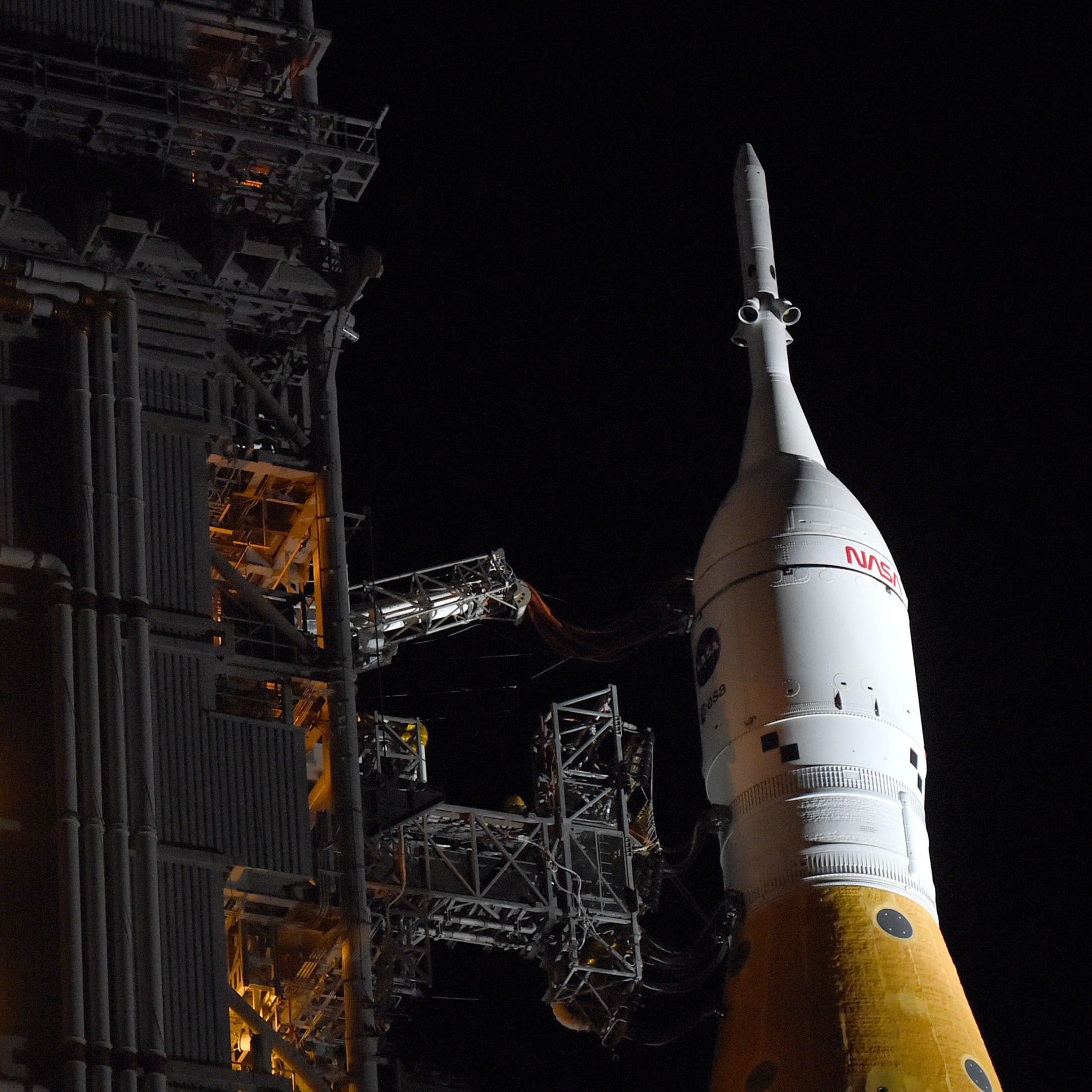
If all goes to plan, Artemis II, Nasa’s mission to return humans to the moon, will launch this week. The mission will mark the farthest that humans have travelled from Earth, and the first return to the moon in more than 50 years. It will also pave the way for landing on the moon again as soon as 2028. But given the Apollo missions have already achieved that feat, does going back to the moon still matter today? To find out, Madeleine Finlay hears from the Guardian’s science editor, Ian Sample, the Atlantic journalist Ross Andersen, and Jan Wörner, a former director general of the European Space Agency. Help support our independent journalism at theguardian.com/sciencepod
Get every episode summarized
Each time Science Weekly publishes, we email you a written briefing from the transcript — the topics, who appeared, and any specific claims, with the ad reads skipped.
Email me new episodesFree for 3 shows. No card needed.
Hosts & guests


No transcript yet
This episode has not been transcribed. Request it and it moves to the front of the queue.
More episodes
More from Science Weekly

Muons, massive waves and restored sight: the winners at the ‘Oscars of science’
Science Weekly
Apr 23, 202616:19failed

Mythos: are fears over new AI model panic or PR?
Science Weekly
Apr 21, 202615:50failed

The surprising value of boring chats, ‘super El Niño’ and Alzheimer’s evidence r...
Science Weekly
Apr 16, 202620:45failed

Helium: the invisible gas that powers AI, and why it’s in short supply
Science Weekly
Apr 14, 202616:19failed