Loading...
newsdaily
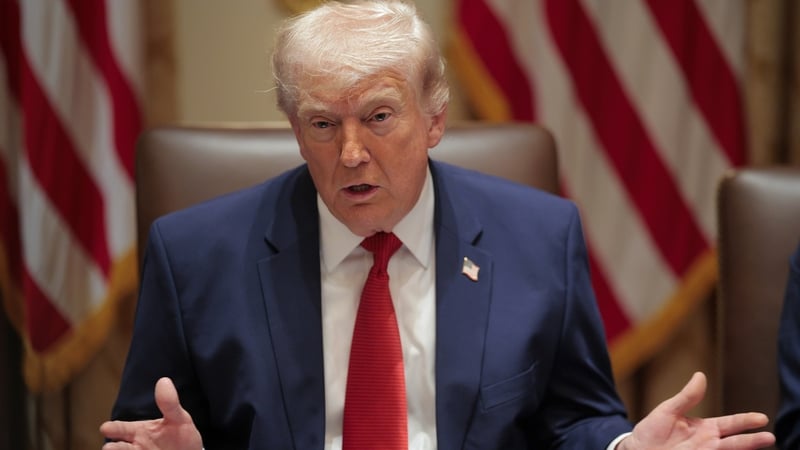
Donald Trump has again postponed plans to start destroying Iranian energy plants
About this Episode
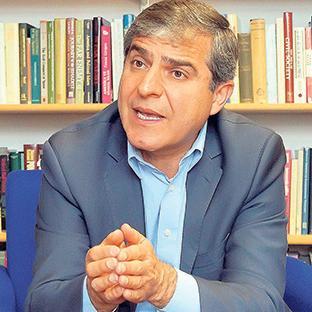
For analysis of the latest developments, Fawaz Gerges, Professor of International Relations at the London School of Economics.
Hosts & Guests
Transcript
Donald Trump has again postponed plans to start destroying Iranian energy plants.
Siting what he claimed was progress in talks to end the war,
the US president said the new deadline was 10 days away.
This morning, the Iranian red crescent said that more than 1900 people have been killed over the
past month, at least 20,000 have been injured. Meanwhile, the price of a barrel of oil has risen
again, a short time ago, it stood at just over $110. For analysis of the latest developments,
we can talk to Farwa's gorgeous, whose professor of international relations at the London
School of Economics. Thanks for joining us this afternoon. It's four days now since Donald
Trump first said that the US was negotiating with Iran. How much is actually known about the
contact between the two countries? Not very much. And for your own listeners,
they should not really take seriously what Donald Trump says, because Donald Trump
engages in falsehood, contradictory statements. It's very difficult to really make sense
that President Trump's basically shifting positions on a daily basis. What we know so far
is that regional powers, Pakistan, Turkey, Egypt, Oman and Qatar are rallying messages between
Iran and the United States. So there are no direct talks between the United States and Iran so far.
And what we know about the American position, the so-called peace plan, the 15-point peace plan,
is really Donald Trump is asking Iran to submit to surrender. And this tells you a great deal
that Donald Trump really does not understand. Neither the larger, if his own war, know how,
and, you know, Iran has responded to his submission demands in the past four weeks. My fear
is that the divide is so huge between the two sides. We could easily basically see more
military escalations on the part of the United States by launching
a ground operations in the next one week or so. Why would they want to do that, though,
when the outcome is far from certain? Well, I mean, I think you're asking a common
sensical question really. It's a very simple question. It's a very rational question and I'm not
patronizing. I mean, think the American Israeli war was basically based on a very false premise
that if you kill the top Iranian leaders, Iran will submit, Iran will surrender. It was
based on a very false premise that Iran is vulnerable. Iran was bleeding. Iran was on its
knees. On all you have to do is to basically deliver a kill for its leaders and Iran would collapse
like a ripen fruit. So what President Trump has been doing really is doubling down. He does not
have an exit plan. He entrapped himself in a very, very difficult strategic, I mean, situation
in the Gulf. I mean, think about it. The President on the first day, he basically boasted about his war
and called on the Iranian people to come out and take charge of their own government, meaning,
you know, regime change. Now we are talking about opening the straight of Hamus through which
more than one-third, actually one-fifth of all hangars and other chemicals pass on daily bases.
So in fact, what we have seen is that it tells you a great deal. Not only about the contradictory
messages of President Trump is that now President Trump has a weaker hand than he had before the
start of the war. And Iran is using, has used its weak hand in order to really basically
increase the economic pain to itself, to its neighbors, to the world economy, to the United States.
So the war really is no longer about military conflict. Now it's about economic pain. It's about
waterways. It's about alliances. It's about the price of energy. And Iran now is doing very well
because the war has shifted from the, I mean, military situation into the economic and strategic
reality that is facing Donald Trump in the face. So how then can this be brought to an end?
Again, you're asking too many common sensible questions. Truly, it's unfair.
No one knows. Even Donald Trump doesn't know. He wants out. He wants a face-saving formula.
My fear is that knowing what we know about Donald Trump, he might really basically double down.
And that's why the United States has been positioning tens of thousands of special operation forces
and commanders in order to carry out theoretically a ground operation. So again, Donald Trump believes
that basically more military might could really force Iran to surrender. In fact, his press secretary
two days ago, I mean, imagine his press secretary Caroline Levitt said,
Iran has to concede that is defeated. Imagine a nation of 100 million people. One of the greatest
civilizations in the world, one of the greatest old calling, I mean, his press secretary is asking
the Iranian government to concede defeat. This is tells you about the childishness and the lack of
strategy and the lack of viable strategy, how to get out of the war and that's why my fear is
that knowing what we know about President Trump and knowing what we know that American institutions
have been gutted out now. So you don't have, where's the State Department? Where's the National
Security Council? Where's the Defense Department? Is President Trump and his few inner circle of
advisors who may basically say, yes, man, what ever he says? So the reality is, without really
intervention by Europe, without basically Europe standing up and telling President Trump,
enough is enough. Let's find a way out. I doubted very much whether regional diplomacy
will produce any kind of, you know, a way out of this deadly embrace.
Professor Fowell was gargous. Thank you for talking to us this afternoon.
More from News at One
View all episodes →
Meta workers in Ireland seeking assurances about their jobs after company announ...
News at One
Apr 24, 2026·6:32·failed

Is a rise in the number of US troops passing though Shonnon Airport a threat to...
News at One
Apr 24, 2026·2:36·failed

Technical issues as thousands queue for Ryder Cup tickets
News at One
Apr 24, 2026·