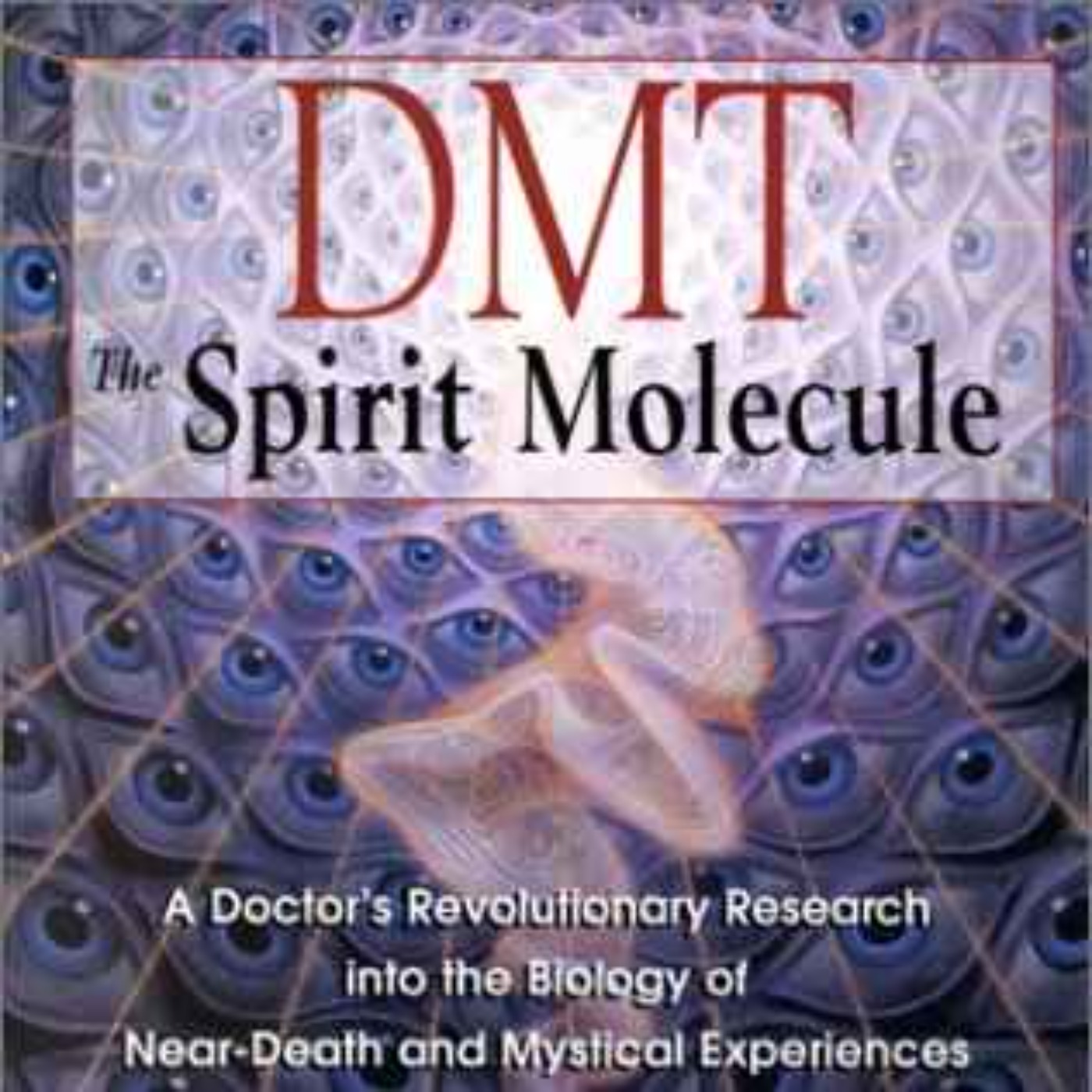
Dr. Rick Strassman on DMT: The Spirit Molecule - July 4, 2015
About this episode
Hosted on Acast. See acast.com/privacy for more information.
Get every episode summarized
Each time Where Did the Road Go? publishes, we email you a written briefing from the transcript — the topics, who appeared, and any specific claims, with the ad reads skipped.
Email me new episodesFree for 3 shows. No card needed.
Hosts & guests
Transcript ready
510 searchable segments. Every word is indexed and playable.
Full transcript
Where Did the Road Go? — Dr. Rick Strassman on DMT: The Spirit Molecule - July 4, 2015. Machine-transcribed; use the interactive transcript above to jump the player to any line.
This is where did the road go? Our aim is to explore the fringe, to be true skeptics and question openly, to investigate the paranormal, bring light to the dark corners of history, and give a voice to the shunned of science. We deal in mystery and the important questions that these subjects bring to light. What is reality? Who are we and why are we here? Join us on the web at wheredidtheroadgo.com for a full show archive, links to all our social media, upcoming schedule, and much, much more. Now join your host Saraya on this week's edition of Where Did The Road Go? Welcome to this week's edition of the show. Tonight will be part one of a two-part interview with Dr. Rick Strassman. Tonight we'll be talking about his initial book, The EMT, The Spirit Molecule.
Next week we'll be talking about his new book, which is entitled, DMT in the Soul of Prophecy. These books are very different and his research has taken them in some very interesting directions as you're going to see. Other than that, if you have any stories, you want to share on our listener's story shell that will be coming up some point in the near future. Get a hold of me. You can go to WhereDidTheRoadGo.com and there's a whole bunch of different ways to contact us. And if you have contacted me in the past and I haven't gotten back to you on it, drop me in of the line because sometimes stuff gets lost in the inbox a little bit. You can find all kinds of stuff on the show at WhereDidTheRoadGo.com, all the shows from the very beginning, all the videos. Of course you can also subscribe to our YouTube or Vimeo pages. YouTube is pretty up to date Vimeo, Hit and Miss. Since most people seem to use YouTube over Vimeo, of course you can also get us on iTunes
and plenty of other places. If you like the show, consider sending us a donation. It always helps. As well if you want to help out, click on the links for the books if you're going to buy one on Amazon on our page because it does actually come back to us to the fraction of a cent or something like that. Every time someone buys a book through one of our links. So if you're going to buy one of our authors' books through Amazon, click on the link. It helps us out. And that's all I have for right now. So with no further ado, here's the interview Luke and I did with Dr. Rick's Strassman. All right, welcome to the show. Rick? Well, thanks. Thanks for having me on the show today, Sarri. Well, is your name pronounced to Ria or Sarri? Sarri? Sarri, okay. And your friend Luke. But always a pleasure. All right. Now you kind of revolutionized certain aspects of the paranormal when you released DMT, the Spirit Molecule.
And this came out when? It came out in early 2001. Okay. And how long was that in progress? How long were you doing these tests with DMT and such? Well, the actual performance of the research just close between 1990 and 1995. And my thinking about this kind of work began a long time before that. I spent a lot of time and energy getting ready to do that study. But the actual performance, and five years. Yeah. You go into a lot of detail about how difficult it was to actually be able to legally study DMT in this country. And it's just, it was really kind of astonishing how much trouble you really did have. Because even when you got permission to do one thing, you still wouldn't be able to
get a hold of like the equipment and stuff you needed. Yeah. Well, it was a process I like to refer to as Kafka-esque. It requires two different parts of the federal government to speak to each other. That weren't accustomed to what communicating. And the channels of communication weren't really open between the FDA and the DEA. So a fair amount of my work just involved getting those channels of communication. And even besides the paperwork and the bureaucracy of getting the study off the ground, it took even longer for me to come around to the idea of doing a DMT study in the first place. Because of my longstanding interest in the biology of Altered States, I had begun thinking
about the biological basis for unusual mental experiences even in college. And once I completed my medical and psychiatric and research training, I started off looking at the physiology of the pineal gland and the hormone melatonin. So all of that worked at places before I even started thinking about a DMT study. And I began the paperwork in 1988. And that was a two-year process, which I described in some detail in my first book. Yeah, it takes a good chunk of the first part of the book as you get into why these things are so much trouble. And just the way that hallucinogens have been treated throughout modern history. Yeah, it's interesting because modern psychiatry wouldn't be where it is without the discovery
of LSD. The discovery of LSD took place around the same time as the discovery of the neurotransmitter serotonin and also at around the same time of the discovery of the anti-psychotic drug philharzyne. So those were kind of the three legs upon which the edifice of modern biological psychiatry was built in the 1940s. People think about serotonin and psychiatric medications as being important. But LSD was also at the same time. It was an area of extremely focused interest for 20, 30 years until LSD and similar drugs were outlawed or at least scheduled in to a highly restrictive legal category.
Right. Right. Okay. Now, as you said, you were looking into melatonin, but melatonin doesn't have any effects like DMT does. No, no, but I began with an interest in the pineal gland of such because it had been an object of veneration within SOT, physiologies for millennia. And at the time that I began my research career in the early 1980s, there wasn't much known about melatonin. And some older studies from the 60s and the 70s indicated that it might possibly have some profound psychiatric or psychedelic effects. And our study demonstrated that it's primarily sedating even in high doses. So because it didn't prove to be especially my end altering, I had learned about DMT in the meantime.
And once I completed my melatonin study, I changed the direction of my work to look more specifically at DMT. Do you want to tell people a little bit about what DMT is for those who don't know? Sure. So DMT stands for Dymethyl Tripdomine. It's a chemical cousin of serotonin and melatonin, you know, quite closely related, you know, chemically. It's a relatively simple compound that's contained in quite a few plants, you know, hundreds of thousands of plants. And it's been discovered in every mammal that's been investigated to date. It's a pretty small compound with respect, you know, to the molecular weight. It's not much, you know, larger than blood glucose or blood sugar. And it isn't an especially complicated compound for the body to make.
We began with dietary triptomine, which is then converted to triptamine. And then you add a couple of the methyl groups of the triptamine and you get, you know, di-methyl triptamine. Well, for DMT was discovered in a psychoactive plant from Latin America. But it wasn't known until maybe 10 years after that that actually is quite psychedelic. And so that was discovered in Hungary by a psychiatrist named Steven Zara, who was interested in studying LSD, but because of his being behind the Iron Curtain, you know, sandals, laboratories from Switzerland was uncomfortable, you know, sending it to him. And so he went to the library, you know, looked around for other possible psychedelic compounds
and stumbled upon, you know, DMT. And, you know, so he made some in his lab and he, you know, took increasingly large, you know, doses orally, but there wasn't any effect. And then he kind of flashed up on the idea of injecting himself with it. And, you know, that's, you know, the psychedelic properties of DMT were discovered in the mid-1950s. It was still kind of an obscure compound. You know, Steven Zara was studying it. But still, you know, the majority of interest within psychiatry was focused on LSD. You know, but interest increased in, with respect to DMT in the 1960s when it was discovered in the body fluids of rodents. And then a few years later it was discovered in the body fluids and the tissues of humans.
So that, you know, kind of opened up a large amount of interest in, you know, determining if DMT, you know, causes psychosis or schizophrenia, if, you know, the blockade of DMT could blockade psychotic or schizophrenia symptoms. You know, so there was a, you know, burgeoning, you know, research field of DMT, you know, which like everything else had to stop within the human or, you know, clinical realm when these drugs were scheduled in 1970. Now you say there's some plants too that DMT has been found in. Yeah. Well, the most common, you know, botanical, you know, preparation of DMT is called Ayahuasca. It's a combination of, you know, two plants which were found in the Amazon. One of them contains DMT and the other contains inhibitor of the enzyme that normally metabolizes DMT in the stomach.
You know, so I had mentioned that even for, you know, swallowed large amounts of DMT without effect. You know, but see Latin American Indians discovered if you combine one plant with another that allows the DMT to be orally active long enough, you know, to get into the bloodstream and exert its effect. And that's always been so puzzling to me how they figured something like that out. Well, you know, I guess you could say it's, you know, it's nothing short of, you know, miraculous. You know, the Indians will, you know, tell you that the plants are both to them and they said, you know, more or less, you know, combine us. You know, so I mean, that says, you know, good explanation is any because, you know, from a statistical plan review, the likelihood of combining those two plants with specific purposes is pretty intentional. Yeah, and especially since the initial results, I mean, when you take ayahuasca,
it's not the most pleasant thing in the world. No, no. It, you know, will cause some vomiting, some diarrhea, some nausea, you know, those kinds of side effects. And, you know, even though it isn't, you know, strictly speaking, an abusable sort of drug because of the side effects is still quite popular, you know, in Latin America, in Europe, in America, Canada, you know, Western Europe, even in the Middle East. And, you know, the context is, you know, mostly therapeutic or schematics. Right, right. Now, is it the same type of DMT as you experimented with it? Is found in ayahuasca? Well, so DMT is DMT, you know, kind of like vitamin C, the vitamin C, if it's, you know, found in an orange or is made in the lab. You know, sorry, DMT was made in the lab. You know, most of the DMT on the street, at least, you know, pure DMT is extracted from
plants. But still, it is DMT, you know, relatively pure depending on the method of extraction. You know, but our DMT was made in the lab, you know, met FDA standards, those kinds of things. And, you know, because, you know, DMT is indoorly active in the street or on the street, it's smoked usually, you know, which means that the pure DMT is vaporized and, you know, then the vapors are inhaled. But that, you know, can cause, you know, coughing and it's hard to get all the vapor in. You know, so, you know, the older scientific studies had either given DMT intramuscularly or intravenously. And, you know, there were a couple of volunteers in our study that had smoked, you know, DMT in the past. And we gave one of them an intramuscular shot of DMT, but it was slower than the smoke to root, you know, so then we switched over to the intravenous root.
And, you know, all the rest of our volunteers received it intravenously. Well, okay. Did you notice a change in the person's experience when you administered DMT in different ways? Well, they only gave it intramuscularly to one person. And it was a slower onset. And, you know, the peak took a little bit, you know, longer to develop. And, you know, the duration was slightly longer. If you smoke or inject intravenous DMT, you know, the effects, you know, begin with in a few heartbeats. And they, you know, peak within a couple of minutes. And our revolve is in a half hour or so. And in the intramuscular injection root, you start to, you know, feel the effect. In a couple of minutes. And the peak occurs at around a 10 minute point. And the effects, you know, resolve it around the hour point as opposed to the half hour point.
Now, with ayahuasca, the effects take a lot longer to build into the system, don't they? Usually they do. Yeah. You can usually, you know, tell the first, you know, glimmerings of an ayahuasca response within maybe half hour to an hour. And sometimes even longer, you know, sometimes shorter. But, you know, I guess as a rule, you know, somewhere between three quarters of an hour and an hour and a half, it's, you know, quite clear that you're beginning to come under influence. Now with DMT being present in, well, most mammals and such, is it mammals or all animals? Well, you know, it's, you know, been determined in every mammal that's been looked at, you know, rats, mice, you know, rabbits, humans. Yeah, I don't think every animal that's been looked at, you know, I've heard stories that some sponges contain DMT, some fish, those kinds of things.
But I'm not quite current on the latest in that regard. Yeah, but, you know, but every mammal, you know, seems to contain it. Which says that it's probably rather important to our systems. Yeah, it clearly is. You know, it's, you know, produced in the lungs primarily. You know, I had marshalled a lot of circumstantial evidence in my first DMT book about the pineal gland, which I think in a way kind of, you know, sidetracked, you know, focused on the lungs, which had been established as the primary source of DMT for, you know, close to 60 years by now, it was discovered in, you know, rabbit lungs and human lungs. And you know, an extremely interesting element of, you know, DMT, or an extremely interesting property is that the brain seems to expend energy to get, you know, to get, you know, DMT into its compounds. And there's only a small number of essential, you know, compounds, you know, that the brain
expands energy, you know, to, you know, bring into itself. And, you know, you know, some of those compounds are things like blood sugar, you know, certain amino acids, not the brain is unable to make on itself, or protein synthesis. So DMT is one of those compounds. You know, so it has, if, it's as if the brain requires, you know, DMT for normal function, which is a very kind of mind blowing idea. And over the last, you know, couple of years, it's been determined, you know, at the level of activity of the enzyme and the gene responsible for DMT synthesis are quite active in the retina as well. You know, so it, you know, could be what the DMT is involved in, in the mediation of, you know, general consciousness. And even more specifically, it's responsible or it, you know, is, it is, you know, mediating
visual perception as well. So this, you know, so the whole, you know, thing just could be a big DMT hallucination. You have to think, well, would you live your life any differently if you were, you know, like in a DMT hallucination. Well, you know, in my first, you know, DMT book, I, you know, talk about, you know, DMT's endometrics. It's, you know, kind of the compound that's, you know, keeping this, you know, consensual reality, you know, coherent, consensual integrities with everything else. You know, I just like the bleepil and the red pill, you know, it, I'm not sure it's, there's, you know, some kind of machined, you know, like intelligence, which is, you know, mediating the hallucination. You know, but still it is interesting, you know, to think about, you know, the nature of reality, if you know, DMT is, you know, so, you know, critical to brain function and
the visual perception. So in your study, were you able to determine conditions when DMT could be released naturally in large doses? No, in our study, we did a gave DMT, you know, it's extremely difficult to measure levels of endogenous or naturally made DMT. The concentrations in the bladder are the order of the billions of the gram per milliliter fluid. And, you know, so we still can't quite, you know, get down to the sensitivity to be able, you know, to measure, you know, naturally occurring levels of DMT. I think one thing we may end up doing is, you know, looking at the expression of the gene, which is responsible, you know, for the end of time that makes DMT as opposed to, you know, measuring DMT itself. Or it could be that, you know, that we'll have to look at the sitting metabolites of DMT,
which, you know, may occur in larger concentrations and to go down longer than the parent compound DMT itself. So if the lungs make DMT, what is the connection to the pineal gland? Well, the pineal gland also makes, you know, DMT, we just discovered that a couple of years ago. Or it's, you know, found in the pineal gland of living rodents. You know, we didn't quite, you know, nail down if it's made in the pineal gland of living rodents, you know, but it is, you know, found there as opposed to being, you know, found another person to bring, which isn't the case. Yeah, you know, so, well, yeah, I mean, I speculated my first, you know, book about, you know, the pineal gland is being kind of a lightning rod for the soul. But that was all, you know, kind of speculative and hand-waving speculation. And, you know, at the same time, I was extremely gratified, you know, that DMT was, you know,
finally discovered in the pineal gland a couple of years ago. Okay. And if the lungs make DMT would, would certain breathing exercises excite the amount of DMT that is made? Well, that's the obvious, you know, conclusion is, you know, that the lungs make DMT and if you, you know, if you've been modified in metabolism or the function of the lungs, you may be, you know, modified, the production of DMT. And you know, it's, you know, been the case, you know, from the millennia that people have discovered if they modify their breathing, if they modify their consciousness. You know, like either it's extremely slow breathing or extremely fast breathing. You know, so that could be, you know, checking your notice. I mean, you go ahead. Sorry, I was going to say, did you notice any differences in the experiences had by the individuals in your study that reflected their cultural background?
Well, I mean, that's a good question. You know, the majority of the volunteers, you know, were Anglo. They were mostly middle class. There are a couple, let's see, there was one black in a fellow, one Hispanic Indian in a fellow, you know, one native Hawaiian down. There weren't any Asians. There weren't any East Indians. Yeah, you know, there weren't any African-African. Yeah, you know, so, you know, the majority of the volunteers were kind of steeped in either, you know, Wicca or Eastern Religious, you know, practices. You know, to a larger extent, you know, Eastern meditation or, you know, disciplines. You know, so the majority of the volunteers, and I myself was expecting an enlightenment, like experience, as the ultimate or the apogee of the high-dose DMT effect.
But, you know, to everybody's surprise, including mine, you know, that was, you know, barely the case, as opposed, yeah, instead, you know, of a, you know, formless, unitate kind of state, you know, quite, you know, highly interactive and, you know, full of content and, you know, busyness. You know, so, you know, the one Hispanic Indian, you know, fellow, you know, well, you know, came in to the study with, you know, certain expectations, you know, based on, you know, shamanic, you know, practice. And studies and, you know, he among everybody else was, you know, more or less surprised, you know, by what the actual experience was. Which implies that those experiences, those, you know, and then you get more into this in the second book, those experiences of unity and stuff are not necessarily DMT created.
No, no, I don't think that, you know, the typical, you know, high-dose effect of DMT is a mystical, unitive, enlightenment-like state. Yeah, it's, you know, more, I can, you know, to as I discuss it in, you know, my new book, an interactive relational kind of prophetic state that's described in the Hebrew Bible. Well, you know, it's interesting to speculate about, you know, the lack of a cultural impact on, you know, people's experiences or even a lack of their expectations. You know, coinciding with the kinds of experiences, you know, that they had. And I think, you know, one of the reasons is, you know, because of, you know, the repetitive action of DMT. You just, you know, it's really hard to prepare for it, and it's really hard to kind of, you know, to overlay it with yourself. With, you know, the longer acting, you know, drugs like LSD, you know, so aside from that, I began Ayahuasca.
You can kind of interact, you know, with it as the effect develop, and you can overlay your personality onto it. But I think with, you know, in the case of injected DMT, it's just a drug, and it's just the effect that's just your brain under the influence of DMT. In a lot of ways, your culture, your personality, your expectations, all those things become moot, and you're just being, you know, shown this pure state, as opposed to it, you know, kind of, you know, bending, you know, to your own, you know, fancy as it were. Right. So you had said that people misunderstood some of your speculation in the first book. You want to go a little into some of that? Yeah, you know, I speculate about the pineal gland, which we've touched upon. You know, some people were, you know, kind of, you know, taking as a fact that the pineal gland is activated at, you know, 49 days of, you know, fetal development.
And it's activated when you die, and there's, you know, DMT released when you dream, and when you meditate, you know, all those things. But, you know, those were in the realm of speculation. You know, they were kind of informed speculations. I kind of will presented, you know, what is known, and then, you know, based on, you know, what was known, I speculated about, well, you know, what that could mean. But obviously, I was not clear enough in distinguishing between, you know, what was objective, you know, fact, and, you know, what was more speculative in nature. You know, you know, a lot of people email me with, you know, wondering if certain states, you know, that they enter into when they dream, or when they're, you know, about to fall asleep or just as they're waking up when they meditate, those kinds of things, are a result of your hired and normal levels of DMT.
And my standard answer, which I stick to, is, you know, to the extent that a non-drug experience resembles what happens when you inject DMT, it makes, you know, sense that there's some common underlying biology. And, you know, that common underlying biology, you know, could be elevated concentrations of naturally occurring DMT. But because of, you know, the sensitivity required, if any way to measure DMT, we still can't state that with any certainty. Okay. It's unfortunate we can't test, well, we don't have a way to test how much DMT is active in someone's body, because I mean, hypothetically, if someone had a paranormal experience, if there was an easy test, you could say, well, test to see what your DMT level is. Right. Right. Those would be, you know, extremely interesting studies. And, you know, for the same methodology was there to be able to measure those kinds of extremely low levels of DMT, those studies wouldn't be especially complicated.
You know, you could look at DMT concentrations, you know, when you meditate, when you die, when you have alien abduction experiences, you know, near death experiences, all those things. So, it still may be, you know, like another decade, you know, before we're able to measure those kinds of low levels of naturally occurring DMT. Well, you know, there are other ways you can, you know, test, you know, those hypotheses, you know, for example, you can give, you know, somebody to have had an NDE, you know, DMT and ask, you know, that person to compare the states. Or you could give DMT to, you know, somebody that's been abducted and you have them compared the states, you have those kinds of things. And now, when you administered DMT to people, did you find, how close did you find their experiences to be to things like near death and abduction scenarios? Well, the near death experience was quite rare. You know, there was one, you know, person that had a, you know, pretty typical, you know, near death experience.
But that was out of, you know, close to 60 people. You know, quite a bit more, you know, common word encounters with beings, which I was not expecting and my volunteers weren't necessarily expecting. And after I completed my study, you know, then, you know, learned about, you know, the abduction literature, which I really didn't, you know, never, you know, much about beforehand. And, you know, when I compared, you know, the descriptions of those two sets of experiences, you know, they look quite similar. You know, the build up, you know, pressure, you know, once the experience begins, you know, fear in the beginning, you know, feeling of a rush, which is a typical effect of both, you know, DMT and, you know, the abduction experience. And, you know, the encounters, you know, with the beings, the interactions, and the questions and answers, you know, things being, you know, done to the volunteer, you know, those kinds of things were, you know, quite surprisingly similar.
You know, John Mac, you know, came over, you know, to my house and in New Mexico, like about halfway to your my study. And, you know, we compared notes and, you know, here blown away, I was blown away. It was a pretty interesting, you know, coffee clutch, you know, that we had that day. I bet. Wow. The thing, I mean, the UFO phenomenon tends to throw a monkey wrench into any theory. And I mean, when you look at the comparison between the DMT experience and the abduction experience, it is very similar. But then with the abduction experience, sometimes you have multiple witnesses, sometimes you have traces of stuff, you know, like bird marks on the ground and stuff like that. And it just, it makes the whole situation that much weirder. Yeah. Well, you know, one of the very first interviews that I had when my DMT book, I saw, you know, KML was with Whitley Stribers. And, you know, he asked me, you know, those specific questions, you know, were there other witnesses, you know, were there burn marks, you know, were there stigma to those kinds of things.
You know, and, you know, clearly, you know, there, well, there weren't any. Right. And I started to, you know, think about that. And, you know, came up, you know, with a notion of the spectrum of encounter experiences. And, you know, and so at, you know, one end of the spectrum, you were the physical encounters, you know, like body to body as it were. You know, where there's witnesses and there's implants and there's metal and there's burn marks and those kinds of things. And at the other end of the spectrum is the purely consciousness to consciousness, you know, type of contact experience. And, you know, if you were going to place the reports of my volunteers on that spectrum, it would obviously, you know, be on the end of the spectrum, which would be, you know, the consciousness to consciousness. Right. Right. Yeah. None of them disappeared from their beds and no streets lights seen around them.
No. No. It was all, you know, everything looked, you know, pretty normal other than what's going on in the ball and his mind at the time. Did you know what I'm sorry? Go ahead. Well, it's going to ask, did you ever notice, and maybe if there's a follow up with some of the subjects, whether it changed their dream habits after they were injected? You know, I don't really think any large extent. You know, I remember one or two volunteers once they began their participation in the study would describe, you know, dreams the evening before they would come in, you know, for the next study day. And those were kind of, you know, DMT like dreams, you know, they would dream of getting DMT, you know, the night before they actually got it. But, you know, as I think about it, I just don't think that nature of their dreams really changed that much. It may have been the case one or two people described remembering them more or, you know, maybe paying closer attention to them.
But, you know, speaking of the dream state, when one speculates on about the nature of what is, you know, the BMT experience, you know, the vast majority of the volunteers were quite clear in distinguishing between, you know, dreams and the DMT effect. You know, you know, some people have kind of wondered, well, isn't BMT like a dream. You know, but if you ask any of the volunteers, you know, they would say, if not a dream, it's completely different than a dream. If you know much more coherent, you're much more alert, you're able to interact with it a lot more intimately. You're not asleep, you know, things like that. Right. And they also describe it as more real than real, which is a description. You hear both in near death experiences and sometimes in abduction accounts as well. Right, right. You know, so that's, you know, so that's another, you know, characteristic, you know, that distinguish should be in the DMT response to dreams is, you know, the feeling that it is that, you know, that it is, you know, either as real or more real than real than everyday reality.
Now, have you done any comparisons between the DMT state and Kundalini? No, I haven't. I don't know much about Kundalini. You know, like in college, on my red goopy Christmas books on Kundalini experience. You know, and they're really nineteen or seventies or so. You know, but I kind of didn't really look into that much when I was kind of working on other explanatory, you know, models for the DMT effect. Well, you know, it's interesting, but that you mentioned Kundalini because I was corresponding with a gentleman from Connecticut who was, he was a president or a past president of the Kundalini Association of America or something like that back in the day. And, you know, he was quite struck, you know, by the similarities and descriptions, you know, by, you know, but other than the account of, you know, goopy christina, I haven't really looked into it.
Well, having had some spontaneous Kundalini awakening of my own that was pretty intense. As you're especially reading through your second book, there's a lot of connections between the experiences I had and some of the imagery and feelings that people had under DMT. Okay. Well, like what? Like the heat and cold sensations, the shaking and even visual hallucinations. So there's a lot of bits and pieces there that are similar. It's not the same thing, but it seems like there are some similar characteristics. Yeah, yeah, so that makes sense too, you know, because of the lungs that are used, you know, so vigorously and Kundalini. So that could be either because of increased DMT release as a result of the breathing exercises or downstream effect, you know, because of the chemical changes in the blood which occur as a result of that kind of breathing, you know, like the acid-based balance in the blood change, which then could affect the empty as opposed to it coming directly from the lungs.
Yeah, see mine mine wasn't done through breathing. It just mine just mine happens spontaneously. I had no idea what it was for about 10 years until I came across the concept of Kundalini. So that just came out of the blue like yours just, you know, watching fine felt or something and exactly. Well, it was it was it was a pretty unpleasant situation. I went into it a few weeks ago on this show. Huh, what is interesting. Yeah, well, you know, I think at some point it would be of value to compare the DMT and the Kundalini experiences. And I suspect I've probably had spontaneous DMT release as well, because I've had very odd experiences that were overlapping with real life, but would also maybe be labeled as feeling more real than real. Like I felt more coherent, more conscious than I normally would and then odd things would be happening around me. Yeah, and well, so that's kind of what occurred with our DMT volunteers is that they'd open their eyes in the beginning of the effect and the DMT space would be overlaid on the room itself.
So that was kind of disorienting and it led us to put, you know, you know, black eye shades on everybody after the first few weeks of that kind of disorienting effect, you know, taking place. Yeah, didn't someone see like being is coming through the walls or something? Yeah, yeah, they came through the door or they or you know, they were trying to come through the door kind of speak that with us. Okay, you comment that most participants would encounter some kind of being or attitude, right? Yeah, I would say at least half, you know, maybe two thirds. And you know, if you include, you know, sentient things other than being, you know, like sentient patterns, you know, sentient furniture, you know, sentient colors. And there's that intelligence that, you know, feeling of being interacted with, being felt, seeing, heard, listened to, you know, communicated with, you know, if you included those kinds of phenomena, you know, the percentage with, you know, probably increase even more.
You want to tell people a little bit about the different types of beings people would encounter? Well, they kind of ran the gamut, you know, carry an animate things, you know, like furniture or statuary machines, human, humanoid, plants, trees, cactuses, insects, reptiles. Yeah, you know, kind of ran the gamut, you know, hybrid, you know, kinds of, you know, living machine, you know, combinations, you know, time errors. The machinery would, you know, sometimes play an important role. You know, but usually, you know, living things, you either plant animals, insects, you know, you know, every day, well, every day in, you know, the normal, every day, you know, kinds of things.
And what, what, at what point did you start to think that maybe these weren't just hallucinations that they were tuning into possibly something else? Well, I started to think about that as a study progress, but I really didn't, you know, work on, you know, developing, you know, that idea on until after I completed this study. You know, but I kind of, you know, needed to start to treat the reports of the volunteers as if, you know, they were real, you know, rather than hallucinations. Because otherwise, if I responded to volunteer's accounts with any skepticism in response to their, you know, feeling that the encounter was as real or more real than every day reality. You know, then the, you know, volunteers started climbing up and they started to, you know, feel embarrassed or judged or, you know, those kinds of responses.
So at a certain point, I decided to take in faith, you know, value the descriptions of the volunteers. Otherwise, they weren't as forthcoming as would be the case if I would respond to them as if they had just been hallucinating or it was wishful thinking from some kind of unconscious, you know, psychological conflict or it was, you know, delusion or illusion. So once I began to treat their accounts as a matter of fact, like, okay, that's the milieu I've heard that. And yeah, that seems to be the case and let's talk more about it, you know, like, if I responded to the accounts as if they were discussing something that was as real as I'm going to the supermarket in the morning. So the conversation was able, you know, to get back on track a lot.
I will allow more easily. What kind of after effects did the DMT have on these people? Was it significant? Did it diminish over time? I think overall, you know, the most, I guess, you know, generic statement, is it established a new benchmark, you know, for their psychedelic experience? You know, they had never been so altered in their entire lives. Well, the majority anyway, you know, there was a small number of volunteers without, you know, too much of a response. Or it was, you know, comparable to their other psychedelic experiences. But, you know, for the majority it was the most, you know, the most altered state of consciousness, you know, that they, you know, well, that they had every experience. So other than, well, you know, so they all, you know, also were convinced of, you know, the reality of, you know, the DMT world.
And, you know, they were able to describe it in great detail. I think especially as a result of, you know, well, of me being in the room as, you know, they were coming down and I was able to, you know, you know, to ask them a lot of, you know, questions about what, you know, they had that, you know, you know, regarding what the experience was like, otherwise, you know, the memory can fade rather quickly. But in, you know, in terms of long-term effects, you know, those were, you're kind of subtle, you know, to a large extent and also took some time to develop, you know, at the end of my DMT book, I, you know, kind of concludes that overall the long-term effects were kind of a wash. But I think I was, you know, premature in that conclusion, you know, because as, you know, time has gone on and especially in the context of interviewing a number of the volunteers for the DMT, you know, documentary, you know, five, 10, you know, 15 years later, I was more impressed with, you know, the depth and the profundity of the long-term effects.
But still, they were, you know, kind of subtle, you know, some people weren't as afraid of death. Other people were more connected with their work and their families. Others, you know, changed their field of work. You know, others, you know, used the material they had encountered in the DMT state, you know, you know, for creative purposes either for art or for writing. You know, the shame that was in our study was able, you know, to use his experiences in his practice. You know, so, you know, I think also I wasn't quite up on the long-term effects. You know, because of all the, you know, conflict that kind of, you know, was associated, you know, with the end of my study. You know, so, you know, by the time I was, you know, concluding, you know, my book, I don't think I wanted to look, you know, carefully at, you know, the long-term, you know, potentially positive implications of the project.
And why did you stop the project? Well, I stopped it for a number of reasons. I think, you know, simplest answer is I had learned all that I really, you know, kind of came to the research, you know, to learn from or back. You know, by the time I had completed the study, I had given a lot of DMT to a lot of people. And I wasn't really sure, you know, how to understand it. You know, so I didn't feel that, you know, good about, you know, kind of, you know, pushing people off of this clip without really understanding, you know, where they were going. You know, so I had plenty of material, you know, to think about, you know, nobody was, you know, severely damaged or, you know, if, you know, they developed, you know, depression or panic attacks after the study, which, you know, took place in maybe three people or so, you know, you know, those were, you know, short lived adverse effects.
So I had given a lot of the DMT. I was getting kind of worried about, you know, my lack of a coach in kind of model. You know, it was really stressful work without a team around me. I was kind of doing it on my own primarily, you know, because our studies were, you know, kind of came out of the blue, you know, as far as the rest of, you know, the psychiatric research came out. The psychiatric research community was concerned, you know, so I didn't really have any colleagues, you know, to bounce ideas off of back and forth. You know, my Zen community was uncomfortable with my work, even though they had been supporting it in the formula over the years. You know, my wife got sick and she wanted to go back to Canada, you know, where she's from. You know, my body, you know, worker was, you know, kind of, you know, giving the TBGB about, you know, the paranormal, you know, qualities of the work I was doing.
I wasn't, you know, so great, you know, for the other world and, you know, kind of, you know, sending of the boundaries, those kinds of things. You know, so I figured, well, you know, I've given a lot of the empty, I've learned a lot, now it's time to take a break, you know, before, you know, like I heard anybody. And also, you know, the studies were becoming more difficult to recruit for because, you know, once I established what the responses, you know, were to be empty. And the, you know, cycle, in the cycle of pharmacology, you know, model that I had brought to bear on the project, you know, that kind of required the blockading of certain aspects of the, of the DMT effect. And, you know, people didn't, you know, want to come in for a blockaded, you know, DMT experience. So it was getting, you know, more difficult, you know, to recruit volunteers as well. You know, so it was, you know, kind of like, okay, I've done good work. You know, now it's, you know, time to think about it and, you know, figure out what it all means.
Gotcha. Now you also said the experiences or the memory of the experiences would fade quickly afterwards a lot of times. Well, you know, that's, you know, the case, you know, most of the time, what you smoke DMT, the details, you know, what they can say, anyway. So, you know, me being in the room when they came down and taking notes and asking questions, I think, was, you know, quite helpful to, you know, to kind of explicate, you know, some of the fine details on my people's experiences. Did you ever have anyone who had a very hard time remembering their experience? Yeah, the first, you know, day of the DMT study, we gave two people a super high dose of the drug, you know, higher than what ended up, you know, being, you know, the high dose. And, you know, and the neither of them could remember, you know, much of what had taken place. You know, so we dropped, you know, that, you know, dose by a third.
And ended up, you know, you know, with our high dose. And it was a high dose, even with, you know, that, you know, dose, you know, 0.4 milligrams per kilogram. A few people were a bit confused in the study, or, you know, were confused in that state. And, you know, kind of, you know, be moaned, you know, the fact that they couldn't, you know, remember, you know, more, you know, but the vast majority, you know, were able to recall, you know, things in the explicit detail, actually. Okay, because I always wonder how much, I mean, kind of like when you have a dream, a lot of times, you know, people don't remember any of their dreams, or you wake up remembering it and that it's gone. And I wonder if that also relates to altered states like say a near death experience, you know, just everyone who dies and is brought back, having your death experience, but only certain people are capable of remembering it. Or is it only happening to certain people?
Yeah, well, yeah, that's a good point. I suppose, you know, it would relate to the profundity of the experience, and, you know, the sense of, well, and, you know, the sense of reality. You know, if it seemed, you know, a dream like it would be a semoral, and you wouldn't remember it, you know, that, well, if it weren't, for example, an extremely, you know, profound dream. But the majority of, you know, dreams are kind of a semoral, you wake up and they evaporate. But the DMT response state is quite profound. So I think if people are questions about it and interviewed, they can certainly remember a lot. And, you know, if you speak with people that have spoke, you know, DMT, you know, they'll speak of the profound, you know, nature and, you know, how the memories kind of imprinted into their minds, you know, definitely never forget it.
Okay. All right. Luke, do you have any other questions for them on the first book? Yeah. Well, it's just a general question. But did this study change your, I'm going to say, ontology? Why you looked at the world? Well, completely. Yeah. Yeah. Completely. It completely turned my world upside down and the number of ways. Yeah. Yeah. All right. So that was part one of the interview with Dr. Rick Strasman next week is part two. And if I didn't announce it already, August 1st will be the next part of the UFO history series with Aaron Gullius and Mike Klelland. So now to take you out of the show, some psyche cooperation. This is a worrying world.
Now to take you out of the world. Now to take you out of the world. Now to take you out of the world. Now to take you out of the world. Now to take you out of the world. Come in, come in. We hear you loud and clear. Beginners, concussion, all the signal here. Two hundred thousand people, We come to a certain society, Some pretend, And we don't just say it. Whilst came this song, Or an unfamiliar, I sighted you the sky. Can you hear the ballight? Play, is the worrying of the world? Can you hear the ballight? Play, is the worrying of the world? Can you hear the ballight?
Play, is the worrying of the world? The great invisible empire is mashing the door. This is time, don't you stay cute for a static? Or magic? No, it's time to be worried you are getting too high. Just the universe, Bet your cousin's age we had. There's not a 1597 in content. Can you hear the ballight? Play, is the worrying of the world? Can you hear the ballight? Play, is the worrying of the world? Can you hear the ballight? Play, is the worrying of the world?
More episodes
More from Where Did the Road Go?

UFO's and Disclosure Day with Suzanne Chancellor - Aug 8, 2026
Where Did the Road Go?

Ardy Sixkiller Clarke on Sky People - June 27, 2015
Where Did the Road Go?

Richard Dolan and Peter Robbins on The Current State of the UFO Field - June 13,...
Where Did the Road Go?

Listener Stories and some Wandering - Aug 1, 2026
Where Did the Road Go?