About this episode
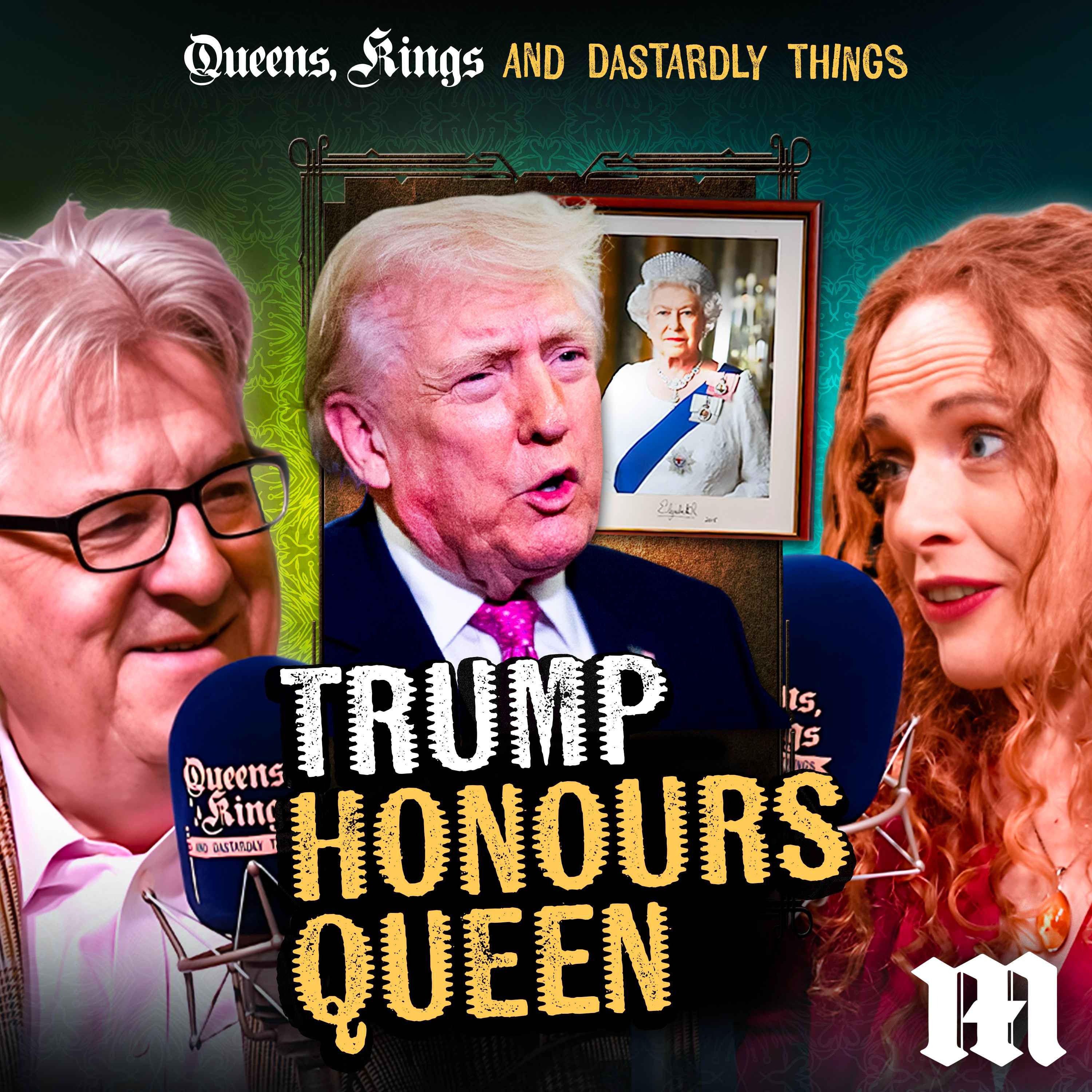
Celebrating Queen Elizabeth II’s life - her character, the scary look she gave those who displeased her, and what President Trump really thought about her majesty. It’s a packed first episode of a mini series of exclusive revelations.
Journalist and historian Robert Hardman opens up to Professor Kate Williams about his research and private recollections as a royal reporter, in celebration of her 100th anniversary. From the Queen’s unshowy political skill to her stoic sense of duty, this episode paints a vivid picture of a monarch who kept working to the very end. Along the way, there are striking glimpses of royal life that feel by turns funny, startling and deeply moving: the alarming account of Prince Andrew (as he then was) and his altercation with a senior member of the royal household; Donald Trump fussing over exactly where to hang a portrait of the Queen at Mar-a-Lago; and the extraordinary image of Elizabeth II still dealing with state papers and official business in the last days of her life.
The conversation also ranges across her wartime years, her relationships with prime ministers, her ability to deflate overblown personalities with a single look, and the immense pressures she absorbed during the final years of her reign during the Harry & Megan debarkle. The result is a portrait not just of a symbol, but of a working sovereign: pragmatic, disciplined, funny, devout, and, in Robert’s telling, much more politically astute than she was ever given credit for.
Hosts: Robert Hardman and Professor Kate Williams
Series Producer: Ben Devlin
Production Manager: Vittoria Cecchini
Executive Producer: Bella Soames
Hosts: Robert Hardman and Professor Kate Williams
Series Producer: Ben Devlin
Production Manager: Vittoria Cecchini
Content Editor: Joseph Palmer
Executive Producer: Bella Soames
A Daily Mail production. Seriously Popular.
Sign up to Palace Confidential, the FREE royals newsletter from the Mail's top experts. Delivered straight to your inbox every Thursday, it's the smartest way to stay in the royal inner circle. Just head to dailymail.co.uk/palaceconfidential to sign up today.
Hosted on Acast. See acast.com/privacy for more information.
Get every episode summarized
Each time Queens, Kings, and Dastardly Things publishes, we email you a written briefing from the transcript — the topics, who appeared, and any specific claims, with the ad reads skipped.
Email me new episodesFree for 3 shows. No card needed.
Hosts & guests

Transcript ready
332 searchable segments. Every word is indexed and playable.
Full transcript
Queens, Kings, and Dastardly Things — Elizabeth II: The Inside Story (Part 1). Machine-transcribed; use the interactive transcript above to jump the player to any line.
So Kate, dare I ask, what have we got coming up today? Robert, it's not a surprise to you, but we've got your book, your new book, your new research on Elizabeth II, we're discussing her life, her role as a politician, and also her role as a mother, and that elephant in the room. It's Andrew Mahantbatton Windsor. Hello, and welcome to another episode of Queens, kings, and dastardly things. I'm Robert Harben, a royal biographer and Daily Mail columnist. I'm joined as ever by my colleague Professor Kate Williams, royal historian, royal biographer, Hello Kate. Hello Robert. And today I'm going to hand over to Kate, really, because we are discussing my new book, which is a biography of Elizabeth II, Elizabeth II, in private, in public, the inside story.
I'm going to leave it to Kate, because I don't want to sit here and blame my own trumpet. Kate, it's all yours. The trumpet's mine, so the book, it's got everything in it, and this is a labour of love, and this is your fifth book on Elizabeth II in two decades, is that right? It's the fifth book on her monarchy. All the other ones were written while she was alive, and I think it's an opportunity to sort of stand back and have a different view, because obviously this month is her centenary. So the Queens character is one of common sense pragmatism, rigorously unsentimental, very much, as you say, the poor yourself together, sort of attitude. I think a lot of it goes back to before, before the war actually, it goes back to that sudden realization that her father, Papa, is going to be the king, and he's going to be the king, because his elder brother has basically abandoned his duty, has been selfish, has sort of done what
he wanted to do, which should sort of go off with this woman. They tried to keep the news away from her Margaret in the nursery, but she somehow she did catch sight of a copy. I think it was the evening standard, and it really hit her. It's like, oh my goodness, this is going to change everything. So he had to go and live at Buckingham Palace, which they hated. The king and queen were expected to go on big state visits, which that's what you did, and war was coming. War I think shaped her in so many ways. It shaped her outlook on how you reign, how you're a monarch. You watched her father going through this torment, really, of trying to put on a brave face, while at any minute knowing that the enemy could be invading. If they did, the whole family would probably go the way of the Romanovs. Certainly, dad would. In September 1940, he's nearly killed three times in a week, and I knew this because I was given access to his diaries. They were bombs that nearly
went off. I mean, the most scary one was when he was at the palace with the queen and queen, and they sort of heard the noise, and they swalled two bombs landing on the far side of the palace, and then they saw another two coming down in the quadrangle, and they as he writes in his diary, you know, they ran to the corridor as fast as they could. They were maids, they weren't killed. And that was the palace ended up taking, I think it was nine or ten direct hits during the war. Yeah, and his members of staff were killed. I mean, there was another bomb that landed outside his study, and it was unexploded, and unbelievably just sat there waiting for someone to come and collect it, and he was back at his desk the next day. And the following evening, it went off. He had a delayed timer. It could have gone off while he was at his desk, but I mean, this was wartime. This is sort of thing that happened. So she's sort of living through all this, and I think it's so fundamental to her world outlook that who is it? Who's sort of coming
to the rescue, as it were, to start with? It's the empire, as it still is at the time. It's those Commonwealth cousins. It's everyone from Canada, Australia, New Zealand, India, and Africa. These are the allies who are sort of coming to help Britain as invasion looms. And then as the war goes on, income, rather like the cavalry, income, income of the Americans, and she just loves all things America. I mean, it's quite sweet all the way through the King's diaries. You know, there'll be some horrific defeat or air raid or something. And then it signs off by, we watch Pinocchio tonight, or you know, Lillibut's birthday. We watch Dumbo. Do you think she ever enjoyed her role? Do you think she enjoyed the job of being Queen? It was due to it was due to no, she loved it. I think she loved being Queen, even in the, even in the worst darkest days, when if you look out to the challenges of the 90s
in particular, I mean, I divide her sort of reign into sort of three golden eras, if you like, golden periods. There was the, the, the sheer euphoria around the sort of coronation the early years, the, in the early to mid-50s. Downsling coronation. And everyone was likening her to Elizabeth I and calling her Gloriana except her. And I love that, but she said, well, I'm nothing like Elizabeth I actually, because she wasn't blessed with a husband and children. She never went anywhere outside of England. And I'm not a despot. So I love, I love the fact that everyone was trying to see it as Elizabeth Elizabeth Elizabeth. Let's buy Churchill, of course. Let's do with me. But it's interesting, isn't it? Because she said that. But then, you know, I think, this is just my, my theory, the 2012 Platinum Jubilee when she goes down the, the Thames in the Barge. And she has that white dress on that's a bit studded. The whole thing looks like the Armada portrait to me. So perhaps she became more amenable to Elizabeth at the first. But certainly, I love the fact that when they said, you're just like Gloriana, she's, I am nothing like Elizabeth to the first. I love executing my cousin, Mary Greene of Scots. I think I shouldn't say that,
but perhaps it was in her mind. But, but yeah, so, so she loves, she loved, she loved, she had these great moments. She had that period. Then she had, I think the second sort of golden phase really comes in the, in the early to mid 70s when Britain is absolutely in the doldrums. I mean, you know, nearly, nearly bankrupt. Everything's going wrong. The strikes, everything sort of, the 70s is not a great decade in so many ways. But it's great for the monarchy. And she has this wonderful silver Jubilee 25 years on the throne in 77. And she's just riding high. The world wants to see her. They're not terribly interested in whichever poor soul happens to be Prime Minister of Britain at the time. It's, it's like, we want to see the Queen. And if, yeah, she's going all over the world. And that carries on through late 70s, we get into the early 80s. And then you get the arrival of Diana, royal weddings, long-come grandchildren. Is this the post coronation high point to the rowing of Elizabeth? So you have this, as you say, this triumvirate of ladies with hairspray, I think you can say,
there's Diana, there's Mrs. Thatcher. And let's not forget the Queen mother is still very much a sort of huge national figure. So really, the story of Britain at that point, yes, it is, it's sort of almost a sort of metriarchy. It's an explosion of dilemma and the whole wedding. It's sort of mid, I think that's the sort of second-grade golden age. And then, obviously, the third golden age, I would say, is from roughly the day that Prince William announces his engagement at the end of 2010, certainly through 2011 royal wedding, amazing state visits into 2012. Queen, Queen's sailing up the river in her, in her pageant, as you say, all those wonderful moments. And that really, that actually carried on that, that sort of period that that, that contented, I'll be happy, healthy, and a third era, if you like. Really, I would say goes on up until the end of 2018, Harry's wedding, Eugenie's wedding, then we get to the end of 2018, suddenly 2019, things just start to go wrong again. And throughout her reign, you get these
happy periods, and then suddenly things go wrong. It's sort of parabola, it sort of goes up and down, I mean, just like everything in life does, you get peaks and troughs. But going back to your question, did she enjoy it? Yes, even in the troughs, she enjoyed it. I've just spent so many people who said she, she loved being queen. And I think it goes back to what you identify, it's, it's duty. And there's that sort of underlying sense that, well, it's always going to be great, that I'm going to have difficult periods. But I'm not just going to chuck it in because life got tough. I think we have to also bear in mind, and I do address this in the book, you know, the importance of faith to her. I mean, her faith was absolutely, you know, she was the only, I would say, one of the only, if not the only major public figure in British public life who was entirely happy discussing faith in public. And politicians were just trying to void it, you know, right? The place, celebrities, oh, don't get me on guard, it's all a bit queen, entirely happy talking and
quoting the Bible, you know, it was the good book said as Jesus taught us all that stuff. She was very, very comfortable as as Supreme Governor of the Church of England, but also just as a regular church girl. We talked a bit about her religious role, but what about her political role? She has this intimate, these, these moments, these audiences of prime ministers. And as she say, everyone wants to know what happens in these audiences, and they particularly want to know what happens with Margaret Thatcher, but she never says. I mean, it's a fascinating dynamic, but I would argue that actually they have a lot more in common in the sense that they both believe in hard work, they both adored their fathers, they're both incredibly close to their husbands, they both have quite traditional views of sort of family roles. And they're both, they're both unshowy, they're both be very comfortable having their breakfast out of Tupperware containers. And they both are women in a man's world. I really like your point that that she would some, people sometimes say, well, why didn't you tell this is that to do this? And she said, oh, I I couldn't get a word in Edgeways, but actually she could get a word in Edgeways. And that was her
way of saying, don't tell me what to tell the prime minister to do, because that's not my job. All her prime ministers spoke very fondly, I've interviewed a lot of them. They were all aware of of what I'd say in the book. There was this, what many were called, the look, Tony Blair, actually. Oh, I love the look. So what is the tell us about the look? The look is something that we see from quite early on in the Queen's reign. It's a completely expressionless fixed stare. Big stare, open eyes, isn't it? Quite wide open eyes. And it's just saying, right, you've overstepped the mark. Tony Blair gets the look. Well, Tony Blair talks about his fear of getting the look. He doesn't get it. One prime minister who definitely gets the look big time is the prime minister of New Zealand, Helen Clark, who in 2002 is hosting a state banquet for the Queen in New Zealand. And the Queen's been asked to sort of really lay it on. This is the big set piece social event of that particular trip, which was in New Zealand many times, but this is a big deal.
So she's really put the ball down, the TR of the full works, and she turns up at Helen Clark state banquet. And Helen Clark is wearing trousers. And that is definitely that they can be, but not at a state banquet, particularly not at that stage where even, you know, the Queen was a traditionalist. Is there getting away from it? And right up until the turn of the millennium, and actually into the 21st century, female members of staff at Buckingham Palace would gently advise that trousers were not considered correct. So when one's prime minister turns up at a state banquet, having asked you to put on the full works, ball down, TR of jewels, the lot, and you're there in trousers, it's, it's looks time. It's interesting. Now, what another, another prime minister I have got to ask you about was your, which was a revelation to me about Boris Johnson. Did she really say to him, do you want this job when he, when he was being inducted as prime minister? Yeah, yeah, she said that to Mojang. Yeah, she did. And she, I think she was, she was fascinated by Boris Johnson. People say she,
she was, you know, deeply offended by his pro-regation and that sort of thing. No, she liked characters. She liked the human side of the constitution, the pro-regation. Pro-regation was very embarrassing, particularly when the Queen gave her approval. This is, this is back in 2019 when Boris Johnson in high summer, when the Queen was at Balmoral, asked her via, he sent his private counsellors up to get this particular procedure, rubber stamped, which is called pro-regation, whereby effectively you just, parliament stops working. And parliament was being so difficult at the time. He just thought, well, I'm just going to shut you up. We know what's happened to Mojang, so you do that, like Charles the First, you know? Yeah, he didn't. Well, he went, went to the, went to the court and, and ultimately the government lost, and therefore it could be so. The Queen had been told to do something unlawful. It's not, it doesn't quite work like that because at the time she and her officials, they took legal advice, I'm told, you know, actually the, the thing that you do as monarch, if you're, if you're
democratically elected prime minister, asked you to do something, you have to do it. This is the question. But it says it was a very, there's a lot of, there's a lot, actually a lot of humor in that episode. I go into the book, I won't go into it now, but, but, but on that particular day, as, as word has leaked out that this extraordinary, what some people call a coup is about to take place, you've got all these broadcast vans heading for Balmoral. Because everyone's gone up by flight, and everyone's seen them at Gatwick. Yes, Jacob Riesmog, who's then the Lord President of the Privy Council, he sort of, he's, he's leading this, this small delegation up there. He's already been spotted, because he's quite a familiar figure. You think you, yes. And I interviewed him for the book, and he's, you know, he's going on this sort of secret mission, but as he said, he'd only just got through security, he threw airport when he was asked for his first selfie by the security guard. So a word is already out that, that summons a foot. And as they get off the plane at Aberdeen, and they're being driven up to Balmoral Castle, and they're going along the, whatever it is, the 893, I think, the main road up to Balmoral. They're, they're stuck behind
a Sky News broadcast wagon, which is on its way there to film them arriving. They're having fits of laughter, watching this news crew in front of them on the road, sort of desperately trying to get there in order to film their arrival. And when they get there, actually, I said that the film crew went to the, the front gate, set up shop, they went in through the back entrance, so they would never film. So it interrupts you, Robert, but we need to take a quick break now, back soon. So Andrew, now where does this notion come from, Robert? I hear it a lot, that Andrew was her favourite child, and she indulged him. Is that true? Well, like, like all things, it sort of yes and no, it's more nuanced. I mean, she definitely, this I heard from several people I'm writing the book. She was particularly worried about Andrew, does that make him her favourite? Or does it just mean she regarded him as the most vulnerable? But unquestionably, she saw that Charles and Anne and Edward were self starters were
making their own way in life. Andrew, she always felt, was just slightly, he was, he was vulnerable. He was, you know, of course, he had a had a stellar early career in the Royal Navy, served in the Falklands. There was great excitement when he married Sarah Ferguson. It all looked like everything was going to be fine. But people always knew that he was, he was not as bright as the others. He could be Borish and everybody knew that. And then it all started to go wrong when he came out of the Royal Navy in 2001. And there was this sort of, everyone said, I thought, what, what do we do with Andrew? They felt that he couldn't be enough for the did it. He could, he could have a degree. He could as far as he could in the Royal Navy. The palace were trying to keep him in the Navy. I mean, I was, I was told by people, no, we, we really did, you know, almost begging the Navy. Can't you find something for him to do? And the Navy said, I'm sorry. And the Navy said, no, the Navy got us from, you know, he, there's not much else that they could usefully do with him. So that was the point at which between
the panace and the Blair government came up with this idea of a trade envoy. And, which, you know, was a good idea at the time. If you were trying to open a few doors in Kazakhstan, or Uzbekistan, or someone like that, well, you know, maybe, maybe send him there. So he would, he would go off on these missions. And he could, he would do some good, but at the same time, as has since become clear, he was increasingly concerned with how to promote one, Andrew Mountbatten Windsor, rather than to promote UK PLC. And clearly a lot of the time he's doing his own deals, kickback deals with pretty dodgy people, which we don't, we don't find out to later on. But, what is clear at the time, and I interviewed David Cameron for my book, yeah, and, and, and, Cameron was, was, was very frank to me, just said, you know, he was, he was, he was the prime minister who had to go to the Queen and say, I'm afraid we're, we, it's time to, to call a halt to this trade envoy. All the money, the endless ambassad saying, oh, I've had to phone up,
you know, X to apologize, because Andrew didn't want to speak to them. So, you know, we have this man who's also entrusted with, you know, some of the most sensitive trade secrets of the country, which he's now since been accused of passing on to Jeffrey Epstein. I mean, it's totally, totally disastrous, and it really has to be the stage where Cameron has to go to the Queen and say, yeah, this can't happen anymore. Yeah, as Cameron said to me when, when, when I was writing this, he does all the other members of the family said they knew the boundaries, they knew what they were supposed to do, what they weren't, what they shouldn't do. And they were all great, but he just said the problem with Andrew was, you know, he, and Cameron saw, he said, I saw this with my own eyes at places like the World Economic Forum in Davos where, you know, Andrew would come in and just upset people or say the wrong thing or just cross a line and then spend those of money. Yeah, people now say, well, why was this allowed to go on so long? And there is, I think, a slight tendency to sort of blame the Queen for all this, but as I've discovered time and again,
you know, she, she, when she, she heard about, you know, this, this, this sort of behavior, she wasn't trying to condone it in any way. I mean, she, she, she would say, well, you know, that's, that's what he's like. I mean, there was this appalling moment where he, um, he actually punched the master of the household and I go into that in some detail in the book, because it's an extraordinary story. So there's a very senior, very distinguished Admiral, um, Admiral Tony Johnston Bird, uh, who's the master of the household. Um, Prince Andrew wants to have a, a event for his pitch at the palace charity at the palace. Oh, yeah, that was all pretty dubious, isn't it? I want, I want this room and the master's, well, you know, actually, they're all fully booked, but we'll, we'll see what we can do and he goes, no, no, no, I, I want this and, uh, and he doesn't take any for an answer. And it, it, it ends up with, uh, Prince Andrews, he then still is actually hitting, um, the, the master of the household. I mean, this is, this is sort of court martial stuff in the, in the Royal Navy. Um, I mean, any jolly would be fired. Uh, yes. So I mean, this is the fact that he, he hits someone who is working for,
I mean, punch is someone. Yeah. And we don't exactly know whether it's, whether it's a, whether it's a sort of punch or a slap or whatever, but anyway, it's as it was described to me as a kinetic, uh, hit. Uh, and, um, I mean, you know, um, and the master is a very serious tough figure. I mean, he's not, you know, he, he sort of gets some of his job, but obviously this has to get raised up the, uh, up the command chain. Um, and it does go up to the, uh, to the, to the, the Lord Chamberlain who's the sort of head of the household. Um, and, and people don't want to, um, bring it directly to the attention of the Queen because they don't want to upset her, but when she hears about it, she's not remotely surprised. Prince Philip writes a letter of apology to the, the master, um, Prince Andrew, I'm told, wrote a very melee maves sort of not quite apology. Um, but I think we can take it, um, internally, uh, from what the Queen did next, where her sympathy is lay because, um, not long afterwards, the master of the household got a knighthood. Um, and he remains master of the household today. He's a very popular figure. So, um, you don't just punch people out
of nowhere. It's not something that, you know, it's something you've done before. I mean, he's there are other stories in my book. I mean, there are the moments where, where people are turning up for an investor at Buckingham Palace and it's their big day and they're all very excited and they're walking across the quadrangle. And suddenly this sort of car comes screeching to a halt, does a handbrake turn and the sort of gravel flying up. And it's all just a bit unsettling and it's, it's Prince Andrew just sort of shaming off doing handbrake turns. You know, I'm afraid, uh, there are ample stories, um, of how, you know, he, he just throws his weight around. Um, and people do say, well, what, you know, why wasn't he, uh, rained in? Um, I think, you know, with hindsight, it can certainly be said, people should have been tougher sooner. Uh, but, uh, I don't think, uh, at the time, people were quite aware of the extent to which he was in the thrall of Jeffrey Epstein. Jeffrey Epstein. So 2011, we see the photograph with Andrew and Jeffrey Epstein in central part and already Epstein has been convicted of, uh, procuring a child
for prostitution, which we'd now call child trafficking. So he's out there walking in central park with a convicted child sex offender. I mean, this is an impossible fall from grace that a man who was once this great war hero has now been arrested and has been so associated with Epstein. I think over time, you know, we will, we will start to discover, uh, you know, more about, you know, all the other, um, government departments, palace departments, um, who, who maybe should have, well, clearly should have, um, acted sooner. Um, but I don't think as we, you know, approach of the hundredth birthday of Elizabeth II, you know, that's, I, that's obviously there on the, on the relatively short list of things she got wrong. I think she got a lot more right. Robert, this is a huge book and there are so many points in here that I didn't know about. I mean, I'm a, what is drawing in your wall of scholar and a scholar of Elizabeth II, but there were lots
of things I didn't know about, but for you, what was, you know, what kind of revelations were there in the research that you thought, oh my goodness. I think know that. I think time and again, there are these moments where you think that, that would have broken, uh, a lesser mortal, whether it's the dramas in the, in the nineties, but particularly in the, in the last couple of years of her life, you've got, uh, you've got the, the whole Harry and Meghan implosion, the, resigning from royal life and then, and then doing that really very damaging interview with just at the moment that Prince Philip is incredibly ill. Well, you know, support is a power in Meghan and, you know, people see to speak their truth. Well, they, they, they, did they speak their truth though from that? I mean, you've only got to look at two of the central charges, which is, you know, Meghan's, Meghan's account of the conversation about the color of the baby's skin. She says as well, she's pregnant, Harry bounces onto the sofa half an hour later and puts it three
years earlier before they just after they, they got married. I mean, in the court of law, that allegation would just fall apart, but it's taken as sort of gospel truth, which is why I think the Queen comes out with what is, I think one of the great lines of her reign, which is recollections may vary. I mean, that is, uh, it's punchy stuff. I mean, it was, it was a team effort, um, that, that line. I mean, there was a lot of thought given before, uh, before that response, but I think it's a very deft way of saying, um, well, you know, that's your truth, but we've all got our own truth. Very soon after that, you had the death of Philip. All this is going on during the COVID pandemic, which is a huge challenge, um, at the same time, the Queen's sort of starting to be hit by those mobility issues. All these things are coming together and you really think that at this point, and this is why I found so fascinating, this is the moment where you, you know, you might think people would sort of say, look, I think really, you know, you, you don't have to do this, you know, just just take it easy. Um, nobody says that and she doesn't want to do that. The European Monics,
the European Monics retire, don't they? They, they've, they've all gone, I mean, in her contemporaries of long since my part of, of European queens, they're all putting their feet up and doing the crosswords. Yeah, I mean, you've got that moment in, uh, 2013, 2014, where there's a string of them, uh, all go at once, where the King of the Belgians, the King of Spain, the Queen of Holland, the Emmy of Gata, um, and then finally the Pope, they all say, oh, you know, what, let's, let's call it a day. Time to retire. And even dear old Queen McGrede of Denmark, who I, I've interviewed a couple of times, she, when I interviewed her in 2000, I think was, uh, she, she was very clear. And I talked to her again, uh, in 2012, um, every time she said, oh, no, no, we, you, you're in this job for life, you don't abdicate, you, you carry on it. So it's a, a lifetime's commitment. She herself eventually, um, decided that the time had come and she abdicated. Um, but let's put the second, it just, it was never, it was never, yeah, and she had, she had more than it, more than enough, um, uh, excuses, reasons, whatever you want to say.
She met this trust just a few days before she passed away. I mean, she was working till the absolute end of the last, you know, the last photo we have of her is so close to her. Yeah, I'm three days, it's, it's September the 6th, there she is, um, uh, greeting Liz Trasse, Bar Moral, and, you know, um, not two days later, um, she, she, she, she, she breathed her last. And, uh, one of the things I find most moving is talking to the people who were there at the castle. And it was a very small little group who were there when she died, um, and right to the end, I mean, that, that the eve of her, her death, she was still supposed to be, um, holding a privy council meeting. It didn't happen in the end. Um, but even, uh, after she died, and her last red box is, is brought back down to the private secretary. And he does no idea what's going to be in there, opens up the red box. And there's a letter to him. There's a letter to Prince Charles, um, personal letter. But there's also her homework. There's still a document that is the, is the short list for the order of merit. And she's been through it and she's underlined it and
she's, she's, he, he'd asked her to, um, go through it and make some recommendations. So, on her deathbed, she's working. Robert, what's Elizabeth the second's legacy? I think she changed the whole nature of monarchy. She was the first monarch who wasn't expected to expand, consolidate, be an imperial monarch. It was all about managing decline, but in a very dignified way, uh, holding her nation's hand through great upheavals and not just this country, by the way, but all the other countries of which she was a monarch. And, and being this extraordinary figure really for the whole world and even after her death, I mean, her legacy now is the fact that she was the most famous woman in the world. People had a very high opinion of her. I mean, for my book, I, just a few months ago, I went to Mar-a-Lago to interview Donald Trump about her. And I mean, you know, he, he was absolutely, he didn't hold back. Just said she was absolutely an extraordinary
woman. He was very proud to know her. He was very proud of the fact that he was her, the last person to pay a state visit to her. Um, uh, it was, it was just a couple of days, actually for him, Venerable Venezuela. He said he didn't tell me he was going to do that, but we did talk a lot about the Queen. And I thought one of the most touching things, when I left. Um, and he was very concerned about this, actually, was that he'd, he bought the last portrait ever painted over over the copy of it. The last portrait of, uh, was, was by Barbara Hamilton in, in her final year. Um, and the, he'd, from the artist, he bought a, a copy of that portrait because he wanted to hang it in his house. And he said to me, he was, he was concerned about whether he'd put it in the right place. And he said, go and have a look. And there it is in Mar-a-Lago and the dining room in Mar-a-Lago are these, these sort of priceless sort of frescoes on the wall in the dining room. There are no other portraits and they're at all none. His portrait is elsewhere in the house, but they're hanging on the wall on our own. In Mar-a-Lago, there's Elizabeth II. And you think this is the most powerful man on earth.
And he's giving great deal of thought to where he hangs a portrait of Elizabeth II. And she's in this room. She's the only, she's the only picture on the wall. Robert, it's been fascinating. And this is the book. Elizabeth II, in private, in public, the inside story, out on April 9th in the UK, and a bit later in the US, is that right? It's out on our actual 100th birthday in the USA. It's slightly different title, slightly different cover, exactly the same book. Wherever you get it, it is her inside story. It's her inside story into this great monarch, the little girl who was never expected to become queen, and then became Britain's longest-raining monarch. So for me, Kate Williams, thank you so much for listening. And for me, Robert Harman, thank you. Goodbye. Goodbye.
More episodes
More from Queens, Kings, and Dastardly Things

Sherlock & Victoria
Queens, Kings, and Dastardly Things

Grace Kelly: Hollywood Princess
Queens, Kings, and Dastardly Things

The Bayeux Mysteries!
Queens, Kings, and Dastardly Things

The Aragon Girls
Queens, Kings, and Dastardly Things