'Energy Crisis' Fuels Market Uncertainty & Explaining Gold, Silver Sell-Off
About this episode
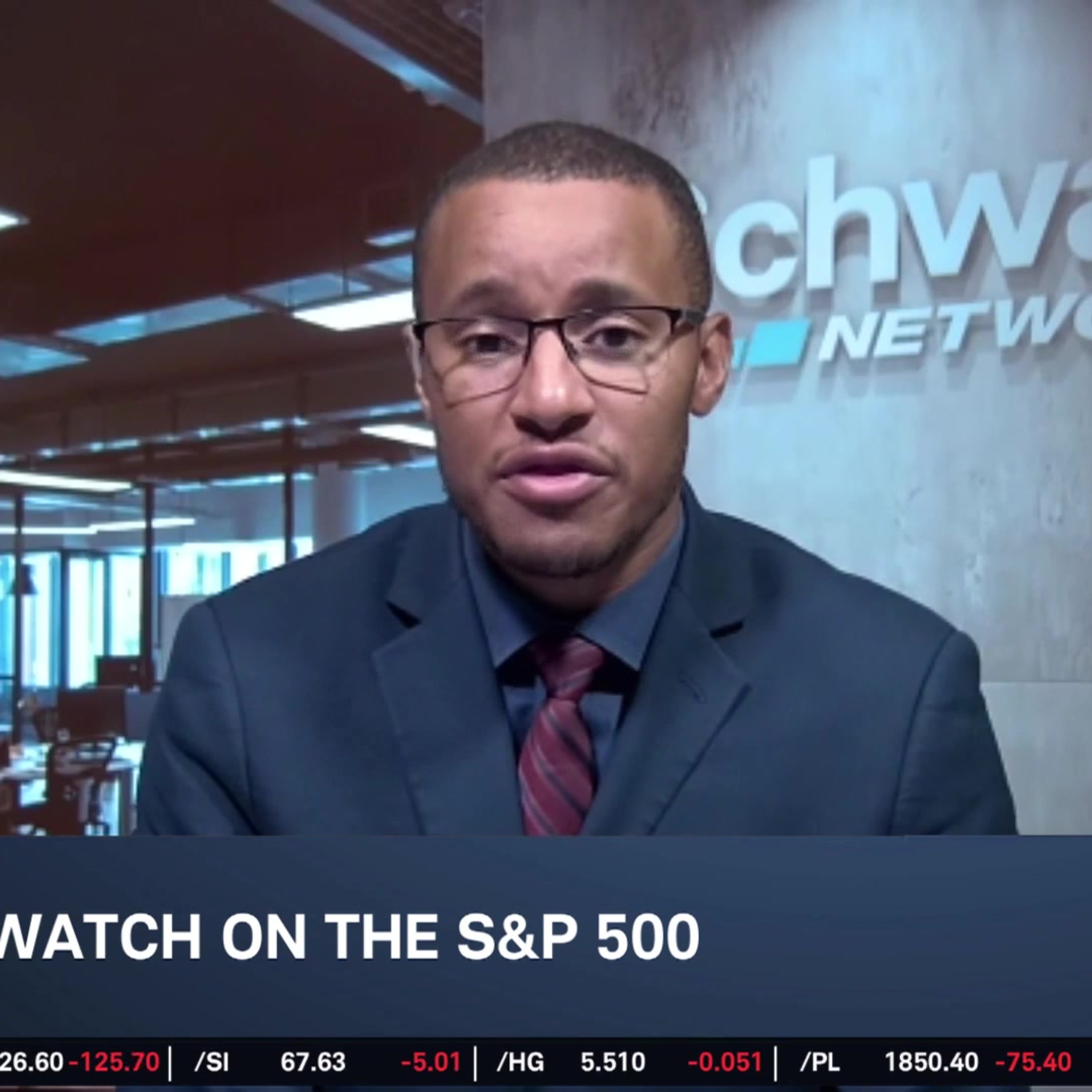
Crude oil spiking and concerns of "boots on the ground" in Iran have investors pulling back ahead of Thursday's opening bell. Kevin Green walks investors through the recent volatility and the central role energy infrastructure risks play. As KG says, keep an eye on the 6,500 level for the S&P 500. Gold's decline also continued and silver's selling action was even steeper. KG explains how global banking moves are behind some of the fluctuation.
======== Schwab Network ========
Empowering every investor and trader, every market day.
Options involve risks and are not suitable for all investors. Before trading, read the Options Disclosure Document. http://bit.ly/2v9tH6D
Subscribe to the Market Minute newsletter - https://schwabnetwork.com/subscribe
Download the iOS app - https://apps.apple.com/us/app/schwab-network/id1460719185
Download the Amazon Fire Tv App - https://www.amazon.com/TD-Ameritrade-Network/dp/B07KRD76C7
Watch on Sling - https://watch.sling.com/1/asset/191928615bd8d47686f94682aefaa007/watch
Watch on Vizio - https://www.vizio.com/en/watchfreeplus-explore
Watch on DistroTV - https://www.distro.tv/live/schwab-network/
Follow us on X – https://twitter.com/schwabnetwork
Follow us on Facebook – https://www.facebook.com/schwabnetwork
Follow us on LinkedIn - https://www.linkedin.com/company/schwab-network/
About Schwab Network - https://schwabnetwork.com/about
Get every episode summarized
Each time Schwab Network publishes, we email you a written briefing from the transcript — the topics, who appeared, and any specific claims, with the ad reads skipped.
Email me new episodesFree for 3 shows. No card needed.
Hosts & guests
Transcript ready
90 searchable segments. Every word is indexed and playable.
Full transcript
Schwab Network — 'Energy Crisis' Fuels Market Uncertainty & Explaining Gold, Silver Sell-Off. Machine-transcribed; use the interactive transcript above to jump the player to any line.
Let's bring in Kevin Green senior Marcus Corresponder right away to help set up the action today. All right, KG, it seems like the headlines, the back and forth between the U.S. and Iran are front and center right now and it looks like we're once again risk off. What's your take as you live broad strokes across the market? Yeah, we are now seeing selling pressure when it comes to the E-Mini SP 500 down, about almost 1% at this point in time here. Now, yes, we actually had a little bit of a rally that took place. We had maybe a little bit of a dead cat bounce and that was on the optimism that maybe a deal could be struck. But once again, we kind of talked about this over the last couple of days. There's a lot of talking coming from the U.S. regarding the ceasefire talk, but we have not gotten that actually confirmed by Iran. Now, this morning, it seems like President Trump is taking a little bit more of a harder tone against Iran and that is also kind of, that's also fueling this move to the downside for equities. The dollar is moving up, yield to moving higher as well as the oil market and the energy market as a whole, starting to gain a little bit of traction here. If you're actually looking at the Brent crude contract and you're above the
$100 level at this point in time trading at about 107 and a half, and you continue to see a significant bit there. I think one of the things just kind of focus on here, Diane, is that the East Asian markets are really feeling the impact. If you look at some of these countries like the Philippines, it seems like they are really kind of instituting what we saw back in COVID-19 when it comes to the rationing of energy as well as advising individuals to stay home that they possibly can and reduce their electricity consumption. In Thailand yesterday, what was actually very interesting is that they're basically their equivalent of regular gasoline here in the United States, increased by 14.5% more than that actually on an intraday basis. So in the morning, it moved up and then obviously during the middle of the day moved up 14.5%. That's kind of unprecedented. So we are seeing an energy crisis taking place here. I think the market is now kind of figuring that out. There's also this risk that we are kind of delaying potentially the effect in order to get troops in the region. It seems like the market is also once again priced in that end that maybe
we will see boots on the ground in one shape or one way shape or form. And that's creating a lot of this volatility. So a lot of uncertainty in this market here. You've got to keep your head on the swivel. But the enthusiasm that we saw yesterday is obviously being wiped out this morning. And if this trend does continue, you start looking at once again around that 65 hundred level for the S&P 500 as your critical area of support to be able to try a role. Let's talk a little bit more about where oil sits right now. Of course, there's also the wretcheding up of rhetoric and possible boots on the ground that causing more gyrations in oil markets. You also have reports from Iranian state media that they're looking to charge to what it looks like essentially a toll to pass through the street of Hormuz. Tell us the latest there. So Iran is looking at actually formalizing a toll to get through the street of Hormuz. We know that there has been chatter that this is already being completed and done. There's been reports that it's around $2 million in order to pass through the street at this point in time. And if you're looking at some of the five points that they
actually responded to when it came to this ceasefire proposal, Iran wants to actually have it stated on the international stage that they are in control of the straight of Hormuz. Once again, that's going to be a very big hurdle for the international markets to be able to overcome and actually recognize which is once again another reason why we are seeing a lot of this movement of this reaction within the oil markets. Diane, I think the bigger risk that you have right now, obviously it's still going to be striking will infrastructure energy infrastructure. But you also have the potential for the Babelman Dab straight to come into effect here. Now that's going to be impacting the Red Sea. Remember about a year and a half ago or so we had this disruption. We had the Houthis hitting a lot of tankers and carriers within that region. That also could come into effect. And if so, that's around 10% to close to 12% of global oil flows on top of what we are seeing with the street of Hormuz. That's where you get additional premium when it comes to the oil markets right now. So it doesn't seem like based on the rhetoric from Iran that this is going
in the right direction. And I think the market is really figuring that out at this point in time. I know that we've seen a lot of job running from the administration in order to push prices down. But if you look at the price action, it's really not having that much of an effect. I think the market really wants to see a ceasefire taking place here in order to back off some of these higher energy prices and really normalize the curve right now in the commodity front. It looks like we're going to be in this conflict for longer than what we initially expected. Yeah, listen, we're in day 27. Yeah, we're in day 27 right now. So heading quickly towards about a month into this war. Let's talk about what's going on in the, with the metals miners, seeing gold take a step back, new mining under pressure, free-port, macro and down as well, free-port, macro and down three and a half percent. Walk us through what set stake here. Yeah, so if we're looking at the gold markets and we're looking at the metal markets in general, we'll keep it real simple, Diane. As the dollar moves higher, that's going to be negative pressure when it comes to the metal markets. As yield to move higher, that's going to be negative pressure
when it comes to the gold markets and the metal markets right now. These products are really pricing in a global economic slowdown and potentially even rate hikes if you're looking at it from an international standpoint. And that's going to be a headwind for gold. You can also have a situation where some of these countries like India might be actually selling their physical gold in order to backstop their own currencies. You can also see Japan talking about some pretty aggressive rhetoric when it comes to trying to shore up the yen itself. And they have a couple of different options in order to do so. They can sell physical assets. They can try to sell treasuries themselves, which is going to be difficult, just giving the landscape of that environment, or they can also try to sell physical metals and even other assets here. So I think that's why you were seeing the pressure to the downside. I don't think there's anything more than that. Now, once this does abate, we probably will see those asset prices moving back to the upside here. But if you're kind of looking at the inflationary hedge right now, the inflationary hedge is right now is in the energy markets. It's not in the metal markets. The metal markets are an inflationary gauge or hedge in the event that we have, you know, economic growth, if you will.
And it's positive inflation. This is negative inflation. And that's why we're not seeing the catcher bed. Okay. I think you alluded to this earlier. But talk us through the direction of travel. What flows look like for the S&P 500 today, particularly to the downside. But also the levels you're watching to the upside. Yeah, to the downside, you're looking at 6,490. That's where you're seeing the majority of the flows to the upside 6,630. Now, that contract is not actually gaining the most volume. But if you're kind of looking at the blend of exposure, when it comes to delta risk, especially for market makers, 6,630 would be that area of resistance. That may change as the market opens up. And as we get more news flow here, but we're implying about a 1.7% low to the upside or downside for the BICs. And if we reject the 200 day moving average once again, I think you kind of look lower and in 6,500 seems like that's going to be that target that we potentially could test here tonight. All right. Thank you, KG. That's Kevin Green, senior markets correspondent with what should be on your radar today.
More episodes
More from Schwab Network

Stock Market Today: ORCL & ADBE Earnings, AEO Plunges Near 52-Week Low
Schwab Network

Thursday's Final Takeaways: Crude Taps $103 & PPI Hotter than Expected
Schwab Network

Balancing High-Conviction AI With High-Dividend Diversification
Schwab Network

EARNINGS PANEL: ORCL, ADBE
Schwab Network