Loading...
educationleisurehome
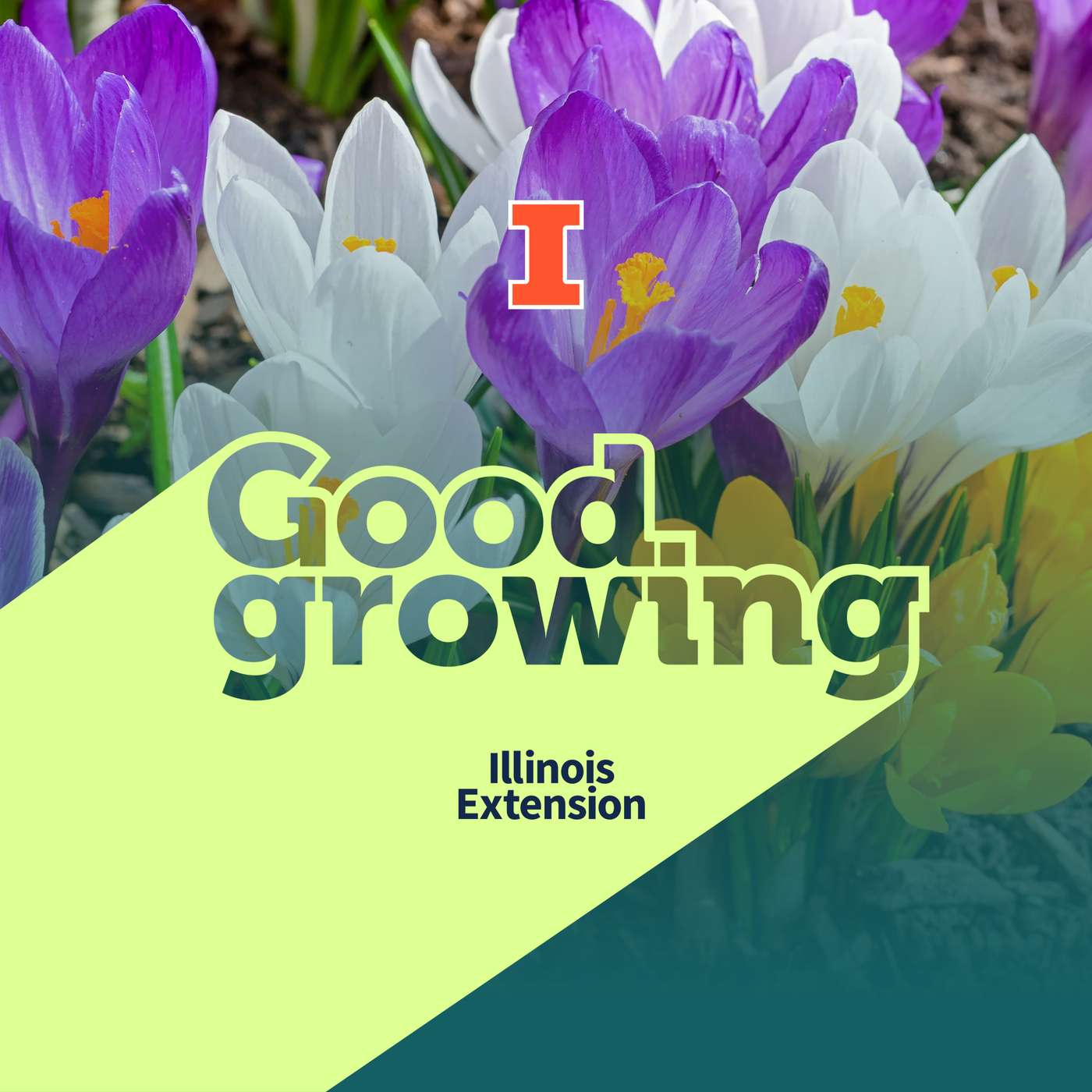
Ep. 242 The big, colorful world of Crocus | #GoodGrowing
About this Episode
Crocuses may be small, but their world is anything but simple! Check out this week’s Good Growing Podcast, as we dive into the big, colorful world of Crocus. Learn about identifying crocus, how to grow them in your landscape, some of the commonly grown spring and fall-blooming species, and more!
Watch us on YouTube: https://youtu.be/rX7QUDstn9E
Skip to what you want to know:
02:26 – 'Crocus' that aren't Crocus
06:33 – What do 'real' Crocus look like? - flowers
11:31 – What do 'real' Crocus look like? - leaves
13:33 – What do 'real' Crocus look like? - corm
17:41 – Categorizing crocus
22:49 – General guidelines for growing crocus
28:32 – When should crocus be planted?
30:15 – Propagating crocus
35:49 – Fun fact - contractile roots
37:24 – A few last planting tips, rodents, fertilizers, and mulch
42:48 – Commonly grown species of Crocus
43:53 - Snow/golden crocus (C. chrysanthus)
47:54 - Dutch yellow/yellow crocus (C. flavus)
48:46 - Tommies (C. tommasinianus)
52:57 - Dutch/giant/spring crocus (C. vernus)
54:01 - Tuscan crocus (C. etruscus)
55:22 - Sieber’s crocus (C. sieberi)
56:51 - Cloth of Gold crocus (C. angustifolius)
57:58 - Corsican crocus (C. corsicus)
59:17 – Some fall-blooming Crocus
59:32 - Saffron/autumn crocus (C. sativus)
1:02:44 - Autumn crocus (C. kotschyanus), Hairy crocus (C. pulchellus), and Showy/Bieberstein’s crocus (C. speciosus)
1:04:17 - Can Crocus be grown in pots? When should they be divided?
1:06:03 - Pests
1:07:27 – Wrap-up, what’s up next week, and goodbye!
More information:
Crocuses: A Complete Guide to the Genus by Janis Ruksans
National Garden Bureau – Year of the Crocus: https://ngb.org/year-of-the-crocus/
Contact us!
Chris Enroth: [email protected]
Ken Johnson: [email protected]
Check out the Good Growing Blog: https://go.illinois.edu/goodgrowing
Subscribe to the weekly Good Growing email: https://go.illinois.edu/goodgrowingsubscribe
Any products or companies mentioned during the podcast are in no way a promotion or endorsement of these products or companies.
Barnyard Bash: freesfx.co.uk
--
You can find us on most podcast platforms.
iTunes - https://podcasts.apple.com/us/podcast/good-growing/id1446630377
Tunein - https://tunein.com/podcasts/Gardening/Good-Growing-p1187964/
Spotify - https://open.spotify.com/show/202u3siWExE1tTqrVgtmCR
Vurbl - https://vurbl.com/station/good-growing-4pljnNlUtyG/
Listen notes - https://www.listennotes.com/podcasts/good-growing-chris-enroth-cHLPMWpvEOG/
Ivy - https://ivy.fm/podcast/good-growing-167902
Castbox - https://castbox.fm/channel/Good-Growing-id4302614?country=us
Hosts & Guests
Transcript
Welcome to The Good Growing Podcast. I am Chris N. Roth,
Portugal Educator at the University of Illinois Extension,
coming at you from Maccom, Illinois.
And we have got a great show for you today.
It is the year of the crocus,
at least according to the National Gardening Bureau.
It is, so we're going to dive into the crocus,
which is more than just a plant.
It is a genus of plants.
It is a, I mean, it is a overflowing genus of plants.
So you know I cannot do this by myself.
I am joined as always every single week
by Portugal Educator Ken Johnson and Jacksonville.
They can.
Hello, Chris.
Yeah, looking at this stuff,
I thought it was going to be a relatively straightforward podcast.
But the more I started reading,
the started getting into deeper and deeper water.
And I am a drifter to see right now.
Yes, it does not make matters any better.
So I got a question about a Frittalaria question,
Frittalaria and Periodalis,
which is also, it is so many things
are intertwining in my head right now.
So I'm going to try to get this right.
I'll do my best.
But I did another deep dive into Frittalaria
to answer that question.
But then I switched back over to Krocus today.
And so yeah, we have, we got a lot of talk about.
I mean, I don't think this will be a two-parter,
but we, the notes are extensive, everybody.
It's, there's a lot here.
So I think we probably just need to dive right into this.
So National Gardening Bureau, they,
every year they have their, their plant of the year.
And this year they said Krocus, which, as we already
very marked, is a genus, comprised of over 100
different types of plants, that people
have been studying for a long time.
So there's a lot of books.
There's a lot of documentation, research,
avid hobbyist who are incredible experts at this topic.
But not everything is as it seems, right, Ken?
So we also, I think maybe first, let's just touch on some things
that are called Krocus, that aren't Krocus, at Krocuses.
And we also learned that it is Krocuses and not Krocai.
I guess it could be either or, but Krocuses
is the popular plural term.
Yes, but according to the internet, it could be Krocai as well.
Yes, I do like Krocai.
But what about some of those things that are called Krocus,
but aren't Krocus, Ken?
Like, let's start off with this first one, the Autumn Krocus.
It's, I think this is probably the most common one
that is called a Krocus, that's not actually Krocus.
And this is Koki, Koki-Kom.
That's the way it looks like it's not sitting away.
So this is a fall blooming plant.
So again, the Autumn Krocus.
And the flowers look very similar to Krocus species
except with the fake Autumn Krocus, the Kokakom.
They have six statements, whereas true Krocus
have three statements.
And the reason this is kind of a,
could potentially be an issue is that Kokakom are toxic.
And they may look relatively similar to staffron Krocus,
which you would be eating, parts of that.
So, make sure you're identifying,
and if you think you've got staffron Krocus,
make sure you're getting it from a reputable place.
And if you're not sure, make sure you're ideate
so that you are harvesting the proper thing.
Because they've got the Autumn Krocus, the fake stuff,
has toxic glycoalcoloid, which can cause stomach upset,
severe gastrointestinal effects,
side effects on humans and pets,
according to the English University of Missouri.
Listen to that there.
So that's kind of the big,
there's also a Prairie Krocus,
which is native to North America,
but again, it is not a Krocus species.
That's right.
I even looked up the Prairie Krocus,
Pulsatilla, Nutaliana.
And it has, I mean, it gets the name Krocus
and also Autumn Krocus has the name Krocus
because they have those Krocus-like flowers.
These purple to lavender, sometimes going into like the color white,
but the Prairie Krocus is really interesting.
Now it's more of a northern species.
I don't know if, I think it's listed as exists in Illinois,
but where it's found in specific counties,
I think it's up in northern Illinois specifically,
not really in my or Ken's neck of the woods.
So it's really a northern species,
but it has a neat feature
and that it sells on its wings, the frill,
the fringe, the fluff of the seed are hydrophobic
and it creates this twisting motion
that actually will pull it into the soil.
It's not the only Prairie plant that does that.
There's others that do, but this is one of them
that actually will like drill itself into the soil.
That's kind of a neat feature of Prairie Krocus.
So I almost want to just get one of those
and just check it out.
As you know, I didn't go that far down the rabbit hole
on Prairie Krocus.
Well, I just don't know when to stop, Ken.
I just went down the wrong rabbit hole
over and over again here.
So yeah, there's a lot of things called Krocus.
I think this autumn Krocus also called,
I think I've heard it called naked ladies
or something like that.
It's like, because it has bare stems when it's blooming
for the most part, there's no leaves near the base.
Yeah, and I think there's other plants
that are referred to as naked lady too.
Yeah, and there's probably all that.
And there's Krocus, true Krocus
that are referred to as autumn Krocus as well.
So yeah, fun with common names.
Yeah, it's gonna be a great time today.
So I guess let's dive into this.
Let's talk about real Krocus now.
So Krocus is the genus name.
So it's Krocus and then the specific epitat.
And so it's all in the similar genus.
And I would say the main thing that people
used to identify Krocus is going to be first its flower.
So let's talk about what they look like.
When we talk about flowers, we're talking
like the fancy scientific term is morphology.
But when it comes to color, the morphologies
are like the shape.
When we talk color, Krocus flowers, I don't know,
Ken, what did you find?
I found mostly purple lilac
is a couple of other colors in there though, white.
Yeah, a lot of the lilac.
I saw a lot of references to lilac, blue lilac.
I'm not sure what that means because they're not blue.
Yeah, the purple lilac white.
There are some species that have yellow flowers as well.
Kind of or even a yellow orange.
So I think by and far, you're looking at white to purplish.
Yeah, yeah, that's that very Krocus theme here.
This is what they look like.
So if we dive deeper into now, like kind of the structure
of that flower, so Krocus are defined as they have six petals,
they have three inner three outer and they're kind of world
around each other.
I can't really can't really do it on the camera.
But I think I'm giving gang signs right now.
But so there's the three petals, three inner
and then there's three on the outside.
I think the outer petals,
just this is kind of based on the reading
and also just looking at pictures very often,
they will have more distinct markings than those inner petals.
I think we're talking what's the fancy science
where it's teaple versus seaple,
but inner versus outer, I'm probably wrong in that one.
It has been, but so anyway, usually not all the time,
but usually those three outer petals are more
that intricate depending upon species and cultivar variety,
all of that, but that's one distinguishing factor.
The other thing is that when we go inside the flower
and we look at some of the reproductive parts here,
so there are three pollen bearing anthers.
So when it comes to like structure of a flower,
there's a filament that holds an anther
and that anther is what holds the pollen.
And there's all different like lengths
when it comes to crocus.
Sometimes the anther is taller than the stipule,
which is the female flower part.
Sometimes they're smaller.
Sometimes the anther is like just, it's a different color.
It's really variable.
So kind of what I read is that there's three pollen bearing
anthers.
If you have a white colored anther,
you'll have white or yellow pollen.
If you have a black or a yellow anther,
you will have yellow pollen.
That's sort of the rule to that.
And then we have our male parts
and then that stipule or that kind of organ
that leads to the ovary, which is where the seed will be formed,
as Ken mentioned, that is three branched.
Now there are, again, you'll get into multiple species
that have these very elaborate filamentous branching
style of that stipule.
But for the most part, we're looking
at three primary branches of that stipule
that then leads down this long tube
that flowers held on a tube down into its ovary
where the pollen then goes and fertilize the seed.
Ken, did I hope that was safe for work description
of flower reproductive parts?
Yes, and I have two main notes here.
But there is one species that the styles,
like it was crazy branched.
I'll tell you a piece of this piece of paper, I don't know.
Maybe it'll count me, but some of these,
and we're getting a specific species,
sometimes they have very prominent kind of showy
and then very noticeable styles on some of these ones.
Yes, styles, I'm a spoke.
What was I saying?
Stipules, wasn't I?
Stiles, styles, that's what I meant.
We'll just dub that over for the rest of the podcast.
Yeah, I mean, I think that's kind of a good description
of the flower.
I have a few pictures of crocus flowers
that I can pop in here as we were describing that.
What next can help us identify what another feature?
So then the leaves and with some of these plants,
sometimes they're blooming before the leaves are out,
sometimes they're blooming with the leaves out.
But for the most part, they're all kind of kind grass-like leaves.
Lots of them to see them planted in lawns
and they kind of blend in fairly well
because they have these really grass-like looking leaves.
And I don't know if all of them do,
but I think a majority of them at least
have kind of a white stripe down the middle of them.
So that's one way, at least I think of the crocus
that I've got, I think they all do,
have that white stripe down the middle.
And these are kind of this chlorophyll free cells,
which is by their white, which kind of just helps distinguish them
from maybe some of the other plants that may be growing
around there, the hey, they can be small hairs along,
the leaf margin as well.
These are kind of keel shaped on the underside of the leaf.
So again, just a few things that if you're not sure
what it is, and there's no flowers on it,
a couple of different ways you can kind of figure out what it is.
And if you have, if you want to know what,
specifically you have, sometimes you're using the leaf shape
and all of that for identification,
among some of these other things as well.
Yeah.
And when we first moved into our previous house,
I remember seeing all of these grass things
and they all had a white stripe down the middle of the leaf.
And I had no idea what it was.
And the whole yard was covered in it.
And I guess spoil alert for later on,
we didn't have that many crocus flowers,
but despite the yard being just full of crocus foliage.
So they were there in the ground.
They just weren't flowering for us.
Probably got cut.
Yeah, probably.
Yeah, probably mostly might fall at me in the lawnmower.
So we'll get into more of that when we get into incurring them, though.
Yes, yes.
So I guess moving on to the next act.
Some of the stuff I read, I think one of the easiest ways
or one of the ways that we usually a lot talk about
is identifying different species that's looking at the corn.
So even though we refer to these as bulbs,
they are technically not a bulb.
It's a quorum.
So a bulb is going to have interior leaf scales
when you cut them in half.
You can see like the individual scales.
Whereas a quorum is kind of solid.
It's kind of basal plate.
Kind of plate on the bottom where the roots are coming from.
But bulb is a nice catch all and they look like bulbs.
So that's what they refer to as the bulbs.
But they all have a, all these worms have a tunic
or kind of this coating on the outside.
And these are, whether they're old leaves,
not a old base, bottom part, basically.
And these have different patterns.
So them can be papery.
They can be fibrous.
They may have parallel veins, net veins on there.
So using that, you can help narrow down what species you have as well.
Which I did not realize, I guess I've never really looked
all that closely at.
Crocus tunics.
But now I'm going to have to do that.
Yes, I went down that rabbit hole,
looked at all of these different images here.
So I guess if folks are, I don't know if we really
have any good images of us, of this that we can share,
maybe we can link to something or a different document
that you can leave this podcast and go look at them.
But picture this in your mind.
So you have this bulb-like, shapeless, rounded object.
And these tunics, they can look like egg shells,
kind of like a more solid pattern to them.
They can be more papery, kind of like your onion
or your garlic, kind of papery-type texture.
But I really love these fibrous textured ones.
I mean, some of them look like cousin it
from the Adams family.
Like they're just wild.
Look, and some of them are like netted.
Oh, there's they look like the corn
has like a bull cut hair.
So let's see, the three stooges who had the bull cut.
Not.
Was it Moe?
Did Moe have the bull cut?
Yes.
Larry had the curly hair.
Yes.
Curly was bull.
Yeah.
So there's that or will buyers for stranger things.
I'm trying to hit all generations here.
Or look up a picture of me when I was in grade school.
So some of these tunics are just so neat looking.
And there's even some that are like these rings
that develop on the corn.
So what a fascinating, I don't know,
if you really want to go into it,
there's some interesting photo libraries
of different tunics that cover crocus corn.
So I had to think to get those words out correctly.
Tunics that cover crocus corn.
Yes.
So yeah, some of those like the cousin it ones,
the really wild and woolly ones, those
are more common in desert environments.
Where you know, so crocus sort of arises from like turkey
and then just it goes all over the place from there.
So everywhere from like desert environments
to like mountains forest.
Yeah, forest.
But these corn tunics are part of the strategy
that they've adapted depending upon their environment
to withstand those environmental harsh conditions.
I just just fun.
Everybody needs to learn more about corn tunics of the crocus.
I'll add it to the list.
Oh my gosh.
Was it never this shorter?
That's so true.
Yeah, was going out the door right now.
Oh, man.
Well, I guess we talk sort of what you would find
if you were looking at a crocus,
whether you're looking at the flower, the leaves, or the roots.
Ken, let's look in some categories of crocus
because obviously with all of the centuries of study,
people have categorized them in different ways
and lumped them in a different group.
So this first one was interesting that I
read about in a paper where it talks about, again,
the country, turkey being the center of variability
and distribution for crocus.
And from there, all these other evolutionary pathways
developed.
And so there's these two ways you've already
described it, though, for blooming.
They either bloom with leaves or without leaves.
And there's a $20 word that goes along with each one of these.
So if you bloom without leaves, that
is a hysteranthus-type blooming.
And if you bloom with leaves, it
is a synanthus blooming function period thing.
And so hysteranthus-crocus, synanthus-crocus,
that's one way to divvy these up.
And I don't know if it necessarily falls along spring
or fall blooming lines.
But the other thing this paper got into
is that for the most part, the crocus that diverged
and went sort of east over into Asia
are predominantly spring bloomers.
And then the crocus that kind of then went west
from turkey and over into the Mediterranean,
southern, central Europe, Northern Africa, not all,
but a lot of them are fall bloomers,
or at least don't require like a cold exposure
to trigger flowering.
But if you want to learn about crocus and go see them,
go to turkey, as that's the center,
as the hub of crocus in the world.
Placed to be.
So then I think you've on this book, right?
The crocus.
Oh, yes, complete guide to the genus,
which is a crocus breeder from,
and I guess it set a lot for you.
Antsman, yeah, from Latvia, Yanis, Roxons.
That's very good.
Yes, I have to look it up too.
I apologize if he's listening and I butchered his name.
Oh, I think that's right.
I don't know why either.
I listened to him say his name and he said Yanis.
So at least we got that part, right?
Yes.
So in his book, and what you can get on Google books,
at least part of it, you can't find the whole book,
but you can get enough to make your head swim.
He breaks them up into three different groups.
So we've got group A.
So crocuses that grow in harsh conditions
with very hot and dry summers, group B or crocuses
that do not require extremely dry summers
and can also tolerate occasional summer rains.
And then group C, crocuses or crocuses
that grow in moisture conditions in the wild
and can seriously suffer if kept out of the soil for too long.
So I think with a lot of,
I think with him a lot of people,
your hardcore, hardcore crocus growers,
sometimes they will dig them during their dormant season,
store them and then replants.
So some of these can handle that a little bit better
than others.
Yeah, that group C1,
you basically put them in the ground.
And if you disturb them,
you've got to get them right back in the ground right away
or else they they'll desiccate and die.
And so they're really sensitive
when they're out of the soil for too long.
But I would say probably by and far the way,
I guess the general public is probably going
to categorize crocus as either spring or fall blooming.
And I'd say most people are probably familiar
with spring blooming crocus.
I think I'm going to buy in for people
if they grow on crocus or more than likely
going to be doing the spring bloopers.
At least that's what we always talk about
when we talk about crocus is the spring bloopers,
not necessarily the fall bloomers.
And I think just in terms of that popularity,
they do like to incorporate them into lawns.
It's just one of those spring blooming plants
that again, the foliage is very grass-like.
It blends in well with a lot of our cool season lawns
at a time of year.
And you can paint your lawn in colors.
And so yeah, I think spring blooming is usually
on people's minds and we talk about crocus.
But we are going to hit on the fall bloomers here towards the end.
Yes, that's probably why we're doing this now
in the spring instead of in the fall.
Right, yes.
So in reading about these,
you know, I'm kind of surprised I survived in my yard
because you know, and Illinois we've got,
for the most part, we've got fairly heavy soils,
at least in my part of Illinois.
So a lot of these plants, you know,
we mentioned some will grow in deserts.
A lot of them are riparian woodlands,
some of them are mountain sides,
but a lot of these have are growing
in kind of very well-drained soils.
And I think about, you know, as a kid,
the house I grew up and we had, you know,
some big oak trees in the backyard
and we had crocus kind of long, the base of those,
but we still had a pretty fairly heavy soil.
So I don't know, maybe the oak trees sucked up all the water
and kept somewhat dry or dryer.
So they survived.
I'm not sure about the like well-drained,
but they do like moisture when they're kind of actively
growing and blooming and stuff.
So, but they don't,
so they, and they can't tell any moisture conditions,
but they don't like kind of always wet,
sitting in water kind of wet feet.
So to speak, you start getting rot and stuff like that.
So, and again, when you talk about
there's a hundred species here.
It's hard to generalize, but in general,
well-drained soils,
but that's mending the soil, growing them in raised beds
on slopes, so that drains a little bit better.
Full sun, they can't take partial shade.
Again, we grew them under trees a lot
because as that tree canopy starts filling
and a lot of times they're starting to decline,
they'll die back and stuff,
especially for like the spring blooming.
Fall bloomers, you probably want
a little more in the, in sun,
depending on when those leaves are coming out on those.
Yeah, and probably also,
depending upon when your shade trees
might be dropping their leaves too,
you don't want them getting covered up right away
or immediately, or whatever,
maybe landscape debris might be covering them up
at that time of year.
So yeah, you kind of want them in an open sunny spot.
And Ken, I was trying to find this.
I think it was the, the Q botanical,
oh, what it was called,
but kind of this repository of plants
that have been identified.
And they said something where they had like 600 some
identified crocus.
However, only like 100 and was it 42
or have been accepted so far as species,
here it is, the Roe Botanic Gardens and Q listed 696 crocus
of which only 142 are accepted as species,
or subspecies or some type of variety.
So, valid names.
We still got a lot more work to do,
it sounds like.
And Yannis would say in his book,
which came out not that long ago,
I think it was like 2010-ish.
Maybe that's when he was writing it,
but he's like, we're still identifying
crocus species to this day.
So he does have a newer book too, I came across,
but I couldn't find any online versions of it.
Yeah.
Yeah.
So no worries in the US seem to have it.
So.
Yes.
And he even talks about, you know,
it's really hard to give recommendations for crocus.
But I think that's because his book is written
probably more for that avid hobbyist,
where they have all of these different species,
all these different site growing requirements
and conditions that have to be met unique to those species.
We're probably not gonna get into that with this show.
We're gonna talk about the big hitters here today, aren't we?
Yeah, so, yeah, moist, well-drained soil.
That's what every plant wants, right?
That you don't usually hear us say and put that plant in a thick clay,
poorly-drained soil.
Very often.
People usually live in those places.
That's right.
Yeah.
Yeah.
And we get into, like, some of the planting conditions
that Janus described.
So there's another gentleman, I believe, Tony Good
is the name that gets referenced a lot,
where they talk about soil
and kind of what these crocus growers and breeders do.
A lot of them will plant and just sand, like a pure sandbed.
They'll excavate the top.
He said 15 centimeters of soil, which is six inches.
And then they'll put down a little bit of layer of compost.
They'll add sand on top of that.
And then they'll put the combs down and then put sand on top of that.
So, yeah, they're growing mostly in sand.
But that's because they're lifting and dividing these pretty frequently.
We probably won't be.
Yes, and they're also like Pokemon collectors.
They've got to catch them all.
That's right.
That's right.
So, you know, we talk about my catalogs are showing up right now.
I feel like I'm too late for planting any type of bulb.
But, you know, when should I be planting a crocus bulb in my too late or my too early?
So probably too early.
And so when your planting is going to depend on the type of bloomer.
So you're planting some late summer usually for fall bloomers.
Because any time to establish, get the roots set and they're going to bloom.
That fall.
And then with your spring blooming types, you know, we're doing that a little later.
And the following are typically plant bulbs.
As we're planting those.
So, make sure you're paying attention to what you're buying.
You know, typically last seed catalogs.
Oh, especially ones that specialize in bulbs.
The ones that I can think of.
A lot of times they're sending out catalogs for your spring and fall bloomers.
And then they're sending out a catalog for your summer and fall bloomers.
And sending out a catalog for your spring bloomers.
So hopefully you won't give too much confusion there.
But make sure you're you're picking the right one and you're planting them.
Other time, if you if you plant your fall bloomers too late,
they're not going to get very well established.
They may flower, but they're going to have a really weak root system.
And they may not survive going in through the winter.
So make sure you get that right.
And then.
I guess it's kind of generally for spacing and stuff.
You know, or in depth.
What two two and a half inches deep two inches apart.
While the recommendations I've seen, which comes to 35 to 75 35 to 70 quorum per square foot.
So again, these are small plants.
They're going to look best when you have them kind of packed and densely.
Get those swaths of color than just kind of a random plant here and there.
Yeah.
The honest would say in his text here that.
Again, we're talking crazy crocus people to if you don't want to divide them as much plant them deeper.
If you are interested in dividing them often plant them more shallow.
And so if you want more plants, plant them shallow.
If you want less plants, plant them deeper.
So that's the deeper ones will develop fewer, but kind of larger.
Corms.
And then the shallow ones will develop smaller, but more.
Corms or cornlets.
Which I guess we'll get into here in a second.
Maybe if we get into the life cycle here of the crocus.
But yeah.
Talk about that now.
We should talk about corn.
That's probably a good idea.
Yeah.
Because as they're growing.
So the plants will send out cornlets basically from the basal plate.
They'll start sending off more or less daughter plants.
And and reading like I didn't realize this should really be Doug.
I think a lot of recommendations are like every four years.
Doug divided.
I have never dug crocus before.
So really any bulb.
If it gets put in the ground and it stays there.
And divide the daffodils because they've gotten too thick.
But typically I don't dig bulbs, which apparently you're supposed to do.
Yeah.
Well, and in its life cycle in that one year's time, you know, if it flowers,
it creates vegetation, creates that seed.
It uses all of that energy stored in that corn.
And then it also forms a new corn on top.
So now we have two ways that it kind of prolongs itself propagates itself.
So you have the cornlets being produced on the sides of the plant.
And now you have the new next year's corn that is developed now on top of the old corn, the former corn.
And that one's exhaustive energy.
And then next year's growth is then stored.
That energy is stored.
And the one on top.
Now the really interesting thing about the cornlets.
And also the seeds.
Oh, no, are we getting too far ahead?
I'm getting in seeds right now.
Maybe, all right, let's wait till we talk about seeds here in a sec.
Then I'll say, say the thing about cornlets and seeds that is really neat.
I thought at least.
So can they flower?
Oh, we didn't even mention these are like heavily like pollinator dependent plants.
Like the pollen is too heavy to be wind blown.
So these do receive pollinator visits in the spring, right?
Yeah.
So a lot of times you'll see a lot of times honey bees.
Because they're out when it gets warm out.
They'll be out.
Maybe some of the later blooming when you talk about spring blooming.
Maybe see some of our native ones on the breath.
You probably primarily honey bees visiting these.
And they'll produce seeds assuming they can't produce seed.
There are some.
I thought what saffron that does not reproduce my seed.
Yeah.
Yeah.
So that it's pollinated.
You know, we talked about the flower being born on this tube.
The tube goes back down to the corn where the ovary is.
The pollen goes down that tube.
It fertilizes the egg down there.
And you start to get seed development.
The corn then pushes that seed head, which I think looks kind of.
I saw a picture looks sort of like an iris seed head almost in a way.
These being related to iris.
So it kind of looked like that to me.
And it might push that seed head above ground.
There's a few species that it will remain underground the entire time.
And a few where it'll just deposit them out on the surface.
Once those seeds are ripe, it will then push that up.
And then it will open the open up and the seeds will disperse.
And kind of like the spring beauty can.
There's a we have another insect that helps us move these seeds around because they.
Well, they they can be eaten a little bit.
They they're attractive to these guys.
So ants can.
I guess we'll spurs them.
I think even in you know, again.
With a Yannis is a book he's talking about ants can almost be pests, especially when you're trying to.
To breed these in and propagate by seed.
They're they're stealing the seeds and taking them elsewhere and eventually eating the seeds.
So depending on your perspective, that may be a.
And good or a bad thing.
And it with the ovary.
I didn't realize that there was ovary stayed.
Underground.
I don't know if I'd ever heard of that.
In a plant before, which was kind of cool.
It's pretty cool.
I pretty neat when I was looking at that.
Yannis recommends buying like three different types of cheap crocus, growing them out and like pulling them at different stages of their life cycle and just sort of dissecting them.
He said, if you want to learn about crocus, that's the way to do it by just cheap crocus, just grow them and every.
Just a few points during the year, just take a couple and just look at them and learn about them.
And he's like, open that up, open that ovary up and you'll see those seeds developing underground.
He said, it's pretty neat.
Now, fun fact.
This is kind of not openly stated in everything I've read.
I'm just going to draw this assumption.
Okay.
So you have a quorum.
Every year it dies, it grows a new quorum on top.
So why aren't all the crocus just sitting on top of the soil after like decades?
Well, that's because the quorumlets and the seeds, they have a...
I think it's called a contractile or contractual root.
It develops and it forms as big thick, fleshy root and it's full of this starch.
And it starts feeding the seed or this quorumlet.
And as the root dries up and dies, it pulls the quorumlet or the seed deeper and deeper into the soil,
which I just thought was pretty fascinating.
And then that root then dies.
And then once that quorumlet or the seed is at the proper depth, it grows.
So, plants are cool, so cool.
I have that in my notes too.
Excellent.
Okay.
Good.
Did you not think that was amazing?
I'm sure other plants do it, but crocus wins for me learning about it first with those.
Skunk cabbage does.
Does skunk cabbage do it?
I knew this was about it.
It's all yours.
I know that.
So, so cool.
Yes.
They can pull themselves down to the proper depth of where they need to be.
I think one other thing about planting that everything seems to recommend.
Can you mention sort of planting them a little bit in clusters because they're smaller,
but maybe like take a group and divide them in half or in thirds because everyone talks about rodents, eating the quorum.
So, Yanis being in Latvia, being in Eastern Europe, even calls out the gray squirrel in the United States as being one of the worst pests of crocus.
And so, sorry, gray squirrel lovers.
I'm sure it's other type other squirrel species, but he really had it out for the gray squirrel.
Apparently rodents, including squirrels here, can be pretty destructive of crocus.
So, if you have them all in one spot, you might lose them all to a one happy, go lucky squirrel.
I think that's probably pest number one.
Yeah.
And two, three, four.
Yep.
How far you want to get down is going to be rodents digging and eating your quorum.
So, with other bulbs, and you could do this with crocus too, is even putting a wire mesh, hard work off, something over those when you plant them.
So, that one, those rodents are digging.
They run into that and hopefully get discouraged and don't try to get to them anymore.
So, yeah.
Rodents can be a major issue.
And if you're a crocus, there are bulbs, you probably know that already.
Yeah, you've probably already had to deal with them.
Well, Ken, I guess maybe a few other growing requirements.
Once we get them in the ground, they've been growing.
You know, what, do they need fertilizer?
Like, what kind of nutrients are we talking about here?
I think with a lot of bulbs, you see kind of a bone meal, high phosphorus.
Our higher phosphorus fertilizer being recommended.
I'll say with crocus and all the bulbs I've grown, I've never fertilized.
And they do, they seem to do just fine.
Maybe they do better if I fertilize, but I still get plenty of flowers.
So, I think that may be a, you know, do a soil test and see if you're deficient.
I think, again, speaking in general, it's easier.
I think for the most part, nilanoi.
Our soils are, are pretty fertile.
We may not need to, to worry about the fertilizer as much as maybe some other places do.
Yeah.
And especially if you're doing these as like a lawn plant and any fern just lies your lawn,
they're getting all the nutrients they probably need.
Thinking primarily of nitrogen, because they do, you know, phosphorus being the primary nutrient
that I also saw, like kind of throughout all of the different texts, you know,
everyone's recommending bone meal, phosphorus, things like that.
Nitrogen is still necessary to grow that leaf matter for photosynthesis
to then create that corn for next year.
If you fertilize already or, you know, if you have a pretty healthy looking lawn
or in my case, lawn combined with other things like creeping Charlie and dandelion
and wild strawberry, I think you probably are doing all right.
Yeah.
Broadleaf plants.
Yeah.
Can't live without them.
You know, we got to love them.
It's as long as I can know them.
I say, and if you're, maybe if you're doing more of the six inches of sand and stuff,
you may need a little more fertilizer and stuff there, but yeah.
Again, soil test, see if you're deficient, because I mean phosphorus is one of those
where you get too much of that deck and, you know, it makes the explain of the water sheds
and causes problems.
Yeah.
It can hurt your, it won't necessarily hurt your grass first, but it can hurt your
woody plants first, too, because they're a bit more sensitive to high phosphorus levels.
So soil test can set it.
You heard it here.
We can get our extension paycheck now, because we said soil test.
That's not true, folks, but it's a very important thing to do.
I think kind of one last thing.
So if you're not necessarily, if you're not putting the middle on,
you're going to put them in a landscape bed or maybe containers,
mulching over top is also going to be really beneficial in terms of just creating
that extra layer of insulation so they don't dry out too wildly or, you know,
just to kind of cushion that space up a little bit when you're walking around all over it.
And I'll prevent that heaving in the winter, because these aren't necessarily terribly deep.
I've had some where we, in areas where we haven't mulched too much,
where I've had come out in the spring and there's been quorms on the soil surface,
because of the...
Oh, it's really so awesome.
Okay, yeah.
So, yeah, they're not that far.
And you've seen them coming up.
So, yeah, they, they need to deploy their contractual route to pull them back down.
It's like, like a Batman with his, you know, utility belt.
Deploy the, the batter anger or something.
Anyway, off topic in a big topic here.
So, I got to get back, drive it back in.
Ken, what are we supposed to talk about next?
I think next was our talking about the different species that are out there.
Oh, man.
All right.
Let's dive into it.
We've narrowed it down to eight spring bloopers and four fall bloopers.
And again, this is...
So, we kind of went through some...
looked at some different companies that sell crocus bulbs or quorms.
And these are some ones that you commonly see or are commonly written about in
by other extension services and stuff like that.
So, these are probably something that are going to be either easy to find
or relatively easy to find.
It's kind of the criteria we figure.
Again, it's not everything, not even close to everything,
you can find in the trade, so to speak.
So, but just a sampling of some of the crocus that are out there that you can grow.
I think it's put them in alphabetical order by scientific name.
So, there's no...
That's the rhyme and reason is to the order.
So, I think we'll start with the spring blooming crocus here.
Not again.
There's only some of them.
So, we have crocus cryosantis.
So, this is called snow, or sometimes golden crocus.
I think most commonly listed as snow crocus.
So, this has...
One of this has as orange yellow flowers.
So, I think typically I think one of the most people think of crocus.
I think purple lilac white.
This has yellow ones.
And it's apparently fragrant.
Well, I've placed the description to describe a lot of these crocuses by fragrant.
I can't say they've ever stopped and smelled of crocus.
So, I'm going to have to do that now because I didn't realize they were...
Some of them were fragrant.
There are other...
There are hybrids of this as well.
Some other species that can be white and blue.
So, you may see...
In addition to yellow, white and...
And going to quote blue.
Not a true blue, but a...
Flower blue, which is more purple.
And this is an early bloom or so bloom.
About two weeks before giant crocus, or Dutch crocus,
is the ones that people typically grow.
Around the time of snow drop.
When snow drop is blooming, these will often bloom around that same time.
A lot of times with snow still on the ground.
So, these have smaller corns and flowers.
And then again, the Dutch crocus.
But you have more flowers being produced per corn.
So, a bit of a trade off smaller flowers, but more of them.
It's native to the Balkans and Turkey, that part of the world.
Yeah, there's some really beautiful pictures of this one online.
And this kind of also goes back to that prairie crocus
that we mentioned at the top of the show that has a white flower.
So, some of these white flowering crocus,
because it's a much earlier blooming time period,
that if you think about sort of the physics of light
as it hits like white petals.
And what happens is that light can be absorbed,
or it can be reflected.
And in a white, the color white, it's more reflective.
And within the middle of these white petals,
it actually creates this teeny tiny little warm microclimate
of this light all being reflective.
And so, if you are an insect,
you actually will experience a warmer little microclimate.
And I think this was with prairie crocus.
So, again, not a real crocus.
But it's a white flower.
Same shape as some of this crocus chrysanthus
that we're looking at right here.
It was much as 18 degrees warmer
than the surrounding ambient temperature.
So, these white blooming plants actually do serve
a little bit of a warming function
for some of our early season pollinators.
And plus, this is an earlier blooming version of crocus.
So, I would imagine it performs in a similar fashion.
It says, light doesn't change its physics
just because it's a different species of plant.
That plants don't get that thermometer out.
Yeah.
And find out.
And the one thing I read about this chrysanthus
is that it is readily spreads
and will move in the yard.
Naturalize.
Yes.
Yeah, we should mention that.
When they say naturalize, they mean it's spreads.
Typically, it means it spreads rather easily.
So, which could be good or bad,
depending on where that's naturalizing in.
Yes.
I think crocus are typically thought of as problematic.
I don't think they're...
Yeah.
They're not displacing any of our native species.
Even though they're non-natives themselves
in this part of the world,
they're not pushing anything out.
They're not taking anything away from anything else
as far as I know.
So, yeah, I don't see them as being listed
as an invasive species any time soon.
Oh, boy.
I just want to delete this.
We'll have to delete it.
And the gray squirrels are going to be very upset.
So, can this next one...
Well, no, this isn't the most popular one.
But it's close.
This is not the giant one,
but this is just the plain old Dutch yellow,
also known as yellow crocus, crocus flavus.
So, in terms of this one,
according to the common name,
I'm assuming yellow flower, correct?
Yeah, golden yellow orange.
Again, often this is fragrant,
as well as this again,
another early bloomer,
another one that's good for naturalizing
and it is native to Southeast Europe and Turkey.
No yellow one,
again, that we don't typically think of.
And it's all yellow.
Like, anthors, the style,
all of it, it's all yellow.
Actually, the anthors are bigger than the style
with this particular species.
So, that's one identifying characteristic of it.
So, next on the list is,
or the Tommy,
sometimes I'm going to try to say this,
I'm going to say it again.
That's like a really crazy sound and dinosaur name to me.
Tommy and in the answers said,
and I've said half of it.
And then, yes,
and then,
pop it up on the screen.
Great.
You can say it yourself.
We'll check the show notes.
There you go.
So, these are called Tommy's,
or Tommy Woodland,
or Early Crookets,
or some different names.
I think you usually see them as Tommy's.
They're named after a botanist,
Muzio Tamasini,
who was,
I guess was born in what is now modern day Italy.
So, again, one of the earlier blooming species,
late winter, early spring,
Missouri Battalion,
says it's usually in March in the St. Louis area.
So,
maybe a little bit later,
up I wear it.
A small lilac flowers
to have a reddish purple color.
There is a white variant.
These are about three inches tall.
You may have to sell these to Europe.
Hill size,
and on hillsides and woodlands.
So, southern hungry,
into the northern Balkans.
There's another one that will also naturalize quite readily.
And this one, apparently,
is less palatable to rodents.
It's more bitter.
So, if you have problems with the gray squirrels,
this may be one that's worth a try.
Maybe they will not like eating it quite as much.
No guarantee they're not going to eat it,
but maybe fewer problems with them.
Yeah.
And this is the one I'm fairly certain I had in our yard
in our old house.
And it was, again,
like the whole lawn seemed to have crocus foliage.
But I would get maybe a dozen flowers every spring.
I think I have a picture of that that we can put up.
But yeah, it would be like the whole lawn.
And there's like three flowers.
Total.
They seemed to have a pretty predominant,
kind of like white stripe in the middle of the leaf.
Seems to stand out at least, I think,
than a few of the other species.
And so, yeah.
And we had just kind of more of the straight,
kind of purple-colored flower.
So, there's,
as Ken said,
there's tons of different cultivars here.
Yeah.
And speaking of the leaves and turf.
And so, I was usually,
those leaves are present for like,
could be like six weeks after blooming.
And you really need to let those stay,
let them start yellowing and dying back
before you cut your grass,
which probably is not practical,
depending on where you live,
let your grass go that long.
So,
some other reason why,
if you grow them in turf,
you may see less flowering over time,
because you're like other bulbs,
you chop those leaves off.
They can't build up those reserves.
They can't, you know,
develop that replacement corn,
or it's not as big,
you don't get flowering.
So,
yeah.
Just keep that in mind.
And that was definitely probably
me needing to mow the lawn.
Really bad.
The lawn being mostly,
just foliage from Marcrocus.
The other thing,
interestingly,
that you won't be growing these.
But the foliage,
it will persist until the seed
is formed and ready to go.
And so,
if you're growing the Mediterranean,
Crocuses.
So, these are the group A ones
that Yannis had talked about,
where they like a really dry summer.
They don't need cold to start flowering,
so they would technically be a fall bloomer.
But they will,
their foliage will persist all winter long,
which won't survive in our climate here in Illinois.
So, you can't,
you wouldn't want to grow these anyway.
But that,
that foliage will be there.
And when it finally dies back,
that's the sign the seed is ready to go.
So, if you ever do want to harvest Crocus seed,
you have to wait for that foliage
to completely die back.
Anyway,
I'm sorry, Ken.
I keep deviating.
I keep branching off
like one of these
multi-branched Crocus styles.
So,
I'll do this.
That's so good.
All right,
next up on lists are the Dutch or Giant,
or Spring Crocus.
This is Crocus Vernus.
And this is probably the one,
the other one,
people are more,
more than likely going to be growing.
These have the really,
the larger flowers.
There are a lot of Dutch hybrid crosses too,
which is this Crocus Vernus
and other species that have been crossed.
I think a lot of times they all get lumped together
as giant Crocus.
But they have much larger flowers
and some of these others.
They get four to six inches tall.
They get shades of purple,
white.
These are the ones that have striping
on the petals.
As well.
Typical bloom for about three-ish weeks.
St. Louis area.
I'm going to have a garden
late March in the St. Louis area.
So,
maybe a little bit later here
in central or more central Illinois.
In Native to Europe,
these are high Alpine areas.
The Pyrenees, Alps,
Carpathian mountain ranges.
Where these are native to.
Yeah.
But they're wider leaf.
I see these more in like landscape plantings
as opposed to lawn plantings.
So,
maybe a little bit later leaf.
I see these more in like
landscape plantings as opposed to lawn plantings.
All right.
Next one.
We've got the Tuscan Crocus
or Crocus Etruscus.
So,
like the magus from the name,
the native to Italy,
southwestern Tuscany,
undecidious woods,
and stony fields.
So, a lilac,
to purple flowers.
And they have purple veining.
And they have a golden throat.
So, if you look on the inside,
down towards the base of that flower.
That's a bright yellow color.
About three inches tall.
And there's a couple that kind of have this yellow throw,
which I don't know if I'd ever seen before,
before I really started looking into these,
which are pretty striking looking.
But some of these, yeah,
I may have to look at you in some of these,
because they're that purple
and kind of that bright yellow is a good combination,
I think, anyway.
I really like these.
They,
it's a delicate kind of purple
that lilac, like you mentioned.
But the styles,
they're like this like trumpet.
It's like this coral looking trumpet coming out.
Of the middle, like something you would find under the ocean.
But it's just protruding out of this flower.
That's really neat.
And I love the yellow throat on it.
And then the veining.
That just sort of like comes down.
I mean, the whole,
the whole tube that goes all the way back to the ground
is ornamental.
So, yeah, I agree with you.
Can't let's get some of these
and get them in the ground.
Split the cost.
Head it to the list.
All right.
All right.
Next one is
Cyberscrocus,
or Crocus Cyberi.
Again, purple,
shades of purple,
flowers.
I think they have a yellow or orange on them as well.
Some,
there are some gold vars that white flowers
with yellow,
and yellow throats.
I get three to four inches tall,
native to the Balkans,
especially Crete,
the island of Crete.
This is another one that will naturalize as well.
And probably one that probably isn't quite as common
as some of these others, but.
There's a ton of subspecies, though,
like they're,
it seems like they're,
they're a big group.
And their purple gold combination
would work really well here in Macomb, Illinois,
whose university colors are purple and gold.
So,
for the, the,
the straight species or the tri-color species,
I guess I should say,
but
the,
not species subspecies.
Yeah, I can't keep this all straight in.
There's too much.
But I think it's a beautiful plant
because they,
they have this,
this tri-color subspecies that.
All these variations of purple and gold on the flower.
And so,
but then they have white flowers.
They,
they have yellow,
almost yellow flowers.
So,
I don't know,
there's too many to keep track of.
I'm going to become a crocus careier soon.
No, be careful.
It's going to happen.
Next one on the list is
the cloth of gold crocus,
or crocus angustopolis.
I'm going to let you guess what color those are.
They are yellow.
And this is one you,
you talk about in the beginning,
where those outer three petals,
a lot of times they have markings
or colorings on the outside.
So, this one,
they have a maroon
or purple bronze streaking
on the outside of those,
those outer petals.
A little bit different
than some of the other yellow species
and we look at pictures,
some of them,
that streaking is almost
the entire outside
of the petals,
sometimes they can be narrow,
sometimes they can be rather wide.
And kind of a different look for those.
This is native to southern Ukraine in Armenia.
And this is also one that's often
listed as being fragrant as well.
I think,
Janus would describe his greenhouse
as honey-centred
when his crocus were in bloom.
So,
I'm really wondering what that fragrance is.
I guess it must be a sweet honey fragrance.
Sir.
Yeah,
I'm going to have to go out
and smell mine this year.
It goes.
Yes.
I don't remember what we planted,
but we'll report back later.
Mm-hmm.
And the last one we had
on our shortened list
of spring blooming species
is the Corsicaen crocus.
So, crocus,
Corsicaes.
So, again,
it's made of native to Corsica
and Serdenia.
I'll see these are islands in the Mediterranean
if you don't remember from geography days.
So, these are lilac
within creamy outside,
deep herbal stripes,
and again, fragrant.
And this is one that's flowering
as the leaves are kind of developing.
If you like rock gardens,
it's a good one for that.
I think one of the descriptions I saw
it likes growing in stony,
rocky areas.
One of the collectors that founded
in Corsica up in the mountains here
said it was a,
I will change this.
It was one heck of a job
trying to get this plant
out of the rocks
without damaging it
as they were collecting.
So, yeah,
it seems like it really likes
that rocky mountainous type environment.
Yeah, I mean,
I think in general,
crocus are popular plants
for rock gardens.
I've never done a rock garden,
but you look at a lot of like
rock garden societies
they have all sections on
a crocus
because they are popular.
Rock garden plants,
because they need that
nicely drained soils.
Yeah.
Yeah.
Well, we could be here all day,
but we got to move
on to fall bloomers.
Ken, what do we got here?
So, we've got four of these
and there's,
I think we came,
came up with like eight or nine
and what we narrowed down to four
in the interest of time.
So, the first one,
well, I guess this one
isn't an alphabetical order,
but probably the most famous one
or the most widely known
is crocus sativus
or the saffron crocus,
also sometimes called autumn crocus.
So, this is one
where,
this is where you get,
where saffron comes from.
And this one may be probably
more to its own episode.
So,
if people want that,
they can let us know.
So, saffron has been cultivated
with what I find
3,500 years,
really since ancient times,
so that origin
isn't really known
because it's been a cultivation
for so long.
But probably,
it is sterile.
So, this is the one
we're talking about,
sterile does not produce seeds.
So, I think it's a sterile hybrid
of another species,
a crocus,
right,
cart-right antianthus,
which is another species
that grows in Greece.
As far as saffron goes,
the most commercial production
is going to be
kind of spain,
to Italy,
to Greece,
and Iran, India,
and that belt there
with the majority of it
being in Spain and Iran.
Again,
this is one that grows
in the soils.
Let's zone six to nine.
So, depending on where you're at,
no one know why,
you may not be able to grow this,
especially in the northern part
of the state.
So, the spice saffron comes
from the stigmas,
and these are going to be
hand harvested,
and you need
about 250,000 stigmas
from about 75,000 flowers
for one pound,
which is why it's
an expensive spice
in the world.
But you can,
you can't buy this,
I've got some growing,
and I'll be bought,
kind of on a whim.
Anyway, I have gotten flowers.
I have picked the stigmas.
I don't have enough flowers,
I've really even bothered
picking them,
but I have picked them
and they sat on the counter,
and eventually got composted
because we only get,
like, 12 of them.
I can't really do anything
with that.
But they got these purple
lilac flowers.
Again, they're fall blooming,
last from about one
to two weeks,
four to six inches tall.
They bloom,
looking to back up pictures,
late October,
at my house,
here in Jacksonville.
Again, depending on the season,
you know,
if we get really cold,
then we potentially could
potentially cause some
issues for you there.
And with these,
the stigmas,
these are really long stigmas.
A lot of times,
they're hanging out
of the flower,
and we can put pictures
of what it looks like,
but they have very,
very prominent stigmas.
Yeah, even when the flowers
close,
it hangs out of the petals.
And pound for pound,
it's, yeah,
it is one of the most
valuable things on the planet,
even more than gold.
And in, like,
in Rome,
ancient Rome,
people could bring
saffron into trade
for gold to the banks,
like banks would accept
saffron as a currency.
Like, yeah,
you could trade it
for actual money,
and then it was considered
very valuable.
Still is, to this day.
Yes, yeah,
a lot of,
a lot of hand,
or a lot of labor
goes into that.
So, which is why it's so
expensive,
and a lot of plants.
Yep.
I'm confused about this next one,
Ken.
Autumn crocus.
As always,
that's not a real crocus.
Yeah, so this,
this is the true Autumn
crocus.
This is,
oh, crocus.
Cochionis.
Cochionis.
Cochionis.
Yeah.
We'll pop it on screen,
if you can check this.
Sure.
That's one of those, too.
Yeah.
So, this is Turkey
to the Caucasus
and Lebanon.
Pale purple flowers.
I'm going to have
these darker veins
on them.
They flower
and usually in September.
I'm frying some
later season color
for you there.
We've got a hairy crocus.
Our crocus
full cellus.
So, this is the Northern Balkans
to Italy.
They have a silvery
lilac blue color.
We'll, again,
with darker
veining on them.
On a yellow
throat.
On these plants.
About four to five
inches tall.
And they have hairy
filaments.
Or those
stocks that hold the
anthors.
That's how they get
their name.
Hairy crocus.
And then the last one
is crocus
speciosis.
Often called
sherry crocus.
I did see some
references to
Berbersteins or Berbersteins
crocus as well.
That may be
more of a Europe thing
than the US.
But this one,
this one,
proving that it looks
more of a
little bit bigger, five to
six inches tall,
and blooms
in October.
So it's a couple
of all
options there.
They're not just
perspring.
I think go.
I mean,
I we've
run through the gauntlet
Ken.
I don't know what
else there is to say.
So I would say
kind of wrapping
things up.
to divide them out and everything, and mulch them just sort of like what we described.
The other thing is when should you be then kind of lifting them out of the ground and
dividing them, replanting them from everything I saw it's when all the leaves have dried
off, because if you try to do that when the leaves are still green or haven't all the
way dyed back, you will damage that point between the old corn and the new corn and the
new corn oftentimes will not survive that, so lifts and divide after foliage has died
back.
Yeah, that's yeah, that makes sense, that's when they're going dormant for the year, so.
Yeah, so, did we get through all the notes, Ken?
So all other books next to you, I know.
Yeah, well I think, let me check my notes, I think one thing, I don't think we mentioned
this, but for a lot of them, most of them, I think they're photo-active, so they close
up at night, and on cloudy days and they'll open up during the day when it's nice and sunny.
There are three species that will stay open at night, they think they're moth pollinated
though, three out of hundreds.
Oh, there's my, so we're talking about the styles of being branched, okay, crocus, legusticus,
that doesn't get so crazy, branching, we'll try to pop a picture and if we can find
one that's okay to use, but that's, that's kind of taken that branching to the extreme
on that species.
Yeah, alien.
We didn't really get into pests other than rodents, I think that will be people's biggest
pest.
There's viruses, like these get cucumber mosaic virus, they get tobacco virus, they get mosaic
virus, they get, they get viral diseases.
I think one of them is like kind of co-evolved with the plant, so don't really kill the plant,
kind of just creates different interesting shapes and colors and things within the plant.
But usually when the plant gets another stress or another virus or another disease, then,
then it's more impactful.
Obviously, there's a lot of different root rods, bacterial, there's one back to your
rod, there's a few fungal rods that it can get, but if you plant it in a kind of well-drained
spot, you'd probably be okay and don't injure it so that rods can't take hold in the
first place.
Yeah, I think for a homeowner, you're, you're growing on a small scale, rodents, squirrels,
which I guess are, roots, are going to be your biggest problem.
You may encounter some of the others, but it's probably going to be, not quite as likely
as maybe some of these big time growers, because they've got so many plants.
Yeah.
Oh, all right.
Have we hit it all, Ken?
Probably not, but probably not.
Part two coming up next year.
Well, I will say that was still a lot of great information about crocus, even if it feels
like we scratched the surface, and I don't even know how long this recording's going, Ken.
I mean, I think we're in, I think we're an hour in, but sorry, folks, maybe we'll look
at it later and try to break it up.
Well, I don't know, but, but so anyway, a lot of great information.
Well, the good growing podcast production of University of Illinois Extension edited
this week by, are you up, Ken?
You, you want to tackle this one?
Okay.
edited by Ken Johnson, thank you, Ken.
Well, Ken, thank you for just learning as much as we can about crocus today.
We spent a couple days reading, so learning as much as we could for this show.
Well, thank you for being here and learning everything we could.
Expert for a day, right?
Expert.
Expert for a day.
Yes.
Yeah.
Crazy.
Crazy world.
Did not expect it to be as in depth and complex as it actually is, but we got to it.
We did.
We made it.
It was a man.
Thank you.
And let's do this again next week.
Oh, we shall do this again next week.
All this talk about spring crocus has got us some spring fever.
We're ready to get out and look at some plants.
So I think Ken and I, you know, we might show you some of our favorite things that go on
in spring in our yard.
So some of our favorite plants, some of our favorite bloomers or just some of the things
we get excited about seeing in spring.
So it might be a photo heavy show next time.
So maybe a, maybe all YouTube for us, but, but anyway, listeners, thank you for doing
what you do best and that is listening, or if you watch this on YouTube watching.
And as always, keep on growing.
I'm going to try to put it on the screen and I am, oh, wait, sorry, what was that?
What happened?
Ken, you went away.
Did you hear me?
Sorry.
I did that.
Did you?
I did that.
Sorry.
I did that.
Maybe because of my internet.
I, I hit stop video and apparently stopped, stopped video for, for you, for you, for
you.
No, no.
No, no.
No, no.
No, no.
No, no.
No, no.
No, no.
No, no, no.