Loading...
About this Episode
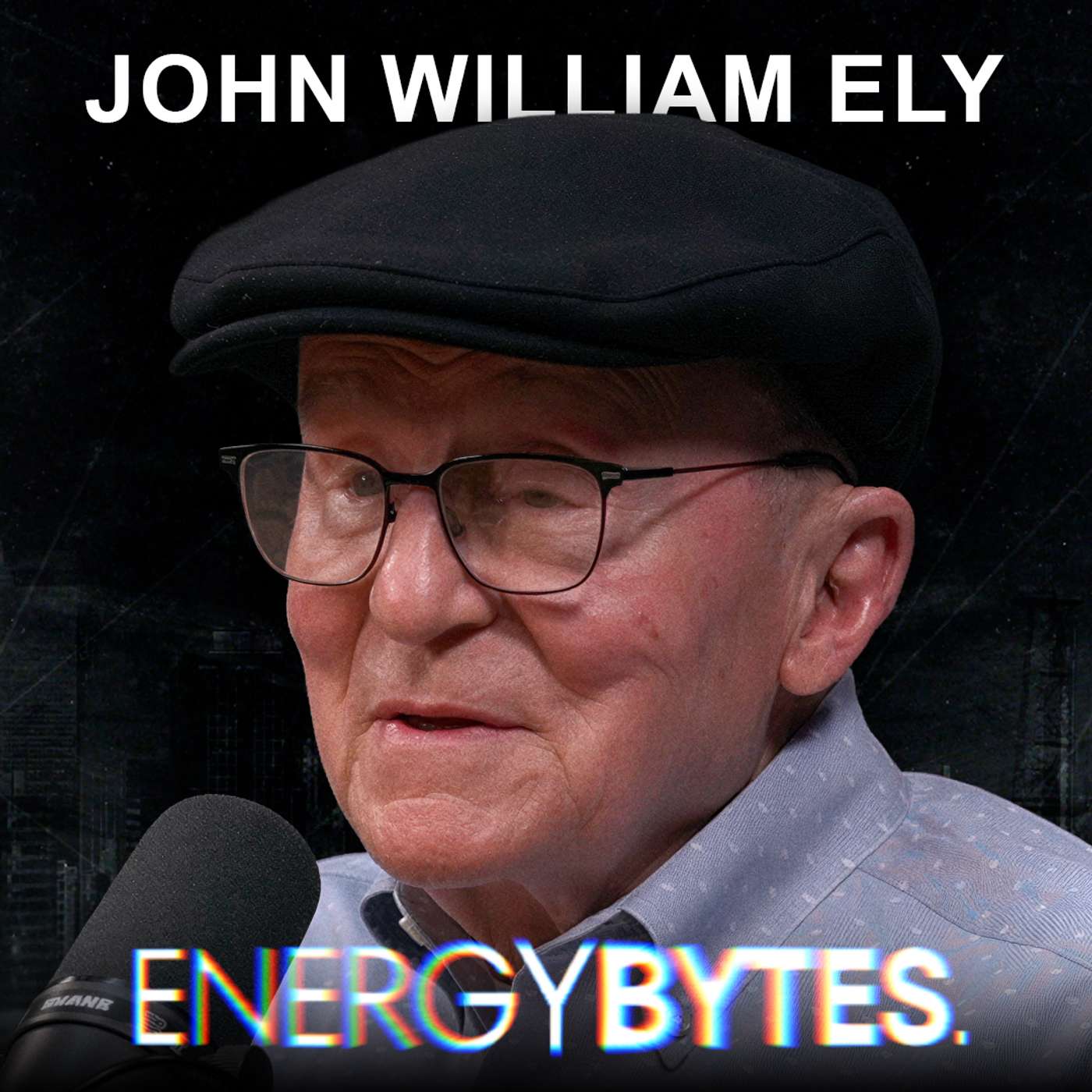
When you have 80 patents and a lifetime achievement award in hydraulic fracturing, you have seen some things. John William Ely, Founder of Ely and Associates Corp, and Jon Harper, Vice President of Sales and Marketing, talk frac history, pre-job diagnostics, the slick water revolution, geothermal, and why the industry keeps pumping the same thing and expecting different results.
Click here to watch a video of this episode.
Join the conversation shaping the future of energy.
Collide is the community where oil & gas professionals connect, share insights, and solve real-world problems together. No noise. No fluff. Just the discussions that move our industry forward.
Apply today at collide.io
Click here to view the episode transcript.
0:00 - Intro and guest backgrounds
3:25 - John William Ely's origin story
7:45 - Offshore blowout and well control in the Middle East
11:25 - How fracturing has evolved over 50 years
19:30 - The slick water revolution and where we went wrong
27:40 - Pre-job diagnostics and what operators overlook
36:55 - Geothermal applications and completions challenges
43:50 - Parent-child well interaction and offset communication
47:00 - Refracing and diversion
54:15 - Increasing recovery factor
1:06:35 - Longer laterals, U-turn wells, and land-driven decisions
1:12:35 - Knowledge gaps in the next generation of engineers
1:25:20 - The untapped tight conventional opportunity
1:30:02 - Advice for young engineers entering the industry
https://twitter.com/collide_ai
https://www.tiktok.com/@collide.io
https://www.facebook.com/collide.io
https://www.instagram.com/collide.io
https://www.youtube.com/@collide_io
https://bsky.app/profile/collide-ai.bsky.social
https://www.linkedin.com/company/collideai
Hosts & Guests
Transcript
You know it's wild, in an industry that powers the world, we still struggle to find the right answers when we need them most.
That's why we built Collide.
Collide is where energy professionals go to solve problems faster.
It's a community completely focused on oil and gas.
Whether you're out in the field, making deals, or just trying to keep up with the industry,
Collide connects you, with the people, knowledge and tools you need all in one place.
You can ask real questions and get answers from experts who've been there.
It's the future of how energy gets done.
So, if you're tired of scrolling through endless LinkedIn threads or waiting on that one email reply, join Collide today.
It's free, it's easy, and it'll make you better at what you do.
Go to collide.io.
That's c-o-l-l-i-d-e.
I-o, and get connected.
Energy moves fast.
Don't get left behind.
Welcome.
Well, guys, we are back with a special episode.
Here's my superlative this week.
It's not always, I mean, we have good guests, but it's not as special.
Yeah, of energy bites.
I'm here with my trusty co-host, Bobby Mealin.
What's going on?
The end from the needful Richmond area.
Appreciate you joining us.
Yeah.
Trekking in today.
But more importantly, we're here with two other Johns.
So, we've got John Cubed.
That'll be the first John joke of, I'm sure, many today.
I'm the only weird one.
Well, I don't know.
It depends on if you think the spelling is weird too.
That's true.
Well, I'll let you kind of introduce yourself real quick,
and then I'll tee up John as well.
Yeah, sure.
No problem.
I'll keep it brief.
John Harper has been with Ely for 11 years.
Started with Halliburton, right out of college.
Worked down in South Texas, out of the Alice district,
back in the conventional, vertical frack days.
Then kind of moved around a little bit from there.
We're for Femeral, Central, doing mining,
and Resident Code of Sand, and Resident Code of Propants,
and then went from there when Weatherford started their
frack division, went over there for a little while,
and then went in frack tech, which is turned into FTS International,
which is now owned by Profracker, was bought out by Profrack,
went with them, and was the Southern Regional Sales Manager
at that time during that boom, and then broke off,
broke stride a little bit, went with a company that was working
on CNG dual fuel back prior to when that really took off,
it was about six years too early.
And so that was kind of before the whole ESG movement,
and then, so that was one of those companies too.
I did really, yeah.
That's what that was.
I mean, it was phenomenal technology,
and we did a lot of pilot programs at that time.
It's just nobody was really ready to adopt it.
Is that gas frack?
Yeah.
Well, it wasn't gas frack.
It was just fueling the pumps, you know,
on the substitution rates and the converging kits.
They were still trying to dial all of that in with the technology.
And there was a lot of methane slip,
and we can go into that.
So, you know, then pivoted,
and then came to work for Mr. Ealy at Ealy and Associates
at that point and been here 11 years.
That's awesome.
Yeah.
Well, then that tees us up for Mr. John Ealy.
I mean, I don't even know that you need an introduction,
but, yeah, most notably known,
I would say for my generation,
our generation of the oil fields for Ealy and Associates
and being basically a frack legend.
So, thank you for being with us here today.
You've got, I think I saw over 80 patents.
You've got the SP Lifetime Achievement
and Legend of Hydraulic Fractoring Awards.
You've done everything from frack chemicals
to blowouts and well control.
And I don't even want to know how many wells you guys,
as Ealy as a whole,
have probably fracked over the years.
It's probably under the hundreds of thousands,
if I had to guess.
But thank you for being with us today.
It's good to be here.
I'm super exciting.
This is kind of like meeting one of your heroes.
So, super excited about today.
But I've also got some questions from our community
that I'll ask you at some point.
But I just wanted to kind of get into it.
So, yeah, where are you from
and how'd you get into the oil field?
Well, when you hear where I'm from,
you're from Newark.
I thought I'm from Dunkin' Oklahoma.
And Dunkin' Oklahoma and they have McDonald's at that time.
So, you worked for Halbert,
and then you worked at the final station
or something like that.
But I wanted to be a doctor.
I didn't have enough money.
I didn't have enough background.
And running out of money and getting sick,
talking about school,
and I saw these while I thought,
were really rich for chemists
that were in Halbert research.
Then, so I started my dream,
and went back to school,
and got my degree,
and got into fracturing research.
You were a chemist?
Yeah.
But it was a really great time.
It was a time when the industry,
the industry at that time
had not really even introduced costly includes.
And we had some really dumb things going on.
80-pound cost link.
I got an argument a couple weeks ago,
guys for older first costly include.
And I got totally mad about me.
That can't be right.
Yes, it is right.
Like I did it.
I love B.H.
P.H.3 fracturing fluid,
mighty gel.
There's some areas I call it,
mighty plug.
But it's not 80-pound gel.
That's crazy.
And lots of things go there.
But as far as going up in the company,
I worked, of course,
with the crossing fluids.
But then I got the opportunity to develop
the first high temperature crossing
five o'clock.
It was a linear primary secondary gel.
It was called high gel.
And that went on for about six or seven years
in the industry, high temperature fluids,
where you had a base fluid,
a secondary fluid.
And what's so neat about it is
you almost never shrink out.
It is cured sand and cured sand.
But it is expensive,
salicylic and so forth.
But it wasn't any politics
in Howard Burton.
But if you didn't have a Ph.D.
or you didn't have an engineering degree,
you were not going anywhere very fast.
So I got an opportunity to go overseas
as a district engineer.
And they told me about no times
it was in South Iran.
So I spent a couple of years there.
Maybe I'll shut down.
We can go back into my career later on.
But it's kind of how I got started.
I don't know.
That's the way I was often.
No, the upper power.
Right.
Yeah.
We can do that.
Yeah.
Actively in conflict with each other.
Pretty different times back then.
It was, the Shaw was in power.
The original Shaw.
And it was safe.
At least it's the safest.
We thought it was safe.
But very different time.
The Iranian people were good folks
and some of their power people were, in fact,
when the echo occurred in 79,
I offered to go over there
as long as they'd give me a rifle.
And I thought, shoot the video.
I mean, they saw going to take over
a bunch of hellabart equipment.
And we were talking about it also.
But it was an interesting time.
Yeah.
So I assume most of that kind of big
conventional type projects out there.
Oh, it was in, in fact, most of it,
back then, it was,
I'm early acid.
Okay.
Acid, and so forth.
And I managed to escape from Iran
and moved over to Bahrain
and then later to Dubai.
And they were very different places then.
Yeah.
But Emerson is an interesting place
to work and live and have a lot of bills in.
And they let me do pretty much what I wanted to do.
And that was, that was a fun part.
And I got involved in my first blowout in Dubai.
Yeah.
So let's talk about that.
Because I think the well control side
is still one of the most like fascinating pieces
of the industry to me,
just because it's,
there's so much, it's true engineering, right?
Like we've got so much copy and paste stuff going on
in the shale side.
That's like, every blowout is unique.
Every problem is unique.
And it's not just, it was a cookie cutter.
What, what had happened is,
you're drilling a well off shore to Dubai.
And surprisingly,
they drilled into a shallow high pressure gas zone.
And long story short,
very soon, not only the rig burned out,
but the rig escaped.
And they actually got into blowout,
it says about 200 feet of water.
Wow.
And how do you control a well like that?
Well, you have to do it directly.
And they had lots of trouble.
They've written a paper out there.
We can call it says anyway.
They're interested in it.
And Conco was the operator.
And because of my background in polymers,
I came up with an idea of how to bite that blowout.
It was direct pump,
very viscous fluid,
because it was very powerful, both on.
And we shipped a million pounds,
ATC polymer, some crossling gel.
It was a big,
man, it was just like a gentleman.
He got a whole factory on it.
For me, it was fun,
because that had me run the blender.
And we were killing the well,
and having great fun,
coming the way it's described.
And one of the management of the operating company
I should have mentioned,
I said,
anyway, coming inside,
he wanted to go crossling gel,
which is not good.
And the fire came back up.
And anyway,
a little later on,
they ordered another million pounds,
polymer.
And it was,
it gave me some of the riddings you were talking about.
But,
anyway, the night before we go out and do this,
I can kill the kind of huge storm.
And it broke,
the jack up,
well,
the jack up did break,
but a girlship broke,
it crashed into a jack up,
and sunk it and killed a guy.
So when the sun came up,
the fire was out.
So what happened?
There was big,
tall cavities above the,
the producing animal,
and I guess they collapsed.
And we would be back up there
and pumped through
40,000 attacks at the same time,
and never saw any pressure.
That's crazy.
That's crazy.
But there was,
there is an SV publication on that.
So that was kind of an interesting time,
as you might.
I mean, this isn't the out of ignorance,
but you're talking about,
I was just doing another million pounds of polymer.
I mean, like,
is that just sitting on hand?
I mean, like,
were they giving it,
especially back then?
Hercules was a supplier,
and they were very happy.
Yeah.
But,
we moved,
had seven,
47 loads,
a two hundred thousand pounds of one,
but come over there,
into P tanks,
and then sent it,
I went to Ben Friedrich,
and it was,
were you geling tanks back then?
I don't know.
And this is on the planet.
This is the,
a lot of delighted,
this delighted thing
that I've used before.
And it was an eight tank.
That's pretty cool.
I think another thing
for our similar listeners, too,
is like,
I mean, I think most of us know this,
but like,
clearly,
Frack is not new.
Yeah.
That's why,
one of my questions is just,
in general, kind of how is,
you've been in Frack,
a very long time,
but even in my career,
the last 15 years,
it's changed a bunch
on the unconventional side.
But, you know,
I think a lot of people,
I've had the luxury of working
for some conventional,
specific,
Frack companies,
and I learned the most
about Frack working for those companies,
because it is.
Everything is unique
in a general sense.
There's a lot more engineering
that goes into it.
And so, you know,
just over your career,
what have been some
of the biggest changes
for the good?
Also,
some of the dumbest things
you think you're currently doing
or have done.
You know, I mentioned something dumb.
Yes, Frack.
You know,
that came out in the 60s.
And I remember how I remember
it was very, very slow,
and now, well,
and come out with a way
to, theoretically,
to,
Jill,
Pro Quay,
LPG,
LPG,
and, of course,
they weren't ever
jumping out of the hall
and mixing in with it.
And I got a lot of fun
and working with that.
But guess what?
If you pump a little bit of jobs
in tight-readed words,
they don't work.
They're smart.
It's coming to find out.
But our whole industry
gets called,
and you know what's really bad,
sad about that?
It's 10 or 15, 20 years later.
Here it comes again.
And I had people tell me that,
oh, well, it's non-damaging.
It doesn't matter how much damage,
if you have non-damaged service area,
it doesn't have any,
any volume to it.
It ain't going to work.
Right.
But,
there's been lots of millions
dollars spent on that kind of thing.
And there's,
there's a lot of other fun things
you talk about.
But as far as changes,
it's been amazing.
My,
my first wrecked job was,
near to that Texas,
it's about 15 degrees,
about 30 mile-hour winds.
Of course.
And it's out there
with a track fluid that was unbuffered.
And I told my
treater,
he needed to put a quarter,
high to core gas at the tank.
And he looked at me like,
do you,
do you,
do you,
do you,
do you,
do you,
do you,
do you,
do you,
do you,
do you,
do you,
do you,
do you,
do you,
do you,
do you,
do you,
do you,
do you,
do you,
do you,
do you,
do you,
I was there played.
So ultimately,
some people in the
Lucy Park
were a few children of
the sicil too,
but we, we work with people
on the ground,
and got treater standing
out there running it.
Later on, we got
some physicalke surfing
and some,
We got communications, but it was always a scary time, I know one time in West Virginia.
We were pumping our competition for gas-fract, was vapor-fract, we came up with the deal.
Mouth method all was sale too, and I meet on these guys, I said, do not.
If we shut down, you got to not come back on, if you come back on, you'll find out
to drive something, or pump our good.
Well, you know the rest of the story, we had five fluid ends blew off.
And what was that there to this communication, right?
The way they had set up, the trader was a talk to a guy who was the lead guy who talked
to pump-offers, who stood on the pumps, by the way, and by the time they got that and
they'd already started out and strapped up, going everywhere.
But communication, a long time, I can remember a high-level source coming, meaning that
said, you know, these pack-frains are further just to think of the plastic on your way.
You know, we all enjoy the end of the rain, you know what I'm saying.
You said something over here that I really beat on people.
The way you learn about fracturing is being there, and being in charge, knowing what's
going on, maybe getting a little bit ahead of myself, I love what's going on with control.
I love the ultimate control and how much efficiency has gotten better.
But somewhere in that mix, there needs to be a human.
And if you don't have a human to do a few checks, and it will get infected, it might be a bigger
discussion. It is do something about optimizing the fluid you're pumping, sit a pump in the
same thing, and you pump an eagle for it, that you pump in the sand, and rest that you pump in
the wood for it in Oklahoma, et cetera, et cetera.
And God punishes all field people, something called heritage and antique.
You can move sometimes 100 feet.
Yeah, yeah.
And all this is different.
But we have techniques that we can evaluate and do what we call Newtonian fluid efficiency test
during the job, didn't take a lot of time. You grab what the leak call feels as you control what
you're doing. And then when over the years, we learn ways to optimize to make things better,
not just pump. John, he worked several days, had a new customer all excited about somebody,
and they gave us a deal to design and optimize the treatment.
And spent five days and came up with the way we optimize treatments and presented it.
On the same call, and they looked at us and said, boy, it looks interesting.
But we want a pump for the OG, which I might have come down the road.
And in fact, last week, or two weeks ago, I make a presentation, and I asked the crowd,
I said, how many of you have seen a fracture design on your, on your or anybody else as well?
And there was a dirt of nothing science. What are we doing? Pumping the same thing that
jumble pump. You know, sometimes that's right. Anywhere, are we going to get the results? Yeah,
you pump 42 frags. And well, it's that one, like John was talking about earlier,
you're going to get better. Is it omnum? That's the way we move things to the better.
Is we push some science? We've done it before. We know it now. We've got history.
We can talk about that way. Yeah, no, I mean, I think that's even, like I said,
even in the last 15 years, just on unconventionals, the the amount of change that's happened around
design, around clusters, around even the profit and fluid types, right? Like no one runs cross-link
anymore, which is crazy to me. And then I've had multiple people on prior, you know,
conversations talking about how we need to bring back gel. He's like for, for width and certain things
and, you know, near well bore stuff. And, but then he's like, in the same note, I couldn't find
a service company that has a blender or that has a hydration unit that could even run the job
if I wanted to, which is also terrifying at the same time. And so I'm curious, what are you
of kind of the modern stuff, so that the tighter clustering, the bigger jobs, more fluid,
pretty much all white, 100 mesh, don't care about sand, properties anymore. What of those
things do you think we're over, we're getting wrong or we're overlooking? If you think the
stick water revolution as we call about 20 years ago, whatever it was, came about because of
technology. Maybe you need to quit reading some of the books. I wouldn't mention anything
particular, but there's some really dumb things out there. It was done because one of the major
operations, there were several people looking at it and said, we're tired of trying to make
the Barn and Shell work. Well, there's got to be something we can do. And they once achieved
the same thing, we can pump water. What if we pump really bad sand? And you want, and then
I'm trying to put things together, but it works. I had this discussion last week because there's
a people. They were just people, but they might have been trying to develop a new generation sand
coatings and stuff. And I said, well, when you pump 20 million pounds or something, it's kind
of hard. And I said, he said, well, how did people figure that out? I said, well, we work for a
company in South Texas. It was in the Hainesville. In the Hainesville, not a shallow formation.
12,30 pounds would be one gradient. And of course, they were gearing up to run,
mockside and prison code and everything imaginable. And they did a job and then they looked at the
ticket and they said, oh, my God. And this manager said to hell with that, we were on sand,
we'll tell him. We'll pull out of the river. That's what they're doing now. Almost right out of the
river. And guess what? Leaving out a little of the details, they found out the small sand
worked better than the mockside, worked better and cheaper. Guess what? You know, and then we got
to the shrill and two of the people said, well, this is good. A whole bunch is better. And so
we get kind of crazy while. And then we get to know a good idea. So you mentioned the cluster.
What's the spacing and the clusters? And what's the distance? You're on a perforated.
Well, I know you better. We did settle when we got some relations that we perforated
based on FMI laws. And we perforated fractures. And we kicked butts. But that kind of, that was
before FMI got to be a real-time situation and got away from it. But we published some of that
recently. And, whoa, 440,000 barrels isn't bad for, it was a 3,000, 4,000-foot lateral.
With 11 jumps. Not too shabby. It's pretty interesting. But it's, you know, we've gone down
once and things are, you know, we're having success. And I think sometimes we can, in many cases,
kind of lost her way. When you, when you don't even think about it, well, you know,
it's like, well, it's good because that's what BP or Chevron or Axon or it's like, well,
who told him to write that? Well, you know, it's interesting. And it's really interesting for me
because until the last six or seven years, I was in the field much more than I was in the office.
And I loved it. And you can control what's happening. You build top of things. It's a, it's a
different world now. For sure. We're trying to move all the people out. And sometimes that's a good
thing. Sometimes we get in the mind. Yeah. I think the, the most fascinating thing for me,
just on all this in general, is just the multivariate aspect of it. And I think why people have
probably just gone into the geometric designs and just, you know, just, we're just going to repeat
is like, how can you even like tell if it was the fracked design that impacted it? Was it the
fracked design? Was it always going to be? Was it the spacing, the stacking? Was it the lateral
length? There's always going to be someone that throws out the left properties too. Is it how you
flow the world back? Like, I mean, there's a lot of time you get to a point where you could say
this was a good well. I think people are like, yeah, I don't know if it was the fracker. This is
that. So I mean, like, they're going to put their hands up and say, let's, you know, it worked
well enough. So let's just, you know, when we can predict the pricing, but like, we're not,
we haven't gotten into like stage by stage optimization and like, you know, and divers and all these
other things. Yeah. But it's just like, there's so much to it. And then like you talk about the
geology. And it's like, I mean, I know we had some good results at in Grayson Mill, like in an area
that was kind of away from like infrastructure. But we knew that there was some geology where
if we fracked too big, we're going to get into a zone that has a lot of water and then we're
going to be screwed because we can't offload the water. So now I was like, there was that some
actually true fracked design that came into that to like, how do we keep it more near well bore,
like keep it in zone? I think that's probably where some of the bigger, you know, optimization comes
in where it's like, there's things downstream of this that impacts. I know that was a lot to
unpack there, but it's just like, it's just like moving my brain gets going on. It's like,
man, how are you even like as a math guy, a data guy, like how do I even quantify was it this or
that? And there are a lot of knobs at once, right? And I had to go sound like everybody else down
days. That's where I could come in. You got to understand somebody and LinkedIn or something
said, oh, we got all this massive amount of service data. Well, just put this plug in and use
it. Well, if you've had the experience with that whole pressure versus service data, you know,
that they go work in broad sometimes if you know all the factors involved. And I think
a pretty intensive AI look through and in the factors and having somebody intelligent,
loads what the hell are talking about. We have a lot of problems in the industry. You give me a
chance to say things. You know, I hear I heard somebody say, for the far-fuel stress that is
doing sensitive service or stress shadowing. It was a neat sounding words. Do they really mean
anything? And I don't know. I say rock with the only thing where you pump anything into it is
you got a rocket. And you're going to get you're going to get stress shadowing. I'm sorry.
And the other thing is a problem. That's a reality is that I see and I've been on lots of jobs
where somebody would say, oh, look what happened there. I look over there and you know, we twist
totes or something, you know, and they said it was a downhole there to know. Somebody show you
on the tree. That's exactly where the chemical comes up and this one goes down. But we have the
ability now to take massive amounts of data and have some evil humans that can look at and tell you
whether it is reasonable, so forth. We have some real good certainly ballparker, not better friction
data. The deal goes on with perforations. That's always a fun thing for me. People tell me how many
perforations I got open. And I just pumped 150,000 pounds of sand and they use a low number of
perforations. I wonder how much of that is still there, you know. And it's very difficult.
Why is there a little pre-job diagnostics checking into it without getting sand or anything
involved can go a long ways to tell when you do what you do. Now you don't want to get into
well-day defects. It's a pump three barrels full of them. I'm very positive about that. But
anyway, I'm talking too much. No, you're not at all. That's the whole point of this is to talk.
Let me ask you this. In your opinion, what's a diagnostic, whether it be a DFID or an FET
that not enough people are doing, considering all these diagnostics are so minuscule from a cost
perspective on the AFE. I can go off on a whole diatribe about why the industry should be spending
more money on diagnostics. But every design that we could put out is I recommend they run it.
This is highly expensive, very complicated deal. You run a couple hundred barrels. Typically,
if you get away with it, get substantial rate and leave the fricking loose, leave everything out.
Make sure the hole is loaded and big deal. Shut down and watch that gets your eyes
up. You find out you got any tortuosity. Watch your fall off. Squatter time, calculate food efficiency,
calculate the bad. That takes about 10 minutes if you got a human. And then you can go forward.
But anyway, we don't need any bad things. We start saying when we have my money pumping fluid.
Yes. And what happens when the sand hits four months, then you have all these pressures.
Let's say that's near World War. You know, it's bridging and you're not getting
distance. When we run what we call water, for actually we pour it around spasers.
We see this fall off with sand concentrations. We see what's going on. And we believe that's
that's a better way to go. Actually, you run, this is really going to be able to say this, but we
actually run less sand and perform equally well or better than you can if you decide properly.
You need to run some hand, but that's a way to time. We didn't get into a way. Well, no,
it to us to what we've seen an experience in my sand. Yeah. What about the profit side of things?
Because that's, you were talking about running box site in the hands. I will be happy if I never
have to frack another hands will well, coming from the services side. Because I, I don't know
how anyone on the service side made money fracking the hands will back in those days when
I mean, because you'd have to have 30 pumps half, you know, and then another half dozen staged
because you wasn't if you were going to blow a fluid in, it was just wind or when a chicken was
going to wash out because you're sandblasting it at 12,000 psi. Well, I, you know, I have a theory,
and I think it's right that when you get to a certain very low permeability,
and I think we've got enough data to prove that's correct. It's still getting questioning. You
don't have a drawdown. And in fact, I have my fun with this too. It's a few. I said,
you run this 100 miles. What are you using for conductivity?
And I raised hand says four pounds for square foot. I said, when do you run four pounds for square
foot? Well, since the might of the week said, well, if you don't run that much, you can't
hardly measure the conductivity. What the hell was that ever do with anything? I believe,
and I believe we got tons of data that were, we are creating complex fractures. We are
popping open complex fractures with this tiny prop and kicking butt.
Now, whether it's 47 to your 100 measure or West Texas, it's going to be one or whatever it is.
It's going to be 140. Yeah. It's, it's, it's kind, it's amazing for all the people and all papers
are in red. Now, I've seen significant crushing when I have fairly similar,
Middle East laugh, I mean, when I got 10th Melvars, right? Sometimes they're there, you probably need
like we had some experience in the Grand Wars, the power, where some, some might run all sand.
And then some more about a year and a half into the well, the decline is, it was crushing.
It was very, very, very defending. You don't see those things, well, why aren't we producing more,
we're not getting it out for or not. And I think some of this, because we're not running a pad,
and we're, we're bridging it and you're getting good collectivity near World War,
you're not getting any distance from them. We, in the very early days of water fracts,
we did a lot and started to do more business hair sheels, so vertical slick water fracts.
And we've got one that's, they told us it's a, heresy, it was 50, 60,000 barrels,
back in 20 years ago, we ran some 100,000 barrels, single size vertical fracts.
And our main operator that we're using in the north of Barnad, they quit running a whole house
because they got so much luck. And there is, in there's different ways to complete stack pays,
I think commercially cheaper than you can with horizontals. And there's a paper about that,
I'm going to try and say anything, but, but it's out there. We, we just, we had, at that time,
people weren't doing horizontal, so we came up with the ways. And we'd run outboards
shouldn't tour for its own, so 110,000 barrels total and come out and these wells were very good.
Well, yeah. No, I think that's the dichotomy of the fact that frack is so multivariate is that
you still have the economic piece of it, right? It's like, okay, maybe my crush strength is important,
but by the time it is important, has the well already paid out? Well, there was a couple of years ago,
and when we looked at that pretty hard, there was some good publications where
they had ran unconventional slick water fracts with just 71, 40 sand, and then they went back in
and did cross-sectional cuts. And you could see clearly the complexity of the fraction network,
and you, you, you could see what we call, you know, partial mono-layering, and it looked like
sand grains just stacked in a line, which proved the theory that in that case, you're getting
infinite conductivity, no crushing, so. Well, that's the thing, when you have no conductivity,
literally anything gives more conductivity than what exists in a shell. And I think it's,
it's crazy to say, because there's been decades of research and trial and error that have
gone into that, but that ultimately is kind of how you sum it down, right? Like,
there's so much opportunity out there with a little more than
microdarsity formations, there's just something out there, and they got to be,
we've done some work in a place by these where they don't, a big track to them is 20,000 pounds.
That's a big track, and they went nuts when we gave them a hundred times pounds,
and it's amazing. So, even some of the real high permeability stuff that had problems with
paraffin, or they had problems with scaling, if you track past that, that's what the early
fractures all about. They even send me a paper of this, it's how it was, how it was,
how it was good or something, it was about 1949 or 50, and I read it, and the biggest job
they did was 12 sacks of sand. 12 sacks of sand. Yeah. But, you know, they opened some purse.
Right. Right. That's great. Right. But if you've got something low permeability, you've got to have
sufficient volume, your deal comment about, about a cross-link,
John Murray's already said in South Texas, how many hundreds of Bixford and Wellcocks,
yay, were formations with Frax, and we made a living building, perfect pop and transport fluids,
and testing them and doing good, doing free and post-frag evaluation. You don't see much of that,
no, you don't. Well, especially those, right, like that Wellcock, especially in South Texas,
that's super high pressure, high tilt, those are gnarly, that's black iron stuff. I'm glad I never
had to do those. They were challenging, amazing, but you learned so much about what you
as far as geometry and so forth. But, anyway, speaking of some of the depth and the temperature,
I saw that you all did some work with, like some of geothermal stuff as well. I mean,
this year. So, how's that been? I mean, it's kind of, everything old is new again,
but at the same time, like it's kind of a new frontier. I mean, like, where are you seeing
as the biggest challenges on the geothermal side? Well, it's more, probably, more on the drilling
images, because you can't degrade water too bad, you know, and again, staying with the
similar type of profit. But the problem with challenges is there is because of the ultra high
temperature, getting in, of course, we still have that problem and getting good seamage down,
so isolation is a big problem. But that's exciting stuff. Yeah. And it's counterintuitive to what,
like, unconventional, you don't want communication, but the key driver is communication.
It's just creating the massive fraction network between the two well-bores,
so that you can cycle the water down, let it expose to the heat and then recover and pull the
steam off. And then that that powers the electric plants and just kind of closed-loop system on
that. And it's pretty, it's really fascinating technology. I did a, I was, I got my master's in
energy business from Tulsa, and one of the classes we took was this renewables class, and I did
this case study on the, I forgot the title, but it was essentially the opportunity of converting
deep, deep vertical Texas wells into geothermal, the fort, and using a, basically the same concept.
And it's amazing how much, like, if you're, that's the thing. I think it would only work at an
operator of a certain scale where they needed the power gen, and they had tie-in points to the grid
and all of that stuff. But it's like, if you could take, you know, an old SWD or a PNA liability
well, and turn around and capitalize on it, that's absolutely, that makes a ton of sense. And
and literally everything is generally pretty directly transposable from oil and gas to that
side of things, right? Absolutely. Absolutely. It is only water instead of three-phase hydrocarbons,
so maybe that part of it makes it easier. But what are you, what are the temperatures,
obviously, a huge challenge for, for the geothermal side? From the completions perspective of it,
are you have, are you running into essentially the same problem with the high temperature on the
fluids piece? Or what are those fracks even look like compared to a traditional? Truthfully,
because once you get a reformation and it took a long time, or I mean, to prove that there's,
there is an access to how about paper will we show that this nonsense about cool down is,
not in sense, in reality, not reality, and we've seen that with the geothermal. But most of the fluids
are, I mean, curl minds that are used for fricking their, they're not seeing those temperatures
till I get the reformation and the reformation, you don't care. And maybe, maybe a little bit of
transport, but when you get beyond 400 degrees, they know many things as they can do anything. If
anything can, some of the curl minds go up 450, something like that, but what are the geothermal
wells? As long as you're in the pipe and moving, you're all right. Are those basically engineered
completions, like back in the old fract days, where you actually looked at every single well and
took your time and put in the simulation? No, to my knowledge, they probably have a program,
and basically, they kind of know the perm. It's kind of nothing. And they can, they can,
they can see any fractures or create, and they know they've created fractures in or connecting.
It's actually, in some ways, it's simpler. But when you get into permability variations, natural
fracturing in, or they call them conventional conventional as a force, but guys, I, I did that.
Once in a while, I get crazy, and I'll do a lawsuit as an expert witness. And I had
same feel of setting wells. And one company was running 2,000 barrels of a hybrid that
was running 10,000 barrels of a slick water. But the slick water had had spacing of about 500
feet apart. And the 2,000 barrels I had spacing right together. And they, you know, I said, well,
how'd they turn out? Oh, they're all right. And he said, well, nobody thought about this. Well,
that's what Jim will pump them where all said. And that's what we want. That's okay. You know,
it's America. And we're happy to pump whatever people. Sure. You know,
absolutely long. It's not dangerous. You know, but some things are dangerous. Yeah.
Not I, I went up actually with that hard at company Greenfield. We did a test or like a pilot
for, for Devin. This was in like 2013, maybe. So we wrote it all of our equipment from
Katarina all the way up to Oklahoma City. And we pull up. And I vividly remember this is back
when the stacking scoop was super hot. Pull up. And I remember looking around and there are
three drilling rigs within a mile of this frack pad. And I, it's like, okay, well, I'm just the
service company engineer. You know, surely they've thought of this. I didn't say anything. And
I look at the design. And it's like 70 barrels a minute for four hours per stage. And they're just
slowly ramping up a quarter of a pound per gallon every like 30 minutes. So horribly boring,
but very large volumes for back then. And we get two or three stages in. And the driller calls.
He's like, I've got a thousand pounds of pressure on my drill string. And he's exactly you can,
I can literally see the drilling rig from the frack van. I was like, did no one think about this
at all? And this is, you know, super early in the kind of communication days. But it's one of those
things that like that happened for such a long time. And people never started like it took forever
for people to start correlating. Hey, maybe my operators around us are what is causing these
casing collapses. Or we would get calls for that all the time when Bobby and I worked at the
gauge company is like, you know, mom and pop conventional operator. I think I had a casing
collapse at, you know, this step or whatever. And it was the same week that they were doing, you
know, E O G was fracking next door or whoever. And I think that's why, but I'm not sure. Is there
any way you can help us with that? It's like, well, if you had a gauge in the well when they were
doing that, probably, but you can't really ask for the fact. It's a, it's a, it's a, that's one of
those things that I feel like it took entirely too long for us to figure out that like, hey, this
is important. And this is a system. This isn't just an individual well that isn't its own vacuum
and doesn't affect everything around it. What do you, what are your, what are your kind of thoughts
or lessons learned as far as the offset parent child interaction stuff is? Well, number one,
if you're somebody who's really close to you and they've been drained, you're not going the other
way. Yeah. No, I mean, that's, it's crazy basic physics, right? I mean, it's pretty straightforward.
Whether you're using Microsoft or whatever you're using,
things propagate, propagated, at least for as far as propagated into the lower pressure regions.
They've come a long ways in evaluating that sort of thing and understanding whether it's
it's a matrix in which to wear more fractured situations. Many times, you know, people look at
me crazy, but I say, well, we've, we've communicated with well five miles away.
Well, how did you do that? Well, there's a crack. They went over there. What do you do about that?
Well, you got to get away from that crack. Yeah. We had, we had a number of really interesting
data sets where it's like, you know, multi well pad, they're all running in the same direction.
They're fracking the furthest one. And it's, you don't see it on the middle too, but you see it on
the one that's furthest away. That's like, yeah, over a mile away from the one that you're fracking,
but you don't see it on the ones in between it. They're like, how do you explain that? And it's like,
well, you know, you got any faults or natural factors running out here. You'll see faults with
that, you know, you don't know about it. Or like, I remember when, when the, the big
Marcellus gas wells started taking off, I think EQT and CNX posted post, posted their first like
60, 70, 80 million a day. This was five, six years ago. And anyway, I talked to one of the guys,
and he's like, yeah, I'm pretty sure that's because we, that well was on this natural fracture,
and it just drained the shit out of everything in that area because they didn't get matching
results on the following wells. Like, it's a, but yeah, the geology is, is important to this.
For sure. No, I mean, at Conoco as a reservoir tech, when I first got in, one of the things they
had me doing was literally I had a spot fire tool and going in and counting the, or identifying the
pressure spikes on the offset wells. And we created our own little database of it. And then we ended
up getting a point where they could, we, we identified the parent and that child and GIS were
able to, you know, create like basic lines from each well. But like then, obviously, you put that
on top and they put on top of the geology and like, oh, there's the fault. Are those lines?
Right. Yeah, there's a lot of like fault sitting on top of there. But another thing that was
interesting from that, and I wanted to ask you all about was like refacking as well. Because I mean,
at the early days, we were doing like some of the pump and prey, whatever we're going to call it,
we should just go right back in and then, I mean, it was pretty clear as day. It was all going
out of the heel. Yeah. But now with some of the advances, I mean, just kind of curious,
you know, because that's almost like you take historically bad design and now we're trying to
make it better with, with refraction. Bad design and good rock. Yeah. Updated. I mean, bad design.
I mean, it worked. I mean, like, oh, when I got to Conoco in 2014, like, oh, these are paying out
in three months. When it was, when oil is a hundred dollars per hour, much easier to get the payout
than when it's at 55. To maybe address your question in one way, we've been all the multiple
companies about that and been to many of their meetings. A lot of it, in particular, some of
morning's shale was it's a fact they went in and cleaned out the lateral, washed it out,
did a little pump ends. Amazingly, the well came back. You had perforations plugged. Yeah, okay,
yeah. I mean, you need to differentiate that. But there are the diversion. I can remember
some of our first jobs in West Texas. We would drop slugs or bend to work as a place. One of my
questions that I wrote down was, what's the craziest thing you've dropped in the well? I know you've
got a lot. Lots of very crazy things. But, you know, we drop at Benzoic as a place and you know,
didn't see anything, you know, but I said, well, I made me hear, you know, and we'd run pump six
or seven stages over and the same thing. And then we finally did some work over in the Middle East,
actually, off of Abu Dhabi, where we put some down for a big day, put gauges down, and we could
actually see at a certain rate, a certain concentration, we could see it plug and plug and it
came up the hole. Now, you couldn't see crap on the surface, but you could see it working. And
you had that certain size flag and so forth. And, you know, there's some signs that you could
be doing. As far as most of the debris agents, I hope it don't you mean, or we're actually located
north as huge. Most of them were just hoping for error. I mean, from all the data that I've seen,
is the, you get more, you get just as effective diverting, doing a flush or shutting down.
It's interesting. Yeah, and then there's there are certain techniques that work. I mean,
most, if you've been around, maybe there hadn't been any place and more changes and more weird
things happen than the Austin chart. I mean, we drill vertical wells and practice them, but
I don't want one source to have had seven crews pumping 40 pounds, cross-linked gel with 300 times
by sand, no matter where it was. And my own Christian church pastor lost his mom's home,
putting money into it. He fractured well, it was doing good. And they plugged it up with gel,
so it's another story at a time. But see, there was a chalk went from that to
high-rate water jobs and maybe a little bit of diverting agents. And then, open hole,
it worked out. And then, finally, long-lasting went to plug and purse. And just like they were
in the block and up in the Rockies, everybody was hung up and running 16 pounds or gallon
slugs and then that was diverting. Yeah, right. We're saying, it didn't work. And then they ran
all the sleeved hopper relations. And those were great if you were a field hand and you were
getting stage bonuses. We did like a 30, 40 stage eagle for, well, in like, 36 hours.
It was wonderful. We've got a nice, fat stage bonus.
We've got a good efficiency, but yeah. All they were good for.
It's interesting our industry. We have a lot of humans. We have a lot of people.
Everybody has an idea. In a long time ago, I learned that most of the people can't see better
than all I can. And many times I see pressures and you utilize where they have no real meaning.
People tell me how many corporations they got up with after they pumped their airtime,
about sand at two or three. We don't have a firm. Yeah.
Yeah, right. And, you know, everybody, they speak loud and show what they're saying.
Right. Believeable. But they don't. And they get found out eventually.
For sure. But we have a huge amount of technology. This is still on control and getting
AI involved. It's very exciting. Yeah. No, I think about it. I think,
truthfully, getting enough competent engineering people and taking advantage of the experience
that we have in the industry to evaluate. Is this pressure? They don't mean anything,
or there's a type that and then time. And then you can use AI because there's a proportional
amount of it that is garbage. And you'll see that as humans that take up a long term.
Oh, yeah. And that's going to need computers to come. But I think some of that.
But boy, it was a awakening day. And one of the more challenging jobs I ever did,
is we had about 30% hydrogen sulfide oil. Wow. And it treated down tubing at about 15 barrels
a minute at between 19, 20,000 psi. And it was one of the eight or nine wells that I
admired highlights where it was confined. You could see the pressure increasing with time.
It wasn't bridging. It wasn't. It's good food. It was 300 degrees. We had good stable food.
And you could time it to where you got to the point you had to flush. And that's really neat.
Because it is free. We nearly knew what the pressure was down how. Now you do that blind.
In fact, Ken Olti was on location. We had the slow out and summer did that well. Intensifier
multipliers, they call them. And he come in and told us we had to go on flush. And we hadn't
started saying. Because we're going to run on slope. You know, in long sales, if you're on one
one slope, you have to go based on the Olti part. But he's a great guy. He knew a lot. He did
great things. But that was one where we get your cheat and I like to cheat, but we know what
the real pressure is. I've got another one. What do you, you know, right now we're only recovering like
five, 10% from this. What do you, what's one technology or, you know, technique, innovation on
the completion side that you think either we're currently doing or we could be doing to increase that?
Well, a little more attention, maybe, still to just shooting everything with closed clusters,
maybe taking to account imaging logs. Time that into the equation. We've got a lot of data
where we pump with with the sweep type and with good sized pads. We pumped half them out of sand
and get just equals else. And that's a big deal. When you start pumping 10 million instead of 20 million,
that's a lot. And you get in areas where even now, but with getting sand off the deck or where you
get it at some point, but don't have many decks or get it off of. And there's a long ways of
transportation. I think we've got many things. I haven't seen a lot of deals. Everybody do an
experimentation with surfactants and waiting agents and so forth. The problem there is what you
said is those formations are different. And that water, whatever the water says, if there are
sensitive water, you know, that's, I've seen lots of silly things by the time that
worry about placewiling and announce Iraq as a kind of snow. I've seen people try to run KCL and
Jan lay control. Yeah, they ran a lot of clicks. Yeah. And we'll cocks where they have a
mountain icing. Hell yeah. You better. Not a fatal. If what's different about this fracturing and
basically everything. And I think we'll try to mix them. These hybrids, they had bad work.
I don't say, well, I got one. Got a great opening. I have a lot of problem with people have a
definition of crossling fluid. A crossling fluid is something you swing off the end of them.
That's a danger. We did a lot of work that, you know, these low concentration crossling fluids
is some of the ultra clean fluids. That can be about the dumbest thing you do. You're worried about
residue from the jails. You might have 500 pounds and you're running 400,000 pounds of sand.
That has a 10% crush on it. But our industry had hung up over that for years majoring in the minors.
Maybe you don't want to, but we tried to work back and we found out that wasn't a major factor,
anyway. Well, you kind of dovetail on that. You're right. I've seen a lot of publications 10 to
15% or, you know, so there's, John, I've talked a lot about this. There's a tremendous amount of
potential out there. That's just kind of left untapped. And we've done a great job of, you know,
American ingenuity of getting more efficient. I mean, we're pumping what 24 out of 25 hours out
of the day. And I heard it said at the Thrive Conference, you know, they said, what are you going
to do to improve efficiencies? And I think it was the CEO of kind of got to chuck a lot of the CEO of
Patterson UTI said, well, talk to a guy about that the other day. And he said we could get 25
when we hit daylight savings time. So I really kind of resonated. But I think, you know, taking a step
back and putting, like John says, more more engineering into this, especially as we gravitate more
out of tier one acreage into tier two acreage. And, you know, you're getting to this factory mode and,
you know, look more at the engineering aspect of the formation, the heterogeneity,
you know, even the gross assumption that all shells are the same across multiple basins, you know,
from the Marcellus to the Wolf Camps to the Bucking, right? And pull a different rock. Absolutely.
Well, I'm worried. I was glad you brought the Austin chalk because I was kind of thinking about it
before you brought it up, because I mean, being in the, I was in the Eagleford at Connickham,
we were doing like lower upper Eagleford. And then all of a sudden, we started doing Austin
chalk stuff and start fracking it the same way. It had just taken off, taken off. Yeah, just,
I get people just, you got to try, right? It's, you know, science. But yeah, I learned from it as
well. But I think that's the trickiest part, right? Is it's like, you know, other people, you can go
put it in a beaker and a lab and it's relatively low risk, low cost. It's like, do you want to try
out a new fract design? Yeah, you can run it through a simulation, but you literally will never know
until you put it down hole and see what happens. And that's going to cost you a lot of money,
normally. I've got, I've got, I've got so many questions. But one, one that came from the community was,
where are you seeing in the frack world right now, they can move the needle on recovery side.
And so kind of follow up to my question around that. Is there anything that you're y'all are seeing
specifically around increasing that recovery that anyone's having actual success with?
The only way that we can increase recovery is to achieve more surface area open to the well
and that it sounds simple, but in reality, I think by calling to me, even some almost conventional
thinking, yeah, you can pump and not screen out. You can pump two pounds of 100 miles or two pounds
or 47, they would three percent pad. Are you getting any distance? Are you getting any width?
I think there's a problem and that needs to be investigated a lot more. It's been hundreds and
hundreds of checkups done like that. Did they truly show up? And again, the AI can be used to
go into that database. But I think if we just get two or three percent, it's easy to increase
your recovery factor. If you got a high perm, thinking about the middle ladies and well,
thinking about nine days. But we ran some Palmer control systems in the Arab D,
and we could get more than 90 percent recovery. But you had to pump
both low to zero, and it could be done. But you can't, you know, and you're talking about
very low permeability factor or majorly fractured. It's more problematic thing.
I mean, just to think some of the old conventional stuff, you had water floods.
Right. You do that and you do just capture even more and more. And it's like, well, that was what,
you know, that was one of the big like things they touted with the gas frack stuff back in the day
was, oh, it's, it's non-damaging fluid. It actually helps with recovery because you get to
flow it right back. And you could theoretically sell the gas that you just used as your fluid. But,
but you're also pumping LPG or allocation, like I'm really glad I never had to work on those
fracks of dangerous enough. I mean, before we jump off that too, like the one I was thinking was,
has anyone like held Exxon accountable? I didn't, they came out, I mean, publicly,
and so they had some way they were going to double recovery or something like, like it was like
year or two ago. It's still waiting for it. Well, I mean, I just like, you'd think everyone
beyond that. Yeah. If it happened and like, that's actually a pretty big deal. I'm not trying to
get anyone to show, but from like a SEC side or somebody, it's like, you can make a claim like that.
You get more than just claim too. Yeah. Right. Yeah. Yeah. That's a huge claim to double.
I mean, I think that sort of said, I don't want to quote me on what I said, but I remember there was a
pretty big deal. I was like, oh, what the Exxon doing that they can increase recovery by that,
whatever that multiple of the co-gash thing though. That's a, that's something I'd love your
opinion on. Because to me, it feels just like the EOG 100 mesh thing, right? EOG had a sand mine.
They were mining 30, 50 and 40, 70. What is a byproduct of that? 100 mesh. So they just had a giant
pile of 100 mesh that they didn't have anything to do with. So they said, screw it. Let's put it
down hole and see what happens. And hey, it worked out. I feel like the co-gash, or the, I think it's
co-gash, but it's, they're using, it's recovered from power plants. They're just, you know, because
they're vertically integrated and they have this as a waste product, why not see if we can pump it
down hole. And if you're a big company, you can, and you can stand the big strands to the trouble is,
we've got a perfect way. And I believe very strong. In fact, I've had customers that
almost threw me out of the office because I used to, in the conventional days, one of my
10 things I said was pump more sand. You know, pump up high concentration in Wilcox or Bixford.
And there was a customer up and I always tell you, he's up at no coma. And he was, you know,
he didn't need any engineering. He pump about 10,000 barrels in a carbonate. And in the middle of
the job, he pump 10,000 pounds sand and then he flushes. And, you know, I was going to go by and
help him out. And he didn't want to help. And if you looked at his production, he didn't need him.
And people that say stupid things like you shouldn't over flush, you don't want to fry.
That's dumb and dumb. It's really dumb things that people do. But you got to learn, it's different.
When you talk about pissing like this place, you know, with a stable thousands of boys
crossing jail, you compare that to war or the settling is almost as serious. You better over flush.
Yeah. Now that's that's something that I didn't know until I went to work for that conventional
frat company, right? On the shale side, you always over flush. Like you could shoot out if you don't
over flush. Yeah. You got to do all these conventional jobs and you know,
gelled up tanks and like you get shoot out if you over flush by a barrel. You know,
it's always through three real short. Yeah, we got, and I caught a lot of flag with it, but we
called counter problem. We were in a bigger problem first. They said, one of him would you do that?
That's well, whatever you pump first, it goes settle out to well for. Why'd you pump last?
He's going to go over the top. And we actually had a big major that checked that out.
And it works. But you know, this is non-conventional. But the people think whatever you pump it
goes with it. No. If it didn't have any transport capability, it's going to drop out very quickly.
I remember doing all those like in West Texas, you'd tail in with 100 or resin coated.
Oh, we were tailing in with stuff. And I'm like, what are we doing? If you have piston-like
displacement, they work great. I'm a big fan of it. In fact, we've done several jobs
with cyclotr, where they have, you know, there's just some formation that makes them okay.
And we lead with curable resin cut. And that'll get people's attention. Yeah,
what the hell are you doing right now? Well, that's what's going to be at the well-bore. Right.
Yeah, it's basically a gravel pack in a way. Right.
Yeah, and it's good product. But if you're not in a proper proper transport,
if you're in a celling station, you got a banking. And then now with the thinner fluids,
we get more complex and bigger. Yeah, just so you will not make things up. It was 2023
Reuters like Exxon CEO says technology events can double its shell output. And some of it was
tied to lateral, longer lateral lengths and like how they could keep cracks propped open.
You're right. Interesting. That's interesting. Come, that is. It's always, I've been
a little worried about a few people, but friction gets to be a serious problem. Yeah.
When you get out there five mile. Yeah, these longer laddles are getting crazy. I was going to
ask you about the U-turn laterals. Oh, that's true. Well, it's an interesting concept.
I'm glad somebody else. But it just seems like a corporation had real hard not to put down
anything new until I get a chance to look at it. One way I judge people with is working.
Is it catching on? There are other people doing it in.
You know, I think we come along ways. The poor we haven't come along ways
is the technology and being able to optimize our fluids.
There are things we can do, things you can try. And again, you've got you've got huge databases,
but that data must be evaluated by people know what to do. Right. Yeah. There's so much noise
and fracked data. Or anomalies that the computer doesn't understand why you shut down in the middle
of the stage. You are, you believe a lot of people that don't even understand what they're seeing on
that or patterns and that. And like John said earlier, you just assume that's a formation
talking and it could be literally we've had situations before where people were going to
abandon a whole stage because they were fighting friction and they were seeing on the surface
treating pressure, the oscillations. And they thought that was a formation and turns out it was
just something as simple. They were cleaning an acid tote into the blender tub. And it was
eating up the FR. But they were ready to move on to the next stage and say, man, you know,
so you know, just taking a deeper dive into understanding. And I mean, I think we've done,
you know, John saying on AI and where we're seeing closed loop fracturing, I mean,
phenomenal technologies and great advancements. And, you know, and I think a lot of that's
predicated on, okay, we can build in surface treating pressure, parameters, rate parameters,
Kim ad parameters. And we can condense that down to where, you know, the computer can make
decisions a lot faster than we can, right? So then your shaving time off of the job,
which translates to dollars. But to us, the elephant in the room is that optimizing the productivity
as well. And that's the key. That is the driver. So I think with that, because we've talked about,
I don't want to be the dead horse, but like, but you guys tend to focus on the engineering side
of the frack, right? How we optimize that side of it. But then again, it's always an economic
decision, right? Right. But then, like, even like, bring up the U-turn, now it turns into,
it's a land decision too. Like, there's a whole other, you know, side of the set. And again,
I think then that goes from the, you know, domestic to the international, like, maybe like,
if you can get somewhere more like a local word or something where there's less of these mineral
issues and we have to do with landowners as much where you have a more contiguous thing,
like, would you do it differently on how you space and stack wells? And then,
no, for sure. You can just, the spacing itself can be an economic decision. Like, I know,
when oil goes over 100 every, you know, private equity backers, like, how tight can we pack these
bags? Right. And then, but then that's where we all come in too. It's like, all right, well,
if you want to do these, this tight here, it's how you need to design it versus, all right,
oil's $50 now when we did, we need to still need to make some money, but we're going to spread
them further out. Right. And now the frack design changes with that cost is much more important
at that point in time. Now, the U-turn one is fascinating. I'm doing a project right now for
an operator up in Ohio. And I pulled in the shape files and saw the U-turn well on the map.
I was like, oh, that's pretty cool. And then I flipped on the unit, the unitization layer.
And sure enough, it went right up to the unit line and turned right back around. So it was
perfectly within this weird unit. And it's like, okay, well, that's why they did that.
Isn't there like that WL in South Texas? I think he's at Coplin or someone posted it.
There are a couple of people posted a few months or so ago. But it was, I think it's an older
well maybe a couple of years ago. But again, it's like a weird little Texas lease or whatever.
It's like triangular or something. They just kind of did the W to kind of maximize it. But
again, it looks great to a landman on a thing. But then when you guys got to come in and deal with
the physics side of it, I can't fathom that doing a plug-and-perf job on the back side,
on the toe of a U-turn well for the wireline hands is very exciting. And it sounds like a nightmare
to me having to pump guns around two dog legs. Well, but then, I mean, you're literally
put yourself in a situation where you could collapse, casing at the heel and totally screw
yourself. So I mean, now your pipeline now I got the toe matters a whole lot, right?
Absolutely. You know, your geology and all that.
Well, it's interesting too because it's like theoretically that toe side should bound
the frack that you're going to pump on the heel side, at least in that direction. But
you still have the other side that it's like, are we just artificially making it worse by
pushing everything over here because we've just added all this all this frack pressure on one
side of the lateral, who knows, but some of this stuff is crazy. Like I said, I just couldn't
imagine having to run wireline or drill out the U-turn well since not only do you have the
start line, they're perfectly drilled, right? So, you've taught frack school for decades,
I've taken the school. It's incredible. Highly recommend. Where are you seeing
where the biggest knowledge gaps that you're seeing from people coming into completions today?
Like, where are they missing? Is that the last year or 15 years? Yeah. It's really sad.
I mean, we sound like a wind talking about rooster and hell or something, but
you don't have an engineer on site. You have really many times and now we're talking about
nobody on site. And the people, that's fine if you have people overseeing that and know what's
going on. How many hydraulic fracturing courses have you seen in college universities?
Yeah, I see. And the ones I've seen that people tried to teach God help us. You know, there's
no practical nature to it. I think it's the time we don't need to stop, but we need to think about
the people that we have that are supervising. They're in charge of it. And then make sure they're
not just somebody that came in Austria or read a book. That's got some experience. And it's tough
because now we've got people like me that's going to head into the sunset soon and take
advantage of that. I will tell you that they're in my interest in track schools. No, no, not at the
moment. That's, well, it's crazy because, you know, like in that school, you learn that the pressure
is the formation to talking back to you. Right. And then, but then you go into unconventionals. And
it's like, no one pays any attention to pressure other than making sure it's below the pop-off. And
you're not going to pressure out or screen out. Like that's all you're worried about in the field
is, are we going to screen out or not? But then, you know, for the part of my career, I was doing
conventions. It's like, here's the design, but the design is never going to be what the actual is
because the person on location that's calling the job actually is changing the design based off
what the rock is telling it. And that's how it should be. Yeah. No one does that anymore. Yeah,
in the vertical days, we didn't pump a job without an FET. We wouldn't even think of it.
I had a summer day, I guess it may have been down while early days. And he was just
bustled about pride because we always do the job exactly like it's designed. And he said,
we take a lot of pride in that. And I said, well, I take pride and change it.
Yeah, I mean, anyway, at that point, them, well, they need you if you're not going to change.
Yeah, and I was over in France where I could cold-same wells and all things.
And I wondered where I was there. Well, I figured out pretty quick, but
their guy, they was supervising their fracks back in San Juan, had been on 350 frights.
And I said, okay, since you tell me what you did, he said, well,
pressure got too high. I said, slow down. I said, okay. And he was just,
I said, God, I don't want to ask him where his experience really worked. And I can't
afraid or know some of where you're going to say, well, okay. No, and that's not put me by
down or anything, but having some experience and knowing what's going on, knowing when the
pressure takes off, it might be that no, no, don't have any friction due to the
terms of fresh agents and not panicking. I'd get into it. It's some experience tied to a thing.
I was going to be our future, but we desperately, and I think, you know, I kind of alluded to it,
if we can put forth like a standard database of what it should be based on no sand in your treaty,
and you take a, yeah, I'm tied into that and then take a database, put it in there.
You might be really shocked to ask who we are.
Is that something that y'all are looking at? Like, as a legacy, I mean, internally,
like, I mean, like, be an institutionalized officer, your work and the work of, like,
everyone that's done for you. I tell you, I love to do that kind of work. I'm not like,
I'm expert by any, any context, but to be able to take data and make it listen to you and
pay attention to what it does and see the variation and what's good and what's bad.
That's where we got, because it is complicated, but that's, that's what robots are for.
But you need somebody to stand up. That's exactly the thing.
Humanity went wrong. Yeah. Now, that's, you know, that's why machine learning was invented,
because humans can only process so much data. Some very convinced that's why we built LLMs is
because we had so much text data that we can't manage it. And now you can use an LLM to ask
about it. But you're right. Like, I mean, there's been probably millions of stages pumped over
just the last 10, 15 years that treasure trove of data. If, unfortunately, it's broken up across
all these different companies that don't want to share it. Right. You know, we, I got into a big
hassle with somebody. They were, this is what they're ready to, but this is what we're running.
We were on a gallon and a half of fixed radiation. I said, why?
I said, what do you mean why? We're going to be sure we got now. I said, I told you that what you're
pumping, about three tens of gallon, that'd be plenty. Is that making any difference?
How much food are you pumping? 40,000 barrels of sage times 40. And we'll apply that time to come
up. It's, you know, just common sense. And, and then somebody told me, well, we need
hobbies. I said, all right. Okay. Do you know that that doesn't have as good a fracture
induction as regular apart? That's why you pump more of it, right?
That's why you're running. I got some trees. You've got more, you've got more vests, more vests,
and you know, it's crazy. Yeah. It just gets, you know, but I know crap like that.
Well, I'm working a lab where we developed F-hars. Yeah. And that's what we did. Yeah.
Literally invented it. And you brought it off the shelf. I tell you this, this is an eye
because it's cat eye because it's a copolymer. And that technology hadn't developed a whole lot,
but we way overdo that and, and that stuff. Caught you're almost as canned as it was at playtop.
And we learned about a race to break that and break it out. But I know there's,
there is so much potential right now. And it's in that phase better than 10%.
One percent more. Yeah. I mean, like, do we think in the last 15 years,
have we improved recovery factor with all the things we've done? I mean,
I'm sure I'm sure it's gone up. Yeah. To some degree, but because was it six or eight?
Now it's 10. I mean, like, there was a, well, I'm glad you brought that up. There was a statistic
in a SP GoPro section presentation given by, I think it was Jeff Kremel. And I shout out to Jeff.
Yeah. Sorry. Shout out to Jeff. Yeah. And I, I'm, I'm, hopefully, I don't botch it. But
basically, it was either him or somewhere I'd read, read that it was a, of all the technological
advances we've had in the efficiency gains and the, everything they've only seen on average,
on a per well basis, per well per drilling rig basis, a two to four percent increase in production.
Okay. And so that just jagged my memory of that. I forget where I read that statistic,
maybe it was Jeff's presentation or a different article. It's also tricky because like,
the recovery factor should also be a function of how much actual rock you're stimulating, right?
Exactly. So it's like, oh, well, we, we went up four percent, but we're also drilling
wells twice as long as we were 10 years ago. So is it, I mean, yes, you're recovering more
from the same reservoir, but are you recovering more because you've just, you now have more surface
areas? So you should, you should be recovering more theoretically. Absolutely. Or is it because of
actual, the engineering side? So this actually tees up a really good question I've got for you.
I feel like over the last probably 10 or 15 years, the operation side has gotten incredibly,
if like, I mean, we were doing, we were, we were having a good day in 2010 if we did four to six
stages on a, on a Fayetteville well, right? Which those are super easy to find. Now, you know,
they're getting 23 hours of operation a day. Do you think as far as, you know,
shale goes, I have this hypothesis that we've, we've almost maxed out the operational efficiency
side of the oil field and based the, the remaining piece or the opportunity area is in the engineering,
right? Like drilling, I mean, when I first started drilling rigs for a unconventional would take
a month, now we're down to four or five days, right? Like, there's a limiting return on,
on some of those where it's like, you just can't, you know, prove it by 20% right? You saved it
right now. It's it's not that crazy anymore, but I think I think you said, you don't have to be
very smart. It's hard to be 23 or 24, you know, that's pretty high per se. I like to be a baseball
guy there. But in reality, there's so much you mentioned refrax, there's so much potential out there.
And it takes some research, it takes some understanding, it's going to take some work.
And it needs to be some training. I mean, I, so amazed at people, they say,
well, I bought a, bought a house from a guy. This is typical deal. He said, what do you do?
And I said, well, I'm going to come and fry guy. And he said, oh, that's something kind of new in it.
Back in 1947, I knew. But now they only run big jobs. And I said, well, 1982, I got a
six million pound job as a round cycle stage, 1982. Wow. He said, that can't be right. I thought,
I mean, I bought this house. You know, nothing, you know, nothing about what we do. And that's
our fault. But the, the industry now, in the end, it's, it's just a little unwise fault. No
boys taught me school was about basic fracturing. I don't know many going on. And we wonder why
people come out and lay their old color flag. And so, so they've been, it's been a time out
with a hammer, knocking them chickens. That's something. It, it takes from the experience,
it takes some, it takes traini and we are missing that. It's, no, I think that's spot on. The
fact that you can't know, not just find the equipment, but no less the crew to be able to run
a jail job these days is, is terrifying to me in all honesty. I know the crazy guy that wrote
the procedure for testing, no temperature jails for 200 degrees, no. I bet you we have a hard
time finding 10 people that's read that or den it. And I talk to people about that sort of thing,
and the way we, we tested so many jobs, the high temperature, fan 50s and so forth, and
that's up to 400 degrees. And you're right. As we know, one major is what do you know jobs?
They're not profitable. And I'm personally the other dude. There's a massive amount of
conventional type as a force. That's what I was going to ask you next is, what do you, do you see,
is that my father-in-law has a bunch of stripper wells up in the Arclatex and stuff. And
you know, we live in very different worlds, right? He has perm. My version of perm is laughable to him.
Of course, his version of perm is hilarious to me, because I can't even comprehend what
Darcy perm or Milladarcy perm looks like. But I do think that, you know, as we run out of
core, shell acreage or whatever, you know, obviously there's going to be people focused on
increasing the recovery factor for shale. But I do think that there's kind of an un that people
are starting to play around with it. There's this untouched opportunity or overlooked opportunity
of like tight conventions, applying what we know and what we've learned from unconventionals to
tight conventional plays that, you know, vertically, you just don't have enough perm
foot to do anything with. But if you can increase that even by 100, you know, or 10 feet to 100
feet or 10 feet to a thousand feet. It's amazing. We've, John and I have a new customer
here now, my daughter, Jim earlier, that he's in an area like that. That really high perm.
But he was really hung up on slick water. And I said, well, we'll put something up.
That guy could have been more excited because we practiced well and, you know, treated it
2000 pounds and 40 barrels a minute. It's like a sand pressure and 10,000 barrels.
And the well went back into three barrels a day. Well, when they got it back on production,
it made 20 barrels a day. And they were going to bring the mafia down and give me some money.
You know, and they let the palm they had because of the water around them below, and that sort of thing.
But this doesn't hold damaged high perm, belly, reservoir that need to be treated. You know,
it used to be the standard completion with 500 gallons of 15 percent more gas per day for the
one day or whatever. And they weren't treated. You have a little area. And as it scaled up,
is it perfect? No, is it plug? There's a lot of that around a lot. And cheap to go in.
That's the thing. No one's looking at it right now. It's not sexy. No, it's not sexy.
We have a few that in John and I have been working a lot on that where they're starting to come
around where they're going back in and looking at some of the vertical log sections. And
well, that's the thing. If the foundation of good engineering design is data,
the conventional world has plenty of like you got more than enough data than you need to go
in and start doing some, you know, how much oil is in place, you know, how much was produced,
you know, the perm, you know, all the variables that, you know, are a lot of the problems
with the unconventional side when you're doing exploration is you don't have, you know,
you do defects or whatever and you get small samples, but you don't have a field worth of
bottom-hole pressure data and tickets and all of this stuff. And so I feel like there's just a huge
opportunity sitting there, especially with modern completion design, modern drilling techniques.
You know, if you were coming and do a thousand-foot lateral in a tight, a tight sand,
yeah, and see what the hell happens. We talked about that. Yeah, exactly. You know,
I think sometimes you need to stop and say, what the hell is the difference between a horizontal
and a vertical well? Well, they say, well, once, once, once, okay, no,
it's the perm thought. Instead of one strike, you're doing 40 or 60.
Frags are the same well. I mean, even if you're not doing the right thing, you're going to do
pretty good. But just to understand, in the understanding, we're part of business like lies in that.
And what it means to you, what it can mean about future things, lots of potential in our industry.
And hopefully we don't need $70 more.
Oh, that's a whole nother conundrum. That's the big elephant, right?
Well, it's like, you know, when prices are high, no one gives a shit about efficiency.
Is there anything to get it out of the ground? But before it goes back below 100,
and then when prices are low, they're like, oh, no, we got to figure out how to make money.
And we should, but then we don't have the money to spend on the new stuff. It's this whole cycle.
But I still won't feel. Yeah, for sure. I like to change it. Yeah, I'm kidding.
What's as we wrap up, because I've got a jump here in a minute, what's one thing
or just kind of piece of advice you had you'd give to someone coming into the industry or someone
young that just started in the industry today? What I do is find somebody that has a lot of experience,
has some knowledge to learn from them, do everything you can, because you'd be truly
understanding how to draw likes. If you certainly understand pressure from what it does in
relations with production, you're way ahead of the game. That goes to some fracked jobs.
Yeah, yeah. Way ahead of the game. But what people are coming out of school, even in petroleum
engineering, I don't talk to them and, you know, fracks or fracks, you know.
Yeah, there's a lot of difference. No, I always found that incredibly frustrating being on the fracks
side. And then, you know, I'd go out on a job in the engineer that is the completion engineer
who's well, who's well it is, just graduated has never sat on a fracked job before. And I'm like,
okay, well, I've been doing this for five years, but you're going to tell me what to do.
Right. I'll, hey, as long as you sign off on it. That's it. You're paying for it.
I can express my opinion. I'm going to make sure I document that, but you do what you do.
It's, yeah, no, I think that's one of the biggest things is like with the field operations,
regardless of what, and if it's drilling completion's production, you can't learn that in a classroom.
You can't learn the real world scenarios of what happens and what's going to potentially happen
unless you're there because that's, you know, it's all the one-offs. It's all the edge cases of like,
oh, well, if our fell off and then pressure ran up and then we screened out and that's why we
screened out. And so it's like, oh, well, if you weren't sitting on that job, yeah, maybe you could
review that in the office, but there were probably three or four indicators before that ever happened
but if you were out there, you would know. Absolutely.
Cool. And we get a lot of those. We get a lot of post-mortem, you know, job analysis and
of course, when we get them in and it jumps right off the page, we could tell you immediately,
you know, but so yeah, to your point, absolutely.
Well, guys, I can't thank you all enough for coming and doing this. This has been absolutely
wonderful. It's been a pleasure hosting and chatting with you all the day.
Well, thank you for having us. We really enjoyed it and appreciate the opportunity.
No, it was kind of that to have somebody that's interested, you know,
say something with my grandkids. All right.
Okay, Grandpa. Maybe some better advice to the kids coming out. Stay out there. We'll fill
up. Yeah. Unless you're a masochist. Yeah, unless you like pain, where can working people
find you if they want to get in touch and reach out to you guys? Oh, easy. Give me a call.
I'll give John a call. We've got our website, our contact information, my cell phone rings 24-7.
We've got guys out in the field 24-7 sitting on jobs. We're not just doing frack. We're doing
wireline. We're doing coil. We're doing drill out mill outs. We've even got some guys doing some
work over rigs. So we've got a lot of diverse, very, very well experienced individuals in that
capacity. So feel free to reach out to me or John and we always answer. Yeah. No. There's a lot
of consulting companies in the industry. And Ely is one of those that I cannot recommend enough.
So thank you. Definitely. I mean, you don't make it 30, 40 years in the industry.
You don't make it through more than one downturn if you're not. It's difficult to get into some of
these shows because he can't get five foot in and you'll just have a sprout. Yeah. That's awesome.
Well, thank you so much, guys. I'll thank you. We'll see you like I appreciate it. Thank you.
While some may see them as the crazy ones, we see genius because the people who are crazy
enough to think they can change the world are the ones who do. Goodbye.