Loading...
religionspirituality
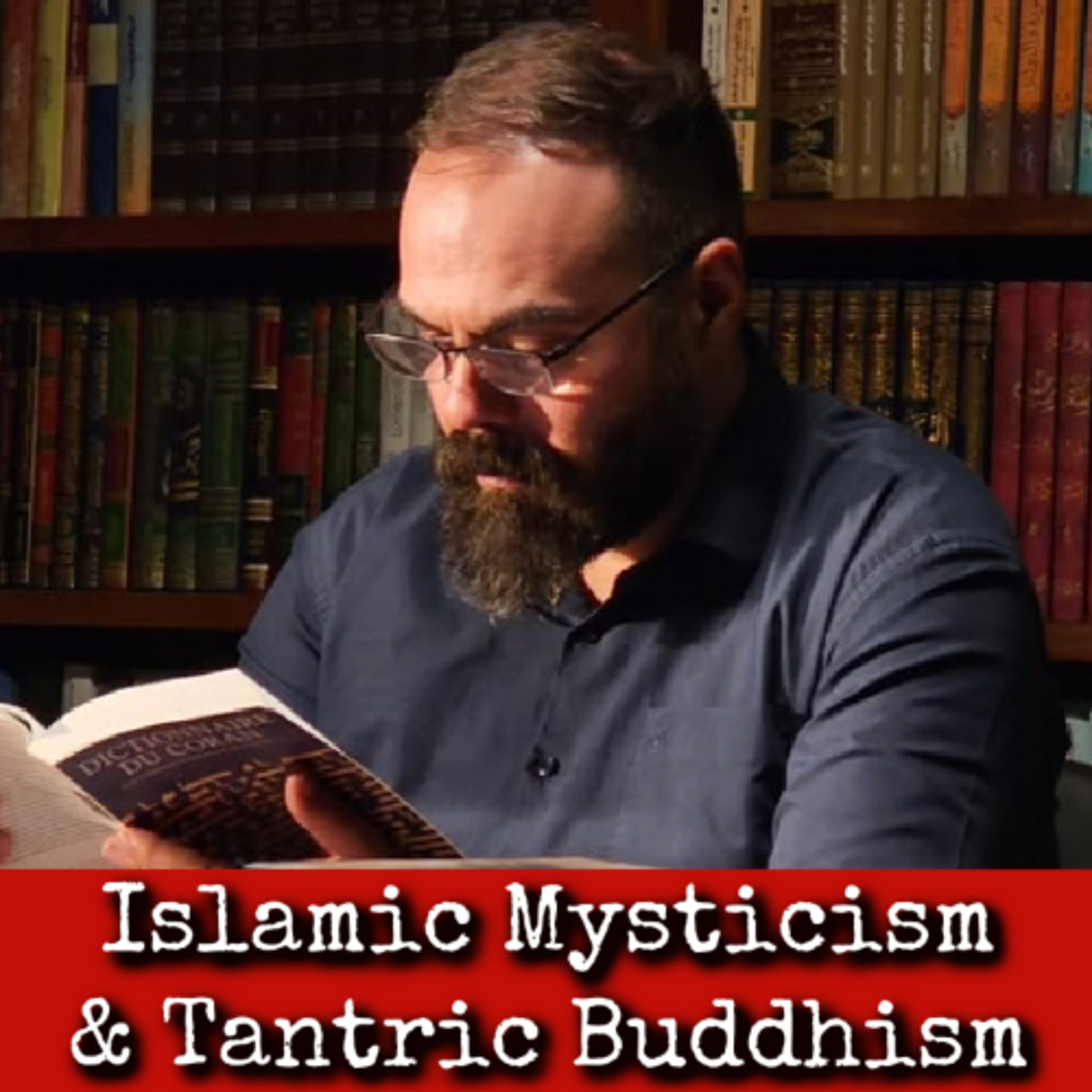
Ep354: Islamic Mysticism & Tantric Buddhism - Dr Francisco José Luis
About this Episode
In this episode I am once again joined by Dr Francisco José Luis, scholar of Indo-Iranian Studies and Comparative Religion trained at the Sorbonne, Paris and SOAS, London.
Francisco shares his research into the links between Indian and Tibetan tantric practices and the mystical teachings of Shi’ite Islam, reveals the prevalence of lucid dreaming techniques in antiquity, and emphasises the importance of the Silk Road in transmitting esoteric knowledge between civilisations.
Francisco discusses the Islamic yogi, Jâbir ibn Ḥayyān; traces the historical tensions between the scholarly, jurist factions and mystics within Shi’ism; and asserts that Iranian Buddhism was a key part of the Islamic Golden Age.
Francisco also argues for significant Islamic influence on Buddhism, the need for a sense of civilisational greatness, and why he believes the time has to come to reignite sacred chivalry.
…
Video version: https://www.guruviking.com/podcast/ep354-islamic-mysticism-tantric-buddhism-francisco-jose-luis
Also available on Youtube, iTunes, & Spotify – search ‘Guru Viking Podcast’.
…
Topics include:
00:00 - Intro
01:02 - Lucid dreaming techniques in a 19th century Shi’ite text
03:34 - The focal point of the Shi’ite tradition
04:28 - 4 volume Shi’ite encyclopaedia of dreams
06:21 - Links between Tibetan and Shi’ite dream yoga techniques
08:01 - Silk road, Gandhāra, and the internationalisation of Buddhism
09:07 - Jâbir ibn Ḥayyān, the Islamic alchemist and “Buddhist yogi”
11:06 - Iranian Buddhist influence on the Golden Age of Islam
14:26 - The rise of the scholar
16:20 - Islamic influence on Buddhism
17:04 - Practice over dogma in Oḍḍiyāna
19:11 - The influence of Classical Greece
19:51 - Lucid dreaming in antiquity
22:27 - Hesychasm: a Christian breath, body, and mind meditation
25:16 - A prophet is always awake
26:19 - Rosary and the influence of Christianity on Islam
28:01 - Lucid dreaming and the Desert Fathers
31:54 - Sleep deprivation to achieve mystical states
37:51 - Bardo ideas and the Iranian worldview
40:49 - Monastic routine and lucid dreaming
42:57 - Tasks to complete in the dream
43:28 - Angelic possession and contacting the Imam in dreams
50:28 - Is mystical Shi’ism practiced today?
58:22 - Francisco’s initiation and anti-mystical, Occidental materialism
59:20 - Political Shi’ism
01:01:41 - Attachment to matter to the detriment of spirit
01:02:07 - The need for the spirit for civilisational greatness
01:04:13 - Francisco’s mentoring
01:07:14 - Reigniting sacred chivalry
01:08:07 - Plato, Evola, and Traditionalism
01:10:19 - Use of the letter “a” in Shi’ite mysticism and other tantric similarities
01:11:13 - Entheogen use in Iranian mysticism
01:12:06 - Francisco’s mushroom trip
01:13:23 - Francisco’s aims
01:15:22 - Reading recommendations: Henry Corbin and Mostafa Vaziri
01:19;18 - Buddhism in Iran
…
Previous episodes with Dr Francisco José Luis:
- https://www.guruviking.com/
To find our more about Dr Francisco José Luis, visit:
- https://www.instagram.com/hludvig_tradicionalista
For more interviews, videos, and more visit:
- https://www.guruviking.com
Music ‘Deva Dasi’ by Steve James
Hosts & Guests
Transcript
In this episode, I am once again joined by Dr. Francisco José Luis, scholar of Indo-Iranian studies,
and comparative religion, trained at the Sarbonne Paris and so as London.
Francisco shares his research into the links between Indian and Tibetan tantric practices
and the mystical teachings of Shiite Islam, reveals the prevalence of lucid dreaming techniques
in antiquity, and emphasizes the importance of the silk road in transmitting esoteric knowledge
between civilizations. Francisco discusses the Islamic yogi,
Juppet Ibn Hayan, traces the historical tensions between the scholarly jurist factions
and mystics within Shiism, and asserts that Iranian Buddhism was a key part of the Islamic golden
age. Francisco also argues for significant Islamic influence on Buddhism, the need for a sense of
civilizational greatness, and why he believes the time has come to reignite sacred chivalry.
So without further ado, Dr. Francisco José Luis. Dr. Francisco José Luis, welcome back to the podcast.
Thank you so much. Well, I'm so delighted to be talking with you again, and gosh, your last
episode received quite a bit of attention, and quite a bit of comments and discussions generated.
It really seemed to have resonated with many people, and part of that, I think, is this perspective
you have across cultures and across traditions. And in fact, just before you began, I was observing,
I perhaps noticed traditionalism with a capital T in there, and in your way of thinking,
and that that might be fun to talk about a little bit later on. But first, we'll start where we
left off last time, which is your discovery of lucid dreaming techniques in a 19th century Shiite
text. So this is part of a broader comparative study you've been doing on Tantric,
Buddhist Tantric techniques, and certain mystical Shiite techniques. Yeah, so I came across this
text, thanks to my very good friends, Nabil, who was from Beirut, and so he mentioned to me this
this full volume work by this traditionist. So a traditionist in Islamic studies, it's someone who
collects hadith. So in the Shiite context, that's the stayings of the Prophet Muhammad, and then
the 12 Imams and then his daughter Fatera. And so in the 19th century, you have this very famous
traditionist by the name of Sheikh Mirza Nuri Tabarzi, who was Iranian by origin, but left here in
Iraq in the holy city of Najaf. And he's quite famous for having written a considerable amount of
works, including one where he talks about the corruption of the Quran, meaning that according
to old school Shiite traditionalists, the Quran that we have nowadays is not complete, it's been
edited, which is controversial. I mean, modern Shiites now tend to negate that in the name of
Islamic unity, but the old school have a rather more different point of view. And also because in the
Shiite tradition, just like in Christianity, the focal point is not so much scripture, but actually the
person of the human manifestation of the divine attributes. So the idea that God is in his essence
forever hidden, but he chooses to manifest himself via his face, his veil of light, which in
Christianity is the Lord's Christ. And in the Shiite tradition, that's basically Imam Ali and then
the 11 Imams that come after him, but also the Prophet Muhammad. And it's very important
his daughter, Fakhmet Zahra, so the who's also the wife of Imam Ali. And so he has this
full volume in sacrapedia on dreaming. And each volume is consecrated as it's dedicated to
specific themes. So what's really interesting is that you have the third volume of this work,
which is called Dada Salam, the abode of peace regarding dreams and visions.
And this third volume deals almost exclusively with techniques of dreaming,
cubation, and eventually lucid dreaming. And the reason why I say lucid dreaming is that
these dreaming practices have as one of their aims to enable the believer to interact with
the 12 Imams or the Prophet or Fakhmet Zahra or even sayings from my gone age in order to receive
spiritual teachings. And being, I mean, given the fact that I was familiar with Tibetan dream yoga,
I thought, I thought of myself, well, the epistemology seems to be almost identical in a sense that
in Vajrayana Buddhism, especially in Tibetan tradition of dream yoga, one of the users,
one of the many users of dream yoga is this ability of being able to consults
masters who are either not present with you or who have passed on and that you can basically
consult and receive teachings from, right? And I thought that was really interesting because
you have no other tradition. You only have these two traditions that actually have that.
And this is where I started wondering if there were any links between these traditions,
because not only is the epistemology very similar, but then you have detailed
instructions that are almost identical. So just for example, the idea of
sleeping, if you're a man sleeping basically on your right side holding your right palm
under your face, right? And that's exactly the position that is prescribed in these
in these dreaming techniques. And then you have the whole preparation you're supposed to take
purification bath, that's certain prayers that you're supposed to recite, protection prayers as well.
You're also on there also certain avocado, or what we would call mantras. So for example,
you're supposed to recite, for example, a hundred times,
a lauma, and then hi Adela Yusuf. So all Lord, you are the ever living one, and you cannot be
described. So you say that a hundred times before basically going to sleep. And so I'm wondering,
well, you know, there must be some sort of, you know, link between these two traditions,
because the resemblance is so striking. And it just doesn't stop there, because if we look
at it closer, it looks as if there has been quite a great deal of interaction along the
Silk Road between, well, what we nowadays know as Gandhara, right, this region that is in
eastern Afghanistan and western Pakistan. This is where the internationalization of Buddhism
basically starts, right? And Buddhism was born in India, but it became international,
a world religion really in Gandhara. And it is also where Buddhism receives its statutory
arts, and also where Mahayana and Vajrayana also emerge, because Udyana is, which isn't a
swat family in Pakistan, is within the greater Gandhara region. So there seems to have been a
great deal of interaction between these, between the near, at least the Middle East and our region,
but also Tibet. And then there is basically a series of three articles that were written by a
by a German timetologist. Unfortunately, don't remember the name, but the title of these three
articles is Jabr Diyogi. Michael Walter, I think. Michael Walter. Yeah. Yeah. Michael Walter. So Jabr,
what was it referring to? So Jabr Diyogi here is actually Jabr Diyogi in Hayan. So Jabr Diyogi in Hayan
is a very important figure from the eighth, ninth century, who is said to be the father of Alkami
and of chemistry in the West, we know him as Jabr, right? And so he is included. So Michael
Walter basically, you know, explores the fact that Jabr Diyogi in Hayan is basically included
in as a yogi in the Tibetan Buddhist canon. I think it's the country. And this is quite remarkable.
And in a sense, this says as a smoking gun to prove that there has been interaction between
the the center of that Riyana, which was then in Udiana and and and the greater Gandhara. And then
basically the Shi'i world, because Jarvan Hayan was a disciple of the six Imam,
Imam Jafrasadak, who's a great, great grandson of the Prophet Muhammad and of the Namali.
And who was also known to be someone who was in doubt with extraordinary knowledge and who
favored the sciences. This is also the age where you have the start of the so-called Islamic
golden age during the Abbasid period. And something needs to be said about it, which is that
this golden age of Islam, which happened in Baghdad, where I live now, and which occurred
around the eight, nine century, which brought about this intellectual and scientific revolution
within the city, was made possible by a particular dynasty of visears and intellectuals
known as the Barmakites. And the Barmakites were a family of hereditary habits of Buddhist
monasteries in in present-day Afghanistan in Balch. So Barmaki is the Arabic pronunciation of the
the Sanskrit Brahmukha, which means basically the head of a monastery. So this was a family that
basically you know was was was heading this or a series of monasteries. And so they converted to Islam
so it's a mindfulness bell that I have every hour and a half where I do a reality check.
I forgot to switch it off. Sorry, I got it. That's all right. What reality what's the reality check
you usually do? What I do is I stop and then I try to remember what I've done in the last hour.
And then I ask myself, okay, am I dreaming? And I look for and I look for clues that might
indicate that I'm in a dream. And if I don't, then I just do the breathing, you know, breathing
through my nose thing. And yeah, so all right, so it starts. So yeah, as I was saying, so the the
word Barmaki, the name Barmaki is an Arabic version of the of the Sanskrit Brahmukha,
which means the habits, the head of a of a monastery. And so this dynasty that that family
basically converted to Islam and then was part of the inner circle of the Basit Caliphs.
And there were the ones who created Baghdad. I mean, Baghdad was created according to
you know, Sasanian Iranian architecture. And it's it's actually built as a mandala.
The inner core of the city is actually built like a mandala and interesting. So we have
you have a circle and then you have four gates and then at the end of very middle,
you have you have the mosque, you have the palace, but you also have the house of wisdom,
the very very famous house of wisdom. And I find it also very interesting that, you know,
only a Buddhist could come up with the idea of putting the house of wisdom at the very core
of mandala structure and as the very core of a city. And so only some of the Buddhist heritage would
have would come up with that. And the thing is also up until that time, the idea of the scholar
being worthy of respect did not exist in Islamic tradition. Up until then, the famous figures
of Islam are basically generals and warlords. And suddenly all, you know, you have the emergence
of the personality of the island, the the the the the the the the the scientist, the the man of knowledge
was then given extreme respect. And there's only one tradition around that time that does that and
that's the Buddhist tradition with the the idea of the Acharya, right? The and because the Roman
tradition was that, you know, teachers were slaves. And as far as the Iranian world is concerned,
well, there was a great deal of, you know, scholarship, I mean, not much is left because of the
invasions, but we do not have the names of great scientists and men of knowledge that, you know,
emerge in in pre Sasanian and so in pre Slavic Iran. But with the arrival of the Barma kids,
you you suddenly have this this explosion of scientific personalities that are seen as worthy
of respect and are given the titles of Imam and Sheikh and so and so forth. And so that's quite
significant. So that so already there, you have, I mean, a lot of people don't want to admit this,
but in a sense, the golden age of Islamic civilization was in large part possible,
because of an Iranian family with, you know, a Buddhist heritage. And that's that's something that,
you know, a lot of people tend to, you know, brush to the side and neglect. And it's important
to to to realize that the the exchanges between Islamic civilization and the Buddhist East actually,
you know, go go both ways. So there is, of course, an influence of Buddhism on on in the Islamic
realm, especially the Middle East and the Iranian world. But then also it seems that there's also been
an influence from that realm into into Varayana, which is basically, you know, confirmed by the
presence of Javanind Hayan in in the Tibetan canon. And so and this is where I I'd like to go
back to this idea that I think what we with, you know, the what when we're talking about with Yana
in particular, I think what we're dealing here mostly is people are that are focused on practice
rather than dogmas. And so you have these, you know, I mean, we spoke last time about Bruce Lee,
right? So and then just to to remind everyone why I mentioned Bruce Lee is Bruce Lee came from
the world of Wenchun. And Wenchun is a form of Kung Fu that was created for Buddhist nuns. And so
Bruce Lee felt that for, you know, sheer physiological reasons that there were limitations for him
in terms of the practice of Wenchun. So that is why he explored other traditions just as
you know, like Taekwondo, Boxing, Midjudwets and so forth, as well as Chachar dancing. That's why
his footwork is very much inspired by Chachar. And so he did not care much about the purity of
a particular school. What what mattered for him is what works. And so I think we're dealing here
with the same with the same phenomenon here with, you know, these yogis and yoginis in in
or Yana. Yana seems to be have been a space for experimentation where people of various backgrounds
came together and experimented. And and and and I think that, you know, the results of all the
practices then basically went out into different traditions. It went was absorbed by the Guadok
Bunti tradition, right? Bajrayana Buddhism, Kashmiri Shivism. And then in Eastern Iranian,
she is a men's Sufism in the practices that I that I mentioned. So yeah.
Two questions, immediately come to mind. When one thinks of the examic golden age, very often
the Greek comes to mind. Yeah. And indeed, Gandhara and this tattra tradition that fed
into Buddhism at that point was very much a Greek influence coming from the through back tree
etc. So I'm curious about that. And you also mentioned in the previous episode the influence of
Platonism and Neoplatonism on Islamic theology and mysticism. I wonder if you might
comment a little bit on that. And I believe there is also some sort of dream incubation tradition
in the Greek civilization too. Does that link in your view? Yeah, it does. It does. It does.
So let's start with that because so because a few years ago Charlie, Charlie Moli
basically asked me to do a lecture about that for his for one of his seminars. So it's it's
good to to bring back all that material. So the question that for that arose for me was the idea
of well, how did these lucid dreaming practices slash incubation practices come from in terms of
the shear tradition. And I do believe that the origin of all that is basically the incubation
techniques in the cult of Asletias. Because a lot of the incubation techniques do also
deal with with healing as well in a sense that I mean not just I mean not necessarily physical but
but also inner inner healing. And so my theory is that there is a progressive awareness of lucid
dreaming throughout antiquity. And because you have traces of lucid dreaming for example in the
in the golden house of a Puleus right. But the vision of you know of the goddess at the end of
of the novel and the idea of the you know the sun emerging at midnight there's an article
written about this which explores the possibility of this having actually being a lucid dream.
Aristotle mentions lucid dreaming in in in in in passing. But the first
proper you know detailed account of a lucid dream is actually found in one of the letters of
Saint Augustine. And this is where we have proof of an awareness of lucid dreaming. So it's not
that people didn't lucid dream before. It happened but I'm talking here about a societal
awareness of a phenomenon known as lucid dreaming. This starts in in late antiquity.
And it what's really interesting is that the fathers of the desert seem to be
quite interested in the phenomenon of of dreaming because especially when it comes to the practice
of hasicasm. So hasicasm for the people who don't know in Eastern Christianity. Asicasm refers to
a a tradition of breath, body and mind-based meditation whereby within the Christian tradition
whereby you concentrate on a on either your left nipple or a point or a center just above
the left nipple. And you direct your your your your breath towards that point repeating the prayer
Lord Jesus Christ saved me a sinner that saved the sinner that I am right. And so you're
repeated with your breath. And so in and that's why in in Eastern Christianity you have the
the prayer ropes. So you have these black prayer ropes that you know especially the the Eastern
Orthodox carry. So it's a basically a rope made of black wool and so yeah these knots. And so
there are 100 knots that are divided into three groups of 33 plus one may not at the end. And so
your your teacher gives you a certain amount of prayers to do every day with a certain posture
and with a certain type of precise type of breathing. And what's really interesting is that the
fathers of the desert say that the perfect hasicast is the warden who is always in a state of nepsis
of awareness of mindfulness of mindful prayer whether he is awake or asleep dreaming.
And so this this this this whole idea of you know body asleep mind awake is very much present
there. And what they do then is that they mention the second verse of the fifth contour of the
song of the song of songs which says my eyes are my eyes are asleep but my heart is awake.
And the thing is this is that in the Islamic and especially the she tradition this they say
verse is used by the prophet. So in Arabic is Tanamu Aayin and Aayneh were al-Biyakvan. So my eyes are
asleep but my my my heart is awake and awake in a sense of you know body of of Buddha basically
in the same sense that it's used in the Buddha's tradition. And not only that it's it's it's said that
one of the characteristics of a prophet is that he is always awake. So he's always mindful
whether he is in a waking state or whether he is in the sleeping or dreaming states or in a deep
sleep state. And then several hadiths said several sayings that you know describe how you know
someone would enter the room while the the prophet was what was asleep but then you know
the context of the hadith been explains that the prophet was completely aware what was going on
and then then he says this this this the same. Now it's very clear then that there's a connection
between the spirituality of early Islam and the spirituality of the fathers of the desert
especially what you know because the historians kept that tradition as well and then
much of the Christianity that we know in the east around that time is actually a historian
but then the other smoking gun that I'd like always to mention is that
um in the Islamic tradition and especially in in shish and there's the use of the rosary
that there's a rosary made of a hundred pearls divided again into three groups of 33 with a
with a main main main bead at the end and so normally these we'll be called in masbah in Arabic
or tatsbi in Persian and so they're normally made of woods or you know semi-precious stones
or nowadays plastic from China but the very first masbah that was you know that was given to
Fatima that the daughter of the prophet was made of black wool and so it was made of nuts so it's
it's you know it's that very clear that we're dealing here with with people who were practicing a form
of you know and nepsis that came from the the the the early christian tradition and by the way
I mean this this idea that early Islam and historic Christianity are you know are overlapping
if something is quite evident within the shia tradition shia tradition didn't never really have
problems with admitting that it's just that you know according to to shias and then you know
the prophet Muhammad just initiates a new a new cycle of of prophecy but that but that
the story in heritage is never as never negated so it seems to it the practice or the awareness
of lucid dreaming seems to come you know from from the from the the the the the the millio of the
desert fathers and I think one of the reasons why this idea of being aware within the dream state
became important is that as we all know one of the biggest fears of monks irrespective of
tradition whether they're christian or butters or Hindus or whatever the biggest fear of a monk
is at night it's what dreams it's a huge problem if you if I mean and and so so how do you avoid that
and so what you so I would like to to mention that and then I'll mention something else which is
that a lot of people a lot of people who develop this ability of lucid dreaming are people who
in early childhood were extremely ill and were afraid to die and so when they were going to
sleep they were just telling themselves to remain awake and then that that awareness just slipped
into the the dream and then they you know they they became lucid I've one of my students who
who became a natural lucid dreamer like this since childhood and there are other people
I'm I'm thinking of a panel that with Steven LaBerge where there was this Iranian
lady was also talking and she developed lucid dreaming of ability in exactly the same way
and I think that probably how it happened is that amongst the the desert fathers amongst these
homonastics of the desert the the danger of being afflicted by erotic dreams at night basically
developed this you know this tendency to basically say and I'm going to continue praying in in my
dream so that it this thing doesn't happen and then well you know then you have you have this
you have the achievement of basic leaders but the state of awakening within the dream realm
and so I think that's maybe how it basically developed within this monastic context and then how
it's basically you know you know you know continued with with with with early early
Islam and she is a man of course of course eventually Sufism as well and then by you know by
cross pollination how it was most probably absorbed in in Nudiana or the eastern Iranian world and
then absorbed into into into vajrayana Buddhism but then combined with the whole you know mystical
physiology that is characteristic of tantric yoga so what we have here is is these expert meditators in
Nudiana who then see these practices coming from from the west from the Middle East and say well
we could use that you know in terms of accessing the barto and and so the experiment and then just
retweet it and and then use this this the the physiology of the you know the chakras and
prana and so forth to really you know pimp that ride as they would say on MTV you know and and
develop this amazing you know school of what we nowadays know as Tibetan dream yoga
I wonder if you found evidence of or hints of this connection between vigilance about wet dreams
and dream yoga practice I'd be curious about that another possible en route for lucid dreaming
that comes to my mind is quite ubiquitous technique of sleep deprivation for just a mystical
or any deprivation really but you know sleep fasting whatever but fasting sleep sleep deprivation
for achieving mystical states transcendent states etc we see it I think in many many cultures many
traditions around the world especially the old ones yeah various types of visual I recall and
interviews I conducted here with Glenn Mullin and he was discussing his training in lucid dreaming
within the Tibetan tradition the book but tradition and part of that was a retreat he undertook in
which they basically tried to stay awake a lot and try to meditate a lot and the reason isn't just
try to stay awake it's it's to get into position where you're constantly falling asleep
and because you're constantly falling asleep trying to stay awake then you have chance after chance
after chance to enter into the dream and so you have chance after chance to try to maintain
awareness continuity of awareness into the dream so if if this idea of visuals of sleep deprivation
was used for various should we say shamanic style reasons then presumably lucid dreaming would be
an epiphenomer of that perhaps that's also a root in a kind of lucid dreaming as as it's
from a shamanic technique might that also have been a way in which it crept into the the
monastic or contemplative traditions that you've been discussing well in the case of the desert
fathers I don't know but in the eastern Iranian world it's quite it's quite possible
what is really interesting is the following and I've mentioned it in in Charlie Mourn in seminar
which is that so as we know that there are two main ways of becoming lucid
it's one of one as the you know the what we call dream induced lucid dreaming rights so you
you you you have these dream incubation techniques and these you know reality tests and so on
so forth and then hopefully at night within the dream you'll become aware that you lose that
that you're dreaming and then you become lucid the other one is the awakened used lucid dream
so where you enter the lucid dream directly you know via the the awakened state
but what's really interesting it's really interesting you mentioned this because
so in ancientism it seems to be that it's more the dream induced lucid dreaming techniques
that prevail but in in Iranian sufism especially with the great Iranian mystic Rootsbehan
Bakli who lived in the 13th century so he wrote this this spiritual diary
called the unveiling of the of the unseen and in it he describes a series of visions that he has
and it always starts in the following manner he says well I woke up for the midnight prayer so there's
this there's this this is optional prayer that you can you can perform in either Sunni or Shia
Islam known as the night prayer so you wake up around midnight between midnight and and the dawn
and then you know you do your ablutions and then you you pray the night prayer where it's said
it's really seen as a sort of very intimate dialogue with gods where you you confess your sins
you ask for mercy and so what he then says is that you know so I do the night prayer and then I
was sitting there reciting my my my mantras by i've caught and then I slipped into this vision
and invariably throughout his accounts when the vision and she said and then I woke up
and did my ablutions again which means that he had fallen asleep so what what's happening here is that
the the sleep rhythm that is inherent to the life of a
pious stew for your she by itself entails some sort of sleep deprivation which is that you know
you're you're you're encouraged to wake up at midnight the middle of the night so you're encouraged to
basically you know interrupt your sleep which is basically the you know the the waking and then back
to bad technique really so you you you're encouraged to basically break your sleep and then wake up
and then for half an hour you're doing something as the technique says right so you do you have to
do something for for half an hour something that also the involves energy so in this in this case
it's it's the it's the midnight prayer and then you basically you know you you do your you know
meditative recitation of a mantras and then you you know you slip into you sit consciously into
the dream realm into the the the the the the the the the the the the bar though and I was really
interesting here is this is that from the point of view at this epistemology Tibetan dream yoga
whether it's idea of the barato because the dream realm is the barto
forms exactly with the Iranian view of the world which is that the the intermediary
world that is the world of cleans but also of the of the dead and it's also the realm of visions
and so and so forth this intermediary realm is known as the barzakh barzakh barbo very it's
very interesting that these two these two neighboring cultures share not only the same culture
as the same concept but have terms that actually you know very much sound alike but
uh yeah so you you have this idea of um of using these intermediary space between
waitfulness and and sleep to basically slip into consciously in into into a lucid dream and
have these and having these you know mystical experiences of you know a swimming in the ocean
of eternity and you know being having you know receiving teachings from Imam Ali and so and so forth
so that's that's pretty much there now to what extent this might have been influenced by
um shamanism i don't know but i think that definitely that i think of it definitely the
the the monastic rhythm in eastern christianity of waking up at night and then you know
the vigilance and so forth which basically you know
uh uh uh she is and and soofis are supposed to also imitate i think because they didn't tell
some form of you know sleep deprivation um i think that the the element of sleep deprivation
probably comes from there that the very rhythm of the prayers the way they're done
the fact that because the obligatory prayer um the first obligatory prayer the day is at dawn
right before sunrise um and before that you can you have the optional midnight prayer
and uh which is actually highly encouraged so yeah to you sleeping and then you wake up at midnight
you do your midnight prayer and then you slip into a lucid dream until you wake up again for
for the um well he dawn prayer and it makes sense that this sort of sleep deprivation is you know
waking back to bed technique as we call it nowadays that um it helps greatly in developing
this ability to become lucid in in the in the dream realm yes if we take the
argument of the wake up back to bed technique seriously which is that it massively increases the
likelihood even if you're not really trying um to have a lucid dream that's the idea that
sometime in the night you should wake up and for half an hour or 45 minutes or something
meditate read the newspaper whatever you want to do and uh then you go back to bed again then
that subsequent sleep phase is said to have greater potential much greater potential so if
if we take that argument seriously intentionally or unintentionally and that's quite a crucial
question i suppose yeah that that rhythm which is also present isn't it in uh
western monasticism the rule of benedict and that sort of thing we see we see similar sorts of
sorts of ideas it's it's going to even if unintentionally induce
uh lucid dreams and if you're oriented towards the holy life wrestling with temptations maybe even
as some of these traditions too uh do uh seeing some of the threats to that holy life as
demonic influence personifying them in those ways what's going to happen in those dreams
who are you going to encounter what are you going to encounter even if we take a strictly
psychological reading yeah it's likely to be laden with religious significance yeah you're
going to meet gurus you're going to meet teachers you're going to meet saints you're going to
meet angels you're going to meet demons or whatever it is you're working on whether if we
if we take a strictly psychological lens that's that's fascinating and then it makes sense that
becomes something of a battleground uh for one spiritual life it's very interesting you know one
of the things that you've mentioned to be before is how similar some of the lucid dreaming techniques
are that is to say once you're lucid dreaming something that i think is very interesting about
the tobacco those dreaming techniques for example our systems is that it's not just about
becoming lucid in your dream actually that's just the entry uh then there are all kinds of
maneuvers and uh objectives uh tasks to do once you're lucid and they're set to have all
different sorts of purposes and so on uh but in fact you had mentioned to me before that there are
similar kinds of tasks that you discovered in this Shiite context yeah so the so here's what
happens around the um end of the um around the 900s basically the 12th Imam of the Shiites uh
disappears goes into occultation and so the the Shiite world is in disarray because their spiritual
lever is no longer there and so you have a whole series of phenomena that emerge which is
uh unfortunately you have the outer circle of the imams which is basically made of
jurists and and people that come from the banking world that basically take over and start purging
the sheet tradition of its more mystical and spiritual aspects uh so these spiritual
aspects you you can find them in in the alivism uh which is the form of shism uh in Syrian alivism as
well uh or in the um the alihak the people of the truth of Kurdistan um who you know are part of
the Shiite world but you know don't pray the way that for example you know mainstream Muslims
pray that their prayers is actually um you know they have these uh 72 scales that they play on
their sacred instrument the tanfuhr and which um let them go into a state of angelic possession
uh it's quite fascinating uh but you know that's a separate subject but
and so the question arises what for for for the pious uh Shiite believer how do i come in contact
with the Imam and and the answer is well the Imam might be in occultation but you can still see him
in the dream realm because uh there's a saying of the prophet according to which um the devil
cannot imitate uh the shape of prophets and and and the holy imams and so if you see the prophet
in a dream you've actually seen it for real and so this is very important because that you know
the the idea that you can have access to the holy imams um and to Fatima Tuzahra uh in dream
or in dream realm in order to receive teachings from them um means that you can basically
um have a very personal engagement with the divine without the need of uh you know that this
the this outer circle of of jurists and um and uh and people of course are tight to you know
banking and um and the commercial world and why not at all interested in spirituality um so
what happens there is that you have this uh these practices that are in the hadith books so they
can do these cannot be perched out of the tradition and so that the you know the miracle somehow is
that these these these these uh these sayings describing these practices are still present in the
she collections of sayings of the prophet and his family and and they can't be perched out and so
people still have access to to these um to these practices if they're aware of them and then can
have access directly uh to the imam uh in order to ask the imam questions and most importantly
in order to receive initiation because mystical she is and it is an initiatory path um and so
what happens is you can ask a mantra from from the imam so that you can practice it um and and so
in in in in traditional she's spirituality um or let's say in traditional non-soofy uh she's
spirituality that the your master is basically the imam of the time of any of the 12th imams or
or phantasmitasara and so you go to them you know to receive your mantra and then that's that's your
initiation so the um the these lucid dreaming techniques are seen also as an initiatory practice
because that's how you get to see the imam and receive the teachings directly from him
in order to start your proper spiritual practice the reason why i say non-soofy spirituality is that
within sheism there are soofy orders that in time convert it to she is and so you have
orders like the hawkshire the nematula ear the zahab ear and a couple of others that have converted
to to to to she is them and there you have spiritual masters uh you have shares we have um you know
peers as they call it in in in in uh in in box down in india uh who then you know can give you these
you can also advise you on how to have these mystical experiences via uh lucid dreaming or
can give you a mantra but there's always been this debate amongst among sheer mistakes
between these two tendencies the uh the non-soofy tendency which is that you engage in lucid dreaming
to have direct access access to the imam or the sufi path which is that you have a human master who
teaches you you know who gives you a mantra a thicker and then tells you to perform certain
number of practices and then only do you have access to the vision of the of the imam but
at the very core of the chemistical experience is the vision of the imam why because the imam
is seen as the face of the living god so he's the is the invisible aspect of the absolute
and so to see the imam is to see god and that is why these lucid dreaming practices are so
so important in the 40s um 40s chemistics and especially for that author
Mirza Mirza Noritabarsi precisely because of that because of the so it's not just like a the imam
is not just a spiritual master he's he's actually the uh the face of the living god and experiencing
the imam in his form of likes in the in the um in in the suburb of kaya as we would say in
in the Buddhism it's basically uh it's it's the it's an experience of the of the divine that's um you
know it's fundamental in in uh for that off how much of this is actively practiced today oh well
so it's very interesting you mentioned this so in the 19th century when when this book the dar salam
by Mirza Noritabarsi appeared it was a huge success it was read everywhere in the sheet of worlds
poems were written about this book by eminence personalities uh you know and at the end of the 19th
century but entire poems were being dedicated to praising this book and that's how important this
book was nowadays um be it in iran or iraq if i mentioned this book um to clerics i get the glare
and the reason for it is that over time you've had this for a minute phenomenon of you know the
politicization of shiasm um which culminates of course in the in the iranian revolution of 70
time now the thing is that and you know is that traditionally speaking 12th of a shiasm was apolitical
because of the belief that only the 12th Imam was in occultation can be uh the legitimate ruler on
us and that uh we cannot pay allegiance to any other power than than him and so because of
in occultation there can be uh there are certain aspects of Islamic practice that basically are
suspended so for example the private press for a long time did not exist in shiasm
uh so much so that you know like uh in a lot of in in a lot of shii um locality so be it villages
or or or or the towns you know you you you don't have mosques but you have proscenias so the
proscenia is a place of gathering for the morning of the third Imam that the grandson of the prophet
and Imam Hussein who was brutally um peeled and massacred in in carabala here in iraq and so
every year around uh during the month of moharan people gather and they and their side these
allergies in in honor of Imam Hussein so a lot of localities have proscenias don't necessarily have
a mosque because establishing a mosque there are certain rules that have to be respected and
sometimes it's complicated to to to to to do that where's our seniorages he can he can be just any
building that you can transform into a senior but the thing is the practice of friday press in 12
a shiasm for a long time did not exist because the friday press actually political acts because
it's the community coming together and the um and the Imam leading the prayer has to be
nominated by the Imam at the time who was the spiritual and temporal ruler of uh in shiasm even
that the Imam is an occultation there's no friday prayer i mean there wasn't any friday prayer
until late 19th century that's where they you know brought up all this stuff again and there were
certain religious taxes that could not be paid so for example there's one religious
tax known as homes which is that at the end of your financial year you have to give a fifth of
your earnings to um basically the poor the orphans and so forth but also and i mean and the other
half goes for you know promoting the religion um even that the Imam is not there that money is
that that the payment of that um religious tax was suspended until there the eventual return of
a first the Imam and so what happens is that uh with colonialism um the shey clerical elites
thought that it was time to basically give up on this quietism the this apolitical stance and to
politicize shiasm in order to turn it into an anti-colonial um you know ideology which basically
culminated in the um in the Iranian revolution now the paradox of the in all of this is that
humane himself was deeply involved in mystical uh philosophy uh he um i mean no matter what one
may think uh about him as a politician um his mystical writings and philosophical writings
actually quite remarkable um and uh so he he wrote he wrote great commentaries on on in arabic
um in fact his theory of power is a political power is actually inspired by the uh you know
by the republic of later the idea of the philosopher king who basically organizes the state at
sonzoforth um that's that's that's i mean and this is something that's been admitted by the
Iranians it's it's it's a it's a republic of later um at the sort of people understand here i have
a multi-arrain in the embassy uh i don't speak on behalf of the uh the Islamic Republic uh so when i
when i speak about this i try to speak about um Iran i mean the political aspect of Iran in a
dispassionate way i have no dog in a fight i i i'm not Iranian i'm not the Iranian citizen um i'm
neither for or against now particularly of all form of power i'm an academic academic and my
function is similar to observe i just don't want people to start considering you know considering
certain things about me because i i just don't i don't get involved in politics um i mean at least not
in locally radiant politics um so the thing is yeah humane was uh was a mystical thinker as well
but then do you have this this this thing and one of the paradoxes of the uh Islamic revolution is
that a certain number of ideologues in the Islamic revolution said that well we now have what we
wanted for age which is which is an Islamic government so all of this mystical stuff which was the
very core of shearsum has basically been utterly and completely neglected um both by the sort of
leftists you know crypto Marxist element within the the uh you know Iran revolution but also
but later on by the the very strong uh conservative liberal um and neo liberal capitalist um elements of
within the Iranian establishment and so that so much so that nowadays um there are only i mean there
are certain circles within the Iranian um religious establishment that still teach the stuff
uh but it's very low key and um yeah the the the which is quite paradox because paradoxical because
homani was into mystical philosophy but nowadays speaking about mysticism uh makes certain people in
Iran quite nervous and it's not just the people in power you also have um sectoralists who
become very nervous when speaking about um you know um uh about mysticism i mean i was initiated
in the in the in the in Iranians so if you order um and uh i remember that i was getting i was getting
grief i was getting beef from both the clerics and then the anti you know Islamic Republic people
and so uh yeah which is not surprising because both of them are part of a secular um and
anti-musical vision of the world and that's why i don't really make any distinction between them
because at the end of the day they're they're um basically people who are slaves to what we call the
um that will would use the uh the oxidant of existence which is this material world which is a
a shadow of light it was a shadow of the uh the celestial realm i wonder if you might
unpack that last point a little bit more well so what has happened um with political schism is that
schism has been transformed into a left-leaning third-worldist um you know worldview that has basically
expunged uh the mystical core of schism in order to turn it into the um a large branch of the
international revolution and by doing so they've just joined ranks with the uh with the Marxists and
but also to you know certain extent also the uh uh new new liberal capitalism which is the reason
why in Iran you you you find both tendencies within the you know political establishment
but the end of the day these are people who uh have no concern whatsoever for the life of the
the spirit in the life of the the the soul um and uh i mean one of the things in my life that i
i've always tried to do is as a tradition is was to revive as a space of traditional education
such as you know meditation, martial arts, calligraphy and so on so forth and for a long time i've
tried to do that in in wherever i live be it in Iran be it here in Iraq or be it in in Pakistan or
in India and uh i was always confronted with this brick wall uh which is that you know i've had
these officials who uh you know would tell me that uh you know there's all fine and dandy but
it's not going to solve our existential problems in your answer and so forth and um and for a long
time i was very i was very you know dejected and sad about this and you ought to realize that
basically this is the qaliyogad, this is the age of darkness and um it was predict that these people
would eventually take over um even under the guise of a religion that they would take over
the world and that's their mindset cannot think above matter they're a profoundly
thermosic people and you find them it's not just in this part of the world you find them in india
you find them in china you find them in europe you find them in in in in in the Anglo-Saxon
West as well it's this attachment to uh to matter matter at the detriment of the spirit and the
thing is that you know the thing that achieves anything in and the thing that achieves greatness
in any civilization is the spirit and um you know you you you cannot develop an elite a proper
elite um if you do not have this life of the spirit and i'm i mean just a few a few days ago i
i talked to my students about Alexander the great right i mean this is a this is a teenager
who you know the end of his teenage years i mean his his father gets assassinated um you know
by the Persians and he decides with his classmates because you know his teacher was Aristotle so
him and his other you know i mean let's imagine you and i are doing our A levels right and my
father dies it gets killed by the Persian we're like a steve you know why don't you uh you and me
and Charlie and Ian Baker and all of us how how we how why don't we just go you know well 40,000
men year and we just you know conquer the Persian Empire and freaking you know conquer it
and this can only come from people who are not only you know physically you know uh quite there but
also were animated by a life of the spirit that's made them realize that you know that
but the very aim of life was to basically chisel their names on on on the on the on on the you know
the the wall of eternity and to change the the situation the the merasm that they were living
in which is like you know that the Greece was this little thing on the map which is basically
was always being devoured by the Persian Empire and within a decade that was all that that was
all reversed by a group of teenagers you know and so what i'm trying to what i've always tried to
achieve is um through my mentoring um young people is too awakened that spirit and you know thank
God like you know every year or two years or so i managed to have this this one person who
uh who um you know who takes that on and then they transform their lives and then they transform
the the world around them i've have one student who's very dear to me um who i was teaching with
Pakistan and um he he tried to uh he he had some some problems uh and um he would come to
about office and seek some let's say personal advice um and you know he would ask questions
about religion that told him look i'm not i'm not a preacher uh all i have is i have my course on
Islamic art and Islamic philosophy and i have the you know the meditation workshop that i do
every day so at the university where i was teaching um as a part of community service i would do
uh one our meditation workshop every day so it's two sessions of half an hour made of mindfulness
meditation for everyone at university whether you were faculty or student or staff you could come
in sit and basically just just meditate and so what happened is that uh this young man started
going to these sessions and then this basically awakened something uh within him um and he had
several other experiences and nowadays he's a very successful um person he's um he's created a
an organic farm in Islamabad where he grows all types of organic foods and um and also um
all kinds of different mushrooms and with his income he teaches martial arts and yoghurt to
to poor kids and he has a dog shelter and so and then an animal shelter and so this person um you
it transformed his life and but also the life and everyone else around him and i really believe in
this idea of um you know like helping ignite that spark within you know to create an uh an
aristocracy of the spirits that's just like um that's just like he basically makes the rest of society
basically rides with them but organically and not in a sort of condescending way
and um and it's very moving for me to to um to to to to be to be part of that process and to to help
ignite that uh that flame within um and so only recently i have found someone who uh in iran who's
basically willing to who's now full actually he fully engaged in in his revival of uh what is at
the very core of the iranian spirit which is sacred chivalry uh so jawan maddi and so yeah so it's
starting and it's very exciting and it's wonderful and um you know uh so hopefully it will
bear fruit in the future and it will be able to see a proper spiritual leads
um emerge and and and really give people an alternative to um this materialistic
materialistic view of politics uh whether it's religious or not it's for me it's all the same
just materialistic so and it doesn't leave anywhere you know i think we might be
talking ourselves into a third installment you know uh you know what i'd like to propose actually
you've used a few terms here that i think would be very interesting to
explore visible you've you've used this word elite yeah and you also mentioned Plato and his
republic yeah and uh elite in many circles is is seen as a dirty word in fact yeah the idea that
there there should be an elite one should strive to be part of it or that any fair society would
have such a thing is is seen by by some as axiomatically unjust but here you're holding it
as something of a positive ideal and of course if you know you're Plato then
which you refer to that then of course what one gets a sense of where that might be coming from
or that's what might be informing it to some extent you've also used the word aristocrat of the
spirit and that makes me think of volas aristocrat of the soul which is a kind of vision of engaged
spirituality and cultivation somehow maybe we could leave it at that for now this seems to be
actually crucial to your thinking last episode we added you as a new Platonist
and now you've you've talked about traditionism with the capital T I think it would be very
interesting given what we've talked about in these last two episodes to have a whole episode
dedicated towards this aspect of your thinking and this this this part of your vision are you up for
that? Oh absolutely absolutely yeah yeah that'd be wonderful. Well then then let's do that and
spend it yeah absolutely. Then before we bring this this episode to a close that you'd like to
mention I mean there's I know there's a lot more there's tummo you've you've found
yeah it's what seems to be some sort of tummo practice in the shite
uh texas and so on is there anything else on this sort of comparative theme?
Oh yeah so you'd like to bring up before we finish. The the use of the letter A in meditation techniques
visualization techniques that basically whereby the person
uh stairs at a portrait of Imam Ali within a mandala structure and then closes his eyes and then
tries to remember that she I mean there's this I mean this is all stuff that we've finally been
into in in in in in day to yoga and guru yoga as well right? So these uh and what is really
we're really interesting at the the the the dervishes that engage in this particular practice is
the hawks are look like yogis I mean they're the ones with these long hair long beets and you know
and uh I mean they look like I mean they're the yogis of Iran basically and they engage in this
in this stuff and also in the use of you know um antiogenics uh in the antiogenics substances
uh substances um yeah there are you know either side of side in or um or a sort of DMT form of
aloe vera that exists in in you know in metanderan yeah Iran is full of those plants uh that they grow
pretty much uh everywhere in fact my first my first experience with side of side in was in
Iran actually uh it's quite an interesting experience I was I was I was handed a I was handed a
this box of um you know quality streets sweets by someone I knew who was was part of the uh
um who's linked to some circles and so I was like all quality streets I mean that's so kind of
you and it's like my friend this is not biscuits I'm like what are you what are you talking about
and so I opened up and lowered the holds um I was in a possession of 15 grams of side of side in
much oops um so that was um it came a right time in my life uh because I just on the gone of
very traumatic um you know event in my life and it um I was suffering from um emotional numbing I
couldn't feel emotions be it sadness joy or fear or anything like that and so this actually
helped me uh in terms of my recovery from from from that uh from that experience uh but also it
was really interesting is that um there's a there's a grand higher taller in in the whole in the
Holy City of of Bob was an expert jurist who actually gave a fatwa uh permitting the use of
ayahuasca and synosybin uh mushrooms so uh yeah and I hope that um with time I can
popularize lucid dreaming and meditation and um and also these uh sacred uh these sacred medicines
in the treatment of PTSD and um and other you know psychological um ailments that a lot of people
here suffer because of obviously the war uh I mean there was been the iran iraq war there's
also been the war against uh against ISIS which has left a lot of people um you know um wounded
I mean internally I mean and and unfortunately especially in iraq that the state of um mental
health uh is is not really good and so I'm hoping to use these um these uh these traditions in
order to help um you know in order to help people because there's a lot of a lot of suffering here
and um and when the people are living here with it uh it's a society that I
very fond of there you find very wonderful people here and it's my way of I mean there's my sort
of personal bodhisattva right um as to um I mean although I'm you know I've not I've not taken
refuge but um the bodhisattva ideal is very important in my life and I think that um you know I
couldn't live with myself if I didn't if I didn't do anything to help uh relieve suffering around
me with humans or animals or other beings so um helping popularize these practices uh for the
you know to relieve people from unnecessary pain I think it's one of the it's one of my objectives
yeah and where might people read more about what we've discussed today I know we've talked about
Michael Walters articles and I know you're writing quite a lot of this and publishing on this too
so where what what are the sort of things you're doing that people can follow up on these themes
if it's if they're interested so uh I would recommend they read the writings of uh two people uh so
the first one would be the French philosopher Henri Corbin or Henri Corbin so H-E-N-R-Y and
in Corbin C-E-O-R-B-I-N so Henri Corbin was a philosopher and uh on Orientalist who um spent
half of his time uh each year so every you know so he would spend six months in Iran and
six months in in Paris teaching and he's basically the one who um in Stimzwell were two basically
unearthed all of these monuments of Islamic mystical philosophy of Iranian mystical philosophy
and so in terms of the philosophy uh I would highly recommend his books I mean all of them they're
they're they're just really uh fantastic uh he was part of the Aeronaut's circle that was created by
Colbe Stavion so every year at um you know at um at the Aeronaut's circle in Switzerland
Colbe Stavion and Micelliard and Gertrude Schollen and Henri Corbin and you know
um uh Suzuki and other great um intellectual personalities that work on on spirituality with
gather and so uh after Yun died Oli Corbin was sort of the you know the the the the the main figure
of that circle until he eventually died as well in in 78 and then there's the work of his uh
successor uh with professor uh Mohamed Ali and Muayseh who was the head of Islamic studies at the
University of Paris at the Sorbonne and at the Ecculti Patigno at the Ecculti Institute
yeah he just retired but um so he wrote uh he wrote this fundamental book um titled um the divine
guide in early shishism and I don't know whatever I mean whatever you may have
thought about shishism I would recommend you fasten your seat belt because
you're in for a ride with this book and as this book goes really deep into the early shishors
and demonstrates how country to today are where politics and and and and jurisprudence
seem to be at the very core of the she alive at the very at the you know at the very core of the
initial she tradition what you had was mysticism and mysticism that was very much linked to ancient
Iran but also ancient India as well so and then yeah all of this works I mean
that's one book that he wrote called uh she spirituality uh where he talks about
visualization techniques uh by these hawks are nervousious uh there are where they visualize a
portrait of Imam Ali within a mandala structure and then repeats certain prayers whilst you know
with their breathing techniques we just akin to what we find in in in many uh tantric uh you know
practices being in Hinduism or Buddhism so he talks about that um and then there's another book
that I would highly recommend which is the one by mostafa vaziri uh titled uh Buddhism in Iran
which is a fundamental read because when we think of of of of Buddhism we think of course
India but we what we forget is the is the fact that Gandhara is part of the Iranian world
uh and that's uh well let's put it this way Gandhara is Indo-Iranian it's part of this world that
is neither fully Iran neither fully India and unfortunately you know with Indian nationalism
there's been a lot of rewriting of Buddhist history uh so you know when people say all the
Buddhism Baba was uh was an Indian master well well hold on he's probably he's from the swat
valley India starts with you east of the Indus like in like that's why Lahore is considered you know
bubble hints that the the door of the gateway to India uh that region that's that's the Indo-Iranian
realm uh so what you have is you know you have uh you know that the religious traditions of both
worlds that basically intersect in this world so it's more correct to say that you know the Indo-Iranian
master or Gandhara master from us and Baba now the thing is Gandhara is essential um you know
that realm is absolutely essential because what people forget is a lot of the Buddhism that went
into East Asia came from Gandhara um you know through China and that uh missionaries from the
Iranian world uh brought you know several schools of Mahayana Buddhism to East Asia you know like
Bodhidharma was a Sogdhian I mean the earliest Chinese accounts say that he was a red head
you know white barbarian with blue eyes and so he came from Sogdhia right um and so and there's a
whole range of other uh we have even we have even um you know uh amongst from Gandhara that end
up in Japan in in you know and um uh you have Luksha Shema who who was one of the codifiers of
you know the the Pope to Amitabha he's from Gandhara several of the masters within the the shingon
lineage uh Wolf Gandhara and Orit origin uh be it's uh you know Rajna was one of the um people
who brought the uh Vajra either the uh Mahabharaya Vairojana sutra to China to China on or even
Amogavajra Amogavajra his mother was Sogdhian and so you have this entire Iranian Buddhist heritage
that's completely ignored uh by a lot of people um both in Iran and within the Buddhist worlds
for obvious you know uh reasons because um when Iran is quite obvious because the Islamic
is the the clerical establishment does not want to have anything to do with Buddhism and then
there's certain you know there's a certain attitude towards the Iranian world on the part of
certain Buddhists whereby they're like you know as soon as you mentioned Iran is like oh my god
I want anything to do with it I think that we need to you know put aside these uh you know these biases
and say well the eastern Iranian world was not only uh was not just a vehicle or receptacle of
Buddhism it was actually you know actively engaged in the spreading of Buddhism and also in the
elaboration of uh you know Buddhist doctrines and practices as is the case of you know
Buddhidharma and so uh I would highly recommend that book yeah Buddhism Iran by Mustafa
Azari it's a really really great book uh which also shows how how deep that the Buddhist heritage
is in Iran and how it also affected um sheism as well this has been so so interesting
that uh Francesca Luiz thank you very much thank you so much thank you for listening to another
guru Viking podcast for more interviews like these as well as articles videos and guided
meditations visit www.guruviking.com