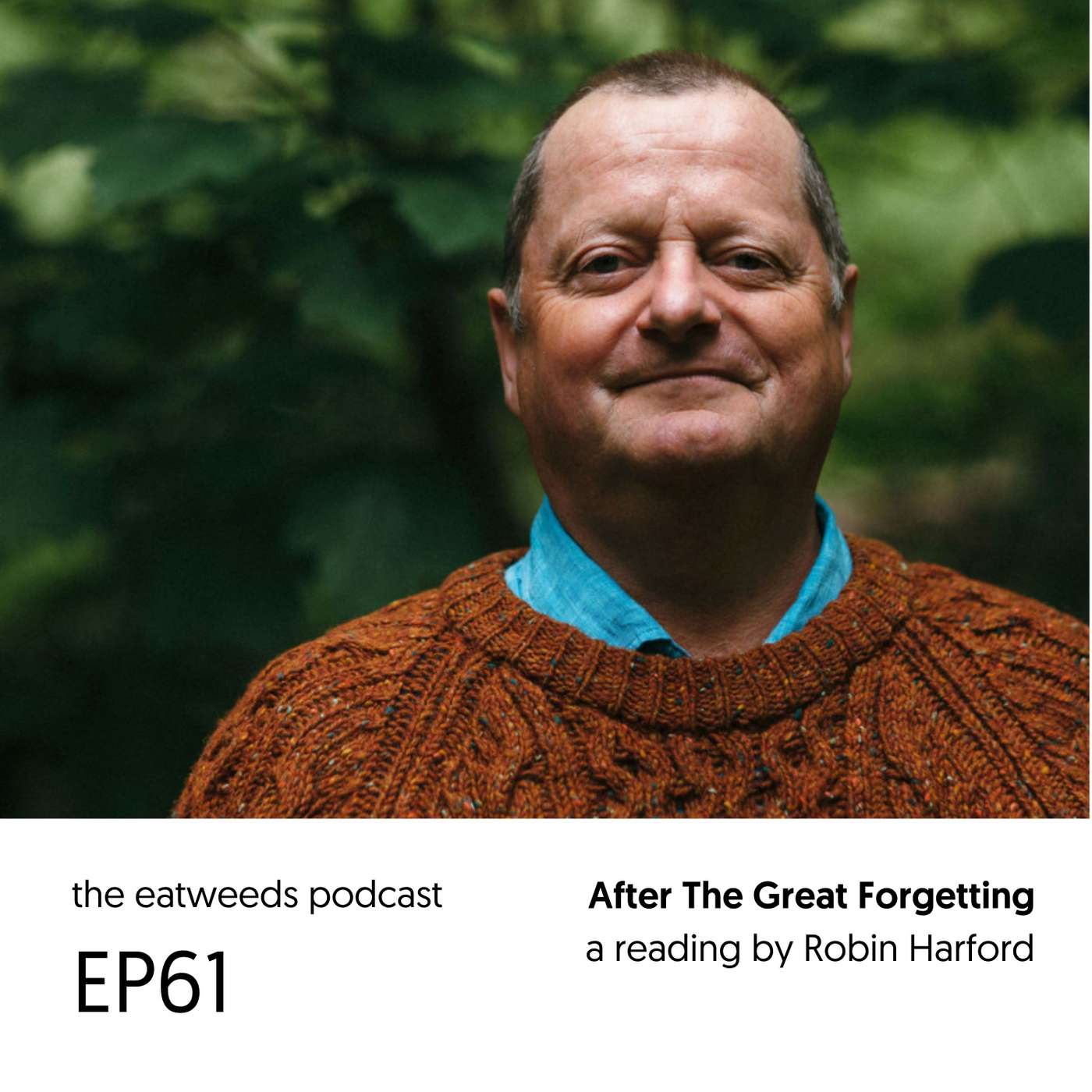
EP61: Robin Reads - After The Great Forgetting
About this episode
In the 17th century, Descartes, Galileo, and Newton transformed a living world into mechanical clockwork.
Descartes drew the fatal line between mind and matter, rendering everything beyond the thinking self inert and available for measurement.
This lens birthed science and medicine, but cost us what Goethean scientist Craig Holdrege calls living thinking - thought that is responsive, relational, and shaped by what it encounters.
Goethe knew perception isn't passive: to truly see a plant, you must let it work on you. Through Domei's sustained attention, observer and observed dissolve into a meeting of subjects.
This Episode Is Brought To You By
Transcripts
Stay In Touch
Website | Youtube | Instagram | Facebook
Free Newsletters
Books
- Edible and Medicinal Wild Plants of Britain and Ireland
- Forage In Spring
- Forage In Summer
- Forage in Autumn
- The Eatweeds Cookbook
Courses
Get every episode summarized
Each time Eatweeds Podcast: For People Who Love Plants publishes, we email you a written briefing from the transcript — the topics, who appeared, and any specific claims, with the ad reads skipped.
Email me new episodesFree for 3 shows. No card needed.
Hosts & guests
No transcript yet
This episode has not been transcribed. Request it and it moves to the front of the queue.
More episodes
More from Eatweeds Podcast: For People Who Love Plants

EP62: Why your body knows things about trees that your mind will never understan...
Eatweeds Podcast: For People Who Love Plants

EP60: Connecting Children and Families to the Wild - with Chris Holland
Eatweeds Podcast: For People Who Love Plants

EP59: Storytelling, Plants and the Feminine - with Clare Viner
Eatweeds Podcast: For People Who Love Plants

EP58: What Is Domei
Eatweeds Podcast: For People Who Love Plants