Loading...
societyculture
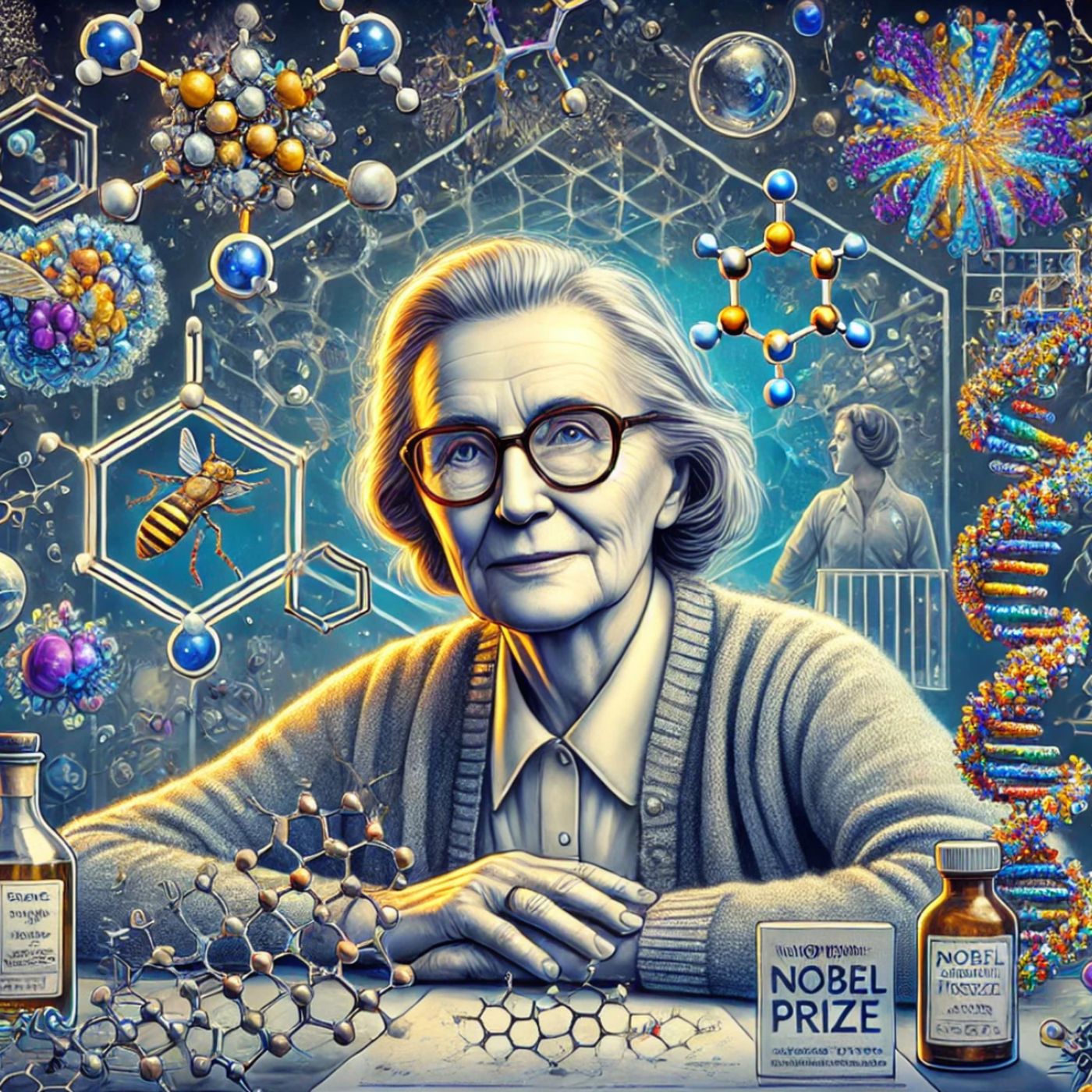
Episode 20: Science in Focus: Dorothy Hodgkin and the structure of penicillin
About this Episode
Dorothy Hodgkin’s legacy in STEM is one of groundbreaking achievements and enduring inspiration. As a pioneering scientist, she was the first to use X-ray crystallography to decipher the structures of critical biomolecules like penicillin, vitamin B12, and insulin. Her work revolutionized the field of biochemistry, earning her the Nobel Prize in Chemistry in 1964. Hodgkin’s contributions laid the foundation for advancements in medicine and drug development, impacting millions of lives. Despite battling rheumatoid arthritis, Hodgkin's perseverance and dedication to science never wavered. She became a role model for women in STEM, breaking barriers in a male-dominated field and mentoring future leaders, including Margaret Thatcher. Her commitment to scientific discovery and her advocacy for global collaboration in science continue to inspire generations of scientists, particularly women, to pursue their passions and make their mark on the world. Join us to learn in a matter of “minutes” how Hodgkin's legacy is a testament to the power of curiosity, resilience, and innovation in STEM.
No transcript available for this episode.


