0:00
Hey, it's Bubba Wallace from 2311 Racing.
0:03
You know what it feels like forever?
0:04
Sitting on a plane waiting for takeoff.
0:09
Good thing I've got Jamba Casino with daily boost
0:12
in social casino games on tap.
0:14
This is a kind of fun that makes time fly.
0:17
Why not turbo charge it down time?
0:19
Play now at JambaCasino.com.
0:23
Sponsored by Jamba Casino, no purchase necessary,
0:25
VGW GroupFord, where prohibited by law,
0:27
21 plus terms and conditions apply.
0:30
According to statistics,
0:31
the average person walks past 36 murders
0:34
Oh my God, she was murdered.
0:38
Unlike in Hollywood movies, they're not easy to spot.
0:41
Where is she, buddy?
0:42
The devil made me turn her dashes.
0:45
They seamlessly blend into our everyday lives,
0:48
assuming rules, as family neighbors,
0:50
helpful colleagues, or even the person lying beside you
0:53
I wanted to be out of jail.
0:55
I couldn't wait till I got out.
0:57
I was in there with someone who was clearly psychopathic.
1:00
Using investigative research and primary audio,
1:02
morbidology is an award-winning,
1:04
trick-rime podcast that shines a light
1:06
on the darkest corners of humanity.
1:08
Through our investigation, we have attained evidence,
1:11
which we are not releasing at this time,
1:12
which leads us to believe Jolene is not alive.
1:15
Turn into morbidology each week across all podcast platforms.
1:27
What's up, everyone, and welcome to another episode
1:29
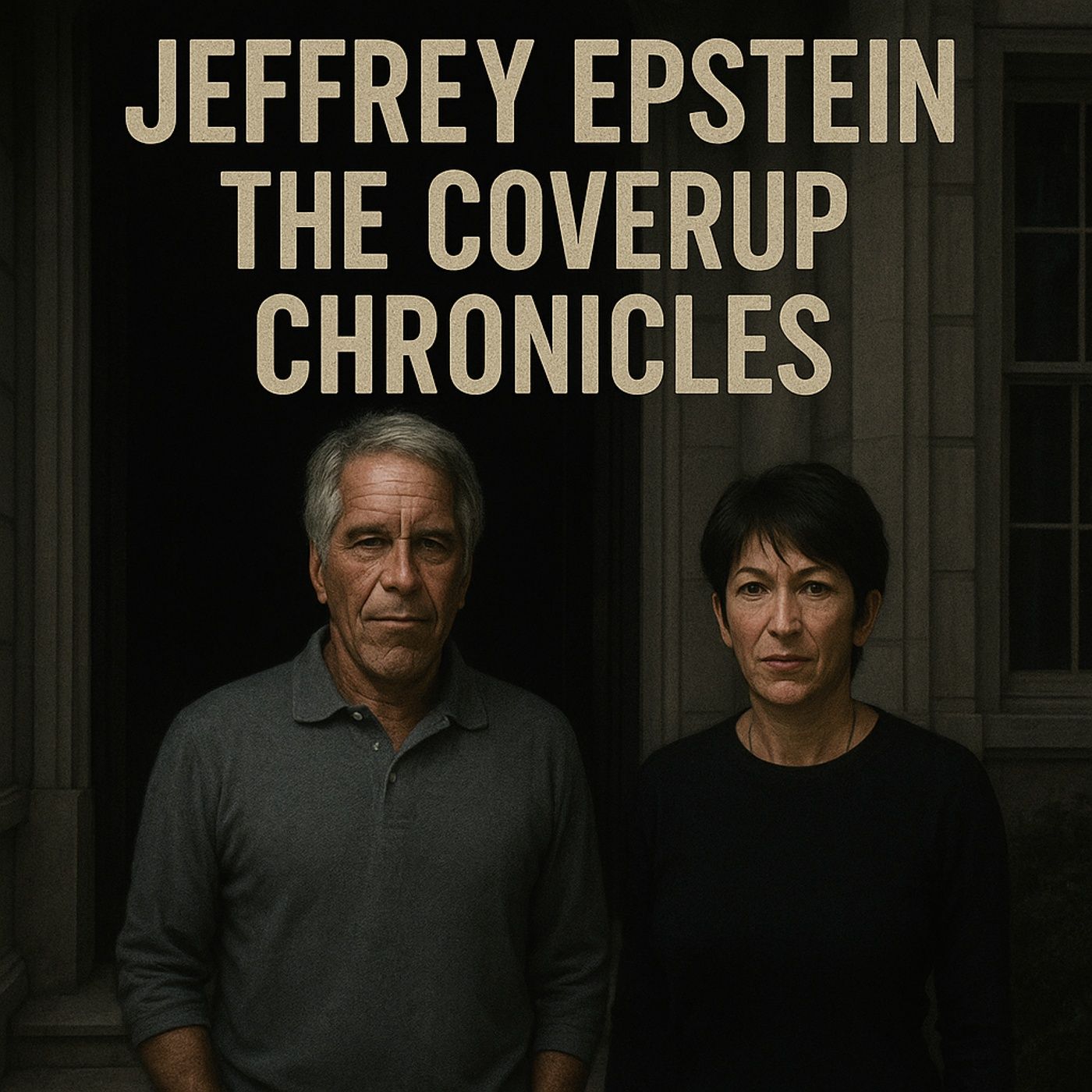
of The Epstein Chronicles.
1:32
What the congressional depositions of Darren Indyke, Richard Khan,
1:36
and Les Wexner have exposed is not just a failure of execution,
1:41
but a blueprint of avoidance that was baked
1:43
into The Epstein investigation from day one.
1:47
These aren't peripheral names pulled from the edges of the case file.
1:52
These are structural beams that held Epstein's world together.
1:56
Indy controlled the legal scaffolding,
1:58
con-monitored, the financial bloodstream,
2:01
and Wexner supplied the capital and credibility
2:04
that allowed Epstein to operate at scale.
2:07
When those individuals are absent
2:09
from the original investigative record,
2:11
you're not looking at an incomplete case.
2:14
You're looking at a case that was deliberately hollowed out.
2:17
Investigators did not miss them because they were obscure.
2:21
They missed them because acknowledging their importance
2:23
would have forced the case into territory
2:26
that could not be easily contained.
2:29
And that's the distinction that matters here.
2:31
This wasn't a matter of oversight.
2:33
It was a matter of direction.
2:34
The investigation was steered away from the very people
2:37
who could have exposed its full scope.
2:40
And once you understand that,
2:42
everything else about the outcome
2:44
starts to make a lot more sense.
2:47
Now let's start with Indyke because his role alone
2:49
should have triggered immediate and aggressive scrutiny.
2:52
This is a man who didn't just represent Epstein
2:55
in a conventional legal sense.
2:57
He helped design the machinery that allowed Epstein
3:00
to move money, control assets,
3:02
and insulate himself from exposure.
3:05
He was named the executor of Epstein's estate,
3:07
which tells you how deeply embedded he was
3:10
in Epstein's trust structure.
3:12
That kind of proximity is not passive.
3:17
And any serious investigation
3:19
into financial crimes would have treated Indyke
3:21
as a primary source of truth,
3:23
not a background character.
3:25
His billing records,
3:29
and his involvement in trust formation
3:31
would have been dissected line by line.
3:33
Instead, he was effectively left untouched
3:36
during the initial investigation.
3:38
It's not how competent prosecutors operate
3:40
when they're trying to dismantle a network.
3:43
That's how prosecutors operate
3:45
when they're trying to avoid triggering one.
3:47
You don't ignore the architecture
3:49
unless you're trying to keep the building standing.
3:51
And in this case, the building was Epstein's entire
3:55
financial and legal ecosystem.
3:58
Then you have Richard Khan,
3:59
who represents the cleanest,
4:01
most objective path to understanding Epstein's operations,
4:04
and yet he was bypassed as well.
4:06
Accountants don't deal in narratives,
4:08
they deal in numbers,
4:09
and numbers create patterns
4:11
that are extremely difficult to disguise over time.
4:14
Khan would have had visibility
4:16
into how money was routed,
4:18
where it originated,
4:19
and how it was distributed.
4:21
He would have known about shell companies,
4:24
and any unusual financial behavior
4:26
that deviated from standard practice.
4:30
In cases involving trafficking,
4:32
exploitation, or organized activity,
4:35
financial patterns often reveal
4:37
the operational backbone of the enterprise.
4:41
That's why accountants are routinely treated
4:43
as critical witnesses or subjects.
4:46
Ignoring Khan effectively removed
4:48
the financial dimension from the investigation,
4:51
which is the equivalent
4:52
of investigating organized crime
4:55
without looking at cash flow.
4:58
And look, it's not a mistake.
5:02
and the decision is to avoid creating a paper trail
5:04
that leads to uncomfortable conclusions.
5:07
And without that paper trail,
5:08
the case becomes easier to shrink,
5:11
and ultimately resolve
5:13
without broader implications.
5:15
Then of course, we get to less Wexner,
5:18
and that's where the entire thing
5:19
becomes impossible to explain away,
5:21
as anything other than intentional.
5:24
Wexner was not just another wealthy associate,
5:26
who happened to cross paths with Epstein.
5:29
He was the origin point
5:30
of Epstein's transformation
5:32
from a relatively unknown figure
5:34
into someone with access to enormous wealth
5:37
and elite social circles.
5:39
The granting of power of attorney alone
5:41
should have triggered immediate investigative interest,
5:44
because that level of control
5:45
over a billionaire's finances
5:47
is extraordinarily rare.
5:50
It raises obvious questions
5:51
about what Epstein was doing,
5:54
and what services he was providing.
5:57
Those questions go directly to the heart
5:59
of how Epstein built his network.
6:02
Yet Wexner was never meaningfully pressed
6:04
during the original investigation.
6:08
You can't claim to investigate the rise of a figure
6:12
while ignoring the individual
6:14
most responsible for enabling that rise.
6:17
It would be like investigating a corporate fraud
6:19
without questioning the CEO
6:21
who signed off on the transactions.
6:24
The absence of Wexner
6:25
from the investigative process
6:27
ensured that the origin story of Epstein's power
6:32
And when you step back
6:33
and you look at these omissions
6:35
collectively, the pattern
6:36
becomes impossible to ignore.
6:38
The investigation consistently avoided
6:40
individuals who had the capacity
6:43
to expand the scope of the case
6:44
beyond a manageable narrative.
6:47
It didn't chase the network outward.
6:49
Instead, it circled tightly
6:51
around a limited set of facts
6:52
that could be prosecuted
6:54
without disrupting larger systems.
6:56
And that's not how organic
6:58
investigations evolve.
7:00
Organic investigations
7:01
expand as new information emerges.
7:06
even when those leads are inconvenient
7:08
or politically sensitive.
7:11
This investigation did the opposite.
7:14
It stayed within boundaries
7:16
that appear to have been set early on.
7:19
And those boundaries
7:20
conveniently excluded the people
7:22
who could have forced the case
7:25
and more complex direction.
7:26
And the plea agreement
7:27
that ultimately resolved the original case
7:30
didn't come out of nowhere.
7:31
It was the natural endpoint
7:35
that had already been stripped
7:36
of its most consequential elements.
7:39
By the time prosecutors
7:40
sat down to negotiate,
7:43
that had been carefully limited.
7:45
They weren't negotiating
7:47
from a position of full knowledge.
7:48
They were negotiating
7:50
that had been shaped
7:52
by what they chose not to pursue.
7:54
And that distinction matters
7:57
how such a lenient outcome
7:58
could be justified internally.
8:02
If you remove the network,
8:03
if you ignore the financial architecture,
8:05
and if you avoid the origin points of power,
8:08
what you're left with
8:09
is a much smaller case.
8:12
are easier to resolve quietly.
8:15
The plea deal was not an aberration.
8:17
It was the logical conclusion
8:20
that had been narrowed
8:21
to the point of containment.
8:24
And there is a tendency
8:25
to attribute failures
8:26
like this to incompetence
8:28
because incompetence is easier
8:29
to accept than intent.
8:32
doesn't explain the consistency
8:37
why the same categories
8:38
of individuals were bypassed.
8:41
why financial analysis
8:45
that should have been driven
8:46
by financial evidence.
8:49
Prosecutors and investigators
8:51
to identify key players.
8:53
They're trained to follow the money.
8:55
They're trained to build cases
8:57
that reflect the full scope
8:58
of criminal activity.
9:00
When those fundamentals are absent,
9:02
you have to ask yourself why.
9:05
cannot simply be that people
9:07
forgot how to do their jobs.
9:09
The more plausible explanation
9:11
is that they were operating
9:16
that shaped their decision-making.
9:18
And those constraints
9:19
may not be documented
9:22
But they're evident in the outcome.
9:23
The congressional depositions
9:25
now happening are, in many ways,
9:28
to retroactively fill in the gaps
9:30
by the original investigation.
9:33
But they also highlight
9:34
how much has been lost
9:35
by not pursuing these lines
9:36
of inquiry in real time.
9:40
to refine their recollections.
9:42
may no longer be readily accessible.
9:45
that would have been clear
9:46
at the time has faded.
9:49
can surface information,
9:51
but they can't fully recreate
9:53
of an act of investigation.
9:56
that the current effort
9:57
is inherently limited
9:59
that were made years ago.
10:02
to reconstruct a case
10:03
that was never allowed
10:06
And while that effort is valuable,
10:08
it also underscores the magnitude
10:10
of the original failure.
10:12
One of the most damaging consequences
10:15
of this narrowed investigation
10:16
is the way it is shaped
10:17
public understanding
10:21
By focusing on a limited set of facts
10:23
and ignoring the broader network,
10:25
the case was effectively reduced
10:27
about an individual
10:29
rather than a system.
10:31
And that framing allows
10:32
for a certain level of denial
10:36
to argue that Epstein
10:38
a single bad actor,
10:41
with a larger structure.
10:43
How to have fun anytime,
10:49
collect your welcome bonus.
10:51
Come to pop a welcome bonus.
10:53
play hundreds of Casino style games
10:55
That's a lot of games,
10:58
unleash your excitement.
11:01
Chamba Casino has been
11:02
delivering thrills for over a decade.
11:03
So claim your free welcome bonus now
11:05
and live the Chamba Life.
11:06
Visit chambaCasino.com.
11:08
No purchase necessary VGW group void
11:10
were prohibited by law
11:11
21-plus terms and conditions apply.
11:14
I'm Lee, here to dig into conspiracies
11:16
that will make you question everything.
11:20
here to make sure we don't contact aliens again.
11:24
Tune into the daily conspiracy podcast
11:26
where we uncover the bizarre
11:28
and the unexplained.
11:29
And I try to make sure we don't
11:31
summon anything like bathamette
11:33
or worse like my mother-in-law.
11:35
If you're ready to question reality with a grin,
11:38
listen to us wherever you get your podcasts.
11:41
We are the daily conspiracy podcast.
11:44
Because reptilians don't take days off.
11:57
They keep telling you that the Jeffery Epstein story is finished
12:00
that it was investigated that it was handled.
12:03
But here's the part that they never explain.
12:05
Why the charges were so narrow
12:07
when the conduct was so broad?
12:10
How does a man with multiple properties,
12:13
international travel,
12:14
and a documented pipeline of victims
12:16
get treated like a lone offender?
12:19
Why were logistics treated as background noise
12:21
instead of evidence?
12:23
Why were facilitators reduced the footnotes
12:25
instead of defendants?
12:26
Well, that's where we come in.
12:28
The Epstein Chronicles exist because those questions
12:31
were never answered.
12:33
This podcast breaks down what the public record actually shows.
12:37
The deals that caps exposure,
12:38
the decisions that limited scope,
12:40
and the moments where prosecutors chose restraint,
12:44
If you ever wondered why this case feels unfinished,
12:46
why accountability stopped at the perimeter,
12:48
or why so many names remain officially invisible,
12:51
you've come to the right place.
12:52
Welcome to the Epstein Chronicles.
12:55
But that argument only holds
12:57
if you ignore the very individuals who connected them
13:01
Indy, Con, and Wexner are not peripheral to the story.
13:04
They're central to it.
13:06
Their absence from the original investigation
13:08
created a vacuum that has been filled with incomplete narratives.
13:12
And those narratives have persisted precisely
13:15
because the underlying evidence was never fully developed.
13:19
And what makes this even more difficult to ignore
13:21
is the fact that the tools to conduct a proper investigation
13:25
were readily available.
13:26
Sapina Power existed.
13:28
Financial records could have been obtained.
13:30
Witnesses could have been compelled to testify.
13:33
There were no insurmountable legal barriers,
13:36
preventing investigators from pursuing
13:38
indict Con or Wexner.
13:41
The barriers were not procedural.
13:43
There were practical decisions about where to focus time
13:47
And those decisions consistently pointed away
13:50
from the most consequential avenues of inquiry.
13:54
That's where the argument for design
13:56
becomes unavoidable.
13:58
When the tools are available and the targets are obvious,
14:01
but the action is absent,
14:03
the explanation lies in the choices that were made,
14:06
not in the limitations that existed.
14:09
The idea that this level of investigative narrowing
14:12
could occur without any awareness
14:14
of its consequences is very difficult to accept.
14:18
Investigators understand the implications
14:20
of not following leads.
14:22
Prosecutors understand the risk of building a case
14:25
on an incomplete foundation.
14:27
These aren't abstract concepts.
14:29
They're part of the professional training
14:31
and experience that these individuals
14:33
are supposed to bring to their roles.
14:35
When those principles are not applied,
14:38
it's not because they're unknown.
14:39
It's because they are being set aside.
14:42
And when they're set aside,
14:43
in a case of this magnitude,
14:45
it raises serious questions about why.
14:49
And the fallout from these decisions
14:50
is not confined to the Epstein case itself.
14:53
It has broader implications
14:55
for how the justice system is perceived.
14:57
When people see that key figures
14:59
whenever questioned,
15:00
it creates the impression
15:02
that certain individuals
15:03
are insulated from scrutiny.
15:06
That impression is reinforced
15:07
when those individuals continue
15:09
to operate within elite circles
15:11
without facing any meaningful consequence.
15:14
It feeds into a narrative
15:16
that the system is selective
15:18
in its enforcement.
15:19
And whether or not that narrative
15:21
is entirely accurate,
15:22
the perception alone
15:25
It undermines confidence in the idea
15:28
that justice is applied evenly.
15:30
It suggests that outcomes
15:31
can be influenced by factors
15:33
that have nothing to do
15:34
with the facts of the case.
15:37
And the denials about what Epstein was
15:39
and how he operated
15:40
are sustained in part
15:41
because the investigation
15:42
never forced a full accounting.
15:45
Without that accounting,
15:46
there is always room
15:49
There is always room to argue
15:54
There is always room
15:55
to deflect attention
15:56
away from the broader network.
16:01
It's a byproduct of an investigation
16:03
that did not fully engage
16:05
with the available evidence.
16:07
And as long as that ambiguity
16:09
the true scope of the case
16:13
the question is not whether
16:14
the original investigation was flawed.
16:18
The question is whether
16:19
there's any meaningful path
16:21
to correcting those flaws.
16:23
Congressional depositions
16:25
but they're not a substitute
16:27
for a comprehensive
16:28
investigative process.
16:30
They can highlight inconsistencies,
16:33
and generate new lines of inquiry,
16:35
but they can't fully replace
16:38
That means any effort
16:39
to revisit the case
16:40
must be willing to go
16:41
beyond surface-level examination.
16:45
the same individuals
16:47
who were previously ignored.
16:48
It must be willing to follow
16:50
the money and map the network
16:52
that was not done before.
16:54
Without that level of commitment,
16:56
the current efforts
16:58
another incomplete chapter
17:03
And when you look at it
17:06
becomes difficult to avoid.
17:09
was not simply inadequate.
17:11
It was constructed in a way
17:13
it would never reach the depths
17:15
it needed to reach.
17:17
It avoided the people
17:19
It sidesteped the evidence
17:21
that could have broadened the case.
17:23
It settled for a version of events
17:25
that was easier to manage.
17:27
And that's not how justice is supposed to work.
17:30
And until that reality is fully confronted,
17:35
lesser resolved matter
17:36
and more a case study
17:38
and how investigations can be shaped
17:44
All the information
17:45
that goes with this episode
17:47
in the description box.
17:49
Hey, it's Cole Swendell.
17:50
After I give everything I've got
17:51
to land a perfect vocal,
17:53
I usually take five
17:54
before jumping into the next track.
17:56
And I've learned exactly
17:57
how to recharge in that time.
17:59
Some folks grab coffee.
18:00
I hit a quick good looks pin.
18:02
Next thing you know,
18:03
the break is just as fun
18:05
as land down the track.
18:07
makes for a better take.
18:10
No purchase necessary.
18:13
were prohibited by law.
18:14
21 plus TNC supply.
18:16
Sponsored by Chumba Casino.