
Eternal Generation of the Son: Dr. Craig Responds to the Backlash
About this episode
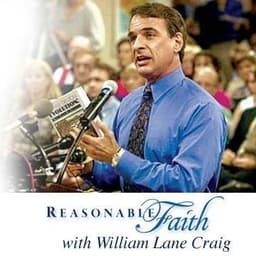
A clip of Dr. William Lane Craig discussing the eternal generation of the Son went viral a few weeks ago, picked up by Protestia and drawing heresy accusations from across the theological world. In this episode, Kevin puts those criticisms to Dr. Craig directly.
Dr. Craig clarifies what he is and isn't claiming: he denies eternal generation is taught in Scripture, but affirms Christ's full deity and the rest of the Nicene Creed. He responds point by point to named critics, including Michael Carlino, Luke Stamps, Jared Moore, Father Ron Ofringa, and Dinesh D'Souza, and explains the distinction between the ontological and economic Trinity that underlies his position.
The episode closes on a practical question: how should a Christian who disagrees handle reciting a creed they can't fully affirm.
Show notes link:
"Is God the Son Begotten in His Divine Nature?" by William Lane Craig
Get every episode summarized
Each time Reasonable Faith Podcast publishes, we email you a written briefing from the transcript — the topics, who appeared, and any specific claims, with the ad reads skipped.
Email me new episodesFree for 3 shows. No card needed.
Hosts & guests

Transcript ready
352 searchable segments. Every word is indexed and playable.
Full transcript
Reasonable Faith Podcast — Eternal Generation of the Son: Dr. Craig Responds to the Backlash. Machine-transcribed; use the interactive transcript above to jump the player to any line.
Bill, about a week ago, a clip from one of our own uploads started circulating. You, talking about the Nicene Creed and the doctrine of the eternal generation of the Son from the Father. We'll get into that, so hang with us. We got picked up by Protestia, which is a Christian publication, polemical news items, controversial news items in the church and things like that, which is north of a million views, and the responses have not been general. Words like Heresy once again have come up more than once. So today, I want to just walk straight into it and read what your critics are actually saying point by point and let you respond. Let's start with the clip itself, because I think a lot of people only saw twenty seconds
up. In your own words, what is the claim that you were making and just as important, what were you not claiming by this clip? My claim is that this doctrine that the Son is begotten in His divine nature is not taught in the New Testament and therefore is not incumbent upon us. I'm not claiming that the rest of the Nicene Creed should not be believed in quite the contrary. In fact, I think it should be. So to be clear, this isn't a denial of Christ's full deity. It's specifically about the mechanism the Creed uses to explain the Father's Son relationship within the divine nature. Is that a fair way to draw the line? Yes, that's correct. The question is whether the Son and the Holy Spirit are self-existent or whether they
derive their existence from God the Father. The view of the Nicene Creed is not that the Son and the Spirit are created by the Father, but that the Son is begotten by the Father. The difference is that in creation, a person makes something that has a different nature than he has. For example, a carpenter might create a chair and they are of different natures. But in begetting, you beget something that has the same nature. So dogs beget puppies, cats beget kittens. The idea here is that God the Father has begotten eternally a Son who therefore shares the divine nature with Him.
You said that you don't outright deny eternal generation. You just don't affirm it. And for listeners who aren't used to theological nuance, why hold that particular posture rather than just picking aside? I think that this debate has as much to do with authority as it does with the specific doctrine. As a Protestant, I regard scripture alone as infallible and authoritative. And therefore, if some credal statement lacks biblical warrant, then I don't think we're obligated to believe it. And just yesterday, as I was reading in ecclesiology, I came across this wonderful quotation from Martin Luther in his essay, The Babylonian Captivity of the Church. Luther is speaking here of the Catholic doctrine of trans substantiation, that the bread and
the wine in the Lord's Supper literally turn into the flesh and blood of Christ. Martin Luther was skeptical of the doctrine of trans substantiation. He writes, I reached this conclusion because I saw that the opinions of the tomists, whether approved by Pope or by council, remain only opinions and would not become articles of faith even if an angel from heaven were to decree otherwise. Or what is asserted without the scriptures or proven revelation may be held as an opinion but need not be believed. And that's exactly the position that I have enunciated. You see, the Roman Catholic Church has on its own authority, added all sorts of doctrines
that are not to be found in the scriptures. For example, in the doctrine of God, they've added the doctrine that God is impassable and simple in the doctrine of Christ. They've added that the sun derives existence from the Father in the doctrine of man. They've added that the guilt of Adam's sin is imputed to every one of his descendants so that you are guilty for the sin that Adam committed in the doctrine of salvation. They've added the doctrine that by God's grace, we are enabled to perform good works which in turn merit salvation in the doctrine of the church. They've added that the Bishop of Rome is the head of the visible church that the Virgin Mary was conceived without original sin and ascended into heaven.
In the doctrine of the last things, they've added that Christians, who sins have been completely expunged by the atoning death of Christ and forgiven by God, will nevertheless be punished for those sins in purgatory after death. Those who accept such doctrines do so on the basis of ecclesiastical authority without scriptural moron. They don't accept them on the basis of the Bible but on the basis of the church's own authority. So I think honestly it's really good that we're having this discussion. Each one of us needs to ask himself the question, what is the source of authority? For my beliefs as a Christian, is it what the Bible teaches? Is it what my church teaches? What my denomination teaches?
What is my authority? I want to quote again from Luther on Transubstantiation. He wrote, therefore, I permit everyone to hold either of these opinions as he or she chooses. My one concern at present is to remove all scruples of conscience so that they need not fear being called heretics if they believe that real bread and real wine are present on the altar and that everyone may feel at liberty to ponder, hold and believe either one view or the other without endangering one's salvation. Without scriptural warrant for these doctrines, one is not a heretic for not assenting to these doctrines. All right. You know, it seems the sharpest pushback has been exegetical. Michael Carlino, a theology professor at Boyce College, pointed to John 1.14, chapter
1 verse 14. He said, quote, this is heresy, the logos Christianity and eternal generation Craig doesn't confess isn't a product of Greek theologians. It comes straight from the apostles. And then he cited John 1.14, quoting, and the word became flesh and dwelt among us. And we beheld his glory, the glory of the only begotten of the Father, full of grace and truth. End of quote. So, Bill, what's your response to that specific text? Unfortunately, this just reverts to citing the very passage that most New Testament scholars and Johanna and commentators agree does not contemplate the eternal generation of the Son from the Father. If anyone's interested in exploring this further, I want to commend Murray Harris's book, Jesus as God, which has a thorough discussion of the relevant text that calls Jesus monogonese,
which has been translated as only begotten. And here's what Harris concludes. As far as the evidence of the New Testament is concerned, it may be safely said that monogonese is concerned with familial relations, not manner of birth. Neither the virgin birth of Jesus nor the eternal generation of the Son is in John's mind when he uses the adjective monogonese. So this response by the professor simply fails to advance the discussion. What on your thick skin for this one, Bill? Luke Stamps, a theology professor at the Clamp Divinity School of Anderson University, made a similar point, quoting, I'm not a crag hater. I think he has done a lot of important apologetic work, but this is really bad.
Lagos Christology originates with John and Old Testament Presidents. With word and Son, imply eternal origin, plenty of from language in the New Testament that can't be reduced to the economy, end of quote, which, well, it's plain economy in a second, Bill. Yes. What do you think that argument goes wrong if it does? Well, let's tease apart Professor Stamps statement. First he says, Lagos Christology originates with John and Old Testament Presidents. Well, yes, the Lagos Christology of the early Greek apologists like Athanagoras, Intation and so forth drew their inspiration from John's prologue where he speaks of the Lagos. And some scholars have speculated that John's idea of the Lagos could derive from the word
of God in the Old Testament. Though I doubt it, the word is never personified in the Old Testament. But in either case, there is no doctrine of divine beginning. Now second, Professor Stamps says, both word and Son imply eternal origin. But here it's important to distinguish between the ontological Trinity and the economic Trinity. The ontological Trinity is God as he exists in himself, independent of creation. The economic Trinity concerns the various roles that the members of the Trinity play in the plan of salvation. So for example, the father is the person who sends the Son into the world. The Son is the person who assumes a human nature becomes incarnate and dies on the cross
for our sins. The Holy Spirit is the person of the Trinity who then superintends and sanctifies the church after the second person's ascension to heaven. And in that economic Trinity, there is plenty of room for relations of subordination and obedience. The Son submits to the father to do his will. The Holy Spirit does the will of the Son and glorifies him. All of this does belong to the economic Trinity, but that doesn't prove that these relations of subordination and derivation belong to the ontological Trinity. Finally, Professor Stamps says, there's plenty of from language in the New Testament that can't be reduced to the economy, to which my response is really. Show me.
I'm open to the evidence. Show me. I'm waiting. You trace the doctrine's roots to second-century apologists like Justin and Tertelian who you say adapted filoes use of logos as divine reason. Is it possible the church fathers were simply drawing out something already implicit in John rather than importing something foreign to it? Well, certainly that's possible, but that remains to be shown. Scripture doesn't commit us to believing something that's merely possible. Jared Moore is an evangelical pastor and blogger. He made possibly the most technical objection, and I want to read it carefully so that we don't straw manhem. He wrote, quote, when the church fathers and those who wrote the creed were arguing that the Son is eternally begotten from the Father, they were arguing for the logical Texas,
the relational arrangement among the Trinity. They were arguing for logical distinction, not ontological difference. There's no difference between the Father, Son, and Holy Spirit, for there is no between them. These three are one God, one nature. All that the Father is, the Son, and Holy Spirit are as well. The only distinction among them is their logical order of subsistence, their Texas. Not logical distinction, you have no distinction among the Trinity. You end up with three gods if you separate the Trinity rather than distinguish logically, and you end up with modalism if you say there is no logical distinction. End of quote. So, Bill, does his account of what eternal generation actually claims change your objection
at all? I'm afraid that Pastor Moore has offered a quite erroneous interpretation of Nicaea. He's trying to water it down to make it acceptable. I saw a very funny cartoon just recently, Kevin, portraying me standing before a nice scene tribunal, and half an atheist is pointing his finger at me and says, Dr. Craig, we're in, we said begotten not made, we meant it. Well, that's exactly what I would say to Pastor Moore. He's denying that the Creed teaches that the Father is ontologically the fount of the Trinity. He's saying that they just stand in these ordering relations, first, second, third. I can affirm that if his interpretation of the Creed were right, then I'm certainly
not a heretic, but at least I recognize what the Creed actually says and then honestly choose to disagree, but he tries to water down the meaning of the Creed so that you can deny the Trenitarian processions and still claim to believe what the Creed says. I think that's just being duplicitous. You know the graphic that you were talking about Bill, rather obnoxious. I mean, it's showing you facing the tribunal with sweat coming off of your brow. You know, and actually on the tribunal, those are your heroes. You would love to have a conversation with them and not be up there sweating. Exactly. When I see that cartoon, I don't feel at all offended because these are my people. These are my guys. When I see Athanasius and Alexander and others. So yeah, these are my heroes.
Well Pastor Moore also said, and I'll read this one too, quote, if you're going to deny the Nicene Creed, you'd better have a better answer than the Creed, rather than punting like William Lang Craig does in this video, end of quote, setting aside whether the deny is the right word for your position. What is your better answer and what do you offer in place of eternal generation to explain what makes the sun, the sun, and not just another instance of deity? Well, I honestly don't understand what he means by punting. Just take a look at volume 2B of my systematic philosophical theology on the Trinity. There, I defend the view that God is a spiritual substance or soul equipped with three sets of rational faculties, each sufficient for personhood.
What makes the sun, the sun, and not the father is his unique first person perspective. The three persons of the Trinity stand in so-called I-Thou relationships. The father can say to the sun, I am sending you into the world, and the son can say to the father, I will do your will. So it is these unique first person perspectives of this tri-personal being that differentiates the three persons. Well, here's something I want listeners to hear directly from you, because I don't think it's gotten much air time in the reaction pieces. This isn't primarily a case of you shrugging at tradition. Your own writing, says the Dr. Neve Eternal Generation, introduces a subordinationism into the Godhead, end of quote, that you think anyone who affirms Christful deity should find
troubling. Walk us through that concern. Why does saying the sun's divine nature is derived from the father threaten his full equality with the father? I think that this becomes very evident, Kevin, in the article that appeared in the Catholic magazine First Things on this controversy. Let me quote to you from the author and listen carefully to what he says. He says, the oneness of the divine essence means that father, son, and Holy Spirit share equally and fully in all the divine attributes, eternity, omnipresence, omnipotence, and so forth. But being unoriginated or underrived is not one of those attributes. It does not belong to the divine essence, but is unique to the father.
It also meant that the attribute later called Aseity is characteristic of the father, but not the son or the Holy Spirit. Craig's departure from Nicene orthodoxy stems logically from his insistence that the son and the Spirit must have the same Aseity as the father. So what this author is denying is that Aseity or self-existence belongs to the divine essence, that God is not essentially a self-existent being who exists, say. In this occasion, two, I think very serious questions. Number one, isn't it essential to deity to be self-existent? Do we really think that God is not a self-existent being that he's some sort of contingent being? And secondly, doesn't it depreciate the person of the son compared to the father to regard
him as not being self-existent? How can you say that the son is not inferior to the father if the father has this great making property of Aseity or self-existence that the son and the Spirit do not share? So I think those are really serious theological questions that need to be asked. Some of your critics would say the historic doctrine is careful to avoid exactly that that the father, son, and Spirit share one undivided nature with no priority in time or being only in relational order. Do you think that distinction actually succeeds or does it collapse under its own weight? Now these critics are clearly incorrect. The historic doctrine affirms the ontological priority of the father to the son and the
Holy Spirit. That's what begetting means. And I think in that respect, the article in first things was right on target. The whole idea of the father begetting the son means that the son derives his existence from the father rather than being self-existent. But notice that if these critics are right, that they themselves don't think there are these ontological derivation relations between the members of the Trinity, then I'm in the clear and they've got no complaint about my view. Father Ron Offringham raised the pastoral stakes of this directly. He said, quote, Craig's teaching is heresy. Why does this matter? If the son is son only in a human sense, then he has no adoption as sons to offer us. Offringham said, we are already sons of God in our creaturely sense. The son gives us an adoption that we might be partakers of the divine nature, end of
court. So Bill, how would you answer a concern like that? Coming up from a critic, looking to score a point, but you know, from somebody who's thinking through what this means for the doctrine of salvation. I find this objection puzzling my becoming an adopted child of God doesn't in any way depend upon Christ's derivation from the father. Think for example of believers in the Old Testament. God in the Old Testament is the father of the Jewish people. The children of Israel are children of God. So already in the Old Testament, without any talk of the derivation of the son from the father, we have this notion of adoption as God's children. And in any case, the economic Trinity is enough to provide that notion of sonship that the
second person of the Trinity is God's son. He submits to and does the father's will, becomes incarnate. And that's all in the economic Trinity. And that's more than sufficient for providing precedent for our adoption as children of God. Dinesh D'Souza asked what a lot of ordinary listeners might also be wondering, why weighed into this at all? What's the point of the exercise as he put it? Some people are reading this clip as you suddenly breaking from orthodoxy when you publish this argument as far back as philosophical foundations for Christian worldview with JP Moreland. In 2018, in the peer-reviewed journal Theological and International Journal for Philosophy and Religion and Philosophical Theology, and it's been on our recent double faith website under scholarly articles for years. Is this just an example of an already articulated and defended position going viral?
People perhaps haven't researched your view? I'm afraid so, Kevin. I think folks just aren't familiar with my published work. One theologian I saw said he'd never heard of me and had to look me up in order to know what this was all about. Well, folks just aren't familiar with the work that I've been publishing over the years on this. So Bill, if someone only saw the clip and nothing else, just a little video short, what's the single most important piece of context that they're perhaps missing? Well, I think it would be my robust defense of the Trinity, including the full deity of Christ. And I would commend to our listeners the book One God, Three Persons, Four Views, edited by Chad McIntosh, in which I interact with a unitarian theologian and give a very strong
defense of the deity of Christ and of the biblical doctrine of the Trinity. Let's look at a couple of practical applications, Bill. Should a Christian who disagrees with you on this still consider you a co-laborer in defending the faith, or is this the kind of issue that should divide fellowship, something that we should divide over? I don't think we should divide over it. I mean, should I separate myself from fellow Christians because they have added this extra biblical doctrine? Well, no, they're free to believe it if they want, but I'm just not obligated to believe it, given the lack of biblical warrant for it. A quick question, Bill. You know, we recite the Nicene Creed most Sundays at my church. And I've always had a little trouble with that particular line in the Creed. Is it appropriate to remain silent and not recite that passage?
Or for that matter, any passage that one doesn't agree with during the congregational recitation? And by the way, that's rather difficult for me because I'm the worship leader at my church. I'm on the platform facing the congregation. People may notice if I skip a portion of the Creed. Yes, that makes it awkward for you, Kevin, but I think you're right that one should not publicly affirm things that one does not believe. I have a friend who will not sing the verses to a particular hymn if that hymn has bad theology in it. He will just stand and be silent. I know another Christian philosopher who says that when he recites the Nicene Creed, he adds a connoisseur mentally in his mind when it says that God is the creator of all things visible and invisible. He says, well, concrete objects, but not abstract objects.
Well, I don't think that's a good practice, Kevin. I think that we should only affirm verbally and publicly what we actually believe and that therefore silence is the better option when we come to something like this that we can't honestly affirm otherwise. What we're doing is citing words with mental reservations. In closing, Bill, thanks for being willing to sit with all this pushback. I think it takes a thick skin, like I said earlier, for anybody who wants to read your full argument on this, we'll link to your paper. As God the Son begotten in His divine nature in the show notes, and it's free to read at reasonablefaith.org so you can go there. But you're closing thoughts, Bill, and talk about your section on this and your systematic philosophical theology. Well, the relevant section would be in volume 2B on the Trinity, where I will give a very
robust defense of what I call a biblical view of the Trinity. It seems to me that there are two tenets to a biblical doctrine of the Trinity. Number one, that there is only one God and number two, that there are exactly three persons, Father, Son and Holy Spirit, who are properly called God. And that I think forms the essence of a biblical doctrine of the Trinity.
More episodes
More from Reasonable Faith Podcast
Annihilationism and Penal Substitutionary Atonement Once More (QoW #1006)
Reasonable Faith Podcast
Why Not the Beatific Vision Now? (QoW #1005)
Reasonable Faith Podcast
A Megachurch Pastor's Eight Reasons for Leaving the Faith and Where They Go Wron...
Reasonable Faith Podcast
Bestiality Among Adam and Eve’s Immediate Descendants (QoW #1004)
Reasonable Faith Podcast