EXCLUSIVE: Keir Starmer on his special relationship with Trump
Get every episode summarized
Each time Electoral Dysfunction publishes, we email you a written briefing from the transcript — the topics, who appeared, and any specific claims, with the ad reads skipped.
Email me new episodesFree for 3 shows. No card needed.
About this episode
“Thank you sometimes going to your studying quietly swear. Well, occasionally I keep my explainess myself most of the time. There's a clear difference there for of opinion between me and President Trump.”From the transcript
Beth is in Helsinki with the Prime Minister for an exclusive interview for the podcast.
Keir Starmer has said he "hates the fact" that he made a "mistake" over the appointment of Peter Mandelson.
"I dwell on it. I beat myself up about it," he told Beth, who is accompanying him on a visit to Finland, where he is taking part in a leaders' summit.
Beth also questions him about his relationship with Trump following disparaging comments the President made about Starmer's response to the Iran war.
Plus, Beth, Harriet and Ruth react to the full interview.
Got a question for the burner phone? WhatsApp 07934 200 444 or email [email protected].
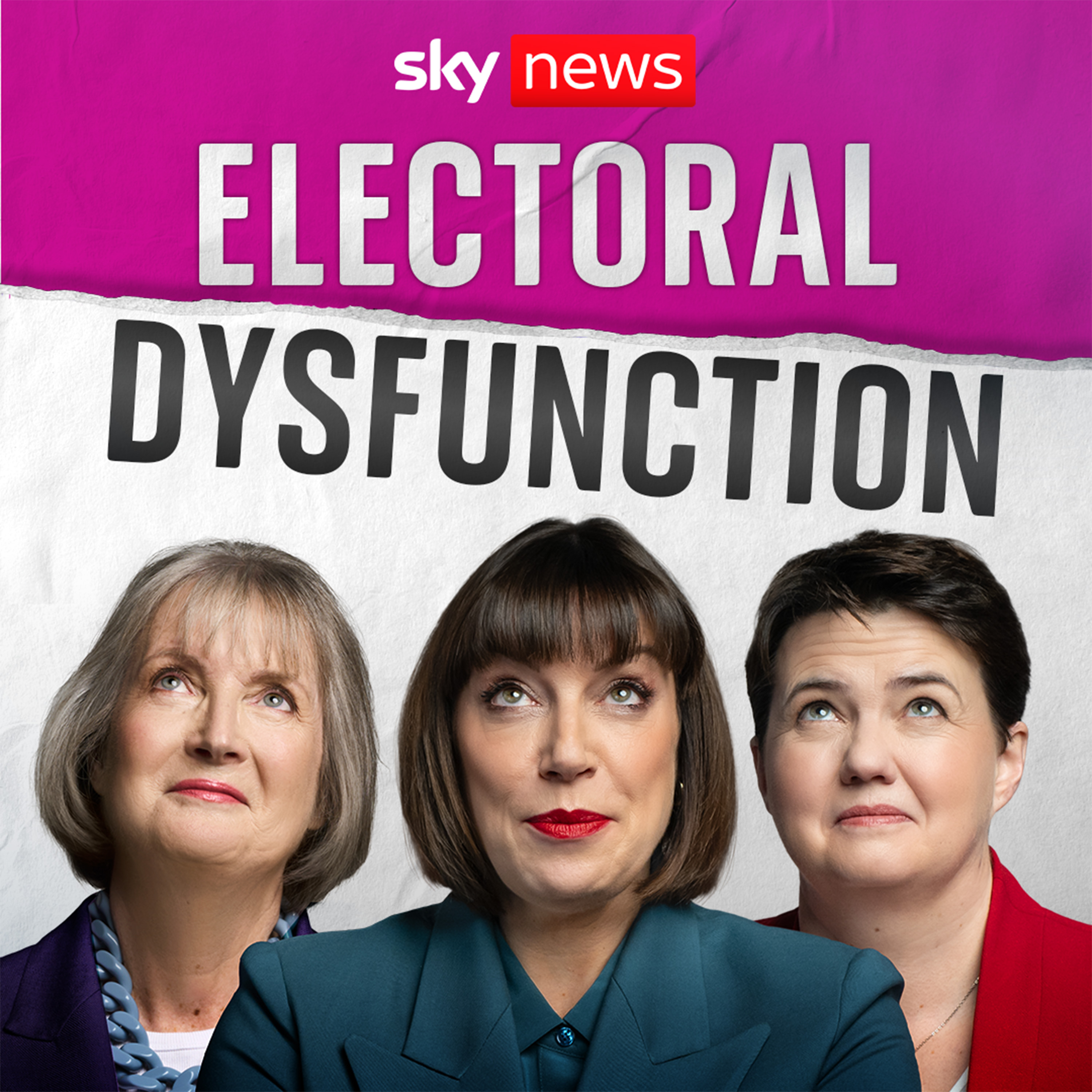
And if you didn't know, you can also watch Beth, Ruth and Harriet on YouTube.
Get every episode summarized
Each time Electoral Dysfunction publishes, we email you a written briefing from the transcript — the topics, who appeared, and any specific claims, with the ad reads skipped.
Email me new episodesFree for 3 shows. No card needed.
Hosts & guests
Transcript ready
934 searchable segments. Every word is indexed and playable.
Full transcript
Electoral Dysfunction — EXCLUSIVE: Keir Starmer on his special relationship with Trump. Machine-transcribed; use the interactive transcript above to jump the player to any line.
Sky News, the full story first. Thank you sometimes going to your studying quietly swear. Well, occasionally I keep my explainess myself most of the time. There's a clear difference there for of opinion between me and President Trump. My own view is that a lot of what is said and done has been to put pressure on me. I made a mistake there and I hate the fact I made that mistake. Hello and welcome to Electral Disfunction with me, Beth Rigby. My Ruth Davidson. And me, Harriet Harmon. I'm in Helsinki, I've just interviewed the Prime Minister and I've imminently got to get back on a plane and get home. We ended up doing a 20 plus minute interview, which I don't normally get. I think you've just heard preview of that and Harriet, what did you think of what you heard?
Well, I thought it was a very significant interview and I actually felt very encouraged by it, which bearing in mind he was talking about the intense difficulties for the economy with the Iran War, being abused and bullied by Trump. The dropping we're going to get in the May elections and the disastrous mistake that he made over the appointment of Mandelson. It might seem a bit odd for me to say I felt encouraged by the interview. But I really got a sense of direction, which I think usually I get quite anxious when I see interviews with Kirstama because he seems more calculating. And actually, I thought it was very genuine. I got a real sense of purpose. It was thoughtful and I thought it was a really encouraging interview. So I think my first reactions where I thought the really interesting bit was where he was talking about how the fall of the Berlin Wall had changed the world and how it changed how we looked at the world and what was in the ascendancy,
this idea of democracy, of liberty, of kind of Western values, and that we're at an inflection point right now, and these things might be receding. And I think that that's a worry for lots of people and it's a worry that I share. And I think the other thing that really kind of hit home was Peter Mandelson bit. So he talks about Peter Mandelson and how much he regrets appointing him. It struck me as you could tell that this was a man that was absolutely kicking himself, that he'd listened to folk and appointed this guy against his better judgment. There was a lot else in there though that I just listened to it and I didn't believe him. You know, it's the Prime Minister of the UK and he's talking about decisions that he's made and why he's made them and what he wants to do. And I'm just thinking, I don't believe you, I don't trust you, I don't know how you're going to do that. You're not explaining it to me. And I think that's a hurdle that he still has to get over with people that are natural labourable terms. But should we just have a quick listen to it? Because I don't, let's listen to it and then we'll pick up. Prime Minister, welcome to our podcast. Thank you for having me on my first time. Yeah, and I hope it's the first of many because we're going to do a bit of a different interview than we normally do.
Because I normally see you with my political editor hat on only and it's a question and answer or five minute walk about. But this is hopefully going to be a longer conversation at a time when things are incredibly turbulent in the world. And I'd like you to reflect on that a bit. But before we do that, we have got some news because let's kick off with that. You're in Helsinki for a meeting of the Jeff military coalition. And you've just announced that Marines, UK Marines are going to board Russian shadow fleets and seize assets. What's that all about? Well, you're absolutely right. This is a meeting of northern European countries. It's a military alliance that was set up in 2014. And we work together on the threats particularly in the north of Europe in the Baltics, Nordics and what we call the high north where we've got interests as a country. Obviously the focus for the last few years has been on Russia and the threat from Russia and what we can do.
And we've done a lot together, training together, we've done operations together. But what we were talking about today and what I've announced is that we need to do more on the shadow what we call the shadow fleets. These are basically vessels that are carrying Russian oil in breach of sanctions out to market. And we are I've announced today that from now on I've given permission to the UK to intercept these vessels. And to do our part to enforce the sanctions that are in place. Now that is designed to put further pressure on Putin because the Ukraine war is now four and a bit years in. Obviously the Ukrainians have paid a very heavy price for the aggression. But we've also been impacted back in the United Kingdom. Our energy bills have gone up. There's hybrid threats from Russia. There are constant examples of them trying to do damage to undersea cables.
And it's in our interest that we rise to that challenge. So this meeting takes place once a year. But these are countries that we train with, we work with, but particularly in relation to Russia. We are in a period of a war on two fronts aren't we? Because you're here talking about Ukraine and Russia. Trump meanwhile has threatened to unleash hell on Iran after Iran said it would reject his 15 point peace plan. You won't know this yet because you've been in meetings but he's doing a press news conference in the US at the moment. He's just said the US is not sure if it's willing to make a deal anyway with Iran. I mean we have no idea when this is going to win. Do we and how damaging that will be to the UK? Well, you're absolutely right. We're facing a war on two fronts. We've got the Russian invasion of Ukraine going on for, as I say, four years now. And then we've got the Iran conflict. Both of them very serious. Both of them with huge implications.
And how they end and on what terms could well define us for a generation. So both of them have those sorts of consequences. And that's why it's really important that we approach this with our values and principles. That's what we've applied in Ukraine. And that's what we've applied in Iran. And certainly we're working with others to de-escalate the situation in Iran. And just in the last few days we've been putting together a coalition if you like, of countries that are willing to work on how we reopen the Straits of Hormuz, which obviously is hugely important for our economy. Yeah, you just said that this conflict in Iran could define us for a generation. I'm packed that for me. What do you mean? Well, the consequences in terms of our economy are already there to be seen. It depends how long it lasts. But if you take the Russian invasion of Ukraine, if that ends on terms advantageous to Russia,
that will cause them to think that they can do more of the same in the future. That's a threat across Europe. And if the Iran conflict ends with greater economic harm, then that is going to be impactful. It is already impactful on economies across the world. And that is why we need to see this in those terms. They're both serious. They both have serious consequences. And how they end matters to the United Kingdom. What are the other moments in modern history? Would you compare that to then? Well, I think there are various times when the major principles that we plan have been tested. I'm not sure there's been any time quite like this. But I think for most of our lives, I think in my life, I remember profoundly the Berlin wall coming down. And I remember that feeling that there was going to be peace and freedom,
and that the values that I held dear were the values that were going to sort of be the dominant values, if you like, in the world. And I didn't think, I have to say, that I would ever see Russian tanks going across a European border, or get in my lifetime. I didn't think I would see that. And yet we saw that four years ago in the Middle East, Iran is a threat to all of its neighbours, the threat to the world, and therefore how this ends will determine what that threat is as we go forward. So this is a defining period. It's a testing period for the whole world. And for you, because you're the Prime Minister, and you've got to try and lead the country through it. Absolutely. And every leader has to rise to whatever the challenges are at the time. What I've done here is to be absolutely clear, that I'm the British Prime Minister, and I have to act in the British national interest. And that's really important. And that's why when it came to the Iran War,
I've said, we're not going to get dragged in, because my judgement is, that's not in the interest of our country. You were really rounded on for that by quite a lot of people by President Trump, by some of the newspapers, by reform, by the Tories, even Tony Blair had an opinion on your decision. People sometimes criticise you for not having strong opinions, but you did on this. Very strong opinion. I looked back the example of the Iraq invasion, invasion and learnt the lessons. It is not in our interest to join a war like this, and I'm not going to do so. Undoubtedly, pressure is being put on me by many quarters, whether that was political leaders in this country, before they actually changed their mind, pretty soon afterwards. Some of the media in this country and others, but I've got to stay focused on what's in the British national interest.
It's not in our interest to get dragged in, and it's very important to me that, for any UK action, there's got to be a lawful basis, there's got to be a clear and viable plan, and if that isn't the case, we won't get drawn in. On the other hand, of course, when Iran responded, and there was then a threat to British citizens, British nationals in the Gulf region, and to our allies in the Gulf region, I agreed to action in our collective self-defense. So that's the divide I've been very clear about, no to getting dragged into the war, yes to collective self-defense, and our cells and our allies. When you talked about once in a generation moment, you made me think a bit about Gordon Brown in the financial crisis of 2008, when he was Prime Minister, and he was facing a once in a generation moment. He was also facing a leadership crisis, and he said, now is not the time for a novice.
Is that how you feel about this moment in time that you are the right person for the job? Look, that's not for me to say, in the sense of whether it's the right time for a novice or net. I'll be judged by what I do. I'll be judged at the next election by what I've done for our country. But I have to have totally focused on what is in our best interest, and I don't want to get distracted by everything else that is out there that's being said or is being put to me. But I think the point you make about 2008 is really important, because how we respond to this, these war on two fronts, is hugely important. In 2008, I feel that Gordon Brown reacted very well, he helped mitigate the damage around the world, but then after the election in 2010, two things happened. The coalition government, as it then was, went for austerity,
which destroyed our public services, and we're living with the consequences, but nothing materially changed. Again, with COVID, which was obviously a great shock to the system, afterwards did anything materially change. It has to be different this time, as we come out of this, the response is going to matter, and we have to change the way the country is set up. What do you mean by that? What I mean is that for most people in the country, their living standards haven't gone up since 2008. That is 18 long years, and therefore they're fed up. The cost of living is still the number one issue for people and families across the country. We can't come out of this and say it's business as usual, or it's back to the status quo. We have to be prepared to say we need to absolutely go further when it comes to our defence, to our security,
to our economy and how it works for people, and the whole way the country is set up, we have to turn this into an opportunity to change our country for the better. Let's get to that and the war and how it's affecting us, because you did want this year to be about cutting the cost of living. After a difficult period, you started here with a chunk of light. Inflation was beginning to fall. Interest rates were predicted to come down. You're smiling at me as I say these things, and your distant memory of the sunny hour. Only a few weeks ago. Yeah, it was only a few weeks ago, and consumer confidence was on the art. Then Trump bombed Iran. The OEC is now forecast in UK will be the worst country hit economically by the war in Iran with a major cut to growth predicted. It's the opposite of what you promise voters. Does it drive you nuts that your whole plan just gets turned on its head by Trump?
Of course there's a frustration there. The spring statement, which was only a few weeks ago, we were able to show that inflation was down to 3% and predicted to go down further. Interest rates have been cut six times, and the prediction was they'd go down again. We built up a good headroom, so there was the stability. These aren't just statistics. What that meant is that for families across the country, here's the economy at last stabilized, the conditions on which we could then build. And so now a few weeks later, of course there's a frustration that that may be much harder now. Well, I'll say two things about that. Firstly, it is really important to acknowledge that we go into this conflict in a stronger place than we went into the Ukraine conflict in 2022. Two, that the extent of damage, the extent of the challenge we now face will depend on how long this war goes on.
And that's why we've got to de-escalate. Am I frustrated that having spent 18 months getting the economy stabilized and in a better position? What happened quite a rough time? Well, of course, but we had to take difficult and hard decision for the right. And you felt like you just got peeps at the top of the hill and then... Well, what the spring statement showed with inflation, as I say, in the right place and all the rest of it, is that the plan that we had in place was the right plan, notwithstanding the criticism that everybody puts on it. But now the question is, look, there are these challenges. These are global conflicts. And there's no point me sort of complaining about it. That's the world we live in. You've got to face the world as it is. I have to lead us through this war... Thank you. Sometimes I'm sure studying quietly swear. Well... I mean, do you? Do you? Well, occasionally. I keep my expletives to myself. Most of the time, although I don't think I'd say all of the time. But look, I think...
If you're the British Prime Minister, it's really important that we approach this with our interests in mind and asking the question, how do I come out of this better? What are the conditions when we went in? How do we come out of this better? And these are the challenges of our time. I mean, we've just finished this meeting this evening with the European leaders here by saying we have to recognize that these are the challenges of our time. We are the leaders of this time, and we have to step up and lead when there's a war on two fronts. We have to step up and lead when we need more on defence and security. And we have to step up and lead when we know that for millions of households the cost of living is less single, most important. Can I cut to the chase on that? Because energy bills, people are really worried. They could rise on average by 500 pounds after July, the Resolution Foundation, 2022, the Trosh government spent 40 billion capping bills for all households.
Let's just be clear in this, you are going to rule out universal support, aren't you? It's not what you're going to do. Well, first let me be clear, because it's very important I reassure people. Bill's energy bills for households will go down next week and they will stay down until the end of June. And it's really important I make that. That's the decision we took at the budget, opposed to how all the other political parties, but you can now see the worth of it. So because I know people watching this will be worried. So until June builds down. Now, what happens after that will depend on how long the war goes on, what the damage is, which is why de-escalation, getting the straights of our moves open is really important. But on your point, look, I think we need to try and reduce the cost for everybody. But we don't want to leave anyone behind, but any support is likely to have to be targeted. Now, obviously, the extent of that, the nature of the package will depend on... But that's your principle, that's your guide in principle.
Some people won't like it, but that's where you're at. Lower the cost for everybody. Don't leave anyone behind. Okay, that's clear. But we will have to tailor the support. Exactly how we do that is obviously a number of options we're looking at, but I'll be clear with you when we tell you that. Yeah, I'm already running out of time. This is terrible. So I'm going to have to... I know I'm running out of time, as ever. So I'm going to ask you about President Trump. Yes. Because you've invested a lot in that relationship. But in recent weeks, he's insulted you. He's demeaned you. He's poked fun at you. You are the prime minister of Great Britain. And for many people in the UK, many people listen into this podcast or watch it. Insulting you is like insulting our country. Do you understand why some people feel like that? I do. I think it's really important that we see this for what it is. The relationship with the US is a really important relationship. It's been close for a long time. On defense, security and intelligence.
We're probably one or two closest countries in the world. And that's really important to us. So it's in my... It's in our interest that we have a good relationship. There's undoubtedly been some hard decisions over the last few weeks. I have been clear I'm not going to join the war. And there's a clear difference, therefore, of opinion between me and President Trump. My own view is that a lot of what he said and done has been to put pressure on me to change my mind. But I'm not going to do so. Because I'm the British Prime Minister. And I have to act in the British national interest. And I will always act in the British national interest. Do you think you underestimated you? Because you'd been... You'd worked really hard at the relationship. I had followed you around. I remember being in the White House and you came out and you were pleased because he'd... He'd bat NATO an article five. He'd... He'd signaled he was going to do a good deal for trade.
You were really personally proud that you felt like you had found this connection. You tried to accommodate him. Do you think he took that as weakness from you? Well, I wanted a good relationship. I'm not going to pretend otherwise. I still want a good relationship. And as we work our way through this, I'm sure that is possible. But I want to be equally clear. I'm not going to waver on this. I'm not going to back down. I'm absolutely clear about the values and the principles that I'm applying here. And anybody who thinks that I'm going to act in anything other than the British national interest. Yeah, but you're only human. I mean, it must make you bristle. It would make me bristle if someone spoke about me like that. I think I understand what's happening. It's to put pressure on me in different ways. But that pressure isn't going to make me waver. It's not going to make me a bad at my principles or values. And that's just the way I am. This is new. That isn't because of President Trump. I've got core values and principles I've held on my life.
And they're irreducible. And also you don't like, you stand up to bullies. You don't like being bullied, right? And you don't like seeing people bullied. Well, look, I stand up for my principles and my values. And what are they to respect people and not talk down to them? Well, the values here are to act always in the British national interest. Yeah. To be really clear that involves not getting dragged into the war. And I'm not going to get dragged into the war. Yeah. And that is the long and the short of it. Do you think he underestimated you? Well, I don't know. I mean... I don't know. I don't know. But it's obvious that, you know, from a number of sides, there's pressure being applied. But I'm not going to buckle under pressure. And that's... Okay. That's the long and the short of it. And PM, you've got the mayor elections coming up. It could be very bad for Labour. You've been here before. Back in 2021, you had a shocking set of election results. Johnson won the Hartley by election, Hartley Pool. And you had a major wobble. And you contemplated resigning back then, didn't you?
Why was that? Well, I... The Labour Party had lost badly a number of times. And I wanted to turn it around. And I was there for concern that a year afterwards, we lost the Hartley Pool by election. In retrospect, I think I had not appreciated it. And it is a really important political lesson that when a party loses a general election badly, to think that that's the bottom of the curve is a mistake. Because we were still going down. And we did then turn it around. And so there is a lesson there. But look, we have got mayor elections coming up. They are very much midterm elections. They're very important in the councils and the authorities where they're being fought in Scotland and in Wales, of course. But look, if you look at history, all incumbent governments pretty well lose in the... You're not going anywhere, are you? Whatever the results, you're not going anywhere. No, I intend to be judged the next election
on what I've delivered for the country. And PM, whether you like it or not, Angela Rona seems to have sent me to Clairden leadership race just like Andy Burnham. Is the race effectively on? Well, let me say about Angela to start with. She was a fantastic deputy prime minister. I was very proud of the fact that Angela had come from a really challenging start in the deputy prime minister. She's got a lot to offer. And I obviously had a conversation with her on the day that she had to resign. And I regret that she had to resign. It was the right thing to do. But I regret that she had to do it. And I said to her that her contribution to the Labour government and the Labour movement was by no means over. And so I do expect to see her playing a leading role in this Labour government. OK. Prime Minister, I've got one quick more question which is about Peter Mandelson. When I looked at that vetting document, the continued friendship with Epstein, the suck ins from Blair and Brown administrations,
I don't get why you put him back into place. Surely your instinct was, I don't want this guy near my government. Are you angry at yourself that you maybe didn't follow your instinct? Well, I, on the back of that due diligence, we, questions were put to him, answers were given, which in my view weren't truthful. But if I sit back and answer your question, I am, for us, nobody has been harder on me in relation to the mistake I made there than me. And I tell you why, I've spent years trying to deal with violence against women and girls. And as I look back at it now, and the mistake I make, I've been really hard on myself. In the immediate days after this all came out, I was particularly hard on myself. So yeah, everybody else was criticizing, I guess all that. But nobody was criticizing me more than myself. I'm not trying to, you know,
make that a mitigation or an excuse. But I know I made a mistake. I can see that you feel that. I know that after nearly 20 years, fighting violence against women and girls, I made a mistake there. And I hate the fact I made that mistake. And I dwell on it. I beat myself up about it. It's certainly not a mistake, I'll never repeat. But there's no criticism. Anybody else can level up me that will be as harsh as the criticism I've dished out for myself. What advice, this is your final question. What advice would Keir Starmer of March 2026, this moment, give to Keir Starmer of 2024 as he contemplated walking through that famous black door? I would say you have to rise to the challenge. You have to realize it's going to be a bumpy road. You can't fix everything as quickly as you think.
But you have to be really clear, what is it you're trying to achieve? And in the end, I will be judged at the next election on whether or not people feel better off. Whether they can pay their bills, but not just that. Whether they actually feel their life's a bit better. They can do what they want to do with their families that they don't feel held back in the way that they have done. For far too many years, I understand why people have frustrated. I'll be judged on whether our public services are better. I'm really pleased the health service confidence levels have gone up. And I'll be judged whether people feel more safe and secure. I will also now be judged in the context we're facing a war on two fronts on how I took our country through that difficult situation and how we emerged afterwards. And I know I'll be judged on that. And I go into it with my principles, with my values, which are my irreducible core.
And applying those, I hope that people will see that in the end, the reason I want that I'm proud and privileged to sit here as Prime Minister is because I want nothing better than to improve this country and to act in our national interest. And in the end gives me that great determination. I'm not going to be pushed around by other people. I'm not going to be persuaded to do things that I don't think are right for our country. And that is core for me, important for me, and will help steer our country through this. OK, Prime Minister, thank you so much for joining us. I really enjoyed that conversation. It was really, we should do it again. We'll do it again. Thank you very much for your time. Thank you. Thank you. Hello, I'm Elizabeth Day, the creator and host of How to Fail. It's the podcast that celebrates the things in life
that haven't gone right. And what, if anything, we've learned from those mistakes to help us succeed better. Each week, my guests share three failures, sparking intimate thought-provoking and funny conversations. You'll hear from a diverse range of voices sharing what they've learned through their failures. Join me Wednesdays for a new episode each week. This is Elizabeth Day and Sony Music Entertainment original podcast. Listen now wherever you get your podcasts. So for me in the room, for me the most powerful bit because I could see the expression on his face and he looked genuinely quite upset and uncomfortable and remorseful was that mandrelsome moment where he sort of said how he hated the fact he'd made the appointment that no one had been hard on him than he had himself. You could see someone really genuinely kicking themselves. I mean, Sinek's will say he's kicking himself because of the problems it's brought. I don't feel in that moment.
I feel like he's betrayed his own principles or whatever he was feeling. I mean, Harriet, what did you think? I was very struck by it because what he didn't say is oh well, it was a bad decision, but it was because Peter Mandelson lied to me or I take responsibility for it, which usually means you're taking responsibility for a decision somebody else has made. It was very heartfelt. He said he hated the mistake. He hated the mistake he'd made. That he dwelt on it. It was obviously still burdening him and that however much other people beat him up on it, he beats himself up more. And the fact that he linked it back to women and girls and somehow letting down women and girls by just disregarding them in terms of the abuse of Epstein when he appointed Peter Mandelson, I thought he really owned it and I've been very critical of him on this. But that was good enough for me.
I mean, the truth is there's a long way to go on this because he's got to be very open and transparent about the process, but I thought he really owned it. It's not so interesting because you've been really critical about that. I mean, Ruth, I think you were, I think it's fair to say you were quite frustrated by a lot of his answers. Yeah, it was. I can't work out whether because, yeah, I can't work out whether it was because Harriet is Labour and I'm Tory or whether it was because Harriet was watching it and could see him, whereas I could only listen. I was listening across the line. And there's this really famous part of the first presidential debate between Nixon and JFK where they pulled people that listened on radio who all thought that Nixon had won the debate and then they pulled people that watched onto Ellie and they all thought that JFK had won it. So I don't know whether it's because I was listening rather than watching. But I found myself getting hugely frustrated. I thought he was absolutely genuine and the Mandelson thing. It's clear he's absolutely kicking himself that he took advice on that and went against his better judgment. But the bit I was kicking himself on when he was trying to do that framing you were talking about of being this wartime leader standing up to Trump
and fighting for Britain and all this sort of stuff and he's talking about the insults were, I've got a quote here, they're being done to put pressure on me to change my mind and I'm not going to do that. And I'm kind of shouting, you know, Adam, going, you've already changed your mind. Like, you've changed your mind on whether the US can use British bases to launch raids on Iran because you said they couldn't and then they could. You have changed your mind on whether you're going to send any British warships to the region because you weren't going to and then you had to scramble HMS Dragon. You've changed your mind on whether you cage it so we're going to join in and any defensive mission you said they weren't and now they are. You've changed your mind several times and it's okay to change your mind but you have to tell people why you're doing it and why the conditions have changed. You don't just then say, I'm this amazing wartime leader that's never changed my mind under pressure. You know, because people can see the truth. I thought it was very interesting what he said about Trump because he still insisted that the special relationship was important and he wanted to have a good relationship with Trump. But he acknowledged that the reason why President Trump is saying these things
and humiliating things and insulting things to him. He said that is just to put pressure on me so he acknowledged it was a tactic by Trump to put pressure on him which is quite a big acknowledgement although he resisted the suggestion that he might call Trump a bully but he said this is trying to put pressure on me. I know what's going on here but I'm not going to be pressurized. For me, what I think, and maybe this is because I'm a bit too up close and I spend every sort of moment watching every twist and turn of the cut, stammer, Trump relationship. I think there was a quite a long period and I sort of said it there. Did he underestimate you? Did he think that you trying to accommodate him was weakness? Because I think there was quite a long time that Trump used to say quite outlandish things. You know, that stuff he said about and Sadik Khan bringing Islamist law to London and stuff that Tom would have found absolutely ludicrous but also offensive. And he didn't really go in on Trump. He didn't really stand up and challenge it.
He just let a lot of stuff wash over him. So for me, for him to kind of stand up in the sense of saying I'm not going to be moved. I'm not going to be pushed around. I know what's going on. I do think it's a bit of a change in position. And I do think it's partly because he's probably encouraged by how the public are responding to Trump. But I do take your point, Ruth, that you can make the argument, that the fact that he is allowing them to use the bases to try and keep the straight of Hormous open. You could see that as a change in position because obviously at the beginning it was only about defensive strikes and trying to take drones and missiles out of the air. I guess he would argue. I suppose the situation on the ground has changed a bit and it's not a U term. But I can see where you're coming from with that Ruth, I can. But I think that while taking this different position, I think he resisted the temptation to do grandstanding
which I would have found very worrying. He might have been tempted to do that because what I hear from Labour colleagues is that the issue of how he's responded to Trump in relation to the Iran attack has been spontaneously being mentioned on the doorstep and is actually coming over positively and he didn't take the wrong message from that and overdo it. He still said, yeah, but we want to be on good terms with Trump. So I think he's calibrated that really well and I think that was significant. Yes, if you'd have asked him about the different decisions he's made as each day has gone on, well obviously they do have to change with the circumstances but his stance of actually not being in attacking mode but being in defensive mode and working with allies for collective defence. I think he stayed very clear on that and that came through again. I think the other thing that I am taking away from that and I think it will come more into view in the coming weeks
is that we are in for quite a big bloody change in this country in the sense that I think that was a prime minister there saying when this is a once in generation moment, comparing it to the financial crisis of 2008 or the pandemic. I think he's signaling that things because of this war and the knock on effect for energy prices and the global economy that things are going to change a lot around here. He sort of identified the problem but didn't give any of the, you know, or he identified the illness but he didn't give any all the symptoms but he didn't give any of the, what would you call the medicines or all the, all the, all the cures. But that had sort of flashing lights in my head because I'm thinking what does this mean for energy bills? What does it mean for taxes? What does it mean for debt? What does it mean for public services? And I think that we'll look back on this interview and what he's beginning to say and I think we'll get more of it to see a government pitch rolling
quite a difficult period coming up. Is that fair? I saw those flashing lights as well and I think that perhaps is perhaps the most significant thing of what I thought was a really significant interview Beth. I think he's saying he's not saying we're going to get things back to where they were. He was saying there's going to be no back to business as usual and it made me think that he's thinking really big about changes which might well not have been envisaged at the time of the manifesto. Perhaps on Europe, perhaps on taxes and let's see whether we see more along that in terms of fleshing out the details of his thinking on that. You might have heard some background noise because everyone's packing up around me in my new fine room. This beats the hotel room, doesn't it Ruth? It's looking pretty swanky. It's looking pretty posh. Look at me. This is in my ambassadorial lounge. I've got a run. But I will see you all next week. Goodbye. Goodbye, well done, Beth. Bye. But I think your point about the significance, Harriet, is a really interesting one and I think that Beth's right that they are going to try and frame this
as something akin to the 2008 crash or akin to the COVID pandemic globally. And I think what's going to be difficult about that is by saying that Ukraine, which has been going on for some time, and Iran, which they're also trying to ride the horse over we're staying out of. So we're not part of that. We'll, you know, support from the sidelines, but we're not going to be part of it in any way. And also, you know, we'll send, we'll continue to send arms to Ukraine as we have done over the last four years, and we'll continue to train troops. But again, we're not part of it. It's going to be hard to show people in Britain that this is one of these really big disruptive events, especially when, if you cast your mind back to the election, we just had 18 months ago, part of the conservative argument of, why things have been difficult, why we were trying to restore services that had been disrupted due to the COVID pandemic and Ukraine together, why that had put up house prices all the rest of it. It was completely poo-pooed by the very same Labour Party
that's now the Labour Government that's going to try and say that Ukraine, which was part of the Tory argument, combined with Iran, is one of these disruptive events, which allows almost special pleading, if you like, for a government. And to say that the Tories don't get special pleading for COVID and Ukraine, but Labour should get special pleading for Iran and Ukraine. I think it's going to be a hard sell. I think it'd be interesting to see where he takes it. I mean, sometimes he's made big statements in the past, like, for example, on identity cards, and then nobody ever heard of it again. So the question is whether or not he said this is a time for really big new thinking and no back-to-business as usual. We have to see where he takes that and develops it, because he highlighted it, but as you say, Ruth, he didn't put the chalk marks on the ground and identify or itemize what it is, but he said something very big. So actually he will need to have really big ideas to follow that up.
Yeah, and I think what's really interesting as well is, again, when we're on the big themes and certainly the start of the interview, I thought was really broad in school. This idea of talking about, you know, formative sort of epochs in kind of international relations and changes to the world. And he was talking about the fall of the Berlin Wall. And it was huge. I remember it. So I'm a bit younger than Kierstarmer. So the reason that I know the exact date of it was the 9th of November in 1989, was because it was the night before my 11th birthday. And my parents let me stay up late to watch what was then the 9 o'clock news, because the wall had started coming down on the 6th, and it continued at the 9th, and I was allowed to keep watching it. And it did feel like the world was changing. But if you look back at that time, if you look at who you think the really substantial figures are, and it was the sort of troika of Reagan and Gorbachev and Satcher, whether you liked any of them or supported their politics or not, it felt as if they were people that were shaping events. And I'm not sure Kierstarmer has got to the point
where it feels like he's one of the people that are shaping events. But I think to be fair, he wasn't saying I'm going to reshape the world after this. He was saying things have got to be changed back home after this. You're right, that's fair. He was talking about structural changes to the way Britain operates and how things work, public services work, the economy works, defense works. But I think if we see this as future framing from the government about serious time calling for serious people, it will be interesting to see how that develops. She also asked him about what's going to happen with the rising cost of energy bills following the Iran conflict. And I thought it was quite interesting what he said about that because he said the government would help everybody trying to keep the cost of energy down, but there would be targeted help, obviously, on those who need it most. And he said there's a number of options we're thinking about. Well, I'm hoping they don't just think about them in number 10 or between number 10 and number 11 and the Treasury
that they actually have a really big discussion and a consultation because what went wrong with the cuts in the winter fuel allowance was not ending the principle of means testing, but it was actually setting the cliff edge at the wrong point. So I think they've got the time now before the end of June when the price cap runs out to actually consult about where they set the targeted help. I think the country's ready for a big broad debate about what helps, benefits, services, all the rest of it should be universal and what should be targeted. And I think what would be really interesting was if the Prime Minister felt confident if that's his view that we should be far more targeted and we should abandon in some areas where it has been the norm in the past we should abandon universalism. It would be interesting to see him making the running on that and laying out the ideological grounds for it as well as the specific policies for it.
It would be really interesting to see if they've got the confidence and the bandwidths to actually start that debate. Especially when they're going to be already being criticised by reform and by Kimmy Badenock, who was saying, well, the only reason you're going to need to target it is because you're spending too much money on benefits and actually this will just be a boost to people on benefits and you won't be helping hardworking people, which of course overlooks the fact that a lot of people who are on benefits are actually working as well. But I think that they need to use all the time between now and when the price cap ends at the end of June to explain why they need to target it rather than do it universally and explain where they're going to do the cutoff. And look, that is everything we've got time for today. If you're listening to this, if you want even more of Beth Rigby with Kear Starmer, there is a reminder that the interview is also on Sky News YouTube, the whole thing.
We've got a special behind-the-scenes video coming out at the weekend as well. And if you have any comments or questions, you know how to get in touch. The number to WhatsApp is 0793-400-200-4 or you can email electoral dysfunction at sky.uk You can't forget to mention that we are going to the hay festival this year. You can catch us on stage for two sessions, one on Monday the 25th of May, where we'll be talking on a panel with none other than former Australian Prime Minister Julia Gillard about being a woman in politics, and then we're doing a live edition of the podcast on Tuesday the 26th. And tickets are available now, so search for the hay festival online. Goodbye! Goodbye! The world is a pretty confusing place right now. How long did you learn about Andrew and Nick? I'm Neil Patterson, and after 20 years reporting and presenting for Sky News,
one thing's become clear. People don't just want to know what's happened, they want to know why. Our new daily podcast takes one story at a time, explains what's really going on and why you need to know. This is why. Listen, whatever you get your podcasts.
More episodes
More from Electoral Dysfunction

Is the government doing anything to stop AI killing us all?
Electoral Dysfunction
Why did Andy Burnham choose Israel for his biggest moment yet?
Electoral Dysfunction
What changes if Zack Polanski is an MP?
Electoral Dysfunction
'A bloodsport': Were journalists to blame for Keir Starmer’s downfall?
Electoral Dysfunction