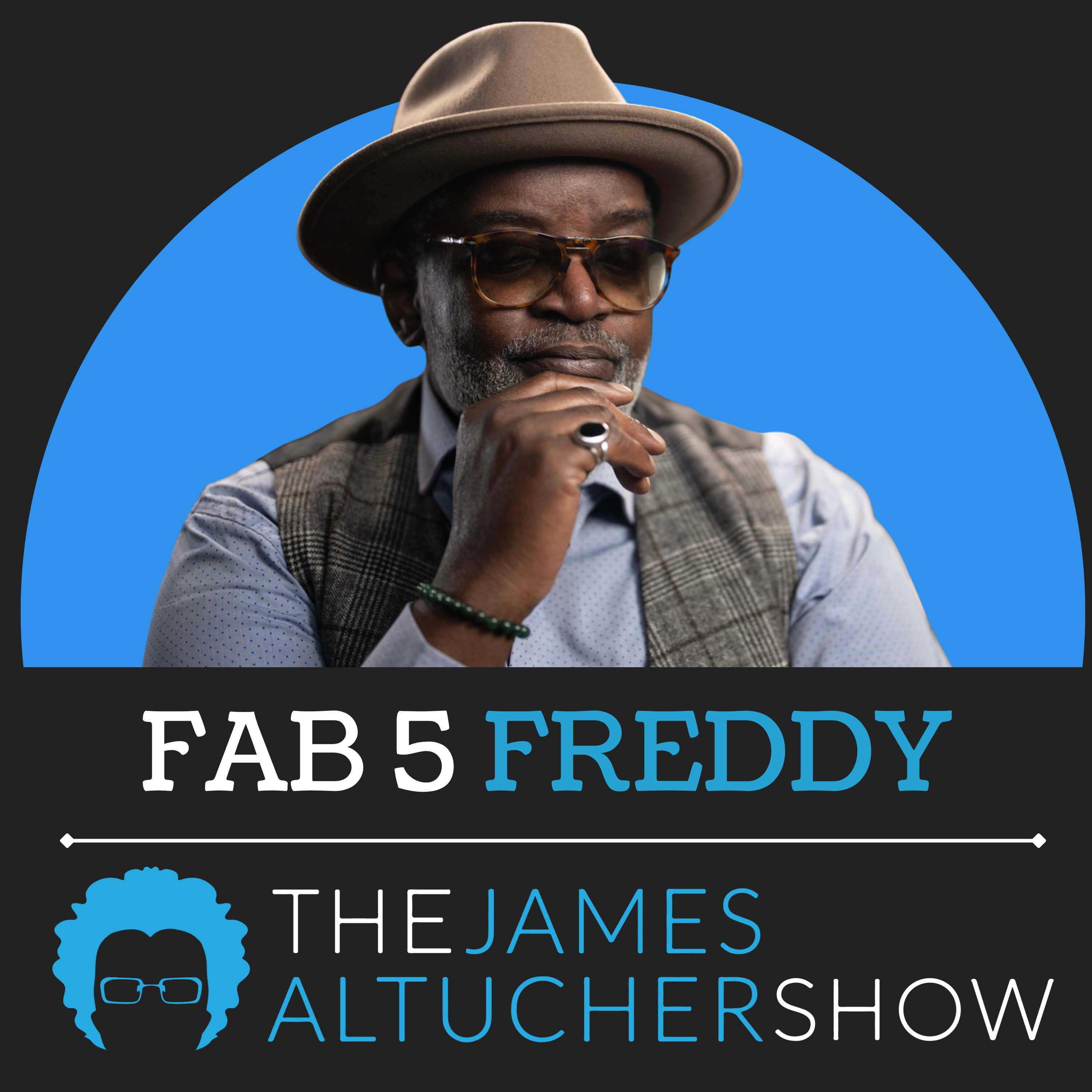
About this episode
A Note from James:
In the Blondie song “Rapture,” which was the number-one song in 1981, Debbie Harry has this famous line: “Fab Five Freddy told me everybody’s fly.”
So the question is—who is Fab Five Freddy?
This guy is one of the central figures in the birth of hip-hop culture. Not just rap music, but the whole ecosystem: graffiti, breakdancing, fashion, DJ culture, art, film—everything that eventually turned into a massive global industry.
Hip-hop today represents hundreds of billions of dollars in music, fashion, and entertainment. But in the late ’70s and early ’80s it was just a small creative movement happening in New York.
Fab 5 Freddy helped connect all those worlds. He bridged graffiti artists, musicians, downtown art scenes, and eventually MTV.
He also just wrote a book called Everybody’s Fly, and it was a huge honor for me to talk with him about the origins of hip-hop and how creativity actually grows.
Episode Description:
Before hip-hop became a global industry, it was a loose network of DJs, graffiti artists, dancers, and musicians creating something entirely new in New York City.
Fab 5 Freddy was at the center of it.
In this conversation, he explains how hip-hop emerged from a mix of street culture, art scenes, punk music, and experimentation with records and sound. He discusses the origins of graffiti tagging, the rise of DJs like Grandmaster Flash, and the cultural moment when Blondie’s “Rapture” helped bring hip-hop into mainstream awareness.
Freddy also shares how the first hip-hop film, Wild Style, helped unify the culture’s elements—music, dance, graffiti, and fashion—and introduce them to a wider audience.
The conversation then turns to the modern era: AI-generated music, the attention economy of social media, and why artists today may need to slow down and develop their work before exposing it to the world.
What You’ll Learn:
- How hip-hop emerged from a mix of music, graffiti, dance, and street culture
- Why early DJs searched old records for breakbeats to create new sounds
- How the film Wild Style helped define hip-hop culture for the world
- Why artists today may need to resist posting unfinished work online
- How creativity evolves when technology disrupts the music industry
Timestamped Chapters
- [00:02:00] The Story Behind the Title Everybody’s Fly
- [00:03:01] A Note from James
- [00:04:15] Meeting Biz Markie and the Culture of Collecting Hip-Hop History
- [00:05:35] How Jazz, Blues, and Soul Influenced Early Hip-Hop
- [00:06:22] DJs Digging Through Records to Find Breakbeats
- [00:07:40] Grandmaster Flash and the Science of DJing
- [00:08:41] Why Producers Became Central to Hip-Hop Music
- [00:09:54] Blondie’s “Rapture” and Hip-Hop’s Mainstream Breakthrough
- [00:11:00] The Downtown Art Scene: Basquiat, Keith Haring, and Andy Warhol
- [00:12:24] The Origins of Graffiti and Tagging Culture
- [00:13:48] Graffiti as Competition and Artistic Evolution
- [00:15:12] Punk Rock and Hip-Hop: Parallel Cultural Revolutions
- [00:17:47] The Idea for the First Hip-Hop Film Wild Style
- [00:19:02] Bringing Breakdancing, Graffiti, and Rap Together on Film
- [00:21:50] Lessons Modern Artists Can Learn from Early Hip-Hop
- [00:22:49] Why Posting Creative Work Too Early Can Hurt It
- [00:24:00] Social Media, Attention, and the Speed of Culture
- [00:26:00] Hip-Hop’s Global Influence
- [00:29:00] The Birth of Conscious Rap
- [00:31:12] Directing KRS-One’s “My Philosophy” Video
- [00:33:00] Finding Great Hip-Hop in the Streaming Era
- [00:36:00] Battle Rap and Lyrical Skill
- [00:37:00] Artists Who Still Push the Genre Forward
- [00:40:11] How Rappers Make Money Today
- [00:43:00] What Makes an Artist Stand the Test of Time
- [00:47:00] Sampling, Technology, and the Evolution of Music Production
- [00:54:00] AI Music and the Future of Creativity
- [01:02:00] What “Everybody’s Fly” Really Means
Additional Resources:
- Fab 5 Freddy
- https://en.wikipedia.org/wiki/Fab_Five_Freddy
- Rapture
- https://en.wikipedia.org/wiki/Rapture_(Blondie_song)
- Wild Style
- https://en.wikipedia.org/wiki/Wild_Style
- Grandmaster Flash
- https://en.wikipedia.org/wiki/Grandmaster_Flash
- KRS-One
- https://en.wikipedia.org/wiki/KRS-One
- Debbie Harry
- https://en.wikipedia.org/wiki/Debbie_Harry
See Privacy Policy at https://art19.com/privacy and California Privacy Notice at https://art19.com/privacy#do-not-sell-my-info.
Get every episode summarized
Each time The James Altucher Show publishes, we email you a written briefing from the transcript — the topics, who appeared, and any specific claims, with the ad reads skipped.
Email me new episodesFree for 3 shows. No card needed.
Hosts & guests

Transcript ready
1,304 searchable segments. Every word is indexed and playable.
Full transcript
The James Altucher Show — Fab 5 Freddy: How Hip-Hop Was Born. Machine-transcribed; use the interactive transcript above to jump the player to any line.
The Bleacher Report app is your destination for sports. Right now, the NBA is heating up, March Manus is here, and MLB is almost back. Every day there's a new headline, a new highlight, a new moment you've got to see for yourself. That's why I stay locked in with the Bleacher Report app. For me, it's about staying connected to my sports. I could follow the teams I care about, get real-time scores, breaking news, and highlights all in one place. Tell of the Bleacher Report app today so you never miss a moment. The desire to put whatever you're making, developing, thinking about online too soon.
Because it can dissipate. Yeah, people get addicted to the likes and the thumbs-ups and all that adulation. But it can be so fleeting, as you know, we're bombarded with so much these days. And the energy can be drained out of something before it really gets a chance to develop. This isn't your average business podcast, and he's not your average host. This is the James Altiger Show. Jay, do you like Blondie? Who do you like him? Well, in the song Rapture, which was the number one song in 1981, first of all, it's one of my all-time favorite songs. Second, she had this great line, Fab Five Freddy told me everybody's fly. And the question is, who is Fab Five Freddy? Well, this guy is like the godfather of all hip hop.
And hip hop was like this massive cultural shift, including break dancing, graffiti, fashion. And of course, hundreds of billions of dollars of music with the whole rap scene. We Fab Five Freddy, which Blondie mentioned, 1981, basically kicked it all off. And here he is on the show. He just wrote the book Everybody's Fly. And such an honor for me. I'm such a fan, such an honor for me to talk to Fab Five Freddy in the flesh. Here he is. So, oh my god, this is like, this is a big event for me. You're like icon of hip hop. You're the godfather of the whole hip hop universe. Oh boy. That's a big responsibility, right? Yeah, I mean, I've been called a lot of things. I mean, yeah, what the hell? You know, you know, I one time I had Bismarck Key on the podcast for S&P.
And he called himself the god uncle of hip hop. Oh boy, Bizz, I miss him. He was a real great guy, man. A sweet character, an incredible, like a collector. And the truth is sense of the word. What do you mean? He collected all types of hip hop related memorabilia, clothing, ephemera. Boy, he used to walk around with the food stamps years ago. He used to be a printed out like thing that you use when you... Those would have been gone for decades. I remember for quite a while. I don't know if I never used them, but I remember them being quite prevalent. I remember one time we were talking. He would always ask me, hey, Fab, you know, about early hip hop stuff that he had gotten his hands on some of the stuff when we were researching wild style. And he was letting me know the way how profusa-collector he was. And then he said, look, look, Fab. And he pulled the food stamp out of his wallet.
And I was like, then I realized, oh my god, these things haven't been in existence in forever. He had toys as well, all kind of serious collector. It's so interesting because like you look at like the 70s, late 70s, early 80s. And suddenly there was this merge between let's say jazz, blues, art, fashion, dance, music. Everything kind of came together. And when you say collector, it makes sense because all of these things add their roots back. This merging happened back then. And it was so important that time in hip hop history. And obviously you were at the center of it all. What was it about the 70s and early 80s that created basically what now everybody knows is hip hop and rap. And maybe some of these things were even forgotten, like some of the history. Well, you know, I guess the people that really guided the ship, so to speak,
or the DJs or the people that were really involved in creating were really, I mean, I know we're responsive to what came before them, a little before them, if not a little more, like obviously hip hop. It's funny, you know, working on my memoir and well, working on the audio book for the memoir, what I came up with, which we're doing is we're doing some interviews, brief, with some of the people that I really dive deep into in the book. And so among the handful of people I'm going to do interviews with, including Debbie Harry, Q-Tip, his grandmaster flash, I wanted him to tell those stories about the beginnings for him in his very articulate, scientific way of explaining the research and development he went on to find the right turn table to allow him to do what became a significant part of it all. And he talked about, and this is a snapshot of what a lot of those DJs did, because they were accessing their parents record collections oftentimes.
And finding these little break beats. So he talked about doing that, and it was just such a snapshot of what many did. They went, as we refer to it as digging in the crates, looking for that old stuff and finding these old records and finding a new way to use the records to manipulate, to do all these things. And other DJs, as hip hop further developed and sampling developed going into the 90s, digging up every possible 60s, or whatever record had a beat that typically came from the 70s, 60s, and whatever was what became a foundation, I think. So maybe that, I don't know, that's a long-winded answer, but I think that's a part of the sensibility took to go back and remix, if you will. Those things that would done prior. Well, and you look at how that's evolved. Basically, every musical genre is sampled in hip hop and rap.
It's really like this mixture of all these different, it's really a production, which is why the producer is so important in rap. And, you know, Grandmaster Flash and Meli Mel were kind of the first, I would say, crossover rappers, where their name, a lot of people say Ron DMC, because of their collaboration with Aerosmith. But like, Grandmaster Flash, Meli Mel, the sugaral gang, they're the first ones with like top hits in the early 80s that kind of bridged across all cultures. And then I want to talk about graffiti, but like, what do you think happened then? Like, why did Grandmaster Flash break out? Why did Meli Mel break out? I mean, they were the first like lava spewing out of this volcano, which was bubbling for a while. You know how they work, so it's a kind of a nice analogy, if you will. And it was eventually going to happen. Interestingly, you know, the title of my book is also inspired by what Debbie Harry sung on the record rapture when she said Fab,
Fab Friday told me everybody's fly. And clearly not a part of the hip-hop scene, she was a part of what she took a piece of hip-hop and expanded it, kind of took the message out to mainstream America. Many people had not have, didn't have a clue, but when I got on MTV and when people got to learn about Flash, they were like, oh, wait a minute. That's what she was referencing this guy and, oh, you're that Fab Friday. You know, nobody knew who the hell I was when that record became a number one hit. And so people began to figure that out. And so it becomes a really important part of of all of this. And then, like I said, you know, the Sugarhill story is incredible, somewhat unfortunate that the way they moved, they had the right instincts, but just, you know, cobbling together a group to kind of cash in, which was the clear intent. It's still, it opened the floodgates because we were all like, wait a minute. What's going on? Who is this?
It's a fun record, huge record. That record really broke it open nationally for then setting the stage for, you know, like it set the stage for the floodgates to open. Yeah, just it was inevitable as I guess what I can say, but a lot of people in that era were very curious about what had preceded them and they tapped into that and mind it and remixed it. Even on the art scene, a lot of the people that I connected with when I hit the art scene, late 70s, early 80s, we were all kids in the 60s, but were very aware of the fun that artists had and the way that scene looked. So we were all like, definitely conscious of having an equal amount of fun while making art, you know, so that includes myself Keith Haring, Jean-Michel Basquiat, Kenny Shopper, a whole slew of us connected around that vibe, very aware of what had happened. And then when we connected with Andy and he was embracing us and, you know, it just all made sense.
Right? So, so like a lot of those guys that you just mentioned where everybody basically came out of this alternative art scene that Andy Walher all was pioneering with his factory and so on, just like, you know, Debbie Harry, blondie, kind of coming out of this underground culture at CBG Bees in New York. So it's sort of like had their blessing. This is acceptable underground culture and she's bringing you in there bringing you in and you kind of came out of this. I don't know where you came out because I mean from your book, I know, but like now you can describe, but like initially you're kind of graffiti in the in the tagging sense, which I want to understand, like, and maybe people don't know like graffiti, which you think of like these beautiful, you know, boldness sort of letters and images on subway cars really started with the tagging, like tacky 138 and so on. Yeah, just just a name. It's just like peeing on your territory. Like this is ours or cornfield and build Alphe or whatever. So why tagging like what's up with that? I look at it like it's a good question because it covered practically every inch in New York City walls, all the mass transit at a time.
And then it all kind of stopped, but it spread around the world. There was a desire that I like to equate to the kind of radical coming out of the 60s. Once again, having been a kid and seeing all the protests and the, you know, going against the establishment and the system and a bunch of that. And just kids being kids. I mean graffiti always was around scrolling your name on a desk, a tree, something like that. It was something that happened at that time. I think fueled by the decade of demonstration and stuff that everybody had witnessed on the news. It just felt like a thing to kind of do, I think. I wasn't thinking like that at the time, of course. I just saw other kids doing it. And I wanted to do it. But what became fascinating is the competition built into it was I'm going to do it more than you. I'm going to do it bigger. OK, you did bigger, bigger than that. I'm going to make it more colorful 3D. I'm going to use more colors. It just was this ongoing competition that pushed the whole form to develop into a creative way to expression. Like I'm going to, you know, figure out how to do 3D drop shadows and figure out how to really paint in a way that my name really comes off the train three dimensional style.
That is what was a breakthrough that then led other people to becoming artists without even thinking of art in that sense, you know what I mean. And one of the things that I looked at, haven't did my share graffiti. But I was also looking at pop art and looking at what wall hall and these guys were doing. And then I said, wait a minute. Oh, these guys are looking at comic books and cartoons and soap box advertising things that really push, you know, really hit you. I'm a goodness. So what we're doing in a way is inspired similar to the what inspired pop artists. And that was when like a bell went off in my head, like we could be artists like that and to find people that understood that and wanted to take a look at the work from another perspective. And that led me to connect with the people on the downtown scene. Because I saw, I just happened to be like, you know, always reading and access to a lot of publications when punk was beginning to emerge. I thought, wow, this is radical. This is like people are trying to bring rock and roll back to what it was. And it's like garage roots, if you will.
And I was super excited about it. And I'm developing these ideas about the art and looking at it in a different way. And that led me to connect with people like Chris and Debbie from Blondie, Glen O'Brien, Amos Poe, people, all those people in those bands were very open-minded and embraced these ideas. And they were like, oh, my God, that's a great idea. And meeting other artists that once again, we're all in sync and was all about let's find a way to get some exposure and that opened the doors. Yeah. And it's so interesting making me analogy to punk, which was sort of also emerging as the same time as beginnings of hip hop. And you see how in, you know, late 70s, let's say it's like 100% punk, but then it kind of evolved almost into a sort of pop style with Blondie and other artists. Yeah. And you can argue the same thing with hip hop, you know, it's going from graffiti slash jazz blues, R&B combined with kind of the drum machine and so on.
And it evolves until ultimately what becomes a very popular art form, the tagging of evolving into beautiful art forms, you know, painted everywhere. I wonder, you know, like on the art side, could the merger have gone further? Like you never really see it fully accepted by the pop artists around Andy Warhol, for instance. Could have done further. Well, there were other artists who dug it who, you know, they didn't, one is, you know, they didn't collaborate with other artists the way John ended up working with Andy Warhol. I think that, I mean, there was an, there was an open mind is, you know, once one of the things I point out in my book is like class Oldenburg gave donated some funds for artists to make work for the big PS1 New York New Wave show, which followed the time square show. So there was definitely a synergy in the energy once people got an understanding and seeing it as not just vandalism, which was how the city portrayed it.
And clearly a lot of it was, but I wanted one of the things that I saw in my mind trying to figure out a way to define my space into the art world into being, you know, into pop culture, if you will, was to present us in a better light. And that led to the idea that I developed to show all of these cultures together, the dancing, the painting, the music as one. And to do that, I had the idea to make like an independent underground film. And that became hip-hop's first movie, Wild Style, I collaborated with Charlie Ahern, who was in the underground film scene, which was very close to all the bands and stuff at that time on the downtown scene in New York. And Charlie Ahern, I pitched him this idea. He was like, oh my god, I got it. Let's make a movie. We literally, we met at a really pivotal art show in 1980 called The Times Square Show, where over 50s or more artists had art covering this building for story building.
And I met Charlie at this art show, I had been thinking about making this film. And then Charlie had made a film called The Deadly Art of Survivor, which was like a super ultra low budget urban kung fu film, literally shot on Super 8, which was early, early film technology. So Charlie was familiar with graffiti Lee lived in this area where he made that film, but he didn't have any access. And I'm working with Lee and I'm have these ideas. I'd like to make a film that show all this stuff as one culture and Charlie loved it. And so Wild Style is the first time people see this connection and get to look at us as young creatives, making paintings, you know, to break dances, you get to see. And the idea we had was everybody would play them. Most of the people would play themself, so we didn't, we had very few actors. I'm one of the few people actually acting, but that helped the story and the message and it helped to frame up who we were in a different light.
And I detail all of that in everybody's fly, like how I came to come up with these ideas and miraculously things came together and worked. I mean, the great thing about that time in New York, that period, and there was a lot of very open-minded people to helping get this message out once they heard it put. And a lot of people had seen things with graffiti that they liked. There were some things that were kind of just like, I can't read the subway map. I can't see out the windows because these wild kids have painted everything and I get it. But when people looked at it from another perspective, they began to see, wow, this is a really wild form of creativity that these kids doing was all a part of helping break it out of the box if you were. And you know, I kind of want to get into the nitty-gritty of wild style as a fanboy, but I also want to bring it up to 10,000 people. You had like everybody from Grandmaster Flash, you, Rocksteady, like you had the dancing, you really merged every aspect of the culture into one package there.
And I think that allowed people to see, oh, this is very, like for instance, nobody really associate, I mean, I guess people associate musical genres with the kind of dancing that you do with genres, like, you know, punk with moshpits, for instance, or whatever, but like break dancing and rap became this really like beat, beat street doesn't exist without Rocksteady crew in there, like the movie beat street or break and you have iced tea rapping and the guys break dancing. And, you know, and then there's graffiti. All right, beat street is all about the graffiti and the art. And of course, this is kind of, I would say the Hollywood version of wild style. Exactly. But as an artist, like what can artists today learn from it, like how you integrated all these different styles? Like if you're starting out as an artist now, what would you be thinking about, particularly with like computers and AI generating art and all this kind of stuff? I would you think about art now in this birth of hip hop way?
Wow, that's a great question. And I think about it a lot because one of the things that I think about is, I mean, I love technology. I've been very tech forward, like my whole life. So I've been, you know, I like to say, and I think I mentioned it in a book, I've been into AI since Hal 9000, which you may know that. Yeah. The name, yeah, and 2001 is based on one. Yeah. It's like, you know, how, how have you had one letter to each thing is H, if you have the one letter to each letter is IBM H is plus one is I A plus one is B L plus one is M. Yikes. I taught you, I taught that by Freddie something. No, hell yeah. I'm always trying to learn something. So I'm wide open, baby. That's how it all happens. But I mean, if you think about that. I think in terms of today, one of the problems may be the desire to put whatever you're making, developing, thinking about online too soon.
Because it can get, it can dissipate. Yeah, people get addicted to the likes and the, and the thumbs ups and all that adulation. But it's, it can be so fleeting as you know, we're bombarded with so much these days and the energy can be drained out of something before it really gets a chance to develop, I think. So one of the issues that creatives may have is not understanding how to hold back. Because when I look at hip hop or compared, obviously a completely different time, it had a long period of time to sink its roots into the ground I like to think hip hop music specifically and other aspects of the culture. I think they had a chance to really develop and the aspirations were like very humble and level set. But if you will, people fantasized about having a color TV. I always think about the line and rappers delight when the guy says, I have a color TV so I can see the next play basketball.
Because I can remember at that time, my, my family, my dad wasn't a big TV guy. He watched, he liked some classic films, but he called it the boob tube and the idiot box. And he, I was like, but dad, I want to see the colors of the NBA, NBC peacock. He didn't care about that. And so that was a reality. A lot of people didn't have color TVs. And so, you know, the aspirations oftentimes now are like people want everything so quick because where everything is speeded up. Sometimes that's not good when you're trying to really develop something substantial. You know what I mean? Like, you want the foundation to be strong and secure before you put the building up on top of it. Because you know what happens if you don't, it's going to crumble and it's going to disappear. And I think I haven't figured it all out because it's all happening so fast. But I think a part of it is knowing how to restrain yourself from, from overexposing what you're creating before you've gotten it there.
And if you can manage that, that's a good thing. That, that's really interesting. So let's think that as point number one. And that goes against the ethos of, let's say, professional social media where consistency is encouraged. Like get to get a, get your art or whatever it is. They don't even call it art. Get your blog posts or your, your Instagram posts out there every day. A new one every day, five times a day, whatever. So, so it becomes harder. And then once you get likes, you get addicted to likes. So the audience controls you and you have to feed the audience as opposed to developing your art. So ethos number one, let's say of hip hop is developing your style. What is the art you're trying to develop? Like did you see an evolution? For instance, of Grandmaster Philash, you know, developing his musical approach over time? You know, I was always encouraged by the grassroots support that I saw that was there. The kids that would come out in the areas where this was developing.
Three, four, five, six hundred people out in the parks had jams at the early parties. And so when other friends of mine were like, oh man, that's stash it is garbage. That's those wild ghetto kids or whatever. I love the energy of it. And I saw that this is attracting kids and people are coming to this. I knew there was something there that could develop into something. I had no idea 50 years later, global culture, like people that couldn't, you know, they don't even understand, they can't read English. We're able to understand the messages in these very heavily worded wraps. But people could feel the vibes and they got it. That still blows my mind to this day. And the way the culture works, especially people in seriously distressed, poor, sometimes, you know, bombed out, war-ridden environments, used this culture in a way that it was initially put together. Like when the South Bronx, when people at own building in the South Bronx,
were literally burning them to the ground to get insurance money so they can cash out. And you had block after block in the South Bronx that literally looked like it had been blitzed with bombs. I see that going on in other places around the world and I'm amazed. It's like, oh my god, this is so much resembles what it was in its humble beginnings. So there's something super special in that that just is still quite astonishing, considering the humble beginnings in New York. Like nobody was thinking this far. People would like, look, I'm somebody in my neighborhood, I'm somebody on my block. I want you to know I exist. You know, here's that painting I just made. Look at it. Even though it might get wiped away the next day. It was all about, you know, just here I go, I exist. Check me out. I love that as like almost principal number two here, which is that I want you to know I exist. So whether it's a tag in graffiti or it's, you know, again,
all these initial rappers describing essentially where they came from. Yes. I'm wondering and also not only where they came from geographically, but hey, we have roots in jazz or, you know, some other forms of music or graffiti or dance or whatever. And or just the party scene, like you say in the, in the Bronx when it was going through these hard times, just for 300, 400 kids in a park. Yeah. So making a beat. But I'm wondering like, like you see with the particularly this initial crossover rap. And even the crossover hip, you know, graffiti and dance, you don't see as much anger culture as one would have predicted in the beginning. I'd like to say, yeah, in the late 60s, you have Martin Luther King dying, Malcolm X being shot. You were there at Malcolm X being shot, you know, great story in the book to my dad. My dad was there. Yes. Yeah. That was there. Yeah. So. So what? Why isn't there more, more angry like like, okay, take the sex pistols and punk. There's anger culture in that.
And we don't even know what they're angry about. They have nothing to be angry about. But like you guys were should have been angry. And I feel like it's not there under if it normalized the anger, the way the way like TV and Hollywood normalized the black protest movements with like the mod squad, which was like this fairy tale of like black anger in a, in a, you know, almost like a silly drama. Wow. Wow. Very clever. Yeah. I did catch a little bit of the mod squad. But yeah, that was interesting. You know, you know, good points, man. In the beginning, it was all about throw your hands in the air, wave them like you just don't care. It was a very, it was a party vibe. And I was into it. But at a point, and I say this in the book, I knew that at some point, because it was a lot of fairy tales and very beginnings of rap. It was fairy tale. It was just fun. Like, you know, the rhymes didn't make much sense, but it felt good rhythmically. It felt like a good party way to, you know, crowd participation. All that stuff was in full effect.
And at a point, I remember saying to myself, you know, this is dope. But if somebody could make a record that really says something, that addresses the realities of what people are going to, because in the 70s, as you point out all the time, and I point out to younger people, almost every soul, R&B, whatever the genre was called funk, there was at least one song that addressed the kind of ain't no stop in us now, or, you know, a positive, you know, Marvin Gaye. At least one song oftentimes that had a uplifting kind of in sync with what those times were about, those times where people protest. So everybody saw that, and knew it was needed, as there was sort of a cultural revolution happening. And then, rap developed it organically on its own. And I directed one of the first videos of an artist that was about that, and that was my philosophy video for Keras One. I was trying to get to direct a video for public enemy.
So a lot of the aesthetics that I put in the my philosophy video, black and white footage, real raw running gun, to give you the feel of how the news clips I saw growing up looked and felt, that opened up a whole period where you had what we call what was known as conscious rap. But that went along with gangster rap at the same time. And then you had guys with a sort of a kind of a hippie-esque kind of sensibility, so to speak, daylight soul, and some of those groups. So there were all different kinds of sensibilities going on at a time that interestingly was when I hosted UMTV rap. So it was just incredible. But the way the business affects things and things do shift, people like, okay, we even heard enough of that. It's time for some of this. Okay, New York, you've had your run. It's time for Atlanta, Florida, and all of that to happen. I'm just still amazed at how when it,
at times when hip hop can sometimes seem like it's kind of flat, it's not as interesting. Something surprising pops up. I think the thing now, because the whole business structure is completely different how music is made and released. It's like, I like to tell people, well, that stuff is there. You just have to know how to find it. Sometimes you can just literally Google search conscious rap or whatever. And you'll find some examples, some artists that is maybe smart enough to be self-releasing their own stuff. And it's just like tapping in. That's the problem that I have. It's like, how do I find what's happening? So I mean interesting people that are doing musical stuff. I'm like, send me some links, because I don't know where to go anymore. Sometimes it's like, how do I find? I used to be in a New York and being tapped in. The village voice was always a good way to know who was playing, what movies were showing, and stuff like that.
Where's the village voice now? I mean, the village voice doesn't exist. That's the problem. How do you find stuff that you like now that you think is like at the frontier of the art of hip-hop now? Well, like I said, it's sometimes hopefully getting a link, something hitting your timeline, somebody saying, oh, so-and-so just drop something that's incredible. It sometimes hit or miss. And I feel like that, but I don't. Because if I miss something, I'm like, I can't believe I didn't know. I used to feel like people thought, oh, Fab is so hip. The heat, he already knows. And I'd be like, but dude, I didn't know. Nobody told me. Oh, I'm sorry. I wouldn't let you know. So that's a bit of a quandary. I still need to find the right links to be able to know what's going on. I mean, it bothers me a lot. Because I'm a person that loves film as well. I used to love looking at the movies that are out. Obviously, films are...
That's another thing that doesn't... That's shrinking because we all have a thousand channels and a giant TV. So, you know, culture's moving aggressive, but then it affects other things that you used to take for granted. Like, I just want to go see great films, man. Where do I find out what films are showing? It's hard because as you said, there's so much supply now. It's almost like the value of a movie goes down because the quality just can't stay up. If you have a thousand channels for releasing movies. But, and I wonder if the same thing is true for, for like, rap and hip-hop. Because you look at, like, let's say, there's tons of artists releasing stuff on Instagram or TikTok or whatever. A lot of it has, like, a 90s field to it. Because that was sort of a little easier than rap, but also a little bit more mainstream. Like, naughty by nature was infinitely... Like, they were great. Trash is like a great rapper. But they were kind of very mainstream. The sound is just this great pop sort of sound. And I find that a lot of rap that people like on Instagram is not, you know, the beats on sync with the words.
And there's nothing... They're not really playing with the form that much. What people like that. Because it reminds them of that 90s sound. That's a good point. I'm a guy that's... Whatever the rap that I really, really get like the most for my personal taste, lyrical skill. People that can play with the words in an interesting way is something that really amazes me. And I think an offshoot of that is the battle rap scene, which is this whole thing that grew. And it's fascinating. There's leagues, different battle rap leagues in the country, different places in the country, and then round the world. And other countries around the world, where people just get at in each other's face and just come up with these incredible rhymes, kind of battling this in each other. And it takes a high level of skill to actually do this. And some of these guys like research this guy. And it's like phenomenal. Like you can just stand there, memorize all this stuff, and just go at somebody, and they come back at you, and then the audience decides. So that's like an offshoot of lyrical prowess that I kind of amazes that.
That's a big genre. You can search battle rap on YouTube. You'll see no end of it. And so that's little things that I see come up. Low-fi hip hop is another genre that completely exists online. That's like, oh my god, like laid back kind of not aggressive. You could see the influence from tribe and native song. Or rappers that are not trying to scream and yell or shoot your head off. There's a whole low-fi genre, which completely lives online. And it's pretty fascinating that it's almost like sometimes even Nas, who's a rapper that I love, lyrical maestro. I directed one of his first videos, by the way, for the song One Love. And Nas is a successful entrepreneur and businessman. So he doesn't have to make rap just to get paid. But he releases albums regularly, super dense, lyrical masterpieces. Like on a level of like great literature, if you will, the way he rhymes.
And he drops his records. And oftentimes I think of Nas the way I think of classic jazz musicians that are comfortable in the zone that they're in. They don't have to think about trying to do arenas or stadiums. But they're comfortable meeting their audience in a mid-size club who love what they do, who are passionate. So it's a different way that I think it works. You can find various levels of it. And I think also a lot of the younger artists, I think, are confused. I think many of them grew up wanting the proverbial record deal. But then the business, it's not about a record deal anymore. Like the major labels have to find other ways of being viable businesses. Do rappers make money? How do hip-hop artists make money right now? Take a quick break. If you like this episode, I really, really appreciate it. It means so much to me.
Please share it with your friends and subscribe to the podcast. Email me at altaturegmail.com and tell me why you subscribed. Thanks. Running a small business is tough. And believe me, I've run quite a few. And here's the thing, when it's time to get alone, it feels impossible to find a lender that you actually trust. Like big banks, they just say no, because who are you? And the internet is filled with just sketchy offers, sky high rates. And whether you need help covering payroll or managing cash flow, or investing in growth, you deserve better. And that's why I can't recommend highly enough the small business marketplace, Fundera, powered by nerd wallet. It's a free, easy to use platform that you compare real financing offers
from trusted lenders all in one place. And what I like is that you don't need perfect credit to get started. No spam, no bait and switch. Just personalized options that fit your business needs. I wish when I was first running my small businesses that something like Fendera had existed. I would have been able to grow much faster. I would have been able to trust the people I was dealing with. And it would have given me a lot more confidence that I would be able to build my business through both good times and rough times. And here's the best part. For a limited time, when you visit nerd wallet.com slash James and fill out the no obligation for him, you'll get VIP treatment and talk with a real person who knows all the ins and outs of small business lending. Don't risk your business on unreliable lenders. Go to nerd wallet.com slash James to find the funding that you deserve. Fendera Inc. NMLS ID number 1240038.
If you're a small business owner, you already know what it takes to keep everything moving. You're juggling customers, invoices, and about 100 decisions every day. Thankfully, taxes don't have to be one more thing on that list. With Intuit TurboTax, you can get your business taxes done for you with a full service expert. TurboTax matches you with your dedicated tax expert who knows your industry, understands your business right off and gives you the personalized advice your business deserves. Upload your documents right in the app, hand everything off, and still feel like you're in the loop the whole way through. You can even get real time updates on your expert's progress right in the app, which makes it so much easier to stay on track. And you can get unlimited expert help at no extra cost, even on nights and weekends during tax season. Visit TurboTax.com to get matched with an expert today, only available with TurboTax full service experts.
Well, I think if you're on all the different DSPs from title to Spotify, and you figure out how to navigate them, if you figure out ways of communicating directly with your audience and selling their merch and reaching out to them, there's artists that have figured it out. I'm always get stuck with the names right at the tip of the moment. But occasionally you'll see these stories pop out about artists that have found ways to get to their audience, sell them the merch that'll support them in a significant way. They may not be, you know, hitting gold and platinum numbers, but if you figure out the economics, and you get to those fans directly and engage with them, there's artists that are figuring out ways of earning a living. And then when the summertime hits, they become weakened warriors like out on the road, you know, playing mid-sized venues, oftentimes grouping up like a lot of classic rap acts who go out on the road,
and you'll see them shows coming through that people get really excited about. So like a new rapper, like let's say, like what's a new rapper that you really like right now, or hip-hop artists doesn't have to be a rapper? Yeah, oh boy. I just want to start. I'm always stuck, man. I hate when I'm an interview. I should have a list of like knowing that. I'm probably going to ask who I like now. But once again, these younger cats that I do, like have to have lyrical kind of skills. And that's what I get attracted to. I can't think of it. Anybody right off the top. Yeah. You know, again, like I'm all, I'm curious really from the point of view of becoming, like, hip-hop strikes me as artistry 101, because you're like, you know, merging all these different genres and then merging that with, you know, your own musical taste. It really, I feel like it's, it's kind of linked hand in hand with, you know, black culture, but of course, now it's around the world
in every single culture. And it's, by the way, it's not just rap, like I don't even consider Kanye West or rapper, for instance. Like a lot of his stuff is really full-scale productions, musical productions. So, you know, like becoming an artist now, it's, what skills do you need, you think, to become, you know, to really become a full artist? I think, I think, having a sense of what kind of artist you'd like to be is important. Some artists wanted to emulate guys that hit unheard of plateaus. Like, you know, they are artists that have gone, that have gotten wealth beyond expectation, oftentimes from other business ventures. That's pretty incredible. And I think some artists want to be really creative. Okay, Do Chi is an artist who's ever, thank you, relatively new, blew me away with her skill set,
and her rhyme playing her cleverness with the records. I'm like, wait a minute, she said, what mind-blowing on, on, on every track. And then when you hear about her story, how hard she wanted to make it, and just got to break remarkably, and emerge with, like, dope skills, and everything put in place. Like, super excited about that. That's she's an example. Thankfully, I thought of, I thought of one. And, I know more will come up, and I'll be like, ah, God, I should have shit. She's incredibly unique also. Like, you're right, she has a very unique style that you haven't really seen before. Exactly, and that's another thing, that's a great point, because the artists that really define themselves, particularly in the period, when I was hosting, let's say, the six or seven years, when I hosted UMTV Raps, to break through, you have to be unique in your sound, and, and, and other aspects, which was what, I mean, somebody like Biz, who we started talking about initially,
it was so remarkable, like, like, not a classically, you know, handsome guy, if you will, not that that matters, but the fact that he broke through with just so much, and had people smiling, and just, you know, when that, I remember, you know, you know, making a record, like, picking bookies, and then turning around and singing, like, oh, baby, you got what I need, which everybody will break into, a single long version, they love it so much, such a special, unique artist, that you cannot compare to anybody, and the artists that define the genre, particularly in that period, when I hosted your MTV Raps, were all genre-defying, and carved out a unique mold. I mean, there's a lot of younger artists who sound very similar, who have that current kind of style of rapping, which is not about heavy lyrical flows, but it's very stylized. It's really the big deciding factor is,
who stands the test of time, and like, what stuff cuts through, you know, that you go back and listen to and says, oh, man, this is still incredible. The listen to this stuff 10 or 20 years later, that's what you'll know, and you'll remember, like, there were trash records coming out back in the days, you know, that we don't remember or care about, but it's a significant amount of artists who did do fantastic stuff, who did, you know, cut through. So it ain't easy. It seems like a lot of the ones that had a philosophy behind, like, you know, you mentioned, you know, public enemy and KRS1, they kind of were the first, even though you have the earlier stuff, like the message in New York or New York, which was very much about the reality people were going through, you have public enemy, you know, Chuck T is almost a, it's like protest rap, KRS1 is like protest. And then you go into like, you know, tribe, day last soul, black sheep,
they're more kind of relaxed, laid back, chill. Yeah, exactly. And then it gets more pop with like, you have Nordic by nature and all those guys. Yeah. And then you have again, like, kind of hardcore, like, like Wu Teng Clan, and it's just kind of evolved from there. There you go. But I just wanted to add, and thanks for mentioning the message, because when I talked about, knowing that I, or hoping that a record would come along that really speaks to the issues that people could relate to, like a lot of 70s records I mentioned had at least one song. The message was that record. When I heard that, I was like, oh my goodness, it hit so hard and it spoke exactly to how many people lived. So that was a breakthrough that opened up and showed that the genre could go there as well, which something I was hoping would happen and when it did happen, it felt right. And, I mean, the one thing that we could be sure about, because the form is still so inviting.
You don't need to have this perfect pitch of a singing voice to be able to express yourself. So the thing that I still love about rap is like, you can say things in the genre, and if you put it together right, it can cut through in some form of fashion. Like, it may go viral on some social media platform. You may not sell a million, but you can reach people if you say the right thing. And then I'll hit me, and I'll share it with you, and you'll share it with some other friends. The fact that that still happens is still kind of like amazing. And so I'm confident that things like that will continue to happen. But the whole structure of the business is so crazy and confusing and with all this new technology coming in and AI now being able to create music that sometimes is pretty surprising and incredible,
but it's good that we know, okay, this is AI. But also what's happening is people like Derissa and producers that are super skilled are using it to help their production process. It's a lot more complicated than what sampling was introduced, and a lot of people were, you know, a lot of musicians in air quotes were like enraged about this idea sampling and then they began to see how people that are creative can use it in creative ways. And public enemy was a great example of that. I mean, you know, end up you way and the production of Dr. Dre just wanted to push it and take it to another level, which was incredible to be in the studio and watch Dre work. And also I was in the studio watching the bomb squad work on public enemies records because I was campaigning and lobbying those guys to let me direct a music video for them before there was a UMTV raps
and the people from job records heard that I, and they said, oh, wait, he'd be perfect to direct a carous one video which I got to do, and that was that, so. And this, you know, your career was sort of like this interesting kind of, like you were involved in the scene from, from day one, but then of course blondey, you know, fat five Freddy told me everybody's fly, raps are one of the greatest, you know, or most popular songs of all time, like your name is immemorialized forever, and then of course your UMTV raps, do you ever resent a little, the direction rap and hip-hop's taken where you have guys like Drake making, or 50 cent making hundreds of millions of dollars, like all these rappers from like the OOs, that was like the peak of making money, and you were like, maybe 15 years too early. Oh, no, once again, you know, for me, my focus wasn't just on money, if you will, and I think that's a, sometimes could be looked at as part of the problem,
if artists, you know, want to make music to be remembered, to kind of, you know, kind of affect the times that we live in, then that's something that some artists want to do, some artists want to make a lot of money. But I think you got to, at the core, you've got to really be able to connect and continually kind of put out incredible stuff. I mean, most of the time, there are incredible one-hit wonders that have stood the test of time, but I think to really have a shot at hitting a legacy, legendary, or whatever you want to term it, you've got to be able to do it again and again and again. And that's what the true great ones have done. They could replicate it and figure out what twists and turns are needed so they can continue to have an impact. I mean, nobody's been able to do it forever,
and ever, and ever, and ever. But we look back at true artists, and when I say artists, anybody that gets a record deal is so interesting to me, being an actual painter and an art maker and having reverence for the term artists in the music business right next door to me, anybody that gets signed is referred to as an artist. But when you really understand, and I know you do what a real artists are, or what a real artist is, and who real artists are, you right away know the people that really carved out unique spaces, and they will stand the test of time because they were like nobody can touch them. You can't get near it. Look what they did. Look how consistent they were. Look at the levels, how they almost exceeded what they did the first time, which was incredible. And maybe on the third album, they even went farther. Those are the people that stand the test of time and the trueest sense of the word. There may be other people that made more money
and whatever it is, but in terms of really carving out a space in that big rock of legacy, you've got to be consistent and really hit hard multiple times. Do you think artistic ability declines with age? Because you look at maybe you have to be hungry and really connecting with what people are most sensitized to right now. Take a look at Chuck D. Obviously he's a great artist, but it's not like every year he's putting out a new album and he hasn't put it out. I mean maybe he does even, but I don't know about it. What happens to artists as they age? I don't know, I mean shit. I'm an artist that has grown up, grown up, growing older and all that good shit. It's incredible. It's an honor to actually still be here. I've watched a lot of friends pass too early, if you will,
but tomorrow's not promised to any one of us. But once again, if you're in their zone, you're focused and you're locked in and you're clear on your creative path, then you continue to actually do it. And you can defy time if you stay locked in. And we could just look back at like who's been able to stay locked in and to continue to create. Clearly some people hit a certain age and they want to kick back and put their feet up. And like, you know, reminisce about their journey and like how they got there. And then others want to keep going until the wheels fall off. And they may hit. They may not hit because once again, we're in such unique and different times to the whole structure. I mean, in the last 30 years or so, we went from like, well, vinyl ended, then CDs came in, and then DVDs came in,
and all of that stuff is gone now. Like you can't put your hand, even though there's a little bit, you know, people buy a little vinyl, and I'm here, CDs come back, and cassettes are gone. That is kind of shocking that we're living through an era when all of that stuff is gone, and we could snatch music and listen to a million songs on a DSP. I'm still kind of mind blowing, but then I'm still the kind of cat that, if I like a record, I want to read all the information. I want to know what the engineer was and what studioed. I mean, this is what we did years ago, listening to records. We looked at the record covers intensely that we liked. I love all that stuff, and it's gone. I miss that so much. Knowing information about the music is a thing for me, because once again, that's the era I grew up in. But yeah, I mean, these times are crazy, man, and navigating them and figuring out how to make an impact against the tides of all the bombardment of AI this,
and social media that, and how to navigate it. It's a mind field. I used to think that, oh, AI is never going to be as good as a really great individual, let's say, artist. But I just, I heard something this weekend. I don't have the link to say, I forget the name. It was a video of this Asian woman, almost like in a crouching tiger kind of movie, and she's rapping, and I thought it was a real, from a real movie. I was like, what movie is this from? And then I read in the comments, oh, this is AI, and she was so good. I'm going to ask Jay, because Jay, maybe you've seen this video, the podcast producer for Jay, did you see this video? Even though I'm Chinese, I haven't seen that video before. Yeah, even though you're Chinese? Okay. Well, you know, you should be up on your AI Chinese peers. You know, that's another wild fact of it all, is the way China has really seemingly taken over the future. I've been to China a couple of times, Shanghai and Hong Kong,
but I'm seeing clips of cities that are like, they're like, this is the truth. I don't know if it's Chung, I don't even have the names down. This is one city where you're like, it's a very mountainous city, and they built up over everything, and everything looked, everything is lit up. It's Blade Runner on steroids, and they're producing AI that's, it's supposed to be equal to, and better than the latest nano banana, and whatever else is coming out. And I've just seen some things. I keep a close eye on AI, but I've seen a couple of things just recently, where the subtleties, and things were literally, if I didn't know it was AI, I would not have known. So we're approaching that, and it's just, this is the future that we're literally living in, and if you could do it in a good way to do good things, I think people, you know, it's almost like movies use special effects.
You kind of know, but they don't have to say, oh, that was a special effect. That building didn't really blow up, and collapse, and whatever, but now AI is doing that so much better in a way. It's really a crazy time, and I don't know. I guess for a human to be competitive with that, you almost have to start defining your own genre. Like before the message, nobody was going to make a rap song. If, let's say there was AI in the early 80s, no one was going to make the message because just the genre didn't exist. So there was nothing to learn on. And, you know, maybe you kind of have to, like, keep on pushing the edge of what the genre is in order to be an artist now, a human artist. Yeah, well, there you go. It's funny because it just didn't think of that, and once again, it brings me back to the idea of sampling. One of the music videos I directed was for a group called Stetsisonic, and the song was called Talking All That Jazz.
So for me, visually, I got to make a comparative between hip-hop and jazz. Like, I had a jazz scene, and I intercut it really beautifully, and it really worked well. But what the song was about was, Daddy-O was addressing an artist's name in Tumay. He didn't call him out on the records, but in Tumay was a musician, very incredible musician, and work with Miles Davis and other stuff, and he came out negatively against sampling in the beginning. And Daddy-O made a record really addressing him, talking about sampling. It's a tool. It's something that they used to express themselves, and at the time, a sampler, an affordable sampler hadn't happened. People were using these big-time computers, like a fair light and stuff like this back then, as I recall. But anyway, I had to have my art department construct, so we got a computer monitor, and we had sample flash on the screen. We attached some other gear to it
to make it look really technical. But it's such a thrill when I look back at that video, and I go, man, this was sampling at the beginning, fighting a battle against these naysayers, and then that became a common tool in the making of hip-hop music through the 90s. It became almost like using a certain instrument. Like I'm sampling this. And then, as you know, it helped people learn about other artists that had been kind of forgotten, or artists that did incredible things, that the producers and DJs that were digging deep in the crates revitalized a lot of careers. Like a lot of people now know who Charles Stubblefield was. He was James Brown's drummer on some of the most incredible records sampled and used by hip-hop people, tens of thousands of times, if you will. And so that's a, I love that aspect of learning about artists like Charles Stubblefield.
Yeah, it's a rough time as we are in the future in a major way. Like I say, in my book, the future is here. We're in the Jetsons right now. It's not easy to navigate, but I think in my book, everybody's fly, I capture a big chunk of the creativity right before all of this kicked in. Interesting. I mean, even as a director of music videos, when you'd go to do the final edit and post-production, you'd go to these big elaborate post-production houses that had rooms in the back that look like you were at mission control of NASA, like all these big machines with, you know, all this stuff going on. And I remember talking to those guys about the fact that the ability to edit on a computer was knocking on the door. And they were like, oh, we're not worried about that stuff. Yeah, it's coming, but we're not tripping. All of those companies are gone because they didn't move quick enough to adjust to the fact that change was knocking on the door.
And that's kind of the thing you have to be able to do. You have to look at this tech and stop hating on it and find out how you can turn it into a tool for yourself. And like I said, in my book, I realized that was the period where I wrap my book up kind of just as your MTV wraps kicks off. And I talk a little bit about how things are changing and about to actually change, which is kind of the new space that we're living in now. Yeah. It totally mirrors now. Well, what a look. As we all know from your book and from the famous song, the famous song Rapture by Debbie Harry and Blondie, you told Debbie Harry that everybody's fly. What does that actually mean? Why is everybody fly? That's a good thing for asking that. So what I did tell them, and I loved the way Debbie just flipped it into her own way of doing it, which was so incredible, it was part of the slang in the Bronx that on the hip hop scene were fly guys and fly girls.
Hey, fly guy. Oh, if you were a fly guy, I mean, you were in the scene. It was a slang that was used within wrap culture. At the early wrap culture, I told her that, you know, the being the great, a good DJ and this guy Flash is the fastest. So Debbie remembered all that stuff. I'd be playing them some of these early tapes and talking to Chris a lot. And Debbie about how I was trying to push this stuff into, well, pop culture, if you will. We were trying, I saw that New Wave and punk rock had carved out a space that was really interesting and challenging the pre-existing ways that rock and roll had been made. And then they felt like it got too big and guys got rock star and super rich. And I was like, I felt like the clash and sex pistols and the jam and the Ramones and these hardcore bands were really challenging that. And they were really fun. And it just was like really exciting to be at CBGB's and to see the cramps perform.
And almost be a little scared. Like, y'all, this is wild. Look at this dude on stage. Like Lux interior, shit was kind of scary. But seeing the graffiti everywhere, even in the toilet, in the bathroom, I'm like, wait a minute. There's a synergy between these cultures. You know, the beats and the rhythms were different. But the attitude to go up against the system, I felt it was a simpatico there. And in talking to them, Chris and Debbie, especially Chris, they really got it. And other people that I connected with, they really mentored me. Like, you should get some press, Freddie. And this guy is the right guy to talk to. And this is stuff that Glenn O'Brien and these guys helped me with because they understood this mission and they wanted to help it. But downtown New York at that time, which is what I get into in the book, was a fertile ground for people open to new things. Like, okay, I've never heard of what this rat thinks about,
but come and let's do something at the mud club. Okay, you wanted the guys that used to spray paint everything. Oh, so you're making art now? I'd like to see it, you know. And so, and then they say, oh, wow, I like it. And I want to write about it. And it really was key at that point that so many people had open minds and open hearts. To show love. I mean, Christian and Debbie Harry, they were the first people to buy paintings for me. And John Michielboskiat, where we were all hanging together in the scene and, you know, all realizing that this is a nice group of people that are open to these wild new ideas. And it really took off in ways that I didn't even realize. I mean, come on, when I was one of my fun stories in the book is how the, when they first played me, the songs for their new album, including Rapture, I really thought Rapture was something they were just in the studio and did this special goof version just for me to show me that, yeah, Freddie,
we got all that rap stuff. Here's a little fun thing we did to show you. I was completely blown away, completely flattered that one of the biggest bands in the world was like playing around with this idea. I did not at all think this was going to be a real record. And literally, I'm in France a month or two later and I'm in a cab actually with Chris and Tina from the talking heads. And this song comes on and I'm like, I thought this cab driver, how does this guy get a copy of this song? This song is, this is not a real record. And then they told me, oh, Freddie, this is the next single. I was like, y'all, they're really going to release this as a record. And it goes on to be number one. I mean, this is one of the big surprises in my life that just is still blown away. In fact, I talked to Flash just yesterday and he's a similar thing. I couldn't believe it. That was a real record. It wasn't the kind of rap we do,
but it was great that she shouted me out, shouted, flash out. And it goes on to be a number one record that kind of let a lot of people know, hey, something's, they had not a clue, but something's coming where this is coming from. And so that was all so unbelievable for me. So yeah, what does it mean? Everybody's fly. Well, you know, fly guys and fly girls and Debbie just said, well, Fab, Fab, Freddie told me everybody's fly. What she meant was referencing the fly guys and fly girls on the hip-hop scene. I mean, that's where the term was, was popular. And she just, she did her own little twist on it. I had had another rhyme, which I would do, one of the few rhymes I had to, you know, to get on a mic if the occasional rose was something to the effect of, I was born and raised on the planet Mars where I used to chill and rock with the stars. When day I got bored, decided to split. I came to Earth on a rocket ship and blah, blah, blah, blah, blah. I was just like, hey, Debbie, here's one of the rhymes I wrote, you know,
which was the fantasy way that rap, a lot of early rap was just making shit up. So I was a man for Mars and then she freaked it and was like, the man for Mars, he's eating cars. Yeah. What? That came from you. I didn't know that came from you. Man for Mars part, yeah. I mean, that's cool. I mean, I guess it's an example of how the creative process works. This is a good point to illustrate. And I read this once. It was put, it was a series of video essays to the point of everything is a remix. And basically, when you're inspired by something, which we all are, we then take that inspiration and put our own little twist on it. Like, you look at something, somebody says, man, I really liked the way he made that. And that's in you. Now, I'm going to take some of that and I'm doing this now. So I've remixed it, if you will, in a classic sense. And I've extended it. And I've expanded it.
I might have translated it into a new language, into a new way of looking and seeing and thinking. And that's the creative process right there. We're all inspired by something that we've proceeded. Sometimes more directly, you know what I mean? And so that's it. I was like, yes, the remix. And the remix, which became this way of taking a record, adding a new beat, adding some new flavor, tweaking this, turning that up, is the process. And literally, on Rapture, that's a great example. Like, and she asks a little, you know, eating, she shoots, she did, and he eats her head. I mean, what the hell? I don't know where that part came from. But it was funny. And who knew? Who knew was going to go on to be a number one record? So that's pretty, like, fantastic. So, in that regard, I'm really happy that everybody's fly is something that people can read and get a sense of what those times were like, in a real, wildly creative time, largely in New York.
Unfortunately, it doesn't exist anymore because nobody, I mean, the thing that drew us, most of us, to the downtown lower east side, areas of New York City, was we could afford to live there. You could get an apartment for under 500 bucks a month and basically live, maybe work a couple of days a week, wait tables, do whatever, and then you could figure out how to be an artist, how to make your paintings, how to write your songs, how to, you know, do your photography. Everybody we hung with, that was the boat they were in, trying to create something, trying to, like, you know, get your work made, and that made it such a very special time that then, you know, in my book, it kind of comes to a close, if you will, of over the whole renting situation, and the fact that it was affordable to live, that was about to change. And people, there was a riot that happened, referred to as the Tompkins Park riots. I was there that night, and the police really rioted,
and beat the shit out of the local people that lived in a neighborhood that were just protesting, you know, higher rents and just trying to get a place to live. And so that ends the East Village as we know it, and everything changed. A lot of those creative people, after all of that happened, they had to go to Williamsburg, then they couldn't afford Williamsburg, and they went to Bushwick, it's a sad situation that has taken over a lot of those areas. And a lot of cities in general, like cities just can't afford to live in Miami, you can't afford to live in LA or San Francisco, it's impossible. It's crazy. And the model which was really developed in New York, and I've seen it happen in the East Village, when art galleries went way further east, like, an area referred to as alphabet city. So what we used to say back then was Avenue A, you're all right. Avenue B, be careful. Avenue C, you're crazy, and Avenue D, you're dead,
because it got more and more edgy and hardcore, like the heroin addicts, the dope needles on the street, it was a wild scene. The galleries went past Avenue C and opened up. The real estate people said, yo, it's now time to start buying these buildings. And I didn't realize that was really a thing, but they were saying it then, like there were articles that these guys were speculating on the real estate. Once they saw galleries go that far, they knew it was time to start buying. That's interesting. I didn't know. Yeah, so it was crazy. That's when the neighborhood changed. And everybody's fly, get into that. There was a building that was the symbol of that in the East Village, a building called the Christodora House, which was a high-rise building on Avenue B, or if I think Tem Street, that was a, it was about 10 story buildings that had been abandoned for like over 10 or 15 years. But when all of this went down and they saw that these guys speculated it's brought that building, and that building is now like,
like a high-rank condo. But at that time, it was unthinkable that that would turn into what it is now become. And the rents down there are higher than the upper east side, which used to be the most expensive place to live in Manhattan. And so it became a fact that where creatives go, where true artists and real creatives, the edgiest creatives pushing the envelope, where they go and set up camp, the real estate speculators are watching, and they then go, oh, wait, artists are going into that dumpy area, it's time to buy. And next thing you know, unless you own something, baby, you get forced out. You know, it's fascinating because that's, you know, the history of capitalism follows the history of art basically, and there's no circumventing it. So it's an interesting way to look at it, but I guess that breaks it down to its key elements, right? Well, you figure, can you be like the whole industrial revolution
kind of spraying out of the fingers of people like DaVinci and Michelangelo, you know, back in the day? Well, yeah, but you had these industrialists, like that's another funny story in my book, being an artist, man, you get to meet so many such unlikely people. So as the fun gallery began to heat up in the East Village back then, once it took off like a rocket, and collectors like from Chase from Banks, and Chase Manhattan Bank bought a couple of my works, and then they had a big gala for all the artists and all the kind of executives at the bank, and you know, like the, so at this gala, their artists wore a certain color badge, so you can know, oh, he's an artist, oh, this person's an executive or whatever. And I'm standing around with Jean-Michel Paddi Assa, who was our art dealer, and I'm introduced to David Rockefeller, who was the chairman of Chase, and I had recently, a couple of weeks before,
was a write-up on graffiti in the New Yorker, and he referenced when he saw my name, we chatted, boom, boom, boom. He says, oh, I mentioned, I saw you in the New Yorker, we just had this brief chat. It was, you know, he was walking around being really cool, and I'm like, wait a minute, David Rockefeller, like this is crazy, I'll just chat. It's all funny. And that was, it made me think, like being an artist, particularly in New York, man, you're just the whole cross-section of connections that you make. But you're right, I mean, that's pure capitalism. I'm an artist, and that's just something you have to figure out how to navigate, because if you hit it, it's going to come in some ways, so how to navigate it and manage it is the thing that people need help with. Maybe that's my next book. Nah, let me start. Well, look, Fab5, Freddie, you know, Fred Braithweight. Breathweight. I don't even know how to say your last name. I never heard your last name actually pronounced before, so. You did a good job. All right, good.
I think we'd be breath-weight, but some people say breath-weight if you add that extra iron, but you can call me, you can call me Mr. Braithweight. Nah, it's all good, but yeah. And the book is, everybody's fly a life of art, music, and changing the culture, such a great memoir about not only you, but also just kind of the birthing and history of probably the biggest genre on the planet right now. I really started right there in the South Bronx with you and others by your side and what, you know, an amazing journey. And such a pleasure for me to talk to you and learn from you and look, keep on, keep on keeping on. And thank you so much for coming on the show. No, it's great to be here, man. You asked some really good questions. You got me really thinking, by the way. So I always love talking to people who basically get it, so that makes it fun. And yeah, I'm going to take that clip and put it everywhere. Hope you're saying that. Thank you so much, man. Appreciate this.
Thank you. Thank you. Thank you. Thank you. Always free. Pluto TV. Stream now. Pain ever.
More episodes
More from The James Altucher Show

Kareem Abdul-Jabbar: Becoming Kareem, the Skyhook, and the Search for a Self [Fr...
The James Altucher Show

How You Get Rich Isn't How You Stay Rich: 300 Years of Proof | Joseph Moore
The James Altucher Show
Seth Godin: The Smallest Viable Audience and the Work That Might Not Work [From...
The James Altucher Show
Arianna Huffington: The Sleep Revolution, Microsteps, and the Joy of Being Awake...
The James Altucher Show