About this episode
Jump to the AD-FREE Safe House Edition
Become a supporter of this podcast: https://www.spreaker.com/podcast/true-crime-historian--2909311/support.
You can pay more if you want to, but rent at the Safe House is still just a buck a week, and you can get access to over 400 ad-free episodes from the dusty vault, Safe House Exclusives, direct access to the Boss, and whatever personal services you require.
We invite you to our other PULPULAR MEDIA podcasts:
If disaster is more your jam, check out CATASTROPHIC CALAMITIES, telling the stories of famous and forgotten tragedies of the 19th and 20th centuries. What could go wrong? Everything!
For brand-new tales in the old clothes from the golden era of popular literature, give your ears a treat with PULP MAGAZINES with two new stories every week.
Get every episode summarized
Each time True Crime Historian publishes, we email you a written briefing from the transcript — the topics, who appeared, and any specific claims, with the ad reads skipped.
Email me new episodesFree for 3 shows. No card needed.
Hosts & guests
Transcript ready
147 searchable segments. Every word is indexed and playable.
Full transcript
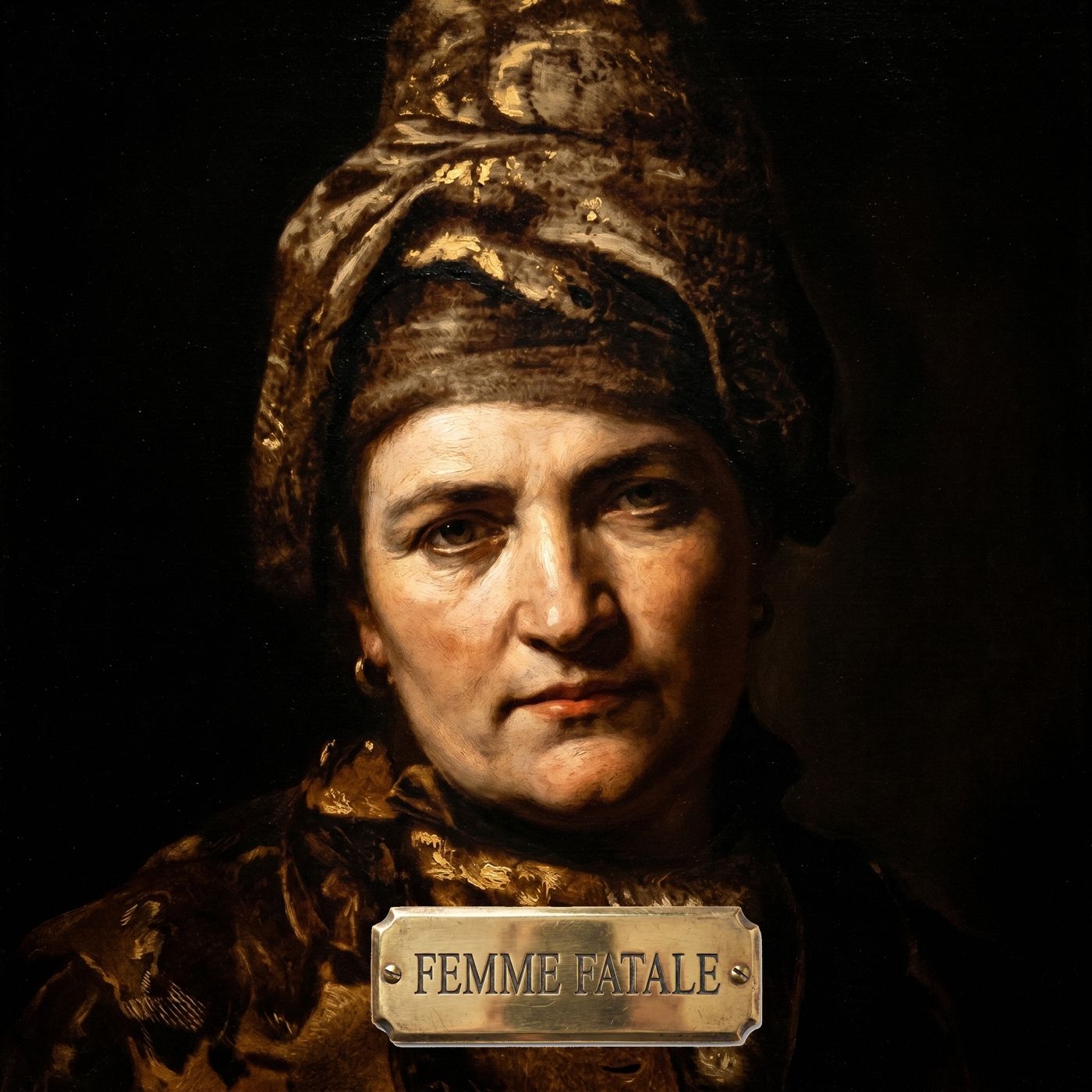
True Crime Historian — Femme Fatale Sophie Lyons. Machine-transcribed; use the interactive transcript above to jump the player to any line.
Boston, April 1878, a suite at the Parker House. The old lawyer came in smiling. He left three hours later without his coat, without his pocketbook, and without a thousand dollars, and he did not go to the police because the woman who had just robbed him owned the thing he valued more than the money. She owned his reputation. Her name on the register that week was something other than Sophie Lyons. Over the course of her career she went by maybe a dozen names, but the woman behind the names was Sophie Levy, daughter of a New York shoplifter, pupil of the city's most efficient fence, and by the reckoning of the men who policed her, the most accomplished female criminal America had yet produced. She was 29 years old in that Boston hotel room. She had already done two stretches in Sing Sing, walked out of one, crossed into Canada
twice, and married her way through the upper ranks of the Northeast's bank burglar aristocracy, and the most profitable work of her life still lay ahead of her. She was not a bad woman because her childhood was hard. Her childhood explains her. It does not excuse her. What she became, she chose, and what she chose was to make her living by finding the worst thing in strangers and charging them for it. She was born on Christmas Eve 1848 on the Lower East Side to Jewish immigrants whose trade was theft. Her mother Sophia shoplifted for a living. Her father was mostly in jail. The household language was the argot of the fence and the flash house, and the family business began for the Levy children at an age when other children were learning the alphabet. Sophie never saw the inside of a schoolroom. By the time she was six, her hands were working men's pockets on Broadway. The guiding hand of her apprenticeship was Frederica Mandelbaum, Marm Mandelbaum, the most powerful fence in 19th century New York, who ran a parlor on Clinton Street where
Stolen, Silk, and Diamonds passed through in bolts and pouches, and where the city's elite thieves paid court. Marm took to the girl. Sophie was bright, pretty, and had a quality the older criminals called brass. By her middle teen she was running in Mandelbaum's inner circle, and by 20 she had made her first professional marriage, to Ned Lions, a bank burglar with a national reputation, and a willingness to share it. That was the rise, a childhood at the pocket, an education at the fences parlor, and a wedding into the top shelf of the gilded age underworld. The Sing Sing business happened in 1872. Ned had gone down for a bank job in Wyoming County, New York, and landed at Auburn. Sophie, who had been convicted of her own shoplifting the year before and sent up the river quietly arranged, through Mandelbaum's political connections and the endemic graft of the New York prison system, to have her husband transferred to Sing Sing where the watch was
looser. Then she went to work on the staff. She befriended the matron. She became the matron's housekeeper. She was trusted to walk the matron's children outside the prison walls. On one of those walks she passed word to a Confederate, and days later Ned Lions walked out the front gate of Sing Sing like a man headed to lunch. He returned the favor of that December. Sophie had palmed a sliver of wax and pressed it against a prison door key. A duplicate was cut. On December 19, 1872 she let herself out. The family decamped to Canada. The escape was the moment the American criminal establishment began speaking her name with real weight, but the escape was not her best work. Her best work was still waiting because she had begun to understand that picking a man's pocket was rudimentary labor and that a far richer seam ran through his shame. The badger game was not her invention. She perfected it. The mechanics were simple and disgusting.
Sophie, elegant and educated, for she had, after her flight, hired tutors to drill her in languages, art, and literature until she could pass as a lady of means, would let a wealthy man meet her in a hotel room. She would encourage his compromise. She would then make sure the door locked and his clothes, watch, and pocketbook went into a trunk that the man could not open. The rest was negotiation, and the negotiation favored the woman holding the keys. The elderly Boston attorney paid $1,000 to keep his name off the courthouse steps. He never prosecuted. Almost none of them did. That was the scheme's governing logic. Sophie Lyons did not steal from men who could afford to be seen as victims. She stole from men whose social standing was the thing they could least afford to lose, and she traded on the fact that they would rather part with a fortune than with their wives good opinion. She worked Philadelphia, Boston, Detroit, Montreal, the mining camps of California, and the watering
holes of the French Riviera. She wore disguises, a gray wig, a widow's weeds, an accent borrowed from Paris. Chief Thomas Burns of the New York Police Department, who was not a sentimental man, put her in his 1886 rogue's gallery, and called her the Queen of Crime. She married twice more during these years. Jim Brady, then Billy Burke, both burglars, both useful. She buried one, divorced another, and buried several children along the way. She piled up a fortune. The victims do not have names in the record, which is the intended outcome of a blackmail career. They were merchants, lawyers, gentlemen of standing whose weakness she had priced correctly. Some of them paid her and kept paying her. There is no count of the ones she came back to twice. Some of them went home and told no one, and carried the thing for the rest of their lives. One of her contemporaries, a fellow-confidence woman, described the trade as fishing in
a barrel full of fools, and Sophie was the woman who kept the barrel stocked. She also left a trail of more ordinary wreckage, the women whose jewels she slipped from their necks at the opera. The merchants, whose tills she emptied with a partner's misdirection. The landlady's whose borders turned out to be Sophie Lyons under a different name and a forwarded bill. The totals are lost. The grievances were countless. In 1913 she announced that she was done. She moved permanently to Detroit, where she had already been parking her proceeds in brick-and-mortar for two decades. She owned 40 houses by the end. The estate, appraised at half a million dollars, would be worth roughly $16 million in today's money. She wrote a memoir titled, Why Crime Does Not Pay. A title produced by a woman who had made crime pay very well for half a century and who now proposed for a small syndication fee to warn the young against her methods.
She began visiting jails. She took an interest in juvenile delinquents. She funded boarding houses for paroled men. The act was not in the end of fraud. The philanthropy was real. She appears to have believed she had become someone else. The record of her victims was not in a position to agree. On the evening of May 8, 1924, three men she had tried to reform, let themselves into her Detroit home. They wanted the money the neighborhood believed was buried in her walls. When she would not tell them where it was, they fractured her skull with a blunt instrument. A neighbor found her on the floor. She died that night at the hospital of a brain hemorrhage. She was 76. There is a temptation with Sophie Lyons to call the end poetic, to say the woman who made her fortune trading on private weakness was killed by the public consequence of her own philanthropy, to leave it there as a closing flourish. The temptation should be refused.
She was not murdered by metaphor. She was murdered by three men who wanted her money, and the fact that she had once been them does not redeem her history and does not redeem theirs. What it does plainly is finish the ledger. Sophie Lyons spent 50 years selling other people's shame for cash, and when the bill came due, it was collected in the same coin she had always demanded in silence. Behind a locked door by strangers who knew her reputation better than they knew her name. She was, in her moment and in her method, exactly what New York's most experienced cop had called her, the queen of crime. And crime, as it turns out, did pay her. It also, in the end, paid her back. American Scoundrels is a personal service of true crime historian. It available for free to all free subscribers and registered visitors to the safehouse at www.patrion.com slash true crime historian.
You can pay more if you want, but rent at the safehouse is only a buck a week, and gives you commercial free access to over 400 episodes of the scandals, scoundrels, and scourges of history. Next to the boss, and every new resident gets a clean pillow.
More episodes


