About this episode
Firing Line Radio Show is made possible by:
See omnystudio.com/listener for privacy information.
Get every episode summarized
Each time Firing Line Radio Show publishes, we email you a written briefing from the transcript — the topics, who appeared, and any specific claims, with the ad reads skipped.
Email me new episodesFree for 3 shows. No card needed.
Hosts & guests
Transcript ready
665 searchable segments. Every word is indexed and playable.
Full transcript
Firing Line Radio Show — Firing Line Radio Show 09-12-26. Machine-transcribed; use the interactive transcript above to jump the player to any line.
Welcome to the firing line with Rick Travis, legislative director of the California Rifle and Pistol Association. The firing line radio show is brought to you by the California Rifle and Pistol Association, CCW Safe and Turner's Outdoorsmen. And now here's your host, Rick Travis. Good afternoon, patriots of California. Welcome to the tailgate here at the end of the trail with firing line radio brought to you by the California Rifle Pistol Association. I'm your host, Rick Travis, the director of Governor and Affairs. And we have a great show today to talk about what goes on in the background, especially when it comes to the outdoors. But before that, what's the update in Sacramento? Well, there's not much of an update because all the bells that are good and bad that unpacked
you in the area of the Second Amendment in conservation and everything you do, the derives from the Second Amendment are on the Governor's desk awaiting a video or awaiting a please sign. How do you take part in that? Go to CRP.org. We have a page set up. All that takes is you clicking like two things and you automatically send letters to the Governor's desk, asking to sign or to beat him. So your role is important because right now talking with the Governor's staff, they're looking at those numbers. And those numbers can have a huge sway because remember, Gavin Newsome, whether you like it or not is running for president and he's trying to get a good grip. So he's very slow on his role this time around and signing and beat beat him because he's trying to see where the people are. Now is your chance to stop some bad stuff. So please go to CRP.org and sign up for that so that you can make sure this is happening. Now coming to today's show here at the tailgate where we gather together, somebody that I
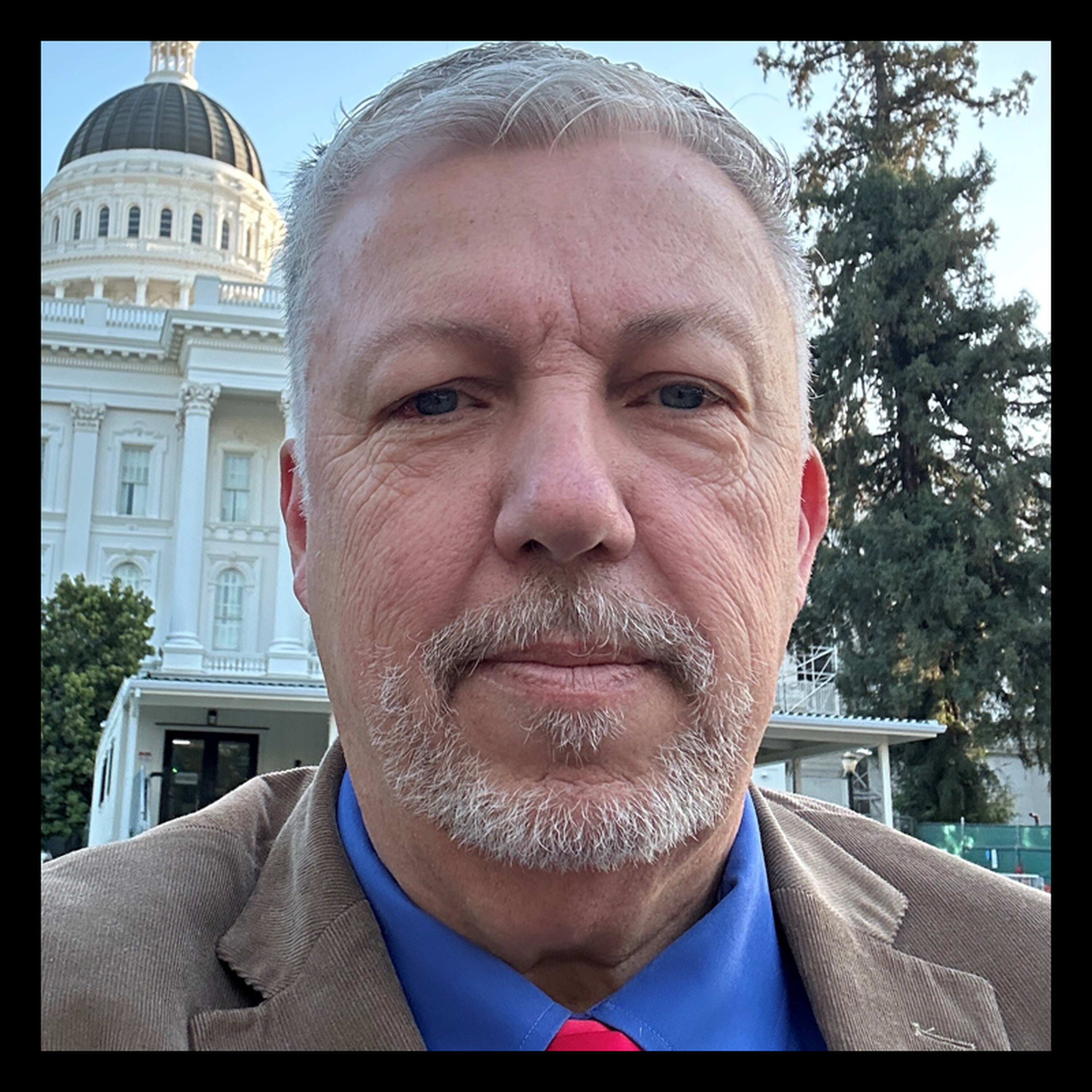
have met at a tailgate more than once is our guest today. His name is Steve Childs and Steve is an outstanding person who like many of you that will set out there participating in the second amendment, rather it'd be target shooting, hunting, a little bit of everything. And one day he just got fed up with some of the things going on and said we need some good new blood in the area of science. And so Steve went and became a field biologist went to Cal Poly up in Humble, one of the best schools in the country on biology with wildlife and conservation issues. And we're going to talk about what that takes today, what they do. You're going to know. And from a CRP point of view, I've had the privilege of working with some fine biologists. We've had Nick Villa on the show. We're going to have him come up here in October where we've talked about all sorts of things and why it's so important for you, the layperson to understand who these people are and
are not cut from all the same cloth. So welcome to the show Steve. Take a morning break. So Steve, you know, talking about a field biology role, I think a lot of people, you know, they're only real understanding biology is what, you know, many of us got in high school with senior in the class and you were either really, really excited or really, really wanted to put a pencil through your eyeball to get out of there like in the other class of high school. You know, and so they think peachy dishes and stuff like that. But can you just give an overview of what a field biologist is? Sure, we're essentially the boots on the ground in natural resource conservation and management. A lot of us go out and conduct surveys, you know, looking at plants and wildlife documenting their presence, their abundance, you know, how they're distributed across the landscape, how they use the landscape, things like that and, you know, reproductive activity. And so, you know, obviously, you had a background before this, what did you also
pivot and dedicate your life to conservation? Well, I was into hunting and fishing and I really love that part of the state, the opportunity as it provides. So naturally that led me to kind of participating at the commission level at the state kind of seeing what's going on, you know, since they dictate a lot of what we do outdoors and how all it's done. And of course, that leads you to interacting with wildlife advocates. I want to be nice animal rights activists, things like that. And after a period of time, I started noticing that they were taking studies out of context, you know, manipulating data that kind of get their way. And when I realized that I thought, wow, you know, I really need to get involved and understand how all of this works and that's what really kind of sparked my interest and going back to schooling in a degree. And based on experience, why would you say California, because I hear this all the time from people that do wildlife biology, it's such a challenge to balance conservation
and the protection of some species. Why is that such a challenge? I mean, California is one of the largest and most biodiverse states for both plants and animals. We probably have more species that exist in this state and only in this state compared to, you know, any other state in the union. And basically, you know, managing these species and protecting them is a balancing act with all of these different interests in the state, you know, from Tom Dickens Harry that looked down the street to agriculture, to business, to government. So it's really hard to kind of balance all of these needs in such a diverse state. Yeah, yeah, a book that we'll talk about on another show, but it's called The Four Fishes. It's really goes in quite deeply to explain the challenges. And, you know, I've been reading it, I understand the fishing side to house a little bit better. And, you know, just looking at like, you know, you're not just bouncing, do we protect
this breed of salmon or not, but all the subspecies of salmon, all the things that go with salmon, the water rights, you know, for agriculture, the water rights for generating power, you know, all the different issues. And so it's not simply, and this is what I'm going to get to all of us at the tailgate. It's not simply of like, we want to save this or we want to protect this. We want to conserve this. There are a lot of competing interests that like, you know, there's no power then the hospital doesn't work and grandma doesn't make it. But, you know, so you need the power. And so it's not, it's not as simple. It's very complex. What do you think are some of the challenges that you and others like yourself, basis of biologists first in terms of what the public sees and then to the actual challenges in the field? Well, I think the public doesn't always understand exactly what we do or how we do it. And I think a lot of that is a, is a communication issue. It's really kind of hard. I mean, we're talking about competing interests and management.
There's also competition for people's time and attention. So I mean, that's probably the biggest challenge is how do we reach the public and get to talk to them in a way that's meaningful, that they understand that kind of helps them, you know, grasp what we do or how we do that. Do all field biologists, is there competition or disagreements between you guys and Gals when you're out there? Absolutely. I mean, just like, you know, you have a hard time picking a place to eat for lunch with just two people. It's like that in conservation too. You know, our backgrounds, our education, our life experience kind of helps guide our decisions and our perspectives. So it's going to be nuanced. It's going to be diverse and not everyone's going to agree. Okay. So folks, the reason I wanted to have Steve come on is we've known each other for a long
time. I'll just put it that way. And one of the things that I've always enjoyed with Steve is we've been able to pull apart some of the issues dealing with, I mean, we met and sharpened each other in the area of understanding apex predators, especially like cightotes and separating back from fiction. And one of the things I know that we've talked all often is, and I want to set this up here to Togie as we get into this next couple of sections today, is that we understand the compassion that people that we often don't agree with have for a certain species. But as I've said on this show, all the time, species are a part of a larger ecosystem. And to Steve's point, California is one of the most diverse places on the planet. And one of the few places you can go on the planet to see just about every ecosystem. Rather, you're going out to, you know, the Orange County coast and you're looking at estuaries. Estuaries don't happen everywhere. There are very few of those left.
You know, there are places that you can go on the desert, you can go the lowest point in the 48, you can go the highest point in 48, both here in California. You can actually see those two places from each other here in California. We have things that just defy logic sometimes and challenge the science. And then we get the emotions involved. And we're going to be talking a little bit about that. So I want to be sensitive. But what I want to bring up is all of us have kind of a, and I'm not picking on Disneyland, but we have a Disney-esque attitude of what nature is like. Now, I hate to tell you this, but we don't have rabbits walking with young deer and butterflies on their tails. That just doesn't happen. And, but we want to think it does. And so when we approach nature, we want to see that. But nature can be very hard. Nature can be very cruel. And nature is very demanding. And if you understand it and respect it, it's also beautiful.
It's also serene. And it's also one of the greatest gifts that we have. And that's why people like Steve spend so much time in the field fighting for that. And some of the capo's why I spend a time in the capo. And we're going to come back. And we're going to be talking about some of that. And then we'll go into a natural project that is going on here in California. And then we'll talk about the future in conservation. We'll be back on fine-minded media. The Police Credit Union proudly extends its membership beyond the blue to welcome members of CRPA. The Police Credit Union understands that size doesn't determine value when it comes to banks. Joining the Police Credit Union means you have a partner watching out for your financial well-being. No matter where you are, the Police Credit Union services are just a click away. Open your membership at virtualbranch.policecu.org. The Police Credit Union, originally founded a Surveillance Enforcement, has expanded their reach to now serve you, your neighbors and friends.
Open your membership today and experience the Police Credit Union difference federally insured by NCUA. Hi folks, Rick Travis. If you're a concealed handgun carrier and have a firearm to defend your home, you need to have CCWs safe on your side. CCWs safe is your defense. If you're forced to use your firearm for self-defense or the protection of a loved one. CCWs safe provides and pays 100% upfront defense funds for high quality attorneys, expert witnesses and investigators you need following a critical incident with no reimbursement. And they do it all for one flat yearly fees, trying to earn $79 a year. CCWs safe has permit and non-permanent plans to protect California residents in this state and while traveling across the country. So check out their new ultimate plan with no caps on criminal and civil defense. $1 million for bond coverage. A dedicated $1 million of civil liability and many other benefits. To defend your life, CCWs safe will defend your freedom and financial future.
In California, CCWs safe has got you covered. So join now at CCWs safe dot com. The California Rifle and Pistol Association has worked tirelessly for 150 years to promote your rights to self-protection, shooting sports, firearms collecting, hunting, conservation and every aspect of your second amendment rights. CRPA works tirelessly and relentlessly to defend the civil and constitutional rights of individuals to choose to responsibly own and use firearms. Every dollar that CRPA receives from its members and donors stays and works in California to support your hunting and second amendment rights and the fight against politicians, elitists and bureaucrats who would deprive individuals of those rights. Join the California Rifle and Pistol Association today. It's CRPA dot org. That's CRPA dot org. AM 590, the answer.
This portion of the firing line is brought to you by Turner's Outdoorsmen. Welcome back to Fine Line Radio. I'm your host, the director of government affairs Rick Travis and with me today is Steve Childs, a wildlife biologist doing work for the state of California and doing work more importantly for each of you and we're here to tell gay today to explain what field biology is and isn't and so you know field biology covers everything. As Steve said, it covers the flora being the plant life. It covers the fauna being the critters running around. It covers fish. It covers foul. So if it flies, it swamps, it runs around or it just grows out of the ground. It covers all of that. And we look in California at ecosystems and a lot of times we have to go to border states to figure out because newsflash animals don't understand borders. Animals don't understand. Oh, that's a state line. They don't. So ecosystems fell out and recently Steve, when I went to call you, you were working on
a project dealing with owls and Oregon. I think this would be helpful for people to understand what a project like this is, what the goals are. So can you explain the owl project in Oregon? Yeah, sure. I was working under a subcontractor for a federal agency and our work was in southern Oregon, the Rogue River Valley and we were a tractor for a federal agency. Our job was to conduct surveys for Northern spotted owls specifically but also included other owls like barred owls and you know other species that we kind of went into in the field. And most of the projects that we were working on were timber sales or fuel management projects. So we were out there to identify species that were important. So these projects could actually go forward down the road. Okay, so let's back that up. So there's like a timber project. So you're trying to get because people will I know take this and go like a thousand different directions.
So was the goal of the federal agency to know how many owls were there and then they'll go back in like after the project to see how many remained to see what the damages were or was it like hey, just to know what the count was and how to protect those owls as they went through with the project. Like what were the goals? I mean, they didn't get into the meat and potatoes of that because a subcontractor I was just tasked with locating the species. But essentially we want to protect sensitive species like the Northern spotted owls and if there aren't any in the area in the habitat and I didn't want into any in my area. It was other biologists that were in more rugged isolated habitat that were running into the Northern spotted owls. But in my area, I'm assuming that we're trying to find and identify where they're not as well as where they are. So some of these habitats like thinning and timber sales would negatively impact Northern spotted owls. So yeah, we are really trying to make sure they're not there so we can go forward with
the project and actually conduct timber sales and do the thinning projects and the fuels management projects. So working with those partners, you're basically like doing surgical operations within the wilderness of saying we can go ahead and harvest some surplus here because we won't negatively impact these species there. Right. So what is a typical research outing like, I mean, obviously I know because I talked to you about this, but I think it's really fascinating. So like for, because we'll talk about some of us that felt like for this owl project, kind of describe what life was like on a typical day. Okay, so we generally be given a series of maps and these maps would have day and night points scattered throughout. And sometimes, you know, these would be along a road or sometimes it would just be smack dab in the middle of habitat. You'd have to hike in and hike back to try to find these things oftentimes and dense
brush, probably an over and around fallen trees, sliding down hill sites that really aren't the most stable. It's kind of all over the place. You know, and of course, add weather to that, you know, it'd be you dealing with hot and cold and wet days, dealing with landowners as far as, you know, access issues. You know, there isn't really a typical day, but essentially a lot of it would be, you know, getting to these points and then calling and identifying whether or not there are species there and what their mating status would be for a certain status would be. You brought up like landowners, but weren't there some people that thought they owned the land, but they don't own the land? Get started there doing stuff that they shouldn't be doing that you could also encounter. Yeah, there's one of my favorite incidents was this older guy who they blocked the road with a bunch of different signs saying it was private property and it took me a few visits before I finally realized the guy was, you know, blocking access for us to do our job.
And you kind of want to balance these out. Like in the back of my mind, I really wanted to be mad and say, hey, this is land for everybody paid for by taxpayers. But at the end of the day, you just kind of have to solve the problem and I decided to, you know, kind of make friends with this guy and let him know what I was doing and that I would be out of his hair after a few months of just doing random surveys and the guy ended up being pretty nice. But yeah, you run to that quite a bit where people will, you know, either unintentionally or intentionally mislabel roads and it kind of creates access issues of its own. And I know that, like, for some of the other biologists, sometimes there's illegal grows, sometimes there's other stuff going on. And so what I wanted to get out was, you know, we think of a field biology job and you don't think about the perils, but, you know, you sent me a picture, which we can't put on, you know, the tailgate here, but like you sent me a picture that I was like, no way I'm walking across that log, that distance up off the ground, not happening.
Like you guys really sometimes take some pretty interesting risks to get that data. In other words, it doesn't come. It's not like you're just stopping at a roadside and collecting something came out of a camera. Yeah. A lot of times that people that design these surveys are in an office and you can't exactly tell what a map is until you've ground truth it and where you actually go out and physically visit that. So it kind of creates these extra challenges, like not intentionally, but there's some maps that I went to when it was probably steeper than a 45% grade where I had to drop it off the top of a ridge line to get to a hiking spot. And then I realized, you know, after after getting probably five or 600 meters down the side of a mountain that I realized it was so soft and so slick that there was no way I was getting back up out of there. And I ended up having to hike down to a river, you know, across that.
And I made friends with the local and I somehow managed this. We talked this guy into giving me a ride back to my car 30 minutes away on a mountain road. But yeah, you run into a lot of unusual circumstances trying to balance, you know, what the map says and what the reality is on the ground. So that sounds like a pretty big challenge game of 30 mile hitch out of a situation. But what are some of the other challenges that you carried on the project, whether it be with wildlife or terrain or issues so people can really understand what it takes to extract these field notes. Yeah, like I said, ground truth is the big one, like what you run into isn't always what it looks like on the map, you know, whether place a pretty big role or looking for species that are probably more active at dusk and dawn and that keeps you from kind of hunting or not hunting, but hunting for them, looking for them, doing the surveys during the heat of the day.
But it also prevented you from calling when it got rainy because the sound of a phone prevented you from hearing the owls. Those are kind of like the everyday kind of challenges that you run into. Like I said, landowner access, it isn't just people blocking roads. Sometimes the terrain prevents you from getting to a location and it's easier to try to sweet talk a landowner into giving you access so you can get to a part that's really hard to get to. You know, we're trying to balance like, you know, how much time you have in a day versus what you can get done. What were some of the things that you personally learned on this owl project that made you go like, wow, that's new. That was new information. Oh, man, that's a really good question. I really think it's just every project is going to present its own challenges. And I think this really exemplified, you know, the need to be flexible, the need to think
on your feet, you know, and the ability to keep your mind on the ultimate goal of getting it done so you'd have to, you know, approach every situation as it comes and figure that out. But one thing I was really surprised was to find all the burnt out and destroyed vehicles abandoned in BLM property. That was a big shocker to see in Oregon. Yeah, we're going to come back here at the tailgate and we're going to talk about another upcoming project that's happening in state. And we're going to finish on a couple of things with the owls. But one of the things that Steve and I talked about is one of the challenges with studying owls is you may not know this. There's plenty of videos on YouTube that you can go check out, but owls are absolutely silent when they fly. You cannot hear them here. You can hear crows. You can hear hawks. There's a lot of things that you can hear, but owls are swift and silent. And so to pull off this project, a hat tip to you, Steve, and to your cohorts because
that's an incredible amount of work to be able to track decent and credible animals, a part of our predatory system. We'll be back on fine line video. Turner's Outdoorsman, California's number one hunting, fishing, and shooting sports retailers since 1971 now has 33 locations across California and one in Tucson, Arizona. Turner's is your one stop shop for all your shooting sports and fishing tackle needs. They offer a full selection and unmatched prices on firearms, ammunition, gun saves, shooting necessaries, archery equipment, and fishing tackle. Visit Turner's.com now and sign up for the Turner's Discount Club for free and get their weekly ads and members only specials sent directly to your inbox. Turner's is a proud supporter of the fight to protect your rights in their continued support of the California Rifle and Pistol Association. For more information and a sign up for Turner's Discount Club or to shop online, visit Turner's.com of the firing line. Is brought to you by the California Rifle and Pistol Association.
Welcome back to Fine Line Radio, where we talk all things in the outdoors. Today with me is my good friend Steve Childs, a wildlife biologist. It's doing various projects. We just talked about our project in Oregon, but this is really fun for me and I'm going to I'm going to lead into why it's so much fun. So there's many times that you're seeing in government meetings and I know all of you think those are exciting and they're just nail biting events and you, oh my gosh, it's so great. Actually, there are times where I feel like I'm back in junior high going, why do I have to take this class because I am bored stiff. And then somebody says a word and you go, what? And that word two years ago was a good friend of mine when the assistant chiefs got up and said, hey, we've got this promise weird and suddenly head again. And I mean ugly head and it's called Nutria. And I'm like, Nutria, what the heck is Nutria? And then I get told, well, it's like the biggest swamp rat you've ever seen.
And I'm like, well, how they get here? And that's what we're going to talk about because California is always trying to find a way to get a grip on some new way to make money. And so Steve, if you could explain to us what Nutria really are and how they got here, that would be really, I think I opened for a lot of people here at the tailgate. Okay. Okay. So Nutria are some way aquatic rodents that are native to South America. They came here during the first raid. I think the first introduction according to CDFW was Elizabeth Lake. And then that population didn't make it, but there were more introductions. And basically what happened was the fur market collapsed in the like around 1930, 1940. And people just let the Nutria go instead of just filling them. So the population kind of bounced back. They were declared a eradicate in the 70s.
And then I think around 2017, CDFW found a pregnant female Nutria in Castine, which is in Merced County, Western San Joaquin Valley in 2017, which ironically was about the same time Governor Newsom banned recreational trafficking in California. Yeah. So, you know, whenever I hear the word Nutria, I think of the Princess Bride of rodents of an unusual size because these things are so big. And so people, if you hear somebody say that, that's kind of what they remind you. But what is the kind of damage that's being caused by Nutria? Because that was, I heard it had all sorts of numbers thrown out because that's what they do in those means. And I was like, what? So and now I realize, but I'm going to let you talk about the damage that they do. Okay. So I don't have the exact numbers, but Nutria do cause significant damage to crops, our native aquatic vegetation, and damage to wetland habitats, primarily through feeding
and breeding burrows. So they'll burrow into stream banks and levies, and the burrows will be, you know, 16 meters deep and go 15 meters into a bank. So they'll cause erosion, increased sedimentation, it'll cause levies to fail, rodents to collapse, you know, they're really problematic. So let's, let's peel back a little bit of this though, Steve, because I think this is really insightful. So many people who follow this program love the water development. And we just got a report from the United States government that we have the lowest turnout of mullards in 33 years. And we all realize that the Pacific flyway, California is the place where the flyway comes to lay their eggs, get their, their chicks going, and then fly back north to, you know, parts of Canada and the Arctic Circle where they feed, narrowing the summer months, and
then they come back here and that cycle continues. The Pacific flyway depends on California to have those areas where, you know, there's habitat for them. So in terms of nutrient, nutrient are damaging that correct. So that's like an impact on a different thing in the ecosystem. Yeah, a lot of these species are kind of interrelated, you know, the habitat, the impact isn't just that one species, it could be multiple species. And pulling that out, Steve, a bit is I think that's something that a lot of people don't understand, you know, there's actually a group of people that love nutrient. And I get it like, you know, everybody has their thing. But folks when we all of a sudden are like, oh, at the supermarket and we hear somebody saying, oh, I love nutrient, oh, I love this. You got it. You got to tap on the emotional breaks here. And you got to say, okay, but what damage are they doing and what else is involved? Because here's where we as a society have went, we become species specific.
You know, everybody has a t-shirt that either has a wolf or a bear or a nutrient or a duck or a dog or whatever on it. And that's cool. And I'm never going to put that down because I'd be too faced. I have a couple t-shirts with labridores on it and go figure, you know, I have a couple of other shirts with various wildlife on it. I get it, but you have to take the entire ecosystem in to a role because it's not just the egg community that's getting hurt, but you have to understand how this revolves. And so Steve, that's why I'm trying to kind of tease out with you is a little bit of the biology like when the new trip, you know, are doing, you know, 15 meters one way that's 45 feet for those of you that don't do the metric to standard measurement change in your head when he's talking about, you know, some of these are just we're talking about 16 meters is like over 100 feet. So this isn't like a small little mole in your front yard. This is like damaged.
It could lead to walls crumbling things like that. This is damaged at honestly when when those levies break and water gets messed up, then all of a sudden the ducks all does it are in harm's way because animals that couldn't get to their nests now have an easy access to those nests. And so then the chicks, the baby ducks, etc. they get wiped out. There's not as many to fly north and then you start to see a collapse that takes not one season, but multiple seasons if ever to recuperate. And so Steve, I mean, feel free to go there, but like this is this is serious stuff. This isn't just your author that to you know, catalog or rap. Yeah, I mean, these are 20 pound, you know, water rodents. I mean, it disinsane. They think of mature in probably four to seven months. Females can produce their first liter and eight to nine months. You know, multiply that two to three liters a year, which generally four to five young,
but as much as 13, you know, this is a highly reproductive species. You know, a little fun fact about Nutria is the mothers have mammary glands high on their sides. So the the young could nurse while the mother is actually swimming. You know, the young within just hours of being born, eyes are open. They could start eating vegetation and could be on their own within a few days. So that high, high reproductive rate and the fact they have no natural predators really makes them problematic. Where do Nutria originate from? From South America, but they were brought to the US as part of the fur trade back in the early part of the century or the last century. Was that like the Cheap Man's substitute for beaver? Say that again. Wouldn't they like the Cheap person's substitute for beaver? That was the idea that they would replace beaver peltz. Yeah, because they were so highly reproductive. Basically bringing a smaller, faster, matureing beaver.
Wow. Okay, so where does funding come for this kind of work? Because obviously, you know, everything revolves around money. So where does money generally come that helps you guys be able to do these kinds of things? Well, this is a partnership of federal and state agencies. So it's California Fish and Wildlife. You know, funded in part by the federal dollars from US Fish and Wildlife. The California Water Conservation Board contributes Delta Conservancy. I don't know exactly all the funding sources, but I wouldn't be surprised if there were private funding sources, including some of this. So down this is where I bring them back to you folks, so here at the Teal Gate. So when Steve said it comes from CDFW funds, federal funds, etc. It comes from you folks. That's your tax dollars. It comes from you that buy things because part Pittman Robertson goes to fund these kinds of projects to make sure that there is the research and the science there for it.
So why should you care? Because you're paying for it in a very real way. You're paying for this work to understand this. And this is why gain to know the biologists, gain to know the projects and having a more global view of the ecosystem is so vital because we all know what the fraud that's going on in multiple areas of government. This is not one of those areas and this is why we need to be able to say, hey, we're capable of doing things the right way and we need to do things the right way. But it's also understanding that this does not happen in a vacuum and that this doesn't happen overnight. You can't just look at nature and say, okay, here today, gondomal, there is a process to figuring out how to manage them without screwing everything else up and how not to let them get out of hand. And that's what people like Steve are doing for us. Is they're going out there, they're getting that information, they're bringing that home to make it so that we have better conservation here in California.
We're going to come back in this last segment and we're going to really pull back have kind of an open conversation between Steve and I about the future of conservation here in the Golden State. We'll be back on Fire Mine Radio. The California Rifle and Pistol Association has worked tirelessly for 150 years to promote your rights to self-protection, shooting sports, firearms collecting, hunting, conservation and every aspect of your second amendment rights. CRPA works tirelessly and relentlessly to defend the civil and constitutional rights of individuals to choose to responsibly own and use firearms. Every dollar that CRPA receives from its members and donors stays and works in California to support your hunting and second amendment rights and the fight against politicians, elitists and bureaucrats who would deprive individuals of those rights. Join the California Rifle and Pistol Association today at CRPA.org.
That's CRPA.org. CRPA training. Now brought to you by CCWC. Training matters because in a critical self-defense moment everything happens fast. Your instincts take over. Your training kicks in and what you do in seconds can impact the rest of your life. But what happens next matters just as much. The legal aftermath can be overwhelmed. Investigations, legal challenges and financial strain. That's why being prepared doesn't stop at the range. You need the right protection in place before you ever need an attorney on your side. CCWC provides experienced attorneys, expert witnesses and investigators and covers 100% of your defense costs upfront. No payback, no surprises. CRPA training and CCWC. Train with confidence. Be ready for anything. Visit CCWC.com and become a member today.
The Police Credit Union proudly extends its membership beyond the blue to welcome members of CRPA. The Police Credit Union understands that size doesn't determine value when it comes to banks. Joining the Police Credit Union means you have a partner watching out for your financial well-being. No matter where you are, the Police Credit Union services are just a click away. Open your membership at virtualbranch.policecu.org. The Police Credit Union, originally founded a Surveillance Enforcement, has expanded their reach to now serve you, your neighbors and friends. Open your membership today and experience the Police Credit Union federally insured by NCUA. AM590. The Answer. This portion of the fire in line is brought to you by CCW Safe. Welcome back to Fire Inline Radio. We're here at the tailgate today with Steve Childs, who is a wildlife biologist. It does work for on projects for both the federal
government and for the state. We are going to be just talking about some of the challenges that are coming. Steve, the last two years in the legislature, I'll just bring it to you. We've had some different ideas that have been brought forward by people that I may shake my head out personally, but I also know are for the most part sincere that they really care. I'm just going to talk about, let's say, predators. We have lions in the form of cougars. Now we haven't been hunting cougars. We have cougars all over the state. In fact, we know we have more cougars in one county than like several states put together and that would be Oderado County. California has more cougars than any other state in the lower 48 and county in the last one of Hawaii. We're like cougar capital. Why are so many people freaking out when we have the bulk of cougars in California that cougars are threatened?
I think it goes back to what we're talking about at the beginning of the show that people are really disconnected from wildlife. They really aren't on the ground in the habitat, looking at what's going on and also what you were talking about earlier is that this these species are interrelated. They don't understand that banning hound hunting for bears would result in increased population of bears. I don't think people understand that those bears will negatively impact deer species and mountain lions through a process called with the mountain lions called soptoparacetism where the bears will steal mountain lion kills and again forced the mountain lion to take more deer. It's all kind of all this is kind of interrelated interwoven. I was out in Oregon and I personally went into mountain lions twice while being out in the field while doing these surveys. There's certainly no shortage of them in California. And again, people think there is because they're actually not spending
time out in these habitats understanding that mountain lions tend to be elusive and that's why you're not seeing them. Yeah, you brought up a really great point. So like, you know, we have the bear people that love the bears and that's cool. We have the mountain lion people that love the mountain lions. We have people that love deer. We've certainly seen down the fight on Catalina Island. But you brought up a great term kleptoparacetism and to put in lay terms, it's like the neclatomy. So bears are generally speaking pretty lazy if they can get away with it. And so they will look and say, oh, there's a mountain lion and I'm bigger than the mountain lion and they pushed the mountain lion and the mountain lion gives up. But here's the thing bears carry a lot of fat. Mountain lions don't. So now the mountain lion has to go and expend energy. It has not recuperated from the last kill to kill again. As this continues to mountain lions gain weaker and weaker. And then you bring another apex predator into the mix and that would be the wolf. And when
the wolf comes in wolves work in groups and Steve, it's my understanding from what I've been able to study on those animals. They have no problem stealing from mountain lions and they have no problem stealing from bears. I'd agree with that. I mean, you know, wildlife does one thing really well that manages to adapt and to survive. Yeah, and I think that's one of the issues you got to realize. So now you have the people at love wolves that are vying for wolves. They don't care about the bears, but now the bear people are upset. And then you got the cougar peoples upset. And you're starting to hopefully get a feel from what's going on before you get to any of the ag groups and the other wildlife enthusiasts. And then folks, we get the bill this year, Senate Bill 1305. That was let's go to threatened areas around the country and grab 75 grizzly bears and bring them and put them in three other locations where we already have a plethora of bears,
wolves and and mountain lions and see what happens. So Steve, not getting into the politics of it, but just looking you drop a grizzly bear in with black bears. And what I've been told by other biologists is often the black bear is like, yeah, I'm not going to tangle with that. And so they move away. I mean, yeah, you're going to drop this these wolves into the or the bears into the mix, a larger species. And they're going to push these bears closer into human habitat. We already have a tremendous amount of conflict with the increased populations in California. This is only going to make it worse. And so folks, this is where the challenge comes for, you know, the biologists, the biologists sometimes understand no to species. They don't hate the species that you like. They're saying, hey, think about so, you know, there's debates there going between the feds and the state before you get to any of us over how many of these animals that the lamb can hold, which is called carrying capacity. But the one thing no one's disagreeing on is when it comes to
black bears were well over that number, were well over that number with coyotes were well over that number with bobcats were we're nearing being over that number. If not at the number with cougars. So folks like just with the predators and what's suffering is all the other species down wind. I mean, in the past few years, we've suffered a rabbit hemorrhagic fever, which has been incorrectly, but it's there is some true to it called like bunny Ebola. It's not actually Ebola, but it is a hemorrhagic fever. Deer have had a similar fever. They went through it. Was it quite as devastating as it was with the rabbits? But like California is suffering some really harsh things with the environment and with the ecosystems. Steve, like what are you hearing in your community about some of those threats to the various ecosystems? Well, a lot of these conversations were kind of had in a bubble. People like to talk about disease, people like to talk about habitat.
Like we're saying earlier, these are really complicated discussions. They're very nuanced. A lot of it also boils down to context and scale. So these are really kind of complicated issues when you really unpack how all these species impact other species. Like you're saying, the role of disease, habitat, changing climate, all of these things are contributing factors to these problems or ongoing challenges. So you brought up climate and all of us here to telegate have been like, wow, it's been like living in Florida or somewhere other than where we normally live because of the heat and the humidity. That has an impact on wildlife as well, doesn't it not? It just like impacts us. It changes the way that we conduct our day to day operations and the same goes for wildlife. Yeah. And so folks, this is why I want you to take in like, you know, you can have your political opinions. You can have your naysayn, but you have to realize this is part of what the
biologists are doing and one of the things I'd love to have in Steve on the show today was, and I know he won't get a finisher when I say it, but what Steve did with the owl project, what Steve will do with the new cheer project, it's a snapshot. He is not out there for 365 days, a year for 10 years. He's out there for usually, you know, somewhere between a few weeks to a few months, taking a snapshot. He's not in the same area every day. So we're trying to figure these things out based on snapshots, modeling, using everything at our disposal to figure out what's best. And so my encouragement to all of you as you're listening to us is to think, wow, there's a lot of time, a lot of energy, a lot of science that's going into this and then it ends up and where you normally hear me talk about the legislature, which, you know, 90% of the people do not have a clue, have never talked to a biologist or knocking, have the experience you're having today.
They don't see the interplay between species, the interplay between all the various roles. They're usually listening to who's the loudest person after door. And doing science by who screams the loudest outside the given door in the capital does not benefit anybody. I don't care what the direction is, if it's a direction you agree or disagree with, what we need to have is a balanced conversation. And you're a part of that balance conversation. You do have the ability to have a voice in this. The thing that I ask is, look, you can say that you think, you know, the Chupacabra, which is a mythical beast, is the greatest thing on the world. Great. How's that balance out with Bigfoot, you know, to use the analogy of mythical creatures. And now I know I just ticked off the people in Southern California and the people in Northern California without joke. But seriously, this is what we have to do. We have to start looking at how all of this interchanges, the rights of people to go out and photograph and see them in nature, the rights
of people to do sustenance hunting, the rights of people to make sure that these animals are there for future generations, which is always our push. Steve, I want to thank you on behalf of the program, on behalf of the people of California that we represent the CRPA and beyond for the work you and your colleagues are doing in the wild. Yeah, thank you for having me. I appreciate it. And folks, every week we talk about how you can get involved. Go to CRPA.org, sign up, get involved. And as I say, be safe out there. Shoot straight both with your firearms and your arrows, but also your language and thoughts. And fight back for your rights with the California Rifle Pista Association. See you next week. The firing line radio show has been brought to you by the California Rifle and Pistol Association, CCW Safe and Turner's Outdoorsmen.
Turner's Outdoorsmen, California's number one hunting, fishing and shooting sports retailers since 1971 now has 33 locations across California and one in Tucson, Arizona. Turner's is your one stop shop for all your shooting sports and fishing tackle needs. They offer a full selection and unmatched prices on firearms, ammunition, gun saves, shooting accessories, archery equipment and fishing tackle. Visit Turner's.com now and sign up for the Turner's Discount Club for free and get their weekly ads and members only specials sent directly to your inbox. Turner's is a proud supporter of the fight to protect your rights in their continued support of the California Rifle and Pistol Association. For more information and a sign up for Turner's Discount Club or to shop online, visit Turner's.com.
More episodes
More from Firing Line Radio Show

Firing Line Radio Show 09-05-26
Firing Line Radio Show
Firing Lane Radio Show 08-29-26
Firing Line Radio Show
Firing Lane Radio Show 08-22-26
Firing Line Radio Show
Firing Line Radio Show 08-15-26
Firing Line Radio Show