Loading...
healthfitness
Fix Eye Strain and Blurry Vision: Visual Hygiene & Optic Biohacks | Claudia Muehlenweg
About this Episode
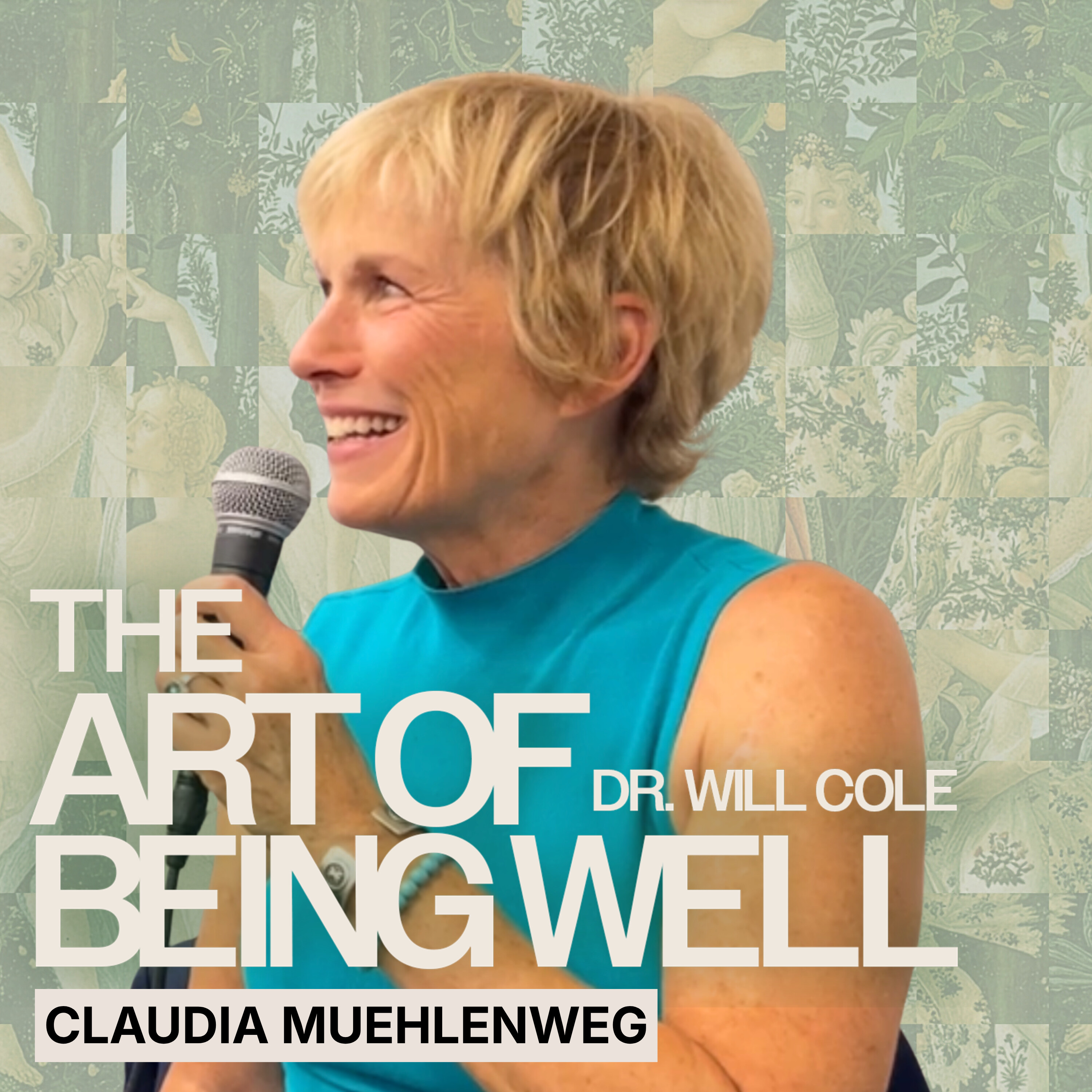
Holistic Vision Coach Claudia Muehlenweg joins Dr. Will Cole to discuss why eyesight declines and what may help support healthier vision habits. Claudia shares her story of getting glasses at age three, becoming glasses-free as a teen, and later retraining her vision again during a high-stress season. They unpack the role of chronic stress, nervous system tension, and “tunnel vision,” plus how screens impact blinking, dry eyes, and near-point strain. Claudia also shares practical tools like palming, visual breaks, and building better “visual hygiene,” along with insights on light sensitivity, night vision, and nutrition. For all links mentioned in this episode, visit www.drwillcole.com/podcast.
Please note that this episode may contain paid endorsements and advertisements for products and services. Individuals on the show may have a direct or indirect financial interest in products or services referred to in this episode.
Sponsors:
- Right now, Betterwild is offering our listeners up to 40% off your order at betterwild.com/WILLCOLE.
- For a limited time Hollow Socks is having a Buy 2, Get 2 Free Sale. Head to Hollowsocks.com today to check it out. #HollowSockspod #SPONSORED
- Go to DRINKAG1.com/WILLCOLE to get an AG1 Flavor Sampler and a bottle of Vitamin D3+K2 for FREE in your AG1 Welcome Kit with your first AG1 subscription order!
Produced by Dear Media.
See Privacy Policy at https://art19.com/privacy and California Privacy Notice at https://art19.com/privacy#do-not-sell-my-info.
Hosts & Guests
Transcript
The following podcast is a deer media production.
Hi, I'm Dr. Wilcole.
Wellness is a sacred art, and you are the masterpiece.
This is the art of being well.
What's up and welcome to the art of being well.
As basic labs can miss so much when it comes to figuring out why you feel the way that you do,
how you can optimize, and you're so much medical gaslighting.
Sometimes unintentionals, sometimes intentional.
People know intuitively something's off here.
My brain fog, my fatigue, my digestive problems, my skin issues, my hormonal problems, my fertility issues,
and they run the basic labs, and when the labs come back, quote unquote, normal,
they're told, hey, everything's fine.
See you in six months.
Take this medication.
You're just depressed.
You're just getting older.
You're just a new mom.
What they're unintentionally telling you, that person is going through that,
is you're a lot like the other people with suboptimal health that aren't thriving,
that we're comparing you to the lab reference range on conventional labs,
is based on a statistical bell curve average of people who go to labs.
People that predominantly go to labs aren't the thriving health there,
going through some health issues.
They're not feeling their best.
So in functional medicine, we're looking optimal, not average,
and we're trained to not just diagnose a disease and match it with a corresponding pharmaceutical drug.
Why do we have the problem in the first place?
It's not a pharmaceutical deficiency.
It's not a sort of medicinal matching game.
If you get this diagnosis code, you get that medication.
Why do we have this problem in the first place?
So when you're looking at things like hormonal problems, autoimmune problems, digestive issues,
metabolic problems, mental health issues, we can look at the components.
What are the pieces to the puzzle?
I'm passionate about labs.
I'm passionate about looking at these upstream root cause issues.
It's something that I've been doing clinically over the past 16 plus years,
starting the first functional medicine to tell a health clinic in the world in 2009.
So if you want to learn more about a functional medicine and clinical nutrition,
approach to youth thriving,
taking your health to the next level, check it all out at doctorwillcool.com.
That's dr-w-i-l-l-c-o-l-e.com.
Tons of free resources, protocols, everything I've seen work and what doesn't work
when it comes to proving people's labs and improving people's lives,
we put on that site and I'm constantly updating it with new health science research.
All right, enough of that.
Let's get to today's guest, shall we?
Her name is Claudia Muleinweg.
If you've noticed your vision, eyesight,
maybe getting worse, more eye strain, more dryness, more blurriness,
this conversation is going to expand the way you think about eye health.
I sat down with holistic vision coach Claudia Muleinweg
for a deep dive into why eyesight declines
and what may help support healthier vision habits over time.
I've learned so much on this conversation.
Let's get right to it.
This is Claudia Muleinweg's art of being well.
Claudia, welcome to the podcast.
Thank you for having me, Will.
Yes, so you're based out of LA.
How long have you been there?
Over 30 years.
Oh my gosh, you have a more Los Angelino than anything.
It's actually, I just did the math.
I'm 64 years old and I moved there at 32.
So it's literally 50-50.
Wow, from Germany?
Yeah, obviously.
Which part of Germany?
Hamburg.
Ah, is that in the North?
It's in the North.
Yeah, never been.
But I want to go.
I talked to a telehealth patient there a couple months ago.
And I always learn from my telehealth patients about their health, of course.
But then about their life, right?
It's like, where are they from?
What do they do?
And I forget what industry was in hospitality industry.
He was.
So do you go back often?
I just came from Hamburg.
So I saw my family and I just said, well, I'm so exhausted.
It's like, you know, you, I have on my work in the US.
Yeah.
So the whole timeline shifts and all of a sudden all your work starts at 6 p.m.
Yeah.
But I'm also having my life there.
And then being with family is both a joy.
But also has its challenges.
Yeah.
Oh, yeah.
So I was like, I need the, I've used, I need all the biohacking thing right now.
I'm definitely tired.
I think it was Eckhart Toli.
Here's maybe he quoted somebody said, don't quote me directly.
But he said something to the effect of, if you think you're evolved or conscious,
spend some time with your family.
You're right.
You can avoid it.
But then when you go back, it's like, okay, I've worked to do here.
These are areas or boundaries paid that are needed.
Exactly.
So yeah.
Yeah.
Okay.
So I'm fascinated by your work.
I've never got to go in such a deep dive about eye health as I'm going to get into today.
Your story's fascinating.
Can you take us back to like what you were up against that was so transformative that led to your work today?
So I got my first pair of glasses at the age of three years old.
And like I said, I was, I was born in the 60s.
And I have a photo for my first day of school.
My dad was an average photographer.
And I was the only kid in school with glasses.
I was bullied.
I was teased.
So glasses were kind of for me.
And they were like a handicap.
First of all, they could break.
They would fog up.
I was not very athletic.
So I would bump into things.
And when they broke that we would have to tape them because my parents didn't have money.
And you know, you're on the playground.
And it's just.
So I got so frustrated with them.
And then I started playing handball, not because I was talented, because they needed girls.
And my mom was like, you should do that.
Couldn't wear my glasses.
So three years of doing that.
Not wearing the glasses.
And then now I know I was, you know, running around looking peripheral vision, catching throwing in the sunlight.
The doctor said, your eyes are normal.
And I was like, wait, what?
All of a sudden, I was 15.
Boys are like, you have pretty eyes.
And then a few years later, high school exams, I was not going to school studying vision, got blurry again.
And I was like, hell no.
I'm never going to get back to this.
And I found a method.
And that helped me.
And that lasted me till the end of my 30s.
And then I was back in glasses.
And then it took a few years of noticing how the vision declined.
And then I'm like, wait a moment.
I've done this before.
So I was in my early 40s.
And then when I finally really committed.
And I've been glasses free since.
I don't know now, 20 years.
Wow.
Yeah.
And I love the fact that you took us through how healing is nonlinear, right?
Where it's like, okay, it worked for a time.
And then people feel like, okay, it's a failure or it's not working.
But it's okay to pivot and evolve or dig deeper.
And what served you for a season of your life may not always work.
And you have to kind of what's the another layer to healing, right?
Because a lot of times people think it's like linear.
Or this is the magic cure.
And it's always going to be the case.
That's not the case.
Body and life are dynamic, right?
100%.
And I was in both phases in my life.
I was in a lot of stress.
So my high school years, I had to study and study.
And then when I went back in glasses, I was in a marriage.
I had moved to Los Angeles, married a German.
We had two daughters.
I mean, they still exist, obviously.
But I was, the marriage was falling apart.
I was really stressed.
We came a single mom, sleep deprived.
So I now know, you know, crazy job.
Trying to do it all, you know, especially as a woman, you know,
having a job where you kind of pretend you don't have,
don't have kids.
Because if you do, then you're like, oh,
you don't really give you the good parts of the, you know,
you get the crumbs of the project, right?
So I realized that in both cases, I was in severe, like,
no, I'm not just physical stress, like sleep deprived.
But just emotional and mental overwhelm.
And yeah, it was difficult times.
Yeah.
Okay.
So that's a good segue to what I think everybody's thinking about.
Okay.
Maybe they are wearing contacts, glasses, their eyesight isn't as good.
They have eye strain in your experiences of healing yourself
and then helping people around the world optimize their eyesight.
What are the top drivers of eyesight problems that we're facing today?
Why are people dealing with it?
Well, I'm doing my talk tomorrow and I'm going like,
what's the number one reason our vision keeps declining?
And I'm going to spill the beans for you.
But yeah, people won't hear this so after.
We're people with contacts.
We're at the health optimization summit in London.
And yeah, you're giving a talk tomorrow.
Yeah.
Okay, cool.
So yeah, for everybody that isn't here alive,
they get the tea behind the scenes.
What's the cause?
So let me say what's not the cause.
So we always see it's genetics.
It's aging.
It's like smoking too much.
It's fast food.
It's sugar.
It's like reading in dim light.
Or parents who say, don't read.
What else?
What are people?
My grandma always told me that.
Yeah.
You need the light on like you're going to go blind.
Or alcohol.
So I'm not saying those things are good.
But reading in dim light is actually not a problem.
But you know, sugar, alcohol, all this stuff, smoking is obviously not good.
But the main driver is stress.
Like I said in my story.
So when I ask people, go back to a year or two before your vision got worse
or you got glasses.
What?
And that doesn't matter if you were a child.
It wasn't that great.
If you were in college or in your 40s.
Like what was going on in your life?
And most people can connect, yeah, I switched jobs.
Or when I was little, I was bullied.
Or we moved a lot of my parents divorced.
Or something that was stressing you at a higher level than anything else.
And obviously aging does play a role.
But a lot of times it's also like people that have pressed biopia.
Now we have new technologies.
We, at this time, and I love technology.
Where they say it's going at a speed that's almost, you know,
and you hit your 40s, 50s, you're like, gosh, like,
it's just harder to keep up with these things.
So stress is really, and when we are stressed, what do we do?
We drink alcohol, we smoke weed, we eat sugar, we watch Netflix.
Like we do all the bad stuff, right?
Our sleep is disturbed.
Sleep.
Exactly.
It's all it talks about cocktail.
So stress is really, and I know it's a big word, but that kind of chronic stress.
I didn't realize how tight my muscles were because it's, you don't realize, you know,
you get a massage and they're like, oh, you have really tight.
And it's almost like a badge of honor.
Like, yeah, I work really hard, you know, so that's it.
So stress is the biggest driver of it, which we can unpack and what that,
right, right, right.
How do we deal with it?
What do you find to be the most effective stress tools?
And okay, so let's go back to, that's the biggest ingredient stress.
Or what are the top five or the other ones that you think are the biggest,
other needle movers in addition to stress?
So yes, okay.
Of course aging, right?
I mean, I don't look the same.
My mom likes to point out how many wrinkles I have.
It's like coming back to family.
Mom, come on.
Of course.
So genetics can also play a part.
You know, I'm here with a good friend of mine who's an ophthalmologist,
and there can be glaucoma, can run in families.
Or you can, babies can be born with cataracts.
I mean, that is genetic component.
Yes, that is.
But I would say the other biggest one is probably definitely aging.
And then also getting into glasses.
Because glasses, I have never heard one person saying that glasses make the vision better or contacts.
You know, so, so because then you don't really address the real reason your vision,
Godblower, are you slapping a bad night on there?
That doesn't address, like the vision, bad vision habits is also a thing.
Screen use, screens don't have to be a reason that your vision declines.
But most of us don't know how to use screens properly.
Don't have good visual hygiene.
Yeah.
And then we get blurry vision and ice train.
Yeah.
Okay.
So let's talk about a few things.
And I wear blue light blocking glasses and you do too.
Yeah.
Which ones do you have?
Those are the raw optics.
Yeah, that's what I have too.
Yeah, I love those.
I have them.
And I have to wear a slight prescription.
And I have been in telehealth for 15 years.
And I never knew, okay, was it the stress of running the telehealth clinic?
And doctors are always the best patients when it comes to like saying no and having healthy boundaries.
And, you know, I have the food and the biohacking and the peptides all dialed in.
But like, healthy boundaries and taking time off isn't always the, I'm not the best at it.
I, let's just not sure if you could, I stuck at it.
But I'm getting better at it slowly.
I'm taking my own advice here.
But I never knew, okay, was it the stress or the screens are both because it's hard to tell.
They kind of both 15, 18 years doing both.
It's hard to tell.
So I can, okay.
So there's a couple of things.
First of all, something simple as blinking.
When we are healthy and people with good vision, blink every two to three seconds.
It only takes 10 seconds of not blinking to thin the T-affirm.
So we have a rapid issue of dry eyes.
Obviously, you know, there's dry eyes can also be caused by hormones.
It could be my Bowie and Glantist function.
It could be autoimmune disease.
Yes, showgrens.
So it could be other things.
But for most people, it's not enough blinking.
So there's not enough lubrication.
And when we look at screens, we've seen in studies that everybody blinks less.
It's like, when we, like, if I were to stare at you, you know, if you ever done eye gazing and people like do this, it's like very.
It's not very friendly.
So we have a softer gaze.
When we look at screens, we end that focus mode.
So it's, it's that it's also.
Near point itself, again, it's not the problem.
But our muscles are engaged when we look up close and they're relaxed when we look in the distance.
So our eyes where when you think about nature, not designed for eight hours a day.
To be engaged, look at the near point.
It's the combination of that, not blinking, kind of that tunnel vision, because healthy vision is also a wide periphery.
So a lot of times, especially when there were glasses, people that were glasses, it's almost like beyond the frame of the glass doesn't exist.
So it's, it's a combination of these bad habits.
And then the screens is also harder for the eyes because it's like we gauge distance based on like reflection, like of, you know, physical objects have an easier for the eyes to gauge.
The spacing versus the backlit screen.
It's more like, especially when we think of a movie like there's a 3D, but it's not real 3D.
It's like a flat.
So it's a little bit harder for the visual system to use.
Look at a screen, for instance, then say as a printed book, for instance.
Yeah.
Okay. So let's tackle both of these.
The stress piece.
It's a very nebulous, complex thing, right?
You can't just tell somebody to not stress, right?
Then they stress about not stressing.
Yeah.
But what do I do?
When you say stress, how does someone mitigate that or build resilience or calm stress?
So I break it down into different components.
So stress is basically that chronic sympathetic nervous system state.
We breathe more into the chest.
My chiropractor, I've been going, he does mostly body work, but he would always say,
oh, you're still not cloud of mastoid or your scaleings are tight.
Chest breathing.
And I did not, I didn't know what I was doing.
So when we are stressed, we breathe more into the chest.
When we breathe more into the chest that tells our nervous system,
there's something to be, you know, we need to be prepared to attack or run away or do something like that.
So it's, you know, you know, the vagus, you know, if you know 80% goes from the body to the brain,
20% from the brain to the body.
So we might accumulate this tension, but we're not, everybody's always like,
my shoulders and my neck.
So that's one sign how stress can show up.
So with that constant, like higher cortisol level, that constant arousal,
like not being able to fall asleep and then you end up drinking.
I used that back then, you know, drink wine.
And I also walked back in the day.
I walked in advertising a long time ago.
I know it's almost like a celebrate like you, everybody was drinking.
So it's that culture, work hard, play hard, you know.
So we don't even realize that we are never really coming down.
And I think it's also important because I'm, I have a lot of energy.
And I don't know if you know human design, but I'm a manifesting generator.
I'm like too.
Oh, you know what?
Like we are like, we always like going, we're the energizer bunny.
Like I want to run, remember the little, yeah.
So for me, relaxation doesn't mean I have to collapse on the couch and do nothing.
You know what I mean?
It's like feeling that you can, that you, that you can breathe, that you can like ground myself.
So I had to really, like you, I had to teach myself.
I now do my morning walks.
It doesn't matter what I'm going, I'm walking in the morning.
You know, so finding things that work for you that bring you joy.
Because it's not the same for everybody, you know?
Yeah.
So it's important to differentiate.
And my, so this is actually interesting because I also suck at this in a way.
Like two years ago, I was in Greece.
It was beautiful.
And I was like, I just want to, I was a yoga retreat.
I wasn't leading it.
I was attending.
But then you're like, oh god, the slide is great.
I should shoot up for Instagram.
Like I need to create some content.
And that is the thing where I catch myself, like as an entrepreneur.
You know, and I love creating content.
It's fun.
But it's also like, is there ever a time when my brain switches off?
But I also enjoy it.
So it's not just like, oh, I have to do this.
You know, so finding like, like you do talk about boundaries, finding like.
So in the end, I made a list, okay, this is what I'm going to shoot.
And I shot this stuff.
And then I was out of my system.
And then I could relax.
Interesting.
So you, this is the daily thing, then a daily of boundaries with yourself.
And finding that, you know, acts of stillness, that whatever that looks like for you.
And maybe cutting things out of your life that maybe aren't loving you back right now.
You can, like if you can't like change it, then you may have to leave it.
I fully agree.
And that's the beauty of getting older after say, I don't feel like I have to please everybody.
And sometimes even cutting people out of your life.
So I teach something called strains and gains because I don't know if you know what your vision varies a little bit.
Like some people say, oh, it's better in the morning or it's better in the afternoon.
Or when I'm on screens, it gets worse.
Most people can easily connect light level screen use daytime, whatever other on vacation was in the office.
But then I go, go deeper.
Could be a tacit.
You're doing maybe your face time with somebody and that's joyful.
Now you're doing your taxes.
That was always me like Excel spreadsheets.
I'm like, oh gosh.
So, so that's a strain where I'm like, you know what I mean?
It's not just the distance or that I'm on the computer or not.
You know, so and what are gains?
I always give an example of a private kind of mind that blew my mind.
She's like, a strain is going into the garden.
I'm like, really?
Like most people like garden nature that she said, all I see is the weeds.
So for her, that was a stressor because the garden man, I have to clean up something to do.
Right.
Most people would say garden is like, oh, you know, yeah, but she saw all the imperfections.
Yeah.
So so connecting to like what stresses you like, what is this strain?
Like, where do you make an effort?
And it could also be certain people, you know, you meet with them.
And then afterwards, you feel like your battery is empty versus the people that you meet
and you're like, you're feeling energized afterwards.
Come out of your winter slump and reset for the season ahead.
Prioritizing your health doesn't have to be complicated and can make a meaningful difference
in how you feel.
AG1 is a daily health drain clinically shown to support gut health and fill in common nutrient gaps.
With 75 plus ingredients, including five clinically study probiotic strains,
AG1 replaces the need for a bulky, expensive multivitamin probiotics,
all the things you can simplify foundational nutrition with AG1.
It's challenging to stay consistent as scheduled shift in the spring.
Take advantage of more daylight and kickstart your mornings with one simple scoop.
Most supplements over complicate with things with tons of pills and confusing timing
and impossible schedule to maintain long-term.
AG1 simplifies nutrition, multivitamin, prebiotics, probiotics, superfoods, antioxidants,
all in one scoop.
For years, I've been drinking AG1 every day.
No exceptions.
It's just one scoop, mixed in water.
You can also mix it in smoothie as well.
But I just, in between consulting color health patients, I'll put it in water, just one scoop,
once a day in the morning, but you can do it in the afternoon.
Honestly, it doesn't matter.
It's be consistent every single day.
That's what I want you to do.
Go to drinkag1.com slash Wilcole to get an AG1 flavor sampler in a bottle of vitamin D3,
K2, completely free, and your AG1 welcome kit with your first AG1 subscription order,
only while supplies last.
That's drinkag1.com slash Wilcole, again, that's drinkag1.com slash Wilcole.
If you've not heard about hollow socks, I love these socks.
You'll know I'm telling you, oftentimes on the podcast, to switch as you can, to natural
fabrics, natural materials when it comes to our clothes, the things we use in our house,
on a regular basis.
But we also want functionality, we also want comfort, and whether it's synthetic, which I wouldn't recommend,
but even cotton, even wool, thicker, does not mean better with your socks.
Socks never seem to hold up to the promises.
If socks are supposed to keep your feet warm and comfy, why do they all kind of suck?
The natural material that I love for socks is premium alpaca boot socks.
As you see me wearing my alpaca sweaters, I love my alpaca socks.
Built for cold mornings, long days in your feet, and everything in between.
These socks from hollow socks are ultra soft, baby alpaca fiber.
These are thermoregulating.
They're warm below freezing and comfortable when it warms up.
The three times more warmer than wool without the bulk, moisture managing, feet stay dry,
instead of stewing and sweat.
They're durable, no itch net built for daily wear in real boots, not just desk socks.
These are everyday socks, soft, breathable comfort for daily wear.
For a limited time, hollow socks is having a buy two, get two free sale.
Head to hollowsocks.com today to check it out.
That's hollowsocks.com for up to 50% off your order after you purchase.
They will ask you where you heard about them.
You could support our show and tell them we sent you.
Any other practices you find to be really good for people to integrate that are maybe good for everybody?
Yes, there's so many.
I mean, I have all these 10 habit guides.
It's a lot about habits.
So blinking is one of them.
The biohacus we all know that lateral light is important, right?
You know, 10 years ago, people would say it's so dangerous.
You should never go into the sun without sunglasses.
Nowadays, so that's an important thing.
We can also rest our eyes.
Close our eyes more.
Or we do something called parming.
I can't do that right now, because somebody said you close your eyes and you cut your hands.
You rest your eyes.
And then really, I like to think of moving my attention.
So a lot of times, optometrists say, do the 2020-2020 rule.
I don't know if you've heard that before.
It's like, so every 20 minutes, when you walk on the computer, look up for 20 seconds, 20 feet in the distance.
I'm like, okay, I'm all about practical stuff.
It sounds super catchy, but who sets a timer for 20 minutes?
And then no way.
So I always say, place the computer at a window, like creating an environment that supports your vision,
versus trying to fight against you.
And if you work in an office that has a fluorescent lighting like this one or whatever this is,
then use the blue-blocking glasses.
So those are things resting your eyes.
Also, like in another simple one is I call it color of the day.
Take your glasses off and then pick a color and then look around and look for that color.
And people and focus on what you can see, or this is what you cannot see.
People are telling me all the time, I'm blind without my glasses.
I'm like, oh, really?
You can't even see me?
Oh, no, no, I see you.
So the language is also important.
So if we keep saying I'm blind without my glasses, I can't see anything.
That, you know what I mean?
They've been literally like, no, change how you talk about your vision.
And so that, I mean, those are just a few other things that I teach.
But I think, and the last one I would say that's really important.
That blew my mind when I learned this.
Our eye anatomy, the phobia, you know, you know what I,
so the phobia is the part where we have the sharpest vision.
It's inside the macular.
People might have thought of macular degeneration.
We have a tiny, tiny point of perfect clarity.
So people with poor vision, they usually try to see a big,
like if I look at you, I look at your right eye,
I see the rest of your face, I see the screen, I see the room.
But I don't see anything else as clearly if I want to see the other eye.
So moving your attention around, you're not, I mean,
versus trying to see the whole thing.
And yes, the rest is peripheral vision.
We see more than that.
But that's like staring as a habit that people with poor vision do,
where they really try to see too much,
which is anatomically impossible.
Interesting.
So we call it central fixation or central vision,
is that idea of the,
and you see the diagrams and biology right the side of the eye
and then the light rays come in and they bundle and they fall on the retina.
That's the phobia.
That's the only spot in the retina where we have perfect vision.
And night vision is different than day vision and all these things.
The peripheral vision works different than central vision.
So I think when people understand a little bit the eye anatomy
and how we actually see in the brain and how the two eyes produce
together depth perception, you know what I mean?
So I do a lot of education also on the anatomy.
So that people appreciate.
Yeah.
So what, I mean, you taught us some about the anatomy.
I know I'm like, I get so excited.
No, this is what you taught us some about the anatomy right now.
But anything else that people should know about
eye anatomy as it relates to optimizing and supporting healthy vision.
Yes.
So when we are stressed,
we have dilated pupils.
We also like lose our peripheral field.
So we get that little retinal vision, right?
When the pupils are dilated, I actually had a dilated pupil exam two days ago,
like after not having done it for like 50 years and oh my god,
you, of course,
the pupils are built in sunglasses, right?
When it's bright, if you have healthy eyes and you don't have any conditions,
the pupils are really small.
And when it's dark, they open up, right?
So it's kind of a built-in aperture system.
Yeah.
So when we are stressed, our pupils are a little bit dilated.
And then we get light sensitive.
And then we say, I used to be so light sensitive.
I wore sunglasses on over cast days.
But eyes are light receivers.
So we have to reduce the light sensitivity to make them function properly.
And baby steps like we do something called sunning where you close your eyes
and you get exposed to sunlight.
And eventually you want to get to the point where you can just accept extreme conditions.
So we have to, so that's one piece.
It's like reducing light sensitivity.
And then also, again, opening up the peripheral field,
because the cells that we have in the periphery are the raw cells.
The sharp vision cells that see color and sharp are the cone cells.
So at night, we don't, the cone cells don't work.
We don't see colors at night, right?
So the cells that have the peripheral visual field also produce night vision.
So when we understand that our,
and the night vision cells,
basically we need beta-carotene gets converted to vitamin A
and that gets converted to rotopsin,
which is the pigment in the raw cells.
So, you know, that's why they always say eat carrots, you know,
for good night vision.
So we need to, we need to understand that our night vision,
if we train our peripheral vision,
and sometimes I tell people just to block your central vision and train
and open up the peripheral field,
we have to be relaxed to have peripheral field,
you will also improve your night vision.
So I had people that couldn't drive at night,
they gave up night driving,
all of a sudden they can drive at night again.
But we always turn on the lights,
like it's almost like if we never expose in our modern day life,
ever our eyes to darkness,
how can it be?
And it takes about 30 minutes for the, for the rod,
they are 100,000 times more light sensitive.
But it's like when you develop film,
I used to develop film back in the day,
the black and white pictures.
You know how they slowly develop?
Yeah.
So that's kind of like,
so when you turn,
if we were to turn off the light right now as pitch black flag,
initially we would not see anything.
And then slowly, slowly,
more and more and more,
we would see more and more things, right?
Yeah.
So we have to give our eyes also some time to adjust at night,
and not always immediately turn on lights every single second.
We're like, you know?
Yeah.
Yeah.
Yeah.
Absolutely.
You're building a resilience and adaptability
that we don't ever give our eyes a chance to build that over time.
Yeah.
Yeah.
Also, we need to know,
we humans are not night animals.
We're not, you know, like some think they are.
Well, but you know, our night vision is not by now.
Our night vision is compared to other animals,
it's not that way.
Yeah.
Yeah.
Okay.
So going back to someone's,
has to be on screens for work, right?
Yeah.
And I use the word has.
And then we're on their phones when we don't need to be.
So what advice you have for people that are on their screens,
whether it be for, let's just say mainly for work,
but then we're on our phones, like,
what's the best we can do with this unideal situation?
Place the computer in front of a window so that when you look out,
like when you look up, you can immediately look for it.
If you can't, if you work in an office in a cubicle,
then you have to, you have to be more proactive.
Like get up, like even if you don't use a printup pretend,
you're like, I used to smoke cigarettes back in the day.
Oh, I know.
Smoke us.
Well, you're German.
So it's like, I know.
I know.
But we always found time 10 times a day to go outside,
smoke a cigarette.
Like we figured it out somehow.
So I always sometimes I say to people, think like a smoker in a way
like, I want, I need to have my doors of sunshine.
I need to go outside and look far.
Place things around you that you like to look at.
And your computer is also important.
Do not ever sit in a dark room with just the computer screen lit.
Okay.
People will open up even more and then we get more blue light.
Have the room.
Let's like equally well.
And if you work at night or in the winter, I have these Himalayan salt.
And so there's still some light.
And you can even use something in the periphery.
We see movement.
So if you have a secondary screen, sometimes I tell people like a little gift.
Like one something animated that's like, so you're not getting into this tunnel vision.
Blinking.
One of the things.
I did a three day event like we were literally three days.
But it's three times a 24 hours on screens.
And everybody that attended my event improved that vision.
Wow.
We also did.
We did the parming.
We did movement activities.
We did, you know, we did vision practices.
Yeah.
So.
To mix it up with these tools.
Yeah.
That palming for people that are not watching this on social media.
You're closing your eyes and putting your palm.
Yeah.
You're copying your hands.
So you don't want to press on the eyeballs.
And you, when you have two hands, you overlap the fingers.
What overlap on the forehead.
Basically, you're creating a cocoon of darkness and warmth.
And it lets your eyes like you really want to completely relax.
So I had a client once that was in 2016.
She would always listen to CNN for the debates.
I'm like, it's top.
This is top down as much as it's bottom up.
So bring something up in your mind.
Like.
Like it could be a thought of a person, a pet, a place.
Something imaginary.
You could use a guided meditation.
But you really, you really want to kind of dial down your whole thing.
And then sometimes people need to move first.
I also had clients that were like sitting there, tapping their toes.
So if you're anxious, like moving, going for a walk, doing things beforehand.
Yeah.
But rest your eyes.
I realized when I first learned this in the morning, my eyes felt really lubricated after just one or two minutes.
But in the evening after I didn't learn, I didn't know all this stuff.
I was working on like crappy office light and all day.
It took my eyes like 30 minutes to feel even halfway relaxed, you know.
So tune into your eyes.
We can close our eyes so much more than we think we can.
We don't always have to look.
You know, that's one reason why I love audiobooks to like either go for a walk or.
You know, close your eyes.
Yeah.
Podcasts.
Podcasts.
Perfect.
Perfect opportunity.
Okay.
What role, let's stick with the screens, the blue light blocking glasses.
When I mentioned them in a moment, a couple of minutes ago, do you feel like they're helpful?
What's the best use of them?
I think they're really helpful.
So I use screen software.
I was, I think it's, I was tech.
So it was created by a computer programmer that's flux, which is free.
My son uses that.
Apple has like, you know, the night shift mode.
Yeah.
So I have that on my phone.
My phone is always, everybody says, why is your phone so yellow?
So I have that on.
It doesn't reduce the flicker so much, but I also don't really like to have glasses on my face.
But if I'm in an environment like this where I can control the light and also in the evening,
I always find my orange light.
Even though I don't have bright lights on in my house, it just really helps me.
To have the melatonin be secreted and get more tired.
So those are things.
So I feel like blue blocking glasses can be extremely helpful.
I have to look like they're, the ones that are, the effective are the, like they're very
yellow during the day, right?
Yeah.
And then the sort of dark amber color at night.
Yeah, exactly.
You look like Bono.
We look like Bono walking around, you know, you two, you know, the singer of YouTube.
I know, of course I do.
That's right.
Everyone, I get on a plane with my blue light blocking glasses and I'm like, hey, Bono.
People just have 50 people.
Yeah, nobody said that to me.
Maybe you look, you look a little bit.
People just feel like the liberty to say that.
I take it.
I mean, he's cool.
I went, whatever.
You know, we have women here, a lot of other things.
You know, I need to shut up.
Just take the Bono compliment.
Yeah.
Exactly.
I have two golden doodles.
I love my dog so much.
And they tend to both left unmanaged have allergy issues.
Like get red skin, rashes, patchy skin, digestion can be affected.
These are not normal dog behaviors that we should normalize.
They're actually signs of allergies.
And as with us, most allergies, if not all of them, at least have a gut component, if not entirely,
a dog gut health problem.
Just like with us, when we have allergy issues or immune issues, when things get out of balance internally,
can show up everywhere.
Issues with our dog skin, their ears, that's another one, digestion, energy issues, just like us,
dogs need good bacteria to strengthen their gut health and calm an overactive immune system.
That's what led me to better wild allergy relief soft shoes.
They're designed to support your pet's allergy defenses by strengthening digestion and helping restore balance from the inside.
They're the first and only choose with ancestral advantage wolf probiotics and natural ingredients proven to help reduce itching
and support gut immune and skin out for your puppy.
My dogs have been taking these shoes.
I noticed such a difference clinically proven veterinary and improved solutions to work on the gut skin immune access for your dog.
Right now, better wild is offering our listeners up to 40% off your order at betterwild.com slash will call.
That's betterwild.com slash will call up to 40% off your order betterwild.com slash will call.
Have you ever looked in the mirror and not recognized yourself?
Hi, I'm Caroline Baudino from Instagram shop with Caroline and host of coming in hot.
This tough New Yorker whose source you would never depend on a man lives to wear all her jewels and look fabulous,
let everyone else's expectations of being a mom, a wife, a daughter to Cuban parents, take priority.
I finally put my oxygen mask on first and took the biggest bet of my life.
Join me every Monday on coming in hot to deep dive on finding your own happy tools
and living your best life too.
Yes, we can.
Go into nutrition.
What role does nutrition play in your experience when it comes to supporting eyesight?
It's super important. It's not something I directly teach, but obviously we have, you know,
a vendor out there for continuous glucose monitor or those, you know, you stick in your arms so you can measure your glucose.
So people often say, oh, doctors say, oh, you're 60 in your 60s, you get cataracts.
60% of cataracts are related to diabetes, prediabetes.
So glucose is like one number one reason for many so-called age-related eye diseases.
So don't wait, diabetes can take 20 years in the making, right?
So don't wait till it's officially the red light.
Oh, now you have diabetes when it was already bad the last 10 years.
So the A1C, like all of, you know, those are important.
And then also getting the nutrients, you know, the eye vitamins, routines, the exam, the astersand,
and so those are the micronutrients the eyes need.
You know, get them through diet.
We call them supplements for a reason.
And then gut health is super important.
So I sometimes recommend for my clients to go work with a coach because we now know the gut brain access, the gut eye access.
So it's super important, especially when it comes to the eye diseases.
So we have to differentiate with vision problems. There's really three categories.
There's refractive errors, which is near-sided, far-sided astigmatism.
That's how the light is refracted through the cornea and the lens on the retina.
Then we have fusion or binocular problems.
Like that could be a squint or ambiopeia, but the two eyes do not play well together.
And then we have the so-called pathologies or eye diseases.
So most common ones are cataracts, which affects the lens.
The glaucoma is affecting the optic nerve.
It's either, in most cases, too much high interocular pressure.
And then we have macular degeneration that's often called AMD-H related.
But there's also myopic macular degeneration.
Myopia has a high risk for many eye diseases.
So they are in that effect, the other macular.
So that affects all different parts of the eyes.
But they often show up in age because of decades of like, you know, bad diets, smoking, bad habits.
So we don't have to get those things.
Or at least we can delay.
You know, I just got my eyes checked.
They're super healthy.
But yeah, I also used to smoke, but I stopped at some point, you know.
Like, even if you do bad habits, it's never too late to make changes.
That's nice.
Great.
Yeah.
Okay.
So you mentioned luteine astasansansans.
Yeah.
And then these sort of anti-oxidine flavonoids.
Only a three fatty acids.
Okay, mega threes.
So you said food first, like any specific foods that you like that are the most
great sources of these.
I don't like those lists really because like, what is the super food for one person can cause
oxalate issues like the dark leafy greens, right?
Cale and spinach are great.
But then some people have issues with them.
Walnuts, chia seeds, flax seeds, hemp seeds are all high in omega three fatty acids.
Oftentimes, I think we do need to supplement because we can't get enough.
If you need salmon, but you need to eat a lot of salmon and then you might have the risk
of like, you know, like, so I feel like good variety of foods is important.
Yeah.
Colorful foods.
Colorful foods.
That's when you're talking about these pigment type things.
Right.
They're fruits, vegetables.
Yeah.
Salmon, salmon, beef.
Yeah.
So I'm not into the food religions.
Like sometimes we get very upset or very intellect.
You have to do this or that.
Get the nutrients you need.
You know, work with a functional medicine doctor like yourself.
Like, we leave figure out what's going on.
Symptoms, labs.
Yeah.
You know, I, I did a test once for a week.
I checked on my, I tracked on my omega three was, it was really hard.
Like, I didn't eat any almonds because they basically have no omega three.
Yeah.
So it was very hard to get that one to one ratio as almost impossible.
Yeah.
Especially with our food supply and the nutrient density of it and the soil.
I mean, in a way that the animals are fed, right?
Yeah.
These are all a trickle down effect.
And that's why I think targeted supplements like start with food, but then fill in the gaps
of supplements and just a few, right?
Right.
And you can get like these compounds that you're talking about in these therapeutic doses
in supplement form, any supplement brands that you like that you find.
I mean, I, qualia, I think is a great brand, but I'm not really affiliated with any specific
brands.
Yeah.
Just get the compounds.
Yeah.
I think it's, you know, things are always changing.
Yeah.
Okay.
I like that.
You're focusing on food.
And it seems to be like so much of it stress and the way that we're staring in the our daily
habits, right?
When it comes to our lives.
And look at press biopia.
So press biopia.
I talked to several people today and they're like, yeah, I'm 45.
I'm 50.
I can't really wait in the near point.
So yes.
And there is a change in the lens and the ice structure, but also other things that you don't
want to let in anymore.
So like that.
So think of our sadness as a way of like you want to push things away.
So a lot of times like press biopia or hyperopia, which is true for our sadness is more
like you always outside the bubble.
You're like, can I help you like, and I was as a mother, like always putting other people
first.
And when then somebody says, how are you doing?
Oh, I'm okay.
I'm okay.
Versus the near side of person might be more concerned with themselves and less with other
people.
So where are things I tell people to do some fun things at the near work?
What did you use to enjoy doing?
Maybe was coloring, maybe was doing whatever, but also like do not just productive things
at the near point.
Do some fun things at the near point, right?
So that you can, because if we always avoid the near point and like, oh, it can't see anything.
It's blurry.
Right.
It's always about productivity.
It's about reading.
It's being on the phone on the computer.
Where can you have some fun?
And even use the other sense, it's like touch things, you know?
Yeah.
Like love it.
Kids.
Yeah.
Right.
Yeah.
And even like sometimes I have people cross crawl on the floor.
Like if they have fusion issues, vision is really a whole body and brain connection.
Yeah.
Yeah.
Build that over time.
So for someone that doesn't have good eyesight.
And I know it varies.
But like, what's the range of somebody if they're consistent with your method?
How can, how fast can they start seeing improvements?
I know that's a question we always get and it's like really impossible.
Except seeing people get rid of that glass in three weeks and other people take some years.
But I had a student in my, I want to use her as an example because it's most recent one.
So she just turned 70.
She had a cataract stage three in one eye, two and have any other gave up night driving.
Was told she has to have cataract surgery and got a prescription for multifocal lenses for $900.
And said she joined my program.
And oh, the other thing she had plus three 25 readers for the computer.
She needed to, she divorced needed to work to and couldn't see anything with the glasses.
Everything was blurry.
She was like freaking out because she couldn't afford to retire.
So she did my program and stepped on with the reading glasses like slowly.
And she had a plus one and she said I recently like I don't even know where the glasses are.
They had to look for my whole house to find them so she can read the screen with our glasses.
And she joined my course 18 month ago.
So she's now driving again at night.
She had totally given that up in her cataracts.
She just went to the eye doctor last week.
It's now at most in both eyes and one and a half.
But guess what?
The A1C was five nine.
So she's gotten it down to five three, I think.
Amazing.
Right.
But it's also all the work like we call that the inner game stuff.
Like what do you want in your life?
You know, because she was just like this broad enough.
I'm divorcing.
I have any money.
So where is the joy?
Where is the fear of stress?
So yeah, I'm like that's like.
Sometimes I'm actually amazed by the results people get.
And other people like because you it's not like people like,
Oh, you have to fix me.
You have to.
I'm like, I'm not doing anything.
I'm teaching you.
You have to do it.
Right.
So the results are sometimes.
I mean, we had a person for the fifth year in a row.
She doesn't need to have corneal transplants.
She has folks dystrophy is a corneal disease.
So the disease isn't gone.
But she was supposed to get transplants surgery where you need to take steroids for the rest of your life,
which caused cataracts back in 2020.
And then the surgery was canceled due to COVID.
And she did my program.
And now she said the ophthalmologist every year.
She's like, Nope, you're good.
You don't need the surgery.
What a blessing.
So so to me, but I didn't know that was impossible.
Right.
And I have somebody who does it and like, wow.
What the body's capable of.
Right.
When you give it the chance to do so.
So many people are out of glasses within weeks, sometimes years.
But I always say it doesn't matter what your age is.
You can everybody can improve.
And at a minimum, keep your eyes at where it is now.
Yeah, preserve what you have.
Amen.
So okay, how each day, what does that consistency take?
If someone's showing up and doing the work, the method that you're talking about,
how much time are we people devoting to this?
Or is it just so intuitive?
They don't even think about it.
No.
I mean, it's like anything in life.
If you want to make changes for us, like friends as you change your diet,
or you want to eat more, you know, you give up gluten, whatever it is,
you first have to learn to read ingredient labels.
You have to figure out like, how do I use this and that set of that?
So initially, I would say, I would say about 10, 15 minutes a day,
I have something called a clear morning ritual.
Some people are meditating.
You can do parming while you're meditating or, you know, go for a walk,
you get the sunlight.
So a lot of things that I teach you can actually, that color of the day,
you can pick, you can do that in it.
So many blinking, you can do that throughout the day.
And then there's other things techniques, some of the movement techniques,
where you have to learn them a little bit and you have to actually take some time to practice them.
But all the things I'm teaching are really connected to mindfulness.
So it's not just about doing exercise like you would do conscious in the gym,
because it's a sensory, like it's a sensory experience.
So we want to connect like the seeing is more than just the physical act of seeing.
You know what I mean?
And you mentioned acatolia, you know, being in the here now.
Our eyesight is only in the here now.
And we use a lot of visualization, imagination.
We actually see in the brain.
So 90% of vision is in the brain.
So there always say the retina doesn't know a table from a chair.
Right? In fact, the image on the retina is flipped upside down.
So the brain makes sense of what we see.
So, so we can have people the same prescription.
And I look at the eyeshadow and they will read different things.
You know, Jacob Lieberman is an optometrist to improve this on myopia.
And he says, if I go into the machines, they will still scan my eyeball.
It's slightly elongated and the mind is too myopia.
But he can see 2010.
So our physiology doesn't always directly translate into the performance that we can, you know, doesn't make sense.
So, so it's really about optimizing your visual performance and how you interpret the data that you receive in the visual cortex and the brain.
So powerful.
Okay.
So any biohacks where a massive wellness biohacking summit.
Are there any like advancements tech that kind of stuff you feel is you're excited about when it comes to eyesight.
I am excited.
I mean, but I'm also really like simple stuff like, you know, sometimes there's something called vision therapy that behavioral optometrist do and they do great jobs.
It's broad vision traumatic brain injury of fusion problems.
But a lot of it's like high tech and this is great stuff.
But also, like, I try to teach things that don't really require any tools or equipment.
I love that.
It makes it more accessible for free and sunlight.
Yes.
You know, microcurrent.
I haven't really done much with PMS.
Like, I feel like all these things can definitely help us create faster, better results.
But they, they are never every placement.
Yes.
For the foundational.
Yeah.
So well said.
Hyperbaric oxygen therapy.
I'm not aware of any data around it.
But I could think increasing like it that's impact on the nervous system and oxygenation.
Have you seen that you tool for anybody?
That's so funny that you asked me this because I just talked to Hagen before he went on the stage and talked.
And because I had not heard, I only heard negative things, but I'm really interested in this topic.
Because I had two clients and they both had their myopia increased tremendously.
But they did a lot of sessions with, I think, too much pressure upon another safe things.
And I looked it up.
So there is a risk for myopia and cataract formation and people that already have it.
If you don't do it the right way.
But I feel like, because I think it helps with mitochondrial health.
Yeah, it does.
So people don't know that the retinal cells use more energy than any other cell in our body.
And over when we get to get over 40, you know, what was, I'm blanking on the name of the University of London, Jeffrey.
He did the study with the red light and the mice and then he did it with man.
But he found that the red light actually helps rejuvenate mitochondria and older in older mental cells.
Yeah.
So we know that that it's important.
And I think hyperbaric oxygen can, I'm actually interested in this to learn more about it.
Because I've only had the bad stuff.
That's right.
Because it can be contraindicated.
People that will do it.
When you do too much.
Yeah.
It can be too much pressure.
I don't know exactly what systems they use and how much.
But I know that both of these people did a lot of sessions and they probably cranked up the pressure higher.
Yeah.
So I think that's everything in life.
We have to have a good, the right dose.
Exactly.
It certainly is contraindicated for some people.
I want to be clear on that.
But yeah, if I could see it in theory from a mechanism standpoint.
If it's done appropriate, low and slow.
Yeah.
Yeah.
Yeah.
Yeah.
Yeah.
Yeah.
And there's other ways to support mitochondria.
It's not like it's only HBOT.
Like you red light therapy that you mentioned.
Right.
Many other ones.
Food.
Nutrition.
Exactly.
A postbiotics.
Okay.
This has been a great conversation.
Before we go, this is the art of being well.
So at the end, we have your art of being well.
What's the worst tasting healthy food that you eat?
You do it for the health benefits, not for the taste.
Oh my gosh.
I don't do it because I hate it.
That's okay.
That's an answer.
Apple cider vinegar.
I'm like, oh god, I got goosebumps.
I mean, I put in my salad dressings.
But when they tell you, take either teaspoon before you eat them.
Like, no, or dandelion greens.
I know they're great.
I'd rather have the bitters or arugula.
But the dandelion, like, I get goosebumps.
Yeah.
Do you take supplements?
And we kind of talked about a few.
Do you take supplements personally?
And if so, what are maybe two lesser known ones that you take?
I do take supplements.
I don't, I think they're all pretty well known.
B vitamins.
But I also work with a functional health coach.
So like, look at what I need.
I do take only a three fatty acids.
I right now take some digestive enzymes.
Liver health is really important.
So I do regular liver cleanses.
Let's see.
Oh my god.
Why am I not thinking right now?
But I'm also testing different things.
And I have to say one thing that the only supplement that made a huge difference
for me was carbon 60.
Have you heard of that?
Yeah.
So I take that every day.
Okay.
That was the first thing where I took it.
I was like, wow.
Like my energy level, my brain was so sharp.
But this, I'm not the person that takes supplements.
And then I immediately feel a difference to be honest.
Yeah.
These are more from foundational things.
I take because I've tested that.
I have methylation issues.
So I even, if I live in California, I just don't.
So I take vitamin D.
Okay.
Two for people that don't know about carbon 60.
Oh, yeah.
So it's a very powerful antioxidant.
And it's basically a molecule that I forgot the name of the guy who won the Nobel Prize for discovering it.
So that's all I get.
It's a very powerful antioxidant.
And I take a, I use a brand called C60 power.
And it comes in different.
It comes in olive oil on avocado.
Yeah.
And they see the olive oil one.
Yeah.
I like all three of them.
But I put it in my coffee.
They have one with cinnamon.
I usually, I love cinnamon in my coffee.
That's smart.
So yeah.
And cinnamon lowers blood sugar too.
Yeah.
So yeah.
Really good.
Yeah.
Just not in gum.
Cinnamon gum.
I'm like, wow.
I like cinnamon gum.
Oh, no, I get the goosebumps.
What is the weirdest, most out of the box thing you've done for wellness that you're willing to admit on a podcast?
Oh gosh.
I'm not, I'm not good with like coming up with stuff on the fly.
That's okay.
I guess my, my parents house that we had a song.
I mean, it's so that it's not used anymore.
We like when we had a song called,
I think we had a song called,
we don't have a song called,
No, this one,
You know,
this one.
And we just go find it and we would,
you know, what's snow,
and we would just open the garage door,
go out the sauna
and then just on the driveway.
Like,
make it,
jump in the snow.
But you know,
and we just talked about yesterday at the VIP party,
because in Germany,
it's always co-ed sauna.
Make naked.
It's welcome to Europe.
And then I made it move to the US and people like,
So yeah, yeah, but anyway, jump like, you know, yeah, going into the snow, doing sauna, like nakedness is something to me, like a natural part of being us.
Yeah, hey, it's better for your wellness to do it appropriately.
Maybe that's a, maybe that's weird, I don't know.
Yeah, hey, if you're an American, yes, if you're German, probably not.
Where do people go to learn about your work?
My website is naturallycleavision.com, and I'm also on Instagram and YouTube as holistic vision coach.
Amazing. It's been a great conversation. Thanks for coming on.
Thank you for having me, Will.
Of course.
Thanks again for listening to the art of being well.
You can support the show by subscribing to AppDark to Will Cole on YouTube, or you can watch full episodes.
And if you haven't already, please leave a five star review here and share your favorite episodes with a friend.
New episodes drop every Monday and Thursday.
To learn more about everything we've talked about in this and every episode, head to drwillcool.com slash podcast.
I'll be back again next time, and I hope you will too.
Talk soon.
Please note that this episode may contain paid endorsements and advertisements for products and services.
Individuals on the show may have a direct or indirect financial interest in products or services referred to in this episode.