Loading...
newsartsfood
Food Professor: Here's why a spike in the price of oil will impact your grocery bill
About this Episode
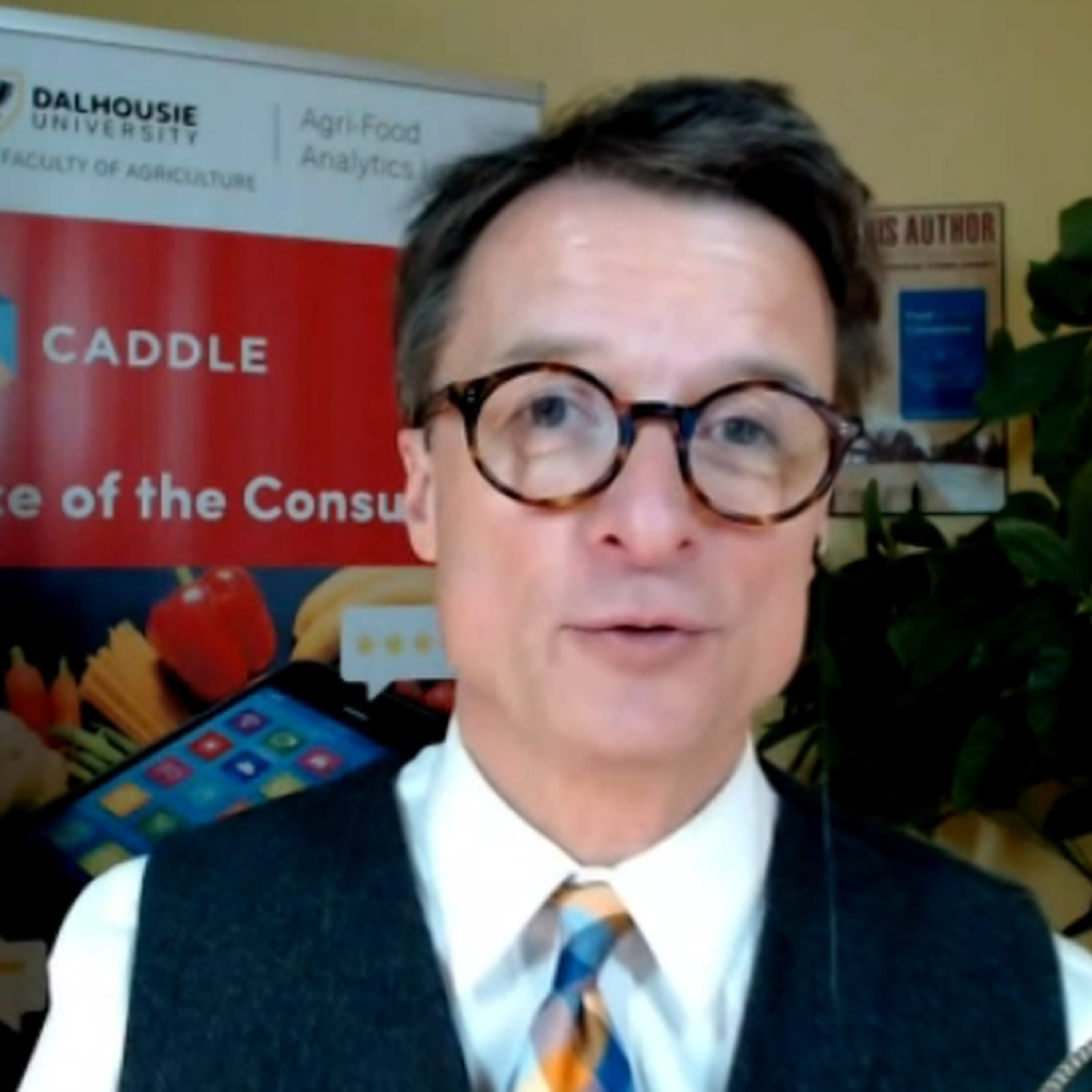
The Food Professor from Dalhousie University, Sylvain Charlebois, joined Jay Farrar to talk about higher fuel prices equalling higher food prices.
Dr. Sylvain Charlebois, better known as ‘The Food Professor’, is Senior Director at Agri-Food Analytics Lab and Professor of Faculties of Management and Agriculture at Dalhousie University. He joins Weekends with Joanne Vrakas every Saturday at 7:10 a.m. to discuss everything from fluctuations in grocery prices to food trends.
Hosts & Guests
Transcript
J4R in for Joanne Vrakis this week. She's taken a little bit of a spring break. She'll
be back next week. For now, you're stuck with me, folks. So over the next two days, glad
to be with you. Canadians are already stretched thin at the grocery store. We all know that.
The escalating conflict in Iran could make things worse, apparently, with oil prices climbing
and the street of hormones under threat. The ripple effects don't stop at the gas pump.
The entire food supply chain runs on energy, and when fuels get expensive, so does everything
in your card, apparently. But I don't know nothing about this. It's the food professor
himself who's going to explain it. Sylvie Charlebois joins us this morning. Good morning, sir.
Hey, good morning, Jake. Thank you so much. So is the connection oil and the spike in energy
prices that's making its way to the grocery shelf? Oh, absolutely. So for every 25 percent
in oil, you're likely to see the grocer bill of a typical family of four in Canada increased
by $150 to $200 for the year. And oil is up 65 percent since January 7th. And so obviously,
if prices remain elevated, we're likely going to start seeing prices increase probably end
of April early, because there's a bit of a lag. Of course, it doesn't happen like right now.
But it is problematic. I mean, the barrel of oil is now over $90. That's a 35 percent increase
in one week. We haven't seen that since 1983. So yeah, it's pretty dramatic. And of course,
for a lot of farmers in Quebec, they're having a hard time getting fertilizers. And if you
haven't really forebought your fertilizer last year, you're likely going to pay 20, 30 percent more.
And I'm thinking specially about crop farmers in Quebec. They're the ones that are most
vulnerable. So even, let's say, the war suddenly stops. Peace happens. The straight-of-hermos
opens again. Transport gets back to the normal. We're still going to feel the effects from it,
considering the lag, correct? Actually, no. I think we're still, we need to,
prices would need to be remained elevated for at least, I'd say, four or five weeks.
And the straight would have to be close for about four or five weeks. But if it opens up again
and things calm down within the next week or two, we should be okay. It's just, it's when contracts
are renegotiated, when it comes to transportation and things like that. That's when we get into
trouble. And of course, you have that ripple effect impacting the entire food supply chain.
And eventually it impacts the consumers. But don't forget, Jay, on April 1st, the industrial
carbon tax. Yes, it is still there. The consumer carbon tax was brought to zero last year.
But the industrial carbon tax is still there and it's increasing from $95 a metric done to $110
a metric done. So there's going to be a bit of a double whammy when it comes to energy costs affecting
the entire food supply chain. So yeah, I mean, you know, positive thinking that anything good is
going to happen. It seems like this conflict might be in for the long run. At the same time,
when these prices do start to spike, are there specific food categories, Canadians should expect to
feel this first? Yeah, you're going to hate me even more. Because me, I would say meat dairy,
because dairy products are pretty heavy. So I tend to cost more to move things around.
And I would say fruits and vegetables. We're still in March, March, April. We're importing a lot of
food from different parts of the world, including I'd say. So I would say that those are the
categories that are most vulnerable. But I'm not surprised to see the White House trying to
see how they can implement policies, interest policies to allow cargo ships to go through the
straight of Hormuz as soon as possible. Because they know, I mean, it's not good. And the White
House is very motivated to bring down the cost of energy because if he keeps energy costs high
in the US, well, guess who's going to become less popular, President Trump, and he doesn't want that,
especially in light of the fact that we have midterm, midterms in the fall.
Yeah, and this war has not helped out as popularity either. It seems most Americans seem to be
against it. You mentioned the supply chain. So I mean, it's at risk. I would guess Canadian imports.
It goes beyond just the energy costs, I assume. There's direct import as well.
Oh, absolutely. So, but energy is the big one. A lot of people have asked me,
are we going to go through the same thing as Ukraine four years ago? Not exactly. Ukraine was
about access to grains in general, and we saw wheat. A bushel, we went up to $13 US. When
typically you would see it at $5, $6, which is what it is right now. And 20% of all calories
consume on earth has something to do with wheat. So, the Ukrainian invasion was really terrible for
food inflation. This time around, it's all about the cost to move things around. The good news
is the gain dollar. The gain dollar has actually gone up, and that's going to help importers,
the buying power of importers. So they'll have more money to spend, and they'll be able to buy more
for less with a higher gain dollar because, well, our petrol dollar is still indeed a petrol dollar.
You mentioned that we'll start feeling the effects maybe in late April and into May.
You're talking about direct consumer effects at that point, when it's already passed on from
the retailer. So, in that time, what kind of advice can we give Canadians? Anything practical
people can do to protect their budget at this point, as the conflict drags on, which we see
as well. Well, I mean, consumers are pretty strategic now. It's already in place because of the
recent inflation. I mean, inflation is at 7.3% right now. People are approaching grocery shopping
very differently than, say, a couple of years ago. My only advice is just to continue to do what
you're doing. And I'll be shy to visit independent stores in Montreal and elsewhere because
smaller doesn't mean more expensive. And I've spoken to Joanne many times about this and
valuing independent grocers is very important because a lot of people think, well, if you go to a
big box store, you're going to save more, not necessarily. There's a lot of independence out there
in Montreal and in the region that offers really good deals. Great advice. So, the good news is,
Professor Charlotte, well, I'm not mad at you. I don't hate you. I may be a little mad at you
about the whole meat thing. Maybe that just about. I know. I know. But hey, listen, there's always some
deals somewhere out there. Just be careful. Sound advice. Thanks so much for your insight this morning.
Thank you, Jay. Have a good one. That was Professor Sylvie Charlotte. Coming up,
Christine Long joins us with our Weekend Review.
Canadian women are looking for more. More of themselves, their businesses, their elected leaders,
and the world around them. And that's why we're thrilled to introduce the honest talk podcast.
I'm Jennifer Stewart and I'm Catherine Clark. And in this podcast, we interview Canada's most
inspiring women, entrepreneurs, artists, athletes, politicians, and newsmakers, all at different
stages of their journey. So, if you're looking to connect, then we hope you'll join us.
Listen to the honest talk podcast and I'm Art Radio or wherever you listen to your podcasts.


