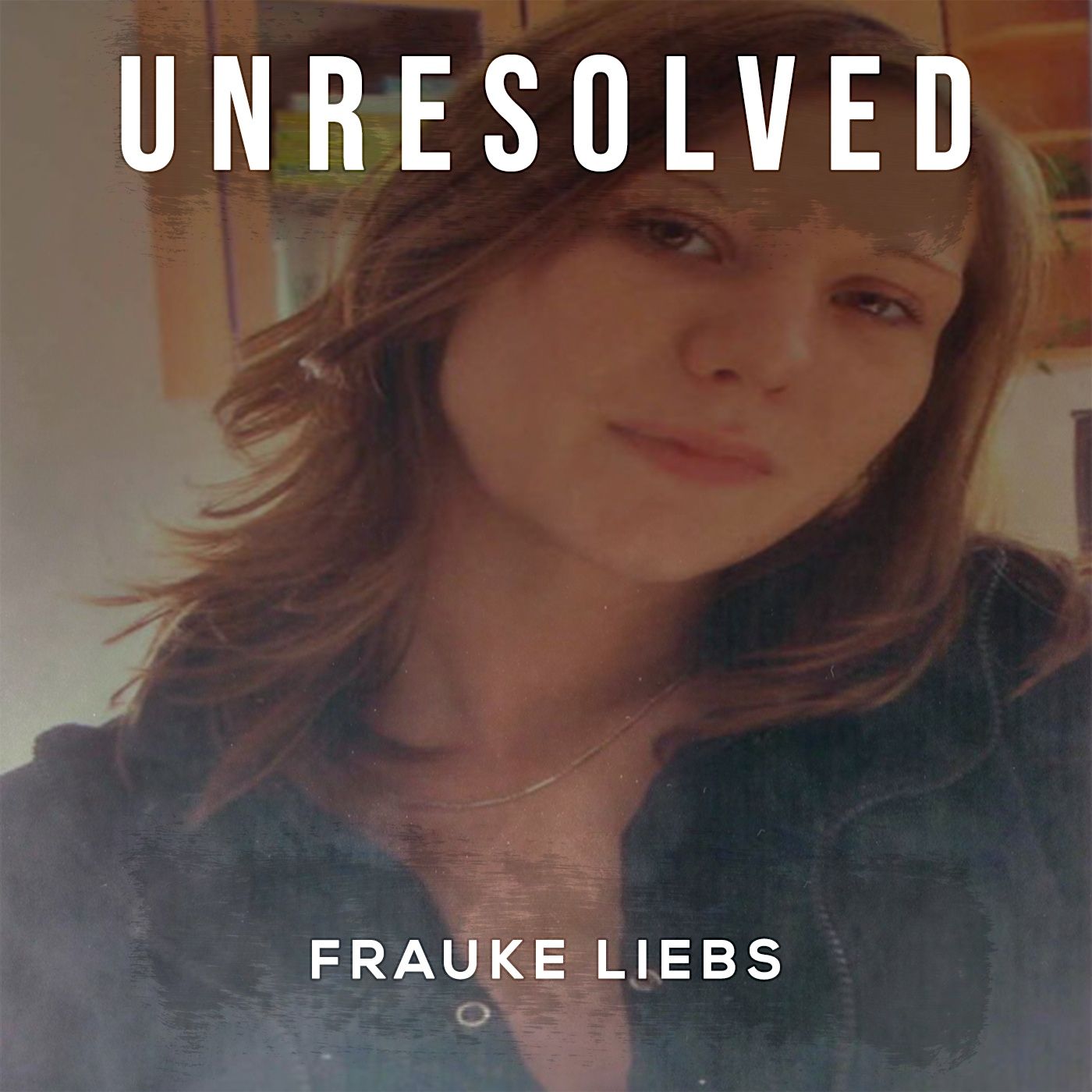
About this episode
Unresolved is made possible by:
In the summer of 2006, Germany was hosting the World Cup. Cities and towns throughout the country were energized, and on the evening of 20 June 2006, 21-year-old nursing student Frauke Liebs went to a pub in the city of Paderborn to watch the England-Sweden match with friends. While there, she visited and texted until her phone battery died. She stayed until just after 11:00 PM, then headed home with less than five euros in her pocket.
The walk home was a little over a kilometer and a half. It should have taken her fifteen minutes or so, and on a warm summer evening with the streets lit up by the glow of the World Cup, no less. But she never made it home and nobody saw her walking that night. Yet over the next week, her loved ones would receive strange phone calls and texts from Frauke, claiming that she'd be home soon...
Check out the podcast store at unresolved.dashery.com
If you would like to support this podcast, consider heading to https://www.patreon.com/unresolvedpod to become a Patron or Producer
Become a supporter of this podcast: https://www.spreaker.com/podcast/unresolved-a-true-crime-mystery-podcast--3266604/support.
Get every episode summarized
Each time Unresolved publishes, we email you a written briefing from the transcript — the topics, who appeared, and any specific claims, with the ad reads skipped.
Email me new episodesFree for 3 shows. No card needed.
Transcript ready
715 searchable segments. Every word is indexed and playable.
Full transcript
Unresolved — Frauke Liebs. Machine-transcribed; use the interactive transcript above to jump the player to any line.
This episode contains graphic content that may not be suitable for all ages. Listener discretion is advised. If you or someone you know is struggling or in crisis, help is available. Call or text 988 or chat with someone at 988lyfline.org. Those outside of the US reach out to someone at your local crisis center or hotline. These do not suffer in silence. In the summer of 2006, Germany hosted the World Cup. If you don't follow soccer or football as most of the world calls it, this might not seem like much to you. But in Germany, back in June of 2006, it meant a ton. The World Cup has held every 4 years and for the host country it becomes a kind of national
holiday that lasts about a month. The matches are shown everywhere. On massive outdoor screens and city squares and pubs and restaurants. In living rooms with the windows thrown open so the neighbors can hear your screams or your cries. The whole country stops for 90 minutes, multiple times a week. The teachers stand next to each other in bars and cheer or groan in unison. It is for a few weeks a type of shared experience on a scale that very few things in modern life can recreate. On the evening of June 20th, 2006, the group B match between England and Sweden kicked off at 9pm local time. It would ultimately end 2-2. In the German city of Potterborn, a 21 year old nursing student went to an Irish pub to watch the match with friends. She would never come home. Over the next 7 days, this young woman's roommate and family received a series of text
messages and phone calls from her cell phone. 7 contacts in total. The calls were short and deeply strange. The young woman kept saying she was fine and she would be home soon. But she never said where she was or who she was with. And then on June 27th, almost exactly one week after she vanished, the calls suddenly stopped. This is the story of Frocalebes. Welcome to Unresolved. I'm your host, Michael Wheelan. If this is your first time listening to the show, we typically cover cold cases, unsolved
disappearances, and sometimes stories of institutional failure. This is one of those stories, a missing person's case out of Germany that turned within days into something much darker, and that 20 years later has never been solved. If you find this episode interesting or enjoy listening to the podcast, I would encourage you to check out our back catalog for more cases like this one. If you would like to support the show directly, you can find us on Patreon at patreon.com slash Unresolved Pod. There you can get access to a wide array of bonus episodes and even resolved, a podcast dedicated to solved mysteries, which you can only find over on Patreon. But for now, without any further ado, let's go back to the summer of 2006. Frocalebes was born on February 21st, 1985 in Lubacca, a small city in the northeastern part of North Rhine, Westphalia. She moved to Potterborne to pursue training as a health and nursing student at St. Vincent's
Hospital. By the summer of 2006, she was 21 years old, living in a shared apartment at Borkener's Strasse 56 with her former boyfriend, a man named Christos Carulis. They had dated for about 5 years before breaking up, but they remained close friends and continued living together. Potterborne is a mid-sized city of about 150,000 people in eastern North Rhine, Westphalia, roughly equidistant from the larger cities of Bulafeldt to the north and Cosswell to the south. The surrounding landscape is pretty rural. To the northeast, about 35 kilometers away, lies the small town of Neheim. With the southeast, about 15 kilometers lies Lichtenau. Between and around these towns are forest, farmland, this triangle of towns, Potterborne, Neheim, Lichtenau. This will become the geography of Frocca's final days. On the afternoon of June 20th, 2006, Frocca had lunch at a restaurant with her mother,
Ingrid, as well as her ex-boyfriend, slash roommate, Chris. While they were eating, she received a text message from her friend named Isabella, inviting her to the Irish pub the old triangle to watch the World Cup match. Ingrid and Chris drove Frocca to the pub, arriving at around 9pm. At the pub, Frocca watched the England Sweden match with friends. During the game, she exchanged text messages with a man named Neils, a recent acquaintance introduced through some mutual friends. There was no romantic relationship between them, but they had been chatting regularly. At some point during the evening, the battery on Frocca's cell phone died. She borrowed a friend's battery, used it for a while, and returned it before she left. She left the pub at approximately 11pm. She reportedly had about 5 euros in her pocket, not enough for a taxi. Her apartment was about a kilometer and a half away, a walk of perhaps 15 minutes. Chris was waiting at the apartment.
He had borrowed her keys earlier and needed to stay awake to let her in. The total distance of the walk back to the apartment was about a mile through the city center of Potterborne on a warm June evening during the World Cup. Because the match had been on, the streets were not empty. People were out. In bars on sidewalks, walking between venues. This was not some isolated path through a dark park. In fact, most of the walk back was through a populated urban area. And yet, no one is believed to have seen Frocca after she left the Irish pub. Not a single witness has come forward to say that they saw her walking home. No surveillance camera captured her on the route between the pub and her apartment. She simply left one place and never arrived at the other. And in between, she disappeared. The theory publicly floated by police is that somewhere on that walk, Frocca got into a vehicle. Whether she was forced in or whether she entered willingly, accepting a ride from someone
she recognized or someone who seemed harmless is unknown. But she did not make it home on foot. Instead, within two hours, her phone was pinging a self-ower 35 kilometers to the northeast in Neheim. Back at their apartment, Frocca's ex-boyfriend Chris waited and eventually he fell asleep. At 12.49am, now June 21st, Chris received a text message from Frocca's cell phone, the message read in German. Coming later, the game was fun, not against England. Love you, see you later. It also included HDGDL, a German text abbreviation roughly equivalent to Love You Lots. When he saw the text, Chris was not alarmed. The message sounded like something Frocca would send. She must have gone to an after party or ended up at someone else's apartment. It was World Cup season.
These things happened. But Frocca did not come home that night. And the next morning, she did not show up for her shift at St. Vincent's Hospital. That was when her mother Ingrid became concerned. Frocca was reliable. She never missed work. Ingrid called around to friends and acquaintances and with no one had seen Frocca, she went to the Potterborne Police Station around midday to file a missing persons report. What no one knew at that point, what the police would discover later, was that the text message sent at 12.49am had not been sent from Potterborne. Old Tower data placed the phone in Neheim N-Troup, a rural area approximately 35 kilometers to the northeast. Frocca had said that she was going to be home soon, but she was already nowhere near home. She was already gone.
What followed was a week from hell for those who knew and cared for Frocca leaves. She would contact her loved ones seven times over the next seven days, through text and phone call, each shedding very little actual light on where she was or in what conditions. But pointing to something sinister unfolding just out of sight. These seven contacts, two text messages and five phone calls, are almost all that authorities had to work with for several months. The first contact was the text message sent at 12.49am on June 21st, sent from Neheim N-Troup. This was the text she had sent to her ex-boyfriend Chris, which was casual and cheerful. The second contact came on Thursday June 22nd at 10.25pm, more than 45 hours after the first text. This time, Frocca called Chris. The call was brief. She said. Hello, Chris-Thos. I wanted to say that I'm fine and I'll be home soon.
Tell mom and dad and the others. Then she hung up without taking any questions. Two things about this call stood out to Chris immediately. First, she called him by his full name, Chris-Thos. She only ever used that name when something was wrong. When things were tense or difficult between them. Chris was normal. Chris-Thos was a signal. Second, her voice was described as sounding off. Like it was stunned or distant. Chris later described her as seeming like she was reading from a script, or as if the words had been prepared for her. The call was so brief that some investigators have wondered whether it could have been a recording played over the phone rather than a live conversation. Contact 3 came on Friday June 23rd at 11.04pm. It was another text message. It said, I'm coming home today. I'm in Potterborne. Love you. Sell tower data placed the phone in the industrial area on the eastern side of Potterborne.
Two minutes later, Frocca's older brother Frank called her phone. She was surprised. She answered. Frank asked when she was coming home. Frocca said she was coming home today, not too late, that she was in Potterborne. She said, don't ask. I'm coming home. Frank asked where she was. To that, Frocca said, I can't say. Then she hung up. Contact number 4 came on Saturday June 24th at 2.23pm. This was the only call during daytime hours. Broca called her ex-boyfriend again. Chris. She said she wouldn't be back too late that she'd be coming home tonight. Chris asked if she was hurt. To that she said, no. Then she said, I'm in Potterborne. I'm in Potterborne. I'm in Potterborne. The repetition was noticed by everyone who heard about it. Was she trying to emphasize something? Was she lying? Was it a code? Her mother, Ingrid, described Frocca's voice during the call as blurry,
like someone who was heavily medicated or intoxicated. The fifth contact came on Sunday June 25th, this time at 10.28pm. Broca called Chris again. She said she was coming home today. Chris asked, are you in danger? Frocca said no. Chris asked why she had not come home the day before. Frocca said, can I explain to you? Chris asked where she was. She said, I'll tell you when I'm home. Chris asked who was with her. To that she said, I'll tell you later. There was no contact on Monday June 26th. It was a full day of silence. For a family that was growing accustomed to one call per day, the absence was excruciating. The seventh contact, which would be the final contact, came on Tuesday June 27th at 11.29pm. It was almost exactly one week to the hour after Frocca had left the Irish pub. This phone call was the longest and the most revealing.
It lasted more than five minutes. Chris answered, but Frocca's sister Karen was also present and could hear through the speakerphone. Both later wrote down what they remembered. Frocca said, Mama. Chris asked where she was. Mama, she said again. Then the third time, Mama. It seems like she was calling for her mother, but her mother sadly wasn't there. Chris asked if she was afraid to come home. To that she answered, no. Chris tried a different approach. He said, we'll clean up your apartment and nobody will ask you what happened. Just come home. Frocca's response was, that won't do. I'm still alive. The phrase, I'm still alive. Ick Leibnock hit everyone who heard it like a physical blow. It seemed to be an answer to a question that no one had asked, at least not out loud. It implied that the alternative, that she might not be alive had been on the table. It implied that being alive was at that moment
remarkable enough to mention. Chris asked whether she was with one person or more than one. To that, Frocca said, please don't ask me. I'd like to be with you all. I'd like to come home. Chris asked when she would call again. I'm not sure. Chris begged her to call every day. Yes, I will, Frocca said. Ciao, bye for now. Then Karim, Frocca's sister, spoke up for the first time. She asked the question that everyone had been circling for a week. Are you being held against your will? According to Karin's account, Frocca first whispered, yes. Then immediately she said, no, loudly, forcefully, twice. And then the line went dead. Frocca Lebes was never heard from again. If Frocca Lebes was being held captive,
why did the person or persons holding her allow her to make these calls? There are several possible explanations, and none of them are comforting. The first is the diversionary theory, which is the one that German police eventually adopted. In this reading, the calls from Potterborn were deliberate misdirection. Frocca was being held somewhere in the Neheim area, which is rural and remote, somewhere northeast of Potterborn. And her captor drove her into Potterborn's industrial areas each evening to make the calls, so that the cell tower data would place the phone in Potterborn rather than at the actual location of captivity. In these calls, the captor controlled what Frocca said. The reassurances, the I'm fine, I'm coming home. Those were all scripted or coerced, designed to prevent the family from escalating to a full-scale search. By the time the calls stopped and the alarm was truly sounded, Frocca could be dead. The evidence disposed of.
This theory explains why the calls were short, why Frocca was evasive, why she kept repeating Potterborn. She may have been instructed to say that she was there. It also explains why the cell phone pinged off of different industrial area cell towers. The captor moved around to a different location each time to avoid establishing a pattern. The second possibility is psychological control. The captor allowed the calls as a form of power, demonstrating to Frocca that she could hear family's voices, could be tantalizingly close to rescue, and yet could not say the words that would save her. This is consistent with certain profiles of predatory captors who derive satisfaction, not just from physical control, but from the emotional torment of their victims. The third possibility, and this is the one that I find most difficult to dismiss, is that Frocca was making the calls of her own partial volition in a situation that she could not fully control. That she was in the company of someone she may have initially gone with willingly,
and that the situation escalated beyond her ability to leave. The first text that she sent, which was casual and cheerful with a smiley face, reads like someone who was fine at 12.49 AM and not yet in danger. The calls that followed read like someone who was increasingly not fine, but could not or would not articulate why. This doesn't rule out abduction. It's possible that she entered a vehicle willingly. Accepting a ride from someone she knew or thought she knew. And she found herself in knee-hime before she understood what was happening. What it suggests is that the situation may not have been a straightforward grab and hold from the first moment, unlike she wasn't just grabbed off the sidewalk and whisked away toward a location. She might have taken a ride from someone and they eventually became coercive and controlling. After all the transition from cheerful text to a whispered yes, took seven days. Something changed over the course of that week and we sadly don't know what.
There is one more dimension to the calls that I want to address because it is often overlooked. The police at the time did not believe that Frokka was in serious danger. After all, she had made contact with her family and said that she was fine. From the perspective of law enforcement in those first few days that looked like a young woman who had gone off on her own. Perhaps with a new boyfriend, perhaps on a spontaneous trip and was reassuring her family that she would be back. After all at the time, the world cup was ongoing. People were staying out late, they were getting drunk, they were cheering. 21-year-olds sometimes did things like this. Frokka's mother, Ingrid Leibz, has spoken about this with barely concealed anger. She felt that her initial concerns were dismissed. In a 2021 documentary, she described going back to police and being asked dismissively whether she really believed some kind of predator was behind her daughter's disappearance. The implication being that she was overreacting that her daughter was an adult
and would come home when she was ready. By the time the police fully grasped that the phone calls were not reassurances but distress signals. It was too late. The calls had stopped and the trail had gone cold. Somewhere between Neheim and Lichtenau, Frokka was already beyond rescue. Now I don't want to say this to a sign blame in a simple way. Missing person's cases involving young adults are statistically overwhelmingly resolved when the person returns on their own. The calls confirmed she was alive. In a different case, the response might have been reasonable but this was not a different case and the window in which Frokka Leibz might have been found. Though seven days when she was apparently still alive and reachable, closed while everyone was still debating whether there was a window at all. On October 4th, 2006, more than three months after the last phone call, a hunter walking through a forested area near Lichtenau
along the state road L817 between the villages of Oslohn and Herbrum Vault discovered human remains approximately 10 meters from the road. The body was skeletal. Decomposition was so advanced that it was impossible to determine a cause of death. It was also impossible to determine the exact time of death, meaning that we don't know whether Frokka died on June 27th immediately after the last phone call or whether she survived for days, weeks, or even longer in captivity before being killed. She was still wearing the same clothes she had worn on the night of June 20th. Her mobile phone, handbag, wallet, and wristwatch were not recovered. Identification was made through dental records and later confirmed by DNA. The location of the discovery was significant. Lichtenau is about 15 kilometers southeast of Potterborne in a different direction from Meheim, which is northeast. The forest where she was found was accessible by car,
but not the kind of place that a stranger would stumble upon. Investigators concluded that the person who left her there knew the area well. The police also concluded that the forest was not where Frokka was killed. There were no tire tracks, no fingerprints, no DNA at the site. Her body had been transported there and left. The forest was a dump site, not a crime scene. The formal investigation designated Mordkommision Lichtenau was enormous by the standards of regional German policing. Over the course of a year, investigators processed roughly 700 leads in question more than 1,000 people, including over 100 individuals with whom Frokka had communicated online via chat and email. Five initial suspects were identified, but all five were eventually cleared through verified alibis. The lead investigator, Ralph Erskerman, worked the case for years.
A criminal profile prepared by the North Rhine Westphalia State Criminal Police Office in January 2007 concluded that Frokka had most likely been held captive in the Neheim area. The profilers believed that the captor was probably a single male offender who was familiar with the region. Someone who knew Neheim, knew Potterborn's industrial areas and knew the roads around Lichtenau. Whether the place of captivity was a house, an apartment, a hunting cabin, a caravan, or a camper van could not be determined. The profilers also believed that the captor had driven Frokka into Potterborn almost nightly to make the phone calls. A calculated routine designed to mislead police into searching the wrong area. The police later summarized their theory. Purpetrator and victim drove out almost daily in the late evening hours in a vehicle and later returned. They believed that every night they drove to Potterborn to make the calls, and then they drove back to wherever Frokka was being held.
Among the more than 1,000 people questioned were over 100 individuals with whom Frokka had communicated with online, through chat rooms and email. This was back in 2006. Internet communication was widespread, but not yet as trackable as it would later become. The investigation revealed that Frokka had an extensive online social life, speaking regularly with people that her family did not know. Whether any of these contacts were relevant to her disappearance was never determined, but the scope of her digital connections meant that the pool of people who might have known her, or known of her, was far larger than her immediate social circle suggested. The acquaintance named Neils, with whom Frokka had been texting on the night she disappeared, was investigated and cleared. Her ex-boyfriend and roommate Chris was also investigated and cleared. All five initial suspects, people close to Frokka who might have had motive or opportunity were eliminated through alibis. An initial reward of 7,500 euros was posted,
which included 5,000 from Frokka's parents and 2,500 from the Potterborn prosecutor's office. Frokka's mother Ingrid established a website, frokka-leabs.de, with her daughter's photos and the question, who murdered Frokka Leabs in June 2006. The case was also featured on Actancy Ken, Ikse Upsilon, Unglerst. Germany's equivalent of America's most wanted, but no breakthrough ever came. The Morte-Kamision was dissolved in June 2007. The investigation continued as it must under German law. Murder does not carry a statute of limitations, but the active phase was over. Chief investigator Ersterman moved on to other cases. More than a decade later, by December 2018, he told reporters, we have definitively no new leads. In 2016, something happened that briefly reignited hope
before crushing it yet again. In the town of Huckster, roughly 55 kilometers from Potterborn, police arrested a couple named Vilfried W and Angolica W. They had married in 1999, divorced in 2013, and continued living together in a house in the rural village of Bossa Born. The case that emerged was one of the most horrific in modern German history. The pair had placed personal ads and newspapers to lure vulnerable women to their home, where they were held captive, tortured, and in at least two cases killed. One victim's body had been stored in a freezer and later burned in the fireplace. The case became known as the Huckster Horror House. The geographic proximity was impossible for investigators to ignore. Huckster was 55 kilometers from Potterborn, 48 kilometers from Lichtenau, and only 22 kilometers from Meheim, the town where police believe Frokka had been held.
A unit of 30 investigators was assigned to examine whether Vilfried and Angolica could be connected to Frokka's murder. The investigation found a few tantalizing overlaps. Vilfried had registered dozens of cars in his name. He had access to multiple vans and camper vehicles. Analysis of his mobile phone data showed some spatial overlap with locations relevant to the Frokka Leab's case. One particular detail emerged. A walking route frequently used by the couple reportedly passed near the forest site where Frokka's body had been found. But investigators could not establish a definitive connection. There was no physical evidence linking Frokka Leab's to the Huckster House. Angolica W, during a six hour interrogation, was shown photographs recovered from phones found in the house and could not identify Frokka among them. Her defense attorney, Peter Vueller, told multiple publications that Angolica could not account for every woman that Vilfried had contact with.
There were, he said, many white spots in the life of Vilfried W. Investigators tried to reconstruct which women had been held in the house and win, but the timeline was incomplete. The prosecution eventually stated that the Frokka Leab's case and the Huckster case were unrelated. Vilfried said nothing. He had remained silent throughout the investigation and the trial. If he knew anything about Frokka Leab's, he chose not to share it. Then four years later, in June 2020, from her prison cell in Bielefeld, Angolica W wrote a handwritten letter to Ingrid Leab's. The letter was dated June 5, 2020 and read in part,
The police say that the cases are unrelated. I accept their professional judgment, but I also understand why some might find it difficult to put this lead down. In 2019, the Bielefeld Criminal Police enrolled the case in a new cold case database being built by the NRW State Criminal Police Office, which had been systematically reviewing unsolved cases dating back to 1970. Of the 1143 cold cases in the database, 403 were identified as having good prospects for resolution. Frokka's case was among them. In 2020, the reward for information was raised from 7500 euros to 30,000 euros. In 2021, a television documentary brought Ingrid, Karen, and Chris before the cameras. Ingrid described the early days of the investigation. Her frustration with police who she felt
did not take her concerns seriously. The documentary also highlighted some of the investigative errors that police had failed to obtain complete cell tower records and at Frokka's funeral, where investigators suspected the killer might appear among the mourners and arranged to film attendees discreetly only one of the two church entrances was covered. In late 2022, the 13-part German language podcast series, Frokka leaves the search for the killer was released. It was a finalist for best podcast at the German audiobook prize in 2024 and by some accounts generated over 150 new tips. Among the leads it explored was a pair of brothers from the village of Assolm, the same area where Frokka's body had been found. Police searched the brother's homes and seized old mobile phones and DNA samples. Months of testing followed. In October 2023, the investigation against the brothers was discontinued.
DNA analysis and phone records revealed no connection to Frokka leaves. That same year in August 2023, 17 years after her daughter's body was found. Ingrid leaves announced that she was shutting down her website. She told reporters at the time. The anniversary is a good time to let go. From my point of view, I've done everything to find who is responsible for Frokka's death. She described the experience of maintaining the site, the hope that came with each email followed by the disappointment when the tip contained nothing verifiable. She said, I don't want that anymore. At the time, Ingrid described herself as sad, but not desperate. She had her son, her other daughter, a grandchild, a partner. She said, these positive aspects will carry me through the rest of my life, but it bothers me every day, not knowing how and why my daughter died. The Potterborn prosecutor, Kai Vashkiz, has not given up.
In a statement carried by the Vest Fallen Blot in August 2023, he said, the Frokka leaves murder case, which still moves people in the Potterborn district and beyond after many years, also has a special meaning for me. It is certainly one of the best known murder cases in the Potterborn district and due to the behavior of the perpetrators. It is also extremely interesting from a criminalistic and psychological point of view. The NRW cold case unit, staffed by 24 retired investigators continues to work on cases dating back decades. New DNA analysis techniques, capable of extracting information from samples of just 100,000th of a millimeter, now exist. This technology was not available back in 2006. Whether it can prove decisive in this case is unknown. Frokka's family has also taken one additional step. They have publicly guaranteed immunity from prosecution for accomplices who come forward. If someone helped the killer, knowingly or unknowingly,
by providing a vehicle, a location, or simply by remaining silent, the family is willing to go to bat to protect that person in exchange for the truth. The case is not available to the killer. The case is not available to the killer. The case is not available to the killer. The case is not available to the killer. Most unsolved cases haunt us because of what we don't know. The Frokka Leab's case haunts us because of what we almost knew. Her family was on the phone with her. They heard her breathing. They heard her voice change over the course of a week, from casual to strained to seemingly desperate. They tried to ask the right questions. They even got some answers. The answers just did not come freely. What kind of person holds a 21 year old woman for at least a week and drives her into the city each night to make phone calls? What is in the psychology of that? Is it tactical? A cold, calculated effort to keep the family from escalating?
Or is it something stranger? A need to extend the experience. To watch Frokka speak to the people she loved while knowing she would never reach them. The profilers described a single male who was local and familiar with the area. Chief investigator, Erstrman, said that the crime did not fit any known series. If this was for the killer a performance, a way of extending control over Frokka even from a distance, then the phone calls were part of it. It was the summer of 2006. The world cup was going on. The whole country stopped to watch. There were bars full of strangers cheering together. And in that, a 21 year old nursing student started to walk home from a pub with five euros in her pocket and a dead phone battery through streets that should have been safe. They were full of people, full of celebration and excitement. But somewhere between the pub and her home, something went wrong. And for seven days her family listened to her voice crossing the distance between wherever she was and wherever they were.
And they could not close it. It has now been 20 years and no one has any answers. As of this episode's recording, the story of Frokka Lebes remains unresolved. classic concert Thank you for listening to this episode of Unresolved. I would like to take a moment to thank the producers of this podcast, who support the show each month through Patreon. These amazing people are, Roberta Jansen, Sarah Musk Ritolo, Ben Crocom, Crystal J, Scott
Misi, Mary and Welsh, Jacinda Class, Lauren Nicole, James Weiss, Alex Klaugher-Ropolis, Robert Porter III, Stacey Hauser, Kevin Tweedy, Heather Fittler, Anna T, Stephen Diaz, Ceci, Tabatha Colvin, Danya Alchemist, Trixie Fink, Beck, Marcus Mitchell, Caroline Dejong, Brutalist, Catherine Rich, Thomas Budkin, Sophie Weiss, Jey Law, Fractal Man, Jamie Stevenson and Latisha Ortiz. Thank you all so, so much. If you would like to join that list of patrons, please head on over to patreon.com slash Unresolved Pod. There you can get early commercial free access to every episode for as little as $1 a month, and the perks only get better from there. There are the unresolved bonus episodes for 250 a month, episodes of the Patreon exclusive show resolved for $5 a month, and additional tiers that include the aforementioned producer
credits. Thank you all so much to those who do support the show. Just know that you're helping support an independent production that has no outside backers, no big money advertisers, nothing of the sort. Just a guy making a podcast, who strives to try and make a show that is every bit as interesting as it is useful. If you have the ability to leave a review on Apple Podcast or Spotify or wherever you're listening right now, it genuinely makes a difference for independent shows like this one. I know I say something like that every episode, but I'll keep saying it because it keeps being true. That's the best way to help other people learn about the show. Other than of course nagging everyone about it. Which you also should do, and I thank you for those who do. Now I should be back with another new episode next week, but until then, please stay safe and stay healthy. I will talk to you later.
More episodes


