About this episode
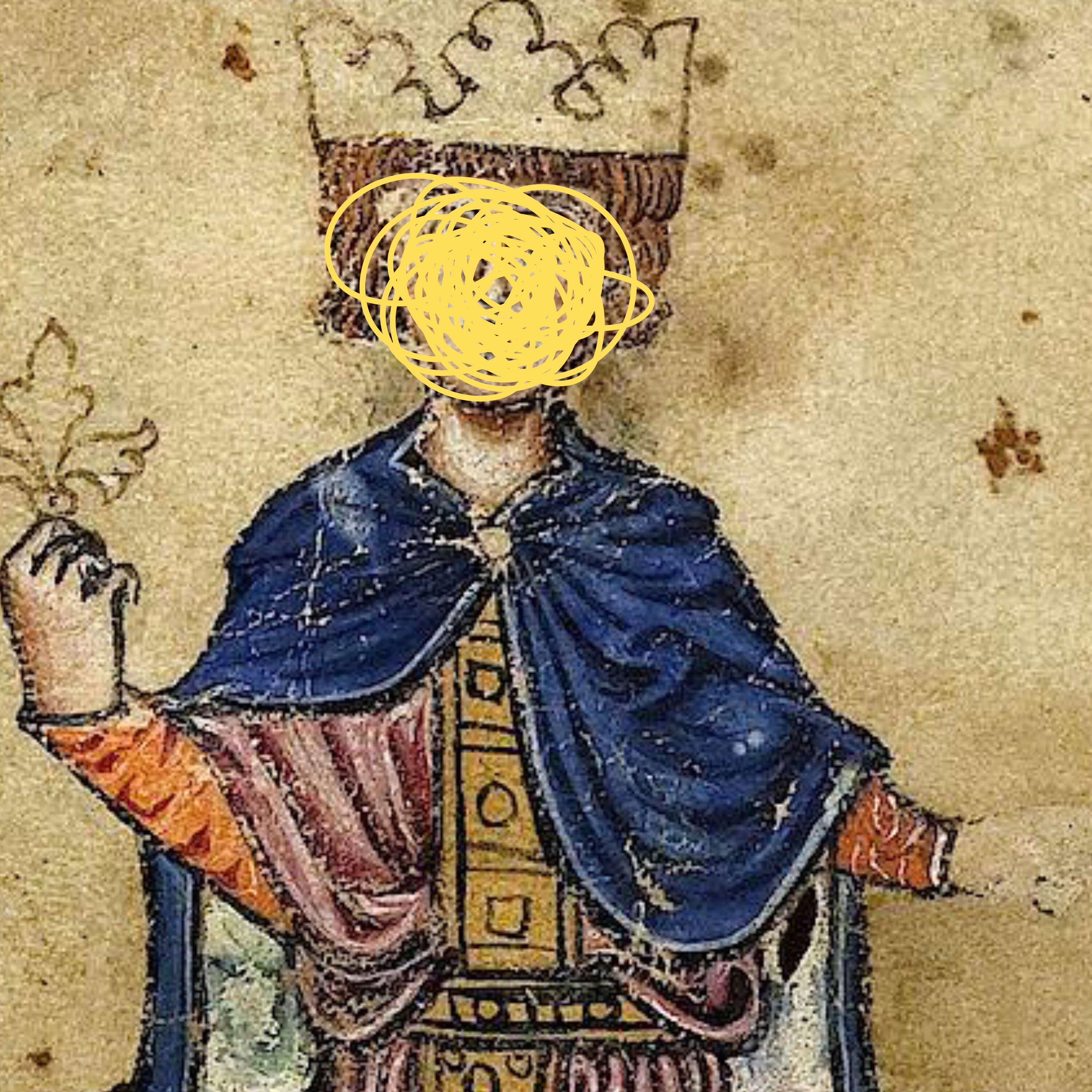
Claire and Prof. Richard Cole head over to medieval Jerusalem and prove that dysentery is the real mind-killer.
Guest
Our guest Richard Cole is an Associate Professor of Medieval European History at Aarhus University and host of The Chronicles, from the Centre for Viking and Medieval Studies.
Sensitive Themes & Topics
Warfare and violence
Credits
- Host & Executive Producer: Claire E. Aubin. Find her on Twitter @ceaubin and Bluesky ceaubin, or check out her website.
- Editor: Julia Schifini. Check out her website.
- Music: Marshall Dean Williams
- Multitude: multitude.productions
Want double the episodes, all ad-free, and other exclusive perks? Join the TGS Patreon.
Shop our bookshelf - The Hater’s Library - here.
Find Us Online
- Website: thisguysucked.com
- Instagram: instagram.com/thisguysucked
- Bluesky: @thisguysucked.com
- Twitter: twitter.com/thisguysucked
Want to become a sponsor of This Guy Sucked? Head over to https://multitude.productions/ads
See Privacy Policy at https://art19.com/privacy and California Privacy Notice at https://art19.com/privacy#do-not-sell-my-info.
Get every episode summarized
Each time This Guy Sucked publishes, we email you a written briefing from the transcript — the topics, who appeared, and any specific claims, with the ad reads skipped.
Email me new episodesFree for 3 shows. No card needed.
Hosts & guests
Transcript ready
272 searchable segments. Every word is indexed and playable.
Full transcript
This Guy Sucked — Frederick II with Richard Cole (Subscriber Preview). Machine-transcribed; use the interactive transcript above to jump the player to any line.
Hi. So I have some wild ass news for you. TGS is turning one year old this month. It has been a bananas year from news coverage to award nominations and best of lists. And I really could not possibly have anticipated the show's success so far, especially because most podcasts fail pretty much immediately and they definitely don't ever make any income. I'm so incredibly grateful to all of you for listening to the show, telling your friends about it and letting us make good accessible public history. This was really an experiment and I'm honestly over the moon and slightly bewildered at how well it's working. I really can't express how deep my joy and appreciation for all of you is. We're doing a few things to celebrate. We're having a birthday triple header week to celebrate the actual anniversary with some really exciting guests and we're doing huge discounts off of our Patreon all month long.
Between now and April 1st, if you head to patreon.com slash this guy sucked, you can use the code TGSB month like birth month for 50% off your first month on a monthly subscription or TGSB year like birth year for 30% off your first year on an annual subscription which does stack on top of our normal 17% off annual discount. So the annual subscriptions this month are like incredibly discounted. The Patreon is how we can afford to make the show in the first place and we've worked really hard to make it actually worth your money so we thought we'd also make it a little easier to afford as a birthday treat for both us and you all. We've got lots of cool stuff in store for the year ahead. For example, I'm hoping to double our Patreon income so that we can start a K12 history classroom grant program which would really, really rock. If you like to be part of the Patreon and make some of our year two goals more reachable, use code TGSB year or TGSB month between today and April 1st to get started.
Thank you and I can't wait to see what happens next. Hi there, it's Claire. If you're hearing me, that means you're listening to the free preview of one of our Patreon episodes. We switch off every week between free and Patreon exclusive episodes so if you'd like to hear the rest of this conversation, head over to patreon.com slash this guy sucked and join our honorary haters club. A list of sensitive themes and topics included in this episode can be found in the episode description. Welcome to this guy sucked. The show where we prove that it's never too late to have haters and you can't label the dead. I'm your host Dr. Claire Aubin and I'm a historian, writer, and most importantly, certified hater. On this show, we talk about people from throughout history with
legacies that need a little updating. Whether it's because of their politics, their behavior, or their impact on society and culture, these guys actually kind of sucked and we bring in a new scholar every week to tell us why. With me today is Richard Cole who is an associate professor of medieval European history at Orhus University and he has his own podcast, The Chronicles, From the Center for Viking and Medieval Studies at Orhus. Welcome to the show. Thank you for having me. Yeah. So I thought of a lot of different things to ask you because I normally start out with a question and so I like a question unrelated to the actual topic and at first I was like how do I escape to Scandinavia was my initial thought and then I was like okay maybe this is an off-pod conversation. So I think the question I settled on because I've recently been shifting away from historian questions and I would like to get back to some of those again last time I asked someone about their skincare and stuff. What is your favorite part of being a historian?
Oh, wasn't my favorite? That's a great question. I think it's that I get to spend all this time that I think I would have been spending my time thinking about the Middle Ages anyway and in fact the times I've had when I've been out of academic work and I've had to do non-academic jobs, I found that that is really what was happening. I was obsessed with the Middle Ages all the time and that definitely hampered my effectiveness as a postman and I think it's such a fantastic privilege to have the time to be able to think about this stuff and even better to be able to talk about it with other people. It's really wonderful. Yeah, I mean I think sometimes we get very bogged down. We as in like our profession get very bogged down in the many extent problems right that there are within the profession. There are lots of them but I said this on a recent other episode that people will have heard a few weeks before this one comes out or hardly like down the mines. You know like our job is for me often sit in the chair that's behind me read a book and then
talk to someone about the book I read and people pay me to do that. That is an immense, immense joy and privilege for me, you know. I fully agree and I think it's a story I mean you're basically a second world, more historian though of course increasingly you have to same issue as me I suppose which is the which is that these people are gone right the people that we're talking to by reading the sources they aren't with us anymore so it's an incredible thing to be able to talk to the dead in that way. Yeah there is a sort of necromancy is that the necromancing necromancy? That is the correct objective. There is this sort of necromancy experience here where you are at least for me it might work in part because the people that I work on not only are often dead but often I compare them to the sort of black box because I work on Holocaust perpetrators in the US and I have a real vested interest in not telling their stories so a lot of times what I'm trying to do is understand and recreate their lives without being able to glimpse or engage with their internal world. So there's a level of like detective work that happens that I
find really interesting where I'm trying to piece together their experiences of the world while also not fully having access to those experiences and I think that's actually like a very interesting kind of enriching thing to do is to ask myself how did someone think in the past? Based on how all of these behaviors all of these contexts and for me to medieval historians it's even like much harder than I have to. Yeah I think that's true. I think it's one of the epigraphs of Mark Bloch's epilogue on being a historian or something like that but he quotes someone else one of the kind of great prussian historians and it's just the simple words no one has ever lost as long as there are some historians around who can read the sources then even death nothing it can't take this away it's an amazing thought. Yeah it is an amazing thought. There is something I feel like right now because we're talking about all these things also that history as a profession is kind of bogged down with there's this thing now where we're constantly having to prove our value right like STEM students should take history classes because we'll make them better
at mining crypto or whatever it is that they're doing right like there's this thing where we have to like make it an argument for our value or for the value of the humanities and other academic disciplines aren't doing what we're doing in terms of being able to speak to the dead right and that sounds really silly but there is something to that where like this is a skill and it's the most exciting part of what we're doing to me at least but there's a good use case there that maybe gets undersold a little bit. Yeah and it's something that people can understand it's something that I mean I live in a taxpayer funded university system obviously your American listeners well some there are state schools in America of course but there's a lot of private schools that study different ecology but it's something that actually you know a taxpayer who hasn't studied at the university at all can understand what it is a historian is doing from nine to five. Yeah I don't know if they can always understand what the you know some of the things where our politicians would say well that's obviously good and we should definitely have that. Well I don't know how much
of that is readily intelligible to the people who are actually paying for it you know. Yeah this will now be my second reference to my best friend on this show but or one of my best friends on the show but one of my best friends is Simele and I'm a historian and when we go to bars or parties or something there are 50 people that we talk to who are like I'm in venture capital and then they explain what they're doing or they're like I am at desk type thing something about deliverables their shareholder value right and when they turn to us she's like well I taste and sell wine and I'm like I'm a historian and people immediately understand what our jobs are and so I think that alone is like it is such an easily understood profession that requires so much effort to be able to do it in the first place and that doesn't mean that I think sort of history qualifications or university qualifications are the only thing that allows you to do it but it is interesting to work this hard to do something and then you can be like yeah I do this and my partner's a therapist
and because I'm a therapist and everyone says okay I got that one too you know so I think that's pretty great we probably should talk about the thing that you research or one of the things slash people that you research since that is theoretically the point of the episode who did you want to talk about today I would like to talk about Frederick the second emperor of the Holy Roman Empire from 1220 to 1250 not to be confused with the other Frederick the second Frederick the second of Prussia who's from the 1700s well I think probably is maybe these days a little bit better known than my Frederick to the extent that even Frederick the greatest better but I want to talk about Frederick the second emperor in the 1200s so I said this before we started which is something I'm always saying on the show I'll like reference the fact that I have to give people like a talk in before we start the show but before we started I said to you that I did the normal amount of research that I always do and beyond the normal sort of obvious violent despotic medieval king stuff because this
is so far outside of my wheelhouse of historical knowledge I have truly no idea what your problem with him is going to be normally I can kind of tell like normally I can figure out okay it's going to be somewhere in here but with this I am actually very excited to find out what like because I'm sure the violent despotic king emperor stuff is is enough right but I'm curious about some of the it feels to me like there's going to be more here so I'm ready for that what is he most famous for in your estimation you may as in today what is it if he's remembered at all today or when he was alive or right after he was alive yeah that's an interesting question I mean in the middle of the 1200s virtually everybody in the Latin question world and a lot of people who weren't in the Latin question world a lot of people in the Islamic world a lot of people in the Greek speaking world would have known who Frederick II was and that is something that carried on actually for centuries after his death before that sort of period from around 1220 to 1250 I mean he wore multiple
crowns at once but through the various crowns that he held if we were yes talking about say the 1230s through the early 1240s for example he ruled a collected realm I mean it was never actually sort of constitutionally collected but everything together right that would have stretched from the borders of Denmark where I live and work in the north all the way through to the northern coast of Tunisia in the south so the full stretch of Europe right and from province in the west all the way through to Jerusalem in the east so it's huge a huge kind of territorial holding and it was something that was remembered for centuries after his death in fact Europeans lots of different types of European that were in places in various times simply couldn't accept that he had died so kind of magnificent was he supposed to be and for centuries after his death I mean all the way through to the 1400s right so nearly 200 years after his death you get people who think they've seen him right and it's like Elvis huh although unlike Elvis you do get armed uprisings who proclaim
that yeah he's back you know and that hasn't happened with albums yet yeah well it's still time at first but well we all know about the second coming of Frederick right like that's an important yeah world mythology yeah I'm also curious he gets called things like stupermundi which is like the wonder of the world there is a sort of mythological association what even while he's alive with him right yeah before he's born actually it starts while he's still in the womb huh people start coming out with mad prophecies about him yeah please tell me more about that yeah I mean it's hard to one is low to uh to introduce Dune but I'm assuming more people have seen Dune and they have already booked that please do but they almost when you look at his life it's hard to fight the idea that people were planning that he should have this sort of mystical effect and people's minds I've I've got no evidence for that per se but they're just the way that people are behaving I mean if you look at his parents you've got Henry on his father's side who's from the Hohenstalfan dynasty so so these are the ruler have been the rulers of the empire for some time
and obviously the empire is a big old chunk of Europe and it's got a lot of ideological ideological baggage as well I have almost an empire right somewhere deep inside famously yeah I've been actually maybe they don't look I'm always saying that to people everybody wants to have an empose I can barely run the centre of Viking medieval studies I'm not sure I want to know by but but Godl so he's caught that in on his father's side but then on his mother's side he's from the Sicilian ruling house and his mother really seems to be doing some stuff cultivating some mystique around him as soon as he's out the womb and and maybe even before so she's called Constance and her name obviously evokes Constantine you know the first Christian emperor there's there's some stuff going on there just with her and actually when Frederick is first born he is named Constantine the masculine form of it so there's clearly kind of nods to this imperial ideology already there and then he gets given the name Frederick that harks back to
his grandfather Frederick the first Barbarossa who again is this great you know kind of imperial figure and so yeah he's in the womb and because he there's this Norman Sicilian milieu that he's kind of coming from on his mother's side wherever you get Normans you get bureaucracy and you get horse riding you all kinds of strange things but one of the things that comes wherever you get Normans is Merlinic prophecies um Ormans are really into the old Merlin prophecies it's kind of funny because the original Merlin prophecies are kind of they're all about how we the oppressed kind of Celtic peoples it's not quite an idea in their minds but something like it I'm going to throw off these horrible invaders who've come into the British Isles right and the Normans who are sort of the third round of invaders coming into the British Isles are like oh yes quite good to think we'll be procreating that thank you very much so so they start kind of coming out with this stuff and and so there's kind of Merlinic prophecy about Frederick and he's got these two names Constantine and Frederick two great kind of imperial names yeah bringing together the Sicilians
and the horny styles and so there's really a feeling that kind of incredible things are going to happen with this kid I know you're scared to invoke June but this really is like a Kuisatz Haudra Lissan al-Gayib situation where I also his mom in this scenario is a Benajezer from Sicily and I don't know it is that is an interesting we're constantly making these random pop culture comparisons on the show and I also never go in planning to do them so like one of the last episodes I recorded we called Dick Cheney the forest gump of evil and like this is this he's like the Kuisatz Haudra of 13th century Europe yeah and you know and that's a really classic scenario that everyone is familiar with I'm sure but that is fascinating that from before he's even born that he sort of has this thing bestowed upon him is it that he has to spend his life living up to it or he just kind of does does this stuff and people are like well you know I guess we can assign this to him yeah does he live up to it I think that's the big question he certainly I mean you quoted
there Stuper Mundi that's from Matthew Paris who's an English conic right in the middle of the 1200s Pinkippo Mundi Maximus Federico Stuper Coca Mundi at Imutatil Mirabilis first among the princes of the world Frederick Wunder and Miraculous transformer of the world right and that's being written in a report about the death of Frederick in 1215 right this idea of yes he's the wonder of the world the Stuper Mundi but he's the Imutatil of the world he's a transformer of the world the world's never the same after him is is the idea right I think something really interesting is he's still a toddler when another chronicler Peter of the Bowley calls him Réphormatil Orbis Imperia the Reformer of the world and the Empire you know he's about four years old when that's being said about him I mean he's not performing anything other than his potty issue but even then as this this this idea and I think interesting that this is going all the way to his life I mean I'm getting ahead of us a little bit perhaps but the question is how much does he really actually
transform the world right people are going around yeah saying it but is the world transformed after Frederick's death I'm not I'm not sure that it is that is so fast and that's the thing that we're going to get into right like not I mean in a few minutes but it is interesting that there is a specific sort of legacy and in the research I did on him that's sort of how he's framed but then while doing further research into things he does I was kind of like I don't know if this is borne out so much by sources but he does also do things like he is a patron you can also tell me in any of these moments if I'm right or wrong because I feel like medieval sources or medieval people are actually the hardest for me to do research into because of how much their legacy has been shaped and reshaped over and over since then and is often shaped by them while they're alive or immediately following their death so sometimes the facts aren't really facts like the facts that people know or put out into the world are not really real but sort of he's sort of from what I could tell sort of a patron of science and philosophy and learning and that seems to be a big part of his
long-term legacy that people think that he's this sort of like learned figure is that right? Yes that man of letters sort of thing going on there this is something that's been sort of debated I think a lot of academics you know they like to are quite bookish types wisely and I'm shocked here for a reason that I think I attracted to the idea of an emperor who's a man of letters and certainly when he's interacting with the Islamic world you know there's an expectation that that Muslim rulers should be learned and he's very careful to make sure that Muslim rulers know what a brain box he is and that he can communicate in Arabic and all this kind of stuff so so this stuff going on in the kind of the great sort of revisionist biography of him David Abulafia who passed away recently he sort of says actually he probably wasn't much more learned than any other kind of Sicilian ruler so sort of pause a drama of scorn on that idea but I mean I think we can't lose sight of the fact that there's a lot of scholarship that goes on
at his court and it's happening in multiple languages right and he's Frederick is making an effort to interact with the Arabic world which he's actually fairly unusual for a Christian prince in his time and and the learning is a huge part of that that's sort of his his way in right because he's not gonna I mean while he was alive his enemies often said oh he's secretly converted to his arm he's a secret Muslim you know what a what a deposit so this is often said about him it's clearly not true in any any kind of way so he's his way in his way of interacting is he's never going to become a Muslim that's obviously not on the table but he's interacting with Muslim scholarship and learning that's kind of his way in in that part of the world I will say on our Crusades episode on Peter the Hermit I kind of jokingly asked whether life in the medieval or in the in the Middle Ages in the medieval period was better or worse and Ellen Rihonika said yes in response and this is one of those scenarios where like man at least people kind of wanted their leader to be smart they were doing that maybe better than or doing right now in terms of
wanting them to have red books and be interested in things that being said they aren't he's not a leader because people like choose him to be very necessarily so you know yeah as well not the peasant on the street yeah the field or the the house or industry is choosing it although it is interesting that he he really does seem to attract a lot of popular support and he seems to mythologize himself successfully as far as we can tell to ordinary people you know whenever exactly that words whatever that should mean but but when we're not totally making something up when we talk about ordinary people and Frederick Dickers yeah even sources at the time used terms like the middle high German rhyming chronicles about him often mentioned that he's he's backed up by Domingue right you know the masses are kind of going forward it's quite often in stories about him that there's illusions to sort of what the little people are saying about him so there is I think a sort of popularity there he's of course he's got a special place with the Arabic stuff as well right because he's brought up in Sicily and he actually has a there's all this great expectations
around him right these prophecies as soon as he's kind of out of the womb and even before he's why he's still still in there actually but it all goes wrong fairly quickly you know his father the emperor died when he's three his mother dies when he's just about turned four so you know he's an orphan at four years old and he loses the lot basically all of this great promise that he's supposed to you know unite the Italian south and the German north if you're looking at the very late 1100s and the early 1200s it wouldn't seem obvious at all that it was going anything good was going to happen to this boy I mean you probably would have put money on the accordio is going to smother him in his sleep basically why he's going to have an accident all his minions get given to other people you know wise to a child and he's just there in Sicily just kind of being kept around and that's where the Arabic connection comes in because in you know Sicily in this period is tri-lingual space that's probably probably more than the languages but you know you've got
the Arabic third the Greek third and the Latin third we're not really certainly exactly how he gets so in there with the Arabic third one of his great biocryphus-enched can sort of it you maybe will speak about in a bit he tells these lovely stories that basically the the boy is just left to wander in the suks it's sort of quite orientalistic anyway sure that's where he picks up his Arabic right in the sort of in the suks of Sicily that is made out we don't know we don't know that's what happened but he's he got it somehow someone taught him speak Arabic because he he communicated in it fluently and we have apagraphs of letters written by him in Arabic and he he undertook translation personally from Arabic into Latin so he could speak it and that's something that he could probably only have access because of his Sicilian background this does also I think very importantly underscore how false this sort of popular myth of this disconnected Europe or disconnected world in the middle ages is I think there's for some reason this in this popular imagination all of these spaces are existing separate from one another and they're not connected and there's no diplomatic
relationship and there's no intellectual relationship and whatever and that has been the work of so many medievalists for especially like the last hundred years but even much shorter than that now to really like tell people that the world was much better connected there was much more cultural exchange happening than a lot of people are willing to accept and understand because it subverts a kind of narrative of this like pure separate Europe right so that's kind of a tangential to what we're talking about but I think he's a good example of like clearly there are connections being made interculturally across culturally here in this moment can you now that we're at you know a few a little while in and people have a general idea of who he is as a person and what he maybe represents and a lot of people's memory can we start to talk a little bit about what you see as some problems here and I'm curious about whether your problem is with his legacy whether your problem is with things that he actually did during his life is it a little of both yeah
thanks for listening to this preview of a patreon exclusive episode to subscribe and listen to it in full head over to patreon.com slash this guy sucked
More episodes
More from This Guy Sucked

Ramesses II with Patrick Wyman
This Guy Sucked

Ezra Pound with Kristin Grogan (Subscriber Preview)
This Guy Sucked

Daisy Bates with Lingthusiasm
This Guy Sucked

Presenting: Dreaming Against The Machine
This Guy Sucked