Friday of the Twenty-second Week in Ordinary Time - Spouse of My Soul
About this episode
The scribes and Pharisees said to Jesus, “The disciples of John the Baptist fast often and offer prayers, and the disciples of the Pharisees do the same; but yours eat and drink.” Jesus answered them, “Can you make the wedding guests fast while the bridegroom is with them? But the days will come, and when the bridegroom is taken away from them, then they will fast in those days.” Luke 5:33–35
Though most of the scribes and Pharisees rejected the ministry of John the Baptist, here they attempt to use his discipline of fasting as a weapon to criticize Jesus. But our Lord, perceiving the hollowness of their accusation, turns it into an opportunity for divine revelation. He discloses to them, and to us, a profound truth about His identity: He is the Bridegroom.
By doing so, Jesus draws from the rich prophetic imagery of Isaiah and Hosea, which portrays God as the divine Spouse of Israel. Isaiah declared, “As a bridegroom rejoices in his bride so shall your God rejoice in you” (Isaiah 62:5). Hosea, speaking the word of the Lord, proclaimed, “You shall call me ‘My husband’… I will betroth you to me forever” (cf. Hosea 2:18–22).
Jesus is not merely using a poetic image. By calling Himself the Bridegroom, He reveals a nuptial mystery: Christ comes in the flesh to unite Himself to His Bride, the Church. The proper response to His presence is not fasting in sorrow but rejoicing in the wedding feast. Fasting will have its place, but only once the Bridegroom is taken away, which is a prophetic reference to His Passion.
This exchange exposes not only the Pharisees’ superficial religiosity but also unveils a central mystery of salvation: In Christ, God draws near in spousal love. To follow Him is to enter into a covenant of joy and grace.
Though nuptial imagery might seem more naturally relatable to women, it expresses a truth that transcends gender. Just as “a man leaves his father and mother and clings to his wife, and the two of them become one body” (Genesis 2:24), so each soul is called to a transforming union with Christ. This is not merely symbolic; it is a real and spiritual union. We are called to become His Mystical Body. Saint Paul captures this mystery when he writes, “I have been crucified with Christ; yet I live, no longer I, but Christ lives in me” (Galatians 2:19–20).
Traditionally, this union has been described as Mystical Marriage or Divine Union. Saint Teresa of Ávila favored the image of Mystical Marriage, emphasizing the soul’s intimate, spousal love for Christ. Saint John of the Cross more often spoke of Divine Union, highlighting the complete transformation of the soul in God. Though they use different terms, both describe the soul’s ultimate vocation: perfect union with Christ.
In Heaven, when this Divine Union is fully realized, fasting and other penitential acts will be unnecessary. During Jesus’ earthly ministry, the disciples did not fast because the Bridegroom was with them—an extraordinary grace unique to those three years. But after He was “taken away,” fasting took on a new importance, becoming a participation in His Passion and a preparation for the Wedding Feast to come.
Reflect today on the glorious end to which you are called: union with Christ, your Bridegroom. This journey requires sacrifice, so fasting and penance remain essential. Yet when we keep our eyes fixed on the joy of Divine Union, every sacrifice becomes lighter and a joyful embrace of love. The difficulty of fasting and penance is overshadowed by the union they help bring about. Resolve to fast, to pray, and to stay close to Christ, the Bridegroom of your soul. He is the faithful Spouse who will never abandon you.
Bridegroom of Your Church, You came to enter into union with us, Your sons and daughters by grace. By Your Incarnation, You wedded Yourself to humanity, and through Your Passion, You purified Your Bride, the Church. As I journey toward the Wedding Feast of Heaven, purify me now through acts of penance and prayer, so that my soul may be ready for the Divine Union to come. Jesus, I trust in You.
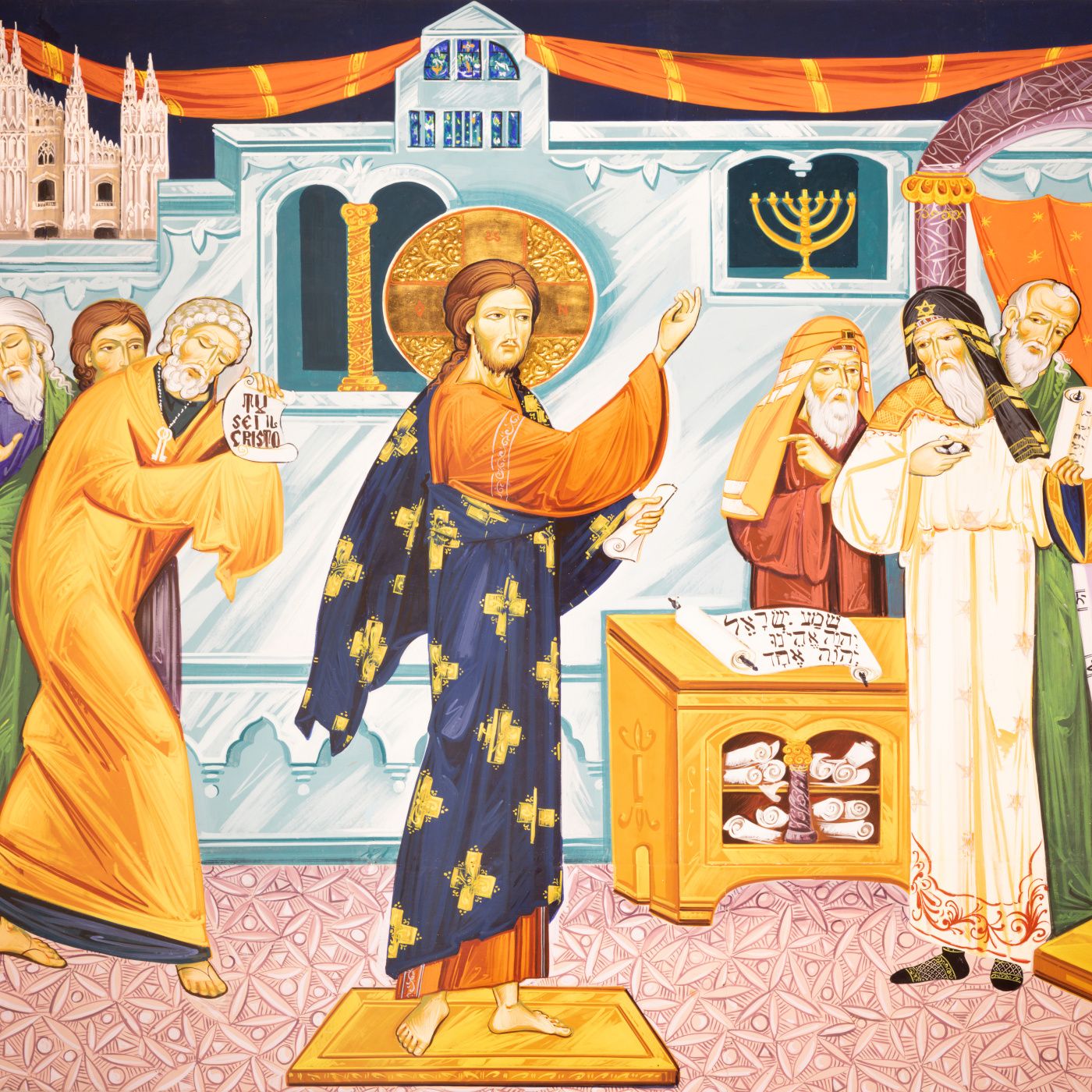
Image: Jesus Reproves the Scribes and Pharisees, by Iulian Rosu
Source: Free RSS feed from catholic-daily-reflections.com — Copyright © 2026 My Catholic Life! Inc. All rights reserved. This content is provided solely for personal, non-commercial use. Redistribution, republication, or commercial use — including use within apps with advertising — is strictly prohibited without written permission.
Get every episode summarized
Each time Catholic Daily Reflections publishes, we email you a written briefing from the transcript — the topics, who appeared, and any specific claims, with the ad reads skipped.
Email me new episodesFree for 3 shows. No card needed.
Hosts & guests
Transcript ready
77 searchable segments. Every word is indexed and playable.
Full transcript
Catholic Daily Reflections — Friday of the Twenty-second Week in Ordinary Time - Spouse of My Soul. Machine-transcribed; use the interactive transcript above to jump the player to any line.
This is Catholic Day, the Reflections for Friday of the 22nd Week in Ordinary Time. Today's reflection is entitled, Spouse of My Soul. The scribes and Pharisees said to Jesus, The disciples of John the Baptist, fast often and offer prayers, and the disciples of the Pharisees do the same. But yours eat and drink. Jesus answered them, Can you make the wedding guests fast while the bridegroom is with them? But the days will come, and when the bridegroom is taken away from them, then they will fast in those days. Luke 5, 33-35. Though most of the scribes and Pharisees rejected the ministry of John the Baptist, here they attempt to use his discipline of fasting as a weapon to criticize Jesus.
But our Lord, perceiving the Holowness of their accusation, turns it into an opportunity for divine revelation. He discloses to them and to us a profound truth about his identity. He is the bridegroom. By doing so, Jesus draws from the rich prophetic imagery of Isaiah and Hosea, which portrays God as the divine spouse of Israel. Isaiah declared, As a bridegroom rejoices in his bride, So shall your God rejoice in you. Isaiah 62-5. Hosea, speaking the word of the Lord, proclaimed, You shall be my husband. I will be trod you to me forever. See Hosea 2-18-22. Jesus is not merely using a poetic image.
By calling himself the bridegroom, he reveals an uptual mystery. Christ comes in the flesh to unite himself to his bride, the church. The proper response to his presence is not fasting in sorrow, but rejoicing in the wedding feast. Fasting will have its place, but only once the bridegroom is taken away, which is a prophetic reference to his passion. This exchange exposes not only the Pharisees' superficial religiosity, but also unveils a central mystery of salvation. In Christ, God draws near in spousal love, to follow him is to enter into a covenant of joy and grace. Donumpual imagery might seem more naturally relatable to women.
It expresses the truth that transcends gender, just as a man leaves his father and mother and clings to his wife, and the two of them become one body, Genesis 2-24. So each soul is called to a transforming union in Christ. This is not merely symbolic. It is a real and spiritual union. We are called to become his mystical body. St. Paul captures this mystery when he writes, I have been crucified with Christ, yet I live no longer I, but Christ lives in me. Galatians 219-20 Traditionally, this union has been described as mystical marriage or divine union. St. Teresa of Avila favored the image of mystical marriage,
emphasizing the soul's intimate spousal love for Christ. St. John of the Cross more often spoke of divine union, highlighting the complete transformation of the soul in God. Though they use different terms, both describe the soul's ultimate vocation, perfect union with Christ. In heaven, when this divine union is fully realized, fasting and other penitential acts will be unnecessary. During Jesus' earthly ministry, the disciples did not fast because the bridegroom was with them, an extraordinary grace unique to those three years. But after he was taken away, fasting took on a new importance, becoming a participation in his passion and preparation for the wedding feast to come.
Reflect today on the glorious end to which you are called, union with Christ, your bridegroom. This journey requires sacrifice, so fasting and penance remain essential. Yet when we keep our eyes fixed on the joy of divine union, every sacrifice becomes lighter and a joyful embrace of love. The difficulty of fasting and penances overshadowed by the union they help bring about. Now, resolve too fast to pray and to stay close to Christ, the bridegroom of your soul. He is the faithful spouse who will never abandon you. Let us pray. Bridegroom of your church, you came to enter into union with us,
your sons and daughters, by grace. By your incarnation, you wedded yourself to humanity, and through your passion, you purified your bride, the church. As I journey toward the wedding feast of heaven, purify me now through acts of penance and prayer, so that my soul may be ready for the divine union to come. Jesus, I trust in you.
More episodes
More from Catholic Daily Reflections

September 8, Feast of the Nativity of the Blessed Virgin Mary - The Dawn of Salv...
Catholic Daily Reflections

Monday of the Twenty-third Week in Ordinary Time - Seeing is Believing?
Catholic Daily Reflections

Twenty-third Sunday in Ordinary Time (Year A) - The Joy of Reconciliation
Catholic Daily Reflections

Saturday of the Twenty-second Week in Ordinary Time - Confronting Opposition
Catholic Daily Reflections