Loading...
businessentrepreneurshipcareers
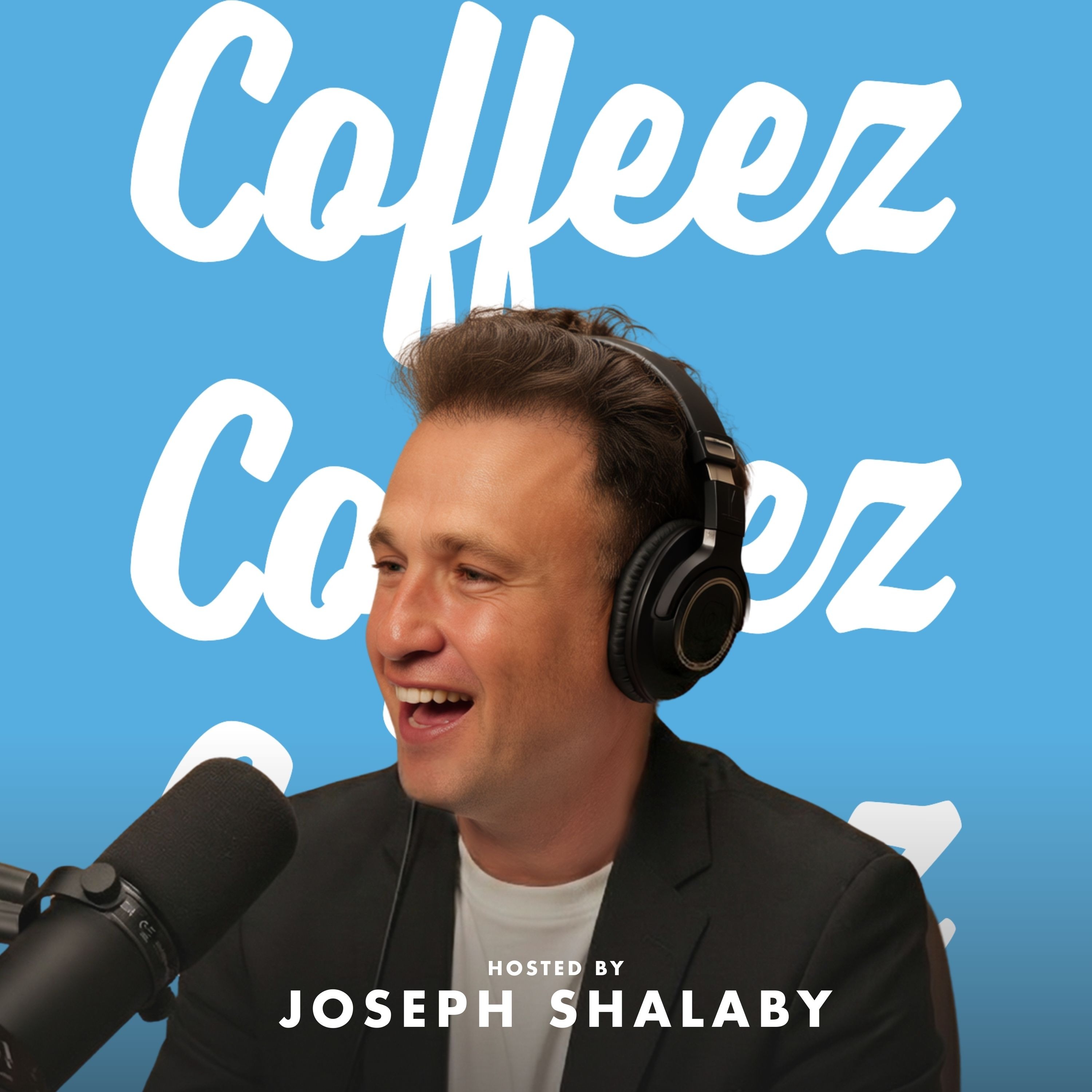
From Wholesaling to 7 Companies | How Justin Colby Built a Real Estate Empire
About this Episode
Justin Colby built his career in real estate flipping and wholesaling — but he didn’t stop there. Today, he operates seven companies across real estate, tech, and entrepreneurship.
In this episode of Coffeez for Closers, Justin breaks down:
• How he transitioned from flipping homes and wholesaling deals
• Why he no longer wants to be known for just one strategy
• What it takes to scale multiple businesses at once
• The difference between doing deals and building companies
• The mindset shift from operator to entrepreneur
This conversation goes beyond tactics. It’s about identity, evolution, and long-term vision.
If you’re in real estate, entrepreneurship, or scaling phase — this episode will expand how you think.
Top producers at E Mortgage Capital are earning more per deal—with faster closings, better tech, and no junk fees.
👉 Learn more: https://join.emortgagecapital.com
Our Sponsors:
* Check out TruDiagnostic and use my code COFFEEZ for a great deal: https://www.trudiagnostic.com
Advertising Inquiries: https://redcircle.com/brands
Privacy & Opt-Out: https://redcircle.com/privacy
Hosts & Guests
Transcript
Now, do I want to make a massive impact?
Yes, that is why I'm leaning in as I go to you off-camera
into my podcast, you know, to learn it.
DNA, because I want you at a massive impact while I am here.
The key to that statement is while I am here.
If that lives on after me, I love that.
But the reality is we are not going to get at your line,
maybe a very short window, your experience as much as we can.
So I'm more about being in present than building legacy.
Welcome to another episode of coffees.
What's up, Justin? How are you, bud?
Good, brother.
Thank you for having me on, man.
Excited that I finally get to meet my long-lost brother
as we were able to find that after off-off camera.
We were like, bro, we are the same person.
Yeah, dude, so many mutual connections, so many investments
and the same thing and, you know, very, very similar personalities
and it's just an absolute pleasure and a blessing
to have you on today's show.
You are a legend in your own right.
You've done a lot, a lot for entrepreneurs.
You continue to innovate and, you know,
you just continue to be an inspiration to so many.
So thanks for jumping on today's show.
I have a question that I like to ask everybody,
especially high performers like yourself.
What's your morning new team, my brother?
So I take that part pretty seriously.
I had a mature a little bit to understand the power
of your morning, but I would encourage any listener.
I'm 44.
If you're younger in me, take this seriously.
If you're older in me, I would sell you the same thing.
So I brought 44, what birthday?
April 30th.
Okay, I'm August 30th, four months off.
You know, I hold the breath.
I'm telling you, we're brothers, just right here.
So listen, I wake up early and the reason being
is I wake up at 4.30 and for some, that may not be early.
I've heard people, oh, I wake up at 3.30.
Okay, I'm not comparing.
I'm telling you why I want to do it is because I want
to be able to have my time.
I run multiple businesses.
I may husband, I'm a father of two very young children
at the ages of two and five.
And I don't have any of me time, right?
I mean, the reality is the second I get out of this office,
I'm going to go run into my family and I'm going to grab my children.
I'm going to hang out with my wife and I'm going to have dinner
and then it's bath time.
So there's no, like, just in Colby time.
So where do I find time to hit the gym?
Where do I find time to journal?
Where do I find time to think?
I think people under value thinking, right?
I believe it to be one of the best things I do all day long
is sit with my coffee and think, no phone, no email,
no nothing.
Just me and my thoughts.
And I have a journal.
I literally journal all the time.
Another undervalued asset is I'm literally journaling all the time.
And it's because I want to write down these thoughts.
Some great, some useless.
Doesn't matter.
Want to write them down.
And so 4.30 I wake up, grab some coffee.
I sit and think to about five, five o'clock.
I journal, I have a five minute journal.
You can pick it up on Amazon.
It goes through like three things that you're grateful for.
What's going to make today a great day?
And then some manifestations, right?
And so simple literally.
I use that same one.
Five minutes, right?
It's amazing.
And then, you know, I'm roughly ready to answer a couple emails
around 5.30, see if anything's, you know, necessary.
And then I'm off to the gym.
So I'm at the gym till about 6.30.
I'm showered and back home at 7 because I go to the lifetime fitness.
So it's literally a resort that I literally have everything.
And I'm back home at 7.
My daughter who is turning five, she's usually up around 7.20 to 7.30.
Making breakfast, getting lunches ready, walking the dog, getting her to school.
I pride myself and I take my daughter to school every single day.
By the time I get back from taking her to school, it's game on.
And the world is on me.
The email is the text, the social media is the, you know, it's all there now, right?
So that is why waking up in the morning to me is so powerful.
It's because I get me time and if your cup is never full, you can't give to others.
And so I have a lot of people I need to give to in a given day, just like you do, Joe.
I need that to keep my cup full.
You know, we have very similar morning routines.
I also gym, drop off the kids, you know, I make smoothies for them.
But you know, I try to do as much as I can in the morning as jam pack, man.
And I continue to stack to it, you know, my morning routine and just like keep adding stuff.
But yeah, I just find it night.
I don't have the same energy to do and be creative.
And like in the morning, I have a lot of creative juice.
And so that again, my family is not up to 7.20, call it 7.30.
So even in the days I don't go to the gym, right?
I get so much more creative juice going, content creation, podcast creation, all these different things.
And so, but I take my fitness very seriously, it's 44.
I went and did the whole work up.
I got a CT scan of my entire body and MRI.
I want to know what's in my body in the same way I want to know what's on the exterior.
I might have muscles, might be lean, but I have no idea what's inside of me, right?
And so I went through all that because I want to live a long life.
I want to see my kids have kids, right?
And so we are grinders.
We're entrepreneurs, we're high D's, high energy.
I don't want to live a short life, right?
I don't want to burn out fast.
So to me, fitness, exercise is a priority.
Yeah, me too.
I probably trained twice a day.
That's great.
Between working out, jujitsu, basketball.
Love it.
It's like it's the only thing that kind of keeps me going.
Yeah, that's my energy spark.
Well, that and all the coffee I drink, coffees for closes, right?
I mean, I slam coffee.
I'm surprised not in front of me.
I slam coffee all day long and it's bad.
Like it's a bad habit.
I get it.
And doctors are like, you got to be a little bit more careful.
And I'm like, I'm out of all the bad habits to get out out there.
I'm going to be okay with slam and black coffee.
Yeah, that's, that's all right.
You're doing all right.
There's a lot of health benefits.
Now, let's dive into like the, the entrepreneur experience.
You flipped 2,300 properties over your lifetime.
You have seven companies currently.
What, give me the scope of each company.
Like what, what are you doing?
I'm in tech.
I'm in real estate.
I'm in funny enough.
I, and I'm not in the operation of it.
I own a gold mine piece of a gold mine.
I'm in these companies to some extent that have bolt on,
but then other things that have no bolt on, right?
I run two education companies similar,
but aren't directly like I run a real estate education company.
I run an entrepreneur education company.
That's called the entrepreneur DNA.
Same as my podcast, right?
And so for me, it's really about an alignment thing.
And I'm actually in a season where those seven companies
are going to go down drastically.
I'd like to really only have two, maybe three.
I'm actually being acquired.
My tech companies being literally in the middle of being acquired.
They're just finishing up due diligence.
So I'm releasing some of the stuff
that sounds cool, does cool things,
but just I'm not in alignment with anymore.
I don't want to be in the tech space.
It's not, it's never been a passion.
And I don't have a purpose behind it, right?
And if it doesn't fall in line with my purpose,
I don't need it, right?
Could there be some huge payday down the road 10 years from now?
Whatever, there could be.
There absolutely could be.
But if I'm miserable for the next 10 years
and that's reflective on my wife and my children,
it does no good to make that kind of money.
I don't care.
$1 value is worth your piece.
I don't care.
And so I just, if it's not alignment with my purpose, right?
Because people talk about follow your passion,
the money will come.
I agree with that to about 20%, right?
The other part is what is your purpose?
If your purpose driven of what you're trying to go and create,
then the money is going to come.
And if that can align with your passion even better,
but I can tell you, little Joe didn't grow up and say,
I can't wait to be the biggest baddest loan officer
in the entire planet.
Little Joe didn't have a passion for that, right?
And so I say all that just to say, like,
where I'm at today and in the bio today is real time changing.
I actually find that to be a source of peace.
I think there's a lot of people that hold on to things too long.
And this is my identity.
I've been in real estate investor for 20 years.
20 years, I've been doing the same thing.
Flipping homes, wholesaling, buying rentals.
You've heard about apartments, storage facilities,
the whole thing.
Okay, I no longer want to be known just for real estate.
I want to be known as someone who facilitates someone
that brings people together,
someone that helps other people and offers value
to the entrepreneur space.
That is more an alignment with who I am today than real estate is.
I'll forever do real estate.
Don't get me wrong.
But what am I known for?
What is my brand is real time changing?
Because of what I've been able to create through this great platform
that you and I have done very well on, which is podcasting.
You know, we are fortunate enough to have made our wealth
through real estate mortgage.
Obviously, we're kind of in the same space.
But our purpose isn't this, right?
This is where we really find that we're contributing to society.
And we contributed, we made real, you know,
the American Dream come alive for many, many people and yada
and that was cool.
But you and I, and I think we're both an alignment on this
is like, this is our purpose.
Like we really are changing lives,
helping a lot of people, making people's lives better.
You know, I, I was getting like fan emails,
which is of people in hardships,
like what can you, you know, or whatever, you know,
like stuff that really touched my heart, you know,
like that they're like tracking us and listening to us
and really like we're influencing them
and making them better people.
And they're, you know, that, that stuff to me is really like,
that's legacy stuff.
Yeah, I, and for me, I'm at a weird moment where,
yes, I'm, I'm interested in legacy.
It is not my driving purpose.
And I know a lot of our mutual friends,
it's all about legacy and building this legacy.
I realize one thing is with a hundred percent certainty,
we're not making out of this trip alive.
Nope, right?
So while I am here is more important than my legacy.
Now, do I want to make a massive impact on the world?
Yes, that is why I'm leaning in as I spoke to you off camera
into my podcast, the entrepreneur in the DNAs,
because I want you to have a massive impact while I am here.
But the key to that statement is while I am here.
If that lives on after me, I love that.
But the reality is we are not going to get out here alive
and we have a very short window to experience as much as we can.
So I'm more about being in present than building legacy
that can happen and that is great.
It is not my driving force.
And I know that's counterintuitive or what's the word.
It's against what a lot of us in our space kind of feel.
Like all we're trying to build this big legacy play.
Cool ish, just not really what I'm here for.
I'm here to actually be present in the moment.
I make an impact.
Yeah, for me, it's more like just being of service.
This is where we could be of service and do God's work
and have a plan and voice an opinion that's, you know,
in a society where the world's kind of gone mad
with so many different, so many different false ideologies.
Because I'm speaking truth on this podcast.
I'm sure you are too.
Yeah, well, that's you being present.
That's you being in the moment, right?
That's the very much alignment with what I'm saying, right?
It's like you're trying to make an impact now.
If that impact is big, it will last forever.
It will create a legacy in and of itself.
I do love real estate because the legacy play, if you will.
But I think with all the different ways to structure legacy
financially, real estate can be a part of it,
but it doesn't have to be all of it.
And so again, to your point, I want to make massive impact,
but I want to make it now.
I want it to be real time and I want to enjoy my kids.
Now, I'm going to dive.
I'm going to go back in history 20 years in real estate.
Start flipping properties of 24 years, 24 years old.
When did you know that you wanted to be an entrepreneur
and what inspired you specifically to get
into the real estate space?
So knowing when versus when I became one,
two separate answers, I was an entrepreneur
since literally my earliest memory.
So a young kid riding bikes around the neighborhood,
I would take it upon myself because in California,
you would get paid, I think at the time,
it was 10 cents for a bottle and five cents for a cam.
And I would drive around on my bike and have two garbage bags
and as fast as I possibly could,
I'd wake up in the morning, 6 a.m. start going
and filling up these garbage bags with all of my neighbors
in my neighborhoods recycling, right?
California's big on recycling.
I would then drive it down to the recycling.
All my bike drive these two bags, one on each handle
down to the recycling bin so I could get paid, right?
Everyone's just recycling and doing good by the planet.
I'm like, oh, I could go make money
because I want to go buy baseball cards,
which leads me to the next thing I was doing.
I would go take the money, I would go to the baseball card store,
I would buy a box of baseball cards for $20.
Nowadays that we're talking like,
some of these things are like 50,000.
But let's just even say that the, you know,
I collect cards with the name boys,
so I'm big on the card card.
I'm huge into it here.
I literally have like six of these
and I'm still, I don't know where I'm.
Oh nice, you're still, you're still ripping packs right now.
Oh yeah, dude, I mean, I'm in the game.
So I say that because literally since I was six years old,
right, that is a real time.
I'm 44 right now.
So when you say, I would rip a box just like this.
That would be 20 bucks.
I just paid almost $149 for this one box.
That's the big box, though.
And I would rip it in front of the store owner.
I would wholesale in the cards that he wanted to sell at retail.
So at the time, you know, Barry Bonds and Mark McGuire
and Jose Kinseko and all these, you know,
at the time baseball was a much bigger card play
than any of the other sports, I would make $40.
So I replaced the $20 I bought it for plus the 20
and I would leave.
So I've been this way prior to even understanding
what I was doing, right?
Then it was the washing cards hustle, right?
When I got a little older, I'd go around my neighborhood
and wash cars for $5 at a chunk.
I've done everything since a kid, not knowing what I was doing
because I had a rough childhood.
So I had to depend on myself.
I didn't come for money.
So like if I wanted something for the most part,
I had to go make money to pay for it, right?
Now, I'll set that aside for a second.
I was not destitute.
I don't have those huge stories of like homelessness.
I didn't have that.
And I'm sorry if you're out there listening and you did,
but I definitely did not have money, right?
I didn't have extra money.
So like ice cream, baseball cards.
I had to go make the money.
So anyways, the long answer.
I've been this way since my earliest memories.
What you're saying resonates at a level, you know,
I mean, it's like you're saying my story.
Yeah, like, yeah, rip in packs,
go into baseball card shops, flippin' cards.
I mean, you know, there's a lot.
I, the way I teach my kids now, my boys,
entrepreneurship is through cards.
So we'll go to shows and we'll flip,
we'll buy cards, we'll flip them at shows
and they'll transact thousands of dollars,
you know, at the shows.
Like people are just throwing hundreds at them
and they're just like,
and they'll take that money
and then they'll go buy mystery packs
and they'll come back and flip them on our booth.
So there's a lot of entrepreneurial spirit
in cards with children
that the kids can learn at a very early age.
I had the founder of Major League Profits,
which is the biggest coaching program
for card collect cards.
I had them on my podcast and I flew them down
just so he can meet my son
because my son was part of the program
with all these adults, you know, like creating cards.
So man, it's your entrepreneurial spirit started with cards.
We had a lot, again, same thing.
I grew up poor, but I didn't grow up destitute.
I'm just an immigrant.
Parents came from Egypt, you know, came at five.
So they were very similar
with how our journey started
in the entrepreneur space.
But what's even more intriguing
is that we both experienced 2008.
And when, oh, it hit me,
I owned my own mortgage company
and it was an absolute crash.
I lost my house, I lost my business.
I had to start a new company.
I was in mortgage.
I was like, mortgage industry just crashed.
I had to pivot.
I still stayed in mortgage
but I switched to lost mitigation.
What was it like for you in 08?
Because you couldn't pivot
into a completely different side of the mortgage space.
Because mortgage was like, okay, you can't do mortgages.
Well, I'm going to prevent everybody
from going into foreclosure.
So I pivoted on that.
But there was a lot of opportunity after, you know,
2010-11 in the foreclosure space
to buy and acquire foreclosures.
But how did you pivot?
And how did you survive 08?
And what are some of the greatest lessons
that you learned during the biggest crash
that we've experienced in American history since 1930s?
So I, to some extent, like you,
had to change industry.
So I was a real tour during the crash.
I also lost my home to foreclosure.
The repo man took my car
and I ended up on a couch.
So I wasn't married with any children.
So I was a single guy on a couch.
But I was destitute broke, right?
Like it literally, the repo man took my car.
The bank took back the home foreclosure, the whole thing.
But I realized I no longer wanted to be a realtor.
I wanted to be an investor.
Because right about then is where, you know,
flipped this house, started to hit TV, I believe.
And I loved real estate and understood
what real estate could do, you know,
for the wealth accumulation.
And then I really kind of had this idea of like,
real estate is the only industry at the time
I understood that could create a high level of income
and could attain a lot of wealth
at the same time in the same industry.
You can make a lot of money day trading.
You can make a lot of money selling loans.
You can't create wealth selling loans, right?
So industry specific real estate, I said, okay,
I can make a lot of money flipping homes
and I can acquire a lot of these same properties
because I'm an investor.
And I make money and I put that money into a rental
and then I have wealth, right?
And so I did an industry change to some extent,
very much an alignment.
But I no longer worked as a realtor.
I worked as an investor.
And because I was broke, the only thing I knew to do
was cold call.
I had no marketing budget.
I had no presence.
I had no name, I had nothing to lean on.
I had a phone, which my friend had to pay my monthly bill
by the way, and I had coffee.
And I just called every day, six days a week.
People think there's a five day a week work week.
Absolutely not, not for our us hustlers.
I mean, the reality is I still work on Sundays today.
I'm 44 years old.
Now it's not the same kind of work, right?
But I'm still doing things.
Fun work, business.
So I was it and I went full into real estate.
So what the benefit that I got is the market crashed.
So my barrier of entry lowered drastically.
I was living in San Francisco on a couch.
And Phoenix literally dropped in 50%.
Like homes that were selling for 150 grand
are now selling for 50 grand, right?
And so I just said, okay, well,
that's going to be an investor marketplace.
I'm going to start calling realtor's
out of business partner at the time.
And we just went.
We didn't know what the hell we were doing, right?
And that led into an incredible 20 year span
and ups and downs along that span.
But I did wish I knew what I do now
and bought more of these $50,000 homes
because those same homes are selling for five hundred grand.
Yeah.
So what do you think was like what was really driving you hit
rock bottom, living on a couch, you know,
and a lot of people when they're in that position,
I feel like they're screwed.
There's no way out.
What would you tell somebody in that position right now
that was in that position that you were in?
And then what really was the catalyst for you
to crawl out, to kick your way out,
to fight your way out of that destitute position
you were in life at that point?
To some extent, the idea of like,
you can't really get any worse, right?
I mean, I literally have no income.
You know, I walked away, my credit's ruined.
So when you put a line in a corner,
what's the only option to fight their way out?
And so some of it is just kind of like,
well, I can't get any lower than literally
have no income, no credit, no nothing.
I got to do something, right?
The other part of it it was innately in as a trait
that I have is this kind of shoulder shrug mentality
that not that bad, right?
I'm at the lowest of lows, not that bad.
I can go create more.
Now that's not teachable.
I can't go out and podcast and teach that.
But what I did know is I had the ability
to go create it again.
I created it once.
I could go create it again.
I just needed to learn the vertical I was in
which was fixing flipping.
And if someone's out there listening to this
and is on destitute doorstep, right?
Like I was, right?
You've just lost it all.
It all came crashing down.
It's never as bad in your head as it is in real life.
What you make it to be is worse than the reality
is played out on the field.
And the reason why you're able to say that
is because if you play the whole game,
you'll look back and say it wasn't that bad.
In a moment in time, it feels like death.
It feels like your life is over.
But what you don't recognize is the same way
you felt when you lost your high school sweetheart
because you thought you were going to last forever.
In that moment, it is catastrophic.
Your life is over.
You are embarrassed to go show your face on school again.
Everyone is ridiculing you.
It you are done.
And then you grow up and you look back at that finally
and say, God, what a cute kid I was.
How adorable were we as a couple?
I promise everyone listening as Joe is laughing to himself.
That is the same concept that happens in business.
When you are going through it,
when you're in, you feel like it's over
and you give yourself enough runway on the field
and you play enough of the game,
you're able to look back at that
and say, well, I made it through that too
and it wasn't really that bad.
And there's no way for someone
to really believe me or Joe in this example
until you go through it and you come out from it.
And you go, shit, they are right.
But it's also why you hire coaches.
It's why you're a part of masterminds.
We talked about a mastermind, Joe, you and I
are friend Dan runs, like that's why
is you want to get ahead of it
and you want to learn from people who have gone through it
so you can get a buddy to grab you around that neck
and say, dude, you got this, not that big of a deal.
I'll give you some things and tools and resources
and people to help you output.
You're going to get through it, just keep your head down,
keep focused, keep going, adapt, iterate, right?
So I, listen, it is a privilege
that we have to go through our problems, Joe.
It's a privilege, which is counterintuitive
to what most people would think.
The reason why it's a privilege,
because you know, it's really fucking hard,
living in Haiti with no clean water and no food.
That's really hard.
Living in a hut that doesn't have a roof,
basically just four brick walls.
And I've been to the DR a lot.
Like the DR and Haiti butt up again.
Like I've been to the poorest parts of the world.
That is really hard.
Having a bad business deal or a bad financial time
or a bad economy doing what we do.
Not fun, but it's a privilege to overcome that
because what that will do for you is it'll prove
to you what you can do.
And the person who crumbles
will only go deeper in crumbling
because now they've lost all sense of confidence
to know that they can go do hard shit
and overcome hard shit.
You know, you talk about privilege.
Like we are so privileged.
Like I say this all the time on my podcasts.
Like I get to sit with some of the most brilliant people
who have suffered the most.
And I get this one-on-one coaching call with them.
And if nobody's listening and nobody benefits,
I benefit the most.
I get such incredible mentorship
from these podcasts and the relationships I build.
And if people don't seek mentorship
and they don't seek a what,
because if they're just sitting there dwelling,
we know that there's green pastures ahead.
We know that we just got to make it.
We know that God never gives us more than we can handle.
But if no one's kind of instilling that in your mind,
it's hard to overcome.
Now hopefully people are listening in podcasts
or they're doing something
that enables them to have that fortitude
and that strength and that mental tenacity.
But the average person is not thinking like that.
The average person is suffering internally.
They're not looking for mentorship.
They're going, I'm screwed.
This is my life.
Look where I live.
Look, I'm poor.
My parents, this, that, they had a million excuses.
And they were just this, why me?
Mentality.
And to that person.
Yeah, and the other component of that
is they think the answer is quick.
And you and I both know Joe 2007 and eight happened.
The rebound wasn't quick.
The rebound has been great in the real estate space.
If you really look at it, we are well beyond where we would have been
if we just would have camped at the same trajectory of 2005 and 6.
But the reality is people want to go make this change
and get the result quick.
And so I use a lot of times this idea of, you know,
the gym and fitness.
Like you got to play the long game in all of this.
You can't go to the gym for a month
and expect to have a six pack, right?
And then there's all these bolt on or variables and nuances.
Like, okay, well, now you are being consistent at the gym.
What are you eating, right?
So now you got to watch your diet and intake and calories
and protein versus cars.
So I just say all this say like, if you're at that moment,
but you're ready to make the change, you need to be ready to make change.
But also don't expect the result to happen overnight, right?
Don't expect for you to leave the couch.
And that's my story.
I was sleeping on a couch, took me nine months
to get my very first deal nine months.
But you know what I didn't do?
I didn't quit.
I didn't give up.
Because I saw people doing the very same thing I wanted to do.
I knew because I saw it, it was real.
I could do it.
I didn't have to have some, you know, business degree
to go do this flipping home thing.
I saw them doing it.
So as long as I didn't quit, I was going to get it done.
And that would be the bigger highlight
that I think people need to focus on is
make sure you are someone who has the stamina to stay in the game.
This is why I talk about purpose over passion.
Passion can only take you so far.
When the storm comes and the storm always comes.
I'll remind you, always comes.
When the storm comes, your passion can waver.
Right?
Like I use the example of I love ice cream.
Love it.
Do I want to go run an ice cream shop seven days a week?
15 hours a day?
Absolutely not.
But I love, I'm passionate about my, I love it, right?
So you got a purpose over passion.
And you want to create purpose in alignment, hopefully,
with your passion.
But if it's big enough, you'll keep going through the storm
because your purpose of doing it will see your way through.
You'll be convicted.
You know, you talked about like being committed to the gym
and it brings up a point I actually experienced this today.
So I train with a personal trainer a couple of days a week
and I only train two things.
Deadlift and squat Mondays Tuesdays.
And today we're deadlifting 295 pounds.
My trainer says this to me, he's like,
once you get to the really heavy weights,
your technique is everything.
Like so my technique, I've been training this for years
and my technique still is off with the heavy weights.
Like people don't understand the level of intensity
and how hard you have to work and how precise
and how not only like consistent,
but now to your point, like now you're eating.
Now your technique has to be perfect.
Now it's like you want to get to the big leagues
now master your technique.
And that relates to everything in your profession.
That relates to everything in your health.
That relates to everything in your fitness protocol.
Your goals, your technique has to be precise, consistent
and that level of dedication and commitment is another level.
And people have to understand that once you get to the big leagues,
your technique has to get even better.
It's not like I made it to the big leagues, I'm here.
Like I made it.
I'm deadlifting 300 pounds.
I don't know.
You're deadlifting now.
Now the real work starts.
Yeah.
That's why you know, again, use the sports analogy.
Every major player had coaches through their whole career.
Because the level up, you've never been to that level.
So you would need a coach that can support you at that level.
Otherwise, you're going to be lost again, right?
The challenge is you're at a new level.
It's all new, different challenges.
If you don't have someone guiding you at that level,
the same way they guided you at a lower level,
you're going to end up with some big problems.
So I'm going to talk about some of your some of the things
you're doing now.
So you're you want to pivot right now from real estate.
And you want to have a greater purpose at what real
estate can always be there.
But I was giving you and I didn't give in the gift, right?
Not a lot of people get a platform like we have podcasting.
A lot of people start podcasts, but they don't go anywhere.
And I think it is my real, you know,
do you believe in like being in a state of flow and energetic
passion?
Like you're just an alignment is the word most commonly used.
When I'm podcasting, when I am hosting, when I am being
featured on it, I am in true alignment.
Like I am there could be fires going on all around this room
right now.
I wouldn't even notice it because I'm just so dialed in.
And that is unique.
And in the last 20 years,
I don't think I've really ever felt it in the way I'm feeling
it in this last two years because this the entrepreneur
DNA podcast launched two years ago, right?
And it has just been on a rocket ship the whole time.
And so I just I'm not willing to ignore that calling
and that feeling anymore.
So while I'll always do now bigger, you know, apartment type
deals, I'm not willing to ignore this energetic alignment and
flow that I'm in.
And I'm going all in on it because I have a great role at X.
I know a lot of people can make a lot of impact.
And we just talked about legacy that that ultimately could be
the legacy that I leave is I brought all these brilliant
experts in their field of expertise to the marketplace to help
other entrepreneurs win the game of entrepreneurship.
We have the same vision, the same goal.
And another exact thing we both started two years ago.
No kidding.
Yeah, and it's been on a rocket ship the whole time too.
Yeah, so it's like talk about alignment.
You know, like, yeah, we're in a state of flow.
We're in this is where I find my passion.
I just, you know, again, I'm the CEO of the founder of the company.
My partner runs the whole company having a big department
meeting all the departments of them.
I'm like, I don't want to go there.
I'm going to do this.
Like, I'm an alignment here.
Like, I don't, yeah, this is what I do.
I grow the company.
I grow the brand.
I'm an alignment here.
This is my purpose.
You know, I don't need the minutiae of operations.
Totally.
That's like my drag.
You know, like that's like, yeah, I'm not that guy.
I had to take a, you know, we talked about a bad real estate deal
that I did is because operationally, I'm not that guy.
You know, I took my half the ball and that's okay.
But I was able to recognize where my strengths and weaknesses are.
And I just said, I don't, I don't want to do that anymore.
I was basically working against my natural ability.
If that made any sense, right?
So if I was always meant to be a quarterback, I was playing running back.
And it's kind of like, that's not my highest use of expertise.
This is, yeah, it's not, it's not your talent.
So that's that there are people who are just,
they are operators, totalist, what they do, you know,
and that's the yin and yang of running any big business.
I'm fortunate enough to have found that yang for me,
best friend from high school.
And he's always been that way.
He's where kids.
Yeah, it's great.
And I've always been this way.
Lucky you.
Yeah, God is always good, man.
He's watching out.
You know, I know you're very, very busy and I want to wind this down.
I got a couple very, very serious questions for you as we wind down here.
What is a personal goal, Justin, that you have for yourself,
a business goal that you have for your business?
So my personal goal for my business is I want to get my community,
the entrepreneur DNA community on school up to 100,000 entrepreneurs,
members because I will continue to do a podcast the day with experts
in their industry to pour into the members.
So that instead of being the Justin Colby lost on a couch,
you can learn from the person who's going to be able to teach you
and engage with that same person and talk to that same person.
And they're not untouchable because I'm asking them to engage with you
and I can make a bigger impact on the entrepreneur space.
So 100,000 members in my group, I'm not going to say when
because my fifth principle of success is you never put a time frame
on the result you're trying to achieve.
So as fast as I can get there, I'm going to get 100,000 people in this group.
And the group is live, the group is live.
Yeah, you guys are the first to really even hear about it.
So if you go to school and you go to the entrepreneur DNA, it is live.
It's $25 a month.
I'm keeping it affordable because the same Justin Colby that was sleeping
on a couch would love to have learned from these experts.
And I could have found $25 a month to pay for that
where all the other gurus and coaches and everyone's charging $10,000,
$15,000, $20,000, I'm not going that route.
I want to lead with value first.
And let me ask you that that school program you've launched,
you're basically doing kind of like a podcast or interviews
with experts every single day.
No, so we'll do two to four of those a week,
like tonight in 15 minutes, we will be doing one.
This tonight's call is about a LinkedIn expert
because social media must have.
And this individual understands how to print,
build yourself and frame yourself
so that you can make more sales and grow your business specific to LinkedIn.
Thursday will be about your habits and priorities
that you do each and every day are the reason
why you're successful or not.
So what are your habits looking like?
So all these experts will be coming in,
but they'll be teaching.
It will not be an interview.
It'll be genuine teaching their expertise and an open Q&A.
So they'll be able to talk together
and think over a phone or Dean Grassy O.C.
or Ryan Sirhan to Russell Brunson
or all these people that I have on my podcast.
They'll be able to actually be able to engage with them
without having to pay them a ton of money
to ask them the questions they want to know about their expertise.
What great value, what a great resource to all the listeners now
make sure you sign up for his school.
It's going to bring you a ton of value, change your life,
make it a better person.
What's a family goal that you have?
Family belief.
So he said, family goal.
Oh, family goal.
I have one priority to spend as much time
with these little kids I possibly can to raise them
into the best people.
And I know that doesn't sound unique.
But I am old enough to realize the value of young children
and how short-lived that very young age is and how cute it is.
So my biggest goal is to make sure that they're well taught,
they're well mannered, they understand good
and what is right and what is wrong.
So I really care about to be a loyal, loving, supportive husband
because my wife, listen, I fight business dragons all day.
They're business dragons and I fight them every day.
My wife has these two kids all day all day long.
And I promise you this, I could never trade jobs with her ever.
A, I have no desire to.
I'm not built that way, but what she does,
she's the real hero in the family.
She's the one that makes it go around.
She's the glue, she's the rock.
I try to applaud her every chance I possibly can
because I could never do what she does.
God bless, man, that's amazing.
I did forget to ask you one question before I finish my last question
is how are you instilling that same level of grit
to nasty work ethic in your children now
because they're growing up in a life of abundance.
And that's why I grow up.
Yeah, it's challenging.
Sure, roller skates, for example,
this weekend is my daughter's birthday.
She got a pair of her first roller skates.
She's five years old.
So how I'm teaching this is to not give up, right?
Is she obviously, it was very hard for hours,
but I just stayed with her.
It was intentional and kept looking in the eye
and kept picking her up and say,
you don't, you want to ride these things
and you're going to have to learn how to ride them.
And you don't quit and complain,
want to take them off.
No, you want to ride them.
So we will learn how to ride them.
It just takes time.
So I'm teaching them through the mindset that it takes
because the world is tough.
Well, so is learning how to roller skate
at five years old, right?
And so as long as she can overcome that
and learn to keep going,
this morning was another brilliant moment.
I would, when I drop her off at school,
I say, make it a great day.
Why?
And then she has to say,
because I can choose to make it a great day.
She has to say that back to me every single morning.
And then this morning she's leaving the house
and she tells her two-year-old brother
who barely is talking.
Hey, Jason, make it a great day
because why, and he can't say the end of it,
but because I've said this to her every single day,
she's trying to embed that into my two-year-old son.
And at those are the moments that you go,
I'm doing something right.
I don't know at all when it comes to parenting,
but I'm doing something right.
I like that, I'm going to steal that.
That's why I love this show
because I get to take so many great tidbits
from these brilliant people like yourself.
Last question.
Yeah.
When you're in front of the pearly gates,
what do you think God's going to tell you?
Well done.
Well done.
You left it all in the field.
You did what I asked.
You led with your heart.
Well done.
Justin, you've been a pleasure to have on the show.
If people want to connect with you,
how can they find you?
Instagram's my best platform.
Please let me know you heard me here.
So the Justin Colby.
That's it.
The Justin Colby.
Say you heard me on coffees for closers,
Joe's show, whatever.
I will say, what's up?
I don't have bots in there.
I don't have all that jazz.
It is really me communicating with you.
And then I would tell you,
go check out the school program.
The Entrepreneur DNA on school is 25 bucks a month.
If you are an entrepreneur,
if you're a aspiring entrepreneur,
if you're a grisly veteran entrepreneur,
I'm bringing the best in this phase too
to help guide you in each vertical.
Let's go.
Justin, God bless you.
Hope you crushed everything on your goals.
Keep an absolute push and have a have on the show.
Appreciate you, Joe.
If you are a podcast host,
listen up this once for you.
My name is Ally Jackson.
I'm the host of Finding Mr. Height,
a dating and relationship podcast
that I've been doing for four years now,
sharing my positive and practical approach to dating
that's built on my own life experience.
And I wanted to share another experience that I've had.
My secret behind monetizing my show.
It's called Red Circle.
And I was just telling my colleague
about how much I love their platform.
With Red Circle,
not only am I getting a seamless hosting experience,
but I also love the support I receive in AdSales.
It's not just typical AdSales either.
It's targeted opportunities based on my show and my life.
And the platform is super simple.
You just set your preferences
and Red Circle matches you with sponsors
that align with your show.
You can vet every opportunity
and their platform gives you great analytics.
More recently too,
my Red Circle team has brought me opportunities
outside of my podcast on social media
to really augment the podcast partnerships,
bring them full circle.
I just can't recommend them enough.
If you want to give it a try,
go to redcircle.com to get your free trial.
That's redcircle.com for a free trial.


