Loading...
musicinterviewseducation
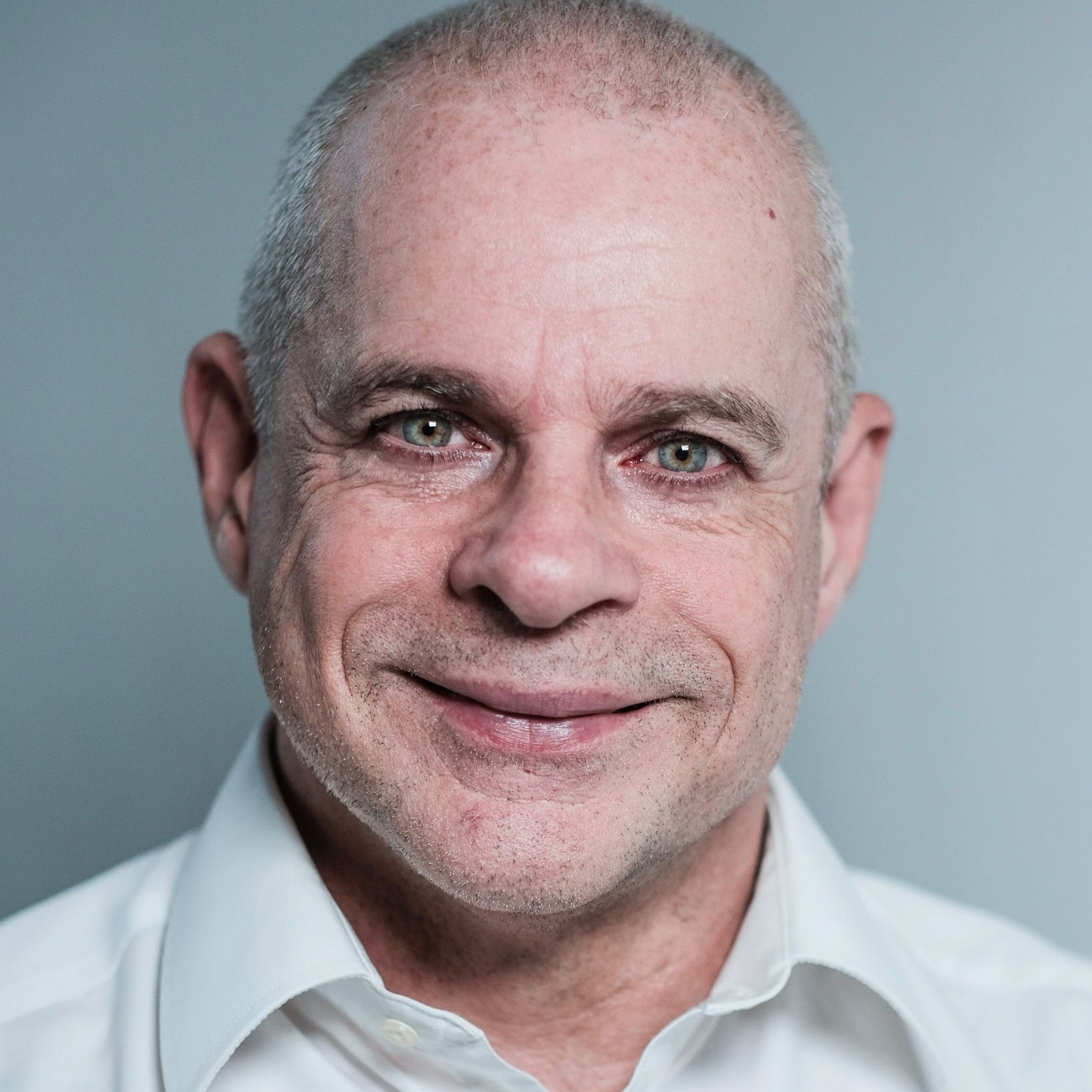
Gareth Valentine - Legend In London's West End Theater Community. Welsh Composer, Arranger, Musical Director. "Sinatra The Musical", "Kiss Me Kate", "Guys And Dolls", "Sweet Charity", "Cabaret", Many More!
About this Episode
Gareth Valentine is a legend in London’s West End theater community. He’s a Welsh born composer, arranger, dance arranger, conductor, musical director and musical supervisor. He’s been involved in dozens of London's biggest musical productions. His latest are Sinatra The Musical opening this summer and The Producers. His credits also include Sweet Charity, City Of Angels, Guys And Dolls, Kiss Me Kate, Chicago, Cabaret and too many others to mention. And in his spare time he also conducts orchestras worldwide including the BBC Concert Orchestra and the Welsh National Opera Orchestra.
My featured song is “It Is A Miracle To Me”, from the album East Side Sessions by my band Project Grand Slam. Spotify link.
—-----------------------------------------------------------
The Follow Your Dream Podcast:
Top 1% of all podcasts with Listeners in 200 countries!
Click here for All Episodes
Click here for Guest List
Click here for Guest Groupings
Click here for Guest Voices
Click here to Subscribe
Click here to receive our Email Updates
Click here to Rate and Review the podcast
—----------------------------------------
—---------------------------------------
ROBERT’S NEWEST RELEASE:
“MI CACHIMBER ALL STARS” is the new, expanded version of Robert’s single, “Mi Cachimber”, which he wrote for his father. Featuring Camila Cortina on Rhodes and Xito Lovell on trombone in addition to Benny Benack III and Dave Smith on flugelhorn, and Project Grand Slam’s rhythm section.
CLICK HERE FOR OFFICIAL VIDEO
CLICK HERE FOR ALL LINKS
—--------------------------------------
ROBERT’S RECENT RELEASE:
“MA PETITE FLEUR STRING QUARTET” is Robert’s recent release. It transforms his jazz ballad into a lush classical string quartet piece. Praised by a host of classical music stars.
CLICK HERE FOR YOUTUBE LINK
CLICK HERE FOR ALL LINKS
—---------------------------------------
Audio production:
Jimmy Ravenscroft
Kymera Films
Connect with the Follow Your Dream Podcast:
Website - www.followyourdreampodcast.com
Email Robert - [email protected]
Follow Robert’s band, Project Grand Slam, and his music:
Website - www.projectgrandslam.com
YouTube
Spotify Music
Apple Music
Email - [email protected]
Hosts & Guests
Transcript
Hi, I'm Larry Blank, I'm a composer-conductor-arranger,
done a lot of Broadway stuff, and I am so honored
to be on Robert Miller's Follow Your Dream podcast.
Hi, everybody. I'm Robert Miller.
Everyone has a dream.
I followed my music dream,
and now I engage remarkable creative artists
from all around the world in conversations
about their lives, their craft, their creative journey,
and showcase some of the works that define them.
Welcome to Follow Your Dream.
The magic in the air is way up high.
It is not something you can see,
but when it hits you, makes a crazy sound.
It is a miracle to me.
It crawls into the space that occupies your mind.
It borrows underground and drinks you all the time.
The moves are electric, and it makes you feel so fine.
It is a miracle to me.
Hi, everybody, and welcome to another episode
of the award-winning Follow Your Dream podcast,
with listeners worldwide on every continent in 200 countries.
I'm Robert Miller, your host.
My guest today is Gareth Valentine.
He is a legend in London's West End Theatre community.
He's a Welsh-born composer, arranger, dancer-ranger,
conductor, musical director, and musical supervisor.
How about all of that?
He's been involved in dozens of London's biggest musical productions.
His latest are Sinatra the Musical,
which is opening this summer, and the producers,
which is still ongoing in London.
His credits include also Sweet Charity,
City of Angels, Dies and Dolls, Kiss Me Kate,
Chicago, Cabaret, and too many others to mention.
And in his spare time, he also conducts orchestras worldwide,
including the BBC Concert Orchestra
and the Welsh National Opera Orchestra.
How about all of that?
And in the middle or thereabouts, as I do with all of my musician guests,
Gareth and I are going to do what I call a songfest.
I've asked him to send me a handful of his best works,
which he has done.
We're going to listen to a little bit of each just the taste,
so you can get an idea of just how great this guy is.
And we're going to talk about them and you'll get the back stories.
And I promise you that nobody else does this in podcasts.
And you know that I like to feature a song of mine in every episode
underneath the introduction and at the end.
And I always try to make it relevant somehow to my guests.
Well, in this case, it was easy.
My featured song is called It Is A Miracle to Me
from the album East Side Sessions by my band project, Grand Slam.
And I chose this song because it truly is a miracle to me.
All that this man has accomplished.
So I hope you agree.
So Gareth Valentine, welcome to the foliar dream podcast, baby.
Well, it's great to be here.
And I'm in very illustrious company, aren't I?
Well, listen, I have to start off with a complaint.
I'm sorry to do this, okay?
And my complaint is that you're too humble.
Okay.
When you gave me your background information, there was nothing there.
And I start to dig to find out what else this guy has done.
And there's a wealth of information out there and a wealth of things that you've done.
And from now on, I want you to expand that bio of yours.
Okay.
So the people don't have to dig like I had to dig.
Well, I think it's part of the British reticence.
You know, the polar opposite, you might say of your, your current president.
That's probably true right there.
All right.
But you're from Wales.
And I've had one other guest in all of this time.
You know, I've had like people from 40 different countries or so.
It's one of the great things about this podcast.
Yeah.
People from all over the world.
I've had one other guest from Wales, a lady named Ellen Williams,
who sings classical and semi classical music.
And she was wonderful.
So she told me a little bit about Wales.
But I want to hear what you tell me about growing up in that lovely place.
Well, Wales is not called the land of song for nothing.
And I think that the Welsh language is very rich.
I'm Welsh speaking as all my family are.
And so that's my first language, my mother tongue.
I lived in an age where my grandmother was the last of a generation
who couldn't speak English.
That's all gone now.
But the language itself is very musical to the ear.
Would you like me to speak a little for you?
I would very much like to hear that.
But tell me, I don't understand.
You're right connected to England.
Why did you develop a language that was completely different?
And why wouldn't your grandmother speak any English?
I didn't get that.
Well, don't forget, you know, the United Kingdom,
which is England, Wales, Scotland and Northern Ireland.
That's the United Kingdom.
The United Britain is those countries minus Northern Ireland.
And Wales, like if you go back 500, 600 years,
distances to travel from Scotland to Wales were huge.
I mean, it would take months and months to travel to these places.
If there were any roads.
And so where is distance is no trouble to us now.
So the Welsh language is the oldest European language
developed in those mountains and hills of Wales.
And it became a batch of honour.
You know, you spoke Welsh.
The English were to be damned because the English were always...
I mean, my brother used to say, you know,
the reasons we have so many mountains in Wales is because we won so much land
from the English we piled it all up.
Yeah.
All right, so give me a little bit of Welsh here, OK?
I'll speak a little bit of Welsh.
This is a hymn by Welsh hymn.
Sounds good to me.
Tell me what it means, OK.
It's actually a little folk song, not a hymn.
It's about the hollybush.
Come dance around the hollybush.
And then that's really old.
So it's one of those little ditties from...
Oh, it must be 500 years old.
That's amazing.
All right, you know, in the United States,
we really haven't been introduced to Wales very properly,
except through some entertainers, like Tom Jones, OK?
Yeah.
Who came to us in the mid-60s and, of course, was terrific.
How has he viewed in Wales?
Does he ever go back?
No, I don't think so.
I think he lives in LA now.
But, you know, I mean, Catherine Zeta Jones, for example.
Now, this is a interesting story,
because when Gower Champion died,
David Merrick, who was the producer of 42nd Street,
I'm going back 40 years now,
brought 42nd Street to the number one house,
which is the theatre Royal Jewry Lane.
And in the chorus was a young 17-year-old girl
called Catherine Zeta Jones, who is from Wales.
She's from the Mumbles, which is part of Swansea.
And she worked her way up through the ranks
and she became a leading lady.
The leading role of Peggy Sawyer.
And then one day, I was conducting in the pit
and I looked up to the box,
and he was sitting in the box,
but Silvestre is still on, no less.
OK.
He recognized this girl's talent.
And then about a year later, I met her.
She was about 19.
Now, I've seen then.
And I said, what are you doing?
And she said, well, I can't work to save my life.
I've got no work.
But she said there's a program on BBC TV
called The Darling Buds of May,
which became a huge success.
And a year later,
she was starring with Anthony Banderis in the movie Zorro.
So she didn't have a general ascent.
She just went, you know, from south to north in like 30 seconds.
Isn't that amazing?
And Silvestre is still alone, not Michael Douglas.
That's right.
He spotted the talent.
And then, of course, she went to America
and then met Michael Douglas, didn't she?
And then the rest of his history, she married him and so on.
Yeah.
All right.
Well, tell me about your trip.
Okay.
When you left Wales, what did you do after that?
Well, I came from a very modest circumstances.
My father was a bricklayer.
My mother, a school cleaner.
I went to the Royal College of Music,
because I knew I wanted to do music.
It was always in my blood.
And I won a scholarship.
And so I did three years at the college
and studied for a year with Sir Peter Pierce.
Now, Peter Pierce was the partner of Benjamin Britain,
the composer.
Right.
And I learned so much from Peter.
So I wanted to be a singer.
Nothing would stop me.
I was going to be an opera singer.
That was my aim above everything else.
But you see, when you're young,
you're like leaves in the wind.
You get blown whichever the strongest, strongest wind.
But I knew that I had a capacity for playing the piano
and playing all the American songbook,
transposition, extemporization.
All this was in sight reading all those skills,
at the fingertips skills that I always had those.
And here's what happened.
I was asked to play the piano in a gay bar in London called Heaven.
And it was owned by Richard Branson,
who was sit by the piano and asked me to play more and more tunes.
And he said, you have to meet the barman,
because the barman was starring in Jesus Christ Superstar.
Now, I was a kid.
I didn't know anything about theatre at all.
And this barman said, you have to meet Anthony Bowles.
And Anthony Bowles was Android Webber's musical supervisor.
In other words, he conducted and assembled all those shows.
Joseph and Jesus Christ Superstar and Evita,
and all those early shows.
Anthony was the music guy.
We became great friends, and all these years on,
I then became Andrews musical supervisor on one show,
which was Love Never Dies,
which actually didn't do very well.
Love dies is what you're saying, OK?
Yeah, well, it became known as paint never dries.
I see.
Of course, I'm making a little joke here.
But anyway, keep going, OK,
because these relationships are unbelievable.
So what happened then?
Well, let me go.
This is how the business is.
John Kander, who is the composer of Chicago,
and Cabaret and Kiss of the Spider Woman,
and starts bread and the news.
That's one of John's songs.
He brought Chicago to the West End.
This is in 1986.
I was very young.
And because of meeting him, then we became friends.
He then said, look, we're bringing Chicago,
which was a massive hit in New York.
It's still playing there, and proliferated all over the world,
and then became a movie, as you know.
Oh, sure.
And John said, I would love you to do Chicago.
But let me go back even before then,
because before Chicago, in 1992,
he brought his, what I call his opera there,
Kiss of the Spider Woman, which is a wonderful score,
and was directed by Hal Prince.
And it was starred the great legendary Grand Dama Broadway,
Cheetah Rivera.
And Cheetah Rivera, we just,
there's a wonderful funny story,
because I'd never met her, and I was sitting in the stalls.
And John Kander said,
it's time you met your leading lady, follow me.
So I went into the stalls,
and Cheetah's sitting there in her costume,
with all these types of Latin American,
kind of,
Mardi Gras costume with feathers, and God knows what.
And she looked like Big Bird, you know, sitting in the stalls.
And John said, this is Cheetah Rivera,
and she said, Gareth, this is your MD Cheetah.
And she said, I've heard all about you,
and she said, thank God, I can't prove a thing.
And I said Cheetah, that's a great name.
I said, weren't you in those Tarzan movies?
And she laughed.
And from that moment, we got on like a house on fire.
And until her death last year, we remained great friends,
and saw each other quite a lot.
But the story she had, you can only imagine,
she was auditioned by Leonard Bernstein,
to play Anita in West Side Story.
She was 17,
and she blew everyone away,
and she got to play the role on Broadway.
She created the role.
All right, so I'm curious about this.
You started out to become an opera singer, you said.
But now you've gone into a whole different part of the business, okay?
You're doing musical, supervision, musical direction.
What was the transition there?
Why did you go in that direction?
Well, I was also at that point.
I did a teacher training course,
and I was teaching in a girl's school,
what we call comprehensive education.
So these were kids from 11 to 18.
That was a kind of safety job.
So that if the music profession went tits up,
I had a reliable career.
And Anthony Bowles, who I just mentioned, said to me,
I have a job for you.
It's in Manchester.
It's a little review.
But you'll have to give up your teaching job.
Now, that meant giving up a payroll job.
To do something I'd never done before.
I had no idea whether I had the chops to do this.
Because it was playing jazz and classical and rock and roll.
And it was it's the whole thing.
And I was only like 20, 25, 26, something like that.
So, you know, anyway, my God.
I learned so much in that time.
It was incredible.
This man was amazing.
But you have to transpose and extemporize
and site read and orchestrate.
And Jesus and teach actors,
which is not easy.
You know, it was particularly with the score,
which was really complex.
But the fact that I could sing,
I had a voice made teaching much easier for me to sit at the piano
and sing their lines and so on.
And sometimes even when I'm in front of orchestras,
like the BBC concert orchestra,
I'll sing a phrase rather than say,
rather than describe how I want it.
You know, it's much, much quicker way to,
to get an idea of.
To communicate it.
I understand.
Completely.
Yeah.
Yeah.
All right, fantastic.
Hi, everybody.
This is Robert Miller, your host.
We live in a world full of challenges, threats, and divisiveness.
At times, it can get you really depressed.
So one thing that I try to do periodically
is write happy, upbeat songs,
songs that are joyous,
and that just make you feel good.
Here are three of them.
It is a miracle to me.
It's about the magic in the air.
And when that magic hits you,
watch how good it makes you feel.
The magic in the air is way up high.
It is not something you can see.
But when it hits you,
makes a crazy sound.
It is a miracle to me.
It crawls into the space
that occupies your mind.
It borrows underground
and drinks you all the time.
It moves electric,
and it makes you feel so fine.
It is a miracle to me.
Saturday morning is a song
about the mundane events in life
that nevertheless put a smile on your face.
The moon meets mowing
and the fences getting old.
The plants sleep and they end
the oak tree has some oak.
I'll take the outside
while you take the indoors.
This is the one day
that we'll get to our shores.
Saturday morning,
bye and bye.
And spring dance
honors the arrival of springtime,
along with the three bees,
birds, bees,
and baseball.
You've got a smile.
So there it is.
Three upbeat, fun,
feel good songs
that remind us all
every now and then
to stop and smell the roses.
As always,
I want to thank you
for listening to this podcast
and to my music
and keep on rockin'.
But tell me this.
I mean, okay, you met Cheetah Rivera.
You've got Candor from Candor and Ebb.
Yeah.
What was your big breakthrough
in the London theatre scene?
Well, for a long time,
I was an audition pianist
rehearsal pianist.
I started in that humble way.
And in fact,
the really useful group,
which was Underlord Webber's group,
needed people to play auditions
for Phantom of the Opera.
And during my spell there,
Prince Edward,
you may remember this,
Prince Edward,
you know,
became part of the
really useful group.
And so we were sitting with
one of the
ears to the throne,
who would make us tea
and who'd, you know,
try to cast,
along with other people
of the company,
to cast the big musicals
that Andrew was putting on.
That was very interesting.
You know, being driven around
by Prince Edward in the car
with his SAS guard
with the guns sitting in the front seat
and public proof windows,
you know, I mean,
my god.
What, what did the queen
think of all of that?
I have no idea.
But I thought,
oh, this is interesting
because then we got to
lunch with Edward.
And I thought,
what's the protocol here
because he has an armed guard
wherever he goes.
And we would finish lunch
at Liscago with some fancy
restaurant like that
before going back to rehearsals.
And no money changed hands.
It's because the roles don't do that.
It's all done afterwards
or in advance.
You don't dirt your hands with money
or being seen to pay for anything.
I mean, it's, you know,
it was one of those things.
You and I, of course,
have to put our hands in our pocket.
Don't worry.
In other words,
you don't buy the guy
a billfold for Christmas
or something like that
because he can't use it.
I mean,
can you imagine, you know,
unless his mother's picture
on the, on the currency, you know.
That's true.
Not too many people
have their mother's picture
on their currency.
That is true.
You know,
from the America,
this is all kind of far
into us.
But we were going somewhere
with all of this.
And I want to get back to that.
So what was that big breakthrough
of yours?
I think the thing
that really put me on the map
was,
kiss of the spider woman
for the simple reason.
I was doing MD jobs,
but they weren't on shows
which were particularly successful
or which didn't always.
There was no heat
on them, if you like.
And this was a new musical
which was coming to London
pre-Broadway
with the New York cast
with Brent Carver playing
Malena and Cheetah.
I mean,
that cast was phenomenal
and the energy
of a Broadway cast
like that was extraordinary.
They did every show
as though it was the first night.
And I've never seen that energy
much here in the West End,
not like that, never.
And so new music was being
written into the show.
Look who was in the auditorium?
How Prince,
the great legendary director,
Cheetah Rivera,
Panda and Ed,
his writing partner,
Terence McNally,
who wrote the book.
Rob Marshall was the choreographer.
Who, of course,
then became the director.
He's now directed,
Mary Poppins returns the movie.
He directed Chicago,
the movie,
Little Mermaid,
the movie.
His sister,
Kathleen Marshall,
is the director and choreographer
of Sonata.
Ah, okay.
So that's how I met Kathleen.
Do you see how all these little links?
Yes.
Everything comes together.
Tell me this.
In the old days,
it shows go from New York
to London,
or did they go the other way around?
Did they get their legs,
if you will,
in London,
and then come to Broadway?
How does that relationship work?
Well, I think, certainly,
the big shows,
like Andrew Lloyd,
Weber shows,
are almost certain
to go to London to New York.
But here's the thing.
Yes.
So there is,
if you like,
a transatlantic exchange.
Yeah.
I mean, British shows go there
and vice versa.
But the interesting thing
is that Americans are finding
that the price,
that the cost
of putting on a musical now
on Broadway,
is too prohibitive.
It's way too prohibitive.
I mean, the costs are,
like, mind blowing.
What's happening more and more
is that they're bringing their shows here
to the West End.
This is happening more and more.
I mean, you know,
the ticket prices on Broadway?
Oh, yes.
I understand exactly what you mean.
Through the...
I mean, they are jaw-droppingly big.
Well, the other part of it,
that you're alluding to,
is it costs millions of dollars.
Something like 10 million,
I've been told,
to get a musical to come to Broadway,
you know, the production costs.
And how many of them actually succeed
at the level where they pay a return
to the investors?
Okay.
That's right.
It's a very high-risk venture, isn't it?
Absolutely.
As long as Roy Weber pointed out, you know,
it's a very high labor.
It's labor-intensive,
but with very small profit margins, you know.
You think of who works in that theatre
from the front first after the musicians,
to, you know,
and then you think of that,
you have to be copyrighted,
and you have to pay royalties,
and the cast,
the lighting, the sound,
the rigs, the rental.
I mean, the costs just spiral
they go on and on.
That's why I do a podcast.
I don't have to worry about all of that.
Yeah.
All right.
Listen, tell me a little bit
about the Sinatra play that you're working on, okay?
Well, it came right out of the blue,
because I think Kathleen Marshall
had been working on this with Joder Petrio,
who is the writer, the book writer.
And they wanted to do a biographical story
about Frank Sinatra,
but using all the back catalogue of songs.
And it's not about catalogue.
Those songs are diamonds, aren't they?
You know, you think of all those things?
The repertoire is so rich in hits.
But they wanted to tell the story of him
as a young guy in Hoboken,
living with his mother and father,
because Italian family first generation.
And how he broke through
and how his relationship
with the business went pot.
I mean, you know, he fell in love with Eva Gardner,
left his wife,
and then his career went down the pan.
Very few people know that.
And then he managed to get up and running again
with his own label, his own record label.
Reprise, reprise.
That's it.
And that success story is incredible.
I mean, he really, you know,
pulled it out of the bag.
So it's a very rich story.
And Tina Sinatra is very much on board with us.
She's the head of the Sinatra.
The Sinatra estate, along with Charlie Pignone.
She's 72, the youngest daughter.
And of course, there's a little girl plays her on stage.
And there's very interesting this,
because when we were looking for a Frank Sinatra on Broadway,
we were auditioning all these young men
who had to have the sensibility,
the kind of New York, Italian, it's skinny,
but they had to be a great actor.
They had to be able to kind of look,
not not identical or not,
but to give a flavor of Frank Sinatra.
They had to be able to sing too.
And that Italian thing,
the swore the complexion,
they had to look right.
And you think about this now.
These young men were coming in,
and they had to sing two songs and do two scenes
with his daughter sitting right there.
And the one would go out of the room
and she'd say,
oh, my God.
But my father had more swagger than that.
He had more, you know, he had even more charming
than the next one.
And she'd say,
but yeah, no, he just thought
my father wouldn't have said it like that.
My dad would do it.
Anyway, this went on and on.
And in the end, I remember,
I had to say something.
And I thought, right,
this is going to go one or two ways.
And I said, can I just say something?
Everyone here in this room has a father.
And regardless of whether there is celebrity or not,
Hansa, who would expect someone to come through those doors today
who's going to be your father?
It's not going to happen.
It's not going to happen.
What you're looking for is somebody who has a flavor of Sinatra,
who can tell the story who's a bloody good actor, you know.
And it's not an impersonation, you know,
that they're giving an interpretation of a man's life.
No, you're right.
She's too close to the action, if you will.
I think so.
Yeah.
I can understand that.
Yeah.
All right.
Just tell me this.
We got to move on from this.
But tell me.
Yeah, yeah, yeah.
Sure.
You do something stupid in the show.
No, we don't.
Okay.
For anybody that doesn't know,
that was the duet that Frank sang with Nancy.
And it was a big hit in the United States, at least.
All right.
Let's go to the songfest portion of this interview,
because I want people to hear some of the great things
that you've done.
And I'm playing right now underneath my voice.
Too darn hot from Kiss Me Kate.
You were the dancer ranger if I understand correctly.
And this was pretty recent, so tell me about this.
Well, Anthony Vanlast, who's one of our top choreographers here,
was asked to do Kiss Me Kate in a production at the Barbecon.
And he asked if I would do the dance arrangements.
And this is the fourth production of Kiss Me Kate.
The first one I did was the Royal Shakespeare Company
and Ron fuels the choreographer.
And I did his dance arrangements when I was very young.
So anyway, I did this big dance arrangement
with a two-down hot, which opens act two.
All right, hold on a second.
When you say dance arrangement,
are you saying the choreography?
Or is it the music or what?
No, people often confuse that.
But a dance arranger, think of it,
it should be really dance music arranger.
I think of it like that.
But we're called dance arrangers.
All right.
Because I knew you said you were an opera singer
to begin with, then I said to myself, wait a minute.
The guys at dance are two.
Okay.
Now I've got it straight.
All right, fantastic.
All right, next one here.
Strictly Gershwin 2009.
This was with the English National Ballet
at the Albert Hall.
MUSIC
Tell me about this.
Oh my God, I mean, well, this again came out of the blue
with so many of these things too.
My then agent said, look, English National Ballet
are doing a big ballet, and they're going to start
from scratch and create a ballet
using the music of George Gershwin.
Now, if you ask me if there's any one composer,
an American composer who has the stars and stripes
written all over it, over them, it's George Gershwin.
He was unique.
He created a sound.
Those tunes, those harmonies, nobody else touched him, you know?
And even, you know, I think it was Irving Berlin
who said of George Gershwin, well, the thing is,
you know, we're just kind of hacks, really,
but George Gershwin is the real thing.
He orchestrated, composed, some of those old composers,
you know, like Irving Berlin, they didn't write or read music.
They simply played, you use there is, you know?
By the way, I have a little trivia question for you, okay?
What was unique about Irving Berlin's composing
on the piano?
Do you know the answer to that question?
I think I do, you know, I think didn't have a piano
where he could shift the key through a mechanical means,
didn't he?
I think you're correct, but he only composed in F sharp,
okay, on the black keys.
Read about that.
Incredible.
Yeah.
Yeah, but think of all those musicals, you know?
Oh, I must tell you before I forget one of my very,
do you know who I'm talking about,
when I'm talking about Oscar Levant?
Of course, yes.
Okay, Oscar Levant, he gave the most,
the best description I've ever heard of putting on a musical.
He said, putting on a musical is a series of disasters
followed by a party.
And that has to be the best description
of putting on a musical icon think of,
but I digress because we were talking about something else,
weren't we?
We were talking about Strictly Gershwin,
but let's move on, because we got to get old in the scene.
Yeah, yeah.
Anything goes 2003, the theater, Royale,
Dury Lane, featuring Sally and Triplett.
And we often we plow the plush
since the Puritan's got a shush.
When they line it up, when a thrush is today,
they should try to stand instead of landing on
the river, the rock, pull in a thrush,
the water runs away.
Tell me about this.
This is a trevonun, so trevonun,
who was running the National Theatre.
And it was his swansong.
And, oh, this is a great story because he said, look,
he wanted to do the boyfriend, first of all,
and he met the composer and told the composer
everything that he wanted to do with his production
of the boyfriend.
And the composer's name was Sandy Wilson.
And after two hours, Trevonun said, what do you think?
And the composer said, no way.
And that was the end there.
So then he thought, right, Fiddler on the roof.
And Fiddler said, no, we're not going to give you the rights.
And then anything goes came along.
And Trev asked me to be the musical director,
because we'd worked on the Baker's Wife,
which is where I first met Stephen Schwartz, the composer,
and Joe Master of the Writer.
And on that, I did dance arranging,
and I did the musical direction.
And since you asked, I also did a little bit of dancing
in that show.
You got it all in.
Good for you.
All right, listen, we could go on for hours here,
but I've got to stop it at this point, okay?
Maybe we'll do a part two at some point.
We have been speaking here with the incredible
Gareth Valentine.
You've had so many successes, too many to even mention them all.
I want to thank you so much for being on this podcast.
It's been wonderful.
And I want to wish you all continued success
and everything that you do.
I've had such a great time.
Thank you for making it so easy.
It is my pleasure.
We're going to listen out to that song of mine
that started this episode.
It's called, it is a miracle to me.
I want to thank you all for listening,
and we'll see you in the next episode.
Thanks for listening to the Follow Your Dream podcast.
Make sure to subscribe, rate, and review the podcast
so you don't miss another inspiring episode.
You can connect with Robert at Robert
at followyourdreampodcast.com.
And you can hear more from his band
at projectgrantslam.com.
It dances with me when I jump around.
It is a miracle to me.
The magic in the air is way up high.
It is not something you can see.
But when it hits you, makes a crazy sound.
It is a miracle to me.
It crawls into the space that occupies your mind.
It borrows underground and drinks you all the time.
It moves electric and it makes you feel so fine.
It is a miracle to me.
The magic in the air envelops you.
You feel alive and old, so free.
You're doing a trend that goes.
It is a miracle to me.
It crawls into the space that occupies your mind.
It borrows underground and drinks you all the time.
It moves electric and it makes you feel so fine.
It is a miracle to me.
It crawls into the space that occupies your mind.
It borrows underground and drinks you all the time.
It moves electric and it makes you feel so fine.
It is a miracle to me.
The magic in the air envelops your eyes.
It makes you as happy as can be.
It keeps you smiling as it does its face.
It is a miracle to me.
It crawls into the space that occupies your mind.
It borrows underground and drinks you all the time.
It moves electric and it makes you feel so fine.
It is a miracle to me.
It is a miracle to me.
It is a miracle to me.
It is a miracle to me.


