About this episode
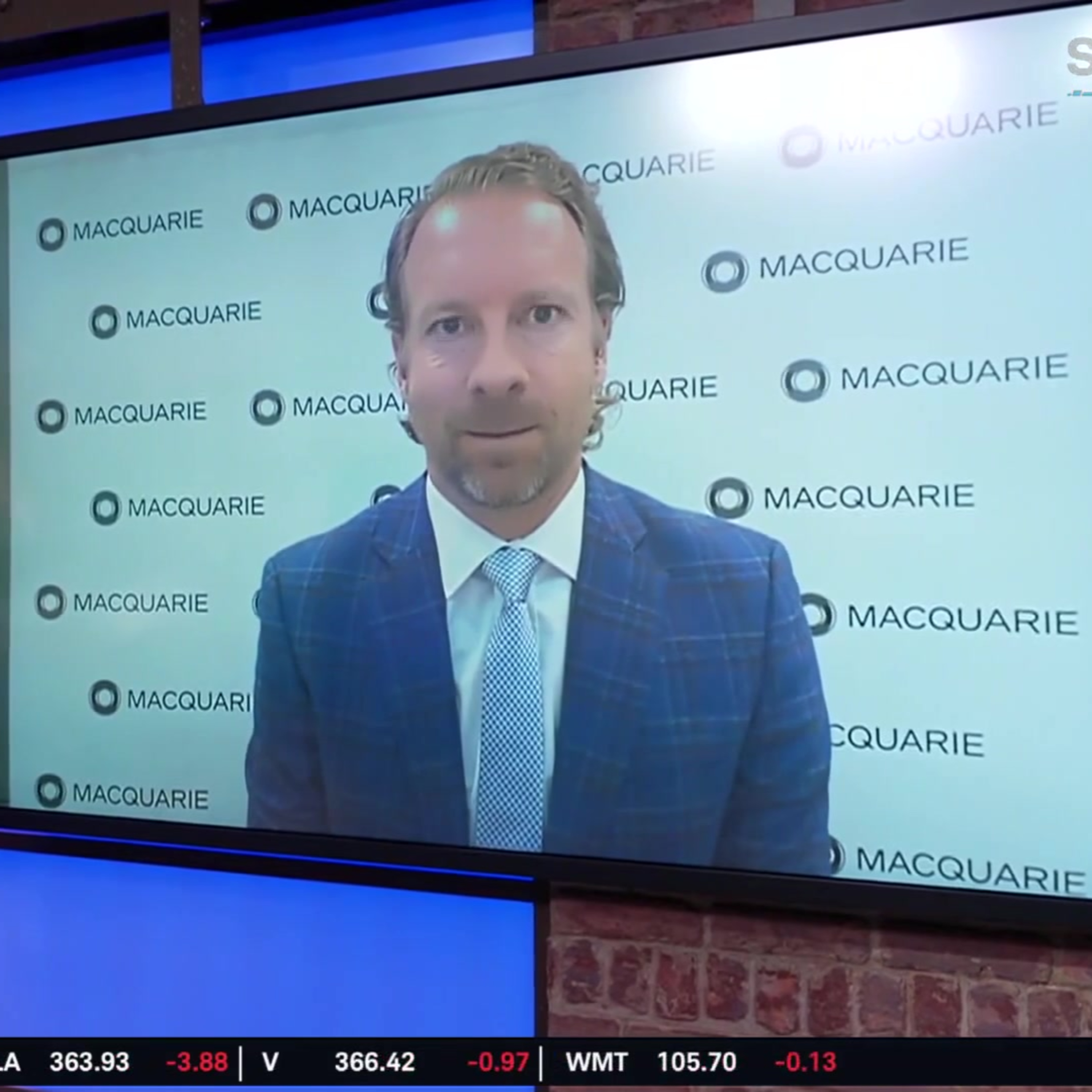
Macquarie Group's Chad Beynon highlights the industry's ability to buck historical trends, with August setting new revenue records and momentum projected to continue through year-end. He notes that streaming services like Netflix (NFLX) and Apple (AAPL) entering the market are contributing to a more robust slate of films, while Cinemark (CNK) and IMAX (IMAX) stand out as top picks.
======== Schwab Network ========
Empowering every investor and trader, every market day.
Subscribe to the Market Minute newsletter - https://schwabnetwork.com/subscribe
Download the iOS app - https://apps.apple.com/us/app/schwab-network/id1460719185
Download the Amazon Fire Tv App - https://www.amazon.com/TD-Ameritrade-Network/dp/B07KRD76C7
Watch on Sling - https://watch.sling.com/1/asset/191928615bd8d47686f94682aefaa007/watch
Watch on Vizio - https://www.vizio.com/en/watchfreeplus-explore
Watch on DistroTV - https://www.distro.tv/live/schwab-network/
Follow us on X – https://twitter.com/schwabnetwork
Follow us on Facebook – https://www.facebook.com/schwabnetwork
Follow us on LinkedIn - https://www.linkedin.com/company/schwab-network/
About Schwab Network - https://schwabnetwork.com/about
Get every episode summarized
Each time Schwab Network publishes, we email you a written briefing from the transcript — the topics, who appeared, and any specific claims, with the ad reads skipped.
Email me new episodesFree for 3 shows. No card needed.
Transcript ready
231 searchable segments. Every word is indexed and playable.
Full transcript
Schwab Network — Gen Z and a Content Backlog Fuel the Movie Theater Comeback. Machine-transcribed; use the interactive transcript above to jump the player to any line.
joining us now Chad Vine in the senior gaming, lodging and theaters analyst over at McCory. Chad great to have you on. Now I have always loved the movies, but I know that we saw a drop off in attendance. It does appear that we are having a much stronger year than expected though. So what is driving this change? What has changed in the movie business that's behind this recovery? Absolutely. Thanks for having me, Marley. Let's say it's two things. One is the content, right? So there was an actor strike, there was a Hollywood strike a few years ago, and that really delayed a lot of the content that was coming out. This was obviously a few years after the streaming wars and a lot of the content going to the home market. So one is just the overall availability of product that's out there. And then the second thing, and probably the more important one, is consumer demand. So we're seeing Gen Z, some of the younger age cohorts in the United States, go back to the theater, turn off their phone. I think the content that's out
there really speaks to them, and also speaks to other age groups. We've had movies obviously like Spider-Man, which is the second most successful movie all time. Still out at the movies, deliver exceptional results. You had Odyssey about a month ago, also toy story. So really wide variety of product and that should continue most importantly into 2027. Yeah, and August was a record month. I want to run these numbers. 1.3 billion in domestic ticket revenue. That was up 85% year over year. 23% above the previous August record. How much of that Chad is this blockbuster driven surge of these movies that were slightly delayed all coming out around the same time versus evidence that we are seeing these movie goers go back to the theater. Is there a way to break that down? Sure. The way that we analyze, you know, content here. We kind of look at the big block posters. Those are the ones that generate over $100 million. Some of these generate over hundreds
of millions of dollars domestically Spider-Man being over $900 million and Odyssey being almost 600 million. But then you have lots of good product that generated between 50 and 200 million in the US. So those are movies like obsession. And you know, some of these horror movies. So blockbusters are doing very well but there's also support in other areas which is really encouraging because the film rates for companies like Cinnamarca and AMC and for IMAX are actually slightly better for some of those smaller movies. And remember, you know, the movie auditoriums are fairly empty Monday through Thursday. So you just need additional product there and that's done really well. And then finally, I think movie going begets movie going. People are at the auditorium. They see the previews. They tell themselves, hey, this is actually a pretty good experience. Maybe this is better than watching
it at home. And then they think about more movies that are coming out in the near term blockbusters or smaller films. And Chad, you said you expect this momentum to continue into the end of the year. How important is the quality and the consistency of the release calendar to sustaining this recovery? It's very important and that goes back to your point on August strength. So historically, a lot of the block busters were released during several key time periods around Thanksgiving around Christmas, the June, July time period. And then there were months where some of the studios were just a little bit more hesitant in terms of pumping out some of some of that content. August, generally people are vacationing in the second half of August. They're at the beach. They're not necessarily in auditoriums, but this kind of buck the trend. But as we look out, I think, again, the variety of studios, Netflix getting into the market with a few movies, Apple getting into the market,
I think they're more willing to take some risks outside of the traditional risk-free delivery times. So the slate, you know, is definitely packed during the peak times, but also in some of these shoulder times. Anyone who's starting to watch the NFL, you'll see lots of horror movies that come out in September. September usually doesn't have big block busters, but that's been a genre that's really done well, particularly for younger audiences. And we'll see that in the next couple weeks. I don't think they're targeting my eight-year-old daughter, but she will be thrilled to hear it. She loves a good horror movie. As we look into the end of the year, when you're projecting a 10.3 billion in US box office revenue, that's up 19%. But I think it's important to note, that we're still almost 10% off 2019 pre-COVID levels. So what still needs to happen for the industry to get back to where we used to be, or may we never attend the movies how we used to? I think the analyst community has taken a conservative approach.
This is one of the first times in our recent note here that we've actually increased our estimates from what we projected. At the beginning of the year, there were some disappointing quarters that kind of led to overall misses for the year. So really encouraging to see that 2026 estimates are going higher and certainly the stocks year to date within the category are up on average 50%. I think to get back to that historic level, I would say the biggest thing is just the variety of content looking back over the past five years. There's always been one quarter where people decided not to go to the theater. But as we're looking out over the next five plus quarters, it does look pretty spaced out. So I would say spacing is very important. And we're back to 115 blockbusters per year. So it has been about seven years since we've been back to those levels.
So good commitment from the studio is good commitment from directors and certainly content for the exhibitors to showcase. So Chad, as we see the strong commitment, we see people coming back to the theaters, we see the estimates moving higher here. Who do you like in this space? Who's best position? The two stocks that we like the most here, both small cap, actually growth stocks right now. IMAX, which is more of a technology company, right? So they're not necessarily an exhibitor. They have projectors that showcase some of the best films for IMAX screens, local language. And then just kind of a higher quality, premium type of delivery, for instance, Odyssey was filmed with IMAX cameras. So that was the best experience. So IMAX is certainly one. The valuation on that has finally gotten back to what we saw about a decade ago when this was a growth stock. And IMAX is a global name. So we have a $55 price target on that name. Management Spoket conferences.
This week and actually previewed the third quarter. And I think estimates are above where the street is based on that. And then the second one that we like is Centemark, ticker CNK. Centemark is a traditional exhibitor generally outside of urban markets. They're kind of right outside of the bulls eye, very high margins, high service. And they were the leader in exhibition pre-pandemic. And they were getting back to that. And they used to pay a very hefty dividend in woodgrow units and would grow revenues in Ibadah. And I think they're kind of getting back to that. So those are the two names that we like the best in the space right now. Yeah, right outside of the urban area means a little bit less to do. And the movies probably look a little bit more desirable. But it doesn't stop me. My daughter wants to go to the movies this weekend. So I'll be there. I'm a contributor here. Chad, really appreciate you joining us to take a closer look at the box office and what we're seeing there. That was Chad Bynon, Senior Gaming Logging and Theaters Analyst at McCory. Thank you.
More episodes
More from Schwab Network

Stock Market Today: ORCL & ADBE Earnings, AEO Plunges Near 52-Week Low
Schwab Network

Thursday's Final Takeaways: Crude Taps $103 & PPI Hotter than Expected
Schwab Network

Balancing High-Conviction AI With High-Dividend Diversification
Schwab Network

EARNINGS PANEL: ORCL, ADBE
Schwab Network