About this episode
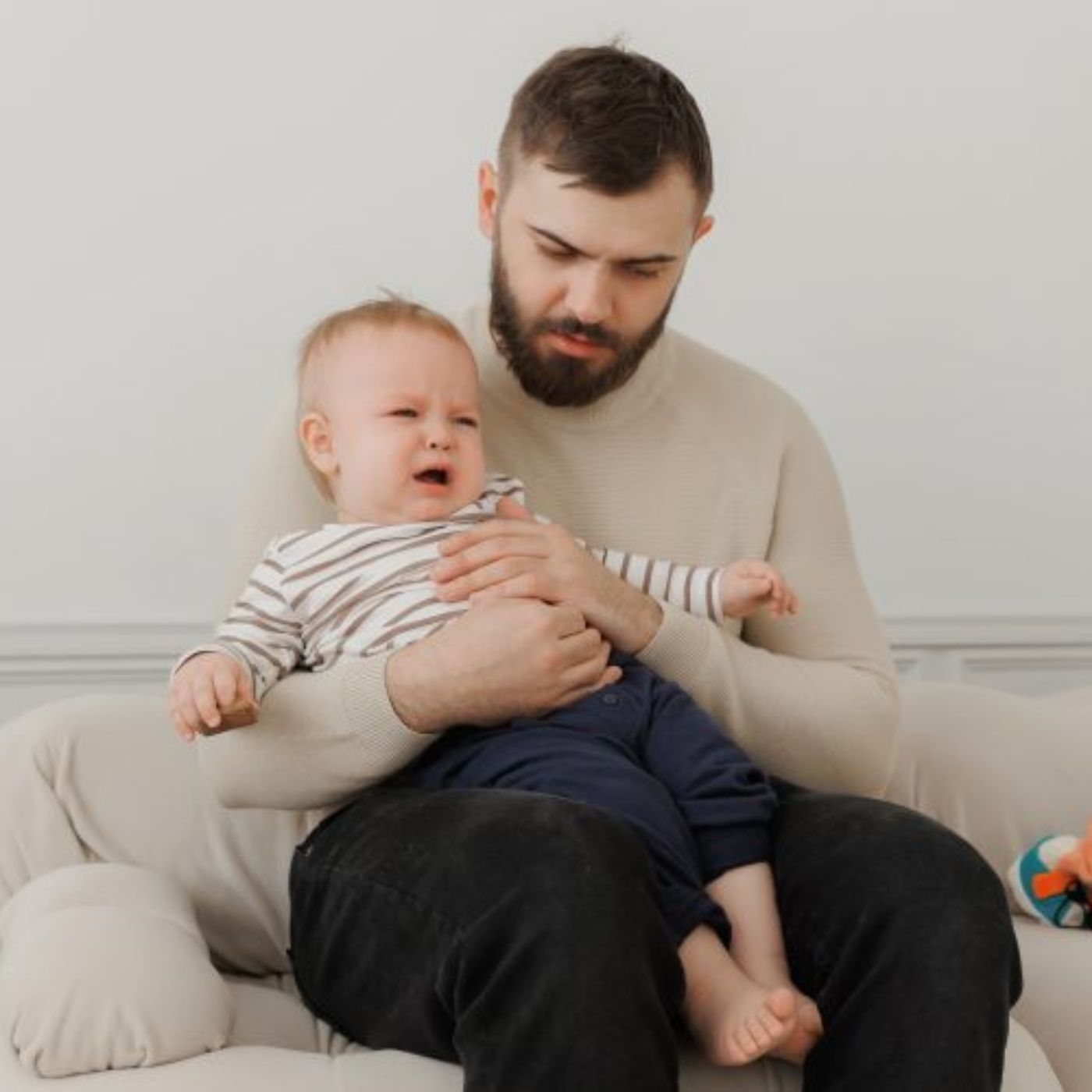
Gentle parenting indulges a child’s biggest emotions – and it’s wearing parents out. Monica Corcoran Harel is a journalist and screenwriter who covers culture and relationships. She joins host Krys Boyd to discuss her own path of gentle parenting — what she got right and what she says she realizes she did wrong — and why she feels it’s difficult to set boundaries for this method of parenting, which discourages old-fashioned authoritarian rule. Her article in The Cut is “‘Because I Said So … Please?’ My greatest fear is pushing my daughter away. Maybe I went too far to keep her close.”
Learn about your ad choices: dovetail.prx.org/ad-choicesGet every episode summarized
Each time Think from KERA publishes, we email you a written briefing from the transcript — the topics, who appeared, and any specific claims, with the ad reads skipped.
Email me new episodesFree for 3 shows. No card needed.
Hosts & guests
Transcript ready
390 searchable segments. Every word is indexed and playable.
Full transcript
Think from KERA — Gentle parenting is rough for moms and dads. Machine-transcribed; use the interactive transcript above to jump the player to any line.
This episode is brought to you by Progressive Insurance. Fiscally responsible, financial geniuses, monetary magicians. These are things people say about drivers who switch their car insurance to progressive and save hundreds. Visit progressive.com to see if you could save. Progressive casualty insurance company and affiliates, potential savings will vary, not available in all states or situations. Funding for the Think Podcast comes from WISE, an app for people using money around the globe. With the WISE account you can send, spend and receive in up to 40 currencies. You can download the WISE app or learn more at WISE.com, terms and conditions apply. It's entirely possible to love your parents and to want to avoid the mistakes they made raising you. Adults who look back on their early lives and think they were misunderstood,
punished too much or supported too little might think there has to be a better way. So many 21st century moms and dads hoping to be better at child rearing than their own parents are embracing the philosophy known as gentle parenting. From KERA in Dallas, this is Think. I'm Chris Boyd. Whereas old school parenting tried to teach appropriate behavior using rewards and punishments, gentle parenting seeks to be less transactional, encouraging adults to prioritize empathy, respect and understanding for their children with natural consequences rather than arbitrary punitive measures. The idea is that children raise this way will develop into empathetic, respectful understanding people themselves, learning to regulate their own emotions and behavior and recognize appropriate social boundaries. But some families find that committing to exclusively gentle methods of correcting and guiding children can prove very, very rough on adults. Monica Corcoran-Harell has experienced this first hand.
She's a journalist and screenwriter who covers culture and relationships and she is mother to a gently parented teenager. Her recent article for the cut is titled, because I said so, please, my greatest fear is pushing my daughter away. Maybe I went too far to keep her close. Monica, welcome to Think. Thank you so much. I'm happy to be here. And I just want to say, I don't know how many rewards I received from my little parents. Yeah, but lots of punishment. Yeah, yeah, no, I can relate. What does gentle parenting look like day to day? That's an interesting question and it causes a lot of confusion, which I mentioned in my article. But in essence, gentle parenting is being incredibly empathetic towards your child, indulging big feelings. Let's say your kid doesn't want to leave the playground. Instead of saying it's time to go, you kneel down in front of her and say, we have to go. She doesn't want to go five minutes later.
You go back and say we have to go five minutes later. And this is repeated on and on and on. It is really letting kids feel their big emotions in. Oh, God, how do I put this just in every possible way and indulging them? And I know that sounds like not good parenting. And I just want to say qualify this with I'm not a good gentle parent apparently, which I found out in the comments. After I wrote this article and I agree with a lot of them. One of the big parts of gentle parenting according to advocates is that you do enforce boundaries. And I think the conflict that arises is that when you're indulging these big feelings, it's hard to enforce boundaries. Those two objectives collide. Yeah, because big feelings are not necessarily very interested in feeling any boundaries at the time.
And if you're trying to respect those feelings, I guess it's hard to know when to sort of step in and say, okay, enough. Now we need to do X. Yes, exactly. And big feelings take a long time to unpack. And then sometimes because gentle parents are trying so hard to empathize, those they take on those big feelings. And so now you've got two sets of big feelings. And again, time consuming and often confusing. And I'm speaking for myself here. Yeah, you know, you mentioned we should get to this right off the top. You mentioned that the comments to your article were telling you like, well, you're not doing it right. I mean, there is a whole lot of judgment in the parenting sphere these days. You know, there really is. And I was thinking about this recently. It's a double edged sword. I mean, it's insulting and judgmental. And I don't think parents always know what other parents are going through. Some of us might be juggling, caring for our kids with an aging parent.
Some of us may have just lost our job. But at the same time, I do think it's good that people care about the welfare of children. And it's mostly women. So I like to look at the upside of this judgment and think that we collectively care about the next generation. It just doesn't always come out the right way if that makes sense. You, by the way, for the record, dads don't judge. Huh, really? I know I'm generalizing, but if you look at the comments, and I actually parse this morning, and there weren't any comments from men that I could decipher, it is mostly mom's terrain. Why do you think that is? I think it's because moms do the bulk of the caretaking. I think it's because moms buy the parenting books and moms. I don't know that I would say they're trying harder.
Dad would probably say we're trying really hard to, but moms make it more of a priority. And I think they also judge themselves more than dads do. I spoke with one of the researchers who done a study on gentle parenting. And she was saying that moms are so stressed out. And they don't know if they're doing right, doing it right. Meanwhile, the men that they interviewed felt like they were doing a good job. So I think that's pretty indicative of why women are more judgmental than men. What sort of vision did you have of life as a parent before you were a parent? I'm low to say I didn't have a mission, but I don't know that I did. Because when I look back, my parents were not great at parenting. And I would ascribe that to the generation. There was a lot of neglectful parenting going on during that time. And my parents weren't particularly happy together.
So that led into their behavior as parents. So I think for me, my vision was to have my role as a parent and my child's role as a child to be better. I wanted to be a better parent. So that's what led me to be a gentle parent. I course corrected too much. Everything that my parents might have done, I did differently. And that's what landed me where I am. I also want to add that I'm not so unhappy with where I am. I wish I had done things better. I wish I'd enforce more boundaries. But I don't have huge living regrets about my parenting style. I am doing my best. It's also really clear that you love your daughter very much. Like we can find our kids' behaviors, frustrating or the dynamics that we've set up with them to be challenging. That doesn't have anything to do with how you feel about the person who you gave birth to.
That's so true. I love my daughter so much. I mentioned in the article that my husband and I endured three trials of IVF. And that was 15 years ago. It's become easier now and less expensive. But it was really emotionally taxing. And it was heartbreaking to not be able to get a heart want as opposed to a material want. We didn't want a big house. We wanted a child. And so I feel like I probably have placed not expectations on my daughter. But you know, she's the only one I have. And she was so hard one that maybe I'm softer as a result of it because I almost didn't get her. Starting out, you thought, OK, parenting should be not an authoritarian state, but a democracy. How does gentle parenting broadly attempt to do this? I would say that because the parent is so connected to a child's emotions.
I mean, the child has a voice, right? And we have a voice in a democracy as opposed to, you know, having parents who are authoritative and or authoritarians and tyrannical. So just in the sheer fact that children have a say makes it a democracy. And again, sometimes they have too much say. And that comes up a lot, you know, parents who don't say no to their kids or maybe consider their wants too meaningfully. There's no shortage of influencers talking about gentle parenting and how to do it. And maybe some of them responded in the comments to your article. Is there a lot of like clinical scientific evidence that this works or are proponents largely relying on kind of a sense of how it ought to work logically? It's so interesting social media loves gentle parenting. And when you look back, the woman who for the most part like originated it and started this movement was is not a child psychologist.
She's an author. I think she studied some child psychology. She's in London. And she's since written I think 18 books, you know, she's got like the gentle potty training book. The gentle go to sleep book. I mean, at some point she'll probably have like the gentle get married book. I mean, she's really ridden this movement and social media just eats it up. I think in part because it's somewhat confusing and so many people are looking for guidance. So influencers love to offer tips. I mean, that's how they get followers. And so gentle parenting much like, you know, fashion is one of those areas where people are looking for guidance and suggestions and gentle parenting is right for that. For you, the infant stage as challenging as it is for every parent of an infant. It was pretty straightforward, right? You keep your daughter safe and alive. What changed as she got a little older and started to really kind of interact and express her will?
Yes, everything was I would say pretty easy. I mean, keeping her alive. And then as she got to be a toddler, I think we handled tantrums pretty well. And I actually think my husband and I to our credit did enforce boundaries. It was when she turned 10 that things went south in a lot of ways. My daughter went into puberty and she's actually since been diagnosed as neurodivergent. She's on the spectrum. And I think that triggered something in her brain chemically. So she was dealing with, you know, the depression, the onslaught of feelings that come with hormones at the age of 10. And then I think her autism was becoming more heightened. Subsequently, she became very depressed. I mean, I could pride just thinking about what must have been going through her head during that time because she was so confused.
And my husband and I became really afraid. She was drew to the point where, you know, she would hide under her desk in her room. She wouldn't even make eye contact with us at the dinner table. Never mind the social anxiety. She felt outside of the house. And this was during COVID. So every kid was screwed up in some way or another. I mean, everyone was dealing with this and we did not realize at that time that she was neurodivergent. So my husband and I just kind of all, I guess it was like all bets are off. We let her be on her screen more. We didn't enforce, you know, boundaries like you have to do chores. We just walked on eggshells around her. And I'm not proud of that, but it really did come from a place of terror. We were afraid she might hurt herself. And then at the age of 14, she was diagnosed and we got so much clarity around her behavior as did she.
And at that point, she was a teenager. So I don't think my husband and I knew how to reverse the laxity or the lax environment we created for her. Did you talk to her about that about being gentle parents? About what boundaries? Yeah, about, you know, maybe we need some, we need to go back to the era of boundaries. Chris, we have talked to her a few times about that. And you know, she agrees. I sound terrible. I sound like a terrible parent. No, you don't. She agrees, you know, she's asked about chores. And then we give them to her and then she doesn't do them. And I guess we should ground her. We don't. I should probably have another conversation with her about it. I feel like I'm going to come away from this conversation, maybe a less gentle parent. You mentioned, and it's understandable the terror that you and your husband felt when your daughter was struggling on a variety of levels.
It was the pandemic. She was depressed. You didn't know yet that she was neurodivergent. So you sort of stop down and pull back on the rules. You also have, from your family of origin, some real concerns about a strangement. Will you talk about that? So everyone's talking about no contact now. Largely in part because of what's happening with the Beckham family, you know, Victoria and dated Beckham are not speaking with their son Brooklyn. And he actually initiated this no contact enforcement. My family has been practicing no contact for as long as I can remember. And, you know, I recently wrote an article about women quietly quitting their husbands. And in that article, I talked about how my mom and dad, my mom did not speak to my dad for an entire year when I was a kid. And I remember this, Chris. I remember it's so vividly sitting at the dinner table and my mom sort of nudging me to get the salt or the bread.
She would not even look at my father. She would do a year later. And this is in her words, not just my memory. When she, he finally said to her, what's wrong? And he, he didn't even realize that she hadn't spoken with him for an entire year. It sounds unbelievable, but it's still happening, which is what I learned in this article. But getting back to no contact within my family, you know, I guess my parents modeled that, right? You just don't talk to each other when you have an issue instead of confronting it. And so my mom's credit. I know she tried with my dad and it didn't work. So that's a whole nother story. But as we got older, that became our, I guess our model of communication, which is to shut down and just cut someone out of our lives. And throughout our lives, you know, there was a time where my brother and sister didn't talk. My sister and my mom didn't talk. I didn't talk to my dad for a while. He's now passed away as has my brother.
So now it's just the three of us, my mom, my sister and I. And I had to tell you, I'm a middle child. I am always trying to keep us in contact. When they weren't talking for a while, I kind of brokered this breakthrough where they came back together. But I'm used to no contact. And it doesn't work. Obviously, it just builds resentment. And it's really hard to come back to someone after you become estranged. I mean, that's a lot of context. And it certainly explains why you might be reluctant to, you know, do anything that might push your daughter away. It has occurred to you that if like today's generation of parents, you know, have, have worried about being too harsh that tomorrow's generation of kids, you know, the people who are eventually going to be the next generation of adults,
you think maybe they'll resent parents for having been too much in their way, too much in their business. Talk about that. Did you say I spoke with some Gen Ziers, a few who were at college. And I also spoke to some managers who work with them. But let's talk about these 20 somethings. Yes, they agree that their parents could have enforced more boundaries. One girl at college said to me, or young woman said, I wish my parents had taught me how to clean a bathroom. I don't know how to clean the bathroom. On the flip side, a lot of them were really close to their parents. They talked to their parents daily, weekly, and a lot of college students anticipate moving back home because of the dismal job market. And they weren't dreading this, which I thought was so beautiful. I mean, when I was in college, the idea of moving back into my parents house, I mean, I don't know what I would have done.
But these kids, students, young adults have great relationships with their parents. So I didn't talk to children or young adults who had been gentle parented and felt like helpless in the world. In fact, one of them said to me, you know, my parents didn't enforce a lot of rules and boundaries. Hence, I didn't have to rebel. And I had a great relationship with them. Yeah, that doesn't sound terrible at all. Your own daughter said, yeah, maybe I'll have to move back in after I finish school. And I wouldn't hate it because you and dad and I get along just fine. And in my opinion, that is most important. Having a close relationship with my daughter, and I mentioned the piece that, you know, depression is on the rise for young people suicide rates are so
horrifying. And to know that my daughter feels comfortable enough with me and her father to talk to us about how she feels emotionally to share her emotions. And she has told us, you know, at times, I don't feel good. I'm a little scared about how I feel. Had I felt that way as a kid and maybe I even did, I would never have gone to my parents. I would have run to my little diary and probably scribbled something down and then for the pages up in a rage. This is really interesting. You've talked to your mom a little bit about this. And she said, well, I never really worry that you wouldn't be okay because kids are resilient. Did she, I mean, was that about you specifically? Do you think our were parents of that generation just more likely to assume things would just turn out fine? My mom was not alone. I think that was the prevailing sentiment among parents of her generation. You know, that was the time of play pens. Just put a kid in the play pen for hours or send your children outside in the morning and don't let them back in the house until just.
I live like that and I really enjoyed it. And as much as I love my mom, she's wrong. My brother, my brother was an alcoholic. He died on the streets alone. And I don't blame my mom or my dad entirely, but I think his childhood and they're not recognizing that he had some mental health issues contributed to his really tragic demise. And again, I just want to say that that then like people weren't taking their kids to therapy. Kids didn't know how to say, oh, I feel anxious. I have social anxiety. I mean, that wasn't part of our lexicon. So I think a lot of kids slipped through the cracks and my brother was one of them. If your eyes are the windows to your soul and your glasses are the windows to your eyes, then it's pretty important to find your perfect frames. That's why at Warby Parker, we've made shopping for eyewear as easy and fun as can be.
Peru's endless styles in our stores or use our app to virtually try on frames and get personalized recommendations to find your next favorite pair of glasses, sunglasses or contact lenses or to locate your nearest Warby Parker store, head over to WarbyParker.com. That's WarbyParker.com. Gentle parenting makes really good sense that you want to not just sort of validate children's feelings, but allow them to feel like those feelings are normal and sort of help them through them. But there's also like nobody feels like doing chores or taking out the trash. I'm sure you often don't feel like it, but you don't feel like you get a choice. Talk a little bit about how choice functions with your daughter when it comes to doing things that need to get done in a household. My daughter tests is a really great committed engaged student and she attends a pretty competitive high school.
Sometimes she wakes up at six o'clock in the morning to study for a test that day. I was not that student and my husband and I have talked about the fact that her room is a mess and we ride her about it. But ultimately, I prized the effort she puts into her studies more than, you know, bringing dishes out to the kitchen or making her bed. So I guess it's a bit of a trade off and that's the way we look at it. We pull back and look at what she's doing. The choice is that she's making that we not just approve of. We applaud. My closet's a mess. So I feel like a hypocrite telling my daughter she has to clean her room. I don't think that's something my mom ever would have admitted. It would have been like, well, you have to clean your room because they said so. And if I said, yeah, but your bathroom's a mess, she would say, so what? None of your business.
So there are these choices that every parent has to make about, you know, like picking battles, right? Like for some parents, it might be non-negotiable that the bathroom is clean or a bedroom is clean and for other parents, it might be schoolwork or something else. I mean, no matter how you parent, they're going to be things you focus on and things that you don't. Yeah. Yes. And because my daughter is neurodivergent, we encourage her to focus on her emotional needs. And she's actually really excelled at self regulating. She knows that she has to exercise to minimize her anxiety. She knows there are certain routines that work for her. She knows that when she gets ready to go out, if her hair doesn't look right or her clothes don't feel right, she will spiral and she can't get out of it. So for us, the non-negotiable, I guess, is take care of yourself because you're going to be neurodivergent for the rest of your life. And you will acclimate and assimilate better, but make that your priority.
I feel like that is very empowering for her more so than emptying the dishwasher. I think a lot of modern parents are comfortable with being the kind of safe space, right, where if their kids are overwhelmed, maybe they don't misbehave outside the house, but they can sort of let loose with mom and dad. On the one hand, that's maybe helpful to the child. It's a lot for parents, though. And you write about the fact that a lot of parents in this generation are pretty burned out. Oh, they are so burned out so much so that the Surgeon General's office issued an advisory. I think it was 36 pages in 2024. And it really just focused on how stressed out parents are. And it's particularly difficult for gentle parents because they feel even more stressed out because there's so much confusion.
I think we're at a time now where whether it's driven by COVID or I mentioned my article gun violence, I mean, this, the pressures to perform to get into college or get a job or whatever your next step is, whatever milestone. I mean, all this isn't contributing to parents feeling responsible for their children's comfort and ease in the world. And I think that is in fact, where gentle parenting is not as effective because I know myself, I'm constantly moving discomfort out of my daughter's way. And she's going to encounter a lot of discomfort in the world. So that is where gentle parenting is probably hurting our kids. You mentioned, you know, feeling some confusion about exactly how to get things right, Monica, you share that, you know, some of this comes as a surprise to you because you don't lack confidence in other aspects of your life.
Like in social and professional settings, you don't struggle to advocate for yourself or to make tough decisions. What do you think feels different about parenting and the decision making required there? I don't want to screw up as a parent. I feel like it is the most important job I've had. It's also a job that is constantly changing, you know, you get a job in the world and you have a job description and you know the deliverables that you're responsible for. Parenting changes with each phase as a child grows up, you know, obviously the infant years are different from the toddler years, the teen years. So I think for me, it's such a big job that's constantly evolving. Meanwhile, I have a career. I have a mom that lives nearby me. It's it's overwhelming, but I don't want to be a bad mom. And I want to say, I do not believe in mom guilt. I think it's a narrative that a lot of women's magazines love to push and I used to write or and I still do women's magazines, but when I interviewed celebrities, the one question my editor would always say, don't forget to ask her about mom guilt.
Always choking the mom guilt, like movement. And you know, finally, at one point, I remember once I became a parent, because I was asking these questions before I even was a parent. I was like, I'm not asking about mom guilt anymore. In fact, I reframe the question to say, you don't feel mom guilt. So you do really believe in mom guilt. So maybe I flip the narrative a little bit. I don't know, but I really I want to do great at this job. I refuse to feel guilty because I try so hard, but the stakes are incredibly high. What do you see as the difference between mom guilt and second guessing your choices? That's such an interesting question. I think mom guilt follows second guessing in that, you know, we as women are maternal we're natural caretakers. And I think this is why it's harder for women than men. We expect ourselves to know how to parent, even though there's no reason that we really should. I mean, we have maternal instincts.
But beyond that, that doesn't mean we know how to handle difficult situations or rebellion. So I think that we tend to feel mom guilt after second guessing. And the mom guilt is less about how other people judge us. But more about, why can't I just do this? And I made a point in that article in essence saying, I thought parenting would be easy. I got slaughtered in the comments for that too. But I guess I just thought as a woman, I've been getting my period for untold years. Isn't this what I have inside of me? When I program to do this, I don't mean that in an anti this way, but like, isn't there something inside of me that already knows how to do this? Because I'm somewhat responsible for procreation. Didn't I evolve to have the know how as well? I didn't, I didn't involve. It's learned. I think there are some, I think you can trust your instincts to a certain degree. But now with social media and again, these depression rates, I think parenting and the competitiveness for kids to excel later on in life.
I think parenting has become a whole new ball game. I'm listening to Monica talking about, you know, this sense that you want to get everything right. And, you know, weren't you shouldn't, shouldn't have been easy. And I think, you know, it's easy to feel that way for all of us, maybe before we ever have children. It makes me think of like the one piece of advice that maybe people would still wholeheartedly take from Dr. Spock, who encouraged parents, you know, just trust yourself, you know more than you think you know. It's just that the broader culture tells you don't trust yourself. You don't know anything. Follow my 20 step plan for getting it right. That is so true. Whether it's parenting books or all of the mom influencers out there, there are people telling you what to do. And, you know, it's so interesting when Dr. Spock came out with that book, it was in 1946 and it sold a half million copies within six months. I mean, people were craving this advice.
And after I said what I said about not trusting myself, I thought about, you know, what Dr. Spock said, you know more than you think you do. We do. We just don't trust what we know. And I even interviewed a woman, a mom in the article, working mom, who talked about how she furiously texts with her friends. Well, what would you do if my daughter said this or how would you handle this? And they all go back and forth. And I asked her, do you remember your mom seeking advice from her friends when you were growing up? And she said, absolutely not. My mom never asked her friends. She trusted herself. And this woman does trust herself at times. So I don't want to say that she never trust her instincts. But for the most part, we turn to other people. How do you handle it? And listen, I'm not assuming that your teenagers any different than mine were at the same age. How do you handle it when your daughter hurts your feelings?
When she hurts my feeling, yeah, I take it so personally, and I have to tell you, I am a woman in midlife and 57 years old. I don't take anything personally. You have to slap me in the face for me to feel like it's a personal slight. But with my daughter, she can make me cry so fast. I don't know why she has this power, but I take everything personally. And when she hurts my feelings, I now tell her for a long time, I didn't, because maybe I didn't want her to know that she had that power. And I finally realized I needed to be really upfront with her and just say, he let that really upset me. It really cut me deep. And I need a little more grace. And I've often said to her, I don't always know what I'm doing, which is something my mother never said to me. And I wish she had. We could have commiserated over that and empathized with each other.
But I do tell my daughter when she's hurt my feelings and she will apologize. Sometimes she will say to me, it's not about you. That's really interesting because it's going to feel like it's about you. Yes, but when I dig deeper, my daughter is not an oracle, but she's often right. Something that she has said may trigger a former wound of mine, or I think of it as a reflection of my parenting. And sometimes it's just an observation. And I read into it too much. Now other times she can be incredibly hurtful too. But I make it really clear to her that she can't insult me or hurt my feelings in that way. I really do that is where I take a stand. And thankfully she does not engage in that kind of behavior very often.
There are still lots of people preaching the kind of gospel of gentle parenting online and advice books. You have realized though you're not the only gentle parent wondering if it's all working precisely the way it was supposed to. Tell us about the sort of survey that you did of the landscape of people who have incorporated these practices into their parenting. Well, so many people I talked to who were gentle parenting were fumbling, but I will say to their credit they have a sense of humor about it. But they did ultimately admit that they wish they could be more authoritative. And it's fascinating that apparently within or among millennials three out of four of them are currently gentle parenting. And I have to imagine they're probably pretty exhausted. That is one of the outcomes that I heard echoed over and over again. Parents feeling tired because they haven't enforced boundaries. And so now either they're having to do the things they ask their kids to do themselves or they're trying to enforce boundaries later on in life.
So my kids are about a decade older than yours. So gentle parenting wasn't really part of the zeitgeist at the time. The framework that I was given was authoritarian, which is like my way or the highway parenting, authoritative, which is about gentle firm boundaries and then permissive, which is like spare the rod and spoil the child if it's the 19th century. Where does gentle parenting is it closer to authoritative parenting? Do you think or is it closer to permissive parenting? It is closer to permissive parenting in my opinion. I think that gentle parents will tell you that it's Matt Gab in the middle of authoritative and permissive. But I do think it's really easy to slide into permissive parenting, which is what happens to a lot of us. I think people who are gentle parenting and enforcing boundaries and maybe capping a limit on indulging big feelings are feeling better about how they're parenting.
But once you slide into that permissive parenting, it becomes a free for all for both kids and parents. So I would say permissive parenting is probably its closest cousin. So permissive authoritarian and authoritative parent parenting, those different styles were identified by a developmental, developmental psychologist named Diana bomber and at Stanford back in the mid 60s. And what she said was just for the record, permissive parents like kids do what they want, authoritarian parents, you know, operate like drill sergeants, my way or the highway. And then authoritative parents encourage and they empathize that they also enforce boundaries. If, you know, modern parenting is basically a story of a swinging pendulum to the extent that like every generation seeks to avoid repeating whatever their parents mistakes are.
I mean, that is certainly admirable, but I think it's also a reminder that parenting cannot be done without some mistakes. There has never been a parent who did absolutely everything right for the specific individual human their child was. Right. And I absolutely agree. I think where we tend to really have issues is when we try to pick a parenting style and stick with it without acknowledging that it doesn't work for our child. I mean, one child may be best or may may thrive best when you're more permissive. Another child may thrive more with, you know, firmer boundaries, but, you know, we're a culture that wants to know how to do things right away. I think the internet has made it so that, you know, we can Google a million different things and try and figure something out.
And so a lot of times we adhere to a parenting style that works for us and not necessarily for our kids. And I feel for parents because in addition to being parents, we're juggling so many other aspects of life, you know. So we want to make it at least economical, if not easy as we start to parent. Does that make sense? It does. It does. But I was going to say, I admire your candor in writing this essay. I admire the candor of any parent who writes about the struggles of it because my goodness, there are lots of people who are going to swoop in and tell you precisely what you're doing wrong and how you should fix it and why they're getting it all correct. Did you worry at all about putting this out into the world and having people not fully understand the nuances of all this? I did.
I'm warning this article was posting, I woke up with like a feeling in my guts, sort of like, uh oh, I'm going to get roasted like a marshmallow in the comments. But as the day went on and I did check the comments over and over again and I defended myself a few times and my daughter, I realized, I think I'm doing a good job. And yes, my parenting style is flawed and just as I'm flawed as a human and a mom and a wife and a friend. But I have a good relationship with my daughter and most importantly, I am trying. I try harder at parenting than I have probably at any other job I've had in my career. Do you ever just want to try a little less? Yes, I do. And sometimes I do, I do afford myself that grace, but I am always thinking about my daughter and checking in with her.
I mean, moms have this like psychic connection with their kids, you know, even when they're not around, I feel her omnipresent in my mind. So yeah, I think I could use to disengage every now and again. I mean, my daughter's favorite expression toward me is back off. And I don't like it, but there is more than a kernel of truth than that. You mentioned Monica and I think this is probably accurate that that fathers feel less angst over whatever parenting style they choose. And you've been so candid that I hope that you'll indulge this question if you don't want to answer it, it's fine. But are you and your husband always on the same page about the value of gentle parenting? No, we are not. However, I will say that sometimes my husband is more of a gentle parent than I am. I think he, like me, tries really hard to be a good dad.
I see it and I so appreciate it. My husband is really involved in supporting my daughter in all different ways, whether it's driving her somewhere, sitting down and helping with her homework, he's so different from the way my dad was. My dad went to work, came home, sat down with the newspaper, and we really didn't engage with him very much. I don't know that my dad ever asked me about my homework. So my husband can be more of a gentle parent and then I can be more of a gentle parent, but we're actually pretty aligned. I think that comes from again, my daughter being depressed and so it comes from fear. My husband and I do not have a power struggle as parents, which is something I heard from a lot of parents, they interviewed for this article. You know, mom will be the enforcer, then dad will be the enforcer. My husband and I really do work as a team. So even though there are some variations, I think we're pretty well aligned in the way we parent.
I don't know that he'd want to be called a gentle parent though. We haven't talked about it that way. At the end of the piece, you share that your daughter told you she feels like you and your husband are doing a good job of raising her, which has to be gratifying. She also said she might try to be a very similar sort of parent. Would you give her a different advice? I would tell my daughter to enforce more boundaries and to parent with faith and not fear. A lot of my parenting style has come out of being afraid, being afraid of my daughter's mental health, maybe being afraid of not being a good parent, being afraid of her not liking me. And I would tell her, think faith, not fear. You're doing a good job and enforce boundaries. Don't be afraid of your daughter or your son going no contact because you made her clean her room.
Don't be afraid of her mental health unless you see tremendous warning signs. But trust that kids to my mom's credit are for the most part resilient, I think with some exceptions. So that would be my bottom line advice for her. Dr. Spock said, trust yourself more. Monica Corcoran-Harell is a journalist and screenwriter who covers culture and relationships. Her recent article for the cut was titled, because I said so, please, my greatest fear is pushing my daughter away. Maybe I went too far to keep her close. Monica, this has been really interesting. Thank you for making time to talk. Thank you so much. I really enjoy talking about it. Think is distributed by PRX, the public radio exchange. Find us on Facebook, Instagram, anywhere you get podcasts, and at think.kera.org. Again, I'm Chris Boyd. Thanks for listening. Have a great day.
See you next time. Bye.
More episodes
More from Think from KERA

Is al-Qaeda functionally dead — or just dormant?
Think from KERA

Europe isn’t built for the heat
Think from KERA

Some dementia patients ‘come back’ at the very end
Think from KERA

Do we still need post-9/11 surveillance?
Think from KERA