About this episode
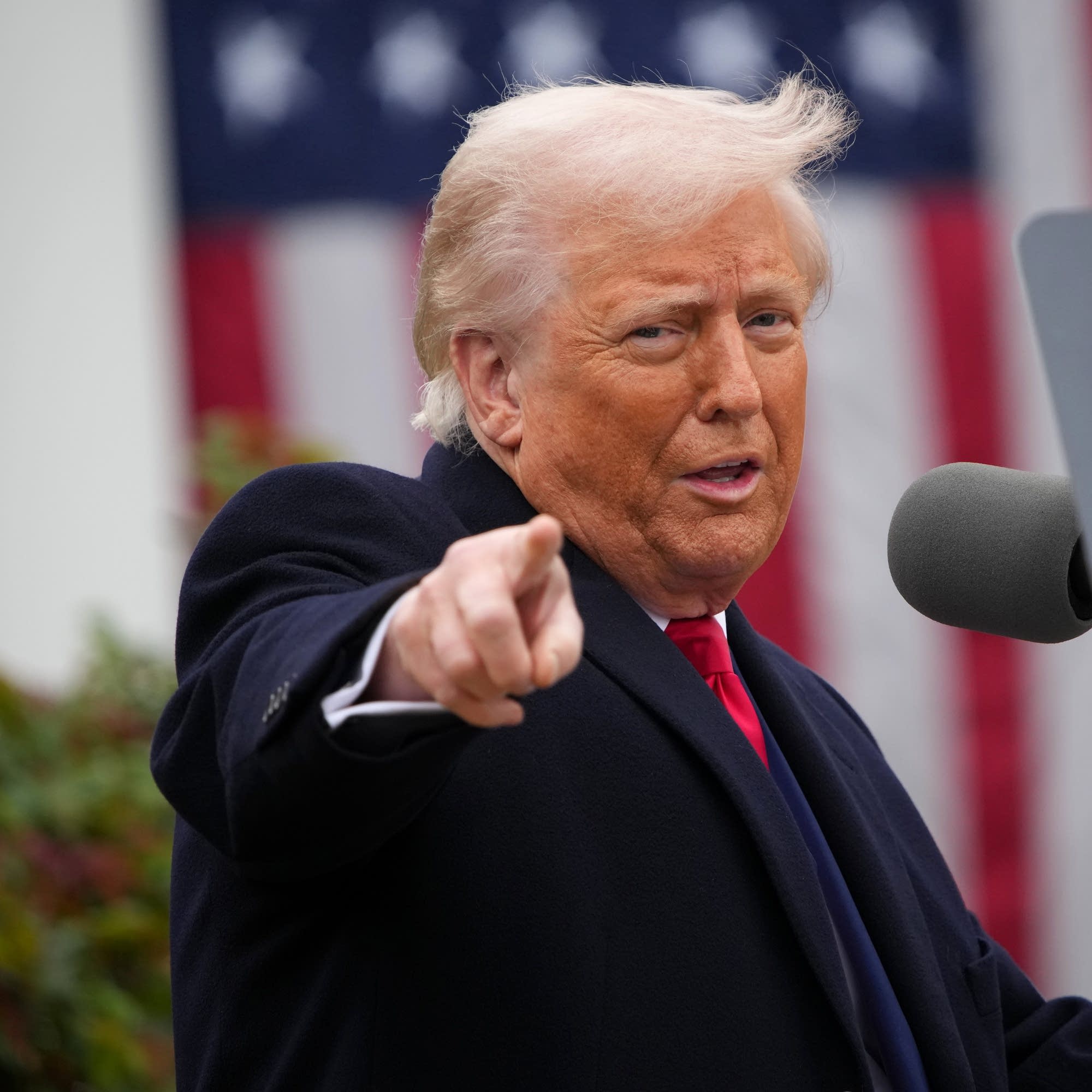
Thursday marks one year since President Trump announced sweeping tariffs on basically all imported goods — how time flies! The name of the game was uncertainty: U.S. small businesses pivoted from growth plans to stay-afloat plans, consumers grew gloomy but kept spending, and the U.S. manufacturing sector shed jobs. All while the rest of the world sorta shrugged and moved on. In this episode, we reflect on the year of the tariff.
Every story has an economic angle. Want some in your inbox? Subscribe to our daily or weekly newsletter.
Marketplace is more than a radio show. Check out our original reporting and financial literacy content at marketplace.org — and consider making an investment in our future.
Get every episode summarized
Each time Marketplace publishes, we email you a written briefing from the transcript — the topics, who appeared, and any specific claims, with the ad reads skipped.
Email me new episodesFree for 3 shows. No card needed.
Hosts & guests


Transcript ready
352 searchable segments. Every word is indexed and playable.
Full transcript
Marketplace — Happy Liberation-Day-tariff-palooza-versary. Machine-transcribed; use the interactive transcript above to jump the player to any line.
This is one of those days, gang, where there is all kinds of other news, but I'm obliged to remind you as always, economy doesn't just stop, you know, from American public media. This is Marketplace. In Los Angeles, I'm Kyle Rizdal. It is Wednesday. Today, this one is the first day of April, it is always to have you along, everybody. Well, let's see, there was that Supreme Court oral argument this morning, there's a rocket going to the moon this afternoon, and a speech by the president tonight signifying nobody knows quite what just yet about the war. So while we wait for things to play out, we here are going to stick to our knitting, and we are going to do it with an eye on the calendar. Tomorrow makes it a year to the day since president Trump decided he was going to tariff
goods from just about every country on the planet, including, and I am not making this up, a colony of penguins near Antarctica. The Supreme Court, as you know, said the president couldn't do tariffs the way he wanted to do tariffs. So the White House is and has been working hard to find new ways to tax Americans for the imported products that they buy. Other countries, meanwhile, as if we needed another reminder that incentives matter, other countries have been turning away from the United States and toward each other. Marketplace is a pre-benicure, gets us going with that. Well, well, well, how time flies when you've been throwing global supply chains into chaos. It really has been a crazy year. Ted Murphy is a partner at law firm, Sidley Austin. While the US has been putting up its own tariff walls, other countries have been tearing down theirs. And we see it almost every day now, where new negotiations or new agreements are being reached without the United States.
Malaysia signed a trade agreement with the UAE. The UK signed one with almost the entire Pacific Rim. Europe has been on a free trade rampage. Finalizing its deal with the Latin American block, then inking a deal with India and just this week signing another agreement with Australia. That Linsecombe is VP of Econ and Trade at the Cato Institute. Now you may be thinking, oh, well, the US has signed a bunch of deals, too. Yes, but those deals are very different. For starters, they're not very detailed. Ambiguities mean uncertainty a vague deal with just a few broad terms. Like Europe has to pay a 15% tariff, but maybe not. On pharmaceuticals, we'll deal with that later. Really hides tons of devils in the lack of details. Businesses don't like that. Also, the US tariffs aren't approved by Congress, so they can change literally at any time. The US deals are not in any way binding. Jennifer Hillman is a professor at Georgetown Law.
So other countries' trade agreements have brought their companies certainty. The US agreements have brought US companies the opposite. But the big difference is that the US deals raised its tariffs. Everybody else's deals lowered theirs, which means, Hillman says, US manufacturers are paying more for their parts, and everybody else is paying less. If you look, for example, at what's happening in the steel industry, you know, the price now of a ton of hot-road sheet steel in the United States is over $1,000 a ton. The price in the rest of the world is around $400 a ton. Anybody making stuff out of steel in the US is at a global disadvantage. Still, she says, the US has extracted a lot of concessions from other countries. The US has made provisions that we've been fighting for for years in terms of getting countries to lower a number of their non-tariff barriers. Like Vietnam easing regulations on US cars, for example. US companies, though, are paying a price for those wins, literally paying tariffs
and having to live with a lot more uncertainty. In New York, I'm Sabrina Schwer from Marketplace. According to the Yale Budget Lab, the overall tariff rate in this economy for most of last year was 14.3%, that's the highest it has been since 1939. And while we have all been feeling that in one way or another, it's small businesses that have been dealing most directly with the president's tariffs. Ali Trella Jones owns bruised boutique at the skate shop of a national New Hampshire. Something as simple as like a roller skate helmet or a skateboard helmet. Used to be when we opened our store was $35. Now they're almost $100. And I know that after 17 years that we've been in business, that's going to happen. But most of that, I'd say like $60 and above, was in the last year. Profit-wise, it's definitely a lot lower than past years. We've had to absorb some of these tariffs just to be able to sell the consumer something
that is reasonably priced. And it's also been challenging on me as an employer. We've had to make sure that we maybe have less employees. We don't have as much cash on hand as we would like. It's also been challenging as far as the mental aspects because taking out a loan when you're not sure where the economy is going to be is kind of stressful. And looking towards, am I going to have a business for my employees? Or are we going to have to shut down this year? So it's like those are the kind of things that you start to think about when I've never had to make those thoughts before. Normally, we have a five-year plan, and normally, we have a three-year plan. But right now, it's just stay above water, stay above water. That's all we keep saying to ourselves. Alley Chola Jones, owner of Bruce Boutique in Nashua, New Hampshire. In related news, Bloomberg spotted this tariff tidbits. In a court filing yesterday, Customs and Border Protection said
its systems are set up to handle 63% of the refund claims submitted so far. No word on the fate of the remaining 37% of those claims. Wall Street today? War? What war? We'll have the details when we do the numbers. All right, let's talk sneakers. On a day, by the way, when Nike had its worst day on Wall Street almost two years, it does seem though that there is always a hot, hot sneaker brand. And some handful of years ago, it was all birds. The sustainable shoe company went public in 2021, topping out at a market capitalization
of more than $4 billion. Now though, the other shoe has dropped, if you will. All birds is going to sell its assets to the brand management company, American Exchange Group, for just $39 million. And as Marketplace's Kristen Schwab reports, it is not the only direct to consumer name from the mid-2010s suffering from slow sales. To consumer businesses, weren't a new fangled idea when they took off a decade or so ago. Remember, mail order catalogs came first. But Mark Cohen, former director of retail studies at Columbia, says the internet refreshed the strategy. Anyone with an idea was relatively easily able to present it. In a lot of ways, that evened the playing field. Retail has traditionally been about who you know and what stores you can get your products into. All direct to consumer requires is an idea and an internet connection, at least at the beginning. This is the dichotomy between coming up with a brilliant idea and then managing it brilliantly
after it's been noticed by consumers. Brands like Glossier and Casper quickly attracted attention from venture capital and private equity. Kevin Mulaney, CEO of the Grayson Company, a retail consulting group, says these investors usually push for fast growth. They're not going to be patient and they will tend to force bad decisions. All birds opened dozens of stores in just a couple of years. Mulaney says most brands do need physical retail to grow their customer base. Marby Parker is one company, he says, has done this successfully. The problem is a lot of brands were trying to do everything, everywhere, all at once. Meanwhile, the direct to consumer space was getting more competitive. There was the pandemic driven online shopping boom and the rise of TikTok. As more people got on to that, the cost of acquiring customers grew. All birds moved into apparel and accessories and tried to become known for more than its washable wool shoes.
Jessica Ramirez is co-founder of the advisory firm, the consumer collective. It was a great concept, but it hit the ceiling you can only go so far with concepts like that unfortunately. A super specific product. It helps a company get noticed, but becoming more than that product is hard. Ramirez says some direct to consumer companies get lost in the expansion and lose sight of their core customer. It's not the model that is broken, it's mostly, are you still relevant? All birds, once a tech bro staple, lost it's cool. I'm Kristen Schwab from Marketplace. He doesn't talk about it so much anymore, but back in the day, by which I mean a year ago, when he was tariffing the whole world, President Trump offered a couple of different reasons why.
One of them was to bring back American jobs, specifically manufacturing jobs. We talked to Matt Nutter-Wedigdo about that idea right after the President's tariffs announcement. Matt is a professor of economics at the University of Chicago's Booth School of Business. We thought it might be a good idea to talk again a year on. Matt, welcome back to the program. Thanks for having me back. Here we are, a year and a day shy of one year since the President's tariff blusa. What if anything has changed in American manufacturing? We've got fewer manufacturing jobs than a year ago, which suggests maybe the tariffs weren't having their intended impact, but overall, I would say that the impacts have been pretty minimal. We're not in a recession yet, for example. Well, there is that, although there is the war, so we're going to keep an eye on that one. But let me ask you the bigger picture question. Is there something about the American economy that has made this tariff thing that the President's been trying to do for all the harm and it's done, for all the uncertainty
and for all of that, expectations had been that it would be far, far worse and it turns out that's not the case. Why? Yeah, I think this is a reminder that the U.S., it's a big country, it's a big economy. We don't rely a lot on imports and exports. There's a lot of internal domestic factors and so it's a reminder that tariffs can only do so much harm or maybe on the flip side, they can only do so much good. There's only so many, there's only so much that tariffs can do because at the end of the day, the U.S. economy is just mostly driven by our own internal supply and demand, not really what's happening internationally. That seems to be an important point. We are so big, so resilient and do so much here that international trade is not huge for us. I mean, we're not Belgium, it'd be pretty different if you imposed tariffs on what economists would say as a small open economy like Belgium or the Netherlands, but the U.S., we can self-sustained our own economy pretty well without relying a lot on other countries or
other economies. I think really what we're seeing over the last year is just a reminder of that basic fact. What do you suppose the past year of on-again, off-again tariffs have meant for companies that do still make stuff here? Yeah, I think the uncertainty has been one of the major stories here because if the tariffs were set in stone and everyone knew that they were going to stay where they are, then businesses could start to make decisions and plans around it, but there's been so much uncertainty about are the tariffs going to be on or they're going to be off, they're changing on a day-to-day basis and this room court is going to be involved. I think it's been very paralyzing to some companies that make it hard to make decisions when you don't actually know what the tariffs are going to be in the future. I found a quote of a CEO saying they're in a bit of limbo land because how can you make a decision when you don't know what the tariffs are going to be a month, two months, three months from now? And I think that policy uncertainty has been an unfortunate feature of what we've been dealing with over the last year.
So let's talk about the thing that we talked about when we had you on the special, the Selling America Special a while ago, and that is manufacturing jobs are good selling jobs. We don't make all that many things in this country anymore. What can we do to protect that slice of this economy? What can we do to help those workers and to help those Americans? One of the things I've been following is the chips act that was passed a few years ago, and that was supposed to bring back semiconductor manufacturing. I mean, that's something that we could do more of in this country with the right amount of training. If you train enough electrical engineers and material scientists and process engineers, there's really no reason that we couldn't manufacture many more semiconductors in the United States. That's an example of what you could do. I'm not sure that tariffs are the best way to get there, but I think it's a pretty reasonable idea. Let me ask a better question. Should we be trying to have substantial manufacturing, substantial manufacturing, the way
it was in this country 50, 60, 80 years ago? Well, I still feel the same way as I did a year ago about that, which is that it's hard. It's been hard to get young workers to work in manufacturing because I think they just don't see it as the future of work as much as jobs in technology or health care. I'm singling out semiconductors just because I said not my expertise, but you could imagine almost a foreign policy reason why you wouldn't want to completely rely on other countries to produce something that's so important to the modern economy. But my own view is just focusing so much on manufacturing jobs, and manufacturing is already a very small part of the economy feels pretty misguided to me. That notable dig though is Professor of Economics at the University of Chicago, the Blue School of Business there. Professor, thanks a lot for your time. I appreciate it. Thanks for having me.
The Trump administration did remove its tariffs on certain commodities back in November, specifically what are called non-domestic commodities. Things we just can't produce here, think in our case right now, bananas and coffee and cocoa. The catch of course is that a lot of businesses are still dealing with input costs on all kinds of things that are still being tariffed. Those two things are handy to know as you hear from Kristen Talheim or Bingham, she's the co-owner of Dean's Suites in Portland, Maine. I don't know quite why this is or how this is, but it feels like business is just as hard as ever, and at the same time it feels like business is harder than ever. If the idea around tariffs is to confuse everyone, I think that's been successful. We're still growing, we're still investing. Our sales are more and more centered around the fourth quarter of the year. So as we approach the spring and summer, that's a little scary, but of course we're doing
everything we can to stay in the game, but more than ever we're watching our spending very carefully. Our rent, our payroll, our ingredients all cost more, and our sales truthfully have pretty much flattened out over the last year. The costs of Coco Skyrocketed in 2024, and then doubled in 2025, but so far this year we're told Coco and Chocolate Costs will be more stable, so that's good news. It definitely makes me feel hopeful that 2026 could be a better year for us. Here's Hope and Kristen Tull, I'm her Bingham, she's the co-owner of Dean Suites in Portland, Maine. Coming up, I mean I like to think of myself as brilliant, but there's been a lot of
dumb luck. Down dust rolls up 224 points today, a half percent, 46,565, and as Dak added 250 points that is 1.2 percent, 21,840, the S&P 500 gained 46.7 percent, 65 and 75. All birds, Kristen was just talking about that, down four tenths of 1 percent, Warby Parker, which has announced it's ending the home trion program for glasses it was once known for, and really, I used that, like a lot. It's things, shares grew one third of 1 percent, Peloton, for many of our exercise equipment that may or may not turn into close racks was essentially flat, also, why don't you just ride a bike outside, seriously. Bonds down, you'll down the 10-year T-note rose, 4.32 percent, you're listening to Marketplace. This is Marketplace, I'm Kyle Rizdall, don't look now, but the American consumer just
ain't given up. The Census Bureau updated us this morning on retail sales for February, up six tenths percent from January, bucking a trend in declining or flat sales that had seemed to be developing. Careful listeners though, we'll have noted that I said these numbers were for February before, you know, everything. Marketplace, Carla Javier, made some calls to see what we might be able to learn. 0.6 percent might not sound like a lot, but Lawrence Idell Baker at ITR Economics has an increase is fairly good news. Now I will warn, part of that increase came on higher pricing, so inflation is one component of this, but even if we are to deflate that number, we're seeing real growth. Which she says means at least in February, people were out there spending more on goods and services. So she warns not to read too much into any single month. I'm going to get one month of data does not make a trend like tattooed across my forehead because that really is true.
Monthly data she says can be exciting to pick apart, but we really want to take a step back and look at the general trajectory of the consumer. That trajectory is looking relatively good, says the National Retail Federation's Mark Matthews. He says the sales data and projected Easter spending show that consumers continue to be the shining star of the economy. If we are spending our sentiment, the economy would be in a lot more trouble. If we look at 2025, almost all the GDP growth came from consumer expenditures. The data show that despite some rough winter weather that might have slowed traffic at grocery stores, consumers still went out and spent explains Catherine Black at the Carney Consumer Institute. They're being more social than ever and they're prioritizing that and they're spending money when they do it. Though even if February was a bright spot, she says, with March and the level of uncertainty,
I don't know that it's a sustained bright spot, we'll have to wait and see. Take the warning wrong, for example. While consumers are feeling the effects immediately in gas prices, they might not see other impacts until the second quarter and beyond, according to Rick Miller and Big Chalk Analytics. If you think about the effect on packaging products for food, if you think about the impact on fertilizer, that's not going to affect food prices until later in the year. For now, Miller says the companies he's working with are continuing to focus on pricing and promotions and convincing consumers it's still worth spending with them. I'm Carla Javier from Marketplace.
Our last small business dispatch of the day comes to us from Todd Adams. He's the president of Sanatube. That's a stainless steel tubing supplier for food manufacturers out of Lakeland, Florida. We have been talking to Todd over the past year or so as he has tried to navigate tariffs on steel and on Chinese imports that he needs. The nature of our business has not changed. The way that we conduct the business has. I like to think of myself as brilliant, but there's been a lot of dumb luck. For example, as an importer, when the product arrives in the US, whatever tariff policy happens to be in place that day is what this particular shipment is subject to in terms of the duties owed, the tariff owed. Having everything else equal, the same drivers that are allowing for higher demand in our industry, yes, it would have been a better year had there not been the tariff uncertainty
because we'd have more capital that we could use for other things. We wanted to open additional warehouse locations, higher additional workers to get our product closer to our customers throughout the United States. We had to dial back those plans at least temporarily in order to shore up cash for the uncertainty that lied ahead. Prices are up and they're not up because everybody's greedy. They're up because it's what's called a risk premium. We're paying more and if we're not, we're buying essentially insurance because we know that tomorrow the tariff landscape could change. Our products again are used for food and beverage processing and production. It's directly tied to the prices you pay at the grocery store. While we struggle to maintain just the same margin, we're actually passing on huge price increases that ultimately are paid by the consumer.
Todd Adams is the president of Sanitube. It's in Lakeland, Florida. This final note on the way out today in which companies just like people that don't remember history are doomed to repeat it, saw this in Bloomberg that Red Lobster, the seafood chain that was driven into bankruptcy in 2024 by its endless shrimp promotion. That is literally incredibly popular and incredibly damaging to the bottom line. All you can eat shrimp, Bloomberg says the company is bringing it back. I wonder what's going to happen. Our media production team includes Brian Allison, John Fokie, Montana Johnson, Drew Jostat, Gary O'Keefer, Charlton Thorpe, Alex Simpson is the manager of media production and I'm Kyle Rizdal Wee-Wills. See you tomorrow, everybody.
Hey, David Brunkachio here. I hope you're well and that your passport is up to date because I am hosting a trip to Italy this fall and you, you are invited. Stay at a world-class Tuscan villa and step into the world of the Medici, the formidable family whose influence and power help give rise to the Renaissance and the art we still celebrate today and not to mention the banking system. We're going to visit the world's oldest bank, swim in the thermal spa waters in Montecatini and take in the art of the Eufitzi. All of this and then we'll try to put it all into context with great conversation over even better meals and wine tasting. Please join me and know this, buying into this trip will provide essential support for public media. Discover more about this falls Tuscan adventure at Marketplace.org-travel to reserve your spot today, that's Marketplace.org-travel.
More episodes


