Get every episode summarized
Each time Pop Culture Happy Hour publishes, we email you a written briefing from the transcript — the topics, who appeared, and any specific claims, with the ad reads skipped.
Email me new episodesFree for 3 shows. No card needed.
About this episode
“This message comes from Total Wine and More, with the largest selection, finding a favorite Cabernet, or discovering a new single-barrel bourbon is simple. Shop Total Wine and More, in-store or online. Spirits not sold in Virginia and North Carolina.”From the transcript
Subscribe to Pop Culture Happy Hour Plus at plus.npr.org/happyhour
See pcm.adswizz.com for information about our collection and use of personal data for sponsorship and to manage your podcast sponsorship preferences.
NPR Privacy Policy
Get every episode summarized
Each time Pop Culture Happy Hour publishes, we email you a written briefing from the transcript — the topics, who appeared, and any specific claims, with the ad reads skipped.
Email me new episodesFree for 3 shows. No card needed.
Hosts & guests

Transcript ready
300 searchable segments. Every word is indexed and playable.
Full transcript
Pop Culture Happy Hour — Harry Styles Kiss All The Time. Disco, Occasionally.. Machine-transcribed; use the interactive transcript above to jump the player to any line.
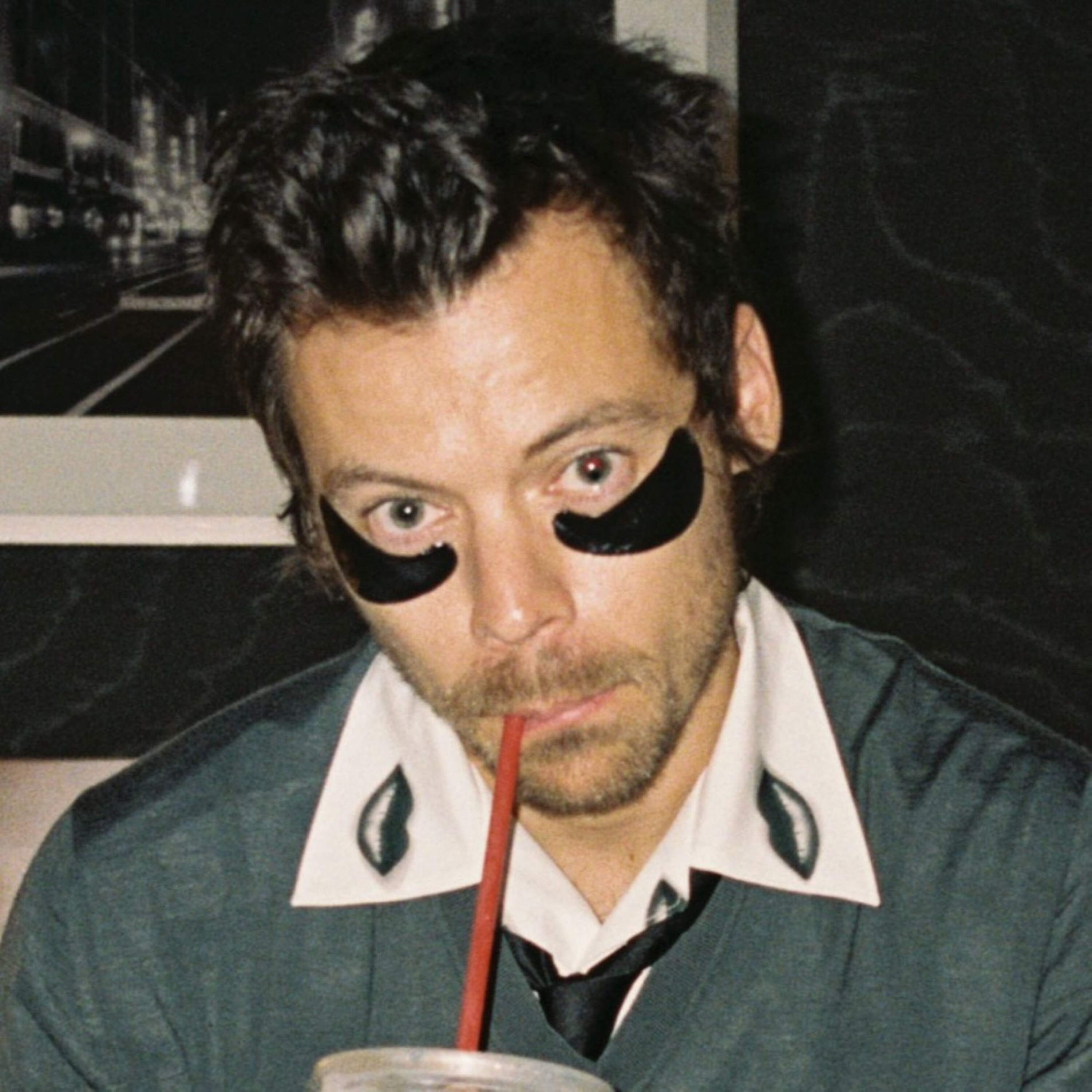
This message comes from Total Wine and More, with the largest selection, finding a favorite Cabernet, or discovering a new single-barrel bourbon is simple. Shop Total Wine and More, in-store or online. Spirits not sold in Virginia and North Carolina. Drink responsibly must be 21. Harry Styles' last record Harry's House was a blockbuster hit that won album of the year at the Grammys. Now he's released its follow-up, a fairly radical departure, inspired by dance floors and post-punk music. But it still swoones as any Harry Styles record must. I'm Stephen Thompson, today on NPR's Pop Culture Happy Hour, we are talking about Harry Styles' new album, Kiss All The Time, disco occasionally. This message comes from Capital One, presenting sponsor of the 2026 Tiny Desk Contest.
NPR Music's annual Tiny Desk Contest called on musicians from all corners of the country to submit an original song performed behind a desk. The lucky winner will play a Tiny Desk concert and headline a tour with NPR Music this summer. While the judges are busy reviewing the entries, you can follow along and choose your favorites. Explore a variety of original talent with videos performed everywhere from bedrooms to staircases to rooftops. See where this year's entries will take you at NPR.org slash Tiny Desk Contest and travel even further with the Capital One Venture X card, offering premium benefits like a $300 annual Capital One travel credit. Plus, earn unlimited double miles on every purchase. What's in your wallet? Terms apply. See CapitalOne.com for details. Joining me today is NPR Music Editor Hazel Sills. Welcome Hazel. Great to have you also with us is Maria Sherman. She's a culture writer and music reporter at the Associated Press.
Welcome back Maria. Thanks for having me. It is a pleasure to have you both. So, kiss all the time, disco occasionally, is Harry Styles' fourth solo album since leaving the boy band One Direction. It showcases the singer's willingness to expand his sound, which in this case finds him evoking dance and post punk bands like Hot Chip and LCD Sound System. But he is Harry Styles, so we still get plenty of warm, approachable lyrics about love and community. Kiss all the time, disco occasionally, is Harry Styles' first album in four years, and from its stylistic twists to the unconventional tour that's about to unfold, it stands to be one of the year's biggest stories in pop music. The album is out now. Maria Sherman, I'm going to start with you. Give me your top of mind takeaway on. Kiss all the time, period, disco comma occasionally, period. I think my feelings on this album are as complicated as its title. It's what I'm recognizing in this moment.
Like, everybody else, my sort of first read on the album was through Aperture, the lead single, and as soon as I heard it, I was like, this has got to be a track one sort of restrained introduction to whatever Harry Styles is doing this time around. We were all together, and finally we lived, so we were all together. Certainly something that was going to like tee up differences. It wasn't going to sound exactly like that single as we saw with Harry's house, and as it was, God, I wish there was, and as it was on this album, in preparation for this conversation, I actually went back and listened to the conversation we had on pop culture happy hour for Harry's house, and it seems like we were all sort of an agreement that we wished it was a bit more of, like, the synth pop, the sort of aha referencing joy of a song, like, as it was, and then, of course, the album was different in that way, and pulling from different sorts of influences, and pastiche, I suppose.
And I think this album does that similarly. I'll say that I do think it's a very cohesive album. It sounds like a full album. I do think that maybe it sacrifices invention for, like, mood and vibes in a way. It's maybe a little bit disappointing. I'm still finding moments that I love about it, but it feels sort of restrained, and that's interesting for an album that was sort of teed up to be, like, Harry Styles' freedom, like, running in the wind, literally running. He's like an incredible runner, I guess. It feels a little blocked in some ways, but I did enjoy it, and I'm ready to defend an album that I feel pretty middle of the road about in today's conversation. Defend from whom? He's a sales. Yeah, I mean, I didn't really love this album, or have maybe as many positive feelings about this album as Maria has, but I'm excited to learn more. I think that this is a risky album for Harry. He can make a pop hit, he can make an as it was, and I think this is an album that really doesn't
have big hits on it, and that's something that I kind of respect. Like, I respect, on some level that this is kind of a restrained album for him, and I think that he is working with a set of musical references and touchstones on this album that are kind of elegant and cool, and, you know, mature for an artist who's certainly passed his boy band days, but I think, like, as he gets older, is trying to figure out, like, how he fits into the pop space as a male artist. However, I think this album kind of suffers from the issues that I have with all of Harry's albums, which is that it's a lot of style and no substance. I think it's a very tasteful album, but I think ultimately kind of a boring one. Hmm. So we've already got kind of a range here. I want to start with what Maria said, where you were talking about the invention suffers in favor of mood and vibes. And I think, for me, the invention is in the mood and vibes. The willingness to explore different sounds and to kind of pull off what feels in some ways like
a reverse ego trip. Like, he's kind of looking to and willing to lose himself in this music, which is kind of a little bit of what this album is about in a way. The fact that he is not always like the dominant part of this mix can make this album feel a little bit underwhelming at first, but kind of makes it more rewarding the more time you spend with it. I think it's really interesting to compare this album to Beyoncé's Renaissance. And the way that Beyoncé took much harder driving dance music, much more extremely dance-oriented dance music, but still centered her voice in the mix in a way that didn't always feel true to a lot of the music that was influencing her. This is kind of taking the approach of putting a dance music sheen on Harry Styles' music, but actually letting him fade back into the mix in the favor of
exploring more of these sounds. And I do think that is an approach that is truer to his influences. I do admire him as a pop star whose willingness to reach as an artist has room for like the Bowie-esque grandeur of a song like Sign of the Times, or 80's synth pop, like as it was, or the fact that here he was clearly inspired by LCD sound system. He was listening to a bunch of music that doesn't sound really anything like Harry Styles and found a way to meet it in the middle. I find it quite interesting because the first time I heard the album, I went to Columbia and listened in one of their like very fancy listening rooms and they turned it up so loud, maybe the loudest listening experience of all the playback that I've had in quite some time. And I was like, okay, they want this to feel like we're at the club. But in doing so, I kept thinking like I can't hear Harry, like turn him up in this mix or what have you. And it's even listening to your point. It's sort of interesting that I'm just now realizing
his reference points that we've heard have been bands. And I'm wondering if this is sort of Harry being like, well, obviously one direction is a band, but a boy band in a very different way of vocal group. This maybe feels like him experimenting with that idea more. You know, I sort of I'm paying more attention to the performers on these on these songs and paying more attention to his producer, Kid Harpoon, of course. It feels maybe more collaborative in that way. I do think his voice kind of comes out more in the back half of the album, but it's sort of an interesting idea to me. And also I think Mary's well with, I guess some of the themes of the album, I sort of see this as Harry wanting to feel the joy of being at a Harry Styles concert. Is this one of my working theories to like turn the camera away from him and sort of feel that communal, I guess, joy. I mean, there's the lyric and paint by numbers where he says, oh, what a gift it is to be noticed, but it's nothing to do with me. That's maybe a risky choice. If you guys agree with this
reading of it, but I sort of see it as to want to make an album that explores the idea of like the joy of being in a crowd is a complicated one because you can get lost in it or it can be uninteresting or you can just be a face in the crowd. So I find that a kind of bold choice. I don't know. I'm just not getting what you guys are getting. And I think the reason that this album has to be turned up loud. And like Harry has said in interviews that he thinks this is music that deserves to be played loud is because that's the only way that you're going to get a dynamic listening experience to this album because Stephen, I think your idea about Harry kind of fading into the music, like it is bold, it is risky. I think that is an interesting choice. However, I just feel like the music that he's working with, the reference that he's working with, I think demand more energy from him and demand more performance from him. I think it is so fascinating that he keeps bringing up LCD sound system as a reference for this album. And I certainly hear it. I mean, he was playing with modular synths on this album. I hear it on like the ready steady go,
and I hear it on season two weight loss. Aperture also kind of feels like, you know, someone great on melatonin a little bit like I hear that influence. But like, you know, I respect and understand Harry's desire to want to make an album that feels like getting lost in the crowd, getting lost in the club. But I'm not hearing the club, like I'm just not hearing that energy. And I think that I had really high hopes for this album based on his, you know, inspirations. And I don't know, he's just not bringing what I want him to bring. I do think there are moments that have a little bit more pop to them. Yeah. Are a little bit more grabby and catchy. There's a track called Dance No More. It kind of built to this chorus of this chant almost of DJs don't dance no more. They said.
It also has a chant of respect your mother, which feels very, I don't know, TikTok friendly, quotable, extirptible. I was reminded, you know, as we're throwing out comparisons here and we've mentioned hot chip and we've mentioned LCD sound system. To me, what that song reminded me of was the song Big Time by Peter Gabriel, which is a big, grabby kind of blasts of sound. And to me, that jolt of energy in kind of the back half of this record really lifted it for me. Yeah, I agree. And I think Harry Styles, if you were listening would be like thrilled by that comparison. I prefer the back half of this album to the front half. And I think it's because I hear more of like Harry Styles in this Harry Styles experiment. When I hear Dance No More, I'm thinking, oh, maybe this is a bit like cinema or I think the same of a song like pop. And I don't know if it's because of using pop as a metaphor for intimacy or orgasm or whatever the popular theories are online. I see a sort of like self-referencing where I'm like, oh, maybe this is
like Harry Styles. I mean, it's album four. He certainly has certain sonic signatures and maybe this is him sort of building from them, but still in a restrained way. That is where the complication exists for me, I suppose. This isn't a house record, but it's also got a disco record. And I think that would have been a sort of failure. I think espresso maybe killed the disco pop moment or was it last sort of like jolt of energy or do a leap or something. So maybe makes sense that he's finding the dance floor and other genres like dance bunk like indie moment, but there's something missing. You know, another album that I was thinking about listening to this record, just because we've been talking about Beyonce, is the Justin Bieber album from last year swag, where I felt like that was a pop artist in his early 30s who was, you know, obviously making an album, you know, about parenthood and his relationship. And, you know, he worked with the producer Dijon on that album and I think was sort of bringing in like a cooler set or like indie set of references
than what Bieber is typically, you know, working with. But I think, you know, obviously swag was like a lot more intimate and personal, but I think Justin Bieber and Harriet suffer from set of the same problems on both, you know, swag in this album when I talk about pop artists and songwriting and, you know, there's so many songs on this album about intimacy and connection and kind of existentialism, which is also interesting. Bieber and Harry on both of their projects sort of used very minimalist bearer instrumentation. And I think that it means that you can't really hide in the music. So I'm listening closer. I want to know what you're saying more. I want to know what stories you're telling me. And I think across this album, I was like, you know, I don't know of Harry Styles can rise to the task. Like as we talked about the vocals, but like also as a songwriter in many instances. I mean, it's interesting that you're saying that there's no place to hide, because in some ways he is hiding here. In several of these songs, Maria mentioned pop, you know,
the words are fairly inscrutable. You know, even a track like American Girls, which feels like it's going to be a single, there's like this like dance pop, Bonnie Verre, feel to the song where like the voice is like an instrument as much as it is a narrative driver. Even as the words you do here, you know, demonstrate that he's never lost his kind of boyband gift for pandering. But it's just interesting that you're sort of saying like there's no place to hide in these kind of spare arrangements, but he still manages to do a little bit of hiding. I think it's less like hiding is in like literally hiding in the music, and I think like emotionally hiding because he's not giving us, you know, watermelon sugar or golden. You know, I think that there is a kind of self-seriousness to this album a little bit in parts. You know, you mentioned
American Girls, that is a song that is clearly inspired by the song Future Perfect, by the English Post-Punk Band, The Derritty Column, which, you know, Harry has cited in interviews that he was like listening to a lot when he was making this album. And I just feel like it's just all of these kind of cool references and sounds. I'm just like, what more are you giving me? Like what is this album really about if you're not going to lean into your talent for hip-making, which, you know, again, it's like I said at the beginning of this conversation, I respect that from any pop star, any pop star that's like, you know, you know what, lead single, I'm going to give you aperture. Like I know that this isn't going to be the song of the spring or summer that I know I can make for you, but then I guess I was like, you know, I put on the album and I was like, all right, aperture, okay, well, where are we going? And I was like, well, we're kind of treading the same path. Although I agree with you guys that the latter half of the album, especially a song like pop or, you know, even like, taste back a little bit. There's more energy
to them, but I just keep going back to that idea of like the restraint here. Yeah, I tend to think that the restraint has to have been an intentional decision. It's just like by virtue of the fact of the kind of songwriter he is, you know, going from sort of self-serious, acoustic singer, songwriter stuff to attempting an album like this, you know, and aperture is five minutes long. So I feel like, I agree with you very much. I think he was aware that this wasn't going to be like a, as it was kind of situation. For some reason this album, I'm like, I can't wait for LP five or whatever. You know, whatever comes next. Like this was a cool experiment. Let's see how we like, sort of build from there if there is more energy. We haven't mentioned Berlin yet, I think, and part of the sort of lead up to this album, the conversation was that he was like, hanging out at Berkheim and like going out in Berlin, and I don't really hear that on this album, nor did I really expect to, because again, he is like one of the world's biggest pop stars. It was sort of going to be like a teaser or taste. It wasn't going to be anything that driving. I assume, you know, this wasn't going to be Harry Styles brat experiment. I wish. I wish it was Harry Styles brat.
Absolutely. I'm interested in this idea of hiding, because I know like with every album and also every pop star in the world says this with every album is like, this is them being extra vulnerable, they're giving more to it. And I think in this album, we see that that's not really Harry Styles strong suit. I think when there are moments of intimacy on a Harry style solo album, it's often found in a song he's writing about somebody else or for force somebody else, maybe like the sort of loving closer of Carla's song or something. I did just read the pitchfork review today and they said that he says you like 300 times and I 100 something times. And I was like, that's a really funny metric of sort of establishing that though, you know, Harry Styles also said that this album is supposed to be like ripped from his diary pages, which I guess are like nonsensical poetic lines. You're really defending this album really well. I feel like Maria is being pulled more and more to the dark side here. It's one that I struggle. I'm struggling with because there are moments that I really love. I mean, even with aperture, the first time I heard it, I was sort of like, I don't know about this guys. And it sort of grew on me. So imagining I'll have a similar experience with
this. I guess I just wish that what was sort of teased was delivered on in some way. But then I also have to remember, you know, I heard LCD sound system at the peak of LCD sound systems run. And maybe if I hadn't experienced that music before, something like kiss all the time is feels revelatory or at least like a gateway into some other kinds of music that I'm unfamiliar with. I always appreciate when a pop star pulls from references and for that reason, maybe alone. I don't know. I'm so kind. I'm still conflicted. I had a little bit of a similar arc with this record where I was very underwhelmed by aperture the first time I heard it. And each time I've heard it since, I've liked it more. And I've had that experience a little bit with this record as a whole. I do feel like it's a little bit more of a grower than he has necessarily done in the past. You know, to his credit with every solo album, I think that he moves farther and farther away from that comparison or sort of metric for judging his musical abilities and talent as opposed to like the first album where it was like, okay, well, can he stand on his own two legs? I'm trying to rid myself of the snarky like, I don't hear any Berlin on this album. I don't hear
club on this album. I hear neighborhood coffee shop with like plants in the corner and you're doing work on your laptop music. But it's those little moments on the album like, you know, the synthesizers that he's playing with and the kind of slow build of aperture, which I actually liked, you know, immediately upon hearing it. And maybe that is because, you know, I'm a hairy skeptic and, you know, I'm kind of primed to not like something. And I was like, oh, I really like what's happening here? When I think about the album in that context, I'm like, you know what, this is a fascinating experiment for him. I think you guys calling this an experiment is making me appreciate it slightly more. I'm also very curious to hear where he goes with this record live. Yeah. That's a big part of the puzzle that is being put together around this record in 2026 is that he has announced this very unconventional touring arrangement where he will be kind of doing residencies and really kind of just appearing in the same place and kind of hoping,
I think, to throw a big communal dance party type event. And I feel like this music could be blown out live. I feel like these songs could have a longer shelf life than it might feel like they do talking about it not long after their release. Yeah. I agree. I did watch most of it's entirety the one night in Manchester live performance he did that's on Netflix as of a couple of days ago. And it was interesting. It did make me enjoy the songs a bit more. I do think of Harry Styles now. If you are Harry Styles fan, he is a live artist who kind of go to bask in the glory of like the communal experience of wearing a boa and like sequins and dancing quite a bit. And I think a lot of these songs are going to lend themselves to that. I do anticipate seeing it live and really connecting with this album in a way that just listening to it hasn't totally allowed for or at least for me just yet. But I guess I just appreciate that Harry is trying something new here
as like one of the bigger pop stars on the world because I'm sort of like where do you go from here? Part of me thinks, is that a cop out? You know, like you have to experience this album live to really get it or understand it. And on one hand, I'm like, well, you know, I love live music and I want people to experience live music. I think that, you know, a 30-night residency at Madison Square Garden is a very rarefied experience. I think it's his only North American date so far announced for this album. I don't know. There's just something about it that's kind of like, well, you'll really only experience the power of this music if you see it live. Similarly to, you know, you really only will get it if you turn it up as loud as possible. It's kind of like if we're recommending a TV show and it's like, no, you really need to wait for season four. Yeah, I'm like, guys, come on. Give me the best thing now. Like, don't make me listen to it in a weird context. And I don't know, maybe that's a, that's boring of me. I'm square of me. Give me the TikTok of the single.
I don't mean like the snippet or like the fastest thing I take. Give me banners. Yes. I'll take some fingers too. I think I also bring up the live performance one because it's such a big part of the sort of Harry Styles, ethos or mythos or whatever. But I think it also sort of separates him a bit from what we've seen in the last few years between these two albums, which is like the emergence of the like post-Harry Styles, like baby pop star. I'm referring to like a Benson boom or like a somber who I think could have been positioned as his sort of like Arab parents. But I don't think have the chops in the same way and I don't really know would be able to even make an experiment to continue to abuse that word like Harry is attempting to do here with this record. And this is sort of a half thought. But I do wonder if by virtue of the fact that like those guys don't have the stuff that a Harry Styles has in terms of being a pop performer, he's also sort of allowed to make an album like this. I don't know. I'm trying just
and Bieber is an interesting comparison. I was sort of thinking about Taylor Swift because I think the last couple of albums I think have also had sort of muted responses. But of course she has the competition of like a new era of young like female pop performers who are really inventive and kind of coming for a crown. I don't know why to say that. But certainly are like kind of competitive in that space. I don't think Harry Styles has the same competition and I wonder if that I mean that's a really sort of unromantic, uncreative read. But I wonder if that sort of allows him to make something that feels a little left of center for him? I don't know. Well, I think we're going to keep hearing about it. We want to know what you think about Kiss all the time. Disco occasionally. Find us at Facebook.com slash PCHH. That brings us to the end of our show. Maria Sherman, Hazel Sills. Thanks so much for being here. Thank you for having me. Thank you so much. And just a reminder that signing up for pop culture happy hour plus is a great way to support our show and public radio. And you get to listen to all of our episodes sponsor free.
So please go find out more at plus.npr.org slash happy hour or visit the link in our show notes. This episode was produced by half-saphatma, Carly Rubin and Mike Katzif and edited by our showrunner Jessica Reedy. Hello, come in. Provides our theme music. Thank you for listening to pop culture happy hour from NPR. I'm Stephen Thompson and we will see you all next time. This message comes from Alexa Plus. The all new Alexa Plus will do more so you don't have to. Chat naturally while Alexa learns your style, anticipates what's next and makes it happen. Free with prime on your Amazon devices. Learn more at Amazon.com slash Alexa Plus. This message comes from Kelly Corrigan Wonders, a podcast hosted by New York Times best-selling author Kelly Corrigan who converses with guests to explore curiosity, humility and creativity. Listen to Kelly Corrigan Wonders today.
This message comes from Bombas. Your feet hit the ground in average of 2,000 times in a mile. Bombas sports socks are designed to support you every step. Sprint to bombas.com slash NPR and use code NPR for 20% off.
More episodes
More from Pop Culture Happy Hour

Practical Magic 2 and What’s Making Us Happy
Pop Culture Happy Hour

Unapologetically basic TV and movies that we love
Pop Culture Happy Hour

Watch this: Filipiñana
Pop Culture Happy Hour

The hidden money financing your favorite songs
Pop Culture Happy Hour