About this episode
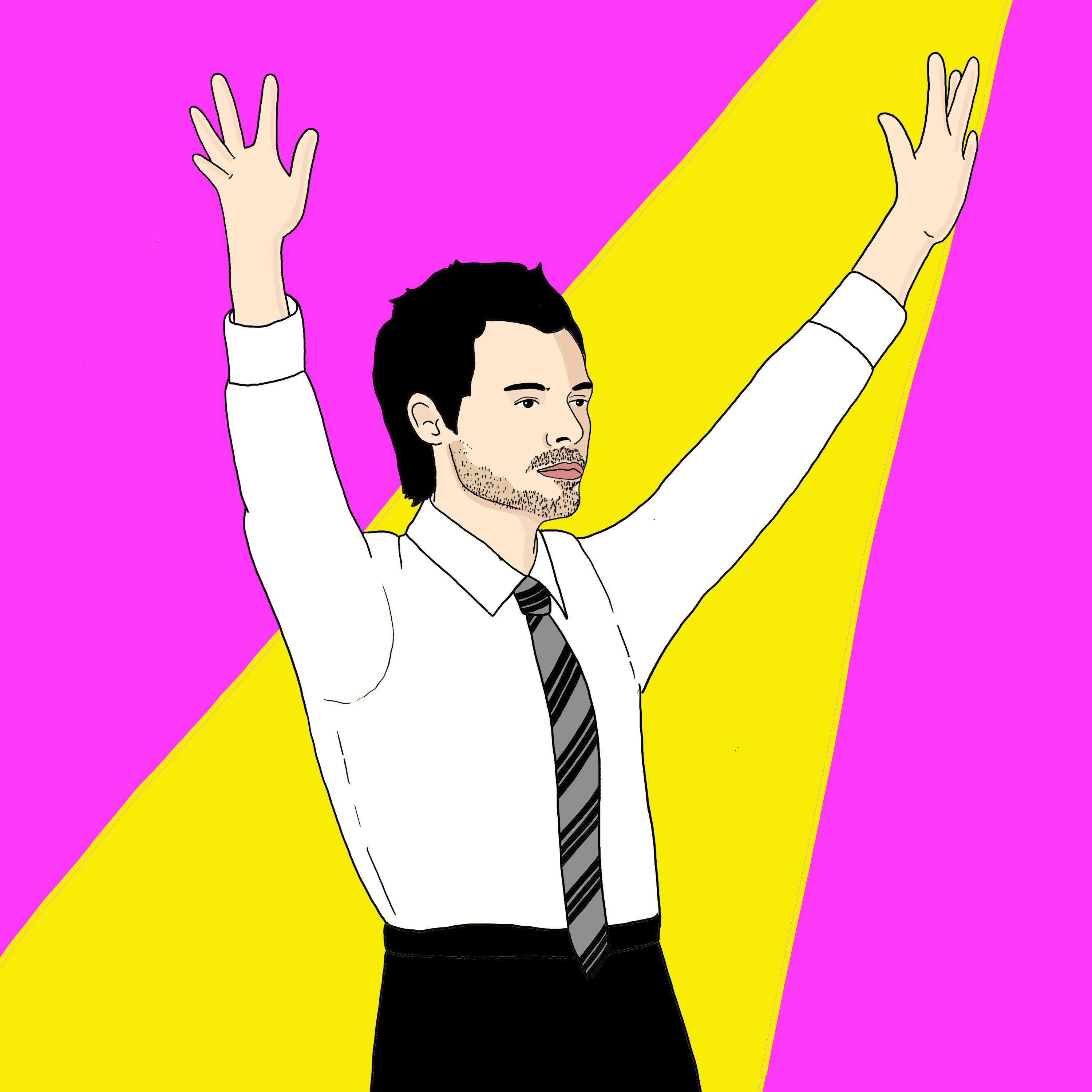
The dance floor is where Harry Styles does his therapy, and this album is the session notes. Four years after Harry's House, Styles returns with Kiss All the Time, Disco Occasionally, a record built from minimal ingredients: live drums, Moog bass, nylon guitar, and synth sequences that stretch across entire songs without a drop in sight. This is Styles' anti-drop album. Where classic disco era dance celebrated collective joy, Styles uses the dance floor as a stage for self-examination.
Links: Newsletter, YouTube
Songs discussed:
- Harry Styles – "Aperture"
- Ice Spice – "In Ha Mood"
- PinkPantheress – "Boy's a Liar"
- Zara Larsson – "Midnight Sun"
- LCD Soundsystem – "Dance Yrself Clean"
- LCD Soundsystem – "Someone Great"
- LCD Soundsystem – "Oh Baby"
- Harry Styles – "Pop"
- Harry Styles – "Sign of the Times"
- David Bowie – "Space Oddity"
- Elton John – "Rocket Man"
- Harry Styles – "Dance No More"
- Chic – "Good Times"
- Stevie Nicks – "Edge of Seventeen"
- Simon & Garfunkel – "Keep the Customer Satisfied"
- Paul Simon – "You Can Call Me Al"
- Harry Styles – "Carla's Song"
- Paul Simon – "Kathy's Song"
- Simon & Garfunkel – "Bridge Over Troubled Water"
- Harry Styles – "Are You Listening Yet?"
- DJO – "Basic Being Basic"
- Harry Styles – "Season Two, Weight Loss"
- Sons of Kemet – "Play Mas"
- Harry Styles – "Coming Up Roses"
- Harry Styles – "American Girls"
- LCD Soundsystem – "American Scum"
- LCD Soundsystem – "Drunk Girls"
- Harry Styles – "As It Was"
Learn more about your ad choices. Visit podcastchoices.com/adchoices
Get every episode summarized
Each time Switched on Pop publishes, we email you a written briefing from the transcript — the topics, who appeared, and any specific claims, with the ad reads skipped.
Email me new episodesFree for 3 shows. No card needed.
Hosts & guests


Transcript ready
756 searchable segments. Every word is indexed and playable.
Full transcript
Switched on Pop — Harry Styles loses himself to dance. Machine-transcribed; use the interactive transcript above to jump the player to any line.
Ready to launch your business? Get started with the commerce platform made for entrepreneurs. Shopify, especially designed to help you start, run, and grow your business with easy customizable themes that let you build your brand, marketing tools that get your products out there, integrated shipping solutions that actually save you time, from startups to scale-ups, online, in-person, and on-the-go. Shopify is made for entrepreneurs like you. Sign up for your $1 a month trial at Shopify.com slash setup. Hey everyone, it's musicologist Nate Sloan here. I have an announcement before we start the show. Many of you know I am a professor at USC Thornton School of Music and coming up March 12th to 14th at USC in Los Angeles, California is the PopCon 26 conference mayhem Pop Music and Writing in Parallelous Times. PopCon is the annual conference devoted to the headiest thinkers and the most insightful people writing about music
and it's an incredible event and it's completely free. All you have to do is go to popconference.org and register in addition to panelists, including switched on pops, very own Rihanna Cruz all through Friday and Saturday. There are also some amazing keynotes. John, that teased is going to be in conversation with the dean of USC Thornton School of Music. Jason King, a brilliant pop music analyst himself. There's also going to be a panel devoted to the legacy of D'Angelo and there's another panel thinking about Rihanna's album anti-ten years later so there's a lot of cool stuff happening and again all you have to do to register is go to popconference.org. It's completely free, Los Angeles, California, March 12th to 14th and maybe I'll see you there. What's that famous quote that's like talking about music is...
It's like dancing about architecture? Yes. If talking about music is like dancing about architecture, how do you talk about dancing? I think the the better question is how do you dance about architecture? Because I feel like I've seen some really amazing dancers about architecture. I'm the son of a modern dancer so I've seen a lot of weird stuff. All right, let's see where this goes. Welcome to Switched On Pop. I'm songwriter Charlie Harding and I'm musicologist Nate Sloan. It's hard to figure out how to talk about dancing and yet Harry Styles has given us a dance album that I really want to talk about. It's called Kiss All the Time, Disco Occasionally. Let's see how it moves us starting with the opening single, aperture that went number one when it debuted on the charts. Right from the beginning, we know what to do.
We're supposed to be nodding our head like this, just like that. Yeah. And we're nodding our head without any kind of drums or because of elements. True. Yeah. We get this synth pad and it's ducking every quarter note. Sidechain compression. Wow. Wow. Wow. Wow. Right. So hoping you're going to illustrate that with your voice Charlie and you did not disappoint. But do it do it a little more dramatically now. Wow. Wow. Wow. Yeah. Wow. Oh yeah. I can now do that. And then we get this trancy synth that's gating in and out. You're like, I got to move my body. At least the part of your body from the neck up. Yeah. Appropriate for a video podcast. No, we're going to move our whole body because we're going to get a kick drum. It's going to tell us how we ought to move. Yep.
Started with the head kind of moved down into the shoulders, down into the hips. Now my feet are moving. It's spreading. We've got that jersey club beat, you know, the beat that was pioneered in the Baltimore club scene, moved to Jersey, takes off in the 90s and 2000s. And somehow has become the dominant sound of the 2020s. I think about artists like Ice Spice. Pink pantheris. You're not making me worry. Zara Larson. That was Ice Spice's in Hamud, then Pink Pantheris boys a liar, which Ice Spice did a remix with followed by Zara Larson's Midnight Sun. Zara Larson also collabed with Pink Pantheris.
So there was a continuity between those artists. And it seems like if you want to make a pop hit today, you need to reference that Jersey club beat that bump, bump, bump, bump, bump. I think it's important we name all these references because they all have something in common with this styles track aperture. It's all Jersey Club light, you know. It's like the whipped version of Jersey Club with all the rhythm and half the calories. This isn't the kind of DJ slink production that would rattle the the ceilings of a club in Newark. It's a little tame in comparison, but man, it still is groovy as heck. And that is what we get, the very beginning of aperture by Harry Styles. A track that could be equally indebted to LCD sound system and the dance punk indie scene of Brooklyn in the 2000s.
The bass from Dance Yourself clean. The pumping pad from someone great. Or the synth sequence from Obaby. So what is Harry announcing here? Harry is making a call for a moment of dance for Unity by asking us to let more light into our life regardless of what we might see. I mean, that's a message I can get behind right now. I'm kind of sick of hearing people talk, honestly.
I feel like we've talked a lot and it hasn't gotten anywhere. Maybe we need to embrace the common language of dance and see if we can't make some progress. So I'm here for some cathartic dancing, for sure. I'm not sure that the messages on this album are quite that grandiose. I'm not sure there are any messages to be honest. Kiss all the time. Disco occasionally. In reality, it might be the inverse. This album is disco all the time and kiss occasionally. In my opinion, but maybe we'll see if listeners agree as we go through the rest of it. So let's get a sense of where Harry is at as a reminder, 32-year-old Harry Styles. He was in one direction, 2010 to 2016. He's on his fourth album now. In 2017, he put out Harry Styles, 2019, fine line, 2022, Harry's house, personal favorite. And now after a four-year break, 2026's, Kiss all the time, disco occasionally, we find Harry in a big period of change in his life. After his last tour, he took a bunch of time off
from making music. He hopped around Europe from Paris to Central Italy to clubbing in Berlin, gone through a few relationships and breakups. Tragically, his former bandmate Liam Payne died in October, 2024. Yes. And part of Harry finding himself was out on the dance floor. He's giving us what I think is a sort of an existential album. He's working with his old collaborators, Tyler Johnson and Kidharpoon. And I hear Harry trying to locate himself in the world and in the club. Hearing that background makes this opening track Aperture a very fitting one, right? An Aperture is a part of a camera lens that as Harry sings in the chorus literally lets the light in. And you have this sense of sort of an opening up as it were. On this first track. And I'll be curious to find out what we see or hear over the course of the rest of the song. I'd say that this is very much a songwriter's album in the language of dance.
You still have acoustic elements, piano, nylon guitar, even marimba. And yet I think that he synthesizes electronic and acoustic elements really well because I think Harry understands to a certain degree where the dance floor is today. When we were coming up making this podcast in the 2010s, it was progressive house, huge drops that were like telling you when and how to move. And now we live in a world of dance music that is I think sort of anti-drop, that it's about vibe, it's about creating a move that can move throughout the entire night whether it's the ethereal sounds of Fred again. It's a glitchy organic beats of 4-tatt. Or the unyielding Berlin techno kick drums of Charlotte Dewitt.
Dance music today I think has more in common with where dance music came from. It used to be the hard to make synthesized music. You'd have to get all these drum machines and synthesizers and you'd have to link them up together. And it was a lot of cabling and it was very hard to build compositions. You couldn't easily move from verse to chorus a big drop. Instead you slowly turn knobs to enhance the feeling of a moment. And I feel like that's what's going on on this record. A lot of long songs, a lot of chord progressions that stretch out and go through the entire song. And he's trying to put us in contemporary club music but through modern pop. You know, this is still very much a Harry Styles songwriter album. So 10 years ago we were identifying the pop drop as one of the core elements of top 40 pop music. And now a decade later we're observing the opposite, the anti-drop.
The anti-drop. Yeah. And some people might be asking like, why is Harry making this sound? And he's explained it that partially it is like he was finding a sense of himself in dance. But I also think it's a very deliberate move. You know, he's working with the same collaborators. It's not like he's gone off to some other producers. They've really narrowed their sound. And I loved the sounds of Harry's house from 2022. You know, I think about that as this very luscious album. With if you related it to food, it would be like taking a stew with 20 different ingredients that all cook down all day. Just like this flavor bomb of sonics. This record on the other hand is much more minimal. Every element of this dance music is hand-picked. It's more like a like a French meal where it's like three simple ingredients done perfectly. I was wondering. I was wondering where that food analogy was going. Well, he was hanging out in Paris a bunch.
Sure. Going to cafes. You know, there's a certain like refinement to the way that he's approaching these productions and these lyrics. They're very plainly presented. And yet they are, you know, buttery and salty and yummy. I think that's as far as I can stretch the food analogy. Let's take a listen to a few tracks. To get a taste, if you will, of the dance grooves that he's putting together. I think there's no better song to listen to than hop. I'm putting a thread in the making me come I'm putting a thread in the making me come I'm putting a thread in the making me come I'm putting a thread in the making me come How is dance music supposed to make us feel? Like architecture? Yeah, exactly. This is a dark song. It is, especially for a song called pop. Yeah, that conjures images of sort of effervescence. Yeah, yeah. It's got this heavy 12-8 groove.
One, two, three, four, five, six, seven, eight, nine, 10, 11, 12, one, it's got these dark minor chords. It has these eerie synthesized textures and it feels like pop in the sense of something's about to explode. Dairy Lois says that he's about to pop. He's about to explode. I was trying to think about like, what does this mean? Why pop in this form of presentation? And I think there's a real truth here. Harry has a way. I feel like I've always writing lyrics that are a little bit surrealist. They don't usually have a really clear narrative through line all the way, but then there will be like a killer pair of one line or something that just sticks with you. And here, this idea of pop making you feel like you want to explode. I feel like the dance floor is a place that we go to let loose, to let go of all of the terrible things that are going on our lives to feel free. And I think that pop music is kind of the same.
We think of pop stars. I think it's needing to portray effervescence. As you said, like, everything is great. Pop sounds upbeat. But pop music is so often about displaying uncomfortable human truths against really upbeat music. And there's that dissonance between the two is I think generally what really pulls an audience into a song. It isn't about, I feel happy, but the things are good. It's about sharing what's really going on and at least for Harry, it's feeling like he's going to explode on the dance floor. I remember when we listened to one of Harry Styles' first solo releases, Sign of the Times back in 2017. And I remember being kind of surprised how opaque that song was, how sort of clouded and mysterious it was, lyrically. And I wondered if that was just kind of an experiment of, you know, his first solo debut. And it actually seems to be really a theme
through his songwriting. There's a lot of obfuscation and not a lot of like obvious parallels. There's a lot of escapism in his music, isn't there? I can imagine someone who spent the majority of his young adult life being hounded by fans and press wanting to escape. Yeah, that makes sense to me. He's escapist. He's also a real student of pop music. Obviously that song, Sign of the Times, a real strong nod to David Bowie, Space Audity. There's a whole episode about that song out in the archives. Maybe also a little bit of the transition of Rocket Man.
That great slide guitar. You can hear the same thing in Sign of the Times. And speaking of being a student of pop music, I think we really hear that come through on a song that really does dance and give us more upbeat vibes. The track, Dance No More. Yeah, all right. We're going to stop it right there. I mean, off the bat. We'll scatter. We'll scatter. He does. He loves to scatter. He did some scatter in Harry's house, as I recall. We'll scatter. That wasn't what caught my ear. I just was like, oh, you are making a chic sound to like. Everyone does. Everyone has to make a good time's baseline. Bernard Edwards' core.
And then, sorry, Harry. I have to interrupt you. That guitar line? I believe I read that he is friends with Stevie Nicks. That guitar sound is just straight up edge of 17 to me. He's making us move with a little bit of nod to the past. But he's also very much in the present. And here's the chorus.
That's one of those great Harry Styles lines. There's no difference between the tears and the sweat. What's happening on the dance floor is the catharsis. It is letting loose emotionally and physically. And I feel like, I don't know if this is what he means to say, but what I hear in this is like, DJs became so famous, especially in the 2010s, that what happened is the dance floor turned into a concert. And people faced the DJ and they weren't moving with each other. And I think about that famous moment of David Greta, just like losing his mind, staring out into the empty abyss, not moving while a bunch of people at some major festival are kind of just like incult like movement to his empty presence. I feel like we have Harry Styles here saying, we've got to turn away. The DJs need to dance and be a part of the larger community. That's when the club feels really good. Out of all the songs, I feel like Dance No More
is closest to the disco promised in the songs title. And in the disco ball that graces the songs cover artwork, with that chic reference you mentioned at the outset with the Prince-style guitars, with that foreign-the-floor drumbeat that seems right out of the 1970s. This feels like a throwback to a time when dance music was participatory. You say it's a throwback, it fulfills some of the disco promise. And yet also some of his references on this album have nothing to do with the world of dance music. Check out the pre-chorus. Move it side to side with your hands up high, keep your customer satisfied and live your life. In an interview with Apple, he said that keep your customer satisfied as a reference to the Simon and Garfunkel track, keep the customer satisfied from 1970.
And it's not the only Paul Simon reference in the song. If you go a little bit further into Dance No More, there's a really fun little instrumental element that nods to another Paul Simon song. Any idea? Respect your mother. Is that a line from Mrs. Robinson? I don't know. This is how deep it goes. He's like listening to a bunch of Paul Simon. No, it's not the Oracle. It's the instrumental little moment. The but no, no, no, no, no, no, no, no, no, no, no, no, no, no, no. Like I would have thought I don't know like a P-Funk Bernie War L keyboard line. In fact, it's a nod to you can call me Al.
That's funny. Oh, yeah. That's cool. That's cool. He said that I guess that came about because when Paul Simon was recording, you can call me Al for the Graceland sessions. It was his bass player's birthday. And he's like, well, it's your birthday. You get your own little special slot. And Harry Styles keyboardist, Yafra was given the same leeway. Harry was just like, here's some bars. Do whatever you want. But was it his birthday? I don't know if it was his birthday. Okay. It left him. This is not the end of the Paul Simon references on this record. The final song on the album is called Carla's song. Paul Simon has a song called Kathy's song. Yes. And Carla's song opens with a Simon and Garfunkel reference in the opening lyric. There is a bridge that leads to troubled water. Of course, a nod to bridge over troubled water.
And friends just can't be found like a bridge over troubled water. I will lay me down. What is Harry Styles doing making all these Simon and Garfunkel references? I don't have any other grand theory other than an appreciation. Could we say he's putting the funk back in Garfunkel? Wow. That was kind of a Charlie joke right there. I don't know. I was like channeling your... That is your dad, Joe. Real. Instead. That's really mean to make fun of yourself by making fun of me. No, I was honoring you. Nate, are you even listening to me? Who? What would you say? We got to move on to the next song. Are you listening yet?
Unintimid sex. You like the way she talks. Never what she says. You've had your tummy tickled. Are you listening yet? This is working it out on the dance floor. I like it. It's a little more sardana. Yeah. And we've heard from Harry in the past. Yeah, I mean, he's sort of saying, I'm here working it out. I've paid my therapist a lot of money. I am looking for fulfillment in romantic relationships that are fundamentally unfulfilling. This line of, you've had your tummy tickled. What? Don't love that. Don't like that at all, obviously. I think it's a great example of this Harry style surrealist style of lyric writing, where it's sort of like non-sequitor experiences that all paint a sort of collage of what's going on with Harry styles. Clearly, there is something amiss in his life. And I think this call of are you listening yet? To me, it almost sounds like he's talking to himself,
not to us. I like whatever this genre is, kind of spoken word lyrics over an insistent beat with a sarcastic, kind of dismissive quality. It actually reminds me of when you interviewed Joe on our show, Joe Kassier, Joe Kiri, and he has that song, Basic Being Basic. Yeah, both of these songs are dealing with the uncomfortable nature of fame, how to be in public, how to be a person, and are both very much pointing the finger at the self
of being like, I'm not necessarily being a pleasant person in making the right choices for myself at this moment. Totally. I'm not sure that Harry Styles is fulfilling the thesis of this album. Are we kissing? Oh, yeah, we're supposed to lose ourselves to dance, right? We're supposed to be disco-ing occasionally. I guess we are disco-ing occasionally, and maybe overly concerned with what's going on in our interior life. Let's take a quick break, and come back to see if we might disco a bit more. Redeem your lab books on free-bets, spins, or even cash in for real money. That's Latisfaction from Labbrooks. And for extra-ladisfaction, here's the Tees and Seas. Let's rock! Within and for, offers all rewards, Labbrooks X5, with Tees and Seas applied, take time to think, gather where I die for.
All right, Nate, so we're working it out on the dance floor. We are being maybe a little raw and honest, sometimes even cynical. I think that's particularly true on the song Season 2 Weight Loss. He's holding out, hoping you will love him now. What do you make of this? This might be my favorite track on the album. For one thing, I love when a song's title doesn't appear in the lyrics of the song. Oh, and we never get the lyrics. Season 2 Weight Loss here, but it's a great title. What does it evoke? The title? Yeah. I think we're back at the idea of fame and its pressures. Yeah. If I'm understanding right, Season 2 Weight Loss, that's like you're on a show and it goes really well
and you get renewed. And you're a cast member and you show up for Season 2 and all of the sudden, you've got your GLP ones and your personal trainer and your nutritionist and your half the size and everyone's like, what just happened? Chris Pratt in Parks and Rack, right? Maybe that's an example of this. So I feel like it's about the scrutiny, the pressure that someone in the line of my experience is. Definitely. I mean, I think that's super clear in the first verse. He says, aren't you for sale if you're cashed in cold? And it's hard to tell when the thoughts are my own. Yeah. It's like, who am I making art for? Like for what purpose am I doing this thing? Is it my own inclinations? Is it because I got to cash it? The sense of self doubt that we've heard in those lyrics
is mirrored in the drums on this track. And that's the other thing that makes it one of my favorites on the album, the drums are so good. They are courtesy of Tom Skinner, stalwart of the London jazz scene. He got his start playing in the incredible group, Sons of Chemet, with Shabaka Hutchings and Theon Cross. You can hear his characteristic frenetic drumming style on a track like Play Mass. It's cool, really both contemporary and also very throwback. And he later teamed up with Tom York and Johnny Greenwood of Radiohead to form the trio The Smile. But he's providing drums not only on this track, but a number of the tracks, giving them this kind of exciting,
unpredictable, propulsive live feel. Well, this is to my point about the ingredients being so good on this album. Like there's not a lot happening on this song, season two, weight loss. You have these really great drums. And a lot of the disco elements, if you will, a lot of them are very organic. There's a lot of live drumming. There's a lot of live electric bass. And then these synthetic elements are often these modular synths that Kit Harpoon is using. There's these big brassy synth lines as well. But it really is a mixture of these organic and electronic textures. And they blend so well. I want to just listen closely to this fine ingredients, if you will, on season two, weight loss. Horgeous synths, very basic. That great drumming. A little bit of bass, some really subtle pads, and hairy. Just like five ingredients. There's so much pop music. It's just stacks and stacks and stacks, hundreds of tracks.
Totally. This is really plain. And I think that is trying to reflect the vulnerability that he's trying to portray, even if through a collage of non-sequitors that occasionally land a perfect line, he does get vulnerable on this album, for sure. There are a couple of slower tracks. One really gorgeous ballad, called Coming Up Roses, really took my heart. Begin with this lovely orchestra. I told you, this guy's hungry. He's not devoid of an appetite. This song was originally written as a holiday track. He says that I've turned back the clock. It's that time of the year. He was trying to write a Christmas song. And it didn't turn into a Christmas song. And instead turned into this sort of central ballad on the album.
This is a song about dancing or aspiring to go out dancing. That is not a dance song. That's true, isn't it? I love that. How about that line? Just for tonight, let's go hangover chasing. Yeah, that definitely stood out. We're going to go out and have one special, amazing night dancing together. And it's a really raw song. He's like, I'm going to fumble through this. I'm going to say all the wrong things. And I hope that we will somehow end up at the end of this night, even if we're not the right couple that you're just going to lay there with your hat on my chest. It's a very beautiful intimate song. The intimacy is compounded by the delicacy of the arrangement. All of those pizzicato strings that we hear throughout. They're like really clashing with some of those lyrics. Chasing a hangover. That sounds like you would have some banging synth bass and 808 drums. But instead, it's like delicate, light strings. It's for such a beautifully arranged song
with all of the expense going into working with a live orchestra. It's a surprisingly raw track. What a curious state of relationship and what a fantastic lyric. Does all this seem to be bringing us closer or am I backseeding your life judging while you drive? Oh, I mean, I know. I've been in that position before. I don't know if in a relationship I've been in that position before. But you know it when it's like you're stuck in the back seat and you're watching this person drive and you're like, what is going on? Am I going to survive this drive? Totally. And yet he's embracing it in this. And I think it's really beautiful, except for maybe this little moment at the end that suggests a darker turn.
Oh, that was a dark moment. Look at that. I didn't catch that. That's some amazing dualities throughout this record. You know, we're waffling between songs about kissing, maybe the wrong person, songs about disco. If there is one song that perhaps unifies all of this together, I think it's the song American Girls. I was American Girls. Mid-tempo, dance song, very simple arrangement, live drums, synth sequence, mogue bass,
and this really beautiful almost out of tune upright piano. There's this combination of dance elements, but also again, very much like this is somebody who's just come off of Harry's house, singer, songwriter, and a track that on the surface seems to be about how beautiful are American Girls. Harry Styles likes to date a lot of them, it seems. It might have a nod to LCD sound system, tracks like American scum or drunk girls, but I don't think that it's either of those. This song is actually he has said about watching his friends all get married, and they've all married American women, and feeling sort of whistful or really wanting to be able to follow on their footsteps of like, I got to figure out how to have an adult relationship and settle down a little bit. There's a bit of a double meaning happening here. Yeah, this to me is the as it was of this album,
for a few reasons. One, I think it's poised to be maybe the breakout hit of the album. It's not the first single, that was aperture, but they did just release a music video today. We are currently taping within less than 24 hours of the album's release, and clearly they're trying to push it. There's also this ambiguity in the lyrics that's kind of supported by the music. Like you said, American girl, that title might sound sort of bright and optimistic, but then when you listen to it, it's more ambivalent. You know, it's like not really clear that this is something to celebrate. You know, I've fallen in love with an American girl. There's kind of a whistfulness to it. I feel like as it was had a lot of the same qualities in this world, it's just us, you know, it's not the same as it was.
They both had these unresolving chord progressions that kind of just cycle in perpetuity. This could be a big hit, but it's not necessarily a hit that's going to make you, you know, smile from ear to ear, like a lot of this album. It's a little more melancholy enough in the air. It makes me think that perhaps that this album is not a dance album, but rather a record about what dancing is for. It's about the place that we can let go of whatever we're holding on to. And if you go back to great chic hits of the past, those songs, those dance floor songs were very much optimistic. They were, let's have good times, right? Let's everybody dance. These songs by Harry Styles, on the other hand, are about what he is undoing internally with his therapist and letting out on the dance floor and using that as a stage for song rating. Harry Styles is one of those artists that I feel like is kind of important for us,
Charlie. I see him as occupying a role in our story to a degree. As someone who forced us to challenge some of the assumptions that we had at the outset of this project, where we were more like outsiders to the pop world. And I mean, when we did our first episode on One Direction, we compared them to a modern day Kastrati. Oh gosh. I don't know that we would know. Well, I know, but I'm excavating the past. It's out there. You can find it. I think we probably had some good insights. But I think we generally had this attitude of sort of like holding our nose as while we listened to this music. And Harry Styles and One Direction sort of forced us to confront that, especially as they grew and matured in their respective solo careers. And Styles in particular was very vocal about the importance of teen girls as an audience, as people who shape the taste of the listening public and platform artists that are important.
So I think what he has to say is always interesting because his vantage point is from so deep within the pop machine that his insights in a self-reflection are valuable, not only as like musical statements unto themselves, but sort of as a chance to step back and think about this weird world that we've been studying for the last decade plus. You could say that he helped us widen our aperture. Ooh, you did it, Charlie. Okay, we've done this whole episode about dance and we haven't talked about the most dance-related news surrounding this album, which is Harry Styles' performance at the recent Brit Awards. Oh, it was good. I enjoyed it. Well, I agree, but a lot of people did it. This was very kind of like, can Harry dance? Like, this seems to be the question on everyone's mind right now. Oh, I thought it was brilliant. Oh, no, no, no. He can dance. I mean, I think what he's doing is it's like just what he's sort of protecting the idea of like DJ's not dancing anymore. I think he's showing us how to dance.
Like, the whole thing begins as a warm-up. He's stretching his neck. He's going back and forth. He's loosening up his hands. He's finding a way to help people feel comfortable on the dance floor. It's about freedom. It's about expression. It's not about necessarily excellence. It's about inviting other people in. And that whole performance, he's surrounded by other dancers. And it's all a little loose. It's not that like perfectly in sync, perfectly timed kind of choreo. It's permission to dance as much as it is a display of dance. Well, I'm Dina here from everyone listening to this podcast. If you haven't yet, go find that performance of Apertura at the 2026 Brit Awards and tell us, is this brilliant or hacky? And that might go for the rest of this album, actually. I'm curious what everyone thinks of these signs. We've been pretty law-datory. Does everyone agree? Let's find out. Switched on pop is produced by Rina Cruz, edited by Lissa Soap, engineered by Brand McFarland, illustrations by Iris Gottlieb, video by Nick Rips, music by Jocsi Adams, and Zach Canario of ARC Iris. Remember the Vox Media podcast network production of Vulture,
which is part of New York Magazine. Subscribe at mymag.com slash pod. Once you formulated your opinion on the aforementioned Brit Awards performance and the album in general, share it with us on social media, at Switched on Pop, and also on our substack chat. You can become a member of Substack by finding a link on our website, switch on pop.com or in the show notes as well, right? Check, yeah, that's right. I want to hear what you're thinking about. And we're going to catch you again next Tuesday. And until then, thanks for listening.
More episodes
More from Switched on Pop
Questionable Country
Switched on Pop
Phoebe Bridgers opens her Moleskine
Switched on Pop
We have Confessions to make...
Switched on Pop
A piano lesson that will change how you listen (ft. Lang Lang)
Switched on Pop