About this episode
Marketplace is made possible by:
Retail sales jumped 1.2% in August after falling in July. But building materials stores — think Home Depot or Lowe’s — still saw a dip. That’s because stretched consumers are putting off “nice-to-haves,” like home renovations. Also in this episode: The future of global energy demand will be driven by a mix of renewables and fossil fuels, high school students take a new AP class melding business and personal finance, and neighbors organize to cooperatively buy their mobile home park.
Every story has an economic angle. Want some in your inbox? Subscribe to our daily or weekly newsletter.
Marketplace is more than a radio show. Check out our original reporting and financial literacy content at marketplace.org — and consider making an investment in our future.
Read the stories in today’s episode:
- The countries driving energy demand growth can't wait for renewables to get cheaper
- Kevin Warsh isn't a "data point-dependent guy"
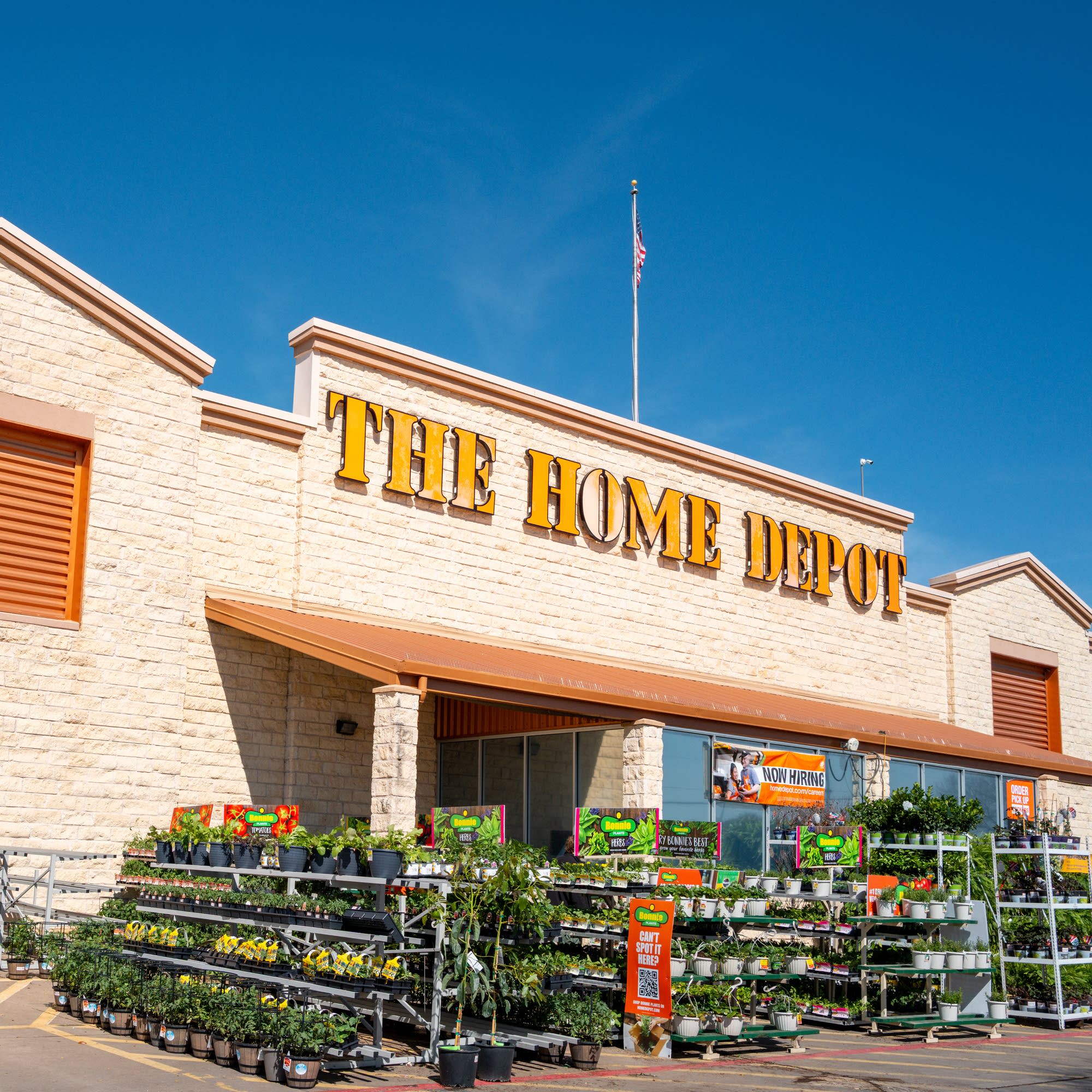
- Home improvement stores take a housing market hit
- High schoolers take new AP business with personal finance class
- Residents of a mobile home park try to buy their community before someone else does
- Turning a childhood home into a place to share with strangers
Get every episode summarized
Each time Marketplace publishes, we email you a written briefing from the transcript — the topics, who appeared, and any specific claims, with the ad reads skipped.
Email me new episodesFree for 3 shows. No card needed.
Hosts & guests

Transcript ready
441 searchable segments. Every word is indexed and playable.
Full transcript
Marketplace — Home improvement stores feel the pinch. Machine-transcribed; use the interactive transcript above to jump the player to any line.
Running a business is hard enough, so why make it harder with a dozen different apps that don't talk to each other? Introducing ODO. The only business software you'll ever need. It's an all-to-one, fully integrated platform that makes your work easier. From CRM, accounting, inventory, e-commerce, and more. And the best part, ODO replaces multiple expensive platforms for a fraction of the cost. This is why over thousands of businesses have made the switch. So why not you? Try ODO for free at odu.com. That's odu.com. Your e-commerce business doesn't need a patchwork of apps. It needs shipstation. Built by shippers for shippers, shipstation adapts to your workflow. It automates everyday tasks, alerts you to low stock, and gets you the best pre-negotiated carrier rates to instantly save you time and money. From inventory sinking to branded returns portal. Shipstation handles the heavy lifting. Get 60 days free at shipstation.com with code marketplace. Shipstation.com code marketplace, taxes, and fees apply.
On the program today, economic data both public and private, mobile homes, and a new advanced placement course. Don't worry, no test. From American public media, this is Marketplace. In Los Angeles, I'm Kyle Rizzo. It is Thursday. Today, this one is the 17th of September good, as it always is to have you along, everybody. You know, maybe the biggest change from the J Powell Fed to the Kevin Warsh Fed other than the straight up word count of their speeches and remarks is this. As you might know, I'm not a data point dependent guy, so I won't react one way or another to data that shows up on our doorstep. That was him yesterday at his press conference. Data you might remember was Powell's best friend, but as Chairman Warsh tries to help steer the U.S. economy, he is choosing a different data path.
Economist Catherine Edwards wrote about that for Bloomberg not too long ago. Welcome back to the program. Good to have you on. Thank you so much. We'll get to the data point thing from the chairman in just a second. Thoughts though, briefly on what he had to say yesterday. I think I was too focused on the fact that they had actually raised rates and that was a very good signal, but he both have managed to do the right thing and inspire some lack of confidence at the same time. Great. Great. We all feel better now. So let's get to the data point thing. You wrote in Bloomberg the other day, a couple of weeks ago, whatever it was, that the effect basically in Chairman Warsh is making a big mistake if they as the chairman is intimated switch or rely less on government data. Explain your case for me, please. So I think a lot of people can, you know, this will resonate that when you get a new boss, they like to redo everything. The way that he has done this at the Fed is he has started with these task force and
there's a handful of them that each have a different activity, but one of them is on data. So people who are following federal data, which it's okay if you're not, the federal statistical agencies are not only vitally important, but they are under attack. And they're under attack in terms of their funding, they're under attack in terms of their credibility, they're actually under attack if it's your job and you're the, you know, head of the Bureau of Labor Statistics. And so many of us in this advocacy community have been waiting for the Fed to stand up for the data that they rely on. And instead he basically came in and said we should probably use private sector data. But I think it was just a missed opportunity to be a champion of a cause that, you know, uniquely affects something like the Federal Reserve. We should say here, there are definitely problems as you pointed out with some of these federal statistical agencies and the way they collect data. There's, you know, survey responses are falling and all of those things, but your point here is that, and obviously correct me if I'm wrong, we lose something if we don't use
these federal statistical agencies to their maximum. What do we lose? Oh, well, we lose, essentially we lose minorities first. You know, we have an unemployment rate now that's delivered monthly, but it comes with about 120 others of what is the unemployment rate of young people, what is the unemployment rate of women, what is the unemployment rate of black people? We know these things because we measure them and being measured is being seen. And you can ask anybody who is struggling in a labor market right now and who thinks the unemployment rate is a lie, they don't feel seen. And what I thought was particularly ill advised about it is that the statistical agencies themselves have developed a plan to incorporate private data in a way that keeps the representation that all of us, you know, use for our own advocacy and vindication. You know, we risk losing that and he seemed to swat away its necessity. A public private partnership, if you will, right, using the private data and the public data. They know exactly what needs to happen in the future. I mean, the agencies are not under some type of delusion that there's going to be a magical turnaround to people's ability to respond to a survey.
They want to incorporate private data, but they want to incorporate it in the right way, in the way that maintains their own mission of measuring all of the US and not just some of it. You, you, you call this private data and look, we've done a thing on high frequency data and private data. We've done that in years past. You call it shiny and new and frequent and voluminous. You know, tell me, do you be only a little bit glib here? Sounds good to me. Shiny, new and frequent and voluminous. Well, I think this might be a little insider stats baseball, but you know, the thing about having more data about a single point is that you don't really get more precise after so long. And this is something that a lot of people have pointed out with private sector data is that it basically over indexes on the points that they have with more frequency, but you lose parts of the board. So I get a really accurate, accurate, accurate picture of one square, but I lose the other half of the board. So these task forces that Chairman Worsh has picked, obviously, you know, he picked them
and the thumb is somewhat on the scale. Do you suppose there's a chance this data task force comes back and says, you know what, Chairman Worsh, we'd be well advised to do a little public-private thing here. I mean, that is what I am hoping. I think if they ask for opinion from people who aren't selling this data, that you would say, almost every economist would say, what are you doing? You need to revive the Census Bureau. You need to invest in the BLS. And so I think the broader opinion of the research community and the statistical community would not be divided in any way. So the hope is that they just talk to the right people and take it in broad view. Yeah. Catherine Ann Edwards, she is a labor economist by training. She also writes for Bloomberg and does podcasts, too. It's called the Optimist Economy. Thanks very much for your time, Catherine. Good to hear you. Cheers. Wall Street on this Thursday, you know, the data says that traders are feeling okay about Chairman Worsh today will have the details when we do the numbers.
There's a lot of energy news of late, the war, of course, and data centers and how much electricity the US economy is going to need because of them. Come with me now into the future, though, when rich countries aren't going to be driving global energy demand. That demand is going to be coming from water now, emerging economies, places like India, and Brazil and Nigeria. And a new report by S&P Global Energy points out that those countries are going to need both fossil fuels and renewables to power that growth as a marketplace is Elizabeth Troball reports by 2060 emerging economies could increase global energy demand by over 60 percent, which is like adding another China to world consumption. This demand growth is going to be met with a multiplicity of different energies. Dan Yergen is with S&B Global. Renewables will be an important part of it. We're going to see perhaps more coal now. And oil and gas will continue to be part of the demand picture for longer than many
people think. Take India, where a tool are yet with S&P Global Energy says both the economy and energy demand are growing rapidly. Most of that energy supply is coming from hydrocarbons. They have a very large renewable power program, but transportation needs are all being met by oil. All of this makes it harder to meet climate goals, like keeping the rise in average global temperature well below two degrees Celsius. The world can still try to achieve the two degree, but that's also becoming extremely challenging. And it's because the world needs energy in these emerging markets. Growing energy demand is a good thing. And less advanced economies says Katie off with the energy for growth hub, a global thing. It's being driven by economic development, rising incomes, job creation. Right now the average Liberian consumes less electricity in a year than my refrigerator does. So the scale of energy poverty is far worse than I imagine most Americans would ever think
about. She says emerging economies can't wait on renewables getting cheaper to grow their energy systems, but richer countries can help them develop their energy mix to be cleaner. I'm Elizabeth Troval for Marketplace. I mentioned yesterday, I think that retail sales were up in August 1.2%. That was, I'm pretty sure I said this a little surprising given the consumers aren't feeling all that great about this economy. That has is off in the case with economic data. What you learned about one industry tells you a little something about another building material stores. It turns out had a week month, which as Marketplace's Katelyn Tann reports does give us a peek into demand for home improvement.
Rachel Drew has some old dying trees. She's keeping an eye on it or home in Massachusetts. You know, they create a potential risk if they were to come down in a storm and to hit our house or hit our cars in the driveway. Because she's been putting off cutting them down because the labor, the chainsaw, the hydraulic tree jacks, they're really expensive right now. In her work with Harvard's Joint Center for Housing Studies, Drew is seeing consumers doing the same, holding off on home projects that aren't dire. Like renovate your kitchen and redo your cabinetry and your countertops. If you're not renovating, you don't need supplies, which Morningstar's Jamie Katz says isn't great news for building material stores. You look back over the last handful of quarters across names like lows or Home Depot. They've really struggled to stimulate transaction growth. Of course, there are projects you just can't put off. If your refrigerator fails, if your toilet breaks, if you have some sort of like water heater
issue, those you got to fix. But to really get more people into hardware stores or lumberyards, you need home sales. It says Zach Fritz with Sage Policy Group. If you're preparing to sell your house, you repaint, you replace appliances, you do little tiki tack repairs. But if you aren't moving, you just live with that kind of stuff. And existing home sales are down. Of course, the underlying factor there is just mortgage rates. Everything really ties back to that. And as we know all too well, mortgage rates just keep climbing. I'm Caitlin T. Ann from Marketplace. Here's a data point relevant to this program's interest. Business, the National Student Clearinghouse, says, is the most popular college major.
So popular at the high school level, personal finance, 30 states now require a standalone course in it to graduate. The college board, it of the SAT and advanced placement courses has taken notice. There is a new course, AP business with personal finance. Marketplaces, Stephanie Hughes went to check it out. Victoria Beasley is setting up a makeshift commodities market. Everybody grab a golden ticket. If you are a seller, also pick up a bundle of apples. Go, go, go. Victoria at Digital Harbor High School in Baltimore. Beasley, who's constantly in motion, is teaching AP business with personal finance. The apples are pictures printed on paper. Each student picks up a ticket that says whether they're a buyer or a seller. It also lists a price. For sellers, it's the minimum they can sell their apples for. For buyers, it's the max they're willing to pay. Y'all have to find the person that you want to make a deal with. One seller, Bren Carter, negotiates with his classmates. For the apples, I have $16.
They're more flavorful, they're more decent. Carter, who's wearing a shirt that says rise and grind, finds a buyer. You have me to this side. I love apples. The goal here is to introduce students to different kinds of markets. In this class, they'll also learn about counting, marketing, how to put together a household budget. These students are into it. And like future business leaders, they seem to be constantly shaking hands with each other. One of them is 12th grader, Christopher Borno. My dad really wants me to learn how to start my own business because he feels, one day you should learn how to start your own business and not work on the people. Students who take the class and do well on the AP exam at the end, could receive college credit for an intro-level business course. That's attractive to 12th grader Wendy Berrios Castinata. I want to make my own offer at some point, so I hope to take some of these knowledge and to consideration when I have my own offer. That interest in business is one reason the college board is offering this new class, which is expected to be taught in thousands of schools this year.
Jennifer Mollhern, vice president of AP program Access for the College Board, says by teaching business together with personal finance, students will learn about financial concepts from two different angles. So you think about how does a business invest and then you think about your personal savings and we thought that would be a rich way for students to learn. But some say business and personal finance are two different subjects that don't necessarily fit together in one high school course. Doing both of those at the same exact time is actually a lot, like a huge undertaking, Carly Urban's an economics professor at Montana State. Last year she released a working paper that found high schoolers who took a standalone course in personal finance were better with their money. They're just less likely to do things wrong, so they're 4% less likely to have a subprime credit score. And they also just feel better about keeping up with their day to day, month to month expenses. But when personal finance was embedded in another subject like math or economics, students
didn't get those benefits. There's something about embedding that makes students not as engaged in it. The AP business with personal finance course is brand new, so it wasn't part of that research. The college board's Jennifer Mulhernt says the AP exam is a big motivating factor for students. They spend a lot of time studying for it, which she says leads to deeper learning. Also she points out the courses build around projects, like acting as a household financial advisor. And we've seen that learning is so strong when students are really asked to apply it. At Digital Harbor, Victoria Beasley says about half the kids in her AP business class have already taken her standalone personal finance course. Our kids need both. We focus a lot on math and English. We need to focus on, do you have a bank account? One of her students, 12th grader Kaleil Ross, says he knows adults who don't understand their finances. And I feel like if they were to learn this in high school, they were to use this.
I feel like it wouldn't be as much people not financially stable. Ross says once you start learning about money, it's easy to get hooked. And Baltimore, Stephanie Hughes from Marketplace. Coming up, I get to introduce more of the people from Iran or Italy or India. A key cultural export, am I right? First though, let's do the numbers. Now industrial is rebounded at 316 points on the day. 610th percent finished at 51,778th. And as that climbed, 439 points, 1.7 percent, 26,418. And as a P500 added to 85 points, 1.10 percent, 76, and 37.
Elizabeth Trollball was talking about growth in the global energy markets. It's going to need a mix of fossils and renewables. On the oil side of things, kind of go Phillips came to half percent. Oxidone petroleum did one tenth of one percent on the day. The sun shined on solar panel maker first solar, added five and three tenths percent on the day. Bonds up, yield down the tenure, Tino backed off just a little bit. 4.93 percent. Noles need a marketplace. You didn't start your business dreaming about payroll tax deadlines. Yet there they are. Every quarter sitting on your desk. Gusto handles that part quietly in the background so you can stop dreading the calendar. Gusto is online payroll and benefits software built for small businesses. It's all in one. Remote friendly and incredibly easy to use so you can pay, hire onboard and support your team from anywhere. With automatic payroll tax filing, simple direct deposits, health benefits, commuter benefits, workers comp 401k you name it, Gusto makes it simple and has options for nearly
every budget. And you'll get direct access to certified HR experts to help support you through any tough HR situation. Try Gusto today at gusto.com slash marketplace and get three months free when you run your first payroll. It's three months of free payroll at gusto.com slash marketplace. One more time. Gusto.com slash marketplace. This is marketplace. I'm Kai Rizdal. All of those stories you've heard about private equity groups and big corporate buyers buying up single family homes. Well, here's a twist. They're buying up mobile home parks to the tune of tens of billions of dollars worth. One park in Colorado is trying to avoid that fate as Lee Patterson from KUNC explains. Residents of Sunset Park, a community of 164 double wide homes in Loveland, Colorado have a multi million dollar problem. We've talked to different lenders and the big things seems to be price at $44.5 million.
That's what the 24 acre park is listed for. Tim Fritch and his neighbors were notified of the sale in April. He says so far lenders are hesitant to move forward. So that's that's the issue. That's a lot of money for for residents to come up with. Since then, a committee has been working towards an offer. They gathered their neighbor signatures. The state requires a majority of residents to sign on and they're trying to cobble together alone. Tonight, they're meeting at Fritch's house. My goal is to get us in here to be resident owned so we control everything that goes on. Being in the living room, many are taking notes as Fritch gives an update on lenders and outreach to government officials. It's somewhat of a pep talk about the financing process. We are still in the ballpark. We haven't hit a home run, but we haven't hit three outs either. So we're still negotiating. Generally, mobile home residents can own their homes, but not the land underneath them.
The hope here is for Sunset to change that by becoming a resident owned community. The Colorado law gives mobile home park residents 120 days to make an offer when their property is put up for sale. Most people who live here are seniors or retirees like Ben McGuire. We have been here 20 years and our concern is if a developer takes this over, we will lose our house. McGuire's worried a developer could buy the land and turn it into something else. The park's owner, legacy communities LLC, didn't respond to questions about Sunset's future. I'm 78 years old. I work. I have to. Resident Bonnie Berry attended the meeting still in her work uniform. She says she recently went back to work as a medical career in order to afford her rent, the nearly $1200 monthly fee for the land under her home. I should be retired by now, but I can't. She feels sure rent would increase under a new owner. There is some evidence to support this.
Kelly Jero is a professor of land economics at the University of New Hampshire. The biggest striking thing is the monthly fees. Her research has found that fees or rent tend to be lower at resident-owned communities versus investor-owned. Jero has also heard of growing pains when she surveyed residents about what happens when their neighbors become property managers. There can be drama. It's just like any association. If you think of a neighborhood association or a condominium association, you're going to have different personalities. Tim Fritch says this group of residents at Sunset Park is willing to risk the downsides of ownership. I mean, our concern is we want to stay here. We don't want to go anywhere. Everybody is too old to go anywhere. Since the meeting, the committee has gotten some good news. The state is considering a complaint that residents filed over what they see as an inflated listing price, which stops the 120-day countdown clock and gives residents more
time to raise funds. In Lovelin, Colorado, I'm Lee Patterson for Marketplace. In July, which is the most recent month for which we have data, travel spending in the United States reached $122 billion for the calendar year. That is up 4.3% from the same time a year ago. That's according to the US travel association, by the way. However, comma, as is so often the case, high dollar figures do not tell the whole story. Visitors from abroad are down 7% year on year, not great for businesses with international clientele. Here's today's installment of our series, My Economy. My name is Chris Sorby. I'm the owner of Hummer Hill Vacation Rental, located in Glendale, Utah.
So, my father originally moved to the area when he became a schoolteacher back in 1973. And he built the home himself, but in retirement, he wanted a small business that could kind of keep him busy and keep him engaged. And he eventually chose to remodel his home that he had built and turn it into a vacation rental that we list on Airbnb. In 2015, I was between work and he was looking to set up this project at that time. And he and I agreed to go into business together. We did a massive remodel on the interior of the house. And then when my father passed away two years ago, I took over the business. And so now I'm the sole owner and caretaker of Hummer Hill. We're going on eight years in business and 10 years that the project's been underway. Two years ago, we were charging about 229 a night.
With traffic coming down, we've had to cut our rates. I think we're at 179 or 189 a night out. We've seen the customer flow change most recently with fewer foreign visitors to the area. We've hosted people from Costa Rica, from the UK, groups in China, Korea, a lot of Canadians. Where our business used to be about 50% foreign visitors and 50% Americans. I think over the past two years, I've only had one group from Canada last year. And then one group from India this year. Glendale is a town of about 315, 400 people. We're very proud of our little town. Small though it may be. We know our neighbors. We look out for our neighbors and we really love and enjoy sharing that kind of lifestyle with guests when they come into the area.
I've literally sat down with guests from around the world and we sit up by the campfire and make s'mores. And I get to introduce s'mores to people from Iran or Italy or India. And it's just a really great thing that we can recognize this shared humanity we have. Even in this little tiny town in southern Utah, that we're all kind of want the same thing. We want things that are better for our family and opportunity for growth. And in this case, a beautiful place to go on vacation. Chris Sorby, Humberhill Vacation Rental if you're looking to get away. Glendale, Utah is where they are. Tell you what, wherever you are, whatever you do, I know I say this all the time. But it's true. It is your stories that make this economy go round. So share them with us. Would you marketplace.org slash mycomy. This final note on the way out today in which commodity strategists at JP Morgan join the club.
For the first time since the start of the Iran conflict, I wrote this morning. We do not have a baseline view. We simply don't know how to model the end game. They then go on. We assume there were economic red lines. The US administration would be unwilling to cross six months later. Many of those lines have been crossed. Yet the exit strategy is less clear. Not more. So there you go. Our daily production team includes Andy Corbin, Micah Ellison, Maria Holland-Hortz, Sarah Leeson, Sean McHendry, and Sophia Toranzio. Will Story is the supervising senior producer. I'm Kai Rizdal Wee-Wills. See you tomorrow, everybody. This is APM. I'm Lee Hawkins, host of Must Be the Money, a podcast for Marketplace. Each week I speak with inspiring entrepreneurs and business leaders about their lived experiences
and they share tangible insights to help guide your path to success. Here from icons like Angelica Nwandu, Van Lathan, Angela Yee, Matt Barnes, and more about how to seize opportunity, manage money, and meet challenges with resilience. Listen to Must Be the Money wherever you get your podcasts.
More episodes


