About this episode
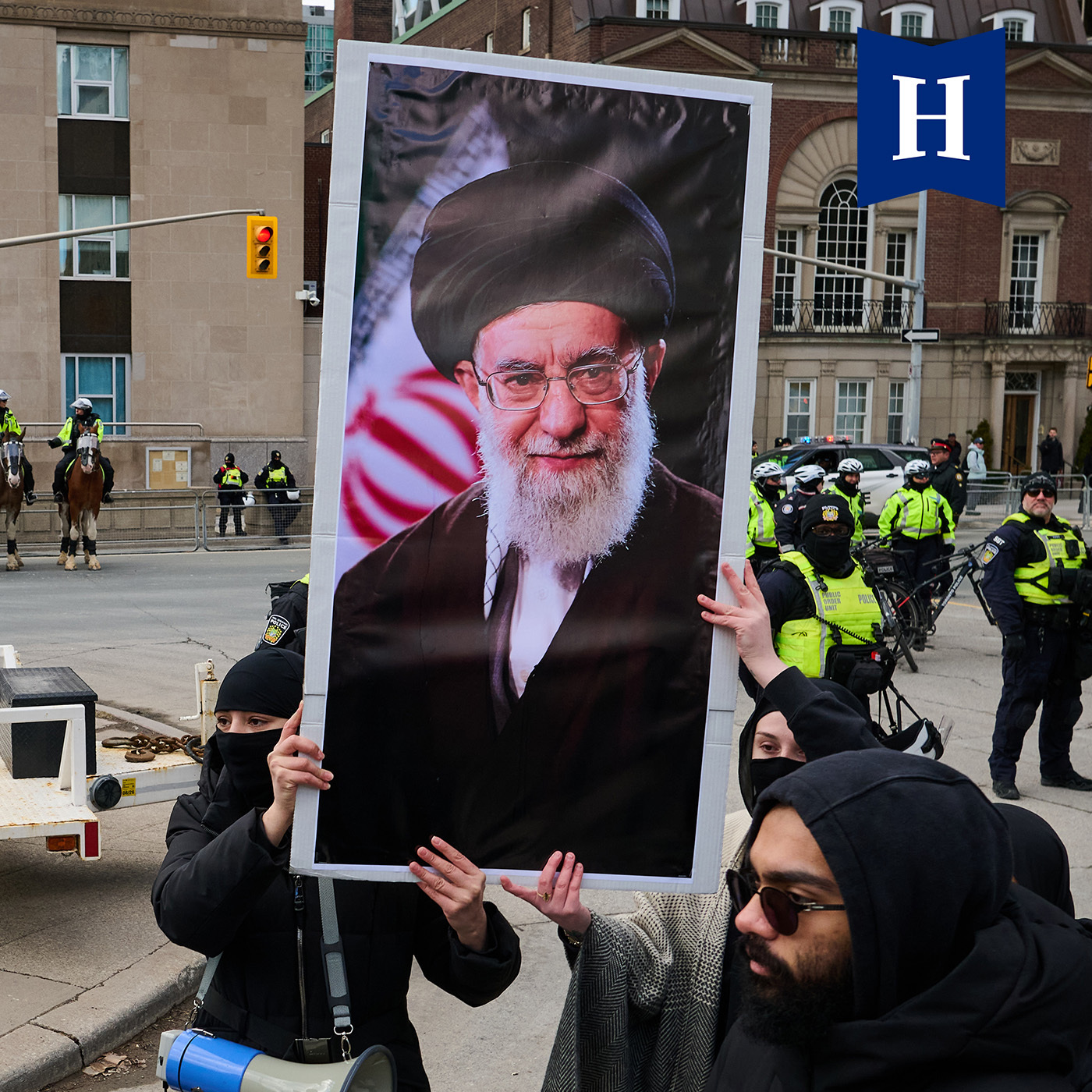
Stephen Rigby, former national security advisor, discusses the threat of Iranian intelligence operations within Canada. He examines the challenges CSIS and the RCMP faces in monitoring foreign agents, the difficulty of converting intelligence into prosecutable evidence, and the phenomenon of self-radicalization within diaspora communities. Rigby argues for creating a dedicated foreign intelligence service and urges Canadians to recognize the serious, evolving security threats facing the country.
This episode is a part of The Hub's new Fault Lines initiative, which examines the pressures pulling Canadian society apart and the principles that can hold it together. Click here to learn more: https://thehub.ca/fault-lines/.
The Hub is Canada's fastest growing independent digital news outlet.
Subscribe to The Hub's podcast feed to get all our best content:
https://tinyurl.com/3a7zpd7e (Apple)
https://tinyurl.com/y8akmfn7 (Spotify)
Watch a video version on YouTube: https://www.youtube.com/@TheHubCanada
Follow The Hub on X: https://x.com/thehubcanada?lang=en
CREDITS:
Amal Attar-Guzman - Producer
Elia Gross - Editor
Stephen Staley - Host
Sammy Kogan/The Canadian Press - Photo Credit
Hosted on Acast. See acast.com/privacy for more information.
Get every episode summarized
Each time Hub Podcasts publishes, we email you a written briefing from the transcript — the topics, who appeared, and any specific claims, with the ad reads skipped.
Email me new episodesFree for 3 shows. No card needed.
Hosts & guests
Transcript ready
234 searchable segments. Every word is indexed and playable.
Full transcript
Hub Podcasts — Hostile foreign threats targeting Canada. Machine-transcribed; use the interactive transcript above to jump the player to any line.
With the war in Iran raging, there have been lots of reports in recent days on the number of Iranian assets or IRGC members or different characterizations operating within Canada. What is going on? What are our security services doing or able to do about what's going on? To talk about that topic, I'm pleased to be joined today by Canada's former National Security Advisor, Stephen Rickby. Stephen, thank you for joining us here at the Hub. I'm in my pleasure. So I guess to start things off, there have been a bunch of reports, some of the media, some just online, claiming various numbers of Iranian agents or IRGC members or different characterizations operating within Canada. How should Canadians think about how these foreign networks exist, operate, or are monitored
if they are monitored by Canadian officials? Well, I think the first thing I would say is the average Canadian observer should recognize that these are not confirmed reports. These are issues that are being mooted in the press. The government is being questioned on them and the government is being fairly circumspect in responding to that. So to the extent that they haven't come out and said, no, this is absolutely untrue, then the issue, the story, the proposition is going to continue to float around. I think that it behooves all Canadians to be fairly, not to be naive, foreign intelligence services operate in and around most countries, to one extent or another. And Canada being the northern neighbor of the United States and Canada being a country which over the last 30 or 40 years has developed fairly large, strong and influential diaspora
communities, I think is a fertile target for a lot of these intelligence agencies. But there might be Iranian intelligence assets operating within Canada wouldn't surprise me in the least. I mean, again, I'm not that close to it anymore, but I think it would be almost expected. But what that means could be various things. You know, people are talking about the IRGC because that's an acronym that is very well known and has become a boogie man for a lot of moated Iranian misdeeds. But there are all sorts of Iranian assets that might be here and some of them might be security forces and some of them might not. And some of them may simply be community activists in Canada who are doing what they can to promote whatever the Iranian cause purports to be at this given time and maybe acting
within these communities to probably foment a certain amount of discontent. And you know, as we've chatted about, Iran's strategy is fairly clear. They are going to cause as much trouble as they can on a global basis and they are going to work to sustain that trouble in many, many forms and that could be military within the Gulf, within the straits of formuses, et cetera, firing on neighboring countries. But also, you know, in a slightly more insidious way, working within countries, certainly within the United States, I'm sure, but countries in Europe, in Britain in particular, where you see some confusion on the part of the government as to what their attitude is towards the Iranian conflict. And I'm sure within Canada, now, you know, we have effective, but modestly sized security and intelligence organizations, largely in the part of the RCMP, federal
policing wing and ceases. But you know, as you will have seen over the past years, how many arrests have there been for espionage in Canada, not many, right? So people are loose in the country, I expect. But whether or not they are, you know, actually practicing what would be a prosecutable offense is hard to say and very hard to prove. And so, you know, I have no doubt, I have no doubt ceases in particular is pretty busy these days following, you know, all of the natural leaves that they would follow at any given time. But as we saw in the India affair, it's very, very difficult to track individuals down and come up, you know, with the whole question, you know, the division that has existed Canada for a long time, intel into evidence, there's all sorts of intel that you can probably
come up with. But whether or not that's provable and prosecutable in a court of law, or even for the purposes of blaming charges is altogether a different thing. So on that front, you know, as you mentioned, the IRGC is an acronym that gets thrown around a lot because it's just widely known, but there's obviously multiple other agencies within the Iranian government. There are people who are simply sympathetic to the Iranian government and doing what they think is in the best interests of the regime. What capabilities do we have to monitor to, you know, actively seek out prosecutable cases? Like is there much prophylactic capability that exists within our intelligence services? Or what's your assessment of that capability relative to the kind of, what the threat is? Well, we're talking about the capability. I would talk about, you know, the challenge of what I think you're describing. You know, these people are, you know, legally in Canada for the most part, a few of them
may not be, a few of them may be visa overstays or, you know, various categories of people who are not here on a legal basis, but most of them are just living in Canada. And, you know, I am 100% confident that Cease's and or the IRCMP have, you know, a reasonable bead on a lot of these groups or individual characters, which they would maintain. But in terms of the actual capability, the numerical capability, this is really quite difficult work. You know, the amount of effort that has to go in just to monitor one person, let alone a whole group of people is relatively massive. And our security capabilities are, you know, they're, I think they're effective. I think these people are excellent professionals. That's always been my experience in my time in this world.
But they're not huge organizations, right? They're simply not. And again, to, to be able to convert what is a surmise or what is a possibility or what is a piece of intel into actually legitimate actionable evidence that could be presented either for the purposes of going to the public prosecution service or, or looking at what might be arguable in court, that's, that's an order of magnitude, you know, greater again. And said, you only have to look at the, the really small number of cases where a charges are brought and be charges are brought successfully. Yeah. So, and I mean, a certain extent, you've got to go back, you know, 20 or 25 years to, to a lot of the security certificate cases for the last time that, you know, we saw,
you know, a fair number of these things being, you know, crystallized properly. People were, were, you know, brought under, you know, the various possibilities that are available in the justice system and the security system. But it's been, it's been quite some time. And that I think belies the fact that you have moved from, you know, the old actual terroristic activities that we're going on by a lot of people to something that's much more insidious in a way. And that is simply working within the boundaries of countries to, to activate and animate diaspora communities and, you know, getting them working increasingly. And as these communities mature within Canada, or of course, you know, different folks from, different ethnic backgrounds, different geographic backgrounds, are going into, into government, into politics. And so they become influential, you know, within the, the Canadian parliamentary system,
legitimately so, but that's, you know, that's another approach for, you know, bringing people together and, you know, convincing them to one extent or another of an injustice here and injustice there in what, what Canada, you know, the constantly evolving Canada should be, should be doing in, in reaction to that. A little more specific. Over the past week, there've been a bunch of shootings in, in around Toronto. There's 300 synagogues. They were shot at the US consulate, had gunshots fired at it. There was the business of an Iranian descendant who had his business shot in Thornhill. In Australia, there was a case, a series of cases of arson's at synagogues that the Australian intelligence services investigated and determined had links to Iranian state-sponsored network. It would be reasonable to assume that cases like we're seeing in Toronto would be on the radar of our security and intelligence services to be investigated more widely than, more broadly
than, kind of, local police incidents, or would that have to be brought up to them by the local police? Like, how would that process of, you know, raising to the level of a broader investigation of some of these more local-seeming crimes be getting motion in Canada? Well, obviously, you know, the actual crime of discharging a weapon or, you know, attempted murder, whatever the charges might be, would be handled by a local police force. But ceases does not need to have a referral from a local police force to, you know, do its job, do its work. So I think it's more than a safe assumption to assume that they would be looking into these things of their own accord. When we think about this problem more broadly, you mentioned the kind of the scale of the challenge facing the security services. Are there either policy funding, are there other gaps that you see that Canada should be putting a little more focus on to address what's a growing challenge?
And, you know, as you described it, the more insidious version that's kind of growing in smaller, less specific, like, terrorists incidents, but more, you know, local organizing and agitating and that sort of thing? Is there more we should or can be doing to tackle this sort of new form of threat? Ceases, you know, has done fairly well in petitioning for and receiving additional funding from the government over the last few years. So it's not as though governments are completely indifferent to the sorts of challenges that they're facing. One of the things that I believe is, you know, you have to remember that Ceases was created as a domestic security service, which is what we're talking about here today. But, you know, because we don't have a foreign intelligence service in Canada, Ceases, you know, is called upon within the limits of its mandate to do some of that work abroad
as well. I believe that time has come with the various challenges that Ceases is facing, but Canada is facing more broadly, such as the things we're talking about today that it's time for the government to seriously consider the creation of a foreign intelligence service. So Ceases can sort of return fully to its original remit of looking into domestic security services. I also think that some of the things and phenomena that, you know, existed in the wake of 9-11 in what was that time more of a terroristic environment and risk profile. And that is how do people, how do they come to be radicalized? That can take a number of forms. And I think what you are probably seeing in the Iranian situation or in any number of
situations that Canada is facing domestically is people self-radicalizing basically based on what they see in the press, on the internet, in social media. And basically, you know, becoming enured without any substantial outside influence that, you know, they don't like what they're seeing and they're going to do something about it. And you know, you're certainly seeing more kind of second, third generation people, it's not like people are coming in infiltrating for these purposes. No, no, no, these people are just as you say second and third generation now. They've been here, their families have been here for a while, but they still identify, you know, with their original home country and they get concerned about, you know, the usual concerns that a lot of countries have when, you know, you get large examples of what they would view as Western adventurism. And I think a lot of people, even observers just in the United States, for example, would
say, you know, why are we doing this? Why did we go into this? You know, I think a case can be built for looking at the risks and dangers of nuclear proliferation or in terms of terroristic funding with the hoodies and the Hamas and Hezbollah, et cetera, but, you know, sometimes a lot of time, sometimes, you know, toxic soils better left, you know, undisturbed. And, you know, the history of American efforts to bring Western style democracy to, you know, countries who have not had any familiarity with that and that their history is something altogether different. It has not been successful. You only have to look, you know, at Libya or at Syria or a number of countries Iraq for that matter to a certain extent, to see what happens when you, you know, you take what
you feel is a is a is a malign administration and you end up with something altogether messier. Yeah. And, certainly, you know, that's what the world is facing today. And I think that, you know, a lot of the radiant expatriates, many of whom I'm sure would love to see the current regime gone and replaced by something more benign, but, you know, they probably have, you know, a range of emotions about what's happening. And you know, when people, you know, downtown Toronto or, you know, in any urban center in Canada, decide to take a gun and take pot shots at a synagogue or a mosque or that or anything, they may well have been just simply, I'll use the term self-radicalized that they decided based on opinions and views that they have fermented themselves in themselves to take matters into their own hands and do these sorts of things.
It may or may not have had anything to do with actions on the part of the IRGC, the Iranian Ministry of Intelligence. It may just be them. You may generous with your time. I think that's a nice way to move to my closing question, which is there's lots of commentary out there, as we talked about earlier. There's a growing discussion, maybe fear amongst Canadians, they think that there are sort of, you know, this really organized, active, foreign threat being targeted against Canadians. What should Canadians think as they're reading these stories and getting this sense that they're being targeted by a direct and intentional threat from foreign actors? Is there a, is there kind of a sober message that you have from, you know what I mean? Like Canadians, you know, should take these issues seriously. The world is a complex place now.
And at this particular juncture, certainly over the last five or six years, between regional conflicts, Russia, Ukraine, regional conflicts in the Middle East, et cetera, you have Pakistan, Afghanistan, you know, going at it with border skirmishes and more. These are nasty times. And I think the Canadian should be very sober in their appreciation of these things. And they should, you know, feel like they have a duty of care to reach out and make their views known, their concerns known to their government. And you know, quite honestly, as a bit of an aside, this whole business where they elect their, you know, local member, but increasingly party lines are proving to be party fault lines as people are crossing the floor. You know, you may have thought that you were voting for one thing and all of a sudden,
you know, a member takes it into their own hands to cross the floor and you find that you, for one reason or another, are voted for something else. You know, I think people need to recognize that what is being mooted here, while it's not proven, it's entirely possible that some of the risks that are being, you know, brought forward by the press and other commentators and observers are more than likely happening to one extent or another. They always do, but people should, should not be blind in their assessment of these things. You know, it's a nasty world now. And Canada is not immune to any of this stuff, not at all. A sobering message, but an important one. Stephen Rippy, thank you for taking the time to join us here this morning. Tyler, my pleasure. Thank you for inviting me.
More episodes
More from Hub Podcasts

9/11, Europe, and the fight over immigration
Hub Podcasts

How much slack is left in the global oil market?
Hub Podcasts

Canada’s low-quality trade war debate
Hub Podcasts

Andrew Coyne says we are at war, but is that true?
Hub Podcasts