Loading...
news
Houthis fire missiles at Israel, Iran's missile toll revealed and Tiger Woods arrest
About this Episode
Yemen’s Houthis launch missiles at Israel as the Iran war escalates. An exclusive report shows that U.S. intelligence can only confirm a third of Iran's missiles have been destroyed, despite the president's claims. Tiger Woods is released from jail after being arrested on suspicion of driving under the influence. And new insights into the bond between humans and their dogs.
Watch the latest On Assignment Podcast Inside Iran: A video diary
Listen to the Morning Bid podcast here.
Sign up for the Reuters Econ World newsletter here.
Listen to the Reuters Econ World podcast here.
Visit the Thomson Reuters Privacy Statement for information on our privacy and data protection practices.
You may also visit megaphone.fm/adchoices to opt out of targeted advertising.
Learn more about your ad choices. Visit megaphone.fm/adchoices
Hosts & Guests

Transcript
I'm your weekend host, Sharon Reichgarson.
It's Saturday, March 28.
Today.
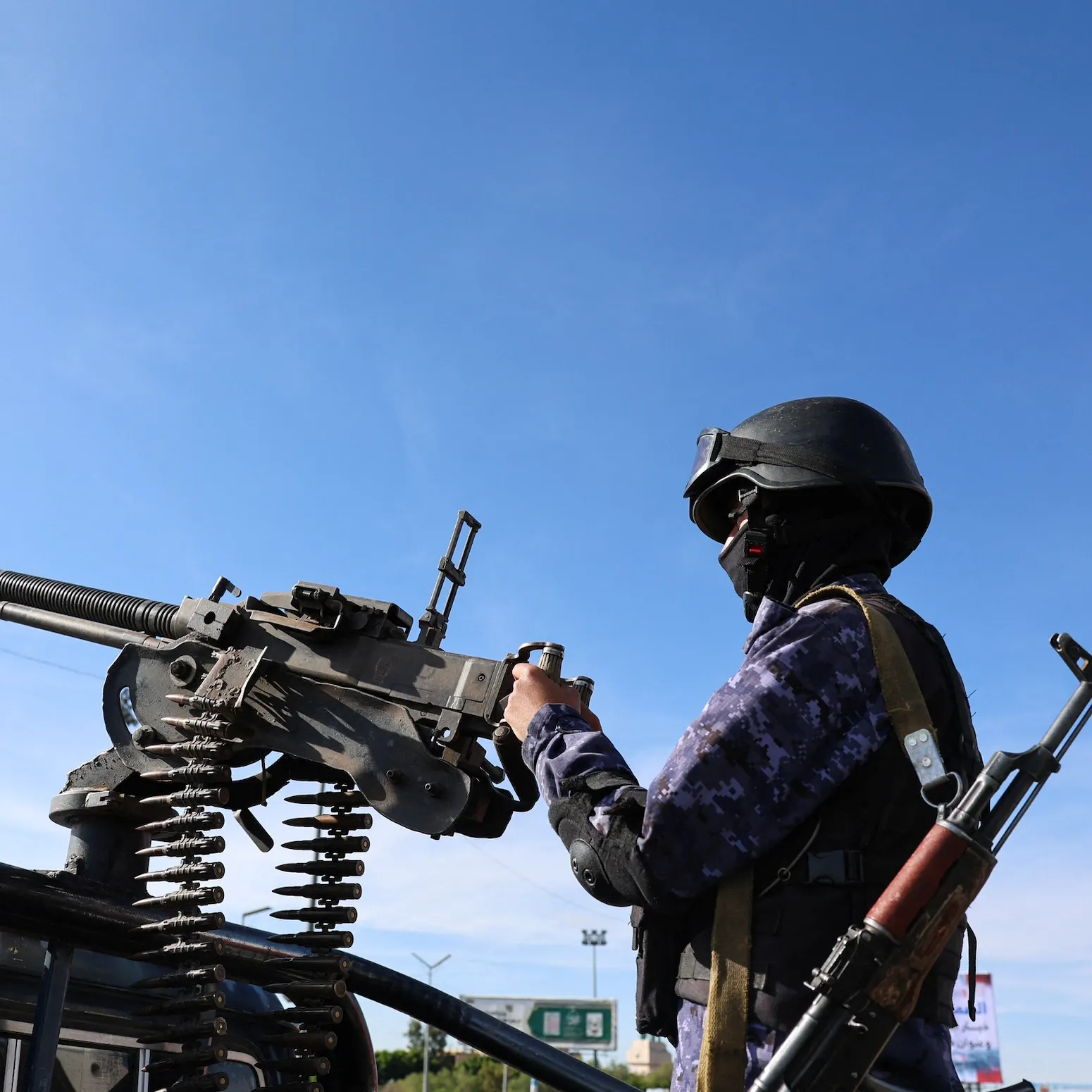
Yemen's Houthis enter the Iran War, launching missiles at Israel.
The U.S. can only confirm that one-third of Iran's missiles have been destroyed.
Tiger Woods is released from jail after being arrested on suspicion of driving under the
influence.
And what we've learned about the relationship between man and their best friend.
This is Reuters World News, bringing you everything you need to know from the front lines
in 10 minutes, seven days a week.
Lifelock, how can I help?
The IRS said I filed my return, but I haven't.
One in four tax paying Americans has paid the price of identity fraud.
What do I do?
My refund though, I'm freaking out.
Don't worry, I can fix this.
Lifelock fixes identity theft guaranteed and gets your money back with up to $3 million
in coverage.
I'm so relieved.
No problem, I'll be with you every step of the way.
One in four was a fraud paying American, not anymore.
Save up to 40% your first year.
Visit lifelock.com slash podcast, term supply.
Yemen's Iran-aligned Houthis have launched missiles at Israel, opening up a new front
as the war with Iran moves into its fifth week.
The group is already shown it can strike well beyond Yemen, and by threatening shipping
routes like the Babel Mandab Strait, it raises the risk that this conflict could spread
even further.
The Houthis say they'll keep up their operations until what they call aggression across the
region comes to an end.
Israel, for its part, says it intercepted the missile from Yemen.
Us were in the region a U.S. official confirms that 12 U.S. troops were wounded, too seriously,
in an Iranian strike on Prince Sultan Air Base in Saudi Arabia.
All of that comes as Washington's been trying to put an end date on the fighting, U.S. Secretary
of State Marco Rubio saying on Friday that the U.S. is aiming to finish military operations
within weeks.
We are on our head of schedule in that operation, and expect it concluded at the appropriate
time here, no matter weeks, not months.
Meanwhile, a clearer picture of Iran's missile losses is emerging.
Reuters has revealed that one month into the U.S. is really war, officials say they can
only confirm the destruction of about a third of Iran's arsenal, which is far sure to
President Trump's claim that Iran is almost out of rockets.
We've decimated them as a military, no Air Force, no Navy, very few rockets left.
The findings show that Iran still has a significant missile inventory and may be able to recover
some buried or damaged missiles once fighting stops.
Reporter Phil Stewart says that suggests that hopes of a quick drawdown may be unfounded.
Iran for many years has been preparing for the potential of an Israeli or U.S. attack
on it.
So what you're seeing right now is that because of that, U.S. intelligence especially is having
a real hard time concluding exactly how much of the Iranian arsenal has been destroyed
and is warning U.S. policy makers that there's a potential that Iran still has a lot of
capability here.
And there's a lot of expert analysis out there that shows that Iran is actually preparing
for a longer conflict, not just using their missiles, but also using their drones.
And don't forget, Iran's drones have been kind of the main driver of U.S. casualties in
this conflict as far as we can tell so far.
President Trump is going to have a real tough call about whether or not he's willing to
put U.S. forces on the ground in Iran.
And from what we can tell, while the planning is continuing to prepare options for him to
do just that, he has not made a decision.
And some of his public remarks suggest that he may not be willing to make that call and
put U.S. troops in that kind of danger.
And this kind of information that he'll be getting about the remaining missile capability
will certainly be one of the things he has to factor in when he decides whether he's
willing to take that risk.
There are moments when you see something and you realize you're looking into a place
the world hasn't truly seen in years.
And that's how I felt watching this week's special episode of An assignment.
My colleague Ahmed Jadala and his team are the first Reuters journalists to be able to
report from Iran in many, many years.
Last night, there were similar strikes by U.S. and Israel in Iran.
And the footage is honestly, deeply moving.
What's your name?
I used to.
That is so.
That is so.
Ahmed gives us a rare, unfiltered look inside the city.
It takes us into the quiet streets, the bombed out apartments, rallies, and through all of
it, he talks to ordinary people, giving us a glimpse into their lives during wartime.
We have to tell the people that the most.
We have to tell the world what's going on exactly.
You won't want to miss this An assignment special.
We'll drop a link in today's pod description.
Over in Israel, the country's parliament, the Knesset, is facing a high-stakes vote.
It's on the country's annual budget.
And if it doesn't pass by Tuesday, it'll force Israel into early elections.
Our Jerusalem bureau chief Rami Ayub says that could pose a real political challenge for
the country's longtime prime minister, Benjamin Netanyahu.
It was long presumed that an Israeli war on Iran would help Netanyahu's fortunes ahead
of an election where his entire future is at stake.
We've seen sort of the opposite of that happens where four weeks into this war, there's been
no bump for him in the polls.
He's sort of unable to plug that gap between translating the popularity of the war itself
into popularity and better votes for him in an election.
At the beginning of the war, right after the opening US-Israeli strike knocked out the
supreme leader, there was a sense in Netanyahu's camp that maybe they would benefit by holding
the elections early and one way to do that would be allowing this state budget not to pass
parliament.
Now that they haven't really seen a bump in the polls and the war is dragging on without
an end.
And Netanyahu's stated goal of seeing the regime in Iran being overthrown has not come
through.
Netanyahu's camp instead thinks that it's better to, you know, buy their time a bit and
hold an election in October on the regularly scheduled date.
Tiger Woods has been arrested in Florida on a DUI charge after his SUV rolled over near
his home on Jupiter Island.
Sheriff's deputies say Woods was speeding as he tried to pass a work truck on a narrow
Tulane road.
They say his SUV clipped the truck's trailer and then rolled onto its driver's side.
No one was injured in the crash.
Deputies say Woods crawled out of the car before officers arrived on the scene.
They did several tests on him.
Of course, he did explain the injuries and the surgeries that he had.
We did take that into account.
Martin County Sheriff John Bootin-Sectel's reporters that Woods showed signs of impairment,
but not alcohol.
He says Woods blew triple zeros on a breathalyzer.
Investigators say Woods refused a urine test, triggering an additional misdemeanor charge.
This is the second time Woods has faced DUI charges, having been arrested in 2017 and
later pleading guilty to reckless driving.
Woods is not confirmed whether he plans to compete in the masters, golf's most prestigious
major, which starts April 9th.
X-Sema is unpredictable, but you can flare less with Ebglyce, a once-monthly treatment
for moderate to superior X-Sema.
After an initial four-month or longer dosing phase, about four and ten people taking Ebglyce,
achieved itch relief and glare are almost glare skin at 16 weeks, and most of those people
maintain skin that's still more glare at one year with monthly dosing.
Ebglyce, Liberty Kizumap, LBKZ, a 250-mg per 2-ml injection is a prescription medicine
used to treat adults and children 12 years of age and older who weigh at least 88 lbs or
40kg with moderate to severe X-Sema.
Also called atopic dermatitis that is not well controlled with prescription therapies
used on the skin, or topicals, or who cannot use topical therapies.
Ebglyce can be used with or without topical corticosteroids.
Don't use if you're allergic to Ebglyce, allergic reactions can occur that can be severe.
I-Problems can occur.
Tell your doctor if you have new or worsening I-Problems.
We should not receive a live vaccine when treated with Ebglyce.
Before starting Ebglyce, tell your doctor if you have a parasitic infection.
Ask a doctor about Ebglyce and visit Ebglyce.lili.com or call 1-800-LiliRX or 1-105-5-5-9-7-9.
We're going to Cuba now.
As President Donald Trump has been talking about the island in stark terms.
And Cuba is next, by the way, but pretend I didn't say that, please.
Pretend I didn't say that.
Please, please, please, media, please.
Disregard that statement, thank you very much.
Cuba is next.
The country's grappling with a deepening energy crisis that's placing a severe strain on
its once-celebrated health care system.
Inside Havana's hospitals, exhaustion starts before the workday even begins.
Doctors and nurses save between power cuts and heat.
They're up all night, and they report for work anyway.
Obviously, but we're fighters.
Nurses like Lissandra González say they're worn down, but pushing through.
Health officials tell Reuters that hospitals are now only prioritizing the most urgent cases.
Reporter Dan Trada is in Havana.
The situation in Cuban hospitals in the health care system is the worst it's ever been,
at least since the 1959 revolution.
Across Cuban society, people are commenting how the situation is deteriorating
worse and worse each day, with very little hope that things are going to turn around soon,
and certainly that's reflected in the health care system.
Dan says the average monthly salary for doctors is 8,000 pesos or roughly $16,
and that no longer covers basic living costs.
Pretty much anybody who works for the government has the supplement or income some way.
We encountered one doctor who gets up early in the morning to cook rice and beans that he sells
on the side to supplement his income.
Others depend on remittances from their relatives living overseas.
Some doctors are just plain leaving the profession.
They've become house cleaners or taxi drivers or butchers.
Anything that pays more than these rather meager state salaries.
And finally, do a look deep into the past and the origins of man's best friend.
That relationship turns out to be far older than we once thought.
New genetic research is shedding light on the origins of dogs,
with scientists identifying what may be the earliest known example.
Bones found in what's now turkey,
suggests the animal was already an important part of human life nearly 16,000 years ago.
That's thousands of years before farming even began.
For more on any of the stories from today, check out Reuters.com or the Reuters app.
Don't forget to follow us on your favorite podcast player.
If you're listening on a smart speaker, just ask for the latest news from Reuters,
seven days a week.
We'll be back tomorrow with our daily headline show.


