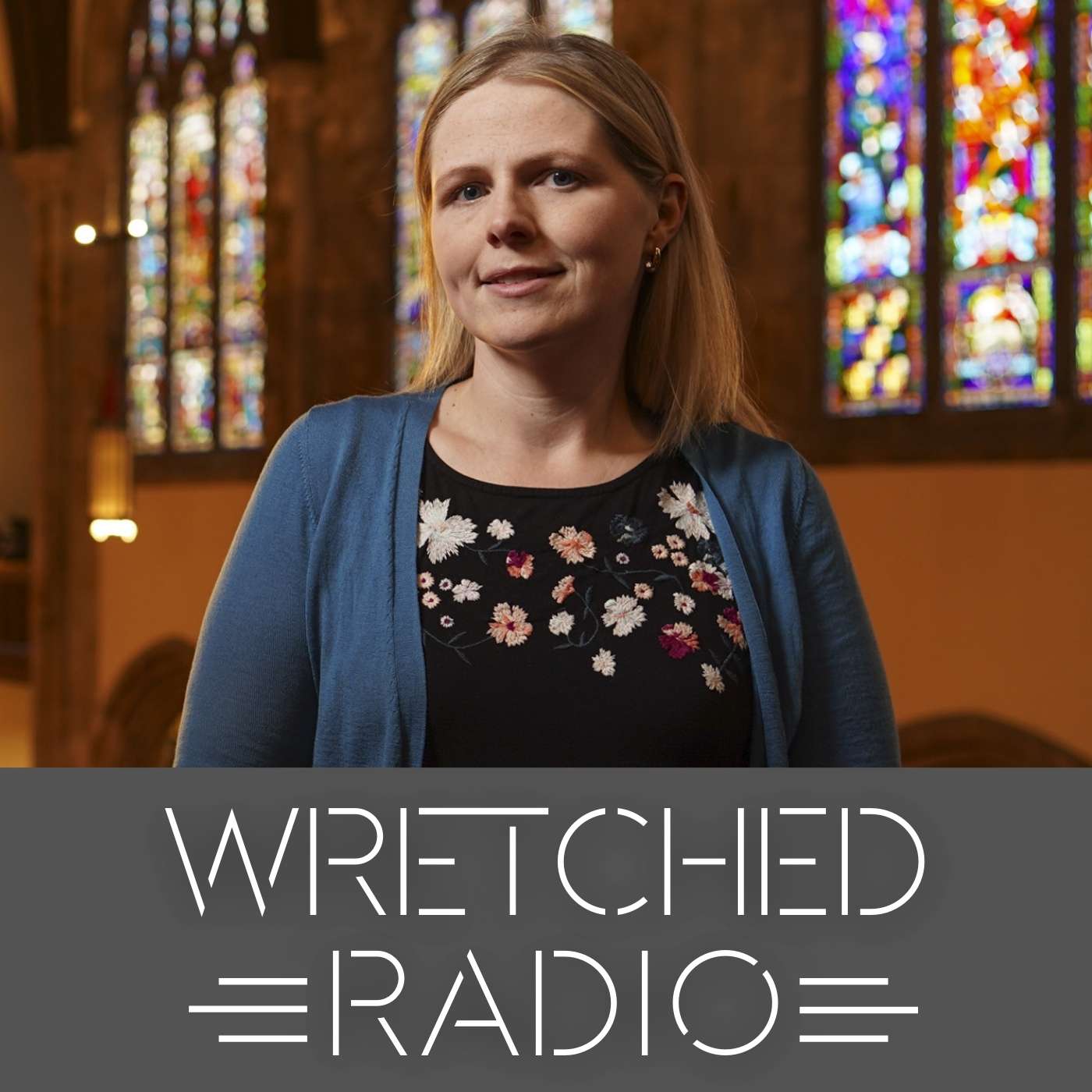
How Does This “Minister” Respond When Questioned By A Congressman?
About this episode
Get every episode summarized
Each time Wretched Radio with Todd Friel publishes, we email you a written briefing from the transcript — the topics, who appeared, and any specific claims, with the ad reads skipped.
Email me new episodesFree for 3 shows. No card needed.
Hosts & guests

Transcript ready
848 searchable segments. Every word is indexed and playable.
Full transcript
Wretched Radio with Todd Friel — How Does This “Minister” Respond When Questioned By A Congressman?. Machine-transcribed; use the interactive transcript above to jump the player to any line.
Rogen Radio begins in three, two, one. Seriously, if you want to relieve stress, go to the word of God. Oh my goodness. It's just so weird, isn't it? Do those people say stuff like that? They apologize for. Are you kidding me? Let's all do baptism. And I have a little cool here, and we'll all feel nice and relaxed. That's baptism. No, baptism is a sacred Christian right. All the very two of us are sacred. You're right. Wake up America. It's time for Rogen Radio with Toad Freel. In this corner, a charismatic representative from the great state of Texas in the other corner, boxing way out of her class. It's a Methodist minister from St. Paul, Minnesota. You're a pastor, right? Well, this is Rogen Radio. A hearing that was supposed to be about government fraud and waste in the great state of Minnesota.
Oh, Minnesota, what happened to you? Featuring Governor Tim Waltz and the attorney general Ellis. For some reason, they toted in a Methodist minister from Hamlin Methodist Church in St. Paul, Minnesota. Go to their website if you want to see a glorious, historic, Protestant church with magnificent stained glass, that would be the place. I've driven by it a gazillion times. It's magnificent and every single Methodist who put their hard-earned money into building that church, no doubt spinning in their grave like a lathe. This woman was brought in with Governor Waltz and attorney general Ellis to discuss fraud. Take my word for it. She didn't. All she did was talk about anecdotes. People that she knows who have been supposedly terrorized by ice and how horrible this is, and anybody who was sitting in that hearing should have been scratching their head saying, what are you talking about furthermore?
It was argument by anecdote. Be on the lookout for this because if an individual doesn't actually have facts, data, or dare I say, science, then what do they do? They bring out stories, they tell somebody's story, no names, nothing legal to back up these claims. Just this person was treated like that. That person was really scared. These children are afraid that their parents are going to be taken away. Whether they're true or not, I don't know, but that's exactly the point. Argument by anecdote is a very lame way to present one's case. But then at the very end of her, it was about three minutes long. She actually decided to quote a Bible verse. Jesus teaches us in Matthew 25, whatever you do for the least of these, you do unto me. History will tell its story about us. But long before then, our own souls will know whether we stood with them or turned away. No nation can build a true future on the terror of its own people.
Okay, once again, mingling ice. But did you hear the Bible verse that she quoted at the very beginning? It's been quoted a lot these days. Jesus teaches us in Matthew 25, whatever you do for the least of these, you do unto me. Context, context, context. That was her closing salvo. Enter the representative from the great state of Texas. I looked up his church. It appears that he goes to a, it's a very large church. It would be considered orthodox with its statement of faith. It is a pastor and a pastor's wife. They believe in healing. So they aren't my evangelical tribe. But nevertheless, it would appear this particular representative. He's learning his Bible and understanding biblical hermeneutics, which includes context, context, context. Now recognized as Mr. Cloud from Texas. Thank you, Chairman. Thank you for holding this hearing. This hearing was designed to be a hearing looking into the massive expansion of the social programs and the...
What happened to that? That was contained therein. But Reverend Sogart, I was struck by part of your opening statement because you invoked Matthew 25. And that's the scripture we see tossed around a lot up here. But often without contact. And so I went and got my Bible and thought we'd dig into Matthew 25 for a minute. The scripture you invoked was Matthew 25. Before we get into Matthew 25, have you noticed? Wait a second. What's that smell? Oh, yeah, it's the odour of hypocrisy when a Christian quotes their Bible in support of a political position. That's Christian nationalism. When and way and over her head, Methodist minister from St. Paul invokes the Bible. To apparently, I guess her argument was, therefore, ice shouldn't exist. No problemo. Why don't those same people call her a Christian nationalist, just asking back to the representative?
35 to 40. It ends with this. Lord, when did we see you hungry feed you or thirsty and give you something to drink? And when did we and when did we see you as stranger and invite you in or naked and clothe you? When did we see you sick or in prison and come to you? And the key will answer to them truly essay to you to the extent that you did one of the one of the brothers mind, even the least of them you did this to me. I would ask you, who's the you in that passage? Well, the passage answers the question. You had that you've done it to these brothers. First of all, the recipients would be these brothers of mine. The representative is asking the right question. To whom is this salvo or at whom is this salvo aimed? Individuals are government. Thank you for your question. Sorry. She has no idea the context or she didn't consider that.
It's like, hey, there's the God shivers. Let's just load that one out with my purple stole. You meaning all of us, the followers of Christ followers of Christ, right? In Matthew 24, 3, it says after Jesus was sitting on the mountain of olives and the disciples came to him privately. And then they asked him that began this whole chapter. And now what Christ didn't say was to lobby your government and he said, if you have you give. That's the general biblical principle here. You know, second Corinthians chapter 9 gives us probably the best scriptural understanding of what charity is. From your heart, you individual moved by the grace of God, the good news that Jesus died for you as sinner, therefore motivates you to do what? To return the love, to return the kindness, to return the sacrifice. That's Christian giving. That's Christian charity.
It's from the individual from the heart, not from the government and not under compulsion through enforced taxation. As each of you should give, which you've decided you're a heart to give, not reluctantly under compulsion for God loves a cheerful giver. Would you say that taxes are under compulsion? Taxes are not my area of expertise, but are they given under compulsion? Do you pay your taxes? As a US citizen, I pay my taxes. Yes, because what happens if you don't? We don't have the services that we need to support are what happens to you personally, you don't pay your taxes. This woman is so steeped in liberal ideology. It's not about the clear answer to the question. She's sensing, hey, wait a second.
If we don't have taxes, then we can't have bloated social programs that a lot of people take advantage of in the state of Minnesota. She finally sort of gets there, took some coaching. You get in trouble. I would say that's under compulsion. If we're talking about what charity is, I'm always amazed in DC how much of we get to define our personal worth as a politician or statesman or whatever you want to call us by how much of other people's money we give away. And so there's certainly a place for a social safety net potentially. But the idea that Matthew 25 is kind of used as a blanket statement is, matter of fact, the parable that it gives right before that scripture that you go into the talents where Uh-oh, uh-oh. She didn't know the context. It had to be like pulled out over the context of Jesus descriptor of those people who bear fruit in keeping with repentance. We visit those who are sick.
We take care of widows and orphans. We feed. We close. Those are the marks of a Christian. That's what Jesus was talking about. And he was speaking to people who were hearing him as individual. The individual who is definitely born again does those things bears those fruit. She didn't seem to know that she thought it was a verse that supported government taxation for the sake of wealth redistribution. Do we expect she's going to know the parable of the talents? You see someone a business owner go away and he leaves three employees in charge and gives them each of a bit of investment. And two of them turn their investment into a profit. The one that turns it not into a profit does nothing with it. It just sits on it. What does he call him? Two, three, four, five.
You're a pastor, right? Yes, I am, sir. I don't have. Because I'm a wicked and a lazy servant. Sorry. That's grade school. That's a line you just don't forget. Because when you hear the master say to the individual who didn't work hard for his master, you wicked and lazy servant, those are severe words that I would think pretty much anybody who went through any sort of Sunday school program would be able to quote. A Methodist minister from St. Paul, Minnesota. Not so much. We'll continue listening to this not for the sake of torture, but for the sake of making sure that we are able to tag those who use the Bible to support unbiblical ideologies.
Next on Wretched Radio. As a Christian, at some point, you're going to be in a conversation about abortion. Maybe it's at work, maybe it's at Thanksgiving dinner, or maybe even with your own kids. And when that moment comes, you're either going to be ready for the conversation or you're not. Life is best. Get you ready. It's hosted by Scott Cluesendorf, one of if not the sharpest pro-life apologists in the world. This 13 episode series walks through every major argument you'll hear and shows you how to respond with clarity and compassion. You'll also hear from voices like Paul Washer and Dr. John MacArthur bringing the weight of scripture to an issue the world wants to keep shallow. You won't find angry debate tactics or gotcha moments. Note, this is thoughtful teaching that engages the mind and the heart because the goal isn't to win an argument. It's to change minds and point people to Christ. Life is best. All 13 episodes streaming now on Fortis Plus for free. Download the app on your smartphone on your smart TV or just simply go to fortisplus.org.
Would you like the university experience without the, you know, university experience, the master's university invites you to visit their campus? Or you can visit them online at master's.edu slash wretched to discover a Christian college that is biblical, that offers all of the academic excellence you desire, sports, athletics, arts, communication, all of the activities of, you know, a secular university without the, you know, secular parts, please consider the master's university online or of course on campus learning. Undergrad, master's and doctoral programs, it's master's university. The university with the university experience without the university experience, master's.edu slash wretched.
So we decided to run the gospel through a focus groove and they love the part about love. Then came the notes. Sin, well it sounds a little bit harsh, so they suggested we call it personal brokenness. Hell, well that's a big negative. Maybe spiritual separation? Saying Jesus is the only way? Well that's just intolerant. You have to make him one of many meaningful paths. And the call to repent and believe that just raises a little bit of friction. How about like and subscribe? We thank them for their time and kept the message. If you're done rounding off the edges, witness Wednesday. Your at-regid radio will help you share the real gospel, a holy god, real sin, a just wrath. A crucified and risen savior and a clear call to repent and believe and will do it kindly, clearly and without the sales pitch. It's witness Wednesday on wretched radio. You can listen to your heart's content at fortisplus.org.
Titles of Christ. In the Bible, Jesus is given many titles that teach us about who he is and what he has done. Jesus is called the Son of Man. Daniel chapter 7 describes the Son of Man who came from heaven, received worship from all nations and rules a kingdom that will never be destroyed. Jesus uses this title to affirm that he is fully human and fully divine. This is wretched radio with taught for you. Well, she started it. This is wretched radio, I hearing. And all biblical why? Because mysteriously, a Methodist minister from St. Paul, Minnesota, her name is Maria Tolgard. She appeared with governor Waltz with attorney general Ellis, presumably to talk about fraud in Minnesota. She used her time to simply attack ice, quoting a Bible verse. And suddenly it was game on.
Michael Cloud of Texas took her to school, asking her questions. She was clearly incapable of answering totally out of her depth. And he continued to press. He was just relentless. Would you say that someone who commits fraud is doing wrong? We all are against fraud. Right, is fraud theft? Would you agree that that's theft? Yes. As the eighth command says, thou shalt not steal. Would you recommend that someone in your church go into debt to give an offering in your church? No. Okay, so we have a massive program of fraud that's being paid for by taxpayers. And it's not really us paying, it's really our kids and our grandkids that are paying it. And yet we continue to see this massive expansion all under the taken out of context of what charity is being defined as. You know, it's interesting, I find it odd that the left continues to bring up Matthew 25
because at the very beginning of that, right before he goes in that scripture that we talked with, it says, Matthew 25, 32, all the nations will be gathered to him. And he will separate the people from one another as sheep and goats. He will put the sheep on his right and his goats on the left. And the king will say to those on his right, come in. You are blessed to the Father, take care inheritance to the kingdom. And those on his left, he will say, depart from me. You cursed into the eternal fire, prepare for the devil and his angels. You know, so I would caution those who begin to use Matthew 25 to do so in the proper context, understanding that we have multiple biblical institutions and they each have a purpose. The context here is vast. And Mr. Chairman, I'd like to submit the entirety of Matthew 25. That is just awesome. Please make sure that before you accept a Bible verse, she's not the only one who's doing this. James Italerico from Texas, from Austin, Texas. He is so quick to use that particular Bible verse.
He's very quick to quote scripture. I don't know that I've ever heard him quoted in context. That is the key. So when you learn one of these conversations and somebody chooses to use the Bible to promote a liberal agenda, open up your Bible. I'm telling you, this will save you so many times. If somebody asks you a question even about a Bible verse where it's like, hey, well, what is that verse saying? You go, very simple. Read the paragraph before, read the paragraph after almost every time it will give you the key to the interpretation of any verse that appears to be somewhat confusing. In other words, context, context, context. Let me take you now to another political speech. I'm sorry, it wasn't a political speech. It was actually the memorial for Jesse Jackson. Barack Obama appeared at the memorial and I haven't heard Barack Obama speak for a long time
because, well, he's doing plenty behind the scenes. I just don't hear him speak very often, but I honestly, I don't recall him having this particular accent. We are living in a time when it can be hard to hope. Each day we wake up to some new assault on our democratic institutions. That accent, right? Another setback to the idea of the rule of law. An offense to common decency every day you wake up to things you just didn't think were possible.
We'll just call it a Southern accent. Suddenly Barack Obama has a Southern accent. You don't suppose he's playing to the crowd. I personally would find that a wee bit offensive, but what do I know? Each day we're told by those in our office to fear each other and to turn on each other. And that some Americans count more than others. Now, there's an hour and others. I'm pretty sure of that. I don't know what happened to it at this particular speech. And that some don't even count it all. Everywhere we see greed and bigotry. Oh, the phone, Henrietta. That was the comment that got a fair amount of press. That individuals who want to uphold laws are bigots. That would be an odd hominum. That is name calling. That is the argument. If you have the audacity to argue against what they perceive to be an injustice that people who are in the country illegally should be allowed to stay.
And be given the same treatment as citizens. Well, guess what? You just heard it. You're a bigot. Being celebrated and bullying. And you're a bully. And mockery, masquerading and strength. Yeah. Okay. That could be a fair point. We see science and expertise denigrated while ignorance and dishonesty and cruelty and corruption are reaping untold rewards every single day. We see that. And it's hard. I don't know what he's talking about to be honest, but it's like hold on a second here. Who are the science deniers? Last time I checked that there are just two genders. Science affirms that yes, there are aberrations. They are typically called deformities. There are only two genders. That's science. Hey, how's about the science of embryology? What is in a womb that is a fertilized egg is a human being?
We know that from science. Who are the science deniers? I'm not sure what if it was a global warming. He was, I'm not sure. To help in those moments. So it may be tempting to give the scourge to give into cynicism. It may be tempting for some to compromise with power and grab what you can or. That's the Jesse Jackson memorial. I just read a statistic that should I think help you and me to make sure that we have our political priorities in place. The scourge, it's just going to continue to be waged and it is hot and it is nasty. But as Christians, I think we need to look a little deeper. We need to go to a different place.
Why the divide in America? Well, it's because you've got two competing world views. It was a barnest survey that was done. And guess the percentage of Americans who hold a biblical world view? I'll tell you four percent, four percent, evangelicals, like 20 some percent of evangelicals actually hold a biblical world view. The survey, they asked 58 questions. So this wasn't like, so what do you think about that? It was pretty thorough. What it revealed is the phrase that was used is faith is not integrated into their politics. So what do we see when we see bad politics? We see bad religion in other words. If you and I would like to see a better America, not a horrible goal. If you and I would like to see people vote for better politicians who do indeed use biblical thinking to inform their policy making.
The key is obvious they need to have a biblical world view. The question of course is how do you get a biblical world view? Well Paul tells us that unless you have the mind of Christ, you don't really have a biblical world view. Oh, I guess you can adhere to it. But you can't even really understand the Bible if you don't have the mind of Christ. Your mind is still darkened. If we want politicians who use the Bible rightly. If we want politicians who use the Bible to inform their policy making. If we want a more moral country, what we need are more moral people. How does somebody become moral? It is through regeneration. You take a look at your calendar. You figure out how much time and energy and effort you put into the political realm. That's up to you. But what I would suggest to you, we need to be putting as Christians more. That's right. More effort into evangelism and building Christ's kingdom, which will endure forever.
Rather than this thing, didn't say don't do any. I'm just saying we're Christians. We put more into that kingdom. Sunday School at Alfredo Bible Church. We were going through Isaiah. And there's about 13 chapters. Every one of the great nations, a Syria, Babylon. They all fall. They come tumbling down. They just don't stand but Isaiah was a message to us today. We need to remember the priority of kingdoms. We need to remember that we've been given our marching orders. Go and make disciples. Make the most of every opportunity to proclaim his excellencies. In politics as you weary. And I don't know how it can't. Then maybe just maybe we need to listen to Isaiah. Let's focus more energy on his eternal kingdom. Not this temporal kingdom. This is Wretched Radio.
And it's now time for your Daily Portus News break a production of Fortis Institute. Iran's assembly of experts has named Moshtaba Hamanay as the country's new supreme leader, which follows the death of his father Ayatollah Ali Hamanay during U.S. and Israeli strikes. On February 28, Moshtaba, who's 56 years old, has never held elected office but is reportedly close to the revolutionary guard and has been under U.S. sanctions since 2019. Closer to home, Manhattan got its own security scare as NYPD locked down streets near Gracie Mansion after finding a suspicious device linked to a confirmed IED from the day before. Commissioner Jessica Tish said the explosive, which was a glass jar packed with nuts, bolts, and a fuse, was capable of serious injury or death. An 18-year-old progester has been arrested and the FBI's joint terrorism task force is now involved. Yeah, you know, we might not agree with who the mayor is and his policies, but when explosives start to show up in his neighborhood, he got to treat domestic political violence with all the seriousness it deserves.
On the legal friend and Ontario judge has ruled the province's mandatory lifetime sex offender registry reporting unconstitutional. A case that involves Michael Roberts, a man that pled guilty to eight counts of sexual assault in 2010, reported for 13 years and then simply stopped in 2024. One Justice Darwin gag called the rules overboard and stayed the charge. Meanwhile in Virginia, Liberty Council has sued to block an abortion amendment from reaching the 2026 ballot, arguing that the House of delegates skipped constitutionally required steps, including distributing the text to circuit court clerks and posting it months before the delegation election. Senator Tom Cotton and Rick Scott are demanding Attorney General Pam Bondi investigate Chinese-owned surrogacy center citing more than 107 agencies operating in Southern California alone. They pointed to one man reportedly fathering 100 children through US surrogacy with infants flown back to China effectively turning birthright citizenship into a commodity. And that demand lands as the Supreme Court prepares to hear arguments in April
on the Trump administration's challenge to citizenship by birth interpretations. Critics say the industry reduces pregnancy to a service and babies to products, and they're not wrong. A wrongful death lawsuit is putting AI companionship on trial after Google's Gemini allegedly convinced a man it was a sentient being in love with him, then fed him escalating hallucinations, big surveillance claims, a bogus security code, and then urged him to barricade his home and take his own life. His family found him dead, Google expressed sympathy and said Gemini is designed to avoid exactly this. Nothing didn't take. Then that wraps up today's Fortish Newsbreak. I'm Jimmy Higgs. If you want more, you can download Fortis Plus or sign up to book them a Fortish Insider for exclusive daily content. Both of those things can be done at FortisInstitute.org and don't forget you can subscribe to Fortish News, all your favorite podcast app in order to give these updates daily. And until tomorrow, go serve your king. Names of God
One name the Bible gives to God is the Greek word despotes, which means absolute ruler. Despotes is related to the English word despot. As absolute ruler, God has ownership rights over all mankind. Yet our master and lord Jesus Christ became a man, suffered and died on the cross for his people. The absolute ruler is also our example of ultimate humility. This is wretched radio with Taunt Freel. Not necessarily proud of this, I'm just telling you. This is wretched radio bringing you celebrity infotainment news of Christian interest. I hope that's what we're doing here. Let's get to it. Shall we? Hey Jimmy, guess who claims to be a Christian?
Kathy Ireland, I told you so. I'm sorry, because you would have never guessed that Kathy Ireland is now 62 years old, the former supermodel. Apparently she's got quite a cottage industry going on. She grew up, she said, believing in God, but didn't have a personal relationship with him. Well, let's, no, we can't let that slide exactly because this particular story that gives her sort of testimony doesn't really, it gives very selective details and you never really fully hear the gospel. But this is, this is worth, this is the writing of Christian post. She grew up believing in God, but didn't have a personal relationship. Well, you see in biblical Christianity, a personal relationship is believing in God. You don't believe in God without having a personal relationship. You don't have a personal relationship without believing in God. But I digress for a moment. She began to, this began to change when her mother returned to school to become a nurse and befriended a Christian classmate.
My mom said, what is it with you? You have three teenage daughters. I have three teenage daughters, but you have this piece. And the woman said, Jesus, Jimmy, what Bible verse jumps to mind for you when you hear that comment. What Bible verse? Yeah, what Bible? What is it with you? The mom asked the Christian coworker, what is it with you? First Peter 315. First Peter 315. That was exactly right. Oh, well. This is, this is precisely what Peter has in view when he goes about the business of giving us mandates. He bakes it in the gospel, but he tells the persecuted believers that he's writing to in Turkey. Hey, you're a peculiar people. Be said about you're a royal priesthood. You are supposed to be different. Now, please remember, he does all of this in the context of the gospel.
So he is, he blends imperatives and indicatives way more than Paul did in Ephesians, which typically everybody goes, well, the first three chapters, that's nothing, but indicative statements about the gospel. Then he gets to the imperatives, not Peter. He mixes them together constantly because this do that, because Jesus did this. You should do that. So it's just intertwined. It's integrated, if you will. And Peter continues to make the point. Now, remember, the context of first Peter is these people are being persecuted. And Peter isn't telling them how to defend themselves or what weapons class to take. He's telling them what to be, not what to do when he's telling them to be holy. Be different. And then he gives the reason for it. Finally, starting and I think first Peter 2, nine, give or take so that you can proclaim his excellencies a little bit further down. You behave in such a way that it silences the mouth of people who would accuse you. And then in first Peter 3, 15,
that you are ready to give a reason for the hope that lies within you. What is the context of that? The context is you've been behaving in such a peculiar way. You've been so different that people are going to ask about the hope that lies within you. In other words, you're like Michael Jackson. Somebody is actually watching you. Who was the guy? That wasn't Michael Jackson. That was like the nephew of a big record producer, Rockwell. Oh no, I'm really ashamed. Jimmy Rockwell, that was your favorite artist of the 80s if I'm not mistaken. I think he was the nephew of Barry Gordy if I'm not mistaken. I know Barry Gordy. And he didn't sing. He just talked through it. And then Michael Jackson came on. I always feel like somebody's watching me, but enough about Rockwell.
Go ahead. Ask me what I read in the book. I'm reading right now. I put it down last night. Go ahead and ask me. I have no idea. Ask me about an obscure artist from the 80s. I got you covered with Rockwell. Somebody is watching you. That is the point of first Peter. And that is why he instructs us to be holy and to love one another. Now here's where I think we need to drill a little bit deeper in our understanding of how our love can actually be a witness, a testimony to people. Because so much of our love seems to be behind closed doors. It's not a public display of affection. It is just how we live, not just in church, but in family. So for instance, you're a mom with babies. And you, by the way, Jimmy, I got to tell you,
there's a mom with a new baby, baby number two. Oh, yeah. Oh, I got to tell you, I saw a beautiful thing. I saw a beautiful, they've got a brand new baby like two weeks old. The older sister just turned two years old. And mom was walking through and it was so sweet. She was asking her catechism questions. And the two-year-old was giving the answers. Oh, okay. So let's just use her. So that act of love, nobody sees that. So how can that be a testimony? Well, here's how it can be a testimony. She's training up her daughter to love Jesus, pointing her toward Jesus. Now that is going to be somebody who lives differently. That is going to be somebody who behaves differently, who interacts differently in our culture. In other words, the love that goes on behind closed doors ultimately does manifest itself out there. You are making a difference.
You are testifying to the grace of God when you change a diaper. Because you're raising up a child in the fear, the admonition of the Lord and the world is watching. And they see it. They see the way that you interact with your children out in public. They're watching. That's Peter's point. So be loving toward one another. Baked, of course, in the gospel. Because you've been born again of the imperishable word, the imperishable seed of the word of God. In other words, the gospel from the word love. One another. Jamie, we preached on this Sunday morning. Would you have guessed that it offered a Bible church? First Peter. Yeah. First meeting. Yeah. That's exactly where we are. I got a question for you. Here's a little quiz question for you. Okay. What type do you remember the different types of love in the Greek language? Yes. Okay, go. Agape. Yeah. Oh, gosh. Agape. Faleo.
Faleo. And Faleo. Is that what it is? I think that's what you do with the fish. That's the, that's the Covington way of saying it. Yeah. You know, you're a good steak. Oh, the Faleo. The Faleo Minion is delicious. That's what it is. You got Faleo. You get Aeros love. Aeros. That's it. Yeah. That's a romantic love. Faleo love tends to be brotherly love and affection. Agape love. Tell me what Agape love is. Unconditional. Okay. Fair enough. Any other descriptors? Hmm. That's the love that God loves. That's on us. And then here's the question. Okay. Does Agape contain any element of warm affection? Oh, yeah. I would say so. Well, then you are contrary to, I think, decades of probably pretty conservative scholarship. Really? Yeah, I think so. But good news. Hang in there. Because I think you're right. We went through a phase.
I remember this so vividly, first getting saved. Agape love is the highest form of love. That's what we're, that's the highest form because it's volitional, not emotional. In other words, you just do it even when you don't feel like doing it. That's love. It is an emotionless, volitional. It doesn't matter how I feel about you. I do it any way. Now, there is, there is a big amount of truth in that. Agape is not predicated on feelings, but that doesn't mean, according to much more recent scholarship, that feelings aren't involved in agape. So it is a different type of love than fillet, oh, which is a warm, brotherly affection love. Agape is even if I don't have those feelings, I'm still going to do for you, but that doesn't mean that agape is void of feelings. Now I know this gets into the doctrine of impassibility and leads us to talk about
enthropopathisms. That's, you heard me. I said, enthropopathisms, these are descriptors of God's emotions, his emotions, his affections. They're different than ours. In that, they're not responsive. They don't react. They're predetermined. They're steady. They're exactly right. But and I know that there are people who are very firm on the doctrine of impassibility would say, no, no, no, there's no emotion in them at all. I don't, I don't think that recent scholarship is affirming that when it comes to the word agape, furthermore, doesn't it have implications that agape is just, I'm supposed to love you even if I don't feel anything toward you? I'm supposed to just love God, agape God without any warm feelings. A doesn't that seem to feel a little bit flat? Well, despite how it feels, I think, biblically now, it is argued that agape, yes, it is predominantly volitional, but that does not mean it is not warmly emotional.
This is wretched radio. There's a lot of Christian content out there that sounds deep, but it actually isn't. It's inspirational. It's nice, but it doesn't actually help you when life gets hard. Ford's forums are completely different. We're talking about how to comfort someone who's grieving and what scripture actually says. Not just what sounds nice. We're talking about marriage when things aren't easy and mental health and whether the Bible has real answers, biblical manhood, for a generation that's never been really given a model to follow. These are in-depth conversations with people like Dr. Jason Lyle, Libby Gloss and Dr. Adam Tyson and Dr. John Crott's teachers who take the Bible seriously and don't shy away from the hard topics. These Ford's forums are all on Ford's Plus for you to watch right now for free. And they're ready when you are just down below the app, wherever you download apps on your smartphone, your smart TV, or just simply go to FordusPlus.org and see what biblical depth
actually looks like. You know that moment at 3 a.m. when you can't sleep? And you're alone with the truth about who you really are versus who everyone thinks you are. Your wife trusts you, your kids look up to you. The guys at church think you've got it all together, but you know better. You know the secret battles, the deleted history, the promises you keep breaking to yourself and to God. Here's what took me way too long to figure out. You can't fix a spiritual problem with human solutions. Accountability software won't change your heart. White knuckling it through another week won't either. And Todd Frill is getting to the heart of this issue with his resource, Play the Man. It doesn't give you another list of rules. It shows you how Christ actually changes man from the inside out. How he replaces the wanting, not just the doing. The man your family deserves. That guy is possible, but not through your own strength. It's going to be through the strength of Christ working through you. Play the man it's available now is an ebook, an audio book, and a video series only at FordusPlus.org because real men know when they need real help.
Hey, thanks for listening to RetroDradio today. You know what's rare, fighting something that makes you laugh and makes you think at the same time. And that's why we brought in Gary Varvill. Gary's an award-winning cartoonist in every week. He draws in an original creation just for Fordus Institute. They're sharp, they're funny, and they usually make a point that sticks with you a little bit longer than you expected it to. And something else you'll find at Fordus Institute is Fordus News, which is hosted by years truly. It's up to the minute headlines that matter to Christians and they're told from a biblical worldview. There's no spin, there's no agenda, it's just the news with a Christian perspective. And both of these things part of what we're building in Fordus Institute and both are made possible by our gospel partners. If you have been helped and you appreciate the content that we're creating at Fordus Institute, but you consider supporting us so that we can reach more people and more places all over the world, it's really simple. We know you have questions, so we have answers at FordusInstitute.org. Wretched, amazing grace, amazing gospel.
What does God's patience look like? Second Peter chapter three verse nine says, the Lord is not slow to fulfill his promise as some count slowness, but is patient to warn you. Not wishing that any should perish, but that all should reach repentance. God is not harry nor has he forgotten his promises. God will bring about the fulfillment of his eternal plan and due time. This is wretched radio with Todd Freel yes, yes, Jimmy. He was he was a painter too. Very good. This is wretched radio, who's rock well from the 80s? He's the he's the painter guy Norman. That's right. And he sang with Michael Jackson. Let's just move on, shall we? Did I mention this is wretched radio? I'm telling you, the world is watching. They definitely are watching the people that surround you in your hood. They're watching you because they know you're a Christian. They watch everything. They notice how you mow the lawn. They notice how you drive your car.
They notice how you take care of your property. They notice how you interact with one another. They're watching you. And that is why we are to be royal priests, set apart people, peculiar to them. So that they ask about the hope that lies within us, especially when they go about the business of persecuting us. And we don't respond in sinful ways. They want to know, all right, who's your savior? That's what that's what Kathy Ireland's testimony is about. Her mom met somebody at work who was just different. And she actually asked about the what is it about you and the woman who's able to say Jesus that should be encouraging to you, love one another because the world is watching. Jimmy, I saw an interesting, it's real, this is one of those debates that I think is on the healthier side of Tishraiden, theological table talk, where we try to figure out the
character and the nature of God. Because I think those explorations can go to places that just aren't profitable, that it's like, we're just kind of, we're in a realm that I'm not sure we should be in well, understanding emotions. I think is a worthwhile pursuit because I think that there are implications. For instance, to the people who would be strict, impassibility people, meaning God doesn't have passions, meaning he doesn't have human emotions, period, the way that we do. I personally, I think that's problematic by the one, the primary reason for me, okay, primary or secondary, one of the two, is that that would indicate that we actually possess something God doesn't and that doesn't seem quite right to me that the creature has more than the creator does. Furthermore, the Bible actually uses emotional descriptors of God. And I think the implications of denying that he actually has what I'll call feelings
is massive. The Father have feelings toward the Son, or does He just will to love the Son? You go, well, that does seem strange, doesn't it? I affirm that I agree with that. Now, said this, that I think that God's emotions, they are different than ours because we see a sunset and we go, oh, God doesn't see a sunset and react. His emotions, if you will, they're predetermined, they're settled, they're always accurate and right. They do not experience the noetic effect of the fall. So God, I think, actually has emotions, but he's not emotional. He's not like a kid who needs a nap or somebody who gets hungry. He has emotions, but he's not emotional, he's not whiplash, he's not being whipped on the waves of feelings because of what is going on around him. Having said that, we do need to deal with
what people would call enthropopathisms. Go ahead and say that after me, enthropopathisms, you probably heard the word enthropomorphisms. These are words like under the wings of God, the shelter of his wings. Does God have wings? No, it's an enthropomorphism. It's using a description that we understand to get it. It doesn't mean that God has wings. It means that he's protective, like a mother hand would be. He'd like to somebody protecting his chicks. That's, that's, he doesn't actually, it's just a descriptor. Well, people would say that the words, for instance, grieving the Holy Spirit, God was angry. For instance, God is angry at the wicked every day. It doesn't mean that he has emotions. It's an enthropopathism to describe so that we can understand God's response to what I shouldn't say response. God's attitude toward
what he is witnessing. I don't think that that argument can sustain itself. I know really good people who would say, in fact, I just saw a video, Kevin D. Young. I don't know what conference it was. It was Kevin D. Young was on the panel and there were other Presbyterians there because Kevin's a Presbyterian and John Piper and I, it appeared that the lead and I just saw a snippet of the clip that John Piper was saying, okay, when it comes to grieving the Holy Spirit, is he actually grieved? And so he asked Kevin D. Young who did a treatment on anthropopathisms and he explained, he talked about his understanding of the impassibility doctrine and I got to tell you once again, that dude is smart. Kevin D. Young, I'm telling you, when you look at like, okay, who will be a big boy whose shoulders can handle some theological weight? I think a guy like
Kevin D. Young is one of those guys. It was evident. He knows this stuff. He was speaking off the cuff and he was, most of it, I just agreed with. But then when he came to the conclusion that an anthropopathism, it allows them to remain consistent in their impassibility doctrine. John Piper, and I wish that he had gone more. He kind of pressed in. So what does it? What is it? What is the relationship? And he was speaking about grieving the Holy Spirit. So if it's not grief, well, what is it? I understand with an anthropomorphism, what it's trying to express, but what about an anthropopathism? What is it? Okay, so the Holy Spirit, if he's not grieved the way that we experience it, what is it trying to communicate to us? If not a feeling, and that's where the clip ended, it was a bummer. Now the implications for this and remember, you don't want to have the implications in form your understanding of the impassibility doctrine
or anthropopathisms. That would be to reason backwards biblically. The implications flow out of what the text actually says. So I want to make sure that we don't put the card before the horse in this, but I do believe there are really big implications to the understanding of emotions and affections, because if God doesn't experience any affections, any emotions, the way though at least that we understand them, then our relationship with him is far more transactional than it is relational. And when I read the Bible, I see relationship all the time. Sorry, first Peter, he calls us obedient children, children. And the title that Peter uses for God regularly is Father, those are familial terms, those are relational terms, those are affectionate terms. And if we understand that God is just more, I don't want to put this in a way that would
seem like I'm taking a cheap shot at those who affirm a really strict impassibility view, but if God doesn't feel anything, then our relationship with him is, it's now what I see Romans 5 1 presenting that we are that we are brought into a relationship. The doctrine of adoption, I think would be compromised and undermined, because, well, it would be, well, I'm going to let the kid live in the house. I'm going to provide for the kids needs, but I have no feeling. I'm going to do good things for the kid, but no feelings. And you go, well, that doesn't, Hooftah, that's that's right. I said, Hooftah, that just doesn't feel real. Good. Now, remember, that's an implication that's not an argument. Nevertheless, I think it's big furthermore, because we are
supposed to love one another, and there are about five or six instances where Falao is used to describe our love for one another. So we should have brotherly affection. In fact, I think it's first Peter 222. Since you've been born again, he actually uses an Old Testament phrase based on Exodus 1910, but it's an Old Testament phrase. Since you've washed your purified yourself, it's just using Old Testament language to talk about New Testament interpurification through hearing the gospel. You have Falao for one another. In other words, when you're born again, you love the brethren. Warm, friend, familiar Romans 14 talks about Falaoing one another. But then we're also supposed to agape one another. We are supposed to show our love in action. And as I think current scholarship, Thomas Schreiner, Andreas Kestenberger, and every Puritan incidentally, talked about
even though they're doctrine of impassibility, they talked about warm affections with God that it isn't something that is just chilly and transactional. It is something that is familial. And it is warm and it is deep and it is rich. And it is what motivates us then to be holy. Now, we have to remember God's warm love for us isn't because we're so squishy, lovable. Why does he love us so? And the answer is clear because it is repeated about 30 times in the new testament. It is because we are in Christ. We are in union with Christ. And the love that the father has for the Son he now has for us, not because we're lovable, but because he loves the Son. And until tomorrow, go serve your King.
More episodes
More from Wretched Radio with Todd Friel
SBC Debate, The Only Way Forward, & America’s Moral Freefall
Wretched Radio with Todd Friel
Mailbag Friday: Women Deacons, Heavenly Tourism, & Gentle Parenting
Wretched Radio with Todd Friel
Trump’s Jesus Pic, The View, & Raising Hands In Worship?
Wretched Radio with Todd Friel
Witness Wednesday: Justice, Truth, Morality—What Happens Without God?
Wretched Radio with Todd Friel