Loading...
technologybusinessentrepreneurship
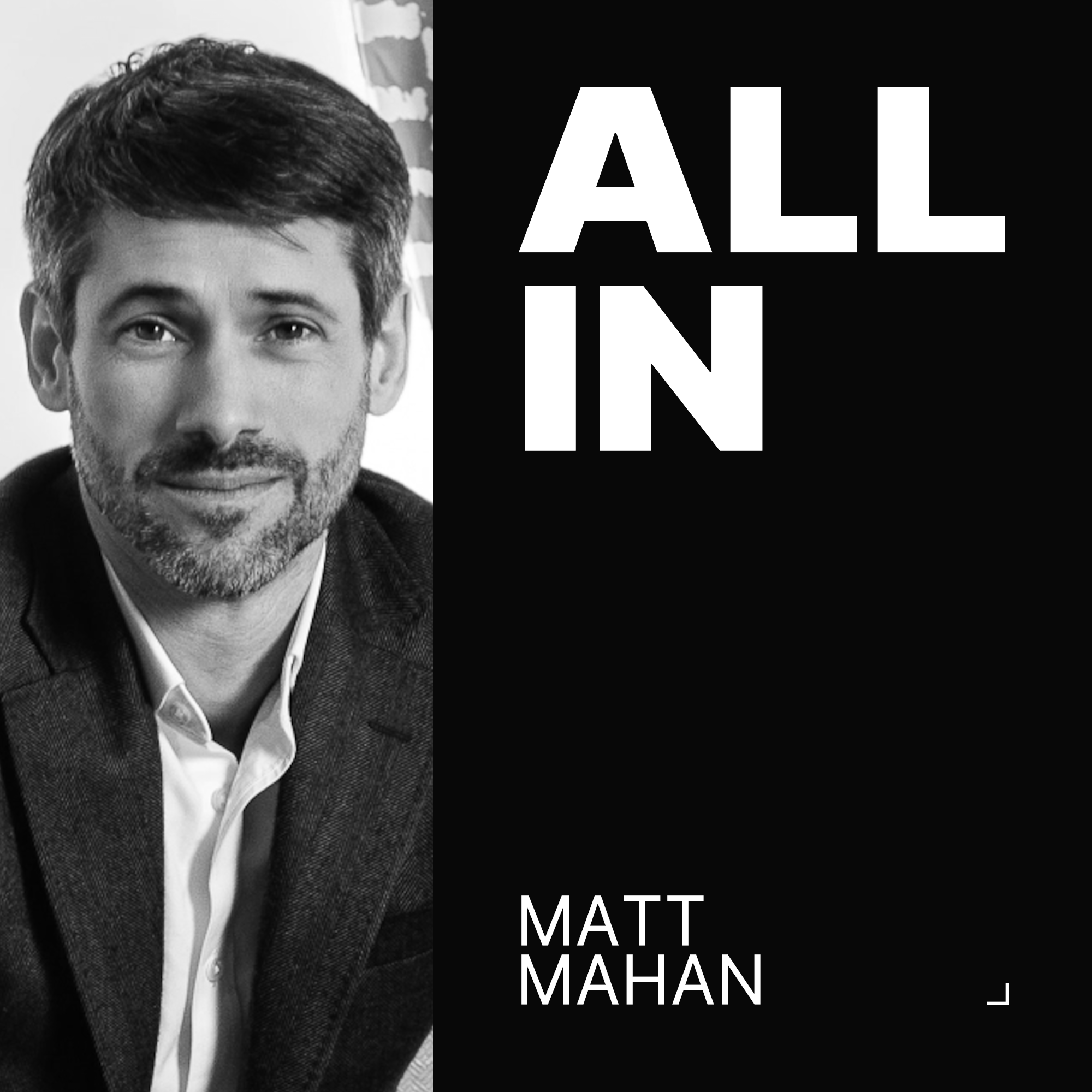
How Matt Mahan Thinks He Can Save California
About this Episode
(0:00) Matt Mahan: Why He's Running for Governor
(1:51) How California Went From Bad to Worse
(12:05) Public Sector Unions & Lobbying in Sacramento
(19:05) California's Housing Crisis: Regulation & Fees
(34:52) California Energy Crisis: Gas Taxes & Green Policy
(43:57) The $1 Trillion Pension Time Bomb
(1:02:37) Trump, Tariffs & the Rise of Dangerous Populism
(1:09:14) Immigration Reform: ICE & the Path to Legal Status
Follow Matt Mahan:
https://x.com/MattMahanSJ?lang=en
https://www.instagram.com/mattmahansj/
https://www.tiktok.com/@mattmahansj
Follow the besties:
https://x.com/chamath
https://x.com/Jason
https://x.com/DavidSacks
https://x.com/friedberg
Follow on X:
https://x.com/theallinpod
Follow on Instagram:
https://www.instagram.com/theallinpod
Follow on TikTok:
https://www.tiktok.com/@theallinpod
Follow on LinkedIn:
https://www.linkedin.com/company/allinpod
Intro Music Credit:
https://rb.gy/tppkzl
https://x.com/yung_spielburg
Intro Video Credit:
https://x.com/TheZachEffect
#allin #tech #news
Transcript
Matt Nehan, welcome to all-in.
Thanks, David.
I have no idea who you are.
Who are you?
I mean, you're a guy who kind of popped up
running for Governor of California last minute.
How'd that come about?
And who is Matt Nehan?
Well, David, like everybody,
I'm frustrated with the state that keeps spending more
and seemingly getting less, which is why I jumped in.
But to back up, I grew up in a little farming town here
in California, a town called Watsonville,
where your strawberries come from.
I do work in Watsonville.
Driscoberries, you know, well, I got greenhouses.
Yeah.
In fact, a working-class family,
mom was a teacher, dad was a letter carrier.
My lucky break in life was getting into a great
college prep high school on a work-study scholarship.
I took buses about two hours each way,
worked my way through high school and college,
and came back as a public school teacher
through the Teach for America program.
Always was very community-oriented,
was interested in politics wanted to know how to make
our city, our world a better place,
ended up in the tech sector,
and spent about a decade building civic tech tools
that help people navigate their democracy.
What did you build?
I was involved with an early Facebook application
called Causes, and then went on
to start a platform called Brigade
that was sort of like LinkedIn for voters.
And the whole premise was to build grassroots bottom-up power
by connecting voters around issues
they're passionate about outcomes they want to see
and help them organize to hold their elected officials
accountable after about a decade in the civic tech space.
Our company was acquired,
I decided to run for city council,
and I went out and knocked on 10,000 doors,
got yelled at for a lot of things
that I wasn't necessarily responsible for,
but I got a real feel for the common sense
of the residents of California who would ask questions like,
if I'm paying $20,000 a year of property taxes,
why haven't my local roads been paved in the last 15 years?
And I thought that made a lot of sense,
so I went to City Hall to try to find out.
How dysfunctional is California?
And how did it get this way?
Pretty bad. I'm really worried,
which is why I jumped in.
I think the state is heading toward an inflection point,
past which there may be no return.
We have increased spending in state government by 75%,
but then in perspective that's $150 billion more this year
than six years ago.
And as far as I can tell,
none of the outcomes have gotten better.
Never mind 75% better.
Many of them are flat or down over the same time period.
So there is a real lack of accountability in government.
We don't have a money problem in Sacramento.
We have an incentives problem.
We have a structure that allows us to keep shoveling more money
into things that aren't working.
Just take high-speed rail.
If a startup took 20 years, spent $14 billion
and didn't deliver a product,
people would have been fired a long time ago.
And we're just not seeing that level of accountability
in our state government.
Is this theft?
Where does the money go?
$14 billion.
Who has that $14 billion today?
It's contractors, it's lawyers,
some of it has gone into actually building the project.
But belatedly, what happens in California,
and the reason we can't build,
we can't do big things anymore,
is that we've got endless process,
years of environmental review,
the most litigious environment imaginable.
Anybody can sue under SQL.
You don't even have to be a resident of California
to sue under SQL.
And so you just get years of litigation,
bureaucracy, what it comes to housing,
just to slightly switch topics,
the fees that cities can assess.
One-time fees can add 20% to the cost of a project.
So we've just, we've bureaucratized the state to the point
where it's total paralysis.
We can keep spending more and more
and not getting anything for it.
It's like, I'm trying to understand,
as it's citizen and the taxpayer,
I pay a 53% tax rate living in California.
I pay my federal tax and my temporary California tax,
which I've been temporarily paying for 11 years.
And I'm paying 53 cents of every dollar I earn
to the state and to the federal government.
I'm like, where do my money go?
It's such a mind-boggling number.
Pick the high-speed rail project alone.
$14 billion dollars spent.
We don't have a rail.
We don't have anything.
Is it lawyers that made $14 billion?
You mentioned contractors.
Is this just like, there's a whole bunch of people
that are all making $20, $30 grand and all adds up to $14 billion.
Like, just help me understand where my money went.
So on that project specifically,
and I haven't done the line item,
my line item analysis to be totally clear.
But you have years of consultants doing environmental reviews
and doing all of these studies and reports of the impacts
that might have.
So tons of consultants.
You have the cost of litigation.
You have an entire cottage industry of people doing design
and studies and reports and managing litigation
and buying right of way and managing community engagement processes.
And we just, we take years to do anything.
And so it just gets vacuumed up into this sea of little groups of things.
So there isn't like one big thief,
like the grandmaster thief of California that's taking all the money.
And then it's just like, the dysfunction is just like everyone's getting a little pizza right now.
That's my sense.
I mean, let's be clear.
There is fraud.
There has been fraud very well documented in California and other areas
during the last five years or so, roughly during the pandemic.
Unemployment claims in California that were fraudulent,
totaled over $30 billion.
That was well documented.
There's emerging research right now that shows that there are hundreds,
if not thousands of hospice providers who may or may not exist.
I mean, we're just getting this information now.
This is very real-time investigative journalism.
So there's fraud.
I think by an order of magnitude, there's even something bigger here,
which is, which is waste and inefficiency.
Is a system where you just keep incrementally growing headcount,
growing the size of programs,
growing the grants that we give out to nonprofits.
And we're funding and managing around process, not outcomes.
And I've tried to approach it very differently in San Jose.
And I think it's why, without raising taxes,
in fact, our revenue has actually slowed a bit the last couple of years,
just because the economy's cyclical, real estate is struggling,
and we're very dependent on local property taxes.
But without raising taxes, we have dramatically changed the outcomes we're getting.
We have led the state of reducing crime and become the safest big city in the country.
We've reduced unsheltered homelessness,
many people living outside in tents and vehicles by about a third in the last few years.
We've unblocked housing production.
We're seeing thousands of new homes under construction.
In all of those cases, we had to change existing process that was in the way,
reduce fees, and cut funding for programs that weren't delivering
so that we could fund other solutions that were more efficient.
Well, let me also ask about legislation.
If you look at Washington, D.C., we have our nation's Congress,
the House and the Senate, and there's Republicans and there's Democrats,
and they fight.
And they fight so much they don't get anything done,
which, by the way, may be a good thing,
because in California, the legislature passes hundreds and hundreds of bills a year,
and they all come from one party, the Democrat Party.
Gavin Newsom, on average, vetoes 15 to 20% of these bills every year,
which says something.
But maybe you can just explain a little bit your view on how are all these laws getting passed in California.
How are these, how does the legislature and Sacramento,
where you're vying for a seat to have the right to veto and the right to push back?
How are they making decisions and what's motivating the California state legislature?
Yeah, and I would just to be clear as governor of veto even more of these bills,
because there's a total lack of accountability,
and I think too many of our legislators think that their measure of success
is how many bills they can write, get to the governor, and ultimately get signed.
What you see is you actually read what these bills do,
they generally just add more cost and more process.
And what the legislature needs to be told by our next governor
is that we are not going to fund failure.
We're going to publicly set goals.
We're going to measure the performance of every dollar we spend.
We're going to audit the heck out of existing programs.
Right now, 75% of the audit recommendations from the state audit are never get implemented.
So there isn't a feedback loop with the public or an accountability for the outcome.
There is a lot of performative politics, a lot of discussion of how much good we're trying to do,
how we're trying to be responsive to everyone.
We have a tendency, particularly in the Democratic Party,
to want to be empathetic and tell everyone that we're working on everything.
We try to be everything to everyone all at once,
rather than very strategically saying some things matter more than others.
The high cost of housing, the high cost of energy,
the quality of our public schools, the safety in our neighborhoods.
These are the things people care about and think that they should be getting when they pay taxes.
But despite increasing spending in the state by 75%,
none of those outcomes have actually gotten better, some have gotten worse.
The irony is that sometimes it may be the case,
and I think it's very often the case that less government solves the problem better than more government.
Trying to do more to create housing may make housing more expensive.
Sounds ironic.
Trying to do more to make education accessible makes education more expensive.
The more government gets involved, the more prices seem to skyrocket.
How do you get over that with all the interested groups that are getting themselves elected
in the California State Legislature by saying,
I'm going to do more, I'm going to do more, I'm going to do more.
Because that's how you get elected.
How are you possibly going to come in and say,
we should do less, and that's how we're going to fix some of this stuff.
Yeah, well, certainly if you're in a hole, don't keep digging.
And sadly, one of my opponents in this race, Eric Swalwell,
just in a debate, he said in a couple of times now in debates,
when asked what his top three, we were all asked what are our top three priorities for the state
said, revenue, revenue, revenue.
And to me, that is just, that is a mindset that doesn't get what has broken down in the state.
You're absolutely right.
As Democrats, we have to own the outcomes we're getting in the state.
And for too long, our reflexive answer has been, we need more revenue.
If we just have more money, we'll solve this problem.
I just don't believe that.
And I say that as the only current executive in this race.
I'm the mayor of the largest city in Northern California, San Jose.
And because of a quirk of history, we were built as a bedroom community for the job centers just north of us.
We actually have significantly lower revenue per capita than many other cities.
We're not a job center.
And so with Prop 13, our tax revenue goes up more slowly, and it is smaller.
Our revenue is about a third less than some of our neighboring cities.
And we're delivering huge increases in sheltering people getting housing built,
reducing crime by thinking differently.
But it all starts with being willing to set a goal publicly and allow the public to hold you accountable
for spending dollars in a way that actually achieves outcomes.
And that sounds so simple.
And I know most of your audience I've been listening for years are in the private sector.
And it almost seems so obvious that why would you even need to say it?
But the truth is, as elected officials, we almost never set public goals where we can actually be held accountable.
Having forbidden your next election, you might get called out for not actually reducing homelessness or reducing crime.
We're getting housing built.
And instead, to your point, we pass bill after bill showing that we're doing something in half the time with the law of unintended consequences.
We make it slower and more expensive to do the very thing that we want.
Well, let's talk about maybe some of the competing interests that want to get capital,
that want to pull capital through the government for their base.
And that would be labor unions.
They're a very powerful lobbying, coordination, a set of groups in California.
They have significant influence over who gets elected in the legislature,
who gets elected in city mayors, racists, and who gets elected in the governor's seat.
Tell me your view on the role that labor unions play in California politics today,
and some of this dysfunction and government and unaccountability and spending,
because I know that this might be a very controversial topic to talk about,
because you don't want to piss off the labor unions.
But yeah, I'd love to hear your candid views on their role.
Yeah.
Let me start by saying, I am not afraid to take on any organized interest.
And it is not just labor, though, let's talk about the role of public sector unions.
It's not just labor that is highly organized.
You have trade associations, you have the doctors and the dentists,
you have the public sector unions, you have the oil and gas industry,
tech has actually been late to the party, tech has started to organize.
So the way that I look at the landscape in Sacramento,
and I think it's largely true in Washington as well,
is you have well-resourced, highly organized, professional advocacy lobbying
and political operations that essentially defend the status quo.
And you are absolutely right that the single biggest spender in Sacramento
when it comes to advocacy lobbying and elections is organized labor,
in particular public sector unions.
I don't think it's a monolith.
I have a great relationship with our public sector unions.
Our building trades want to see the economy grow.
So many unions are very pragmatic,
and all of them are doing what they're supposed to be doing.
It's spineless politicians who caved to their aggressive demands,
who are the root cause of the problem here.
So when the teachers union organizes and says,
we don't want more accountability.
We don't want to be told to use evidence-based curriculum.
We don't want more technology in the classroom.
Whatever it is, they may advocate for presumably on behalf of,
or at least what they perceive to be the interests of their members.
It's our elected officials who need to step up and say,
well, for the good of the community, we're going to push you on that.
We're not just going to give you a pass.
We're not just going to veto that legislation or stay quiet when we know
that for what we're spending, we aren't getting what we should be.
We've got to the point where Mississippi and Louisiana are doing a better job
of helping low-income kids get on grade level for reading.
Then we are in the very well-resourced, very progressive state of California.
That is a function of a system that is more responsive to the highly organized interests
than the people who are elected to serve.
That's the fundamental dysfunction.
Some say it is corruption, and I don't think that's too strong of a word.
I don't mean it in the narrow sense of anyone breaking the law or stealing money.
But the system has become, again, back to the core point here,
that the incentives are all wrong.
The incentive for an elected official is to cater to highly organized interests
who disproportionately spend money in elections, follow what's happening up in the legislature,
draft the bill language, draft the friendly amendments, get legislators to do their bidding,
and I'm running against the system because it doesn't matter if you're a Democrat,
a Republican, and independent, we need a high-functioning government that delivers
lower housing costs, lower energy costs, better schools, safer neighborhoods,
and industry to homelessness.
We have the resources to do it.
What we haven't had is the political will and accountability to do it.
I don't think that's a partisan point.
Frankly, if the Democratic Party doesn't start to wake up and be more responsive to the needs of our constituents
and deliver with the resources we've got, we're going to see the pendulum swing all the way the other way
and you're going to see a mogulike movement happen here in California.
If I look at California, I can understand we're not solving certain problems.
But what I'm trying to grok is how did some of these problems become the worst in the nation?
So there are statistics, and you can debate per capita statistics,
versus absolute number of people, but number one in poverty,
number one in unemployment, nearly half the nation's homeless living California.
How did California go from being bad and not solving these problems to making them worse?
Well, I think my grandmother used to always say that the road to hell is paid with good intentions,
and I do think generally speaking, people have had good intentions,
but have been unwilling to look at data and react when the things that they're championing aren't working.
On homelessness, we've, well, first of all, we've broken the housing market,
which we should talk about as its own issue.
We've also been incredibly lax when it comes to dealing with cycles of addiction and mental illness.
We've sort of deluded ourselves into thinking that leaving someone to choose to live however they'd like,
even if that means suffering and misery on the streets and ultimately dying of an overdose
is somehow more important than intervening and saving their life.
And that's how we've ended up in this horrific situation that frankly has been under-reported.
Over the last decade, we've had 50,000 people die on our streets in California,
about half of overdose and suicide.
These are people with deep behavioral health issues where we're kind of just watching them deteriorate and die
because we're so precious about protecting civil liberties.
May also be an excuse for not spending money in new ways.
In San Jose, we had to move away from spending a million dollars a door
to build a brand new apartment to get someone off the streets and pivot to buying sleeping cabins
that can be deployed in small communities on publicly-owned land, hooked up to utilities,
all in cost of $85,000 a unit.
We've added over 2,000 shelter beds in my first three years as mayor and led the state
in reducing unsheltered homelessness.
But we had to overcome an incredible amount of opposition from advocates, affordable housing developers.
And much of it well intended, maybe some of it self-interested,
but we either are going to be committed to solving the problem
or we're going to cave to highly organized interests or a progressive ideology
that needs to be willing to revise itself when its ideas and practice aren't working.
Yeah, I mean, it just feels some of the policy, they're just crazy.
I always commented on the managed alcohol program for homeless in San Francisco.
They give away free alcohol to alcohol addicted unhoused people.
And I can't imagine that that disincentivizes people to...
No.
Right, it's like you go to San Francisco, you get needles, you get free alcohol.
I mean, you get these things, so it incentivizes people to go to San Francisco.
The whole thing just seemed absolutely nuts to me.
Let's get into the housing question. I mean, what is the core of the housing affordability problem in California?
Is it that we don't have enough houses?
If I see a lot of homes for lease, a lot of houses for sale, a lot of houses for rent,
or is it that we have regulation that makes it hard to maintain a house and it's expensive?
Or is there something else going on that's making housing unaffordable in California?
Like, what's the core here?
Look, I think it's fundamentally a supply problem.
We've seen most recently in Austin, we saw in Seattle, we've seen dozens of markets around the country
that when we remove barriers to the market investing in housing to meet growing demand,
you slow down, cost increases, it's economics 101.
Part of our challenge is that we've also made it impossible to build affordably.
So part of the challenge was zoning, high fees, all of the things government imposes
that block housing from getting built, but we also have a building code that's incredibly cumbersome.
I mentioned litigation earlier when it came to high-speed rail.
Same thing is true for housing. We're not building condos in California,
partly because construction defect liability allows a trial lawyer to come in in your nine of a project
and if they see that the paint is starting to bubble, they'll file a suit and they care about the fees.
They're incentive is to generate fees and we've created a legal framework that allows them to do that.
And if you try to change it, the another highly organized interest in Sacramento,
the trial lawyers will push back on that.
I think this is so important people don't understand how expensive.
Someone told me it was like a sizable percentage of GDP in the United States
is spent on litigation and trial lawyers and that they are the largest donor
in certain state elections all over the country to try and create a legal framework
that allows them to pursue litigation and earn significant fees.
I mean, it's a multi-multi-multi-billion dollar industry.
That's right in California is very much at one end of the spectrum.
I've talked to municipal leaders in cities that are settling at such a high amount for a trip and fall
that now they can't afford to maintain the rest of the sidewalks in the city for the next few years.
So they're going to have more trip and fall cases.
We are going to risk of allowing trialers to sue the state into oblivion.
So that is a major issue.
And on condos, it may seem like a peripheral issue, but traditionally,
that has been how young people get some equity in society become a homeowner for the first time
and build that nest egg to eventually perhaps trade up into a town home or a single family home.
We've essentially taken that rung of the latter away by making it cost prohibitive to build.
Good luck getting financing or insurance to build a new condo building in California right now.
Is it fair to say we have a regulation crisis, not a housing crisis in California?
I mean, is there a way to kind of reframe this?
I think that's fair.
I think regulation, bureaucracy, a set of codes and laws that don't work for people
and work for the special interests in Sacramento.
I interviewed this guy, Adam Corolla.
You know him?
I know of him.
Yeah.
Dr. Drew, what was the term he, very inappropriate.
He called it guino-fascism.
He said that all of the regulatory is a safety thing and it's like a very feminine,
safety, protective kind of origin in a lot of the regulations that have been passed
that make it impossible.
Everything's about safety and more regulation, more regulation, more regulation.
And as a result, you can't get anything done and the lawyers show up and everything gets sued.
What's the right way to think about the origin?
Because his argument is that there's a mindset of safety and protectionism that's driven this.
Is it just the trial lawyers?
Or like, why does someone keep passing?
Why do the legislators keep passing laws over and over and layers and layers and layers and layers
that make it impossible to build and make it super expensive to maintain?
Because otherwise you'll get sued.
Yeah, look, I would take the gender content out of it, but I think the deeper point
that we suffer from safetyism, it's actually easier to add one more rule, one more process.
I see this play out every day with our city council at the local level and I think it's even
a greater temptation at the state level where you're not able to point to a concrete service
that you're delivering, so much of the implementation happens at the local level.
Every time there is a negative story about something bad happening in the world,
there is an impulse for a legislator to say, let's create a new rule.
It calls me a little bit safer.
Let's add another check, another balance, another process, another rule, another fee, whatever it is.
And the reason for that, in my view, is that we have not created an incentive structure
in government to reward actual performance and outcomes.
And so we are by default rewarding the performance of showing that we're doing
such a lot of activity without a lot of impact.
And I think that we have to help voters be smarter about analyzing what the elected officials
are doing and whether or not it's working.
That's why I want to be held accountable.
I came into office running on dashboards.
I put up public facing dashboards and said, here's our baseline.
Here's how we compare to others.
Here's the goal we're setting.
We're going to reduce homelessness by 10% year over year.
We're going to reduce crime.
We're going to remove bears and get housing built.
We're going to speed up permit reviews.
I want to be held publicly accountable because I would rather, frankly, have a feedback loop
with the people whose doors I knocked on than whichever group doesn't like that we're trying to change.
What's your metric for being governor of California as it relates to housing?
What's the dashboard you're going to put up and what's your goal?
I think that the ultimate outcome has to be that we're building more housing
but that we're building it more affordably.
We have to pull the cost out of building because as long as the state of Colorado
can build the exact same home at half the cost of what it is in the Bay Area,
we're never going to be able to compete.
I want to see more housing in absolute terms get built.
We need to start moving in a better direction.
We've gone from about 100,000 units a year to about 80,000 a year.
You go farther back.
It was 150,000 a year.
What do you want to get to in your term?
I think we need to get well over 100,000.
I think the right way to think about it though is it's really a ratio with jobs
for every two jobs an economy creates.
You need at least one home.
Part of the reason the Bay Area and particularly Silicon Valley is so unaffordable for working people
and we're seeing displacement of working families is that over the last 20 years
this incredible economy here, the engine of innovation for our country and really the world
has created about eight jobs for every one new home we've built.
That is a completely unsustainable ratio.
So I'm a little hesitant to come out and say we're going to build 10 million homes.
I think it's a ratio thing.
It's a rate of change.
We need to be building more year over year.
But importantly, we need to pull back the fees, the long timelines,
the overly complicated building costs.
Each of those get a metric.
Yeah, each of those get a metric because ultimately the per square foot cost of building needs to go down.
What does that need to get to?
Where's it today?
Where does it need to get to?
It varies dramatically by product type and market.
It's a good question.
I think we should lay that out.
But I just visited a modular construction factory, factory build housing.
They can bring down the cost per unit by 20% speed up overall project timelines by up to 50%
by just industrializing the production of housing.
So we need to pull the cost down.
You should be able to drop the cost on a per square foot basis by at least a third
with actions that are within our control as regulators.
If you become governor, you're going to be fighting against a legislature
that's got all of the various vested interests tied up in keeping this from happening.
How do you take action without partnership with the legislature?
Because what I think might be very hard is, again, to wind things back
that all these incentive systems have been created to deliver.
Are there emergency powers or action you can take as governor
that can just say, you know what, I'm going to fix this in a year?
Or do you have to work with the legislature to solve these problems?
A bit of both.
I mean, the governor has certain levers that are very powerful driving the budget process.
There's the veto, the bully pulpit, just kind of naming and shaming is really powerful, executive orders.
The appointments, I mean, the governor appoints 3,000 people who run all of these commissions
that have incredible discretion over how to implement regulations.
But there's no doubt that ultimately you need the legislative branch to change.
And I think that a lot of democratic legislators, many of whom I know personally and private,
will admit that things are broken, that things aren't working.
There just hasn't been that willingness publicly to name what is going on,
say that the system's broken, the incentives are completely backwards.
I think, you know, as governor, I'd be in a position to change the conversation,
help either persuade existing legislators to think differently or elect different legislators.
Do you think it's also because if they're public about it, they'll lose their donors
and they'll lose their donor class that's supporting them?
Well, it's hard to step out on a lamb without knowing if you're going to have support for it.
It is difficult to just go direct to voters in an environment where money talks.
It's a very large state.
It's expensive to deliver a message.
Social media has lowered barriers.
That's part of my bet is that we can go straight to the voters with this message
and get traction around the truth or how it takes to actually solve our problems.
But it's, you know, I understand why people go with the sure thing.
And it's not fun to be labeled.
They will call you everything when you fight for change.
You're a corporate sellout, you're racist, you're whatever.
I mean, there's always some label that people will describe when you try to fight for change.
But I try to stay laser focused on the real world outcomes.
Housing costs, energy costs, quality of schools, public safety,
the things that people care about in neighborhoods like the one I grew up in.
That has to be the North Star.
Yeah.
What causes homelessness?
It's a big question.
There's a few things.
I mean, one, you can't ignore our broken housing market because in places where housing is cheap
and widely available, you can have high rates of addiction and mental illness
and most people can remain indoors, even with those challenges.
You know, typically what happens if you actually look at it as a life cycle issue.
As someone who's already vulnerable for some reason, could be of their own choosing,
could be circumstances, but job loss, health issues, addiction, mental illness,
you know, domestic violence.
There's a range of really awful things that happen to people and that people sometimes do to themselves.
And in these circumstances, if the rent is $3,000 a month,
you are just one medical bill, you know, lay off away from really having, you know,
ending up in your car very quickly.
And people working people in California especially don't have a lot of savings.
They don't have something they can fall back on.
So the macro cost structure of California, the highest housing costs,
second highest energy costs with the highest gas prices, which disproportionately hurts working people.
An educational system that is preparing far too few of our children for the jobs of the future.
We can go through that list, but that is creating these conditions of sort of vulnerability or fragility
that means that people living on the edge are much more likely to end up in their car.
But I would add that we have a massive public policy failure.
Not only did we break the housing production market, which is the macro challenge,
but we haven't built shelter and treatment beds.
So for folks for whom an addiction or mental health issue is the thing that has them on the edge,
we have far fewer beds than other states.
And then when people do become homeless, it ought to be brief,
and it should not be outdoors, and yet we lead the nation in unsheltered homelessness.
Over 40% of the people living outside intense in the entire country,
living California, which is only about 12% of the country's population.
We haven't built shelter, we haven't built treatment.
We're not doing what we need to do to rapidly rehouse people, connect them to a case manager,
give them tools to turn their lives around, and hold them accountable for turning their lives around.
If there's mental illness, should they be committed to some facility
to help them recover from their mental illness?
Yes, in short, I think you have to be able to involuntarily hold people
for addiction treatment, mental health care.
If someone is repeatedly refusing help, if they are harming the broader community,
which is often the case, whether that's vandalism, retail theft,
it's been a battle here in our downtown where windows are constantly being broken
by people who clearly are suffering from serious addiction and mental health issues.
I think we should give people opportunities to accept help that needs to be dignified,
they need to be alternatives to the streets.
We've stood up over 2,000 indoor placements,
interim housing placements, almost all individual rooms with doors that lock,
giving people privacy.
These are low barrier alternatives to the streets,
bring your partner, your pets, your possessions.
We're really trying to meet people where they are.
The good news.
Two thirds of people say yes.
The bad news, the other third, is so deep in the throes of addiction to substances
like meth and fentanyl that they can't make a rational decision about their own self-care.
I believe that that is not compassionate or progressive to leave them to endlessly cycle
between streets, emergency rooms, jails, and ultimately dive in overdose.
I think we have a moral duty to intervene, help them detox and get connected to a counselor.
You have a chance to turn their lives around.
Drugs are coming from somewhere, fueling this crisis.
Can the governor address the drug crisis?
Can the governor get drugs off the street or rest drug dealers?
Is that a federal issue?
How do we resolve the fueling of fentanyl, methamphetamines, prescription painkillers, etc.
that have made their way onto the street?
It has to be all levels of government.
All hands on deck, so much law enforcement is done at the local level.
We have a police department with about 1,000 officers out on the street
and forcing local laws.
They're on the front lines of this crisis as our firefighters, social workers.
Certainly having federal tools and state.
We have the National Guard, we have CHP, we have a variety of tools here.
What I do know though is that we can reduce demand by intervening in public drug use
and getting people into treatment and holding them accountable for turning their lives around.
If we get people into recovery, that's one more customer not available out on the streets to buy these dangerous products.
How many times did they cycle through before they have to be helped more permanently?
Well, I think it has to scale up over time.
With Prop 36, I was the first Democratic mayor in the state to come out in support of Prop 36.
The rule of thumb there is on your third public drug offense,
you can be given a choice between treatment and incarceration.
And that's bringing a consequence to a decision that doesn't just affect you.
We can talk about civil liberties.
But when you are actively choosing not to engage in treatment,
you are more often than not creating imposing real-cost, real harm on the broader community.
We've seen businesses shudder in our downtowns, parks where families can't play.
It's direct and indirect.
That's right.
And I think a lot of people don't account for that, which is critical.
I want to shift topics to energy costs.
There's an Iran more going on.
So there's an acute spike in energy gas prices in the state.
Over the last number of years, California Governor Newsom and the state legislature
have pursued an effort to drive green energy policy in the state.
California has a 70 cents per gallon roughly tax rate.
The California price for gasoline this week is $5.50 compared to $350 in the rest of the country.
Did we get it wrong?
Should we have taken a different path in the state versus fighting for green,
chasing Chevron out of the state.
Americans now relocated to Houston.
They're shutting down the largest graphinery on the west coast because of the policies and the bureaucracy.
How do we balance this climate change, green interest with the real hard cost for everyone
on the price of living in the state?
I do think we've gotten our regulatory solution here approach wrong.
I would reject the notion that it's either or.
I don't think it has to be.
I think innovation is the middle path the way to do both.
Texas is providing dramatically cheaper power that is cleaner than California.
You see places like China leading heavily into solar, wind, storage, EVs.
The path is investment in innovation and infrastructure, a smarter grid.
What we've done in California is another classic case of well-intended regulations leading to massive unintended consequences.
Let's just take the example of our refineries.
The state has lost most of its refineries over the last decade because we have intentionally regulated them out of existence.
What's actually happened is we still import oil and gas.
We've just pushed refineries.
We have the cleanest, best regulated refineries with some of the highest-paying jobs in the sector.
We've pushed that out of state.
Now we're importing the same amount of gas from thousands of miles away.
It is dirtier.
It has a bigger carbon footprint.
We lost those good, high-paying jobs.
We lost the tax base of those companies paying local taxes.
It has been a hit on every level and actually because climate and climate change is a global phenomenon,
we have not actually made the problem worse while hurting ourselves economically.
That's the opposite of what we need.
We should be paying EV owners today in the middle of the day strongly incentivizing them to charge their vehicles.
The middle of the day when power is so cheap and abundant in California that we sometimes pay Arizona to take our excess solar
and then have them plug in at night to power the grid and get through that roughly 5pm to 9pm evening peak
where we've got to start firing up gas power plants because there just isn't enough power on the grid.
So we need to be smarter.
We need to invest in innovation, infrastructure, not regulate energy sources out of state that we still rely upon.
But it's hard. So now we've got the 70 cents of gallon tax in California.
The legislature has passed a series of bills to make that tax go up and up and up.
Now they're talking about increasing it even further.
It's the most regressive tax imaginable because it's even worse than a sales tax, which is already fairly regressive.
But as you know, higher income wealthier people have already adopted EVs.
They're not paying this tax. It's working folks, particularly in towns like Watsonville where I grew up.
I mean, when I was in high school, I had to go 50 miles one way for high school.
My parents went 50 miles the other way for their jobs.
And so it disproportionately hurts working people.
My proposal is that we, to start, temporarily suspend our gas tax to provide immediate relief to working families
who are paying the price for a war that they didn't ask for.
And they're disproportionately paying the price.
I would temporarily suspend it.
But we have to be intellectually honest about this.
It is our primary source of revenue for paving and maintaining roads and our transportation infrastructure.
We will need to shift how we do this, rather than being a gas tax.
First of all, the general fund is up 75% in the last six years.
So I'm pretty confident in a state that's spending $350 billion.
We can afford to pay our roads without punishing working families.
But honestly, over time, as EV adoption increases,
we'll have to find a smarter way of charging a basic user fee so that people who use the roads pay to maintain.
One of the other big costs in California related to housing and related to climate change question
is the cost of insurance for your home.
We have this massive wildfire that spread, destroyed a large part of areas in Los Angeles last year.
And as a result, many of the home insurance companies have left the state.
I just lost coverage on my home because I live near a bunch of trees.
So my house is deemed too risky to have coverage.
And I'm fortunate in that I don't have a mortgage that I've got to deal with the loss of insurance coverage.
But this is becoming an increasing burden for the state of California because the state had to step in
and create a bigger and bigger insurance pool that financially and accounting-wise,
the state can't really afford.
How do we solve this problem of the cost of homeowners insurance?
What's the right structural solution here for either incentivizing the return of insurance companies,
creating an insurance pool that's well capitalized and can actually afford to make the payouts,
instead of needing to go to the federal government when there's a crisis and ask for a bailout?
How do we fix this problem in California?
There are a few components to the strategy going forward here.
Number one, we have to rebuild the private marketplace.
90% of homeowners, maybe more, can be covered by private insurance affordably
and we have to rebuild that part of the market by bringing them back, allowing them to appropriately price risk,
and creating more granularity.
If you're willing and you may not be, but if you're willing to remove those trees within a hundred feet of your home,
you should pay a lower premium.
If you prefer to have the trees there, you should pay the higher premium.
So more granular pricing, allowing appropriate pricing of risk, is just really important.
Now, for the 5 to 10% of homes that are up in the hills, heavily wooded areas,
where there's lots of vegetation, we'll have to have higher, first of all, when you build,
there's a question of how much more we should build out there, probably not a lot.
The materials you use, they need to be fire-resistant, and you'll have to pay much higher insurance,
just to cover the true cost of the likelihood of a fire in the cost of replacement.
The other piece of this, though, is the state has to take more ownership for vegetation management.
We spend $8 in fire response and recovery for every $1 we spend on prevention,
and there are plenty of urbanized areas that are at risk,
because they're a proximate to dense vegetation, that the state has not taken ownership for clearing.
And yes, it should be a partnership with the federal government.
If they're federal lands, we should hold the federal government accountable for doing it.
But I just toured Altadena and Palisades, met with the homeowners there,
who are incredibly frustrated about the lack of rebuilding.
No one is quarterbacking this.
And if you go walk the palisades today, you will see, once again, vegetation that's 5 feet tall,
that hasn't been managed in an area where people are trying to rebuild their homes.
So the state has to step up as governor.
I would create a task force that just focuses on fixing the insurance market.
And if the state will invest in vegetation management to reduce the risk of catastrophic loss,
you're going to see premiums go down over the long term.
I mean, I think it's insane that the state sets rates,
and then tells the insurance companies how much to charge,
and assumes they're going to stick around and keep charging it.
If they can't make money doing it, why not let the market decide?
There's hundreds of insurance companies that if they were able to set their own rates
and not have to have the state dictate the rate,
they would compete for price, and price would come down.
This idea that the state should be determining what companies should charge for anything is a problem.
But fundamentally, in the insurance markets, it's literally chased every insurer out of the state.
I just don't understand how this is not so obvious.
People don't work in practice as we've seen,
and that's what I mean by saying we have to be able to appropriately price risk.
Insurance companies need to be able to charge rates that reflect the true risk and cost.
I think they should be strongly incentivized,
if not held accountable for allowing homeowners to adopt best practices,
and thereby reduce their premiums.
And I think there's a subset of folks who may need to be on and pay into a public option of some kind
because they just won't be covered by the market,
or perhaps they have to choose that based on where they live, they won't have insurance.
I don't know, but I don't think you can force everybody else to pay exorbitant rates
to ensure that we cover the last riskiest home that's going to be the most expensive to cover.
It's an illogical setup.
Well, look, let's shift to one of the other big liability questions in the state.
It's the one I care, I wouldn't say the most,
but it's one that I've observed me end up being a big driver for what's ahead for us.
California's public employee retirement system, so CalPERS and CalSTRS,
they provide the retirement benefits to roughly 3 million California public workers.
And there's roughly a trillion dollars of capital in those two investment funds
that are meant to support those retirees.
They've been making about 7% a year compared to the S&P,
making 11% a year, and the current accounting estimates that they're going to be short
by some estimates, 250 to 300 billion, by other estimates as high as a trillion dollars in the years ahead,
in paying out the benefits that they're legally obligated to pay to public employees as they retire.
And you can't just change those benefits.
There's a state Supreme Court case that's made that known that you can't go in and
rescind benefits that you've promised someone, so you are stuck with that liability.
And because they're public entities, California's state taxpayer is ultimately going to be stuck
with a trillion dollar liability if that's what it comes to.
How do we fix this friggin problem?
Yeah, I'm worried about it as well, and I'm intimately familiar with it
because we've had to tackle pension reform in San Jose.
We were sort of the canary in the coal mine quite a few years ago
as our unfunded pension liabilities began eating up our general fund.
Even today, after pension reform, 19% of our general fund in San Jose,
this year goes to pain and unfunded pension liability.
That just comes off the top.
That is one out of every five dollars goes first to our obligation to retirees.
And again, I don't blame the retirees or those who advocated its politicians
who didn't do the math, didn't recognize when the math wasn't working out
and swept it under the rug because they knew they'd be long gone by the time the bill came to.
And so, look, there's really only two options here.
One is to move toward a defined contribution model
as we have in the private sector.
You see all over the world, the employer and the employee pay in.
It's put in the market.
It needs to grow over time.
People need to calculate their savings and their...
You see your account, you track it.
You track it.
You can up your contribution level.
If we were to move to that, the private sector...
I'm sorry, the public sector would need to be a strong match.
And I think the challenge is this.
I don't think politically that's likely to happen.
What we've done in San Jose, which could be a road map for the state,
is we negotiated, well, we had to go to the ballot.
We went to the lawsuits.
It was a very messy process.
I think it needs to be better handled.
But effectively, we created a different pension system for new employees.
That said, as you come in, this is what a right-sized pension system needs to look like.
We're going to have the employee and the employer pay in more upfront.
We will be more realistic about the returns we're expecting.
We'll adjust over time faster if the returns are underperforming.
We've brought in better fund managers who are heavily incentivized
to make smart investments and grow the investment.
And then most importantly, if the returns fall short,
the delta, the gap, is covered 50-50 by the city, meaning the taxpayers,
and the employee in terms of lost benefits.
So they're shared pain on the backside if we miss our targets.
And what do we do for what we have now?
Well, what that has allowed us to do because of the legal limitations that you've mentioned
is, and I'm not saying it's perfect, but this is just legally and politically
what we were able to get to is the best outcome we were able to get,
is that we're on a long glide path of paying off all of the unfunded liabilities
for the Tier 1 employees, all of those older employees.
It's a 20-year process.
By the early 2040s, San Jose will have cleared the debt.
Our general fund's going to be flush.
We're going to be increasing staffing and service levels.
And you'll start to feel that here much sooner.
We are actually roughly at peak cost for unfunded liabilities today
because we took the medicine, and now we'll start that slow glide path.
Where each year, there'll be a little more room in our general fund
because we've actually bit the bullet and took this on.
Well, I think that's like, how do you fund that glide path?
It may be the case that our budget has some margin for error, let's say,
because of how much we're spending.
Let's just do the statistics.
California Governor Newsom has proposed a $349 billion budget this year in the state.
That's up from $209 billion, so almost $2x, $60%, $70%, $80% more, $75% more,
than the year before COVID.
And that's up from $110 billion 10 years prior.
So we went from $110 to $350, $3.5x is how much we're spending since, you know,
it all feels like yesterday, like just a couple of years ago.
Despite having the nation's highest tax rates, the largest revenue base,
we're still looking this year at a $35 billion deficit, California state budget.
What happened?
Like, how did this get so bad?
And how much of this do you think is this term of fraud, waste, you know, abuse?
Like, where's this money going?
Part of what we've done is something we talked about earlier,
which is we have increased our pay for public sector employees
and our pension obligations and post-retirement health benefits
at a faster rate than we could actually afford.
And we haven't been honest with ourselves about that.
Part of where the money's gone, though, is really just a sprawling bureaucracy
that when we, in good years, have more money, we create new programs,
we add headcount.
The state's population has stayed flat over the last six years.
Spending is up 75% as you point out.
And headcounting state employees is up, I believe, over 20%.
So we're adding more state workers, we're pouring more money into public programs
that aren't starting from the premise of, what is the outcome we need
and how do we most efficiently get there?
I mean, it's time for California to go through an exercise of zero-based budgeting
and say, what are the outcomes we need?
And are we actually spending dollars to achieve those outcomes
or are we just funding a sprawling, bloated bureaucracy
where it's just easier to add 2%, 3% headcount every year
and give everybody a 4% raise and call it a day.
And I think that's generally been the approach.
Whenever revenue's up, we just kind of give everybody a raise,
hire more people, initiate a few new programs.
We never go back to basics and say, well, if these are the resources we have
and these are the outcomes we need, are we really optimizing our spend
for those outcomes?
And the answer is no, we're not.
Can you do that with restructuring zero-based budgeting as governor
or do you need to do this in partnership with the legislature
that all has their special programs that they fired up
where money's flowing to their local county, money's flowing to their friends,
money's flowing to their donors?
How do you actually execute this as governor?
As I said before, I think electing a pragmatic, independent-minded governor
who understands this problem and is willing to tackle it
is step one and is necessary but insufficient.
Ultimately, we have to build a more moderate coalition of legislators
who understand how broken the system is, who are willing to do hard things.
I don't think that this just happens overnight,
but the governor has a lot of tools that he or she can choose to use.
You do drive the budget process.
Ultimately, you need legislative support for it.
You have the bully pulpit.
You have the ability to manage state agencies in a very different way.
The governor appoints 3,000 people to run state bureaucracies
that can either come in with a mindset of business as usual.
I'm going to sit behind a desk where process oriented
or it can be held accountable.
And maybe it should be 3,000 employees.
But maybe we should slim how many people it is.
But it can be told, here are the outcomes we need.
Tell us, go ground truth these, go down to the local level,
spend time with the school boards,
the cities and the counties where all the money actually meets the constituent,
where the rubber hits the road.
And come back with answers on how to reform these systems to get more
for what we're spending.
And if you can't hit more aggressive goals, we'll bring in someone else who can.
We need a different mindset for how we operate our government agencies.
What you're saying is starkly different from what others are saying.
And one of the biggest points that others are making right now
is that they want to increase programs and increase spending,
particularly in healthcare.
So what's your view on government-provided healthcare?
Should all healthcare in California be free?
There's a big movement, a big legislative effort to try and make this the case.
Does this make economic sense?
Can we afford it?
How do we actually do it?
Or do you think that this should remain a private market effort?
I don't think it's realistic for California to create a single state run,
free healthcare for all system.
I don't understand.
I know many of my opponents in my party, Democratic Party, are proposing this.
I think we have a pretty good sense of how to reduce cost.
We just have to be willing to do it.
Price transparency and competition could bring down costs in healthcare by five to ten percent.
Preventative care.
We should be incentivizing insurers and health providers
for helping someone get healthier and reducing their overall demand
on the system over the course of their lifetimes.
Things that may seem small, but getting 100,000 plus people off of our streets
and into shelter dramatically reduces the burden on our healthcare system.
I think that prevention, take another one.
Nurse practitioners can do so much more than we often allow them to do,
which again is a function of this behind-the-scenes negotiation in Sacramento
over what are doctors allowed to do, what can nurses do.
Nurse practitioners providing preventative upstream care in clinics
in communities can be far more effective at preventing long-term chronic illness
than what we do today, which is end up with everybody in the emergency room
needing care after they're already really sick.
So we need to restructure our healthcare system.
California should be demanding and investing in innovation
in better ways of doing things and bend the cost curve,
not fall back on this lazy answer that we're just going to find a way to raise taxes more
to fund free services that will ultimately break, just break the bank.
You've been criticized by many for being against the billionaire tax.
I think you're the only candidate running for governor right now
that has spoken out against it.
I've heard your comments on it, obviously.
I think I was probably the first to identify it and bring it up on my show
when it first came out the day it was filed.
For me, it's fundamental to private property rights.
If you can take people's assets after they've paid taxes on it,
there's no stopping that train.
I mean, why not take everyone's assets at some point?
Like, you pay your income tax.
That's your private property you get to keep it.
Shouldn't be that the legislator can later say I'll take 10% of what you own
that just seemed wrong to me.
Do you think we need to have a continued increase?
Do you think we need to maintain the temporary high income taxes in California?
What's your general view on revenue?
We've talked a lot about you think, hey, we don't need to rely on growing revenue.
But based on the current tax system in California,
what else do you think needs to change?
Or do you think it's just like, let's leave it as it is?
No billionaire tax, no new taxes, but let's just not go back.
Let me see a couple of examples.
One, I think where this push is coming from is a deep concern about
economic inequality and declining social mobility.
I think these are real issues I'm worried about economic inequality.
I think in the long run, it's a threat to democracy.
I think there are a number of better solutions to this than the proposed wealth tax,
which is, as you point out, say aside, even the philosophical arguments,
it simply won't work.
It's certainly not at the state level.
People I know have already left the state.
Over a trillion dollars in capital flight are ongoing revenue going forward
is now going to be lower.
The dirty secret of this proposal is that it won't be the billionaires who pay higher taxes.
It'll be middle-class and working families who are left holding the bag.
That's why I just immediately felt that I had to say something
because it's working people who are going to be hurt by this.
It's not going to be billionaires.
They're the most mobile people in society.
First of all, there are things we can do to make the tax code fair.
I think there's a legitimate debate about what should the absolute rate of capital gains tax be.
There's the phenomenon of very wealthy individuals borrowing against appreciated assets
where you're effectively avoiding paying capital gains.
I think that's a loophole we can close.
There's the step up and basis upon death.
I'm not sure that it's very fair for somebody.
Well, let me just use an example.
I'll just say this.
I know that Elon Musk should be able to pass on $500 billion of appreciated but untaxed stock wealth
to his children and the moment that they inherited its rebased at current market value
and no one ever pays the capital gains on it.
There are a lot of things we can do to capture billions in revenue to close loopholes in the tax code.
This is of all the proposals, the worst, the least likely to work, the most likely to hurt working people.
But I also think we have to acknowledge in a state that keeps asking for more before we do better.
We've got to acknowledge that social mobility is down because of public policy failures first and foremost.
Public schools that aren't performing, housing that isn't affordable, energy that isn't affordable.
When half of people, sorry, when most Californians are spending over a third of their income on housing,
spending over half of their income on housing, that hits social mobility a lot more than the fact that the tech sector has had a bunch of growth.
These are fundamental public policy failures and the sooner we own them and think differently about our regulatory environment and our policy,
so we start fixing them.
The better for California, the better for the Democratic Party, most importantly, the better for the people we serve.
But what you're saying makes a lot of sense, but I think people hate other people's success.
I think there's a lot that's been going on, this fueling that's going on with the lack of social mobility,
but seeing a small segment of the population accelerate.
Technology really had that driven that. I'll be the first to admit, there's a small population in California that's done extremely well
while most of Californians have been left behind.
Do you think you're electable in this sense?
I mean, you're not fueling the populist sentiment that I think every one of your candidates has found they can tap into
and that may put you at a big disadvantage in this race.
Look, I do think we need to take economic inequality and social mobility much more seriously than we have.
I think we need to ask and ultimately demand our wealthiest individuals, our tech sector industries that do well to be structured in a way that works for people.
I'm curious what you think, maybe I'll turn the tables for a moment.
I think that we need a shared prosperity that includes people having some sort of equity from or more direct benefit in the incredible gains that tech has produced.
AI is scaring a lot of people because it could lead to the elimination of jobs.
For their concentration of wealth, what do you think is the appropriate role for the tech sector and those who have profited immensely from it to ensuring a level playing field or at least some semblance of equality of opportunity?
That's a longer conversation, but I do think giving more people more ownership is important.
But I'm not sure people are going to want to or need to work at big companies anymore with AI, the longer conversation.
But in the same way that Instagram Shopify, Etsy created a TikTok, created new jobs, almost like new roles, new ways that people could earn.
I think AI is going to create a thousand times more new ways for people to earn than they do today.
And they're not going to have to have the job that they feel like they're stuck with today.
And AI is actually going to accelerate more people up the ladder faster than anyone's really realizing.
And I can give you countless examples of this that I've seen recently.
But I think we're all going to wake up pretty happy with the next advance and economic mobility that's going to be unleashed because of AI, not in spite of it.
I hope that's true. It's a very optimistic read.
I do think my read of history is that technological change while ultimately producing greater abundance, if you will, often is really hard on people.
And that's why in San Jose at least we've created AI upskilling courses for our workers.
We've gotten AI companies to come into our libraries and provide tools and training.
We're really trying to figure out how we lower barriers to learning how to use these tools, apply them in people's lives, start those new businesses, create the new jobs.
The cool thing is AI can teach people how to use AI.
That's true.
Which is where I'm starting to see a lot of people learn how to use these tools on their own by asking the AI and engaging.
And then there's this moment where it's almost like you lit a match on a bunch of Tinder for the first time.
And you're like, whoa, and I've seen this in person.
I'm watching people get knocked down like bowling pins in terms of whoa, that whoa moment that I've been visibly seeing people just in the last couple of months is making me very optimistic.
That's good.
It does though get back to this basic point that we need our public education system to teach people to think critically when half of our kids aren't on grade level for reading or math proficiency.
It's going to be very hard for them to be lifelong learners.
I mean curiosity and asking questions and learning how to think, not teaching them knowledge, is a massive problem that we're dealing with in education in the United States in my opinion.
Kids are not being taught how to question how to build.
They're being taught facts.
Those facts are irrelevant because they all exist in AI now.
You don't need to know all those facts.
It's good to have basis, but what are you really trying to get?
A curious mind, an engineering mind, a creative mind, a thoughtful mind, and teach individuals agency in a world where they have infinite capacity.
That's what AI gives all of us.
But what do you think of Donald Trump?
I'm not a fan.
My concern with Donald Trump, even if he may get certain issues, right, I think he's channeled the frustration of working Americans who feel that they've been left behind, is that I don't believe he really understands what makes our country great.
I think that he has created a lot of fear and division around immigration, doesn't recognize how many people we have had in this country, in part because both Democrats and Republicans wanted access to cheap labor in places like Watsonville where I grew up, who have been here 20, 30 years, working hard, paying their taxes, otherwise playing by the rules, raising children who are U.S. citizens who are now living in terror because they're worried their family is going to get ripped apart.
I don't understand and don't support this war in Iran that I think is a huge, huge blunder and it's going to drive up energy costs.
And it's not clear to me why we're losing American lives over there.
I just, you know, I think tariffs, yes, I do believe China, this is something I think he's gotten right, has been competing unfairly with the U.S.
I think a targeted approach to tariffs focusing on that issue would have made a lot more sense than the general inflation we've seen.
So, I mean, I can go issue by issue, but I just, I worry mostly about the health of our democracy.
I think it requires a real honest dialogue, a respect for rule of law and the independent judiciary.
I just, yeah, I have deep concerns that this, not just populist, but reactionary, quasi-authoritarian rhetoric and mindset is the outcome of declining trust in government when we don't hold ourselves accountable for delivering for working people.
I think it's predictable and I think you're seeing an equal and even, I'd say, equally risky rise in populism on the left in reaction in these two are playing off one of another.
And part of the reason I jumped into this race was to offer a third way, a pragmatic alternative.
I'm a Democrat, but I also recognize that something's broken in California.
The incentives are all wrong. The highly organized interests in Sacramento are being taken care of, Sacramento is working great.
For highly organized interests, it is not working great for regular people.
And I think the best antidote to that is to get back to basics, be competent, be data-driven, deliver results for people, because I'm worried that if we don't, we're going to see this epic populist battle on the right and the left for people offering really easy answers.
That's not the honest answers that we need.
Rate Governor Newsom and the job he's done is Governor of California.
I think Governor Newsom has been a bulwark against some of the worst ideas coming out of the legislature.
You mentioned that he's vetoed 10 to 15% of the bills coming out of the legislature.
Many of those vetoes I agree with and I think have averted real harm.
My critique has been around not doing enough to take on the entrenched interests in Sacramento.
And we've disagreed very publicly on certain policy issues. Prop 36, recovery housing, some energy policy points.
I mean, I try to attack problems, not people. I'm not really interested in evaluating somebody's intentions or their ideology so much as the results of their actions.
And I think he's done some really good things.
I also think he could do even more.
And that's been my appeal to him is let's work together to drive even more change faster.
But some of the things he's brought forward like care court, right idea.
Now we need to execute it. We need to actually make sure that care courts actually getting people with addiction and mental illness into care.
I think he's got the right right idea, right intention.
But we've got to follow through and as Governor I would make sure that Prop 36, Prop 1, care court, number of things he's put in place are actually used to deliver the intended outcome.
Governor Newsom has put out a lot of these memes kind of making fun of Donald Trump by doing tweets sort of like the way Trump does truth.
Social posts and so on. It's very antagonistic to the president, at least publicly antagonistic.
At the same time, California relies on federal funding and requires a lot of federal cooperation, a lot of federal land in the state.
How would you interact with President Trump and talk a little bit about how the governor has interacted with President Trump publicly?
Look, I understand what the governor's doing. He's been holding a mirror up to Donald Trump and both fighting for California's values, which I appreciate.
I think there's also just back to incentives. I mean, he's running for president and that's where I think this approach is coming from.
I would take a different approach in the sense that as Governor focused on delivering for Californians, I will fight the Trump administration through the courts, through the bully pulpit whenever necessary to protect our values to protect our people to protect state funding.
I also think, though, that we need to find places where we can achieve a win-win with the federal administration.
I'll give you the examples. Top of mind for me. I just spent time walking through Altadena, the palisades, where people have lost everything.
Over 10,000 homes lost between the two. People are desperate to rebuild. They're not going to help that they need.
Part of the reason they're not going to help that they need is this hyper partisanship in which California and Washington are fighting rhetorically and politically, and the people who are being hurt are the families who have lost their homes who are waiting on the $40 billion of federal aid that's been promised.
And that if it weren't for this political battle, it would have already flowed to help those neighborhoods rebuild.
And I just, as Governor, yeah, I will absolutely fight for our values, but I'm committed to fixing our problems, which means finding a way to make it a win for this president and the administration to rebuild Los Angeles.
That we have to put the people before our politics.
And as it relates to ICE and immigration enforcement, do you consider undocumented immigrants in the state of California individuals that you would represent as Governor?
Is it part of your job to protect undocumented immigrants who came here illegally, but ICE would like to remove?
Yes, unless they're committing serious violent crime. Look, if you're here, you're not documented. You're committing violent felonies, I think you should be deported.
But like many of the people I grew up with, if you were essentially, if Tat maybe tacitly welcomed here because we had an ag industry or a construction industry that needed low-cost labor, and you came, started a family, started working, paid taxes, raising kids here who were born here, who were U.S. citizens.
The only practical and ethical solution is for parties to put the hyper partisanship aside, come together, and come to a grand bargain in which we secure the border.
We deport those committing violent crime who are undocumented, and we create a pathway to some sort of legal status.
Our citizenship is a bridge too far, for that older generation that came earlier, so be it, but their kids are U.S. citizens, and they deserve to still live with their parents, and I think we've got to find the approach that respects people's humanity and is practical and ethical, and I'm incredibly disappointed.
Frankly, with both parties for years of kicking the can down the road, and I will absolutely stand up to protect undocumented residents who are plain by the rules, who are doing the most American thing, and I get all the arguments around lawful immigration, let's secure the border and set up a proper system of lawful immigration going forward and not create a bad incentive.
So let's do that, and then create this pathway to legal status, but what we've seen play out in Minneapolis is horrible for the country.
We're seeing citizens arrested even killed. This is not working, and I don't think it's ethical.
Let me give you the pushback that the Republican Party leadership would give, which is that many of these individuals will end up voting for Democrats.
This vast majority of them will vote for Democrats, and that the border was opened, they were allowed in here, and now this inevitable due to humanitarian conditions, path forward to citizenship, will ultimately increase the Democratic Party's voting base, and lock them into power in DC, lock them into power in the States, turn more States blue, et cetera.
How do you respond to that concern and pushback? Put the humanitarian piece aside.
Every Democrat I ask about this cannot answer the question, why was the border opened? Was it to lower labor costs? Was there some other reason that we did it?
Was it to increase the voting base? What was the motivation, and how do we address the response that's going to come for the many years ahead from a Republican Party that's going to have issue with this?
My sense growing up in an Ag town that historically has probably been about a third undocumented is that the primary incentive for the parties to not solve this problem is that a lot of people became very wealthy.
A lot of industries did very well by having access to low cost abundant labor, and plenty of the business interests that did really well in Ag construction and otherwise, historically this would have been the meat packing industry, their donors to the Republican Party.
So I think both sides have been complicit, I think the back to incentives, I think Democrats and Republicans have played to their base and actually been politically incentivized to not solve the problem, and as a pragmatic moderate, my approach is to say, you're both wrong, but there's something true in what you're both saying.
Republicans are right that we should know who and what comes in and out of the country, we should have a secure border, and we should take away any incentive for people to come here illegally, especially in a moment where we've got a fentanyl crisis, we've got international terrorism, we've got nukes that are getting smaller and smaller, we should have border security.
Absolutely, if you're not here lawfully and you're committing serious and violent crime, deportation is the minimum expectation of what should happen, so let's do that.
But I think both parties have been complicit, we can sit around and say who wins electrically or economically, we can play that game and continue to have this incredibly divisive and unproductive situation where millions of people are living in fear, living in the shadows, or we can fix it.
And when I say legal status, maybe that legal status doesn't come with a right to vote, maybe it's a green card.
I mean, I'm for compromise and problem solving and moving the country forward, both sides are going to have to give if we're going to solve this problem.
I think that's the best idea possible for how to solve this, which is a path to residents without a path to voting, and that could solve everyone's concerns.
And lastly, I just want you to compare and contrast your Democrat opponents, Swalwell, Steyer, Porter, let's just do those three.
Give me a sense on your view on each of the three of them.
Look, I've been in enough debates with them now to understand that those three other leading Democratic candidates are vying for the same lane.
It is the more of the same lane. It's a platform that says that the answer to our problems is more revenue.
It's revenue revenue revenue as represents, well, it's top three goals.
And look, we need to think differently.
What I'm offering is an approach that's been working in Northern California's largest city. I call it getting back to basics.
It's focusing on fewer things. The things that are most foundational to opportunity and quality of life for everyone.
It's being humble about what government can actually do, not thinking that the answer to every problem is more revenue and another government program.
It's being radically more transparent and accountable about how we spend dollars in rooting everything in results or measurable outcomes.
And just bringing a new politics of pragmatism as an antidote to this incredibly destructive populism we're seeing on the right and the left that really risks the Democratic lowercase D democratic project of this country.
And I think that California has, throughout its history, been the innovative state that has led the way and changed the world.
And I am hopeful that Californians are ready for a different kind of politics that focuses on problem solving.
I jumped in this race because all of the other candidates across the spectrum had already been in for a year.
And I didn't hear anyone talking, speaking honestly about our problems and how to solve them.
And I thought that I had a unique voice in this race.
And we're seeing that. It's a short runway, but as I travel around the state, go to see the sewage crisis and the Tijuana River on the border that shut down all the beaches down there, walk all to Dina, or go through the tenderloin in San Francisco.
People are responding because all they really want is for their tax dollars to be used responsibly. They want their government to work.
They want their life to get better when they send so much of their money to their government. And that's my commitment.
Here, Matt, Mayhan, thank you for being here with me today on All-In. Really appreciate the time and good luck in the governor's race.
Thanks David, I enjoyed it.
I'm doing all of you.
More from All-In with Chamath, Jason, Sacks & Friedberg
View all episodes →
Anthropic's $30B Ramp, Mythos Doomsday, OpenClaw Ankled, Iran War Ceasefire, Isr...
All-In with Chamath, Jason, Sacks & Friedberg
Apr 10, 2026·1:29:18·failed
Josh Shapiro on Trump, Iran War Chaos, Israel's Failure, the Economy, and 2028 R...
All-In with Chamath, Jason, Sacks & Friedberg
Apr 8, 2026·1:01:52·failed