About this episode
Get every episode summarized
Each time Decoder with Nilay Patel publishes, we email you a written briefing from the transcript — the topics, who appeared, and any specific claims, with the ad reads skipped.
Email me new episodesFree for 3 shows. No card needed.
Hosts & guests

Transcript ready
1,251 searchable segments. Every word is indexed and playable.
Full transcript
Decoder with Nilay Patel — How Sonos rebooted itself. Machine-transcribed; use the interactive transcript above to jump the player to any line.
Support for the show comes from engine. Running a small business means every dollar has to work hard. But if your team is still booking travel the old way, it's costing you more than you think. Engine is the fastest growing travel and spend platform in the country, built specifically for businesses like yours. Book a trip in as little as two and a half minutes, earn up to 10% back on hotels, and in 2025, engine customers save more than $300 million on travel. With zero booking fees, no contracts, and no BS. More than 1,000 businesses join engine every month. Join them and get $500 when your business signs up and starts traveling at engine.com slash decoder. Support for the show comes from CrowdStrike. It's not a huge stretch to say that AI is the next major computing platform. Every platform shift changes the way we build software, and it changes security too. CrowdStrike is defining cybersecurity in the AI era
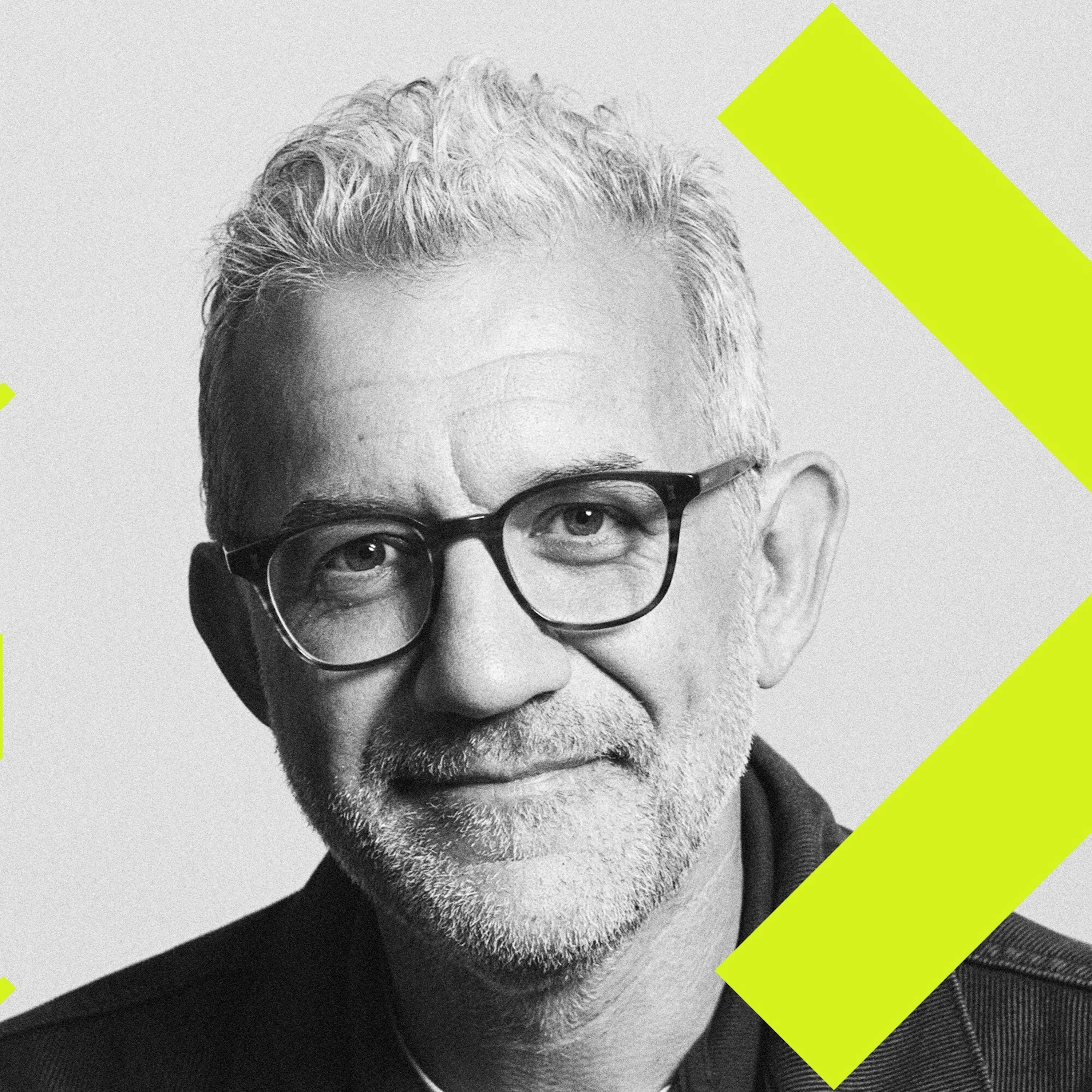
with AI detection in response, or AIDR, a solution for seeing, monitoring, and securing AI across the enterprise. Learn more about how leading companies are turning to CrowdStrike to secure AI and secure their business at CrowdStrike.com slash decoder. Hello and welcome to decoder. I'm Neil Lipe-Hitel, Editor and Chief of the Verge, and decoder is my show about big ideas and other problems. Today I'm talking with Tom Conrad, the CEO of Sonos. Tom and I have known each other for a long time. He was the CTO of Pandora, the VP of Product at Snap, the Chief Product Officer at Quibi, and he was on the board at Sonos during the disastrous 2024 app redesign that threatened to crash the entire brand. Tom took over as interim CEO to write the ship during that period and then took the permanent role just about a year ago. As you'll hear him say, he thinks Sonos is fully out of that mess now. And onto its next chapter with a huge product and platform launch called Sonos 27. I mean, come on, you all listen to the show.
That is the most decoder bait decoder stuff imaginable. I've been dying to have Tom on the show to talk about how the board decided to move on from previous CEO Patrick Spence, how he diagnosed the issues inside the company, and what decisions he made to fix them. And it's no surprise, those fixes involve a lot of big changes to the company structure, to its product lineup, and how Sonos fundamentally thinks about itself, and what its product really is. That's that new platform, Sonos 27. Which you'll hear Tom call a new foundation for the company that makes every Sonos product work better is part of the system. There's a lot here, including how AI systems can work across the system, the idea of having a mesh network of little computers in your home disguised as speakers, and of course, the testy relationship between Sonos and Google, which means Google's Gemini system isn't currently available on Sonos devices. Oh, and of course Tom and I talked about Weezy Smart Home standards because I am a Smart Home nerd, and I simply cannot help myself. But to his credit, Tom was willing to get into it and nerd out with me. And I think this conversation is pretty fun because of it.
Okay, Sonos CEO Tom Conrad, here we go. Tom Conrad, you're the CEO of Sonos. Welcome to Dakota. Thank you. It says they say it's so great to be here. I am just going to say finally, I've been asking you to be on the show for at least a year, if not before, you and I have, I think the first time I met you was in a back of a car at CES when you were at Pandora. Sounds like a hundred years ago. A hundred years ago. And we were children. We were little babies. That car was driven by a human driver. That's how far a while ago it was. That's great. And then you took a turn through Quibi, and I talked through that, and now you're at Sonos. As you know, I'm a huge fan of Sonos. We had your predecessor, Patrick Spence, and I showed a bunch of times. Many things have happened. So I just want to start at the very beginning of this. You're about a year into being the permanent CEO of Sonos. You have a bunch of news to announce. Just tell us what you think Sonos is today. What is your conception of this company? When I came in the door, one of my earliest observations was that the company
sort of behaved like it was a hundred percent hardware, but we're really a hundred percent hardware and a hundred percent software. And you know, you get either one of those, even a little bit wrong, and the impact is tremendous. Well, how does that show up like really day to day? It was about returning the company to the idea that Sonos doesn't make these individual products, but we really make one thing, we make the Sonos system. And it all has to hang together in a cohesive and interesting and valuable way, or we're just not doing the work. Because it's been a bunch of basic blocking and tackling, of course, both operationally and in the work that we're doing in the product family. But at the highest level, returning the company to the idea that we are a system for audio in the home has been the highest level kind of mantra. When you say, come into the company, do you mean as a board member or as the CEO? Let's start the starter pistol in January of 2025, 18 months ago when I stepped in first as interim CEO,
and then was lucky enough, six months later, to be asked to take the job more permanently. The reason I ask that question is, you obviously have two different views of the company and your different roles, but we did have former CEO Patrick Spence on several times. And he said something very similar to me when he first took over. Sonos was kind of stuck in its ways. It was really focused on very, very slow iterations of hardware. He tried very hard to push the metabolism of the company to be much faster. He talks about that very openly with me. That led eventually to what I think is a moment of true crisis, right? The app launch, it was kind of a disaster. The system stopped working. That's when you came in to write the ship. Tell me about that gap, right? You came in and you said this company thinks it's a hardware company. That's kind of what your predecessor had been saying, but it went sideways in like big meaningful ways. Tell me about that moment, and why you think it was the same conception even when you came in. As you describe, I've been involved in the company going back almost 20 years. We brought Pandora to Sonos in 2007, I think.
So we got to get to know the company as a partner before I got to know it. As a board member came onto the board in 2016, right as Patrick became CEO. From the vantage point of a board member, I got to participate in Patrick's chapter. And I guess the way I would characterize his high order thinking about the company in those early days was that as you described, he wanted to turn the company into a product execution machine with an emphasis on hardware products. NPI's new product introductions in the chapter before him. It sometimes was years between New Sonos products. And he said, look, we're gonna make a company that knows how to ship a couple of great new products a year. And he did that. I mean, the company has reliably shipped a couple of great products, hardware products every year for close to a decade now. And sometimes when you energize an organization
around an idea, they're unintended consequences. And I think one unintended consequence of that framing was the company got very focused on the individual products one at a time. Even as a board member, like I received Rome as a portable speaker with a certain amount of battery life and waterproof and Bluetooth connectivity. I didn't really think about it as a member of the Sonos system. And even the software work that we did and every product that we make has a tremendous amount of software effort, innovation that goes into it. But even the software that we made was very focused on the individual MPIs. What can we do in software to differentiate move to from other speakers in that category? What was hard to do was hard to prioritize in the company was horizontal slices of software experiences that benefited all of the platform. And so in a way, I think some of the debt of that accumulated
and the company thought that the antidote was to recreate the app experience. As you know, we made a bunch of mistakes in that moment. I'm really proud of the fact that I think we're well beyond that chapter now. But we could have been much more thoughtful about how we qualified that product in the real world. We could have been much more thoughtful about how we rolled it out to customers. We could have been candidly, I think, examined the original impetus in the first place. That was very, like, so-notes-motivated. We'd like to put the app on a modern architecture to make us more nimble. In my chapter at Zonus, I'm really trying to bring it all back to how can we focus on the customer first? I'm so inspired by talking to people on social and in my inbox and people in the industry like you about how do we show up and solve the real problems that are happening in real households. And I'm so excited about the things we're going to talk to today because I think they're really an answer to many of those questions.
I do, if you're a listener, you know, familiar with Tom, the man's on threads doing customer support every day. And I actually am like, I should not take advantage of this. I hold myself back from asking you for direct customer support all the time. Anytime, anytime you like. The way you can, the way that you can tell it's actually me and not our crackerjack social team is that I often a let a thread die before I should or fail to follow up with someone. So if we were executing perfectly on that, you would know it was fake Tom, but it's real Tom. And I do it when I can, but sometimes it perfectly. At least it's not AI avatar Tom. That's when we know it's going to get started. I know you're the coder fan, so I'm going to make you sit in this for just one more moment because I find all of this to be really fascinating. The app shipped, the feedback was immediately an intensely negative. Many, many things are broken. Speakers weren't working at weddings. This is a time of massive crisis. The company goes to resolve it, but then you're on the board and it's clear that there's going to be a leadership transition,
right? The Patrick has to go and we need a new CEO. You're going to be in trim CEO. Tell us about that process. Very, very few people will ever be in that kind of process or get insight into that process. What happened? What were the steps? I get you start by saying that the last thing as a board that you want to do is to remove a CEO, particularly one who had as many successes as Patrick had. But I think as we looked at the company's progress recovering from the app crisis, and frankly, the tenor of the conversation inside the company, we just decided that for this kind of step function improvement that we needed on some of these dimensions, we had to make some changes in leadership and that included a CEO change. It was a wild experience for me because I'll tell you, at no point in the last decade leading up to that day in January, today, I imagine that I might end up the CEO of Sonos. In the process, the board asked if I'd be willing to step in on an interim basis. And it was an easy yes for me.
It's a cliche, but I'm a customer and I love this product. There was a Sonos move in the room and my daughter was born. You talked about weddings. I was watching friends and colleagues on the internet frustrated by their experience. I wanted to come in and fix it. And of course, as a board member, I felt some real culpability in it. The role that's a chance to come in, and when you're an interim CEO, you're really the assignment is to keep the wheels on. And the assignment at Sonos specifically was to write the ship. And so during the period where the board was doing their comprehensive search for the person that they would ultimately decide was the right choice for the company, it was really easy for me to show up and just do that hard work of trying to get the company back on track. And while I never imagined that I would land in this seat, I feel so blessed that it happened. I do love this job and continue to love the company and the team and so excited about the things
we're doing for our customers. Very few people are going to get to interview to be the CEO of Sonos. Imagine at some point you went from being the interim CEO to wanting to be the permanent CEO, what was that process like? Did you write a memo? Was there a pitch deck? What was it? Yeah, there are a couple of pitch moments that the board asked me completely reasonably to engage in the process of applying for the job in the same way that all of the other talented candidates that they spoke to engaged. And so I took a personality test. I was like, what you did? Like with the letters? Yeah, one of the letters things. Sure. They wanted to know what they were getting. Do they know that that is basically just like astrology? Someone should tell them. I presented more than once my vision for the company. I had the incredible advantage of being inside the four walls of the company, deeply understanding what was working and what wasn't. And the things that we needed to do to get to this next chapter. That was a period of intense, intense work for me
and everybody around me at the company. And more than a little anxiety about how it was going to turn out, it was so fun though to get the call and then to just immediately be able to pivot at least a fraction of the work from the entirely tactical to the much more strategic, to begin to talk about what kind of company are we going to build together in this next chapter? You know, when it was not to you become the permanent CEO, even when you were the interim CEO, my reaction was, oh, this makes sense. And maybe it was to use like a football analogy, football teams hire defensive head coaches and offensive head coaches, right? And they come from that one side of the ball and it was just obvious, oh, this company needs a software CEO and Tom is a software guy. You're describing obviously it's both, right? You've got a shapard run software together. But I just, that was the light that went off in my head. Oh, this is a software person coming in to fix a big software problem. Is that how you saw it initially? My career started selling personal computers in 1986
or something at the original microcentre. If you ever been to a microcentre, it's like one of the few where we had a big box retailers for, so the original microcentre is in Columbus, Ohio. And at 16 years old, I walked into the CEO's office and said I want to work here. And so from my earliest days, I was sitting with early adopters of personal computers and watching their struggles to understand the technology and put it to use in their life. So I became an engineer and a product designer out of a desire to help people learn to use these products. And that's really what motivated me through my entire career. How do I help teams make great experiences? And so while it's true that I'm a software person, 35 years in the business, my identity really is sort of as a product designer. And I'd like to think that the board imagined that yes, they needed a software person, but they needed somebody who could holistically look at the opportunity across hardware and software and help the team get there.
You appear to be through it now. There's a big stack of announcements here, including MCP integration. I've got a lot of questions about all that. When you became the permanent CEO, what, 18 months ago, you said you immediately shifted to strategic. What brought that into focus for you? Oh, this is actually a software platform with hardware components. Was that instinct? Was it research? Was it, I'm getting through this app process and that is becoming revealed to me? How did that work? I think by disposition, I'm a fairly right-the-brained person. And I think that this is intuitive feeling, whatever creative, whatever the words are, not as quantitative. And but my first job out of college was Apple. And I think they, like, from the, even as early days, when I was there, you talked about the sort of intersection of the arts and humanities and the sciences. And I think one lesson of my career has been that you really do have an obligation to bring both a quant and a qual assessment to most things that pass your desk.
And so the development of our strategy was very much like that. There, yes, there was a intuitive sense about what the right answer for Sonos was, built up from my experience as a customer and by observing our customer, talking to them through the years. And a piece of that is a perspective about where the puck is going. But I do have access to piles and piles and piles of data about how our products behave in the real world. How our customers interact with them, what they use, what they don't use. And lots of people around me and the organization who can bring that quantitative framing. And I think one advantage I had over other CEO candidates was that I could bring some of that horsepower to bear on the story that I shared the board about my vision to the future of the company. You've made some changes. It's time for the decoder question. You have restructured the company. There are a few rounds of layoffs. How big is Sonos today? We're about 1,500 people. And how is that structured? The company that I stepped into was divided into business units.
So we had a team that was focused on home. We had a team that was focused on a professional opportunity, a team that was focused on home theater and so on. Oh, something he said for that approach at a certain scale, my appraisal was we were subscale for the inefficiencies that creep in. We have this sort of almost guaranteed duplication of effort across the silos. And what's more, if you imagine that the product is really the system, the idea that your portable team sits far away from your home theater team sits far away from your plugged in speakers team is almost surely going to run counter to the kind of progress that you're trying to motivate. And so very quickly within three weeks of my arrival, we reorganized the company into a sort of functional model. My leadership to team today, of course, we have a finance organization, a legal organization, a sales organization, a marketing organization.
But the product team now shows up as represented by hardware, software, and global supply chain operations. So leaders across each of those things. And what that allows us to do is to assemble cross-functional teams, or matrix style, to invest in the initiatives that are of the highest priority to our customers into the business in any given moment. And we can flex that up and down inside, decide, as our needs change. We might for an intro, we've very focused on this part of the portfolio over here. And then we might be able to move to focusing on a different corner of the portfolio. No one has to get a new boss. And people can sort of fluidly move from these things and get new opportunities to learn. It just strikes me as a much more or breed organization structure for our current state stage. You're describing the shift from a divisional structure to a vastly more functional structure. Yes, that's Apple, right? Everyone. Everyone comes up and there's one big product meeting.
You obviously make a lot of software. I've described you as a software CEO. It seems like the software industry is in a moment of existential crisis that how software is made about what a product manager versus an engineer versus a designer do. Are you still in the classic structures of building software as AI completely have ended what you're doing? Now, where is deep in this as anyone? And what's been really fun for me over the course of the last year is to watch the software engineering team go from Baffle skepticism to pretty deep embrace, I'm honest. And some of that is on the backs of just how dramatically the tools have evolved over the course of the last 12 months. Certainly, I think almost everyone in the industry went home at the holidays. It's tail end of 25 coming into 26 and came back just kind of gobsmacked by how much progress the frontier labs were making on agente coding. And it's been a real accelerant for us.
And as complex as this transition is, I'm really excited about being able to help our engineers navigate what's a pretty fundamental sea change in the way that this kind of infrastructure gets built. And it's funded to get to be a part of that this month. Did you break up the sort of classic PM designer engineer triad or is that still the core building block? We still have all three, but it blurs as the, particularly as the designers and the product managers can be prototypers at a really high level with incredible efficiency. It's exciting to see how quickly they can communicate their ideas now and medium that just didn't exist at all for that. Here we go. That brings me to the other Dakota question, how do you make decisions? What's your framework? I don't think it brings just one framework to every decision. And so we talked about, for example, product decisions as an idea moves through its lifecycle from, it's like, days, it's like an early little sapling that you have to kind of care and tend to through final mass production for a hardware object
and out into the channels. I think how you think about decisions are different. So in the earliest of days, I really tried to protect the creativity of the company and to not let the antibodies of doubt and critique sort of a road and idea before it had a chance to express itself in a way that anybody could get excited about, which means creating room for risk taking and creativity and qualitative assessment and prototyping before you get to the details of the business case and the hard trade-offs that you make on a journey from an idea to something you can actually ship. But of course, as the programs roll along and they take on more and more financial investment and organizational risk, it's more and more people aggregate into the product. You become, I think, just naturally much more quantitative and your analysis of the decisions
and you ask the teams to bring a really thoughtful, detailed sort of description of the puts and takes and the risks associated with it and use that to help you make your decisions. But maybe over top of all of that, you just have to hire great people. I mean, you just do. And you have to put them on teams that are appropriate size for the task at hand. And I think it's gonna be very, very difficult for any CEO or any leadership team to make great decisions that people who aren't bringing the ideas themselves aren't great. And so I suppose it starts with what the right people and it seats. The reason I asked that question in that way is, I think maybe the decision you made that is most emblematic to me of we're going from a divisional structure with individual PNLs to a more functional structure and thinking about the platform as a whole was the decision to kill a product that we was called Pinewood, which was a set-top box that was gonna integrate all the streaming services as well reported by former Virgil Porter, Chris Welch, who's now a plumber. The thing that really struck me about that was if you had a division that was focused on sandbars,
the only place that that division could go was to go compete with Roku. And all the reporting that we had before suggested that the sandbar division was growing because the attach rate for sandbars with new TVs is like 100%. Everyone knows the speakers and TVs are bad. It's a great business and we're for sure the best product in a category. And so if you want to grow, the big thing, you're gonna be like, how do we grow? Well, I got to beat Roku and then now you're just off doing that and you came in and you just ended that and I thought, oh, this is not just a decision to end a product line. This is a decision about the strategy of the company because if you're gonna go compete with Roku, you've got to be a different company. That's my view of it. Is that how you saw it? It's like so many things like these decisions do have it. More than one dimension that you evaluate, a big part of that decision candidly was that we were spread too thin across too many things and I didn't believe that we could be exceptional at all of them.
I wanted to return us to focus on the thing that allows us to be most differentiated in the competitive set and that's the incredible systemness of the product and the audio experience that we can deliver and attending to what at the time was a very long list of things that our customers were explicitly asking us for. If we were actually, punitively, if we were working on a set top box in that moment, another thing that I might have wondered about is our desire to make this particular product. Does it come from our customer or does it come from some sort of internally sourced sense of business opportunity? I think of companies get in a lot of trouble when the thing that comes first is the model and the thing that comes second is the product. I certainly feel a sense of obligation to constantly evaluating new business opportunities
for the company, new business models for the company, sure, but I want them always to start from a place of like what do we really see in the market from customers? And I'm not sure that they were saying we want a high end streaming box that is sort of somehow the love child but the Apple TV and a record. Although that love child, I would be very worried about that love child. And like why does this product have like 200 gigs of storage for no identifiable reason, but also show me ads at all times? What's that aside? Where at the turn, right? You came in, you restructured the company, you identified a new thesis for the company, today you're here to talk about all the new news. Do you think through it? The existing customers have forgiven you for the at-mast. Do you think the brand has been restored? As we've been saying, I think that there's the client and there's the qual. That the quant is green across the board. Performance reliability, customer care interactions,
social tone, NPS, these things are all restored to levels that we enjoyed before any of that happened. On the qualitative, I love the fact that I can show up on Reddit or on social media broadly and engage with our customers and have a constructives conversation about things that they're excited that we're doing and things where we're still disappointing, you know, an individual customer on some dimension. Maybe this game is like never over. You're just always trying to to polish off the remaining rough edges of everything that you do. And so, you know, I have a real critic's eye when I look at the work that we do. And if I ever let that slip, a customer will remind me of where the work remains. Yes, I think in every measurable way it's behind us, but it's a never forget kind of chapter for the company. Support for the show comes from granola.
Have you ever left a meeting thinking that was productive and then 10 minutes later, when it's time to take next steps, you're at a loss. Or worse, you've been heads down the entire meeting furiously typing notes instead of actually listening. And now your brain is fried. Meetings are a mess. Granola fixes that. Granola is an AI power notepad that makes your meeting notes useful. It captures what happens in your meetings and turns it into clean, structured notes with decisions and action items pulled out and made easy to find. And the best part, granola works through your device's audio, which means it integrates seamlessly into the video conferencing tools you already use. No setup, no awkward bots. It's just your normal meeting with superpowers. You get to actually listen instead of frantically typing every word. And still walk away knowing exactly what was decided. Who's doing what and what comes next? Once you try it on your first meeting, it's hard to go without. You could try it totally free. Just head to granola.ai-slash-decoder.
That's granola.ai-slash-decoder to get your time back. Go to granola.ai-slash-decoder and try it on your next call. Support for the show comes from engine. The average business traveler spends 45 minutes booking a single trip on a legacy platform. With engine, that booking time drops to as little as two and a half minutes. And its AI-powered personalization gets faster the more you use it. Multiply that across your team, every trip every year. That's not a perk. That's a competitive advantage. And with the engine X-card, get up to 10% back on any hotel booking. Last year, engine customers saved more than $300 million on travel. 33,000 businesses have joined. Now it's your turn. Get $500 when your business signs up and starts traveling at engine.com-slash-decoder. Engine X-Vista commercial cards are issued by 5th third bank North America, member FDIC. Earn up to 10% back and points on eligible engine travel purchases.
Actual reward rates vary by purchase, category, and may change. Points have no cash value and are redeemable for rewards through all program. See full rewards terms for details. Go to engine.com-X-Rowards-Terms. Support for the show comes from CrowdStrike. AI is already fundamentally changing how companies build products and run their businesses. If you listen to the show, you probably already know this. But while AI drives innovation, every new model and agent also creates new cyber security vulnerabilities. That's why CrowdStrike built AI detection and response, or AIDR. AIDR helps organizations discover where AI is being used, monitors AI activity at runtime, and helps teams detect, investigate, and respond to threats involving AI systems. As companies adopt AI, security has to be built in from the start.
More than 70% of the Fortune 100 trust CrowdStrike to protect their businesses. Now CrowdStrike is helping secure the AI era. You can learn more about AI detection and response at CrowdStrike.com-DCODER. I want to talk to you about all the news here. The news here is a bunch of big bets. You've got Sonos 27. That is the new name of what you are calling an audio operating system. That has something in it called Sonos Fabric. Boy, I know you know me. I'm ready to go on all these names and all these ideas. In there, somewhere is MCP support. There's a big idea about assistance that I want to talk about. You're casting some chips, right? You're saying, okay, here's a big new idea. Trust us. We're going to get it right this time. You're ready for it. I feel very ready. We've spent the last year building the new products that tell the story of this next chapter
of the company. We're really excited. Not just about their capabilities, but how we're going to share them with the world and where we're going to enter a period of co-creation with our customers. We recently done that with some of the app enhancements that we've been rolling out. We've rolled out through a mechanism that allows our customers to opt into them explicitly and talk to us about what they see in their own homes. And this has been such a delightful kind of chapter of engagement with the community that I think we really lacked for a while. So yeah, I feel very ready. Do you talk about it? Yeah, let's get into it. 727. So, what are these things? Explain to people what's going on here. 100% hardware, 100% software. For 20 years, we've given all of our hardware objects names. Rome, Arc, Beam, Ace, Era. But we've never named the software platform. The thing that takes these collection of products and creates a consistent goal. And so in some ways, the big news that we're sharing right now is
that the software platform has a name called Sonus 27. It has a bunch of promises that it makes to customers and it's nuts and bolts. It's an ecosystem platform that allows a huge heterogeneous world of services to come together in your home. It's a system that has a deep technological layer that tunes the audio for every part of your household through a system we call TruePlay. It's a fundamentally built on a kind of fabric that brings all of the products together into a key piece of whole. And architecturally, it's one of the things that's really, really unique about what we're doing. Our products in your home really find each other on the local network and create something that is truly where the hole is greater than the sound of the parts. It's what unlocks so much of the magical experiences that we've delivered through the years. We're about to announce some exciting new capabilities for Sonus fabric and
we're pointing a vector into the future of Morphtakown. And then finally, we have these control and engagement services app voice web. You mentioned MCP, which is a new dimension that we're adding. We also have an entirely new voice-existent experience. And so we're doing all of that across the software ecosystem. And we're even giving a little bit of a preview of capability that we're calling custom agents, which is like multi-tenancy inside of the platform to allow modern voice assistance to live side-by-side interact with one another on the platform. So we're doing all of that. And we have some great new hardware too. We've got a brand new amazing soundbar and an amazing set of new headphones. The B-Multra is the new soundbar. And I think it's 7.1.2. This is very nerdy, but to me it represents, oh, Atmos is like totally mainstream now at this press point. Yeah, totally. That might be an entirely different home theater podcast. And maybe I can't wait for you to hear it, honestly.
I mean, it really, I mean, obviously I'm biased, I consider this first, but it sounds amazing. People who have heard it just can't stop talking about how great this little soundbar sounds. Honestly, I should quit doing this and just do a home theater podcast. Like, where does my heart truly lie? It's just doing that. I'm dead. I'm dead. Anytime. We should do it. We should do it. We should do it. Look, I just judged the TV shootout and Sony lost. It's like a big deal. There's a lot going on in that world. Tell me about the idea of naming the operating system, so-neast 27. It's obviously the middle of 2026. It obviously tracks Apple's naming scheme. There's very much implies there'll be a Sonos 28 one year from now in August 27. I think from the beginning, we knew that we wanted to give it a name, and we knew that we wanted the name to be able to express this idea that Sonos does evolve over time. And for many, many years, that evolution was to the great benefit of our customers. We had lossless audio for Apple. We had high fidelity audio for Spotify. We had AirPlay. We had Alexa. Through the years, we just over and over and over again,
expanded the capability of the products that were already in our customer's homes. We didn't have a way of talking about it at all. So we wanted to give it a name. We wanted people to understand that it improved your time. And so as we started thinking about, how do you really do that? The first thing they came to was, we already have OS, like we're right in the name of the company. And so to try to brand some entirely new things, not like kind of like a self-own. And so we pretty quickly sort of reverted to this idea that like, the product is 100% hard to land 100% software. The product is Sonos, not ARC. Like maybe the OS 2 is called Sonos. And then it's like, well, what companion moniker can we give it to drive that idea home? And obviously we talked about version numbers and any number of other things. But we did decide that we'd like to take advantage of this. Like once a year, we'll stand up in front of our audience
and tell them about how the platform is evolving and using the year as a descriptor for that. Was a better mechanism than almost anything else that was available to us. Those software cycles, you know, yearly big releases. Apple is basically the only company that sticks to it. And even they don't do it. They announce all the features and then they slowly dribble them out over the course of a year is they come into focus. You're again, this is a lot of questions of the nature of software development in 2027. But the idea that there's one monolithic release once a year, the industry's gotten away from that. Is that your idea or are you going to do something different? Fortunately, the industry has gotten away from that. And our intention is to have a moment where we can tell the story of the operating system where I'm mapped for the next six or 10 months. And as you'll see even in this moment, that the things that we're announcing, many of them will be available. And what we're calling early access, which is the chance for us to put them out into the product. I sort of opt in for our customers, do that sort of perspective, collecting real world data collecting, sort of work.
And all of these products will continue to evolve through the year. I know that I'm going to get questions from customers and observers about, but what about this feature? And I think really the answer is just going to be like, we know the stuff. There's very little that you can say, hey, someone should do this. That's probably not on our list. And so to be able to say, look, part of what we're communicating with the 27 of it all, is that this stuff will come in 27. And if it doesn't, I'm 28 or yeah. One of the big ideas here is obviously this is an operating system that addresses a bunch of hardware in your home. That thing mostly looks like speakers. It's some of this connected to your TVs. You've got command and control about other assistants, which I want to talk about. And that operating system should gain more capabilities over time. What does the far version of that look like? Is it, there's just an ambient assistant in your house that is addressing the fabric through MCP? Is it, you'll interoperate with other speakers that might be in the house? What is the biggest vision of this look like? Yeah, I mean, I think it's some ways you'll have to stay tuned
to see where we take this. But I do think I'll start with this. I think that every home deserves this infrastructure. Like I think sound is, it's an incredible sort of mood stabilizer if you like. I mean, take the audio track out of your favorite movie or television show. And so much of the life comes out of it. And I think having an out loud audio experience in your home is something that everybody should enjoy. And so part of the big picture is we want to spread this far and wide and make it accessible to everyone. And you know, you sort of a running joke about the first generation of assistants, they've ended up sort of being for timers. I think you really do when you're building out this next generation of voice-centric experiences. I do really have to look at like, not what can the technology do, but what does the customer want? And you know, one of the new capabilities in Sonos 27 is our new voice assistant. And our voice assistant, yes, is built on modern, generative technology.
But it's really inspired by what people tell us that they like to see in the home. And I'll tell you, the killer app of the assistant, they just want to be able to talk to it like an normal person. Well, stop. Like the first generation of assistants, you just had to guess what to say every time. And even then, maybe it took two or three attempts to get there. It's such a game changer to be able to say, I think that I love my loved in college. The one with the Kakdo twin singer, I think the song ended up like as the theme song for that show, it was on Fox, it was called the Kermudgenly Doctor House. And just have the thing, it's tear drop by massive attack. I know. They check it off the streaming. It's a real, it's a real, it's sad. It is, it is. So that's kind of job one, if you like. And the first generation of assistants didn't do it at all. So in his voice in the new OS is exceptional at this. That's the kind of meet the customer where they are. What else did I say? Well, they say a little bit about like what I would call mood and ambiance.
So lighting, we'll spring lighting into the environment so that you can express the scene through both sound and light. And then they do say, my wife and I are constantly like settling little bets in the kitchen. What was this thing called? Who is that actor? They do want comprehensive world knowledge. I want to get answered the kids homework assignment or whatever. These agents do need to be able to hand off to comprehensive frontier models to get perspectives on the world. And in some instances, those perspectives are allowed them to use the frontier model to manipulate the audio environment to place in music that people are talking about on TikTok. And pick some stuff that sounds like the Chugay's music that I like to announce in college. Like we can leverage the power of a frontier model to understand what's being talked about on TikTok to sort that against my musical preferences and to live there. And then I guess while we're while we're numerating when I think a modern voice assistant has to do, it has to be fast, it has to be reliable, and it has to be kind of responsible and affordable to run. I mean, I do
think that customers want this as a fundamental capability of a product like Sonos and we built an architecture that allows us to deliver it to every one of our customers. There's a lot of big decoder, big verge ideas in all of there all the way down to where does the compute live? Right. Where is the computer in your house supposed to be? You're describing a lot of command and control. There's integration with smart home stuff. I think it's a lute run partnership you have now. Sure. But there's an infinite number of smart lights, which is it might help you control your lighting. Your company is part of the matter standard, but you don't actually enable matter on Sonos speakers. And I think our reporting from the wonderful Gen 2's or smart home reporter has suggested you don't think it's ready. This is a lot of stacked problems. And like, and I'm just going to read your press release to you. It says Sonos 27 MCP allows you to connect any outside AI assistant or agent to your system, including chat to BT. Well, I'm a customer and I'll tell you the one that I want to use is Gemini for home. Google's assistant
and it's been broken on Sonos for ages because of an ongoing lawsuit. Is that fixed? Is Google in your list? Because there's a lot of competitive dimension here. In many ways, we have a strong relationship with Google for the state despite the lawsuit. YouTube music is one of the most listened to music services on the platform. We do have a long history of first generation Google assistant on many of our products. We'd love to continue to work with them on all of these things and those conversations continue. I guess I'm just going to push on this. Can I connect any AI assistant or agent? There's two big ones. There's Alexa and there's Google. You might be in third place. Siri exists. Those are the ones. Maybe there's going to be this trashy VC products in the future. One tees apart two different things. Let's talk about command and control of Sonos system through external, agentic interfaces to just use everybody's word. What I really mean is we think there's a lot of utility in showing up inside of chat
to BT on the web, on your phone, on the desktop in the same way that a fly for your calendar shows up in those environments. With Sonos 27 MCP, we'll show up in the directory of connectable services in all of those environments in Gemini, in Cloud, in Cloud, in Chat GPD, in Brock. By connecting that tool into your experience, however you access it, you'll be able to sum in Sonos. Maybe you're working along on something and you want some music to play. You just tell Clod to make it play or just tell Gemini to make it play from the desktop or mobile surface that you're sitting in front of. That's a pretty powerful building block. As we see these open-cloth, style, agentic, proactive asynchronous agents evolve. Now they have access to Sonos in a supported, sportable way. It's been a bunch of hack MCPs and CLIs for Sonos around a lot of reporting about how they're among the most utilized examples for these things. We're excited to officially support
such a thing. As much as fun as it's the main stream use cases, very excited to see what hobbyists are going to do with Sonos MCP. Let's now talk about on device though, on our devices. We've been working closely with Amazon for some time to bring Alexa Plus to our platform that work continues. I'm excited about it. Don't have anything to announce today, but we've had a long and real success relationship with Amazon through the years. Pannos was on the board with me for many of our years at Sonos. That's just a people on that. It's Pannos Pane, who now runs hardware in Alexa, at Amazon. That's right. Friend of the show. Yes. Yes. Pannos and I are buds too. We're going to demonstrate something we call Sonos custom agents, which lets you take any of these inference engines, the anthropic engine, the open AI engine, Gemini engine, the GROC engine, and
invoke it from Sonos. You'll be able to give it a unique voice. You'll be able to give it a name and you'll be able to give it a context that has it show up in a particular way. Imagine that you'd like to have a personality that lives inside of Sonos. That's the John QSAC character from HiFidelity. Kind of opinionated, record store geek who is like as interested in like kind of subtly shading your perspectives and music and but also making recommendations. You'll be able to go in, set up a custom agent in Sonos that says, let's use open AI inference, let's use this voice I pick. Let's give it this personality and let's have it live alongside an agent that's powered by anthropic inference that's going to give me advice on cooking. And let's do another one that is only interested in connecting me with opportunities to see live
music. And all of these tools will be able to show up inside of Sonos. Envoke by the name you give it, Tey Sonos connect me to the curator and talk to you only about that topic. Have a point of view and be able to access the Sonos context so that they can sort of hand off from one to the other. Hi, I'm Bella Freud. Each week on Fashion Neurosus, I invite guests from the world of fashion, art, film, music, sport and literature to allow my couch and explore the connection between identity and fashion. This week on Fashion Neurosus, I welcome Charlie XCX to be childlike as an adult,
I think takes a lot of bravery because there's always this fear of being embarrassed, I suppose. You also have to kind of like be willing to completely fall on your face all the time, pursuing that child likeness can sometimes really open you up to ideas that maybe you would feel too embarrassed to have if you weren't doing that and I think that's quite scary thing, but a really beautiful thing. Find fashion neurosis on YouTube or wherever you get your podcasts. Hi, I'm Bella Freud. Each week on Fashion Neurosus, I invite guests from the world of fashion, art, film, music, sport and literature to allow my couch and explore the connection between identity and fashion. This week on Fashion Neurosus, I welcome Shenaya Twain. I did really want to flaunt it, I just wanted to be myself and be natural, like, you know, this is my body and so why shouldn't I wear
things that flatter it and that I enjoy wearing that make me enjoy my body instead of not wanting my body. I resisted it until I started making videos and then man, I feel like a woman was that was oh now I'm like oh, you know, this is way too much fun, like, like this was blowing my mind. Find fashion neurosis on YouTube or wherever you get your podcasts. Let me bring some of these together. There's the idea that there's external command and control, right? I have an echo dot and I say turn on the sonos and adjust us that. Then there's the idea that there's the assistant that lives on your device that is either the sonos voice assistant or maybe you're going to keep working with Amazon and Alexa Plus being there and then we're going to make new custom ones out of building blocks that are old and lots of different ways. When I ask where
is the computer? This is like to me, like the big question in where does all this ambient agentic AI actually live? Where does it have control? Is it going to happen locally? Are we sending everything to the cloud? Somewhere in your home, if you're going to control lights and music and everything else, there needs to be some logic happening in your home. There's a lot of standards to do that. Some of them are good. Some of them are bad. Some of them have names that connect directly to the word fabric, like thread. There's like a lot going on here in terms of just the names and schemes of what could happen. Where do you see this view? Who is your competition here? Is it Apple is going to launch a new home pod with an AI enabled Siri and they already have a home kit which is a pretty well built and pretty popular smart home platform? Is it well, open AI is going to have a hardware device and maybe their first one's going to be in a home and you need to stave that off and make sure people are talking directly to you and you have the customer relationship.
That seems not only undeveloped but even the foundations of how you build the products like matter and smart home standards are they're messy, right? They're political in very specific ways. So how do you see the competition and victory there and success there? And then how do you solve just like the capability gap that every other company has run into? I think that we as an industry, there are these kind of platform shifts that unlock opportunity for companies who get lucky on timing. So for example, the original.com era was like really powered by Oracle and Suns Valerous boxes and data centers that you owned and operated yourself. And then we went through a chapter where the infrastructure became Linux and open source for your data tier. And then of course we've had this huge long run of cloud infrastructure.
And I think if you're a company that builds your stack on Solaris and Oracle, there's an opportunity for a company to come along and build the stack on Linux and Postgres in that moment. And suddenly find efficiencies that are very, very hard for you to claim. I think something very similar is happening in voice assistance. You know, when I hear you on show, talk about your experience with voice assistance that are going through the transition, a first generation to second generation, it feels to me like so much of the challenge there is about how do we drag along all of the committed relationships that we have for the internet connected toaster and back massager and all of the things that are connected into those existing historical ecosystems. And honestly, even in the world of AI, just how much has changed in the last couple of years underneath the companies as they're building out their answers here. It really feels to me like we are stepping into a moment where a genetic tool used powered by protocols like MCP are
going to kind of disintermediate a lot of that stuff that you're sort of talking about. In the immediate term, we're really excited about what we can do in the use cases that our customers are telling us they care about, give me mood and audio in the home. We've great solutions for that today. And I think we can take advantage of this shift to a truly next generation architecture without the baggage of a decade of internet connected light switches from 17 different protocols with 17 different hubs in the closet. Well, I mean, well, part of the opportunity there is you don't have the big voice system. I don't think the current SONUS voice system is not at the scale of Alexa or Google or System. Right. I'm just guessing. They do have that problem. Like the light switches in my house are they're in the walls. They're going to be there. That Lutron hub is there. It's not great. Although Lutron is the best one. But it's still the best. There's a box in my house. And there's a lot of those little weird little boxes like in my house because I have a smart home. All of those dependencies exist for those platforms for reasons. And if you show up and so use
my voice assistant instead and it can't operate all of the lights, well, I'm just going to fall back to Amazon or I'm going to fall back to Google and they know it and they know they can't break those things. Panasonic and I've talked about it a lot actually in the context of Alexa Plus. The promise of AI at least from my very abstract vantage point is boy, I should not care about any of this. There's a network in my house. There's lots of devices on that network. They have some access points on that network. Maybe they're API driven access points. Maybe they're MCP driven. It should not matter. There's just a bunch of devices on my network that you can control somehow. And this all seeing robot that is going to replace every job in America should be able to traverse my network and turn on the lights without any help. That's what it should do. And some of the very first big vibe coding shockwaves were like AI researchers bleeding edge AI researchers being like I figured out how to control my shades. Walk through my network and the shades can go up and down
all right. We're not there at the consumer level. The promise is not there. I'm still here talking to you about matter and thread and home kit and whether or not Google Assistant can control my Sonos amp, which by the way it can't. And that is my one ticket to you that I don't submit on threads. Like that's the promise. But the gap to that seems really, really huge. Are you able to close it? Is that the opportunity? I think we're just still like in the Apple two days of the home automation space. And so while there is as you point out this like incredible wild, you know, heterogeneous world of different life switch controllers, I think when you talk to kind of you know mainstream consumers about their homes, they're not there yet. And so I do think that because of the sort of profound technological sort of step function of agenda control, these kinds of services and things like tool use that that as the consumer catches up with the the industries ambition to solve these
problems that new technological solutions will emerge. And I'm really excited about how I think how we're positioned to to ride that transition and not be encumbered by the the decade of early adopter, you know, internet connected light switches. What do you know what the light switches that are already in the walls? I just don't think that there's enough of them to matter in the final answer. And of course, and of course, we're trying to create partner and they do great challenges. They do. I mean, we have them. We got all kinds of lights, which is we mostly have loose run ones. But that's kind of my question is the first natural customer for something like what you're describing is somebody who is already using these products in some way. If you shop to my house and there's no matter support or whatever, I'm like, well, I can't use it. Is it though or or is it more like the difference between the people that were adopting creative labs, MV3 players before the iPod came along? Was the iPod really for those people or was it for people that that that had that problem, but were nowhere near the people that then really adopter?
It's no to the iPhone. The iPhone for people that were using Windows CE or was it for people that were using subphones who were ready for the transition. Is that the idea here? iPhone for smart home control or iPhone for audio in the home? That's right. The turn there that I think is really interesting is who are you going to talk to? Where is the computer? What is the computer? And you're kind of describing if you want music, you're going to talk to Senus. But you also have a general purpose assistant like Claude or Chattach B.T. and they can talk to Senus too. And it's unclear to me and maybe one of the most fascinating questions in this moment in tech of where the interface goes. Well, are we all going to have one chatbot that does everything and all the demand is aggregated there and open AI becomes more powerful than ever? Or are we going to have lots and lots of assistance that we address in lots and lots of different ways? And it seems like your bet is Senus will have a personality in your home, maybe multiple personalities in your home. And you and customers will address that and all the other stuff will go somewhere else. For 20 years, we've found a lot of success around the idea of embracing sort of every dimension
of the problem. Yes, there's an app, but you're welcome to engage with us through Airplay or Spotify Connect. Yes, we have a voice assistant, but it lives side by side with Alexa. Yes, we have a proprietary mesh, but it integrates with Bluetooth and even line in. And I think our bet is that we're going to, we're about a size and scale that allows us to both be nimble and react to these changes, but also have enough horsepower to sort of keep up technologically with with the best in the category you're doing. So, you know, I think some of this just plays out on the field. And just one last idea since he said it a couple of times with question about like, where does the compute live? I think one incredibly powerful opportunity for Senus is that we do place compute in millions and millions of homes. People think of them as computers often, but they are. They create a seamless experience that is really the integration of a set of cloud services and local services in a way that looks like just one surface area to the customer. And I think that the
answer to your question about does this live in the cloud, does this live in the home, does live in a box, does think the answer is yes. And I think we're pretty uniquely situated to take advantage of an architecture where it's not cloud only, it's not home only, but it's a sort of integrated system that combines all that together. And at the end of the day, that is what Senus 27 is. Just to make that really reductive, when I say where is the computer in the home context, what I mean is maybe in the 90s or early 2000s, there was a vision that we would all have home servers in our basements. And they would do all the logic of our home. They would have all the storage and Microsoft would sell you a Windows home server in the basement and a Windows Media Center in the living room. And you and I probably both watched all of those Bill Gates keynotes at CS. And none of that really ever came to pass, right? And said we put a lot of cheap computers near all the TVs and they connected their cloud services and they're basically just running web browsers. As you well know, that is a very different version of what needed to happen and how the market
played out. In the smart home, you know, I've got a bunch of automations in my house. And the garage open, the lights turn on and other stuff happens at night, the doors all lock if they're not locked. That logic has to live somewhere. And I, you know, my perspective on it is it should live in my house. Like if the internet goes down, the lights should still turn on. This is not anything to you with like big AI integrations or the new MCP way to address the center system, right? Those are big ideas. And I'm just like insistently dragging you back down into the dirt of like if the internet goes out, yeah, are the lights still going to turn on? Yeah, you don't want to, yeah, you don't want to be the partner that put in the internet connected light switches that don't work when the internet is down. You're, but it's not just the internet connected light switches. It's the logic of making it all work together. Yeah, there for 40 years now. We've been talking about technology for the home. And starting with the personal computer,
which is supposed to be the center of the technological household. We didn't really get that. We got laptops that people, you know, you mostly use it work and he's a bit of the home. And then, and then we got mobile. Mobile is supposed to be the thing that you engage with when you leave your house on your way to work. And of course, the fundamental media of mobile is so addicting that it's all consuming. That work for you said at home. We use it all the time. But my observation about our use of it in the home is like nobody loves it. Nobody, no spouse has ever said I wish my husband was on his phone more. I wish my kid used their iPad more. And so we're looking for ways to get the on that. And to your point, the other compute that's in the home like a set, a set top box is largely just sort of a web browser to a bunch of services that lives in the cloud. I think it's pretty interesting actually that in, you know, 17 million homes, the stone is like an actual mesh of compute in your house with a real horsepower, real memory,
real CPU, real capability, real operating system, just waiting to be the container for some of the kinds of things you're talking about. So super interesting. We'll figure it out over time. I feel like you're this close to being like, and then the Tesla's will be a data center. Like there's something there that is like maybe the line. Actually, I want to push on that a little bit. The initial Sonos innovation 100 years ago, right, when a company started was, oh, we can build a mesh network, right? We can do wireless audio at scale. We can synchronize the latency of all the speakers. It sounds like the same music playing at the same time. This was a lot of big engineering back in the day. And now you're saying, okay, still, I mean, can't really still. With a lot of a lot of what our software team does day in a day out is it extend and and maintain that infrastructure. There's features you're announcing here is part of fabric that I think are interesting, right? If you have surrounds, you can just place them and they'll figure out that they're surrounds and immediately start being the surround speakers in a home theater. There's just a lot
of potential as you're describing in the notion that, oh, there's a big network of small computers in my house that can come together and do things you would not expect. Is your focus that they will always do audio things or is it the focus that they will have many more capabilities? I think any thoughtful product leader is going to tell you the focus is an important part of success. And we are, I do feel like that so much interesting work for us to do and around creating an audio system that sets the mood for your home that I don't want us to take our our eye off of that opportunity. And we are doing some really exciting things in Sonos fabric and Sonos 27 that we should talk about. They get to some of the work that you're describing. But certainly in the moments where you allow yourself to think about what's the company in five years with the company in ten years you can't help it but interrogate what the opportunity is for
a mesh, a fabric of compute that lives in a home. I want to end by talking about headphones really quickly. We just had a CEO of Boson. She and I are pretty searching conversation about what happens to the headphone market in the time of AI wearables. And you know my fear, my anxiety about audio always is that consumers will always pick convenience of equality. It's just the history of the thing I've got to set out air pods on this desk and they don't sound great but boy are they convenient. And that's just the way it goes. It has always been with the market as a matter of convenience of equality. We're going to enter a time when Apple puts cameras on air pods and you can talk to them in with Siri when Google and Samsung ship very similar products. There's undoubtedly going to be a flood of AI hardware startups that want to put something in your ears or in your body in some way. You are in the headphone market. You're talking a lot about AI, you're talking a lot about fabric. That seems like a cataclysm coming for headphones. The same way that the removal of the headphone jack was a cataclysm in the
headphone market. This seems like the next one. How are you preparing for that? Do you think there's going to be a range of voice assistance on headphones or do you think what you would call the first party vendors are going to just grab more and more of that share? Before we jump to the hypotheticals about where headphones is going to tell you. Can I tell you a little bit about the new headphones? Yeah, of course. All right. You know, one of the things that you get from entering a new market is the opportunity to build something, put it on customer phones and learn a lot about what matter doesn't matter. So we launched Sonos eight, two years ago. I think measured against any of the other premium, over-requeer noise-canceling headphones in the market. They're a great product. They've got great reviews. They have great noise-canceling, they're super comfortable. They look great, really proud of the product. They weren't thoughtfully integrated into the Sonos ecosystem. I mean, at launch, you could swap to one of our sound bars, not even all of our sound bars. I think it was the most visible expression of the missed opportunity of that moment for the company to
just always remember that the products that we make are part of the Sonos system, not individual offerings. So we ended up with a great pair of headphones, but honestly, and you would be the model time, there are lots of great headphones. When we set out to take all the lessons that we learned from ACE to design ACE Ultra, at the very top of that list is like, we have to do the hard thing. These headphones have to be able to show up in your home as a part of the system, and the model through which you invoke your headphones has to be completely seamless and delightful. And so we built an entirely new hardware platform for ACE Ultra, as one engine too, and it unlocks this capability at the hardware level. And then in Sonos OS 27, we built virtualization so that any one of the speakers in your home can deliver the audio platform to that speaker, but can also act as a proxy for your headphone, which doesn't have the horsepower to run the full stack,
with kill battery life, et cetera. And so now with ACE Ultra, you'll be able to link your headphones to your Sonos system, walk up to a speaker that's playing, press a button in your headphones, and the music will jump from the speaker into your headphone, no Bluetooth, no phone, you'll be able to walk around your whole house, enjoy the music, come to another speaker, press the button again, and it will jump to that speaker using some BLA location sensing stuff that we've developed. Super magical. It's the one job that we had and didn't deliver on with ACE, we're really excited to get it out into the market. Analogous to that on the home theater side is, as you mentioned, we're making all of our portable speakers, Sonos play, Sonos move, capable of being rear channels for home theater. And that sounds really easy. It's like maybe people will be even like, why wasn't that always possible? But to your point about the deep technology of it, the way that we achieve high fidelity low latency surround experiences in the living room
is by directly bonding our rear channel speakers and subwoofer to the soundbar on a proprietary network, not through your access point. And so for a speaker to seamlessly hop between being part of your Sonos system as a music node and part of your Sonos system as a surround channel, means that you have to do now a real-time reconfiguration of that networking stack. And you have to know when to do it. So we're using accelerometers in the product to actually know that you've picked it up and set it down in a new location. And we're using Sonos positioning system, which uses ultrasonic signaling to broadcast the room, hey, is there a soundbar here? Ultrasonic comes back saying, I'm here, they negotiate position left, right, distance so that they can optimize the surround sound experience you pick it up again, you take it back to the kitchen, the speaker again. All happens magically, no use of the app. It's pretty cool. I answer my question on headphones, though. This is my big worry, right? You've got really cool headphones that you have a feature that no one else can ship. And Apple's going to say,
look, our new AirPods have Siri, and then you can just say, show me what I'm looking at, and a picture will be taken automatically and something will happen. Yeah, I mean, we'll all get over the privacy implication of that. But like, that's a collapse of the headphone market. Maybe headphones come in all kinds of form factors today over your in-ear, puffs, wireless wired. It's a market where people choose different form factors for different chat tasks. You know, we're really focused on this, you know, personal in the home list name. What do you do in the babies asleep? What do you do when you want to, you know, move the party from the from the kitchen to the den while you relax for the evening? And we think that there's a bunch of really interesting use cases there that other people aren't paying attention to. I think broadly, over the course of the next couple of years, we're going to get all kind of adventurous, wacky-doodle consumer electronics that are connected to this new emerging AI universe. Most of them will be a swing in the mists. Of course, we've already seen some of those. It's just a little hard to speculate about, I think, about which of these things, if any,
is going to have its kind of iPod moment or its iPhone moment or whatever. What do you think is going to happen? I think we're going to see a replay of what happened when the headphone jack got taken away. The headphone jack was an open interconnect. There was a really vibrant market for all kinds of headphones and a bunch of those companies don't insist anymore, right? The sort of like high-end, wired headphones for phones, anyway, have mostly gone away and you have a bunch of sort of medium blue-tooth competitors, but the phone makers have largely taken that with first party and then you have your products at the high-end competing with really high-end noise-canceling products from Bose and Sony and whoever, and that is like the airplane set. The lack of the open interconnects is really killed sort of the vibrancy of the low and middle end of the market. There's one big thing they can do to make sure the high-end belongs to them and it's integrate AI in very specific ways directly into the operating system. We'll see how that plays out. There's also a thing that's different this time is there's a vastly more energized European
regulatory environment. Who knows? I can't tell you, but all that stuff is a swirl in your headphone maker and it seems like different headphone makers are taking different approaches to this. The only counter that I might offer is that there's a lot of talk about the wild garden of the Bluetooth advantages that the platform companies have, but I would say even without the European regulators, it's sort of notable that something like the metaglasses can have a reasonable, I think, virtually viable set of experiences that are principally powered by compute that lives on your phone and still deliver conversational AI that is mediated by a Bluetooth connection admittedly behind some of the obstacles that you're describing, but those obstacles aren't so profound that clever companies aren't figuring out how to work with them, those things, strengths. I'm very curious to see how that plays out. It doesn't seem like it's in focus. Again, probably because, like you say, none of the products are in focus. No one knows what hit
products here looks like, so you might as well let a thousand flowers bloom and then radically contribute to the market. That seems like what everyone is doing, but something there is going to be a turn that happens here. Tom, I've just done it here. I think you can tell I could talk to you for ages and ages about all kinds of things. Super fun. Tell us what's next for Sonos. When does all the stuff ship? I think by the time this airs, we'll have announced all of this. The world we're having a big event in New York to share Sonos OS 27 and Sonos OS 27 and the H-Altra and Beam Altra. Can't wait to get this stuff out into the world and begin to hear what our customers do with all these exciting new products. Many of the software features are going to be available in early access, which I mean our customers will opt into them, be able to give us feedback and we'll be able to observe the tone of data comes back from their home and so make sure that we're delivering exactly the experience that we want which we're excited about the sort of moment of co-creation that's around the corner for us. And then as we talk about at the top of the hour, Sonos 27
is absolutely a nod to the fact that we intend to keep doing this until the sun burns out. There'll be a Sonos 28 and 29 and 30 and beyond. That's great. All right, I got to ask you at the end, I have a ceiling speaker in my kitchen that I can actually do a Sonos amp. There's a Google home hub right there and it's broken. I can't ask it to play music in the kitchen. Why are you going to fix that for me? I'm ending on tech support. All right, I don't know the answer, but I'd love to figure it out. I'd love to figure it out for you. I know the right folks to call. So let's get you connected. Yeah, we're going to have a decoder round table. Yeah, if you're if you're if you're listeners have similar kinds of problems, we get great people to help them and we always like to hear from you. You can find me on social pretty easily. Usually I end by inviting people back, but I'm saying we have fixed it. Yeah, and then we're going to talk about what it took to fix it. That's the plan. Right. Sonos is great. Thank you so much. Super fun. Thank you. I'd like to thank Tom for taking the time to join the coder and thank you for listening. I hope
you enjoyed it. If you'd like to let us know what you thought about this episode or really anything else at all, drop us a line. You can email us at coderthoverge.com. We really do read all the emails or you can have me up directly on threads or blue sky. We're also on YouTube. You can watch full episodes at DakotaPod and we have a TikTok and an Instagram. Same handle at DakotaPod. They're a lot of fun. If you like Dakota, please share it with your friends and subscribe wherever you're podcast. Dakota is a proxies version. Part of the Boxing and podcast network. Shows producers are Greg Ott, K-Cock's and Nick Statt. This episode was edited by Ersa Wright, our editorial director is Kevin McShane. The Dakota music is by Greg Masterson. We'll see you next time.
More episodes
More from Decoder with Nilay Patel

New York Governor Kathy Hochul thinks AI should be ‘less evil’
Decoder with Nilay Patel

OpenAI's executive exodus has one big winner
Decoder with Nilay Patel

How GoFundMe became America's backup plan
Decoder with Nilay Patel

Welcome to the AI crisis in math
Decoder with Nilay Patel