Loading...
newsdailycommentary
How the conflict in Iran is raising Canadians' cost of living
About this Episode
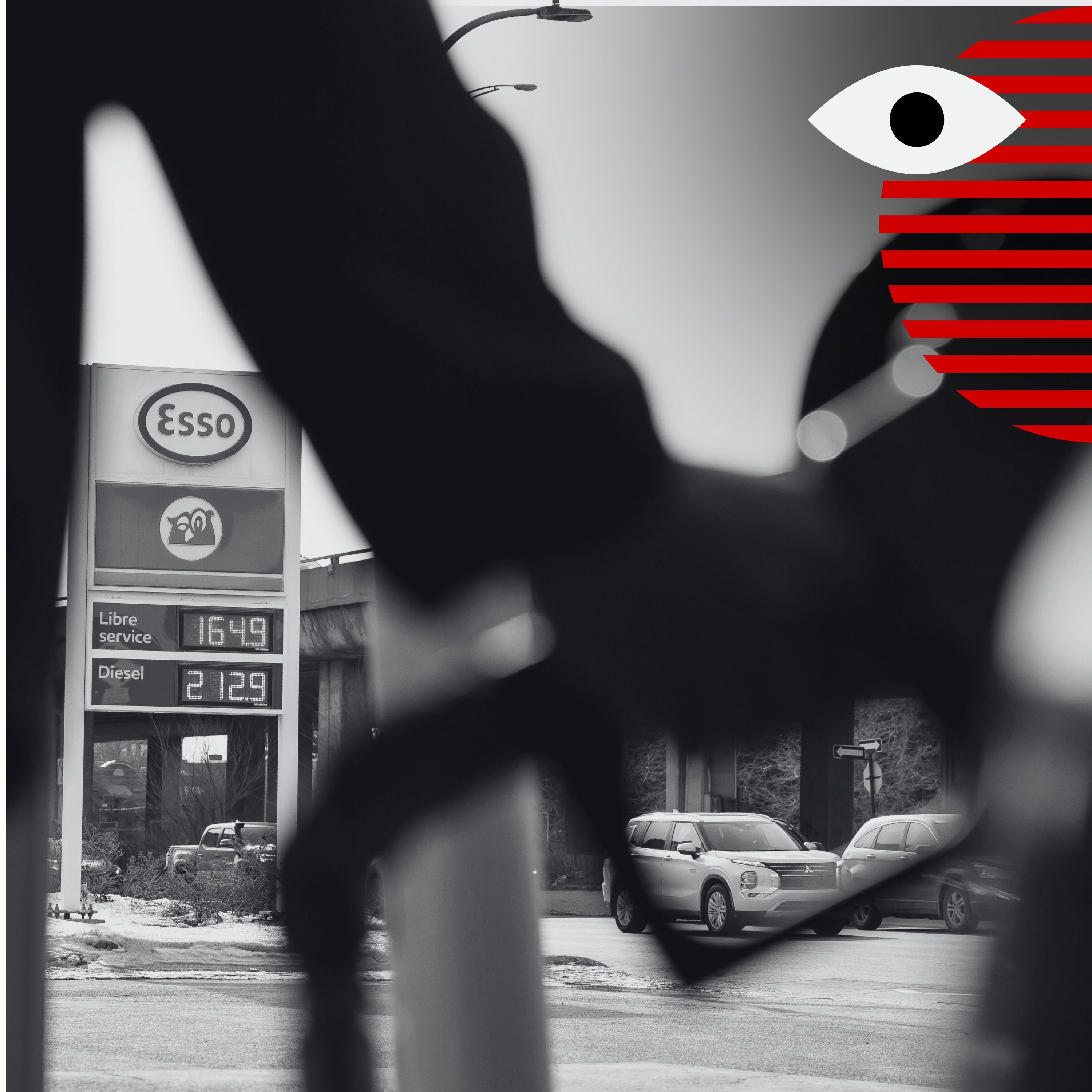
The conflict in the Middle East is well into its second week, and just like rest of the world, Canadians are starting to see its impacts in our everyday lives - including at the gas station.
Correspondence from the White House only seems to be making it worse, with oil prices heading in every which direction after a false claim from US Energy Minister Wright on the movement of an oil tanker through the Strait of Hormuz. The critical passway has been effectively closed by the Iranian regime.
Host Maria Kestane speaks to John Kirton, political science professor and Director of the G7 Research Group for the University of Toronto. They discuss how Canadians can make sense of what they're seeing in the Middle East, and how much worse of a hit their pockets could take.
We love feedback at The Big Story, as well as suggestions for future episodes. You can find us:
Through email at [email protected]
Or @thebigstory.bsky.social on Bluesky
Transcript
Frequency podcast network, stories that matter, podcasts that resonate.
As the conflict in Iran braves well into its second week, the death tolls continue to
climb.
Cities across the Middle East grapple with new safety concerns, and back you're at home,
the effect on the global economy is starting to hit the everyday Canadians pocket.
The price of oil is in a volatile relationship with US President Trump's political ambitions
and conflicting statements from the White House.
And with the straight of hormones heading into almost ten full days of going dark, the
prices at the pumps may only continue their upward trajectory.
So how much more follow can we be seeing from the conflict in the Middle East?
Our Trump's words impacting the market by the second.
What can Prime Minister Mark Carney do to keep Canadians and our cost of living at bay?
I'm Maria Castan and today on the big story I'm speaking to John Curtin, a political
science professor and the director of the University of Toronto's G7 research group.
Today we're getting into how Canadians could be feeling the effects of the conflict in the
Middle East, here at home in their everyday lives, from gas to food prices, and how Ottawa
can use the situation as an opportunity to dig deeper into domestic investments.
John, thank you so much for joining me today.
Well, it's a pleasure being with you and your viewers on this very eventful time.
Absolutely, you know, John, I'm wondering if you can bring our listeners up to speed and kind of
take us through what has unfolded in the past two weeks or so to help us understand why we're seeing
economic disruptions, not just in Canada, but globally.
Well, we're on day 10 of Mr. Trump's latest attack on Iran.
Of course, his first one was last June, right after the G7 summit, Canada hosted in Canada.
Trump went home and then boom, launched a 12-day war against Iran.
And on day 12, he said he had to destroy all of Iran's nuclear weapons, material, and capacity.
So that was the war aim mission accomplished.
But then, well, about two weeks or more, he increasingly was taking all of his military assets
from Venezuela and sending them into the Mediterranean around Iran.
In part, that was to induce the Iranian leadership to make a deal and give more of what the
Americans and the Israelis wanted to stop the nuclear program.
But during that time, it seemed that Mr. Trump's cell war aims broadened and increased.
He spoke about regime change, getting rid of the dear Ayatollah.
And then two Saturdays, a gall, Israel, and the United States together attacked Iran.
They were very quickly accomplished.
The first war aim, they killed Ayatollah, Hamani, and a much of the senior leadership.
And then they destroyed over the coming days, basically all of Iranian air defense,
fighter aircraft, and now almost all of its navy.
But they still haven't even claimed and provided credible evidence
that they've actually destroyed the remaining nuclear weapons program or capability.
Nor have they instituted a regime change.
Keeping in mind everything you've just laid out for us, how does that explain the economic
impacts that we're seeing across the world just in these 10 days?
Well, it's an important impact. The obvious one is the Middle East is a major exporter of oil
that so many countries around the world are dependent on Iran itself actually exports now,
rather little, but all of its neighbors, Saudi Arabia, Bahrain,
Doha, United Arab Emirates, Kuwait, most of them do a lot.
And that oil and the gas exports largely flow through the straits of Hormuz,
which is a very narrow choke point, only about 33 kilometers across, and Iran has done a very
good job of actually saying, look, we're not going to allow any ships to get out if they're
carrying oil, natural gas, or anything else. So if you just stop those exports,
then instantly all those countries that depend on the supplies coming out of the region,
it's physically cut off. So the price on the globalized markets, it immediately shot off.
It was about $80, a barrel shot up over 122, but then it's very recently plunged, especially
today. Nonetheless, nobody can count on it's staying there. So I think we're in for a considerable
volatility. You know, you touched on the prices of gas, and I think that's the most overt
economic effect, at least for Canadians, who are feeling it on this side of the border
with gas prices jumping, and I'm sure we'll continue to see that. But where else you think,
John, could we be feeling the effects of this conflict in our everyday lives here in Canada?
Let's start off with the wonderful reality that amongst the G7 members,
Canada is the best off, because we are a net oil, a natural gas producer, supplier,
and exporter. So we've got enough here at home, not only to take care of ourselves,
but to take care of our friends. We also have been too slow, yes, but moving quite steadily
towards electrifying our energy supply. About 85% of the energy Canadians use comes from
renewables, right? We have a little bit of natural gas that we use, even here in Ontario,
but the only place where Canadians use oil to heat their homes. So it's not just at the pump,
it's when you drive home that you feel an impact. In Atlanta, Canada, they still use a bit of oil
for home heating, but not in Toronto or elsewhere anymore. We use electricity from hydro
and from nuclear energy, and we've also got some windmills churning more and more solar panels,
more and more Canadians buying electric vehicles, putting heat pumps in their home.
So we're much better off now than we were, even with the big price spikes of, well,
2000 and 82009. How does this speak to the need for Canada to direct its efforts
inwards more to invest more in our own oil production?
I know it's very tempting for many Canadians, especially our friends in Alberta or
compatriots to say, oh yeah, we need to invest more to produce more oil,
oh, and pipelines, more pipelines, right? But we have to remember that as our current Prime Minister
previously said, when he was one of the world's leading economists, that's a stranded asset,
because if you look 5, 10 years through now, nobody's going to want to buy those pipelines,
finance those pipelines, or even the oil that goes through, most of the oil we got
from the oil sands in Alberta, it's really heavy. Some people call it the tar sands,
whereas the oil in Saudi Arabia, it's really a light oil, so our oil will help all the refineries
around the world, which have been optimized to use the light, sweet crude from Saudi Arabia
and the Middle East. We are lucky, because Justin Trudeau, as Prime Minister, said,
look, I'm going to take a big rest, and I am going to use Canadian taxpayers' money
to build a new pipeline, the Transmountain Pipeline to Vancouver, and it got done just in time
to be filled right now with Alberta crude, which is going across the very safe Pacific,
right? Just a few weeks before this shock hit, we opened up the new liquefied natural gas facility
in Kitimat, British Columbia, so tankers of LNG are now taking Canadian LNG over to, well,
Japan, Korea, our friends across, so that's good, because it's already there, but
if you're a CEO of an oil company, as we've just seen, and you look five years out,
they know that so many more Canadians are going to be driving electric vehicles,
hitting their homes with heat pumps and solar panels, solar panels, a far cheaper source
of energy than oil liquefied natural gas could ever be. So I do think Prime Minister
Kerney has been wise not to instantly say, I'm going to do what Justin did, I'm going to use
the taxpayers' money, and we've got a big deficit up in Ottawa already, we're going to have to pay
for and build another pipeline. What he's slowly, I think, doing too slowly is electrifying Canada.
John, what do you make about how Trump is talking about the conflict and its impacts? I mean,
you have him downplaying the rise in gas prices and almost justifying what he calls these little
increases for what he's supposedly trying to accomplish here, and this is someone who's
campaigned on lowering the cost of living for Americans, yet he seems to be okay with these
incremental increases if it means achieving his political personal ambitions. Well, he's pretending
to be okay with it, and maybe in his own mind, he thinks it really is okay because I can't
remember the last time when he admitted I made a mistake. He's quite convinced, he's perfect
the best in the world ever at everything. So he says, but it's clear that he didn't think this
one through, which is one of the reasons why we've had a kaleidoscope of statements about
what the warrains are. He said he wanted to replace the regime, but then he said a few days after
he killed those at the top. Oh, the people we identified as our candidates to take over,
we've killed them too. So there's nobody left there. So it was about regime change,
but he originally said no, it was just to get rid of the nuclear weapons material,
which of course he had said he had gotten rid of six or seven months ago. And nobody
said that the miraculous radians could just reconstitute it from nothing to provide a threat.
I think one thing that's very telling he was on TV with his defense secretary and someone
asked him, do you feel badly that an American Tomahawk missile hit a school and killed over 150
at children? And Trump said it wasn't us, it was the Iranians, but of course the Iranians don't have
Tomahawk missiles. You said, well, they're really so bad, they can't aim appropriately. So he's
unwilling to take any of the blame himself. So now we'll just have to wait and see he went on TV
yesterday and basically said almost the war is over. We have nothing left to destroy there.
Well, it does take two to tango and to the other side is still not ending
by the war. They're still firing at Americans at Israelis and they still have the capacity,
I guess, to inflict damage. So he really didn't have a clear set of objectives that everybody
understood, including those allies, including a Prime Minister Karni who spoke to him by the other
day. You mentioned off the top how the straight of Hormuz essentially at this bottleneck point,
and I'm curious to know what do you think John would be needed to allow, I don't know, for the
Iranian regime to feel like, okay, we'll be fine with letting ships pass. What do you think is
is needed to get past this effective closure? Well, if you asked Donald Trump,
he just recently said, because nobody in the private insurance industry would ensure any of those
ships to go through too risky. Trump said, I will. So he ordered is an international financial
development corporation, which is supposed to finance things in poor countries in the world
to finance, to give the insurance for the ships when the private sector would not. But then he also
said, he's going to have the US Navy escort those ships through the Gulf. And it doesn't seem
that the United States or its allies have enough frigates or destroyers to put one on each side
of a tanker, and they're mostly not US tankers, that right? Going through, and again, I come back to
33 miles, but then to shallow a real choke point. So tough enough for a one tanker, little on
two other warships on its side. And just a few hours ago, is quite impressive. Energy secretary
Chris White said, the US Navy has escorted the first tanker through the Straits of Vormos,
but then almost immediately he had to take that tweet down from his website. So I guess it was
self-imposed fake news. So nobody has confidence that a crump can do it. As for the Iranians and their
proxies, the hoodies in Yemen in particular, they had every incentive to shock the Straits
to everyone, even though they said they'll let the ships of their friends come through, but they
don't have many friends left to shut it completely to impose the maximum economic pain
on how much the world, for as long as possible, to have them all gang up on down Trump and say,
you've got to stop. Is there a point of no return when it comes to how big of a spill this war
in Iran could have or could cause globally? And if so, what could be some hints that you think
were approaching that? Well, further escalation is, I guess, the greatest still worry.
The one country in neighboring Iran that the Iranians had not attacked was Turkey. It's our
NATO ally. So if Turkey were attacked, their government, Mr. Anolan, could invoke
Article 5 of NATO and attack on one's attack against all, and then we're all politically
obliged, including Canada, to ride the rescue and to defend Turkey against Iran, even with
troops on the border, maybe going into Iran, our aircraft flying into Iran. So that would be,
I think, a major escalation. And then, of course, the ongoing war in Ukraine, the Ukrainians would
say, why in the world is NATO defending Turkey and attacking Iran? Whereas we've been at war
and we're much closer to the heart of Europe and so many NATO members. Why don't they come and
defend us, boots on the ground? And then Mr. Putin of Russia is already giving intelligence
and other forms of support to the Iranian army regime. And the Chinese do seem to be supporting
the Iranians too. So you have an intensifying axis of evil, if I could resurrect an old phrase,
China, Russia, Iran, all waging war against the West and the Gulf monarchies in a way that they
weren't before. And there's always a danger of a nuclear accident, all right?
If the Americans bombed a nuclear enrichment lab buried in a mountain in Iran,
and it gets through, then there could be radioactivity released into the air. And it won't stay
in Iran, it'll travel around the world. So if one wants to horizon or doesn't move into
ultimate nightmares, it's fairly straightforward to do.
All right, that was John Curtin, a political science professor in the director of the University of
Toronto's G7 research group. And that was the big story. We'd love to know what you think of this
conversation or if you've been feeling the economic effects of the war in your everyday life,
whether that means a more expensive grocery bill or paying more at the gas station. Let us know
we'd love to hear from you or on Blue Sky at the big story or you can reach us by email at hello
at thebigstorypodcast.ca. If you have a story idea or a topic you'd want us to look into,
send it our way. The big story publishes every day including big headlines. Our five-minute
news show hosted by my colleague and friend for Josh Dave. You can hear that on the big story
feed right here or head over to the big headlines feed. They got you covered on a quick rundown of
the news of the day. That's today's episode. We hope you enjoyed. I'm Maria Castan. Thanks for listening.


