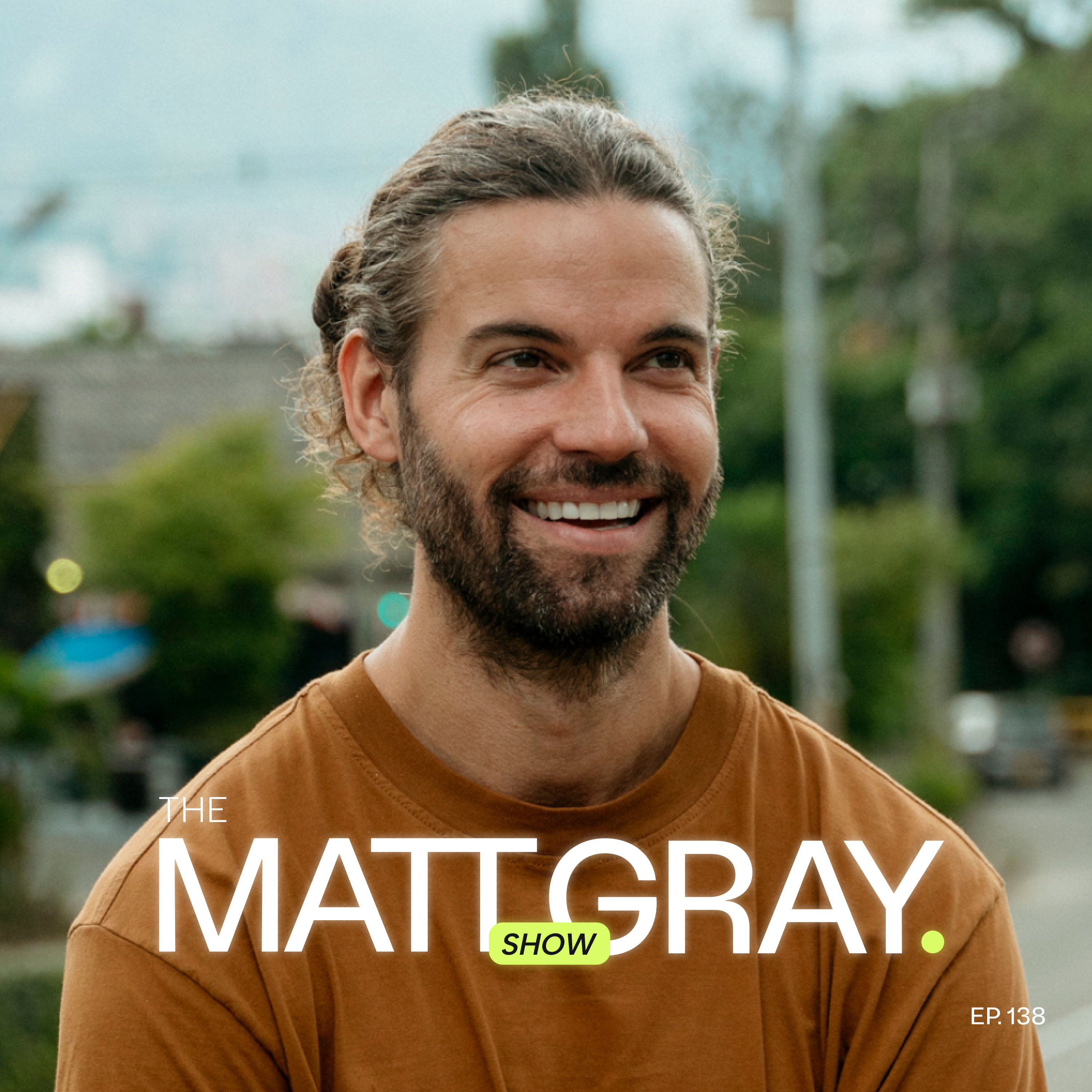
how to become a storytelling genius (the addiction framework) I EP 138
About this episode
Work with me: https://fos.now/TTkEyL
Get the Storytelling Growth Assessment here: https://fos.now/IGdgJx
In this video, I break down the psychology behind addictive storytelling, the five-line framework I use in my own business, and how to turn a single story into revenue without sounding salesy. I'll show you how to open curiosity loops that hold attention, move people from awareness to action, and connect your call to action so it feels inevitable instead of forced.
Want to LEARN proven systems to grow your personal brand? Go here: https://fos.now/yBAMYL
Already doing $30K+/month? Come to my next free workshop and I'll show you how to systemize your business and get your time back → https://fos.now/WTPXcC
Want to WORK with a team of A-players? Apply to Founder OS here: https://www.founderos.com/careers
Connect with me:
Website: https://bit.ly/4kHNanU
Twitter: https://twitter.com/matt_gray_
LinkedIn: https://www.linkedin.com/in/mattgray1
TikTok: https://www.tiktok.com/@realmattgray
Instagram: https://instagram.com/matthgray
00:00 - Intro
00:40 - Make Your Stories Addictive
02:37 - Use Storytelling as Your Growth Engine
04:43 - Your Story is Your Unfair Advantage
07:17 - The Five-Line Story Framework
10:02 - Turn Stories into Sales
12:08 - The Content Waterfall System
#onepersonbusiness #creatoreconomy #entrepreneurship
Disclaimer: Information shared here is for educational purposes only. Individuals and business owners should evaluate their own business strategies and identify any potential risks. The information shared here is not a guarantee of success. Your results may vary. This video shares my personal experience and growth building businesses over 15+ years of consistent effort. Your results will vary depending on your own actions, strategies, and circumstances.
Get every episode summarized
Each time The Matt Gray Show publishes, we email you a written briefing from the transcript — the topics, who appeared, and any specific claims, with the ad reads skipped.
Email me new episodesFree for 3 shows. No card needed.
Hosts & guests
Transcript ready
294 searchable segments. Every word is indexed and playable.
Full transcript
The Matt Gray Show — how to become a storytelling genius (the addiction framework) I EP 138. Machine-transcribed; use the interactive transcript above to jump the player to any line.
What if the reason your social media isn't growing has nothing to do with your strategy and everything to do with the way that you tell stories? Most people post randomly then wonder why they never get views, the money and the opportunities that they want. In this video, I'm going to show you how to go and make your stories addictive and the six part framework that turns any story into profit. So as you're going through this as well, I want you to think about one story you've already told or want to tell. And I put together a short storytelling growth assessment that you can use after this video to map that story and then see whether it can actually scale into sales. Watch this first and then go and diagnose your story after. Step one, make your stories addictive. First, you need to understand how to make your stories addictive. In my how to work less and earn more video, which hit over 598,000 views. I opened up with if you thought of someone making $730,000 per month, how long would you guess they're working? Most would guess 12 to 14 hours a day.
I'm doing the complete opposite. Then I held that tension through the whole video. I didn't explain how until several minutes in and the result, people couldn't click away. The reason this works is is a garlic effect. Your brain genuinely hates unfinished business. Once you open a loop in someone's mind, their nervous system craves that closure. You literally can't stop thinking about it until it's resolved. When you're going and creating any video, or maybe you're writing something, the main goal here is to actually go and retain people to the end. And when you're thinking about a YouTube thumbnail, the core currency and emotion you're trying to drive there is intrigue. Intrigue is going to go and drive the click, but when someone's in the video, it's tension that you want to go and create. That retention is going to be created when people are really sucked into the story. And in order to do that, you want to go and open up different loops and then go and create that tension and don't close it for a few minutes later in the video. You wouldn't believe what happened next and this nearly killed my business.
This was crazy, but nothing yet compared to what happened next. These kinds of questions keep people diving in. Now their brain leans in and it needs the answer. What you'll often see is when you use these kind of tactics multiple times throughout a video, you're going to make sure that people are hooked in the story all the way through. On the other side of things, shitty stories basically go and get someone hooked at the beginning, but then the story just seems to fall flat because there's no more curiosity gaps. And so when you're going and getting that story dialed in, make sure you put the right curiosity gaps throughout it to keep the viewer retained. Step two, use storytelling as your growth engine. Storytelling is your fastest path to revenue. People remember stories 20 times more than facts. These get people emotionally involved in your brand. Now as much as we like to think that we're just these rational beings, the reality is we make emotional decisions, especially when we're purchasing. And so your story is an amazing opportunity to develop that emotional resonance and that emotional bond with your core dream customer.
This explains the psychology behind luxury brands, you know, a Birken bag costs $50,000. And trust me, it's not because the leather is something special, but because of the story, the artisans, the waiting list, the heritage, someone will wait three years for that story. Your story is your strategy, but more than that, a story is a funnel. A funnel is the path someone takes from never hearing about you to becoming a paying customer. Most people think it's linear, you know, traffic leads to calls, leads to sales, but that's not actually how humans buy. The real funnel is this, it's attention to trust, to belief, to action. Everything gets people to stop scrolling. Trust makes them listen, belief makes them think, this could work for me. Action is when they finally buy. For me, when building Founder-wise, I could have said, you know, we just teach systems. Instead, I told the story of the 15-hour days I was working at 22 miserable, trapped and depressed. And the transformation then to building a portfolio of businesses doing over $13.8 million a year, all while being able to travel the world and really enjoy my life.
So show people where you are and tell that story of that journey. The founders with the best stories went. You know, what are those stories that, you know, people can really get grip to around your brand? It may be your Founder story. It may be big crucibles of leadership you've had to overcome. Maybe it's the best stories from your customers that have gotten amazing results. That's how you move them from attention to action. That's how you make profits way faster. And so now you might be wondering, well, what if my story isn't good enough? That's where most people are dead wrong. Step three, your story is really your unfair advantage, and I have proof here. There's one thing Kim Kardashian understands about business that most founders ignore. Kim Kardashian skims versus every Shopify shapewear brand. There's some obvious things that stand out, right? Same product, same factories, but skims crushes them. Why? People buy into Kim's story. Her journey, her obsession with shapewear because of the insane outfit she wears. That's the mode generic brands can't copy.
For me, sharing one of my worst periods of my life had the same effect. I'd gone through business school and honestly felt like the whole investment in going to business school was a complete fucking waste of time. You know, this was the genesis of why I went and created BitMaker, my first company. The goal there was to go and train full stock software engineers seven months in, crushing it. 200K per month, and then the government comes and raids my business. Two agents walk in after seeing an article in the Globe of Mail, and they tell me that we got to shut down because they think that I'm operating an unregistered private career college, which was pretty insane because we weren't giving any grades. We were certainly not a university or a college. We were just a training program, getting people jobs at top tech companies in Toronto, like Shopify, Facebook, and Google. I could go to jail for a year, find up to a million dollars fucking insane. And the main thing that I know to do in that moment was tell the story to as many humans as possible. I went and stayed up for 48 hours straight, emailed over 3,000 people personally and told
the story of why we had created BitMaker and the impact it was having across the Canadian tech community. The story went viral and within one week the government backed off. We got the only exemption of its kind in Canada. Fast forward one year later, we trained over 2,000 software engineers, and the business was acquired for a life-changing sum. That story did morph my credibility than any credential. It wasn't polished, it was my actual life story, and one of the craziest experiences I'd ever gone through. It was the story that saved me, right? Because when thousands of people ended up hearing this story of what we were going through, they couldn't help but act. Ben Horowitz famously said, your story is your strategy, your authenticity, your challenges that things you've overcome, the stuff that you wish you had known five years ago. So run with the five year test. No blueprints or challenges do you wish someone had shown you five years ago? Share the chaos that almost broke you, right? Those moments that shifted you. Those are the stories your audience needs right now. You have a story, right?
And what we now need to do is go and uncover what that story is for you. This is where the five line story framework comes in. And the reason it works is the same reason the biggest movies make billions of the box office. Joseph Campbell's The Hero with the Thousand Faces, Analyze Myths all over the world. Greek, Norse, African, and Asian. He realized they all followed the same structure, The Hero's Journey, Star Wars, The Matrix, Harry Potter, every story you love follows this arc. This is why I use a five line framework for business stories. Step one, the mirror, where they are right now. You want them thinking, holy shit, this guy is literally reading my mind. Example, you're stuck in slack all day. Message after message, it feels impossible to keep up. You keep feeling like you're on this treadmill. The day ends, you look yourself in the mirror, you're brushing your teeth, and you can't help but think to yourself, how long can I keep going like this? Every wind still requires you. Step two, the friction. Why they're stuck? This is the personal cause, and not just the business problem.
So an example here might be, you keep missing your kids birthdays, no real vacation in three years. Your partner asks, when things will slow down, and you have no good answer. Step three, the realization. This is the epiphany no one tells them. For example, the problem isn't your work ethic, it's that you are the system. Replace your self with systems, and everything will accelerate. Step four, the shift. Your transformation. I went from 15 hour days to four hour days, burnt out to energize, and trapped to free. And last, the invitation. This is the natural next step. If this resonates, here's what to do. At this point, most understand the framework, but you still don't understand where your story breaks. That's exactly why the storytelling growth assessment exists. It forces you to map one story using these five lines, and then shows you which of your line is killing scalability. If your stories aren't converting, well, this is going to make it obvious why. People don't buy conclusions, they buy clarity about themselves. The mirror and friction earn that early, and then most people rush to the solution.
Don't. Make them feel understood first. Because if you can describe someone's lived situation better than they can, they're going to trust you then to go and provide them with the right improvement or solution through your product or service. This becomes a skill that I find I can pick up by actually just going and getting outside of the room and just talking with customers. It's from these actual stories that I hear from your mouths that I'm able to then go and weave those into the different stories that I tell on this channel and all through founder OS. The best copy just exists in the words of your dream customer. So the same thing goes for the best stories you can tell. All right, so you've got the structure now, but here's one fatal mistake people make that stops them from making money even with this framework, which is why you need to understand the right way to turn your story into sales. If you want to sell without sounding salesy, here's what you need to do. Where most people go and screw this up is that they go and have some sort of called action that just jolts people out of this story.
They'll go and tell this amazing story. They'll captivate people and then they'll say something generic as hell like, hey, if you like this, go and join my newsletter. Or, you know, if you like what I'm talking about right now, you should go book a call, right? Well, the thing that you really want to focus on is making sure that the call to action is tightly coupled with the story itself. A good CTA is inevitable. It's a natural next step. The story opens up a loop and then the lead magnet closes it. An example is if I told you about being stuck at 22 working 13 hour days and then said, if this feels like what you're going through, go and grab this guide so you can systematically remove yourself from operations. You see, that's connected, right? Not random. You want to be insanely generous. When you give genuine value for free, selling becomes natural. People think if this stuff is free, what's inside the paid stuff? So after every piece of content, ask yourself, what loop did I open? You know, what problem did I surface? It's the smallest, most valuable thing I can give that start solving it where I see a
lot of people screw up as they think that they're just done at telling the story. Most people I see online don't give anything away. Clearly go and guide them to the logical next step that's going to help then solve that problem. And the good news here is that as they go and download that lead magnet as an example, you're going to go and deal to collect that email. And as you probably know from watching this channel, email is the most powerful way you can sell to people. In any business, it's typically your email list that is your most valuable asset. So if you want the email, make sure that you have lead magnets that are tightly coupled to your story. This is how you create stories that convert. If you think everything I've shared sounds like a lot of work, then the good news here is you don't need new ideas every day. Most people are creating content on hard mode. Let me save you here, okay? Here's how to do it on easy mode. Now you just need to apply the content waterfall system. For this system, I was posting randomly inconsistent, burning out, trying to be everywhere all the time. So let me walk you through it.
This is the content waterfall. My system starts with content creation, which is around two to four hours a week, one long form video, and then I turn that into one deep newsletter essay. I record different coaching calls, which are also content goldmines, and then distribute that up. But that's all my team handling it, right? Each editor is able to generally pull a bunch of the best moments from these long form pieces of content, and then distribute that in places like YouTube, Shorts, Instagram Reels, and TikTok videos. On the Instagram side, we typically use carousels, right? And it's my designer that goes and takes our core frameworks and puts them over there. From there, my copywriter can turn scripts into different long form content for platforms like LinkedIn as an example. And we also will typically go and take my raw writing, which I have in different journals or I'm sharing right now on X articles or in my YouTube videos. And then they can go and take that and cut that up into 20 plus other pieces of content. To be clear, we don't just do this with everything, okay? The kind of way you want to view your content system, right, is that you're putting all
of these stories out there to the world, and there's going to be some of your stories that are either insanely important, or you see them perform extremely well. And so what you want to go do is take those winners, and then what we do is call waterfall them. Meaning that you take that core story and you go and break it up into smaller pieces and distribute those smaller pieces. When you waterfall content, you go and you multiply it. The dark side of building a founder-led brand is the fact that it's you. So if you're not careful about multiplying your content, quickly it could feel like you're on a content hamster wheel. And this is why it's important to have the right team in place, editors, social managers, video producers, and the right systems in place like this content waterfall system. You know, you get it, right? Having the right tools in place, the right people in place, and the right system to make this way more seamless, scalable, and effortless. For me, when I go and view building this story engine in my companies, right, it's moving from just being the creator of a personal brand to being the CEO of a personal media company.
A personal media company, right, is going to remove you from a lot of the actual content operation. It's going to build leverage through your team and systems. And most importantly, it's going to give you longevity. The best storytellers stay in the game for a long, long period of time. And that's what we want to set you up for. Pick one story from your business, you know. Maybe it's your origin story, some crucible story, or some story where like, you know, this almost killed us. Film it, write it, map it everywhere it can live. YouTube, YouTube shorts, Instagram, LinkedIn, email. Then we purpose it to all of these platforms. Just people invent something new daily, and I think that's a mistake. And honestly, it's exhausting. And that's why most people burn out and most creators just give up. Go deep on one story, you know, pour your creativity, your authenticity, your vulnerability, your genius into that one story. Make it undeniable. Now let your distribution multiply it. Build once, distribute forever. So here's where you go and take action.
So buckle up. Step one, use the storytelling growth assessment to map your story, and then identify the first line that breaks conversion. Step two, I want you to go and book a call with me in the team, and then go and bring that assessment to the call. Because we're going to go and then pair that with our systems to see where your stories could be driving more revenue. Don't forget to hit subscribe, and I'll see you in this next video where I break down how to build a profile personal brand in just seven steps. So I'll see you over there, and let's continue to win together.
More episodes
More from The Matt Gray Show

The 7 Laws of a Personal Brand Everyone Loves I EP 171
The Matt Gray Show

Personal Branding Is Hard Until You Build Systems Like This I EP 170
The Matt Gray Show

Why grinding harder won't build you wealth I EP 169
The Matt Gray Show

your goals keep failing until you run this meeting I EP 168
The Matt Gray Show