0:00
Hi, this is Chris McGregor.
0:02
Before we begin, I want to let you know that discerning hearts needs your help.
0:05
To continue offering free, faithful Catholic content, now in both English and Spanish, we
0:10
must raise $40,000 by Divine Mercy Sunday.
0:14
Why is this important?
0:16
Because souls around the world are searching for truth, for hope, and for Christ.
0:20
And this mission helps them find him.
0:22
Please visit discerninghards.com or tap Donate in the free discerning hearts app.
0:27
All gifts are fully text deductible.
0:29
Thank you and may God bless you.
0:33
DiscerningHearts.com
0:35
In cooperation with the missionary Benedictance of Christ the King priori presents,
0:40
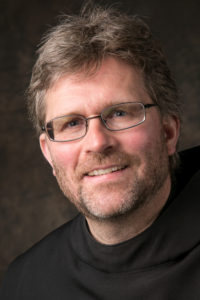
the Holy Rule of St. Benedict, a spiritual path for today's world, with Father Mauritius
0:46
Father Mauritius did his philosophical, theological, and doctoral studies in Rome.
0:52
Father Mauritius also serves as the prior of Sonton Selnos in Rome.
0:57
The Holy Rule of St. Benedict, a spiritual path for today's world, with Father Mauritius
1:03
I'm your host, Chris McGregor.
1:10
The subject we're going to address now is one that I approached with a great deal of
1:16
enthusiasm, but then as I pounded it, I became apprehensive because I thought to myself,
1:24
what really ultimately does this mean for me?
1:28
It's applying the rule in a place of confusing life patterns as opposed to the security of
1:39
You really have to look, what are the confusing life patterns?
1:45
What is that and how can you possibly get some of them under control?
1:51
I think we human beings are succeeding in creating our very own world.
1:59
We make our world, which is wonderful and also part of the task the creator has given
2:07
However, sometimes we don't realize that we go too far or don't think about the consequences
2:18
of what we are doing.
2:20
Let me take an example.
2:22
So there is a natural, healthy balance between light and darkness, between day and night.
2:33
This is just a natural rhythm.
2:37
We have created electricity, which is wonderful.
2:40
And that makes us independent from light or darkness.
2:46
So because we can make light in our rooms even at night and can continue to live like
2:55
a day and we can shut our windows or we can close our shades and make it dark in our rooms
3:06
and pretend to have night.
3:10
In the 19th century, when the street lightening, the street lamps were introduced in Rome,
3:20
the Pope said, I am against that.
3:24
He wanted to forbid street lightening.
3:30
As we see, he has not succeeded in doing so, nobody wanted to follow him.
3:37
And what I found interesting is that he had already the sense there is something fundamental
3:44
So when you make day out of night, so this is one fundamental change we have experienced
3:58
during the last 200 years.
4:00
Another one is weekday, working day and Sunday.
4:08
So for our industries and also for the sake of customer service, we got used to work all
4:23
So in a way, we have given up the Sunday.
4:27
So for the machines, the robots and the engines, for them it is the best if they work all
4:35
the time and we have kind of to serve them nowadays.
4:39
And as a consequence, we have lost, at least partly, the Sunday, the Holy Day, the day
4:49
when we stop working.
4:52
I don't know how many million people have to work on Sundays or holidays in order to
4:59
have the others to rest.
5:02
But anyway, we have messed up with Sunday, the Sabbath in a way and weekdays.
5:13
And the same is true also for the seasons when you think about summer and winter.
5:18
Again, what accomplishment to have an air condition?
5:23
What a accomplishment to have a heating?
5:25
I cannot actually, I cannot imagine to live here in Nebraska without an air condition,
5:33
But it is that a couple generations before us, they lived without it, don't ask me how
5:42
they really could do this.
5:46
And in a way, we have lost the contact, this is the flip side now, the contact to our,
5:56
to the seasons, to the change of seasons, to the temperatures.
6:03
So if you don't want to, you don't have to experience seasons anymore.
6:08
To live in your house, your car is parked in your house.
6:13
So you enter your car, you drive wherever you want to go.
6:17
So you don't have to leave a heated space or an air condition space.
6:23
So you don't have to go outside anymore.
6:28
Which is, as I said, in a way, which is really an accomplishment, I don't want to go back.
6:33
But what it means is that we are not so close anymore to the seasons.
6:38
But the seasons are a natural rhythm given by God.
6:46
So we, we, we human beings even succeed in changing our climate as we probably know.
6:53
It's probably caused by us.
6:58
It has always changed, but this time it seems that it is, the impact is even bigger.
7:05
So as for the, for the human beings, again, it is not about being subject to the nature.
7:16
It is good that we use the nature.
7:18
But on the other hand, the nature offers us things we need for our lives as human beings,
7:25
because we as human beings are still part of nature.
7:29
We need the rhythm of day and night.
7:34
We need to rest weekday Sunday.
7:37
We need to have these changes in temperatures in colors.
7:44
When we look outside, you know, is it green?
7:47
That is good for our eyes.
7:49
It is good for our skin to feel the different temperatures.
7:52
It is good probably for our heart for everything to have these changes.
7:58
Some people here in Nebraska have told me what they especially appreciate is that here
8:04
in Nebraska, we still have all seasons, all four seasons.
8:08
Their parts in the world where the seasons are not as, as different.
8:16
But what I want to say is, as we have distanced ourselves from this natural rhythms, we have
8:27
become, we are in danger now to mess up our whole life anyway.
8:33
Or think about our calendar.
8:35
This is another thing.
8:38
Today we live according to outlook.
8:43
We organize our lives with a smartphone.
8:49
And sometimes as for a family, it is really not easy to organize everything you need in
8:57
Otherwise you get to keep everything.
9:00
But then we change our appointments back and forth.
9:03
And so you cannot live without this calendar anymore, but think about how much our brain
9:11
and our mind is occupied with organizing the most simple things.
9:22
So we have to organize day and night and Sunday and weekday and the seasons instead of
9:28
just letting it happen.
9:32
We could go with the seasons instead of always organizing it.
9:40
This goes back to when I originally approached this.
9:45
I had thought that I was looking at it from the end point I now realize that my life has
9:53
gotten chaotic because of all of the scheduling and all the things I feel I need to do and all
10:01
But what you've helped me to see is that it actually goes, you have to look not from that
10:07
point, but way back to the start point of how as humans we were designed a certain way.
10:14
And we have altered the very basic way of how we were designed to operate so that the
10:21
end result is that chaos in our life.
10:25
Because even the rhythm of waking and sleeping and experiencing just the world around us,
10:35
To go without power for one night, it literally chaos descends into a home and into the person.
10:44
Imagine a calendar, an outlook calendar somehow disappears.
10:49
The absolute panic and the anxiety and the disgruntledness that comes for.
10:56
But that's just the end result of something that we lost side of a long time ago.
11:02
To give you a taste, housing Benedict approaches this topic in chapter 41, he writes,
11:11
from the 13th of September to the beginning of Lent, they always take their meal in mid
11:20
Finally, from the beginning of Lent to Easter, they eat towards evening.
11:26
But fespers be celebrated early enough so that there is no need for a lamp while eating,
11:34
and that everything can be finished by daylight.
11:37
Indeed, at all times, let's supper or the hour of the fast day meal be so scheduled that
11:45
everything can be done by daylight.
11:48
So it's interesting that even at Benedict's times, they had lamps already, so they could
11:52
eat also with the light of lamps.
11:57
But it seems that he schedules the life of the community along the lines of the light
12:08
of the day and of the natural light.
12:12
So we even can imagine that he didn't always pray vespers at, let's say, 6pm or so,
12:22
that even the liturgy of the hours, not only the meals, that he scheduled everything around
12:31
So why don't go to bed when it is getting dark?
12:37
By the way, you find this still in Africa, this was really expressive for me when I was
12:42
there as a missionary of Benedictine, that because of the lack of electricity, people
12:48
just go to bed at night.
12:51
So they go with this natural rhythm and think Benedict, this is what is reflected here
12:58
once us as monks, too, to live in harmony with the nature.
13:05
It will live in harmony with your surroundings.
13:08
I think that's very key.
13:11
As it is, the reason this is so relevant is that this isn't just a sign for that area
13:18
of Europe which Benedict experienced.
13:21
But I mean, you would have Aria Iceland where there is perpetual daylight sometimes or areas
13:29
where there is a lack of a change of seasons as you've spoken before to the southern portions
13:35
of the United States.
13:37
And yet, if you're in tune with those areas, there are differences.
13:41
They're not always the same.
13:43
There is some type of nuance that if you're akin to it, and usually there's a gift associated
13:51
with those changes, too, there's something to be had.
13:56
And this is how a Benedictine day is structured.
14:01
It is always changing, alternating.
14:04
So we start in the morning at 6 o'clock in Skylar at Chrysler King Priory with Vigil and
14:13
Then we have time for spiritual reading.
14:16
Then we go to work.
14:18
Then we go to the Eholy Eucharist at 1115.
14:22
Then we have our noon prayer, midday prayer.
14:27
Then after a little nap, we go to work again.
14:32
Then we have Vesperset 6, praying again.
14:36
And then we eat and we pray complex.
14:40
So there is this alternating way of praying, working, resting.
14:48
And this is captured in this classic motto all right, laborer, pray and work.
14:55
This is how we, when Dickens are mostly seen, this kind of summarizes our life, pray and
15:05
And this is a wonderful motto.
15:08
Because it has this change, so don't pray all the time.
15:12
Don't work all the time.
15:15
A conferee once said to me, what is the most important work in this model, pray and work?
15:21
And his answer was, the most important work is and it's interesting.
15:27
You will think it is pray, actually Saint Benedict says, we should always have priority
15:34
So work is even not as important as prayer.
15:37
So the first priority is praying.
15:41
But then it is important this at this end to connect finally, prayer with work and work
15:51
So while changing back and forth, we bring our work, our daily lives into prayer.
16:00
We just come, for example, the best example is noonday prayer, midday prayer.
16:06
We come from our work, we are still full of thoughts, worries, whatever and pray.
16:14
So we can bring what we have just experienced into our prayer.
16:19
And filled with the silence of prayer, with the encounter of God, with his love, with
16:24
his encouragement, with his grace, we can get out again and do our work.
16:31
So finally, our work becomes prayerful, filled with God's grace.
16:39
And our prayer sometimes actually also is work.
16:42
So as we dicted, sometimes we pray pretty much.
16:46
So sometimes it's just work.
16:48
Now I have to pray, it's just part of our life.
16:53
But the beauty is in this change, in this back and forth and back and forth.
16:58
And it is so basic, it is so fundamental that you can do it all at all times.
17:06
This I find always fascinating that, you know, there are so many orders, religious orders,
17:12
and every order has its very own characteristic and motto.
17:17
But I think a reason that our order still exists is that our motto is so basic and so simple.
17:25
So you can apply this at all times.
17:29
Think about the political situations in Europe and in the world during the last 1500 years.
17:39
So there were kingdoms and different political systems and situations.
17:44
And what was going on in the monks just continued in pray and work and pray and work and
17:54
pray and work because you can do this all the time.
17:57
The same is true for the situation of the church.
18:01
The church went through good times and bad times.
18:04
But what you can always do is pray and work and pray and work.
18:11
And this is the rhythm.
18:13
This gives us this balance and this connects us with our basic needs as human beings to
18:19
be in this world and at the same time, not in this world.
18:24
The danger can become when the work then takes precedent over the prayer and that somehow
18:29
the prayer can be set aside.
18:32
Even the farmers in the field, I love the wonderful manuscript illuminations that the
18:39
Benedictines passed down to us along with their beautiful transcriptions of scripture.
18:44
But they would have these images and it was usually of the countryside, of the people,
18:49
of the changing of the seasons.
18:52
And most often, sometimes them stopping to pray in the middle of the field at noon time.
19:00
It was so important.
19:02
I think maybe we began to really lose that with the Industrial Revolution, that even
19:07
in a city that is surrounding a large church in the middle of its populace, there's no
19:13
longer a response to the tolling of a bell.
19:17
We still do this today as monks.
19:20
We interrupt our work when we hear the bell ringing the full hour.
19:26
We just stop for a minute, pause and pray.
19:31
That is very powerful because it really helps you to see that the work is not as important
19:43
as you always think it is.
19:46
You know, by the way, your work becomes even more efficient afterwards because you have
19:53
As you said, this is really our experience as monks to put work as a prayer, as a priority
20:05
Whereas if you have work as the most important thing in your life, I don't know if this
20:12
is so really what God wanted us to do.
20:16
If I could take the conversation in just a little bit, a path that parallels us in
20:22
some ways, is that those who will do work, which they consider is good work, and what
20:30
they may feel is what God wants them to do because it is a good thing.
20:34
But as St. Catherine of Sienna, somebody I know you have tremendous love for, would
20:40
say from the dialogues a father would say, you do so many good things, but they're not
20:45
necessarily what I've asked you to do.
20:50
So there's not really a godly good.
20:52
It's a good thing, but it's not necessarily what he's asked us because we haven't taken
21:00
You know, as monks, we try to live a contemplative life.
21:05
And so we very much try to live according to this Martha and Mary, Gospel passage, this
21:16
beautiful story, and when Jesus clearly stated that Mary had chosen the better part.
21:27
So to pause, to rest, to listen, sometimes is really the thing you should do.
21:37
And as monks, we sense that because of the situation in our world, for so many people,
21:44
lay people, families, it is so difficult to have these pauses.
21:50
Because of that, we see it as our duty to pray for all of them, for all those.
21:58
That was from the very beginning.
21:59
The monks from the very beginning saw this as their task.
22:03
They said, somebody has to pray while others are working in order to help to balance
22:10
again, to balance this, that the Holy Spirit may be with them, that they may be protected,
22:17
that the grace of God may be with them.
22:20
So we want to make this world be more prayerful.
22:26
But as you said, finally, is this the task of every Christian to not to forget prayer,
22:34
and to give prayer the priority over the work.
22:39
But again, sometimes the work can be the prayer as well.
22:43
Well, this would all ultimately take us back to one of our discussions on responding
22:50
to the needs of others.
22:53
And it's all integrated, isn't it?
22:56
It's ultimately in this great net that Benedict has woven for us.
23:05
I love the location of our monastery here in Skyler.
23:09
So we, the monastery is built on this hill, the mission hill, and I am able to look
23:16
down, to see down to Skyler to the town.
23:20
And when I see the houses and the plant and everything and the cars, the trucks on the
23:27
highway, that helps me and reminds me to pray for all these people.
23:35
We all belong together and everybody does his part.
23:39
This is the beauty of the church, too, that we share our different tasks.
23:46
So as Benedict and we try to really keep this balance and to give priority to a prayer.
23:53
Any final thoughts, Father?
23:57
What I laugh in our daily schedule as Benedict is that we really keep this schedule.
24:06
So I have been in the monastery for 28 years now.
24:11
And I have experienced only one change of the daily schedule.
24:17
The reason is, in order to change our daily schedule, monastic schedule, it needs a two-third
24:25
So when the chapter comes together, chapters, the gathering of all final professed monks,
24:32
and we want to change, for example, to get up later in the morning or whatever or earlier,
24:40
that needs this change of daily schedule, would need a two-third majority, which is a high
24:47
And so what I just want to say is, the daily schedule in the monastery is kind of sacred.
24:56
It is, you don't discuss it, you don't complain about it, you just go along with it.
25:02
Kind of similar as you try to go along with the changes of the nature and your environment.
25:09
Thank you so much, Father.
25:18
You've been listening to the Holy Rule of St. Benedict, with Father Maurizius Fildi.
25:22
To hear and or to download this conversation, along with hundreds of others, spiritual
25:27
formation programs, visit DescerningHearts.com, or you can find it within the free Descerning
25:33
Hearts app or wherever you download your favorite podcast.
25:37
This has been a production of Descerning Hearts.
25:39
I'm your host, Chris McGregor.
25:41
We hope that it's this program that has been helpful for you that you will first pray
25:44
for our mission, which is to offer authentic and rock solid spiritual formation freely,
25:50
to souls around the world.
25:52
And if you feel as worthy, please consider a charitable donation which is fully text-deductible
25:57
to help support our efforts.
25:58
But most of all, we hope that you will tell a friend about DescerningHearts.com and join
26:02
us next time for the Holy Rule of St. Benedict, with Father Maurizius Fildi.