
I Work as a Security Guard. These are my SCARIEST Stories
About this episode
Join Lighthouse Horror on Patreon: Lighthouse Horror | Patreon
New Merch out! https://hauntedstuff.com/
Art & Credits: ninerioarts
Music by Lucas King, Myuu, Kevin MacLeod & Darren Curtis
Original YouTube link: I Work as a Security Guard. These are my SCARIEST Stories
Copyright © 2025 Lighthouse Horror. All rights reserved
Thank you for listening to this scary story! If you enjoyed this story, please check out some of my other horror stories. We'll be uploading new episodes every week, featuring ghost stories, haunted encounters, mysteries, true stories, creepypasta, and anything supernatural and paranormal. Don't miss out on the thrill and suspense that await you in each episode!
Get every episode summarized
Each time Lighthouse Horror Podcast publishes, we email you a written briefing from the transcript — the topics, who appeared, and any specific claims, with the ad reads skipped.
Email me new episodesFree for 3 shows. No card needed.
Hosts & guests

Transcript ready
441 searchable segments. Every word is indexed and playable.
Full transcript
Lighthouse Horror Podcast — I Work as a Security Guard. These are my SCARIEST Stories. Machine-transcribed; use the interactive transcript above to jump the player to any line.
My name is Brian Sullivan. Our work nights is a security guard in an old warehouse off State Route 62, just outside Evansville, Indiana. If you're not looking for it, you will drive right past it. There's no bright sign anymore, just a faded metal panel bolted to a chain-link fence and a long gravel drive that curves behind a row of storage trailers. The building sits back from the road, like it's been trying to disappear for years. It used to be a regional distribution center, that's what the hiring manager told me. Now it's listed as overflow storage and freight consolidation, which means shipments come in, sit for a while, and sometimes leave again, sometimes they don't. The place is massive. Forty-foot ceilings, steel support beams, thick as bridge columns, 24 loading docks along the south wall, rack storage that runs nearly to the sprinkler lines. If you stand in the central freight lane and look down its length, the far end fades into
shadow even with the lights on, and I am the only guard on the night shift. My job is simple. Clock in at 10pm on the dot, check the camera wall, walk in hourly patrol, stand the checkpoint tags mounted to the columns, so the systems log my route. We said motion sensors if they false trigger, log anything unusual, stay until 6am when the day supervisor shows up. It pays better than most security work around here. There's a night differential. There's an isolation bonus. During the interview, the supervisor told me, most people don't like working alone in a building that big. I told them it didn't bother me, and I needed the money, you know how it is. I left college during my third term, tuition kept climbing, and my mom's medical bills didn't slow down, so I picked up whatever work I could get. Day shifts were crowded, nights weren't. The warehouse was hiring.
The security office sits near the main entrance, concrete walls, metal desk, little tiny fridge, a wall of monitors showing camera feeds from every aisle, every dock, every corridor. The cameras are older, grainy, slightly delayed, but they cover the building well enough. At least that's what I thought when I started. Well the first few weeks were quiet. You get used to the sound of the place, the ventilation system runs constantly, never stops. Pipes pop when the temperature shifts, dock plates settle, metal racks creak under their own weight. After a while, you learn which noises belong, in which known. There are forklifts parked in charging bays along the east wall. None of them are scheduled to operate overnight. There's no freight crew on my shift. If something moves in that building after midnight, it is not supposed to. Most of what we store now, well it's sealed inventory.
Palettes wrapped tight in plastic, cardboard cartons stacked in clean grids, wooden crates stamped with routing codes. Some of it looks new. Some of it looks like it hasn't moved in years. And then they're the big ones. The first time I saw one of the oversized crates, I stopped walking. It was sitting in the central freight line, wrapped in black plastic, reinforced with steel brackets at every corner. 15 feet long, 8 feet high. It took up nearly half a lane by itself. The barcode label had a routing number, but no description of what was inside. There were more like it, stacked higher up in the racks, balanced in places forklifts shouldn't be able to reach. I checked the equipment list. The forklifts on-site aren't rated to lift that kind of weight at that height. There's no crane system. No overhead hoist. No heavy lift rig parked anywhere in the yard.
I figured day shift brought in outside equipment when needed. Wasn't my concern. Still, I started noticing something. Sometimes I would finish a patrol and pass back through the freight line, and one of those big crates would be positioned slightly differently. Not dramatically, just rotated a few degrees. Moved a foot closer to another stack. Always lined up neatly again by morning. I never saw them move. Most nights were routine. I'd sit at the monitor wall around 2am, drink coffee from the break room machine and watch empty aisles. The only alerts were dust drifting past sensors, or the occasional moth flying too close to a camera. And then one night, around 2.37am. Camera 14 lit up red. Motion detected in aisle 47. That aisle sits in the far back storage zone. Deep racks, older inventory. No assigned overnight
access. I leaned forward and tapped the monitor to enlarge the feed. At first, I thought it was a lighting issue. And then I realized it wasn't. Something was standing in the aisle. And it was too tall to be a person. Story 1. The shape in aisle 47. Now, camera 14 covers aisle 47 from a fixed angle. Mounted near the ceiling beam. Looks straight down the center of the aisle. With racks on both sides, stacked almost to the sprinkler lines. That aisle holds older inventory. Boxed small appliances, discontinued electronics, things that haven't moved in years. There's no reason for anyone to be back there at 2.37am in the morning. And right at that time, the motion indicator turned red. I am hard to feed. First, I thought the camera had glitched. The lighting in that section isn't great. Two of the overhead fixtures flicker occasionally. And a grainy resolution can smear
shapes together if something passes too close to the lens. But this wasn't close to the lens. It was at the far end of the aisle. Something tall. Not wide, not bulky. Just tall and thin. Like a vertical line cutting through the shelving grid. I leaned closer to the monitor. The racks in that aisle rise to about 35 feet. The sprinkler pipes run a few feet below the ceiling. Whatever I was looking at reached nearly to those pipes. It didn't sway like plastic wrap. It didn't move like a hanging tarp. It just stood there. The shape shifted slightly. Not forward. Just sideways. Just a subtle change in angle. Like something adjusting its balance. I checked the timestamp to make sure the feed was live. 237.42am.
No forklift was scheduled. No maintenance crew was logged in. No patrol logs showed I'd clear that aisle less than 40 minutes earlier. I stood up from the desk. The protocol was simple when motion triggers in a restricted zone. Give air five visually on camera. If it's unclear, you check in person. I grabbed my flashlight from the drawer and headed out of the security office. The warehouse feels different when you leave the monitor wall. The office home fades. And the open space of the building presses in around you. The central freight lane stretched ahead, wide enough to fit a semi-trailer. The huge black wrapped crates were still staged along the side, stagnantly. Nothing unusual there. I walked past them without slowing. Now the deeper you go into the storage zones, the colder it gets. The ventilation ducts don't push as much air that far
back, and the hum drops to a low background vibration. aisle 47 is near the rear west wall. I turned into the cross corridor that leads to it and I immediately noticed something off. There was a strange smell. I stepped into the mouth of aisle 47 and paused. The overhead lights were on. No flicker, no visible obstruction. The far end looked empty. I walked in slowly. My boots echoing lightly against the concrete. Each rack column has a checkpoint tag mounted waist high. I scanned the one at the entrance out of habit. The device on my belt, giving a quiet beep. Halfway down the aisle I saw it. One of the lower palettes on the right side had been pushed inward. Not toppled or shattered. Just pressed back hard enough that the front corner of the wooden base had cracked. The shrink wrap around the boxes stacked on it had split
and a loose sheet of plastic hung down like a curtain. I crouched and ran my hand along the floor. There was a long scrape mark across the concrete. Fresh, pale against the darker surface where dust usually settled. Something very heavy had been dragged. I stood and shined my flashlight toward the far end. And that's when I saw the shape again. It stood between two racks near the back wall. Even in person, it was hard to process. It was too tall to fit cleanly between the shelves. Its upper edge nearly touched the sprinkler line. It didn't have a clear outline like a person would. It was narrow, vertical, almost blending with a dark gap between stacked boxes. I took one step forward. The beam of my flashlight hit the lower racks first, then climbed upward.
The shape shifted, just a fraction. Enough that I knew it wasn't shelving. It didn't rush me, it didn't make a sound. It simply leaned slightly to one side as if adjusting its position behind the rack. I felt something tightened in my chest. There are moments when your body understands something before your brain catches up. My brain was still trying to categorize what I was seeing. Tall equipment, a misplaced beam, a stack of boxes at a strange angle. My body was already preparing to leave, and I took a step back. My heels slid across the concrete and bumped into something soft. I vaked down. There was a dark streak on the floor where my boot just passed. It looked wet, but not glossy like oil. Ficker, it trailed from the crushed pallet corner and ran several feet down the aisle. I didn't touch it. And when I looked up again,
the shape was gone. The gap between the racks at the far end was emptying. The shelves were still. I stood there for about another 10 seconds, listening. Nothing. No footsteps or breathing, no shifting of boxes. Just the distant ventilation hump. While I backed out of the aisle slowly, keeping my flashlight aimed down the center until I reached the entrance. Back in the corridor, I turned and walked briskly toward the security office. When I got inside, I locked the door and pulled up the playback for camera 14. I swirled back to 237. The recording skipped from 236.58 to 238.03. A full minute missing. The system logged displayed a small note, recording interruption, buffer reset. I checked the adjacent cameras covering the cross corridor.
No one entered or exited the aisle 47 during that time. I replayed the available footage twice. The motion indicator flashed. The frame showed the tall vertical shape, and then it could forward in time. I leaned back in my chair and I stared at the monitors. Well, at 4am, I ran another patrol, and I did not go into aisle 47. From the cross corridor, I could see part of it. The crushed pallet was still there. The split plastic wrap hung loosely. By the time the day supervisor arrived at 6am, I'd written a short entry in the log. Motion detected aisle 47. Physical disturbance observed. Possible structural shift. Recommend inspection. I didn't describe the shape. I didn't know how to describe it. Two days later, when I walked past that section again, half the aisle entrance had
been blocked with newly stacked pallets. Clean, tightly wrapped, arranged like a wall. The crushed pallet was gone. The scrape mark had been scrubbed clean. Camera 14 was still active, but the angle had been adjusted slightly, so the far end of the aisle was no longer fully visible. I didn't mention it again. aisle 47 is still on my patrol route. I just don't walk all the way down it anymore. Spring styles are at Nordstrom Rack stores now, and they're up to 60% off. Stock up and save on rag and bone made well. Vince, all scenes and more of your favorites. How did I let no rack as a deed is? Why do we rack for the hottest still? There's so many good brands. Join the Nordy Club to unlock exclusive discounts, shop new arrivals first and more, plus buy online and pick up at your favorite rack store for free. Great brands,
great prices. That's why you rack. Story 2. The dock that pushed back. The loading dock's line the south wall of the warehouse. 24 base, each with a rolling steel door, rubber bumpers, and a dock plate that bridges the gap between trailer and floor. During the day, it is loud back there. Engines idling, forklifts whining, radios going off. At night, it's empty. No trucks are scheduled between 10 pm and 6 am. The system shows all dock doors sealed and chain from the inside. The exterior yard is fenced with a locked gate. If something moves at a dock overnight, it's either an animal or a malfunction. If 3.11 am, dock 6 triggered. The alert popped up on the monitor wall. Unauthorized door movement. I enlarged the camera feed. Door 6 looked normal at first.
The rolling door was down. The rubber bumpers were in place. No headlights outside. No trailer backed in. And then the bottom edge of the door lifted. Not high, maybe an inch. It dropped. Lifted again. The steel flexed slightly in the middle, like pressure was being applied from underneath. I checked the exterior camera covering the yard. Empty. Now truck, no vehicle lights on the access road. I checked the access log. No badge can, no code entry. The door lifted again. This time it stayed up for two full seconds before settling back down. I stood up from the desk. The rule for dock alarms is simple. Verify visually. If it's mechanical, reset. If it's unauthorized access, call it in. I grabbed my flashlight and headed down the central freight lane toward the dock corridor.
The air near the dock always smells faintly like oil and rubber. The concrete there is smoother from years of palette traffic. The overhead lights are spaced further apart, leaving darker pockets between bays. As I approached dock six, I could hear a faint metallic creek. The bottom edge of the rolling door was lifting again. Slowly, just enough to create a narrow black gap between steel and concrete. And then it dropped. I stopped about 20 feet away. There was no sound of an engine outside. No voices. No wind strong enough to cause that kind of movement. The door lifted again. And this time something pressed upward, hard enough that the center of the steel bowed slightly. I took another step closer. The gap widened to maybe three inches. And something dark filled it. I saw a streak under the rubber seal to the right of the door.
Dark and wet. Running along the concrete toward the drain channel. I aimed my flashlight at the bottom seam. The beam hit fabric first. Gray material scraping against the inside of the door. And then a patch of reflective striping like the kind stitched onto warehouse safety vest. The door lifted higher. Five inches now. Enough for something underneath to shift. I heard a wet sliding sound against the dock plate. The steel flexed again more violently this time. I felt it through the concrete. Whatever was under that door was not small. The pressure increased. The rolling door tracks rattled in their guides. The steel plate that bridges the dock gap vibrated. For a second. The door lifted high enough that I could see past the rubber seal. There was a shoulder there. Too broad for the opening. The fabric stretched tight over something
massive and above it. Just for a moment. I saw skin. Pale in the beam of my flashlight streaked with something dark. The door slammed back as if the pressure had shifted. The steel bounced once in its tracks. The bottom edge lifted again immediately. Higher this time. I didn't wait. The emergency drop switch for each dock is mounted on the side wall in a red housing. It forces the rolling door to descend under full motor power regardless of obstruction. I ran the last few steps and hit it. The motor engaged with a heavy mechanical grind. The door dropped fast. Whatever was under it pushed up or at once more. The steel bowed. And then the full weight of the door came down. There was a sound like thick metal hitting something solid. The impact shook the frame hard enough
that dust fell from the overhead beam. The door settled. And silence. No more pressure from underneath. No more lifting. Just the hum of the motor winding down. I stood there breathing hard, staring at the bottom seam. A thin line of dark liquid seeped out from beneath the edge of the door and ran toward the drain channel. It didn't pull for long. Within seconds it slowed. I waited a full minute before moving. And then I stepped closer and crouched, keeping my body angled away from the center of the door. The rubber seal hung straight. No visible deformation. I pressed the manual override to raise the door slowly. It rolled up in a controlled motion. The dock plate was empty. No body or equipment or obstruction. Just a smear on the steel surface and a faint streak across the concrete.
I stepped out of the dock plate and I shined the light outward into the yard. Empty asphalt. Chainlink fence intact. Gate closed. No vehicle tracks on the gravel access road. Well, I walked the perimeter of the dock area, checking the bumpers and sidewalls. There were fresh gouge marks in the steel, left of the door frame. Deep enough to cut through paint. Not wide enough to be forklift forks. Too vertical. Like something and gripped the edge and pulled. I returned to the security office and pulled up the footage. Camera 6 showed the door lifting. And then at 3.12.18 am the feed froze. At 3.30.4 am it resumed. Door closed. Doc empty. The system log displayed the same notice before recording an eruption buffer reset.
I checked the exterior camera. Showed nothing unusual. I rewound it several times. No truck approach. No vehicle left. The yard remains still. At 5.45 am I did another walk past Doc 6. The smear on the dock plate was gone. The drain channel looked recently rinsed. The gouge marks on the steel frame were still there. Small, easing a mess unless you were looking for them. When the day supervisor came in, I mentioned that Doc 6 had triggered overnight and that the door motor might need inspection. He made a note on his clipboard. Didn't ask for more details. By that afternoon, a maintenance sticker had been placed on the door housing. The motor was marked, serviced. Doc 6 operates normally right now. The door doesn't lift on its own. The rubber seal sits flush against the concrete.
But when I walk past that bay after 3.00 am, I don't stand directly in front of it anymore. And I don't get close enough to look under the seal. The story 3. The basement shift. Now the basement isn't listed on my regular patrol sheet. On the printed map taped to the security office wall, there's a small gray square under the western half of the building labeled maintenance access. No aisle numbers, no camera icons, just a stair symbol and a note that says authorized personnel only. My badge worked on the stairwell door the first few weeks I was there. I tested it once out of curiosity during a routine patrol just to see what it led to. The door unlocked with a soft click. But I didn't go down. The air that drifted up that stairwell smelled different. Like old pipes and standing water. I let the door close and kept walking.
And the night I went down there, it wasn't planned. It was 258 am when emotion alert flashed on the monitor wall. The alert box red, sub-level corridor, movement detected. I hadn't seen that zone that up before. The camera feed was active, but the image was darker than the others. The lens looked older like it hadn't been cleaned in years. The frame showed a narrow hallway lined with exposed pipes and concrete walls. The lights down there were dim, yellowed, and for a few seconds nothing moved. And then something passed through the far end of the corridor, not fast or blurred, just a figure crossing from left to right. I leaned closer to the monitor. The movement had the shape of person, upright, two arms, two legs, but there weren't supposed to be any night workers assigned the basement.
I checked the shift log. No maintenance crew scheduled. No inventory team listed. The motion indicator blinked again. I sat back in my chair for a moment, weighing it. The job is simple, verify unusual movement. So I grabbed my flashlight and left the office. The stairwell door sits at the end of a side corridor near the west loading dock. It's heavier than the other internal doors, reinforced steel with a push bar and a small access reader mounted to the frame. I swiped my badge, the reader beeped green, and the door unlocked. The stairwell beyond was narrow and concrete, with metal handrails bolted to the walls. The steps were worn in the center from years of use. The air grew cooler as I descended, and the hum of the main warehouse faded into a distant vibration overhead. Halfway down,
the lighting changed. The fluorescent strip at the top of the stairs gave way to older fixtures mounted along the lower wall. Their light flickered faint light, casting uneven shadows across the concrete. At the bottom of the stairs, the space opened into a corridor about ten feet wide. The ceiling was lower than the main floor, criss-crossed with pipes and conduit lines. The floor was smooth concrete, darker than upstairs, with faint tire marks running along one side. I paused at the last step and listened. There was a sound down there. Not loud. Steady repetitive rhythm. Cardboard sliding, tape pulling, something being pressed and sealed. I stepped into the corridor and moved forward slightly. The first room I passed on the right was empty. Metal shelving lined the walls,
but nothing sat on them. The second doorway opened into a wider area, and that's where I saw them. There were at least 20 people in the room, all wearing warehouse uniforms. Gray shirts with reflective stripes across the chest and shoulders, company patches sewn above the pocket, work pants, steel toe boots. They stood at long folding tables arranged in rows. Some were folding flat cardboard into boxes. Some were taping seam shut with handheld dispensers. Some were stamping labels on the sides of completed cartons. The motion was repetitive, and no one was speaking. The only sounds were the slap of cardboard folding into shape, the rip of tape, and the fud of boxes being stacked. I stood just inside the doorway. My flashlight lowered at my side. The overhead lights were enough to see by.
Their faces were visible. Blank expressions, eyes open, focused on their hands. It looked like a production line operating without a supervisor. I took another step into the room, no one acknowledged me. I watched one of the workers fold the box. His hands moved with mechanical precision. He pressed the corners flat, sealed the bottom seam, and slid the box down the table to the next person. The next worker applied a label, and stamped it with a handheld ink press. The stamp left a dark rectangular mark across the shipping label. I couldn't read what it said from where I stood. Another worker lifted the finished box, and placed it onto a rolling card already stacked waist high with identical cartons. There were no forklifts in that room, or pallet jacks, just tables and people. I cleared my throat. Hey, I said. And just like that, everything stopped. Every hand froze mid-motion.
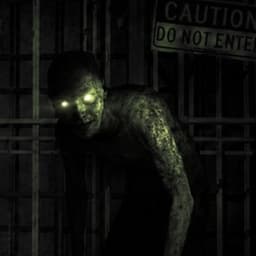
The closest worker turned his head slowly, and his eyes met mine. They were cloudy and glazed over. Behind him, another worker turned. Within seconds, every head in the room had rotated toward me, and they looked different now. They didn't look like people anymore. They looked, well, they looked like zombies, pale skin, dead eyes, body parts, weird angles. I eased backward into the corridor, keeping my eyes on the room. I reached the base of the stairs and placed my hand on the railing. Then as I placed my foot on the first step, I heard the sound start again. Cardboard, tape, stamp pressing. The rhythm resumed as if it never stopped. I climbed the stairs, and at the top I pulled the door shut behind me, and I leaned against
it for a second. I walked back to the security office, and I checked the basement camera feed. The monitors showed the empty corridor. The room with the tables was not covered by any visible camera angle. I scrolled through the list of camera IDs. There were only two assigned at the sub-level. Both showed hallways, nothing inside the workroom. I returned to the stairwell door and tried my badge again. It was still unlocked, but I didn't go back down. The next night, when I walked past the stairwell during my patrol, something had changed. A heavy-duty path lock had been installed through the door's handle. A small laminated tag hung from it. Maintenance access restricted. I swiped my badge. The reader flashed red. Access denied. The basement hasn't triggered emotional harm since, but sometimes, when I'm standing
near the west corridor around 3am, I can hear faint sounds through the concrete floor. I can hear those zombie things working down there. Score more with the college branded Venmo debit card and earn up to 5% cash back with Venmo stash. Got paid back? With the Venmo debit card, you can instantly access your balance and spend on what you want, like game day snacks, gear, tickets, and more. The more you do, the more cash back you can earn. Plus, there's no monthly fear minimum balance. Sign up now at Venmo.com slash college card. The Venmo master card is issued by the bank court bank NA, select schools available, Venmo stash terms and exclusions apply at Venmo.me slash stash terms. Max $100 cash back per month. Story 4. If a box talks Now, most nights between 1 and 3am, I rotate through the return shelves near the center of the warehouse. That section holds smaller inventory. Electronics, tools, boxed kitchen appliances,
items that came back damaged or unopened, and are waiting for reprocessing. It's quieter there than the freight line. The racks aren't as tall. The lighting is brighter. That night had been routine. No dock alarms, no motion alerts. The basement stayed quiet. I'd already completed two patrol loops and logged nothing unusual. I was restacking a shelf labeled RMA hold when I heard it. Hey, it sounded close, like somebody speaking over my shoulder. I turned around immediately. The aisle was empty. I stepped into the cross corridor and checked both directions. Nothing. No footsteps fading away. No movement between racks. I went back to the shelf and continued scanning labels. 10 seconds later, I heard it again. Hey, you! I froze this time. The sound came from lower down. I crouched slowly and turned toward
the source. On the second rack from a floor sat a medium-sized cardboard box. Standard brown. Roughly two feet long. Maybe 18 inches tall. White shipping label on one side. Clear packing tape stealing the top seam. The box was intact. The label was printed with a routing barcode and a warehouse return code. No visible damage. Hey, down here! The voice came from inside the box. For a moment, my brain tried to explain it away. And then I leaned closer. The box shifted slightly. I know you can hear me. The voice sounded. The cardboard flexed again. A small indentation formed along the top panel, then smoothed out. There was no tearing or ripping. The tape remained sealed.
My first instinct was to respond. To say something simple, like, who's there? But something stopped me. Weeks earlier, during a break, one of the forklift operators from Day Shift had mentioned something off-hand. We'd been standing near the vending machines talking about inventory miscounts. He'd laughed and said, you know, if you ever hear something in a sealed package, don't answer it. I'd assumed he was joking. The voice inside the box spoke again. Oh, come on, man, it's tight in here. The cardboard creaked faintly. The shelf above it vibrated once, lightly, as if the weight had shifted inside. As straight and slowly, but didn't step away, the warehouse around me remained still. No other movement or alarms, just the low hum of ventilation. Come on, just cut the tape, the voice said. The tape seemed along the top panel lifted slightly
in the center, bowing upward from pressure underneath. Not enough to split. I checked the label. The return code indicated, small appliance. The description line was abbreviated in generic. There was no listed hazardous content. No live freight indicator. The box shifted again. This time, the entire structure moved forward about half an inch, scraping softly against the metal rack. Please? The word lingered longer than the others. I took a step back. The box remained in place. The top panel bulged once more harder this time, pushing against the tape from beneath. The tape stretched but didn't snap. I can't breathe in here. A backed up another step. The warehouse lines above flickered once and studied. I turned and walked toward the end of the aisle, but the voice followed.
Hey, don't walk away from me. Just open it. I get moving. When I reach the cross corridor, the voice stopped. No fading echo or last word. Just silence. I returned to the security office and checked the camera feed covering that aisle. The box sat exactly where I left it. Still and unmoving. The tape seemed looked flat from that angle. Every while in the footage, five minutes. The feed showed me crouching near the shelf. It did not show the box shifting or the cardboard flexing. From the camera's perspective, I was kneeling in front of an ordinary sealed package. I let the footage run forward. At 3.22am, after I returned to the office, something changed. The box trembled once. Then it slid backward, deeper into the shelf shadow. Just disappearing into the darkness.
Nobody entered the aisle. No forklift moved. No alarm triggered. At 4.10am, I walked back to the shelf in person. And the box was gone. The space it had occupied was empty. I checked the inventory log. The item associated with that barcode still showed as a waiting inspection. No removal scan or relocation entry. The system listed it as physically present on rack C12. It wasn't. I did not write a report. There's no category for package requested release. The next week, while doing another patrol in the same section, I passed a stack of sealed cartons near the end of the aisle. One of them shifted slightly as I walked by, just a fraction of an inch. I didn't slow down. I've heard voices in that section twice now. And I don't answer. Story 5. The biggest boxes. The largest crates in the warehouse are stored in the central
freight line. They're hard to miss. Each one is reinforced with steel corner brackets, and wrapped in black plastic pulled tight enough to shine out of the lights. Summer 15 feet long. Summer stacks so high they sit just below the sprinkler lines. They don't have product descriptions, only routing numbers and internal barcodes. I walked past them every night since I started. I've also never seen a forklift rated to lift something that big, that high. There's no crane system in the building. No overhead hoist. No heavy rig parked in the yard. Day shift doesn't have the manpower for that kind of movement either. I've checked the equipment list. Nothing on site explains how those crates got positioned where they are. Well, I stopped thinking about it after a while. And then one night, just after 3 a.m. The building changed. The ventilation system dropped to a lower hum. The overhead lights in the freight line dimmed slightly. Not enough to shut off,
but enough that the shadows deepened between the stacks. The cameras remained active, but the image quality on the freight lane feeds developed a faint static ripple. I stepped out of a security office and into the lane to see if a breaker had tripped. The air felt different. I just reached the midpoint of the lane when I heard it. A slow, measured footstep. Not a scuff or scrape. A full step, heavy enough that I felt a faint vibration through the concrete. Another step followed. I moved toward the nearest stack and used it for cover, keeping the black wrapped crate between me and the sound. The footsteps continued. And then I saw it. It stepped into the open section of the freight lane about 50 feet away. It was at least 20 feet tall. There's no good way to soften that. It's head and nearly reached the ceiling beams. The reflective safety vest stretched across its
torso. It looked like it was standard warehouse issue. Just scaled wrong. The gray uniform shirt was torn at the seams near the shoulders from the size of the frame beneath it. A company badge hung from a clip near its chest, small against the width of it. It was carrying one of the massive crates. Both hands wrapped around the sides of it as if it weighed nothing. The crate that had taken up half the lane earlier that evening was now lifted cleanly off the ground, balanced and it's grip. The creature moved carefully. It walked the crate to the far end of the lane and set it down with precise alignment next to two others. The concrete gave a low fud when the weight settled, but the stack remained steady. Under the warehouse lights, I could see dark streaks running from its mouth down the front of its uniform. The blood wasn't splashed wildly. It dripped slowly, leaving narrow lines across the
gray fabric before hitting the floor. It didn't wipe it away. It turned and walked back toward another crate. Each step was measured. It adjusted its shoulders slightly to avoid hitting a ceiling beam, bending just enough to clear it without looking up. It knew the space. When it reached the next crate, it crouched slightly and gripped the steel brackets. The crate rose smoothly in its hands. I stayed still behind the stack. My flashlight remained off. The creature turned, carrying the crate past my position and from that distance, I could see more detail. It walked within 30 feet of main and then it paused. After a few seconds, it shifted its grip on the crate and continued walking. It set the crate down alongside the others, aligning the edges with deliberate care. And then I heard another set of steps. Heavier than a forklift,
lighter than the first. From further back in the lane, a second figure emerged. Shorter than the first, but still towering well above the racks, maybe 15 feet tall. It wore the same uniform style, gray shirt, reflective vest, company badge clipped at the chest. It carried a crate that would have required multiple forklifts to move during the day. They did not acknowledge each other. They moved with efficiency, stacking, adjusting, arranging, working. I stayed behind the pallet stack and watched for several minutes. They just worked. When the first one passed my position again, it didn't look at me this time. It stepped around to support column and continued deeper into the lane. After a while, the ventilation hum began to rise back to its normal level. The overhead lights brightened slightly. The static ripple on the camera feed disappeared and the footsteps faded.
I stepped out from behind the stack. The crates were a line neatly, tighter than I'd ever seen them. The floor beneath them was clean. No visible blood, no scrape marks, no signs of disturbance. The shift ended at 6am as usual. Day shift arrived, forklift started up, radios crackled. Nobody commented on the rearranged freight. Nobody questioned how the heaviest crates in the building had moved overnight. I walked past the freight lane one last time before clocking out, and the stacks were perfectly organized. The oversized crates that never made sense to me were now positioned perfectly against the far wall, and I understand now how they got there. Well, I still work here. Nothing dramatic happened after that night in the freight lane. I didn't quit. I didn't call the police. I didn't try to record anything on my phone.
There's no part of me that thinks that would have helped. A few days after I saw the giants moving the crates, I scheduled a short meeting with my supervisor. I didn't describe everything in detail. I didn't talk about the giants, or the basement zombies, or anything much. I just told them that there was a heavy movement in the freight lane between 3 and 4am, and that it wasn't forklifts. He listened without interrupting. He didn't look surprised. When I finished, he asked just one question, so did anything interfere with your post. I told him no. He nodded once, and closed the folder in front of me, the meeting lasted less than five minutes. The next pay period, my direct deposit was 20% higher. There was no memo explaining it. No official promotion. Just an adjustment to my hourly rate, and an updated contract reflecting expanded night responsibilities. My patrol sheet changed too. I-047 is no longer part
of my required route after 2am. The basement access to the zombies was permanently removed from my badge. Between 3 and 4am, the freight lane is marked restricted transit. I don't cross it unless there's an emergency. And Doc Six has not lifted on its own again. The return shelves have state quiet. I've heard a box shift once or twice, but nobody in a box has spoken to me since. Some nights around 315, I watched the freight lane cameras without enlarging the image. The feet flicker slightly during that hour. The stack sometimes adjust by a few inches between frames. But by 4am, everything looks clean and aligned. If I stay in the office and don't interfere, nothing comes near me. That's the pattern I've learned. There are things in that building that aren't part of the employee handbook. There are workers downstairs who don't clock in. There are oversized crates that get moved by giants. There are shapes and certain aisles that
don't show up clearly on camera. But the building runs. The shipments go out. The checks clear every two weeks. I scan my checkpoints. I log my patrols. I don't answer voices from sealed boxes. I don't stand in front of dock doors when they move. I don't go into the freight lane between 3 and 4am. As long as I do the ad, the job stays quiet. I've worked worse places. I've worked places where the stress came from people. Supervisors checking every move. Co-workers creating problems just to break boredom. Endless noise. Endless small talk. Now there are real monsters here. But they don't gossip. They don't hover. They don't start drama. They just work. And I like that.
Hey everyone, this is Stephen. I hope you enjoyed tonight's story. The new merch is live at honedstuff.com. Links in the description. If you want to check it out, I think you'll really like what we've built. And there's also going to be lore and new characters from the lighthouse universe on the website. Thanks for being here and I hope you have a great night.
More episodes
More from Lighthouse Horror Podcast
I Install Home Security Cameras. These are my SCARIEST Stories
Lighthouse Horror Podcast

I Work at a Television Station that closed in 1999. We Have 5 STRANGE Rules
Lighthouse Horror Podcast

I Work at a Motel for MONSTERS. We have a Strange List of RULES
Lighthouse Horror Podcast

I Hiked the Appalachian Trail. These are my SCARIEST Stories
Lighthouse Horror Podcast