Loading...
About this Episode
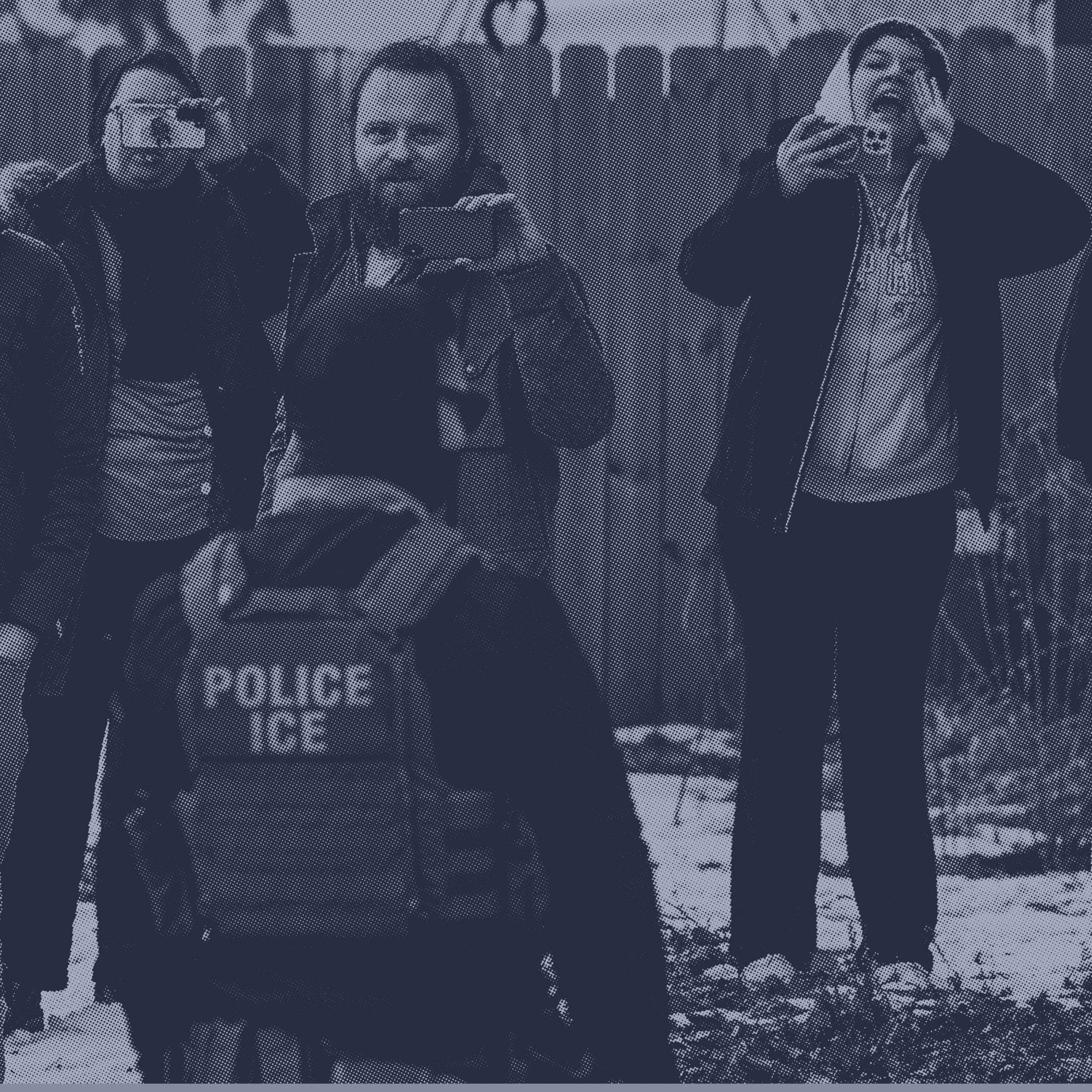
Immigration and Customs Enforcement has been using a variety of tools to keep tabs on not just immigrants the agency intends to deport but also U.S. citizens who publicly oppose the agency’s tactics. We discuss what that surveillance looks like and what the impact is for people whose activity the agency has tracked.
This episode: voting correspondent Miles Parks, reporter Kat Lonsdorf, and power and influence reporter Jude Joffe-Block.
This podcast was produced by Casey Morell and Bria Suggs, and edited by Rachel Baye.
Our executive producer is Muthoni Muturi.
Listen to every episode of the NPR Politics Podcast sponsor-free, unlock access to bonus episodes with more from the NPR Politics team, and support public media when you sign up for The NPR Politics Podcast+ at plus.npr.org/politics.
To manage podcast ad preferences, review the links below:
See pcm.adswizz.com for information about our collection and use of personal data for sponsorship and to manage your podcast sponsorship preferences.
NPR Privacy Policy
This episode: voting correspondent Miles Parks, reporter Kat Lonsdorf, and power and influence reporter Jude Joffe-Block.
This podcast was produced by Casey Morell and Bria Suggs, and edited by Rachel Baye.
Our executive producer is Muthoni Muturi.
Listen to every episode of the NPR Politics Podcast sponsor-free, unlock access to bonus episodes with more from the NPR Politics team, and support public media when you sign up for The NPR Politics Podcast+ at plus.npr.org/politics.
To manage podcast ad preferences, review the links below:
See pcm.adswizz.com for information about our collection and use of personal data for sponsorship and to manage your podcast sponsorship preferences.
NPR Privacy Policy
Hosts & Guests

Transcript
Hey there, it's the MPR Politics Podcast, I'm Miles Parks, I cover voting, and we also
have MPR reporters Kat Lahnstorff and Ju-Joffie Block joining us today.
How do you both?
Hey, hey.
So, today on the show, we're going to be talking about how the Department of Homeland
Security is surveilling people in new ways, because you both, along with MPR's Meg Anderson,
have been digging into a bunch of different tools that DHS is using to track both people
who are in the United States illegally, but also US citizens, and I want to start with
this example of this woman in Minneapolis named Emily, who your story kind of opens with
as well.
Kat, tell us about who she is and what her experience kind of shows.
Yeah, so Emily's experience was back in late January.
She was out driving around her neighborhood in Minneapolis, patrolling for ICE as a constitutional
observer.
I'll just say we're only IDing Emily by her first name because she fears retribution
from the federal government.
She told me she was following an ICE vehicle at a safe distance into a parking lot.
When a mass agent leaned out the window, took a picture of her and her license plate,
and then rolled down the window and addressed Emily by name and recited her home address
to her.
You know, Emily told us that it really shook her.
Their message was not subtle, right?
They were in effect saying we see you, we can get to you whenever we want to, and it
didn't scare me.
Emily says she didn't know how they pulled up her information so quickly.
And that was one of the things we were really trying to figure out with this reporting was,
you know, we were collecting dozens of stories, talking to people, coming through court documents
to really try to understand how is this surveillance web that DHS is spinning affecting real
people on the ground?
Okay, so I mean, tell me more about what you're reporting found out specifically in Emily's
case.
Was the government of any sense of how the government was able to get this information
on her?
We don't know this specifics, I mean, you know, we asked ICE and DHS and they say they
won't share those tactics with the public.
But I mean, it does seem like vehicle registration information is key, you know, law enforcement
through license plates can figure out who owns a car and their address.
But, you know, there's also a lot of questions out there about what kinds of information DHS
and federal agents are collecting on observers like Emily.
There was a case in Maine, a woman who was recording another observer who was recording
federal agents on her phone.
Her name's Colleen Fagan and she was watching ICE agents and as she was watching them with
her phone, they were seemingly recording her face and her license plate and she recorded
this video.
Exactly.
Yeah.
That's what we're doing.
Yeah.
Why are you taking my information down?
Because we have a nice little database.
Oh good.
And now you're considered domestic terrorists.
We're video-taping you.
So you can hear there.
They tell her that they have a quote, nice little database and that they are considering
her a domestic terrorist.
I will say that DHS has denied having a database like this several times since that video
went pretty viral.
Outgoing Secretary Kristi Nome denied it in front of Congress just last week.
Todd Lyons, who's the acting director for ICE, has also denied it in front of Congress.
DHS also denied it to us in a statement that we got from them.
You know, we did ask DHS why agents are taking pictures of protesters' faces or license
plates and they did not respond to that question when we asked them.
So we don't know if there is a database like this despite them denying it.
It could be that these are semantics.
Maybe a contractor has a database.
Maybe it's not technically a database.
These are still things that we don't know.
What is clear is that the federal government and you and I have reported on this a lot too
is working really hard to consolidate data in new ways and is acquiring data in new ways.
And I guess I want to dig into that a little bit.
Do we have any sense of like why that is happening more now than it was maybe a year or two ago?
Yeah.
As you said, you know, the two of us have reported on this in the voting context and
but we've seen lots of other examples of cross agency data sharing and so and actually
some of these are agreements with ICE.
So for example, there's records from Medicaid that a federal judge has now approved because
it was challenged in court to be shared with ICE that include address information.
You know, one technology that ICE agents have access to is a cell phone app called Elite.
It's made by Palantir, which is a company that does a lot in the tech space.
It has a lot of government contracts and this app and it was described by an ICE agent
in court testimony as looking kind of like Google maps and showing data points of places
where people who could be deported by ICE live and like the likelihood that they live at that address.
And it pulls from a lot of different data streams and Palantir has acknowledged that some of that data
includes data from other federal agencies and we think that includes those Medicaid records, for example.
So this is something that's now starting to see a little bit more how some of these data
sharing and consolidation efforts that are happening on the federal level are now trickling down
to ICE agents in the field to be able to locate people they want to deport.
And I mean, I will say surveillance under DHS is not a new thing, right?
That is a big part of what the Department of Homeland Security does.
But, you know, especially under this administration, especially in Trump's second administration,
ICE's budget has ballooned, you know, part of the one big beautiful bill act that was passed by Congress last year
gave ICE something like an $80 billion budget.
It was a huge increase from their budget of previous years.
And a big part of what they've been using this money for is to scoop up surveillance technology
and also sign tech contracts to do things with all of this data aggregation that Jude is talking about.
Figuring out what that money is being spent on is that it sounds like you guys are basically kind of
piecing this together from public records and from talking to people, but is there any actual kind of
government transparency about how that money is being spent?
That's a tricky thing. I mean, mostly reporters are looking at procurement sites where to try to
understand what contracts DHS and its agencies like ICE are signing onto, you know, there's
sometimes in court testimony, like with the Palantir Elite app, get an insight into how these
technologies are being used. Sometimes stuff will come through FOIA, but it's, it's really just
reporters trying to cobble together information to get a better insight into this.
And so there's no big report that really gives us a lot of insight.
One tool that's been interesting is actually DHS had to create a document about how it's using
artificial intelligence. And that actually has given some insight into the tools it's using
because the ones that use AI, they have to do some accounting. And so there's an actual spreadsheet
that says the names of tools and how they're being used. And so that's given some more insight.
But yeah, it's just reporters trying to cobble together how this stuff is working.
Do we have any sense on whether these tactics are different for people who have crossed into
the United States illegally or here without legal status and who DHS obviously seeks to deport
versus the US citizens that we've been talking about?
Well, we do know that ICE is using facial recognition technology and also location data like
Jude was talking about earlier to find people and identify people that it potentially is seeking
to deport. But you know, we're all subject to some level of this surveillance because ultimately,
if it's being used on one of us, it's possibly being used on all of us, right?
But is that legal? I mean, in terms of like, I can understand how the government can justify
using this sort of surveillance to track people who it feels have committed to crime and therefore
need to be deported. If I have not committed to crime, I mean, can you use legally this level of
surveillance to figure out what I'm doing? And you know, and that is exactly one of the big
questions here. You know, but just to give a concrete example of, you know, one one tool that's
really exploded and not just for DHS are automatic license plate readers, which are, you know,
all over freeways and entries and exits into cities at this point and a great tool for law
enforcement to be able to track down cars that are stolen or that might have committed a crime.
But it's picking up license plate information on everyone and it can allow law enforcement,
including DHS, which controls some of these license plate readers and has access to others,
to really locate most cars that it wants to find because they'll be picked up in this camera
network. So that's an example where, you know, critics of this technology say, this is master
surveillance and that law enforcement shouldn't just have this unfettered access to this level of
data. I mean, and I will just say that this is just one more way that we've seen this administration
push the boundaries of the law and then the courts have to go, you know, try to figure out where
those boundaries are. So we're just seeing a lot of these cases make it to the courts and then
the courts are going to have to decide where the boundaries are around a lot of these laws. I mean,
that also is something we see happen with technology, right, too. This is a lot of new technology,
a lot of it. The law is playing ketchup on. And so a lot of these questions that we have about
where the legality is is something that's going to have to be figured out in a courtroom.
All right. Well, I want to dig into also how this is impacting free speech as well, but we'll
get into that after our quick break. And we're back and we've been talking about all these new
novel ways that the Department of Homeland Security is surveilling people. We've been focusing
at this point on people being surveilled out in the world, but I'm curious, Kat, on if we're also
seeing new tactics play out tracking people's lives online. Yeah, we absolutely are specifically
on social media. And we're seeing that play out a lot through something called administrative
subpoenas, which DHS is sending to tech companies like Google or meta demanding personal information
to unmask anonymous accounts, specifically anonymous accounts that are tracking ice activity
or critical of ice. Administrative subpoenas can be issued by a federal agency like DHS without
a judge or a grand jury. They've typically been used with tech companies in the past involving
serious offenses like child sexual abuse material, but now privacy and civil rights experts say
that we've seen a big uptick in them being sent to tech companies to threaten free speech.
We talked to Steve Looney in attorney at the ACLU in Pennsylvania who has represented several
people who have been subpoenaed in this way in recent months. And he told us that a pattern is
starting to emerge. The pattern appears to be as soon as people become vocal critics of what's
happening in immigration enforcement, they get an email from their social media company that says
the government has requested your data. And the scale of this is still really unknown at this
point. So ACLU has helped a handful of people fight these administrative subpoenas in court
and DHS has backed down. But it's possible like many more people got emails from companies like
meta letting them know that some kind of subpoena had been issued, but people might have missed it.
They might not be checking that email account regularly, whichever one they signed up for their
Instagram years ago, or they might have thought it was spam or fishing. We talked to one person
who got one of those emails and at first didn't know what it was or thought it was some kind of scam.
And that means that people might have lost their ability to fight that subpoena in a timely way,
and their information might have been turned over to DHS without them even realizing it.
So these are people who have posted online indicating they've done criminal activity or something
like that, or these are people, why is the government able to basically request information on
these people? Yeah, I mean, that's a good question. Again, it's something that I think the courts are
figuring out. And like Jude said, every time that we know of that someone has challenged one of
these administrative subpoenas specifically in regards to them speaking out against ICE online
in a court, DHS has withdrawn the subpoena almost immediately within days or weeks.
And so, you know, the legality of it hasn't been challenged in court because DHS is withdrawing
these subpoenas. You know, for example, I talked to one person, his name is Sherman Austin, he lives
in Long Beach, California. He runs an account called Stop ICE net. It posts a lot of posts, you know,
critical of ICE. And he shared a post back in September that identified an ICE agent who was
operating in California and identified this agent all through publicly available information,
like a photo taken in public of the ICE agent wearing his uniform with a name tag on it,
stuff like that. And it was a day or two later that he got one of these emails from Meta saying
that law enforcement had requested his information. And he had a couple email exchanges back and
forth with Meta finally got a redacted copy of the subpoena that was sent from DHS. The reason
given was, quote, officer safety or doxam, which, you know, Sherman Austin said was surprising to him.
And he did take it to court. And DHS did withdraw that subpoena.
I mean, the other thing I'm curious about is a lot of what we talked about,
less so with this online activity, but talking about this woman in Minnesota and what happened in
Maine kind of related to the increased immigration enforcement efforts we saw last year that we know
have been scaled back this year. Do we have a sense on whether the surveillance activity has also
similarly scaled back or what is going on, I guess, at this moment related to all of this?
I mean, we honestly don't know, but just because there aren't as many federal agents on the ground
doesn't mean that people aren't still being tracked, right? Again, we don't know if there's a
database of some kind being compiled, even though DHS says there isn't. But we also know that
surveillance is happening online, like we just talked about. So it really doesn't matter if there
are agents physically present somewhere or not. And what about the impact, I guess, on the people
who you spoke to who have interacted with these surveillance efforts? I mean, what have they said
about how it has sort of kind of changed their lives or changed their behavior?
Well, there's actually two lawsuits to watch. One in Minnesota brought by the ACLU on behalf of
protesters and observers there and another in Maine brought by Protect Democracy and a number of
law firms on behalf of observers there who are saying that their First Amendment rights have been
violated by federal immigration agents and these kinds of intimidation tactics that are
chilling there, their right to express themselves, their right to record and observe. And they're
expressed feeling fearful and not knowing if they could continue to do this kind of work.
And one of these observers talked about all the precautions she takes. She's concerned that
federal agents know which car is hers. So she's mindful about where she parks and doesn't park
too close to the homes she's visiting. When she flew recently, she didn't want to take her
personal cell phone with her for fear that it would be searched. So these tactics are having a
lot of effect on the people who've had these firsthand interactions with agents. And I think one
question moving forward is, you know, in this environment, you know, how is that going to affect
political speech moving forward? You know, people canvassing for certain candidates attending protests.
How is this going to affect people's feeling that they have that freedom to express themselves
without consequence? Yeah. And one thing I'll just add to that is that we have a constitutional
right to free speech and baked into that right is the ability to criticize the government
anonymously. And all of the surveillance that we've been talking about is making that anonymity
increasingly difficult to preserve. All right. Well, we can leave that there for today.
Kat and Jew, thank you so much for sharing all of this great reporting with us.
Yeah, thank you. Yeah, thanks for having us.
And tomorrow on the show, we're going to get into the economic impact of the ongoing war in Iran.
Make sure to hit that follow button on whatever podcast app you use to make sure you don't miss it.
I'm Miles Parks. I cover voting. And thank you for listening to the MPR Politics Podcast.


