'If You Can Keep It': What Should Accountability Look Like In The Epstein Case?
About this episode
Among those named in the documents is Donald Trump. The president has long denied any crimes related to Epstein. And there’s no public evidence that the allegations against him are credible.
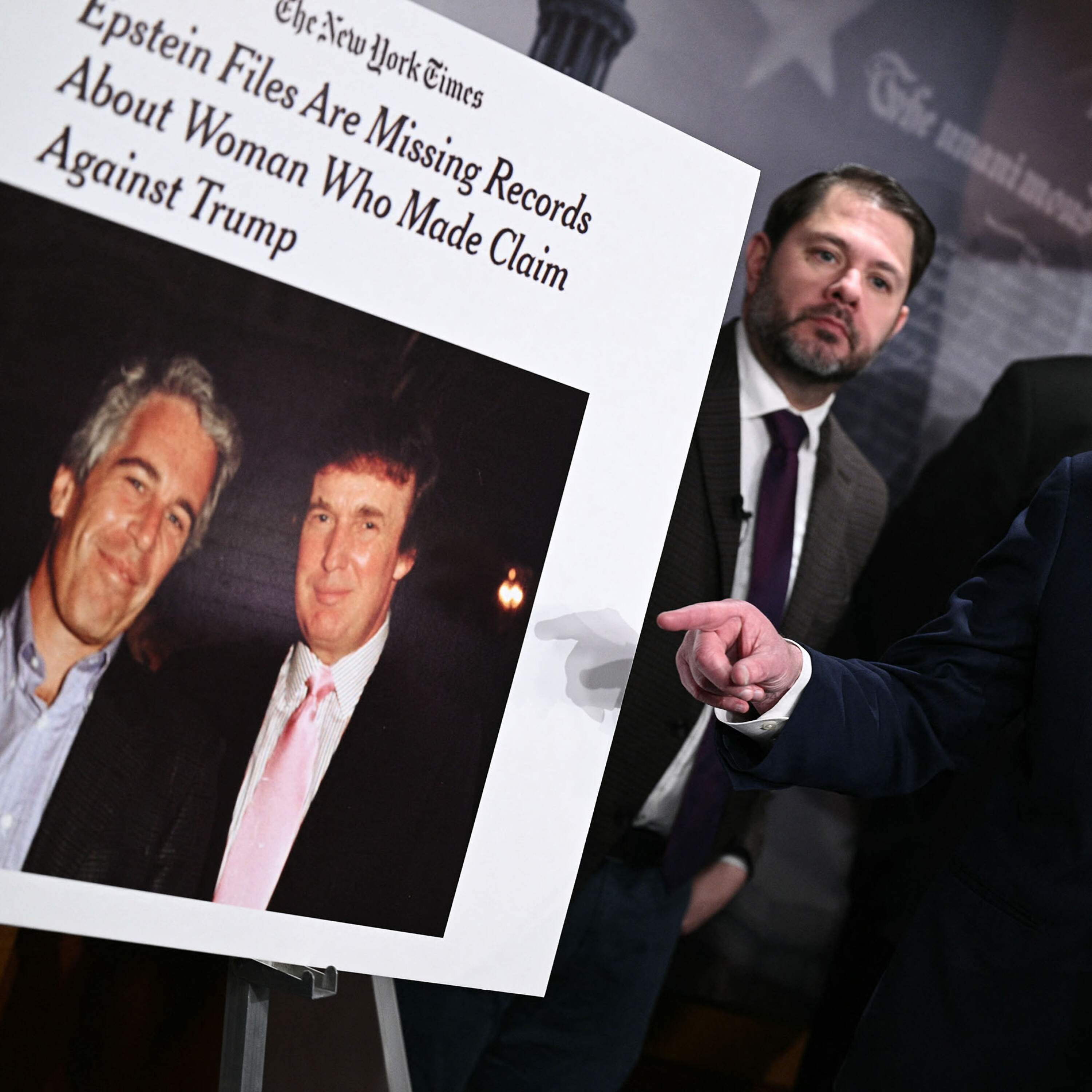
But a new NPR investigation reveals that the Justice Department withheld some of the Epstein files related to allegations that Trump sexually abused a minor in the ‘80s.
In this installment of our weekly politics series, “If You Can Keep It,” what did the DOJ remove exactly? And what does accountability look like for those connected to Epstein’s crimes?
Find more of our programs online. Listen to 1A sponsor-free by signing up for 1A+ at plus.npr.org/the1a.
See pcm.adswizz.com for information about our collection and use of personal data for sponsorship and to manage your podcast sponsorship preferences.
NPR Privacy Policy
Get every episode summarized
Each time 1A publishes, we email you a written briefing from the transcript — the topics, who appeared, and any specific claims, with the ad reads skipped.
Email me new episodesFree for 3 shows. No card needed.
Hosts & guests

Transcript ready
524 searchable segments. Every word is indexed and playable.
Full transcript
1A — 'If You Can Keep It': What Should Accountability Look Like In The Epstein Case?. Machine-transcribed; use the interactive transcript above to jump the player to any line.
This message comes from Total Line and More. College Basketball's biggest tournament is here, and watch parties are underway. Shop Total Line and More in-store or online to get ready today. Spirits not sold in Virginia and North Carolina. Drink responsibly, be 21. The Trump administration is reaching out to Tehran's domestic opposition, the Kurdish minority leaders to back an uprising against the regime. We'll have the latest in the war in Iran during the Friday news round up. Make sure you tune in tomorrow and follow npr.org for the very latest. For now, the latest installment of our weekly series, if you can keep it where we talk about the state of our democracy and the politics affecting it. It's been a month since the Justice Department released more than three million documents related to sex offender Jeffrey Epstein. And in that time, powerful people in several countries have faced repercussions for their close ties to Epstein who died by suicide in prison in 2019.
Among those named in the documents is President Donald Trump. Trump has long denied any crimes related to Epstein. And there's no public evidence that the FBI found any of the allegations against President Trump in the files to be credible. But an NPR investigation reveals that the Justice Department has withheld some Epstein files related to allegations that President Trump sexually abused a minor in the 1980s. We're going to hear more about that reporting a little later. The DOJ has also withdrawn some public documents that include accusations about the President and Epstein. And a Wall Street Journal investigation revealed this week that the Justice Department is now withholding more than 47,000 files that have been flagged for review. For today's installment of our weekly politics series, we ask, what's in the documents that the DOJ removed or withheld? And what does accountability look like for those connected to Epstein's crimes? I'm Jen White. And I'm Todd Zwellick. You're listening to the 1A podcast. We hear from a human trafficking specialist and survivor of abuse by Jeffrey Epstein and more
in a moment. Stay with us. This message comes from Total Line and More. College Basketball's biggest tournament is here and watch parties are underway. Total Line and More has options that appeal to everyone, plus a few choices for cocktails. With low prices and a wide selection, everything can be found in one place. Whether hosting or bringing something to share, shop Total Line and More in-store or online to get ready for the big tournament today. Spirits are not sold in Virginia and North Carolina. Drink responsibly, be 21. This message comes from Intuit TurboTax. With TurboTax Expert Full Service, match with a dedicated expert who will do your taxes for you from start to finish, getting you every dollar you deserve. It's that easy. Visit TurboTax.com to match with an expert today. This message comes from Midi Health, co-founders Dr. Kathleen Jordan and CEO Joanna Strober, discuss why they started a virtual care platform for women in paramenopause and menopause.
The symptoms and experiences that women have in midlife, I think, were underappreciated or possibly even trivialized. The changes in paramenopause and menopause create a broad spectrum of symptoms and can actually lead to long-term health issues, but too few clinicians are trained in it. I also want to add, often the type of care that women are needing is very iterative. It requires trying different medications, learning about their body and learning how to take care of themselves. And so what we've tried to do with Midi Health is create a new type of care system that is responsive to women's needs and helps them take care of themselves. And stay healthy instead of just treating disease. Midi Health, committed to helping women in midlife with paramenopause and menopause care, accessible via telehealth visits. AddJoinMIDi.com Support for NPR and the following message come from ID Tech. ID Tech is a summer camp for ages 7 to 17 with over 50 courses like
BattleBots, AI, coding, game design, and more. Visit IDTech.com and use code IDTech to save $150. Let's jump right into our conversation. Liz Stein is a survivor advocate and human trafficking specialist. She's also a survivor of abuse by Jeffrey Epstein. Liz, thank you so much for joining us today. Thanks for having me. So after years of requests from Epstein survivors and the public and mounting pressure on the Justice Department, the agency has released more than 3 million documents on Epstein for the public to review. Why did it feel like for you when those files finally came out after so many years? I think for us to see this amount of documentation really should say to everyone how big this case is. We keep hearing from this administration that there's nothing to see here. They didn't find anything and what we're seeing in the release of this documents is that
they have a lot of evidence. I have not looked through everything but every page that I've looked at so far. There have been investigative leads and so I think that we're just curious why these leads were never followed up on it. Well, that leads to the question about what's left. Liz, I mean, from your perspective, how has the Justice Department handled the documents and the release so far? Is it complete in your view? I don't think that any of us think that this has been a complete and transparent release of documents. I think that they may be cherry-picking things that they want us to see and withholding things that they don't want us to see. I think that the way that these documents were released to the public in such a haphazard way was really intentional to confuse people. We're looking at documents that we don't have context for. It's hard to put them into a coherent narrative and I think that it's really easy to just
become overwhelmed and frustrated with trying to make sense of this and it feels very intentional. Meanwhile, other countries have been different. Legal authorities in Britain, France, Norway, they've opened corruption investigations into some of the people named in the files. But here in the US, Justice Department officials say there's nothing more to see here. The investigation is closed. They do not plan to file any additional charges related to the Epstein files. What do you make of the DOJ's refusal to investigate further here? Well, I think that despite those assertions by the DOJ, I think that the American public knows that there is a lot more to be investigated in this case and I think that what we saw in November was really remarkable. In November, we saw bipartisan support for the passage of the Epstein Files Transparency Act. And Americans spoke,
they spoke to their lawmakers and they said, you know, this is really an important issue to us where we want to see transparency and we don't really care who is involved. We just want to get to the bottom of this. And so I think that as survivors, we are really hopeful that we're going to see that kind of energy again because I don't think that anyone who is looking at this with any kind of objectivity could say that there's nothing to see here. Soon after the files were released, several lawyers are presenting Epstein survivors called the Justice Department out for thousands of reduction failures to photos and names that allow sensitive information about survivors to become public. And in response to that complaint, the DOJ removed thousands of documents related to Epstein from their site. Liz, what if anything do you wish more people knew about the challenges some survivors face as these files continue to garner more public attention? I think that it's important to remember that we are victims of a crime. And for many people, it's difficult to be
in the public spotlight. It's a choice that none of us have made lightly. And it's a choice that some survivors have made to stay out of the public eye. And so for our government to release personal identifying information of survivors who have remained anonymous for decades is incredibly damaging. And not only is it damaging to those survivors who are directly impacted by those omissions, but it's sending a really scary message to other victims of crime about coming forward, that your information is not going to be protected and that you're not going to be safe. Liz, meanwhile, on Capitol Hill, the House Oversight Committee is conducting an investigation into Jeffrey Epstein and also how the documents in the case are being handled as we're talking
about right now. What do you know about that? What do you think of it? Is this in your view and exercise in House lawmakers kind of covering their own rear ends in a scandal? What do you hope comes out of this investigation that might be good? Well, I think what we hope comes out of this is some transparency and some answers. Again, I think that it's important for us to refocus and really be intentional about what we're looking at. This is an issue that has been so highly politicized, but what we're actually looking at is a crime. And this is a crime of sex trafficking. The people involved are potentially on both sides of the aisle. Yet this is being politicized in a way that it really, really shouldn't be. And so I hope that we refocus as a nation and that our Department of Justice does the job that they're supposed to do in seeking justice for citizens of this country. I think that that's really the path forward is looking at this for what it is
and it is a crime. So Liz, from your perspective, what would accountability look like for those who have potentially committed crimes against young women? That's a difficult question for us to answer. You know, accountability can come in a lot of different ways. As you mentioned earlier, we're seeing accountability happen in countries across Europe already. And that's a good start. I think that any leads that could lead to prosecutions are important. And I think that also, you know, how we view some of these men in society is important. And so it's important for them to step down from their positions of power and to face social repercussions of their involvement with Jeffrey Epstein. And I want to just correct something I said there. I said, what would accountability look like for those who have committed crimes against young women? And I should have said young women and girls because some of these allegations are also against children. Liz, what do your co-victims talk about when they talk about accountability in Europe,
for instance, versus the United States? I mean, we've seen powerful people like the former Prince Andrew, several others held to account. It's different here. What do people attribute the difference to? What is going on in this country that we haven't seen the accountability when you talk to, when you talk to your, your, your sisters? I think that because of the powerful people that are potentially involved in this case, it is difficult to think about exposing them because it would upend a lot of, it would really upend a lot of how we view people in society. And so I think that what we really need to do to kind of bring that accountability in the United States is to press the Department of Justice to do what they are supposed to do and investigate the leads that
they have in these files. And I think that we're starting to see depositions of people and we're hoping to find more information about what happened. And briefly, Liz, for lawmakers and others in positions of power, hearing this conversation, what is your message to them? That nobody should be above the law and anyone who committed a crime against girls and young women should be held accountable regardless of their position with power. That's Liz Stein. She's a survivor advocate, human trafficking specialist and a survivor of Epstein's abuse, Liz. Thank you so much for speaking with us. We appreciate it. Thanks. Coming up, what we know about why the Justice Department withheld some of the Epstein files about President Trump, more from our guests and from you after this short break. We'll be right back. This message comes from an PR sponsor, Focus Features. On March 27, Focus Features presents
the AI doc or how I became an apocalyptic and explosive new motion picture event being called the most urgent movie of our time, the AI doc or how I became an apocalyptic rated PG-13 only in theaters March 27. Support for this podcast and the following message come from strawberry.me. If you could go back and talk to your younger self, would you tell yourself that you have a job that truly makes you happy? Many people are stuck in jobs they've outgrown or never really wanted. A career coach from strawberry.me can help you move on to something you actually love. Benefit from having a dedicated coach in your corner and get 50% off your first coaching session at strawberry.me slash NPR. This message comes from Schwab. At Schwab, how you invest is your choice, not theirs. That's why when it comes to managing your wealth. Schwab gives you more choices. You can invest and trade on your own. Plus get advice and more comprehensive wealth solutions to help meet your unique needs.
With award-winning service, low costs and transparent advice, you can manage your wealth your way at Schwab. Visit Schwab.com to learn more. This message comes from Midi Health, a virtual care platform for women in para-menopause and menopause. CEO Joanna Strober shares the mission behind working with women in midlife. It's not just about hormones, it's not just about weight loss medications. We are very much a holistic care platform and our job is to figure out whatever medications are appropriate for you and offer you those medications. Midi Health, committed to helping women in midlife with para-menopause and menopause care. Accessible via telehealth visits. adjoin-m-i-d-i.com This message comes from Granger. Granger knows that if you're the purchasing manager at a manufacturing plant, the only thing more important than having the right safety gear is having it there when you need it. That's why you can count on Granger for auto reordering. Helping ensure your team members always have cut resistant gloves on hand,
and each shift can run safely and efficiently. Call 1800 Granger. Click Granger.com or just stop by. Granger for the ones who get it done. Welcome back. We're talking about the Justice Department's handling of the Epstein files. And let's bring two new voices to the conversation. Joining us from Atlanta is Stephen Fowler. He's a political reporter with NPR's Washington Desk. Stephen, thanks for joining us. Hey there. And with us from Brooklyn is Anand Giridardas. He's a writer and publisher of the news letter, The Inc. He's also the author of several books, including Winners Take All, The Elite Shared of Changing the World. Anand, thanks for joining us. Thank you so much for having me. So Stephen, your investigation revealed that the Justice Department withheld some of the Epstein files that included allegations that President Trump sexually abused a minor. Now the DOJ also removed some documents that mentioned the President from the public database of files. What are those missing documents as far as we can tell? We don't really know exactly what is in these missing documents. All we know based on other
files that were released on the public Epstein files database, what they refer to and relate to. It's a little confusing and it's like many things with the Epstein files that is confusing because there is no context. There is no table of contents. There's no sort of order and explanation. But as far as we can tell based on other records within the Epstein files, there are multiple interviews and notes from the interviews with a woman who made allegations about Jeffrey Epstein and about President Trump when she was a teenager more than four decades ago. Now we did reach out to the Department of Justice for comment on these missing documents that Stephen's describing. The DOJ spokesperson responded with a link to a statement on X that reads in part as with all documents that have been flagged by the public, the Department is currently reviewing files. Should any document be found to have been improperly tagged in the review process and is responsive to the Epstein Files Transparency Act, the Department will of course publish it
consistent with the law. Stephen, the independent journalist Roger Salenberger sort of broke this story before you got onto it comparing serial numbers of files and saying that these interview notes appear to have been withheld in the files. Can you give us a little bit of a window into the opacity and the process how you discovered these documents outlining accusations against President Trump, the fact that they were missing and what they might contain? Well first it's important to note that there were two documents where the specific allegations were mentioned. One was an email from the FBI kind of wrapping up all of the different allegations made that mentioned the President and there was a column detailing the claim. There was a column sort of detailing any sort of investigatory steps that they took or what the disposition was and another column with any sort of further vetting of the person that made the claim
and the second was a PowerPoint from the Justice Department talking about the case against Epstein and Maxwell and kind of high-level summaries of the timeline and how they got there and there was a slide that mentioned prominent names Donald Trump was at the top of that. There were two allegations or references to the President on there and what was unusual was the these allegations that were mentioned or the one claiming sexual abuse. There were no other references to that allegation in the files anywhere that we could find searching for misspellings or other things and so you have the situation where there's a very inflammatory salacious claim. You have evidence that it was sent to a field office for further investigation and communications. You have sort of a conclusory point that it was mentioned in this Justice Department PowerPoint but nothing in between there was no context. There was no information about
what the investigation found, what the interviews revealed whether they thought it was credible, whether it was a PowerPoint slide of non credible things of important people and so it just raised a bunch of questions and red flags that led to searching and piecing together and finding these documents and that's where we found records of the FBI serial report showing kind of the documents in their case files and a testimony and non witness testifying witness testimony and testifying witness documents related to Galein Maxwell's criminal case that shows kind of a table of contents that there were four interviews that took place with this person and only one of them was found in the files so it was a situation where we knew there was information. We didn't know how that information got there or what significance it meant and that's where it led to just the further questions and to the point about the serial numbers there are basically these serial number stamps on the documents in everything in the Epstein files database
that's kind of a sequential tracking of how many pages of documents that are in there. There were two additional sets of serial numbers on the one interview that was made public and when the bottom number went up by one there was a top serial number showing documents related to these interviews that went up by six and then the middle one that went up by way more than that so we knew that there were documents somewhere just not in the public files. Well, breaking member of the House Oversight Committee in California, Democratic Representative Robert Garcia said in a statement that quote, the DOJ appears to have illegally withheld FBI interviews with the survivor who accused President Trump of heinous crimes and who gets to decide whether the DOJ acted illegally or not. Well, I mean this Department of Justice has been treated turned into a kind of personalist authoritarian lawyer Donald Trump has hired a lot of his own personal lawyers to be the lawyers for the United States of America so that I wouldn't trust anything from this Department of Justice.
But I will say that the revelation of this kind of concealment while the concealment that we might be finding on Donald Trump is one flavor represented by the fact that he has this very powerful arm. It is not out of keeping with the concealment we see from this entire group of people, Republicans, Democrats and others, corporate people, academics and others. This is an enormous, enormous group of people. This is an enormous group of men and it bears repeating that if Jeffrey Epstein had been one creep, a middle-class creep in Florida, very little of this could have gone down. The fact that he was wealthy, the fact that he made and cultivated and maintained so many wealthy and powerful friends, the fact that so much of our elite in the United States and around the world did not find his conduct a deal breaker well years into his being a convicted pedophile,
years into there being reported around him. It is an incredible portrait we are getting. Not just of one cover up by this person or that person, Democrats want to make this a Donald Trump cover up, Republicans want to make this a Clinton's cover up, I'm sorry to everybody. This is a cover up of an entire powerful network of people, all of whom shared a basic foundational thing. Being friends with a convicted pedophile was not a problem. I want to get to this question we got from Susan who asks, what are your thoughts about why all this focus on the Epstein scandal is happening now? What was the Justice Department FBI in Congress doing between 2019 and 2026? And now I'd love your thoughts on that. I mean, not just 29. I share that question and you shouldn't just start at 2019, you should start at in the 80s and the 90s and the 2000s and onward. This has gone on for years and years and years and I think it's not just about
did the Biden administration not deal with this, which they should have. This is about the fact that there was essentially a quiet unspoken consensus in successive White Houses, but also in many of the banks where people listening to this keep their money. Your life savings is in banks where people who work executives in those banks were engaged in the sexual escapades that Jeffrey Epstein was orchestrating and were lending him money, JP Morgan Chase flagged a billion dollars of suspicious transactions, according to the New York Times, the Jeffrey Epstein engaged in with it and still didn't kick him out. In fact, the people who had problems with it were sidelined. So you have to ask yourself after a while when you had a convicted pedophile who was then trafficking women to other powerful people, some underage, some overage. And this trafficking and this larger network took you into the most powerful universities,
banks, governments, etc. What does it tell you about the class of people who leads us? Because these are people, by the way, you see this in the emails very clearly. It's important people to understand. These are people who like one minute were sending an email to Jeffrey Epstein about cute girls, quote unquote. And then another moment were sending emails about tax policy. And another moment were sending emails about trying to interpret Brexit. So the people, I want people to understand this, listen to this. The people deciding about your kids' school funding, this is them. The people deciding whether your mortgage is regulated in a certain way and therefore goes underwater, not in the crisis is them. When it gets to decide what kinds of economic ideas new administrations embrace is them. But to get to the listener's question, when we asked this question of why now? And we should acknowledge here that President Trump talked about the Epstein client list when he was on the campaign trail, like what is driving
the energy around the investigation in this moment when you've laid out this history and this connection of powerful people to Jeffrey Epstein. And there's several factors that gave it more life recently, Julie Brown at the Miami Herald, who's a hero, deserves a Pulitzer prize, that she has not gotten, broke open. A lot of the kind of quiet conspiracy around this in 2018, which gave the story new life. You know, I think you've also had survivors who have had to make, you know, like Liz Stein who I salute, who had to make personal private decisions over these years, whether to go public, it takes time to find other people, it takes time to find your courage, it takes time to find lawyers, it takes time to get depositions done, it takes time to raise money to make sure you're safe, all these things take time. And you're right that, you know, irony of ironies, President Trump ran and movements allied with him, ran on this, a talking about Epstein, but be talking about kind of larger QAnon and these larger conspiracies
of pedophilia. And as has often been the case with Trump, he runs on a thing correctly identifies that that thing is a thing that has salience in the public imagination. And then once in power, becomes the living incarnation of the thing he ran against. And so part of why at my newsletter, the ink, we're running this series called the Epstein class. And I understand that may feel like a like a strong term, Congressman Rocana coined it. I deeply believe you cannot understand what happened to any one survivor in this story without understanding the entire class of people. It's more is it's values, what it what it believes about itself, what it believes about us. If you don't understand that class, I don't think you can understand these crimes. We got this question from Mia who says, please ask Stephen Fowler when the missing documents were dated. In other words, when did this happen? Stephen. The documents refer to some interviews that
took place in 2019. We don't know when these documents are when the decision to not publish these documents were made during the process of collating the files. I mean, this does get to I think some of the previous question of for the longest time, there were multiple ongoing criminal cases against Epstein. There's still an ongoing case against Galein Maxwell has a complex and the policy decisions or rather the like investigatory decisions are why a lot of these things and these documents were not made public. It also is worth pointing out that with the Epstein files transparency act that was signed in a law by President Trump and passed by Congress, the release of all of these files in all of this manner is highly unusual. And it's not something that you see with criminal investigations because what we're seeing is kind of the raw ingredients that went into allegations that span
decades and unverified tips. There are a lot of information in the files that were looked into by the FBI and other investigators that were just found to be not credible. And so there's very muddy waters around what investigators looked into, what their conclusions were, what made it into criminal cases or not. And just, you know, it is impossible to truly know the big full complete picture of what happened with the multiple investigations into Epstein and others around them. And releasing the files only ensures that there is never going to be a finite period end of the sentence to what happened. We got this email from Charles in Atlanta who says we do not have a department of justice. Instead, the law firm of Pam Bondi, Todd Blanche and D. John Sauer is there to protect Donald Trump at all costs. You know, when we do, if you can keep it, it's really with the focus on the strength and health of our democracy. And how do you think the DOJ's handling
of the Epstein files might affect American space in our justice system? I mean, it almost, the question almost feels quaint after the last 14 months we have lived through. I think the notion that we even have at this moment in our national life a department of justice that is, it almost feels like we're going through the motions talking about it as a department of justice. It is really, as your comment or said, a functioning as a personal law firm of the president right now and everything that has come out of it is punishes, enemies protect his friends. But again, I really think when you talk about if you can keep it, I do think there's been a mistake in the Trump era, both Trump terms, of thinking about this threat to democracy that Trump represents, which he deeply represents, as somehow coming out of the blue. And the reality is he is an unsuttle sort of ugly figure
who just turns the volume up on a lot of things that have been going on. The reality that rich and powerful people in this country do not arrive at the doors of the criminal justice system. The same way everybody else does has been true for some time. Donald Trump has neither the capacity nor the insight or the foresight to develop that from scratch. He's just taken that and turned it up to a 10. The fact that people who once made a mistake of selling a little bit of marijuana are in prison for years, while people who raped and trafficked women and participated in this network are running major institutions. Donald Trump is protecting that now, but he didn't start that. We have a top to bottom reassessment of our society we need to make if we want anything like justice, let alone a department of justice. Kit emails it seems pretty clear that the PAM Bondi quote-unquote justice department is pouring over the files and redacting anything that might implicate Trump and probably other political figures. His credibility has been badly damaged,
but Trump will never be held accountable for anything. Still to come, the global repercussions of the Epstein files and the prominent figures in the fallout stay with us. This message comes from an PR sponsor Focus Features. On March 27th, Focus Features presents the AI doc or how I became an apocalypticist, an explosive new motion picture event being called the most urgent movie of our time. The AI doc or how I became an apocalypticist, rated PG-13 only in theaters March 27th.
This message comes from Schwab. At Schwab, how you invest is your choice. Not theirs. That's why when it comes to managing your wealth. Schwab gives you more choices. You can invest and trade on your own. Plus get advice and more comprehensive wealth solutions to help meet your unique needs. With award-winning service, low costs, and transparent advice, you can manage your wealth your way at Schwab. Visit Schwab.com to learn more. Let's get back to our conversation about accountability and the Epstein files. Here's an email from one of you. Charles Wright, every Justice Department lawyer who participates in the illegal removal of any publicly available files should be disbarred and charged with obstruction. Everything, including all redacted files, should be available to review by any member of Congress as our proxy. Additionally, for any cases related to this, careful scrutiny should be observed to avoid any sweetheart deals like Epstein received many
years ago. Steven Fowler, a couple of key points here about the files that you, Roger Solenberger, and other reporters have uncovered. The three missing interviews that you mentioned were also handed over to Galen Maxwell's lawyers as part of her criminal trial. Maxwell is serving a 20-year prison sentence for sex trafficking. A couple of key points shortly after being interviewed by Deputy Attorney General Todd Blanche last summer. Maxwell was granted a special waiver and moved from a maximum security prison in Florida to a minimum security facility in Texas. She got a special waiver for that. A whistleblower told a House Committee that Maxwell was getting special privileges in the prison, like special meals, gym use visits with puppies, and things like that. President Trump has not reversed that transfer even though he found out about it. Maxwell is pursuing clemency from President Trump and when asked the president refused to rule out
pardoning her, he said, I don't rule it in or out. And when Maxwell was arrested during Trump's first term, he repeatedly said, quote, I wish her well. So I lay all of that out, Steven Fowler, to the presence of these interview notes in Maxwell's possession, or at least her lawyer's possession. Suggest that she could have leverage over the president that might be contributing to what apparently are his inducements that he's offering her here. I think what you can say is that there are a lot of things that don't line up with how the president has handled the Epstein vials, the release of the Epstein vials, the campaign promises and pronouncements and the backtracking only to subsequently sign the bill into law. You know, there are a lot of things that at minimum do not answer questions that people raise. I think it is important to point out that we don't know what are in these interviews. We
don't know what the FBI found. We don't know anything about these particular claims. There is nothing at this point in time to suggest that these claims have merit. There's also nothing to suggest that these claims don't have merit because it is information we don't know. At the same time, I think it is important to note that the way the Justice Department has handled the release of the Epstein vials, the millions of pages, as well as the millions of pages that aren't released, also does not make that much clearer. They're the redactions. I mean, there were many, many things about victims that were exposed when these vials were released, that were quickly flagged and the Justice Department took them down, redacted them, put them back up. There were redactions that appear to be made by the FBI before it was handed over to the Justice Department to be published into the public. You see members of Congress going in and the unredacted
files that they thought they were looking at were redacted because that's how they were handed over the Justice Department. The totality of the Epstein vials as a concept, there have been multiple choices, things, points in time that have been done that don't make it easier to understand what the White House is doing, what the Justice Department is doing, how this relates to Galein Maxwell's case and so on and so forth. Well, Steven, a couple of things we'll be watching. This week, the House Oversight Committee announced its voted to subpoena Attorney General Pam Bondi, a Commerce Secretary Howard Lutnik. He's a former neighbor to Epstein. He's also volunteered to testify in front of the committee and Kentucky Republican Representative, also the chair of the House Oversight Committee, James Comer, says the committee plans to open an investigation into why the files that include an accusation about President Trump are missing from the public record. What will you be listening for in that testimony from the Attorney General and what will you be
watching for from the House Oversight Committee's investigation? I think it is important to remember that the House Oversight Committee has conducted a parallel investigation into Epstein and the people surrounding him and has been responsible for a decent amount of information and knowledge about Epstein and the Epstein files separate from what the Justice Department has done, separate from the Epstein Files Transparency Act. The House Oversight Committee subpoena documents and was able to release a lot of the emails and files from Epstein's estate, which is last fall, how we looked at a lot of Epstein's emails and got insight into how Epstein pitched himself as a Trump whisperer and mocked his presidency after the two had a falling out. It also kind of opened the floodgates for the scrutiny of the relationships of people from both political parties, academia, you name it, that kept the relationship with Epstein well after he had been a registered sex offender. Also, what we have heard from the Oversight Committee
is that Congress, the Venn diagram of what Congress has been able to find out about Epstein and the Epstein Files, what the public has been able to figure out and what the Justice Department knows, there is very little overlap. In many ways, Congress doesn't know that much more than the American public does. As they continue to push through and use their subpoena power and kind of seek out this testimony, it is a case where the House Oversight Committee is truly living up to its name in trying to get answers even as you saw the depositions with the Clintons didn't really reveal much information because there wasn't much to reveal. I am going to watch to see how the Attorney General answers some of the questions from Democrats and Republicans because in the bigger picture of the Trump administration's second term, there is not a lot of members of Congress happy with how the Attorney General has acted in general. This is just one avenue, I think,
to get oversight and to get more answers on record because the Trump administration is an answering the public either. We got this email from Leah in New York who writes, I cannot say strongly enough that the most important story of these Epstein files is the culture of those in power that it reveals. The values that it exposes and the corruption of the rule of law that the rest of us suffer as a result. We need to talk about that a lot. After all, it's how we get trafficking and pedophilia and how Epstein got away with it. How dozens of people were exposed for having ties to Jeffrey Epstein and his former romantic partner and co-conspirator, Galene Maxwell, when the DOJ released the millions of files in January. Not all of those named have been formally accused of crimes and just a few of them have faced repercussions like arrests or criminal investigations and losing or leaving their jobs. So, Anon, let's talk a little bit about accountability more broadly outside of the justice department or even the United States. I mean, people have likely heard of Andrew Mountbattenwins or formerly Prince Andrew losing his royal title, his privileges, facing arrest,
questioning investigation in the UK. Walk us through some of the other prominent people facing real fallout from their connection to these files and in sort of how big or how small that universe really is. First of all, I want to underline what that emailer said. That is a profoundly important point. By the way, it is a point many of these survivors make repeatedly in their press conferences. This was not just about a thing that happened in a dark room one day. This is about a giant operating system of power. Virginia, Jeffrey, another survivor, wrote the book Nobody's Girl, said this is a world order that's corrupt to the core and she saw it. So, you know, we're seeing princes like the former Prince Andrew. We're seeing former presidents, Bill Clinton, current president, Donald Trump in this general kind of social world. We're seeing JP Morgan Chase was up to its gills with this guy. Epstein went deep, burrow deep into Harvard University, MIT, et cetera. But here's something that I really want to underscore for people.
It's important, I think, to be in the weeds of this story and I'm very glad we have investigators doing that. I also think talking to lots of regular people out there, these files are overwhelming to people. It's stressful. It's a lot. People don't know really what to do, where to start. And a data dump is not an explanation, and the meaning of this stuff doesn't make itself. So, you know, what I get to do as in being an independent media with the ink is to say, some people are going to be doing the day story, day after day, and I'm very grateful they are. We're stepping back with our Epstein class series and saying, we're doing just one of these things a week for the next several weeks, saying exactly as your emailer said, how does this operating system of power work? Because I believe, and some people are offended by what I'm about to say, and I'm going to say it anyway, I believe there are connections between the most depraved, criminal behavior by some group of people. There are connections between that, and the more chronic, less, not criminal behavior of a much wider group of people in that circle. The way these folks behave in the economy is not unconnected to the way a subset of them
behaved in those massage rooms. The way some of these folks behave when they run their companies and manage their money and pay you or don't pay you is not unconnected to what happened on that island. The way these people buy access in Washington and manipulate the public will is not unconnected to what happened in his palatial mansion in New York. And the common thread is indifferent. So, I would encourage folks to visit us. It's v.ink, THE.inq, and we have a whole series on this. And I will say, as a long time lover of NPR, I'm very happy to gift a bunch of subscriptions to folks for a year. So, if you just sign up for free, THE.inq, I will go in there later today and give away a handful of subscriptions to NPR listeners. Stephen, I want to come back to you. We got this email from Michelle in New Hampshire who says, I do not understand if there are senators in Congress who have viewed these files and know who is implicated in the severity of the crimes that have been committed. Why are they staying silent?
Putting Bonde in front of Congress for questions has been proven to be useless. She doesn't answer the questions and just responds with personal attacks toward those questioning her. I think, again, it goes back to, you know, the files that have been released are an entire universe of information that is not immediately useful, is not immediately clear what is and isn't in there. I mean, we have moved from a situation now where the case around Jeffrey Epstein and people in his life is no longer a court case and now is more in the court of public opinion. There aren't necessarily things in the documents that show crimes. Some of that is because there are things that are being held. It is important to remember, too, that there are millions of documents that have been withheld and the reasons are for investigative privilege or an ongoing federal investigation or if there are duplicates and things. And so, you know, there's not going to be anything
in the files, whether they were redacted or not redacted, that necessarily show evidence of anyone committing crimes other than evidence that was used in the cases against Epstein and the cases against Golane Maxwell or any sort of references to co-conspirators in those cases. And it is, you know, again, there are a lot of things that are redacted, that are even redacted for members of Congress. So, I don't think it's necessarily fair to say that members of Congress have viewed things and are keeping them to themselves. As another case in point, you had an instance where Representative Rokhan and Representative Thomas Massey viewed some of the files. They saw some names unredacted and then went and spoke on the house floor and on social media about, you know, these rich and powerful people that were there that shouldn't be named. And it turned out that by naming those people, it turns out later that Department of Justice said these were other people used to fill out a line up. They're not rich and powerful people. And so, you see,
the dangers of just having some of this information blasted out there without any sort of context. And so, there are a lot of moving parts and pieces and a lot of, I think this also gets to another thing that I've put in a lot of my reporting, is that there is never going to be any sort of closure for anybody involved in the Epstein files case, whether it's the public, members of Congress, of survivors and people who, you know, step forward to share their tales of abuse. Nothing about the way that these files have been created and released and entered into the public sphere is going to create any sense of closure, any sense of finality or any sense of really anything of a smoking gun other than what we have seen both domestically and internationally with people who are being held accountable for the relationships that they had with Epstein knowing who he was and what he was to a certain extent, even if it's not specifically allegations of crimes.
Well, Pambondi is headed back to the oversight committee. She's been subpoenaed. We'll hear more testimony from her. Former First Lady Senator and Secretary of State Hillary Clinton testified so did former President Bill Clinton in front of the oversight committee. They fought it for ages, but here's some of what they had to say. I do not recall ever encountering Mr. Epstein. I never flew on his plane or visited his island homes or offices. I have nothing to add to that. I didn't think of anything unusual. I can't tell you how many airplanes I've been on, where rich people asked me to go and they had someone offering signs. All these boats should you go on and all that. They all do that. Stephen Fowler just a quick minute before we have to go. Those hearings elucidate anything. What are we hoping for in the near future here? Well, I think one takeaway the Democrats want to have from there is that it sets a precedent that a former president must sit down in front of Congress and answer questions and family members answer questions under threat of contempt,
but again, it just shows that there's not going to be any satisfying conclusions from what comes. Well, we'll leave the conversation there for now, but continue to pay a lot of attention to this story. That's Stephen Fowler. He's a political reporter with NPR's Washington desk. Also with us today, Anand Giri Dharadas. He's a writer and publisher of the newsletter The Ink. Thanks to you both. Today's producer was Lauren Hamilton. This program comes to you from WAMU, part of American University in Washington, distributed by NPR. I'm Jen White. And I'm Totswell. Naila Boudou is with you tomorrow for the Friday News Roundup. Hope you tune in. Thanks for listening. And we'll talk more soon. This is OneA. This message comes from Schwab. Everyone has moments when they could have done better,
like cutting their own hair, or forgetting sunscreen, so now you look like a tomato. Same goes for where you invest. Level up and invest smarter with Schwab. Get market insights, education, and human help when you need it. Learn more at Schwab.com.
More episodes


