Loading...
About this Episode
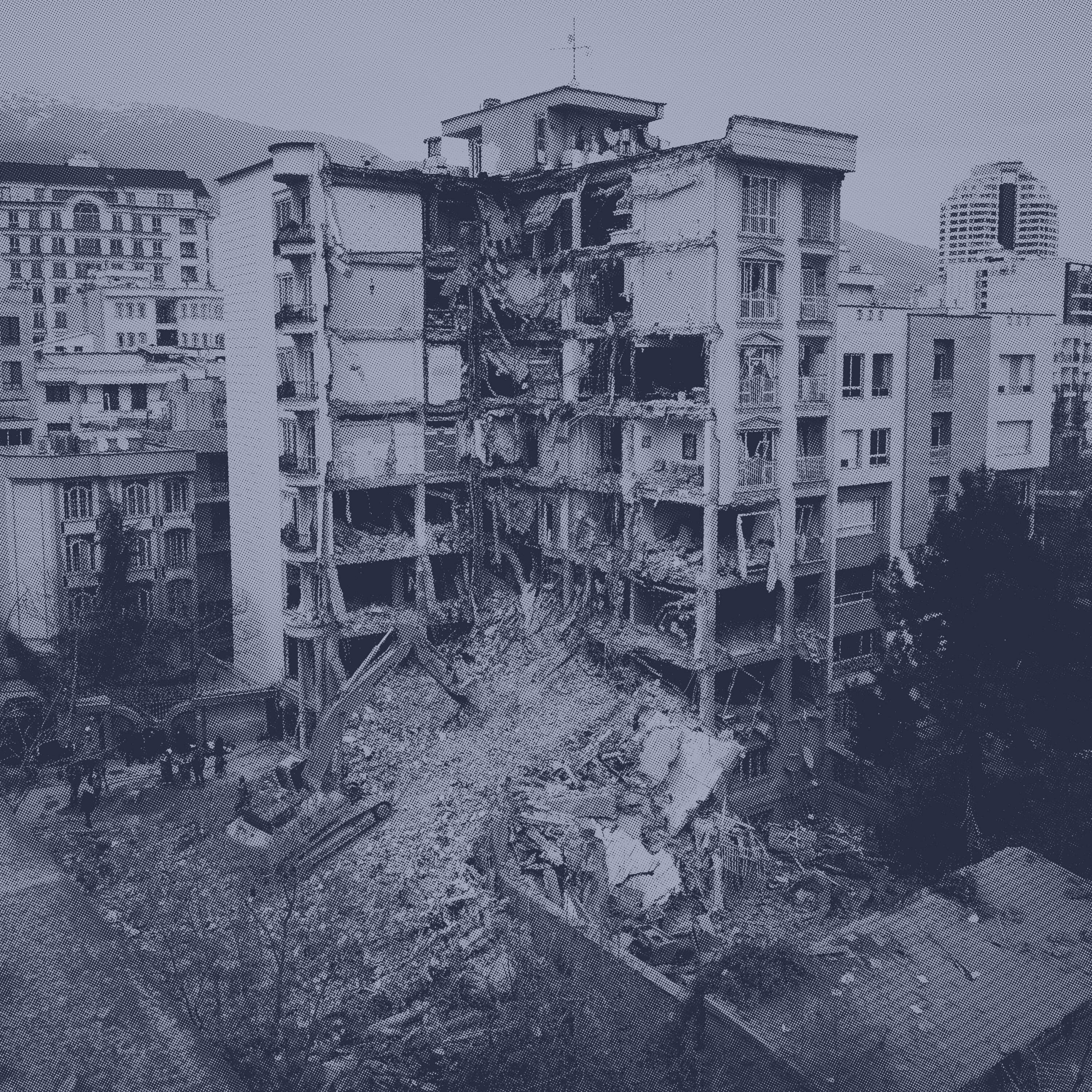
President Trump began the week with an announcement that administration officials were having “very good and productive conversations” with Iranian officials about ending the war there, then sent more troops to the region. We discuss the state of negotiations to end the war and the conflicting messages the president is sending with his words and actions.
This episode: voting correspondent Miles Parks, White House correspondent Franco Ordoñez, and national security correspondent Greg Myre.
This podcast was produced by Casey Morell and Bria Suggs, and edited by Rachel Baye.
Our executive producer is Muthoni Muturi.
Listen to every episode of the NPR Politics Podcast sponsor-free, unlock access to bonus episodes with more from the NPR Politics team, and support public media when you sign up for The NPR Politics Podcast+ at plus.npr.org/politics.
To manage podcast ad preferences, review the links below:
See pcm.adswizz.com for information about our collection and use of personal data for sponsorship and to manage your podcast sponsorship preferences.
NPR Privacy Policy
This episode: voting correspondent Miles Parks, White House correspondent Franco Ordoñez, and national security correspondent Greg Myre.
This podcast was produced by Casey Morell and Bria Suggs, and edited by Rachel Baye.
Our executive producer is Muthoni Muturi.
Listen to every episode of the NPR Politics Podcast sponsor-free, unlock access to bonus episodes with more from the NPR Politics team, and support public media when you sign up for The NPR Politics Podcast+ at plus.npr.org/politics.
To manage podcast ad preferences, review the links below:
See pcm.adswizz.com for information about our collection and use of personal data for sponsorship and to manage your podcast sponsorship preferences.
NPR Privacy Policy
Hosts & Guests

Transcript
This message comes from Total Line and More.
College Basketball's biggest tournament is here,
and watch parties are underway.
Shop Total Line and More in-store or online to get ready today.
Spirits not sold in Virginia and North Carolina.
Drink responsibly, be 21.
Hey there, it's the MPR Politics Podcast.
I'm Miles Parks, I cover voting.
I'm Frank Ordenia as I cover the White House.
And I'm Greg Myrie, I cover National Security.
And we are recording this at 113 PM Eastern time
on Wednesday, March 25th.
And today on the show, we're nearing the one month mark
of the war in Iran.
Frank O. President Trump started the week
with a post on social media that said, quote,
very good and productive conversations
we're going on with Iran,
alluding to the fact that negotiations seem to be ongoing
to move towards an end to the conflict.
What more can you tell us about that?
Yeah, it came as Trump announced that he was postponing
a tax on Iran power plants for five days.
And he said at the time that his team,
you know, the envoy Steve Whitkopf
and son-in-law Jared Kushner,
were in touch with a, quote,
top person in the regime, though he would not say who it was.
And Miles, it really felt like kind of like a turning point
in all this, you know, they were potentially moving
into this new chapter of the war.
That's certainly seen what Trump was signaling.
And moving toward this kind of negotiating ending, you know,
Trump before said that he was not already
to agree to anything.
But here he was saying that they were very willing
to make a deal, that the US was willing to make a deal.
And that he said actually that if he was a betting man
that he would bet on the deal happening.
Yesterday, of course, he spoke again
about this top person actually delivering on a promise.
He called it a big presence.
I didn't say exactly what that was,
but he said it involved oil and gas.
And he also said that was a sign at least
that they were dealing with the right person.
I do want to note one more thing, though,
that Iran officially is dismissing the idea
that they are negotiating anything directly with the US
and actually would not negotiate with Whitcoff
and Kushner because they felt like those
to mislead them in the lead up to the war.
It does feel like it takes two to tango, Greg.
And I don't know, that doesn't that seem like a,
if you have one side saying we're negotiating things are going really well.
But then Iran is denying that this is happening at all.
What are we supposed to read from that?
Yeah, that they're far apart.
And I think that's the only realistic thing you can say right now.
I think Trump has hit a point where he feels
he's going to have to consider negotiations
that the current plan on the battlefield
another day or two or three of bombing
is not going to make Iran capitulate.
So it is significant that Trump is talking about negotiations.
But Iran may have time on its side.
Now it sees the straight of Hormuz closed
and it is in no hurry to bring it into the war
if it doesn't get some of the things that it wants.
And one of those is a guarantee that the United States
will not wage war again against it and try to topple the regime.
So Franco, political pressure is clearly building on President Trump
and the kind of all the different dominoes
that are falling from this war going on weeks and weeks.
I just drove past a gas station in DC this week
where gas was priced over $5.
It was the most expensive station I've driven by in DC.
It's consistently over time.
I know it's when you're talking about it.
Exactly, I'm not going to name names.
But is it fair to say that there is starting to become
I guess global financial pressure for President Trump
to kind of change his tune on this?
Yeah, I think there's no doubt about that.
And I think Trump clearly knows that as well.
And I think you see that in the rhetoric from him
over the past couple of weeks,
particularly when it has to deal with the Strait of Hormuz,
whether it's threatening Iran to stop what it's doing,
stop strikes on cargo ships to threatening essentially allies
and other Western nations to kind of join this coalition
and saying if you don't join and help secure the Strait,
we will remember those things.
But just back to that social post
and kind of like this turning point,
that social post actually came around seven o'clock
in the morning or just after.
And that had such an impact on the markets.
I mean, oil futures instantly rallied the S&P 500
went soaring before the morning bell.
So this is clearly something that is having an impact on markets
and Trump has always paid attention to markets always.
So you've got Trump talking about de-escalation, Greg.
But at the same time, isn't the US still building up
its military presence in the region?
Yeah, Trump always likes to keep his options open.
And as I said, without any great movement
on the battlefield under the current circumstances,
he's basically got two options, escalator de-escalate.
Well, he's sort of chosen A and B,
talking about a possible peace deal in a de-escalation.
But also, we're hearing more troops are headed to the region.
Two marine units, both have 2,000 troops
or a little more each, one coming from Japan,
the other from California.
One should arrive any day now.
The other's probably still a couple weeks away.
And we've also heard that the 82nd Airborne
is going to send about 2,000 troops to the region.
So about another 6,000 troops.
And these are highly trained troops
that could certainly carry out a specific mission.
But again, we're 6,000, 7,000 troops.
That's not a huge number.
There are about 50,000 US troops in the region
on ships, airmen, ground troops.
So that adds to that total, which sounds pretty considerable,
until you think about the fact that Iran has more than 600,000
troops in its active duty army.
So that US presence in the region,
even with these additions, would still
be less, there may be 10% of what Iran has.
So it's not enough to carry out a major ground invasion.
It's enough to carry out specific operations.
Obviously, the speculation is on things
like trying to open the state of Hormuz.
But Trump has said no boots on the ground at different points
related to the Iran conflict.
Is that still the working assumption?
Or essentially, that's what he said.
He's given himself some wiggle room saying,
I haven't sent troops anywhere.
But if I was, I wouldn't tell you.
So he's left himself a little wiggle room.
And one could certainly see him choosing that option
if it's a specific operation.
I mean, I think there's both, if the US troops were
to seize an island to help clear the state of Hormuz,
he might fudge that and say, well, that's not really
troops on the ground.
That's just part of an operation in the Gulf,
or to take a small island.
Again, I don't think there's just enough of the US presence
to do a major ground operation,
what we've seen in Iraq and Afghanistan in the past.
But there wouldn't be a surprise if they were to carry out
a small specific operation.
So thinking about, I guess, to your kind of the way
you put it, Greg, which I thought was helpful in terms of,
there's kind of a de-escalation route and an escalation route.
Think about the de-escalation route.
Who is leading negotiations at this point on the US side,
or who's kind of leading the diplomatic effort
to move this conflict toward a close?
Not entirely clear.
We should certainly be looking towards the two people
who've been involved in the past Steve Whitkoff
and Jared Kushner.
However, both of those times last June,
when they were involved in negotiations,
the US joined Israel in bombing Iran.
And in February, they were involved in these efforts,
and then the US launched this war in Iran.
So the Iranians are feeling maybe a little skittish
about dealing with these two,
and that this doesn't necessarily mean
there's going to be a peace deal coming out of that.
So there is talk, and I would stress talk or speculation
at this point that the Iranians may want to deal
with somebody else, JD Vance, the vice president's name
has been raised.
We still don't have a venue-fixed Pakistan
is a venue that's been raised.
So a lot of uncertainty here,
there does seem that these intermediaries,
Pakistan, perhaps other countries in the region,
are trying to help set up some actual face-to-face talks.
But it seems the discussions at this point
have been indirect, and we're trying to get to the point
of some face-to-face or almost face-to-face meetings.
All right, let's think of a quick break
and more on the Iran conflict in just a moment.
This message comes from BetterHelp.
As a dad, BetterHelp president Fernando Madera
relates to needing flexibility when it comes
to scheduling therapy.
I have kids under 18, so time is very limited.
That's why at BetterHelp or Therapist
try to have sessions.
Sometimes at night, depending on the therapist
or during the weekend.
So I think that's what we need to tell the parents,
you're not alone, we can help you out.
If a flexible schedule would help you,
visit betterhelp.com slash NPR
for 10% off your first month of online therapy.
This message comes from Carvana,
who makes car selling easy.
Enter your license plate or VIN,
get a real offer in minutes,
and have your car picked up from your door.
Sell your car the easy way with Carvana.
Pick up V may apply.
Support for NPR in the following message
come from Warby Parker, the one-stop shop
for all your vision needs.
They offer expertly crafted prescription eyewear,
plus contacts, eye exams, and more.
For everything you need to see,
visit your nearest Warby Parker store,
or head to WarbyParker.com.
And we're back.
And we talk on the show a lot about President Trump
looking for different ways to declare victory
in basically any situation.
It's clear that he's looking for a way to do that
to kind of end this war,
and off ramp is what some people have called it.
What are his options at this point?
Yeah, miles before I get to the options,
I want to sort of make a point about the phrase off ramp,
which is what everybody is using,
and I think we kind of understand
what the meeting is the way to end the war.
But literally when I think of an off ramp,
I think I'm driving down the highway,
I'm low on gas,
I'm looking for an off ramp to fill up at the gas station.
It's a minor inconvenience you need to deal with.
We're talking about a war that really is going
to reshape the region.
We don't know how it's going to end,
what the circumstances will be.
So it's not just simply an off ramp
in the sense that hopefully this fighting can stop soon.
We're talking about this reordering,
reconfiguration in the Middle East.
So we're talking about a solution to a major conflict,
not just an off ramp.
Now in terms of options,
most wars end with negotiations,
and you don't see a clear battlefield solution right now,
but you see two sides that are very, very far apart.
Not only in the goals that were stated initially,
but now President Trump would really
need to open the straight-of-war moves,
a problem that did not exist.
In fact, for decades before this war,
that it always been something looming out there
that could come up the oil markets
and the global economy,
now the President has to make it a focus of his solution.
When he was talking about other things,
like regime change,
or getting rid of Iran's nuclear program,
all of these may still be among the many things
he wants to do,
but he has to deal with some of the cards
that Iran clearly has to play right now.
I'll just add that.
I mean, we are talking about President Trump here,
and for President Trump declaring victory
is pretty as simple as declaring victory.
Everything Greg is saying is absolutely correct,
and that's the reality on the ground,
but oftentimes as we've seen in the past,
the reality on the ground is not necessarily
what Trump is looking at.
He just wants a reason to be able to call something a win,
whether it's a peace deal around the country
or in this scenario,
and he's basically done that for the most part,
including just yesterday,
saying that they have basically won the war.
Clearly, that's not the case.
But for Trump,
I think the victory that he's looking for
is if he can basically get the Strait of Hormuz open,
then he can at least say by his own definition
that they have won the war,
because while the regime may still be there,
they're clearly degraded.
And then he's kind of backed off and on
about whether he really wants regime change
or whether at least that's necessary to end this.
So is regime change just completely off the table
at this point in terms of,
that was something that was mentioned a lot earlier,
this year in terms of President Trump
talking about the protesters in Iran,
how they were treated by the regime,
and then early in this conflict,
President Trump begging the people of Iran
to basically stand up for themselves,
are we hearing any of that sort of language now?
We're really not.
He stopped talking about the protesters are rising up,
and certainly the analysis from analysts is,
that's just not likely.
It's just not realistic to be talking about it at this point.
The Iranian government and military have shown
that they can absorb these heavy blows,
the US and Israeli bombing campaign,
huge damage has been done to be sure
to their military capabilities.
They had a weak Navy and Air Force to begin with.
That's really been decimated.
Its missile program, its drone program
have all been set back very substantially.
But at some level, the government is still functioning
and so is the military.
It's still carrying out attacks.
And we heard Tulsi Gabbard,
the director of national intelligence,
testified last week saying,
Iran's government is weakened, but it's still intact.
Dozens of top leaders have been killed,
including the previous Supreme Leader,
been replaced by a new Supreme Leader.
It's just there's not a clear path
to regime change at this point.
Yeah, I think when the new Supreme Leader was announced,
I think that really changed the narrative
for the Trump administration,
because he was really talking a lot about regime change
and all the steps towards regime change before then.
But then when Iran dug in their heels
and said they were going to continue to fight,
the administration quickly backed off
that language and focused more on the military goals.
I did find it interesting though.
Yesterday, Trump kind of twisted himself
or at least twisted the language into a little pretzel
in order to say that this was still regime change,
saying that they have killed so many leaders,
how could it not be regime change?
And then floated again the idea that this new person
that they're supposedly talking with
could eventually be the person who kind of serves as,
and what we've talked about before,
this Venezuela type model where it is actually
the same regime, but it's a new person involved.
Greg, I want to ask before we close
just about how the region moves forward
from this no matter how it ends.
Can you talk a little bit about the US relationship
with other countries in the region
and how the other countries are kind of viewing
this conflict and thinking about it?
Yeah, one thing I think that has gotten some attention,
but not enough are the Gulf states.
And we're talking about six Muslim Arab countries,
all with hereditary monarchies,
all which are very conservative, very averse to change,
and they all opposed the war.
They were against this war beginning.
And now that it's begun, their big concern is
that Trump may just call it off and pull out
and sort of leave them with a mess behind
that the straight of war moves issue may not be resolved,
that they are clearly within striking distance
from Iran, they're getting hit every day
with Iranian missiles and drones.
And now that Iran has crossed that threshold,
that would be an ongoing threat they would have to face.
And so they're very worried in terms of their security,
in terms of their economy,
they're gonna be left in a much weaker
and more vulnerable position if this war just ends abruptly
without a clear decisive measure,
and their brand is stability.
They've prospered by being this coastline of stability
in the volatile Middle East.
And if they get dragged into this volatility,
that throws their brand, their image completely up in the air.
And so that's a huge concern for them.
All right, well let's leave it there for today.
The political news does seem like it's changed again,
and especially rapid pace right now.
This podcast is here to help you make sense of it.
Please do not miss an episode,
hit that follow button wherever you listen
to your podcast,
and we'll be right back in your feet tomorrow.
I'm Miles Parks, I cover voting.
I'm Frank Ordoniaz, I cover the White House.
And I'm Greg Myrie, I cover national security.
And thank you for listening to the MPR Politics Podcasts.
This message comes from Alexa Plus.
The all new Alexa Plus will do more so you don't have to.
Chat naturally while Alexa learns your style
anticipates what's next and makes it happen.
Free with prime on your Amazon devices.
Learn more at Amazon.com slash Alexa Plus.
This message comes from Midi Health,
introducing age well, longevity care
designed by women for women.
Whether you're looking to prevent future health issues
or just feel more like yourself,
learn more at joinmitty.com.
That's joinmid.com.
This message comes from Bayer.
Science is a rigorous process that requires questions,
testing, transparency, and results that can be proven.
This approach is integral to every breakthrough
Bayer brings forward, innovations that save lives
and feed the world.
ScienceDelivers.com.


