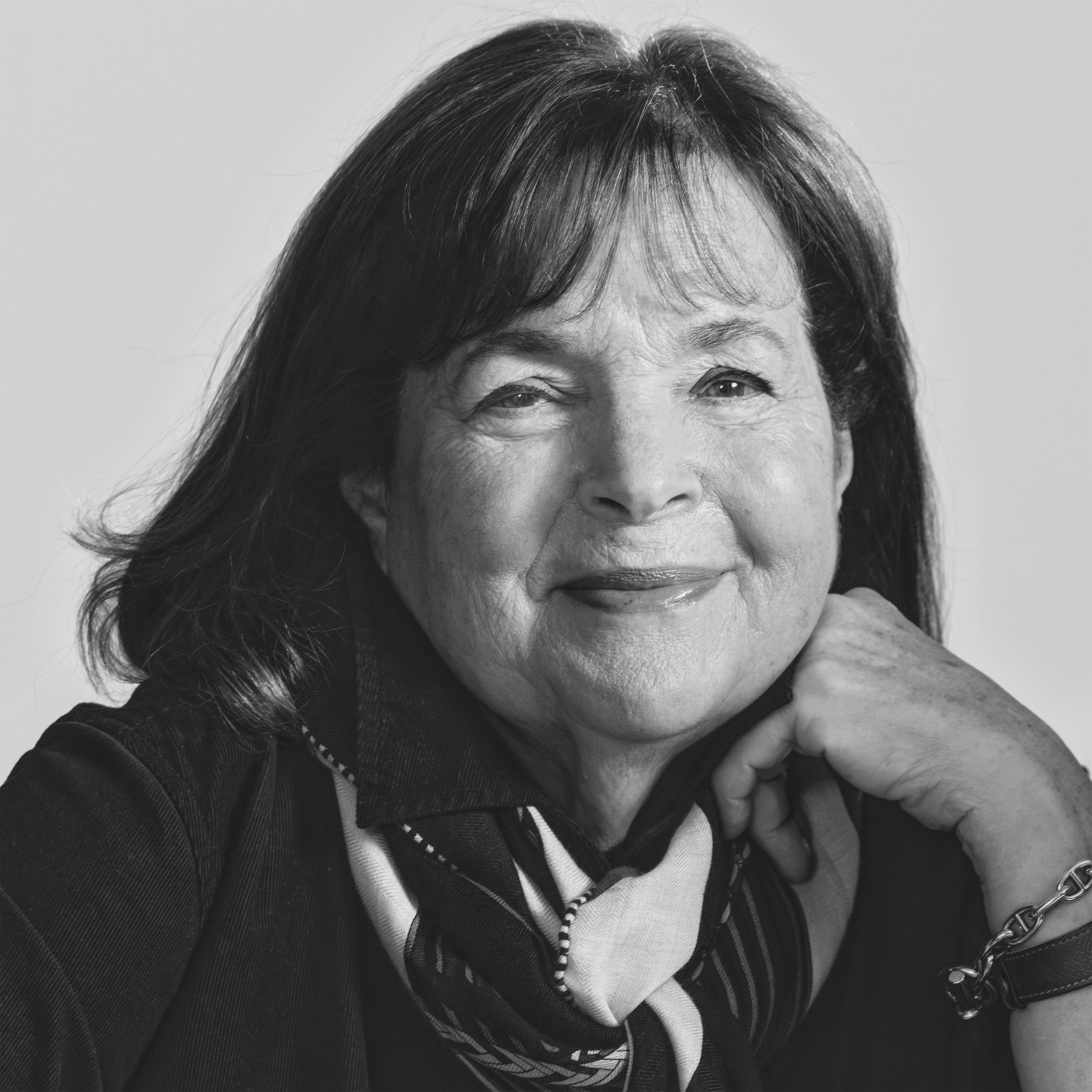
About this episode
At 78, the cookbook author and Food Network host knows what she likes, knows what she wants and isn’t stopping anytime soon.
- Thoughts? Email us at [email protected]
- Watch our show on YouTube: youtube.com/@TheInterviewPodcast
- For transcripts and more, visit: nytimes.com/theinterview
For more information on today’s episode, visit nytimes.com/thedaily. Transcripts of each episode will be made available by the next workday.
Subscribe today at nytimes.com/podcasts or on Apple Podcasts and Spotify. You can also subscribe via your favorite podcast app here https://www.nytimes.com/activate-access/audio?source=podcatcher. For more podcasts and narrated articles, download The New York Times app at nytimes.com/app.
Hosted by Simplecast, an AdsWizz company. See pcm.adswizz.com for information about our collection and use of personal data for advertising.
Get every episode summarized
Each time The Daily publishes, we email you a written briefing from the transcript — the topics, who appeared, and any specific claims, with the ad reads skipped.
Email me new episodesFree for 3 shows. No card needed.
Hosts & guests


Transcript ready
780 searchable segments. Every word is indexed and playable.
Full transcript
The Daily — Ina Garten Says You Can Either Get on Her Train or Get Out of the Way. Machine-transcribed; use the interactive transcript above to jump the player to any line.
I gave my brother a New York Times subscription. We changed articles, and so having read the same article, we can discuss it. Cheap, send New Year long subscription, so I have access to all the games. The New York Times contributes to our quality time together. It enriches our relationship. It was such a cool and thoughtful gift. We're reading the same stuff, we're making the same food, we're on the same page. Learn more about giving a New York Times subscription as a gift at nytimes.com slash gift. I remember thinking how crazy it was to disagree with the top cookbook editor in the country. And I remember saying to myself, well, either I'm wrong, and I'll never have to see me again, or I'm right, and I'll think I'm a genius. I'm Lulu Garcia Navarro, and today I'm interviewing Ina Garten. Garten's best known for her cookbooks, and her show Barefoot Contessa. Which premiered on the Food Network almost 24 years ago.
I'm always looking for new ways to cook chicken, but nothing says some are more than cooking chicken on a grill. That showed top people how to cook. Part of cup of olive oil, cup of onion. How to entertain. So I'm going to have cocktails and orders on the porch. I'm going to have dinner in the dining room table. It's going to be casual. And how to be unfussy about it. You can use ingredients from the store, like a pound cake or vanilla ice cream, that are just as good as homemade. Garten's laid back style and plucky personality made her both a household name and a cult figure. Delicious. Lovingly parodied and maimed on social media. Ha, ha, ha. Tonight I'm making a wonderful dinner, and it starts with roundly pudding. And now at 78, she's doing something new. Launching a video podcast called Happy Hour with Ina. And her 14th cookbook, Simply Ina, is coming out this fall. Here's my conversation with Ina Garten. I am thrilled to have you here.
I have watched you for such a long time. I have cooked your recipes. And so it is a great pleasure to welcome you to the interview. I know. Thank you, Lulu. I love what you do too. So I'm so thrilled to be here, really honored. Okay, so I've been doing the math on your life. Uh oh. Ha, ha, ha. You're now 78 years old. And you are just about to start this whole new chapter. You are launching a podcast. I am. And you started your celebrated food network, TV show when you were in your mid fifties. And you wrote your first cookbook when you were in your early fifties. And I find this very inspirational as a woman also in my fifties. What have you learned about taking on challenges in later life? I think that when I look back and I think about the things that I've done like writing cookbooks and I love working scared. Um, it keeps me up at night.
So I love, you know, I love this expression getting out over your skis. We have no choice. You've invested your money. You've, um, you know, sort of made a stake in what you've decided to do whether it's books or TV. Um, and very often I've said no to things for years. Until I figured out, how can I do this differently? Like I don't, I don't like doing it the way everybody else does it. I like doing taking something like books and saying most cookbooks are in, when I started in 1999, most cookbooks had like 250 recipes. I mean, who needs 250 recipes? I need 75 really good recipes that I can make over and over again. Um, and so when I decided to write cookbooks, I thought, okay, I'm going to write this book. I'm not even sure my publisher was convinced that it was going to work, but it worked out okay. Yeah. I think one of the things that happens when people get older in particular, um, is that you get more afraid, um, you know, get more afraid. Oh, that's what I thought you were going to say, get more confident.
No, I don't. I think that's interesting. I actually don't think people get more to lose. You will. You have more to lose. You get more set in your ways, you know, and just the opposite. Yeah, I know that's what I mean. And I think that's such a great, um, lesson, but I think it's, it's unusual. I think I have a very low threshold of boredom. Hmm. If I know how to do something, I don't want to do it again. I, I love, um, using what I've learned and, and figuring out the next step. Hmm. It's really clear for me. It, I ask myself one question, is it going to be fun? And if it's fun, then I, I really want to do it. I just have to figure out how to make sure it's fun. I mean, it's working with people that I love working with. Um, it's working with creative people. I mean, in the cookbook, I have food stylists during the photographs and photographer, um, and I, there are people I look forward to working together, where we create something that's better than any one of us alone and I'm responsible for the team. I love that feeling.
It's kind of like a great ballet or everybody's working together. So I like that feeling of building something with people. Well, let's talk about the two new projects that you have coming out. Okay. Um, a podcast, um, and a new cookbook. Yeah. Um, let's start with the, um, the cookbook. It's the first one in four years. Yes. Uh, it's called simply Ina. The recipes all look easy and delicious, which are your signature. Okay. Um, have you ever been tempted to make something off brand, complicated Ina, Fussy Ina, you know, pretentious Ina. Um, let's make castelay, right? Yeah, let's make castelay. Exactly. Um, no. I, I actually am not that good a cook. I think of myself more as a taster. I know what I'm looking for in flavor and texture. But, um, I don't like spending hours in the kitchen cooking. I really don't. When I wrote my first book, which was the Biffric and Tessa cookbook, I, I decided I wanted to have several things I wanted to have, um, gorgeous photographs so that when you looked at it, you thought, Oh, that looks delicious. And then you looked at the recipe and you thought, I could actually make that
recipe. And then you looked at the ingredients and thought, Oh, I can get all those ingredients in my local grocery store. That was a guiding principle of the first book. And it's still the guiding principle principle. And there may be a few things like truffle butter that you, you know, can order online and keep in the freezer, but very, very few things like that. Most things you can buy locally. And because this is about keeping things simple, it's even the recipes are even easier. Do you like eating complicated food? Like do when you go to a restaurant, do you order complicated food? Hate it. Really? Oh, my first one is going to order a roast chicken in a restaurant. Um, no, I really don't like complicated food. And I don't like tasty menus. They give me a headache. Need to go all those flavors just like, Oh my God. And I don't like when somebody put something down on, you know, in front of me that I have no idea what it is. I just, I'm not an adventurous eater at all. And I think my recipes reflect that. I like, you know, raspberry cheesecake, you know, like, you know, exactly what,
what it's going to taste like. Let's talk about your podcast. Okay. You'll be making cocktails and mocktails with a guest. Is that right? Well, I mean, I'm going to serve a cocktail. I'm going to tell to each person. Oh, you're not going to make it with. Who are not going to make it? Yeah, exactly. So day drinking with I know. No, it's not, it's not day drinking with I know. That sounds great. Now people are invited at five o'clock. Okay. So it's cocktail hour. It's cocktail hour. Okay. But it's really about the conversation. What makes a good conversation for you? Um, I think what I'm always looking for is where I connect with the, the guest. So for example, with Alison Roman, she writes cookbooks. She has a specialty food store in upstate New York. We have a lot of common experiences. And so it's really fun to talk about how she sees building a business, how she sees writing recipes. I think that's what I'm always looking for. And it's, it's interesting no matter what the, the guest does, whether it's a movie director or a writer like Ann Patchett, we always can find a common thread.
You know, I think having a good conversation also means having a little bit of tension at some point. Um, but I think that's probably not your philosophy. Am I right? Haven't thought about it. But now I'm going to. Yeah. Like what's, what's tension in a conversation? Were you disagree about something? You know, there were a lot of celebrity podcasts now, um, where famous people interview other famous people. And they're very friendly and they're very fun. But I think they often steer clear of difficult questions or touchy questions in part because the interviewer and the interviewer, we are either friends or they're in the same social circles or you're going to see them again at some point. And sometimes the conversations don't go very deep. They kind of, um, skirt the surface. And I was just wondering, have you thought about how you navigate that? I actually think it should be fun. I think it should, the person should have an interesting point of view. But I'm really conscious that I want every conversation to have things that
the listener can take away. So it's not just you and I are talking. It's that we're sharing our experience about how we do something. Um, what's interesting, Alison and I talked about, um, a book that I had read called Why We Buy? Like how, um, people shop. And I, I'm sure somebody listening is going to go out and buy that book and it's going to change, change how they retail. Whatever it is they're selling. So my, my goal is not just to have a really interesting conversation, but to connect with the audience. And, and that's like the way I write cookbooks and it's the way I, um, do the TV show. It's what's the user experience? Is it, is it enjoyable to listen to and do you learn something from it? And the other thing is I think it's really important to ask questions. You don't know the answer to. Hmm. And, and, and let go of control of the conversation. Why did you want to do this? Why did you want to have a podcast? Um, which is now a days a TV show because it's going to be, exactly,
um, obviously, um, because I, I think it really goes back to my childhood where I couldn't connect with my parents and I, I, I crave that connection with people. And that's why my friends are very important. And I just, I find this so interesting. The stories that people have told me on be my guest, like Emily Blond talking about having a, a, a stutter, which was debilitating when she was a child. And so I just, I find people's stories really inspiring. And it's the difficult things in their lives that have led to the things that have, have changed, like Marcus Samuelson. Do you know the story of Marcus Samuelson? Um, when he was three years old, he, his mother and his five year old sister got tuberculosis and their, their mother walked them from the village in Ethiopia where they lived to a hospital to get treatment. And I don't know how long it was like 20 miles without shoes, walk to this treatment center and the, and the mother died and left two children and a nurse
knew that there was somebody in Sweden that was interested in adopting a young boy. And she, she called and said, I have a young boy, but he has a sister and I won't break them up. And the Swedish family said, send them both. So Marcus Samuelson ended up from the worst thing that could possibly happen to you. He lost his mother when he was three with a Swedish family. And the grandmother said, come, come cook with me. How did this happen? He's a brilliant cook and he's got fabulous restaurants. Never would have happened if the worst thing in his life hadn't happened at that moment. What is that for you? What is that origin story for you? Well, I think that I had a very tough childhood and it was lonely and it was, you had a mother who was very disconnected, disconnected. And my father was always mad at me. I don't know why, but because you tried to control me. So I mean, what goes in early goes in deep. And I'm always trying to recreate what I, what I craved when I was a kid.
Yeah, I think either people repeat their parents mistakes. Well, that's, that's the personality. Yeah, or they, or they really try to move away from it. I had a lot of help figuring out what happened because I don't think I, I understood it until I was probably 40. And, and then once you understand it and you say, oh, it was, that wasn't everybody's childhood. When you're a kid, you think everybody lives like that. And then you realize, no, it doesn't. And you make a decision to do it differently. Your, your, your history isn't necessarily your life. You have to break free of it at some point. You have to think, figure it out and then decide how you want to live. Yeah. Your story can be seen as a series of beginnings or actually a series of endings. As I was sort of looking at things, you stopped catering at a certain point. And catering had helped sort of propel you into the food world when you had your specialty store. It was allowing you to be in people's houses.
And, you know, it was a lot of your business initially and you just decided it wasn't working out because because I would run bear for contested during the day. And then at four or five o'clock, I would go to, we would do like 10 parties at night. And I'd get home at one o'clock in the morning exhausted. And on Sunday, my only day off was, you know, basically the afternoon I had off. I just, I couldn't even talk. I was so exhausted and I thought, okay, this is not working. Right. Because it really, I couldn't work and have a personal life at the same time. And then you sold your iconic store for similar reasons. I think I sold the store because I knew how to do it. Yeah. And it was no longer a challenge. And I think if you're not bringing new energy and new ideas to a business, it's time to pass it off to somebody else who will. And then you stopped selling prepared foods at a certain point. You know, some people expand their business. They, you know, they just can't do anything. And you seem to replace. And I thought that that was very interesting.
It is interesting. I don't expand it. I do it sequentially or absolutely right. I hadn't thought about it that way. I think that when I know how to do something, I don't want to do it anymore. It's really that simple. And I mean, sometimes I've taken, you know, one time I took a year off to try and figure out what to do next. And at, I remember in the middle of that thing, this is the worst year I've ever had because I have nothing to do, which is not my favorite thing. But I never would have started writing cookbooks if I hadn't done it. I did it just to have something to do. And it turned out to be so much more interesting than I expected. So I think I kind of like the, the journey, you know, like just funny at where my place is and what works. And it's, I always see it as like tapping on a wall and just tap, tap, tap until I hear like a hollow sound. And I'm like, okay, that's where I'm going to go. And it's not what I'm going to finish with. It's what I'm going to start. And I'm going to see where this leads. Hmm. And maybe because I, maybe because I like to have control over what I'm doing.
I don't like expanding it with more and more people and bigger. I like, I like doing things sequentially. I'm thought about it that way, but you're absolutely right. You've always spoken about learning to trust your instincts. And I think that's one of the hardest things for women in particular, especially to do are inner voices sometimes are harsh as critic. How did you learn to trust yourself? I think my husband taught me because I think as a child, I was always taught that whatever I wanted to do was a bad idea. And when I married Jeffrey, I think he always said, he always supported whatever I wanted to do and encouraged it and didn't question it. And I think I really learned how to be in the world that way. Because you met him when you were 16. Yeah. Yeah. Very, very young. Yeah. He saw you when you went to go visit your brother and Dartmouth, yeah, just the luckiest thing that could ever happen to anybody. I had gone from such a negative childhood to such a positive life.
I mean, where everything I do, he thinks is brilliant and encouraged me to do more of it. When did you realize that perhaps that inner voice wasn't, was not there anymore, the harsh critic, because I think we do. Oh, it is. It is. It is. It absolutely is. But I think maybe when I was around 40, I started seeing a therapist and what I learned from that is that when I hear that voice, I say, oh, that's my mother's voice. That's not my voice. Because my mother always thought everything I would do would be a failure. So her first reaction is what makes you think that you can do that. And I just go, okay, that's my mother's voice. That's not my voice. And I just reinforce, okay, I'm going to try this. I don't know if I can do it, but I'm going to learn a lot from it. And I'm always surprised how well it turns out. And how do you deal with external pressure when people aren't, don't believe in you? Because there's the internal voice and then there's like people in life who underestimate you.
Oh, yeah. There are a lot of them. Yes. And I just have this philosophy, you're either on my train or just get off, get out of my way. I think because I had such a difficult time as a child, I don't like negative people around me. I just don't like to be with them. So if you're going to be positive and you're going to bring things to the party, come along for the ride. But if you're going to be negative and question what I'm doing or not listen to what I want, just get out of my way. Is that tough? You know, I don't think it's tough. I think it's clear. How then do you take feedback? Oh, I asked for feedback all the time. Right. Every morning on me and my team and we talk about what we're doing. And I want to know what they think about it. But at the end of the day, it's my decision. And once I've made a decision, I don't want to discuss it. I mean, now at this stage in your career, obviously people are going to be on the INA train. Yes and no. Yes and no. You know, you are a person who has a proven track record.
But when you were first trying to move into things, well, I do remember my first book. And my editor was the top cookbook editor in the country. I mean, he was extraordinary, really knowledgeable. I had some of the great Martha Stewart Lee Bailey had really great authors. And I have no idea why, but I would say to him, that's not the way I want to do it. I want to do it this way. And he would disagree with me. He said, that's not the way it's done. And I remember thinking, okay, well, I'm not going to be happy unless it's the way I want it done. And I don't know why I remember thinking how crazy it was to disagree with the top cookbook editor in the country. But I just needed to have my vision in that book. And I remember saying to myself, well, either I'm wrong and he'll never have to see me again or I'm right. And I don't think I'm a genius. So I was just determined to make sure it was the way I wanted it to be.
And that determination comes from the feeling that if you can't execute your vision, then it's not going to be satisfying. And why bother doing it? If you're just going to do what everybody else is doing. So, but you have to have an idea. You have to show up 100% and come with an idea. Martha Stewart helped launch you. And in that early stage of your career, there was a lot of pressure to be at many Martha. Like, yeah, she had sort of created the mold and they wanted to have more. That was one of the models. That was one of the models. Brilliant. And she changed how it happened. I mean, she did it brilliantly in her vision. I mean, you walked away from your first foray into television because they wanted you to be a many Martha. Yeah. How did you just have a sense that it wasn't the right fit? I just don't know. You're stubborn. Clearly. I'm clear. I don't think stubborn is a bad word, by the way. I'm determined.
I think what was her film crew that was filming a show for me, and they kept saying to me, no, no, you can't do it that way. And I was like, I kept saying to them, you have Martha. You don't need me to be Martha. You need me to be me. And I don't know why I knew that. But I just was very clear that, you know, Martha does a certain, does things a certain way. And I do them differently. And unless that film reflected who I was, it was going to look like I was trying to be Martha. And that's not who I am. According to New Yorker profile of you from a few years ago, you and Martha grew apart. Can I just say I admire her enormously? I think what she created is stunning. And she did it with vision. And we were, you know, we're friendly. We're not. There's no antipathy. She moved to Bedford and she used to live in East Hampton. So we saw each other then. I mean, I know you get asked about Martha a lot. And in many ways, you became your own thing, the anti-Martha in some ways, you know,
a different style of cooking. Is that in itself frustrating that you always get kind of put in some kind of juxtaposition of her? I had an interesting conversation with Alison Roman recently, actually. I said to her, you know, she and I are kind of in a continuum that started with Julia Child who wanted to teach people how to cook with real food. You know, when everybody was making like box macaroni and cheese, she wanted you to appreciate a really good beef for Gignol. And then Martha came along and elevated home arts to something really worth doing well. Set a beautiful table, make it wonderful dinner, carve out a pumpkin for the pumpkin soup. It's just fabulous. I came along and said, okay, maybe not carve out the pumpkin. Set a nice table. It doesn't have to be over the top and make a lovely dinner and serve it. And then Alison Roman came along and said, forget setting the table, just put the pot of soup on the table and have a good time. And so I think everybody's getting a little simpler and simpler, but at the end of the day, we all like the same thing, which is gathering people around a table.
You know, Alison Roman also said in that New Yorker profile that people were always asking her if she's a Martha or an Ina. Oh, really? Yeah. I don't remember that. So there is like a sense of a continuum, but also a sort of dichotomy, if you will. Yeah, I think we've each taken what's in the world and made it our own. The reason I ask also is because in that New Yorker profile, Martha said she had never made one of your recipes, which I felt was kind of pointed. And I wondered if it bothered you. No, certainly hers, hers to decide. It's I didn't know what to make of that. I've certainly made lots of hers. We've talked about how you've sort of evolved over time. And I do want to touch on a period of your life that I find fascinating, which is your period at the food network, because it's really changed since you started there 20 years ago.
You know, you came up with Rachel Ray, you came up with Paula Dean, and you women were really a big deal at that certain period of time. There's a lot of competition shows now, though. Yeah. That doesn't interest me. Yeah. A lot of sort of male energy, GuyPierre, Pit Master's, Bobby Flay. I watched a lot of Bobby Flay. Can I just say how much I adore Bobby Flay? You can say he's just extraordinary. Would you ever compete with Bobby Flay? No. I see, I'm not a chef. I'm a home cook. Right. And I mean, to go to Bobby's house and watch him just make lunch with not a recipe anywhere. I mean, he's, you know, he's run restaurants. It's in his DNA. He's such an extraordinary cook. And he's so joyful in the kitchen. It's just wonderful to watch. And you know, he doesn't, when he's competing with somebody, this is their identifying recipe. This is their, their favorite recipe and Bobby's never seen it before.
And he usually beats them. Why do you never want it to be part of a competition show? It's just not who I am. And you know what? That's what other people do. I just like to do something different. I think part of food, food networks DNA is showing people how to cook. And fortunately, they still support my doing it. Warner Brothers, which runs the food network, is in the midst of possibly being sold to Paramount, not yet. Not so fast. Not so fast. I mean, do you have an opinion about that merger? Will you stay with the food network if it gets sold? I think we must stay away from that one. Okay. Okay. Is that all right? Yeah. I understand. It's complicated. It's complicated. Yeah. All right. Who would you say your audience is today? I'm sure you've thought about this as you're launching your new podcast. I mean, who do you think of as people who watch China Garden? You know, it's astonishing to me how varied it is. I just, I mean, I always, I've said this before that I loved walking up Madison Avenue one day and a woman in Big Four code was like, oh, darling, love your cookbooks.
And a block later, a truck driver pulled over and said, hey, babe, love your show. And I thought, this is what food is. And I mean, I would think that my audience would be older because, because I am, but I mean, Jen Zierz or just desperate to cook and entertain now and, and be together with their friends. Have you seen the many social media accounts parroting you with love? No. Oh, really? Oh, I would love to show you like in particular, you heard of a comedian called Tom Hurn. Yeah. He does the shirt, the giant moe of the Rita glass, but there's also just many, many others, you know, somebody came to Jeffrey and said that they were having a wedding in Amigance, which is the next sound over from East Hampton and that all the bride's mates were dressed like me. And could I stop by? I was like, are you kidding? I mean, what were they going to explain to their kids in 10 years? Why everybody's dressed in a denim shirt? I mean, it was incredibly flattering, but a little crazy.
I mean, speaking of social media, what do you make of the influencers? Sort of online making, sort of elevating the old fashioned idea of homemaking, you know, the tradwife trend, wives who are farming their own food, making everything from scratch. It seems very different than what you've been advocating your whole career. The only thing I advocate is do exactly what feels right to you. Period. Just don't, don't become somebody else because you think it'll allow you to fit in, figure out who you are and do what you want to do. If you want to stay home and cook and take care of the family, I think it's wonderful. If you want to work, I think it's great. We're so busy judging everybody and it's free. You're just from the sidelines, you can just take pot shots at anybody. And what's the point? Doesn't make you feel better? No. The reason I asked about sort of the trend of elevating the homearts and cooking your own food and all of that is because it did make me wonder if you ever had internal battles
over your career with traditionally women-coded things. Because I see you as clearly a feminist. Is that how you would describe yourself, first of all? And how did you think about how you were sort of showing up with what you were doing? I'll tell you a story I've actually never told. It's when I was in high school, the girls took homeic and the boys took shop. Yeah. And I don't think anybody had ever questioned that. And I just refused to take homeic and I took shop and what I learned is drafting. And at some point I was thinking maybe I'd be an architect. But I use those drafting skills all the time. So now when I think back how ironic it is that I refuse to do cooking and, you know, whatever, whatever full Mac was at the time, I love what I do. And I could actually make a case that I was really lucky that I'm interested in a field where women excel.
So that the only limitation on my success was my own imagination. And I think women and cookbooks and women in TV, I mean, it's, it's easier. So it was just a happy confluence. I didn't choose it because it was a female talent. I just choose it because I love doing it. Hmm. Thank you so much. We are going to speak again that this has been an early delightful. I thank you so much. Thank you so much. Thank you. So much fun to be here with you. On the interview, we talked to our guest twice. So later I followed up with Garden who was at her home in East Hampton. We got into her favorite ingredients and whether she's ever considered retiring. Hi, I'm Brian Chan. I'm a tech columnist for the New York Times. Instead of just regurgitating the marketing brochures of a tech company, I asked questions like, should I be buying a new phone or should I be replacing my battery?
If that's really all you need to do to have a good experience again, I'm going to tell you to replace the battery. I'm trying to protect you and prevent you from making a wasteful decision. A lot of companies don't like it when I say things like that. I'll get phone calls from tech companies who want me to change my stories, but because subscribers fund the New York Times, I'm able to be fearless in bringing you this information. I don't mind having some of these tough conversations. My goal is to serve our subscribers, not the tech companies. That is a huge part of what you get when you subscribe to the New York Times. All right. I know. Thank you so much for joining me again. It's nice to see you. I know. Nice to see you again too. We had such a good time last time. You know, I was thinking we had spoken earlier about how you ask yourself one question when deciding whether or not to do something right. And you said, is it going to be fun?
But I was wondering about something for you that might have been really, really, really hard, but not fun, that you're glad that you did in the end. Do you have a story about that? Something that was hard, but not fun. I mean, the thing about hard is I like having problems to solve. So if I have something that's difficult and I have to work it out, I find myself totally engaged in it and I enjoy that process. So I think that's fun figuring it out, like starting out going, how is this ever going to happen? And then you go, well, if I start it this way and I go there and then I try that, let me see where I am when I get there. So I like that. I find that process fun. I mean, fun isn't always ha ha fun. Fun is just something that really feels good. Oh, yeah, perfectionist. I mean, I think the people around me might say I am. I am in some ways. Yeah, I am. I like things done the way I want them done. And do you think that's part of your success?
That idea of it has to be on the Ina train or not on the Ina train? I think that clarity is part of anybody's success. And I think I'm really clear about what is my brand and what I want to do to further that rather than, you know, people having lots of ideas and going, well, let's try this and let's try that. I don't, you know, I've been doing this for 50 years and I know what I like. And I think that's why people understand what I'm doing because it's consistent. I was thinking also about your origin story because as we mentioned in our first conversation, you had a lot of trauma with your parents who didn't support you. They didn't believe in you. What are some of those memories for you growing up in your house that sort of made you have this reaction of wanting to do something completely different? I think I never had any agency whatsoever. Nobody ever asked what would you like to do today? Or if I decided to do something that was well done.
So I've taught myself how to do it myself. I'm thinking of your mother's relationship to food. She was a nutritionist, right? Who saw food as sort of a method of control and not of joy. There was no joy in it. I don't think she really understood joy. I think if you go through a difficult time, you either allow it to affect you or you decide you're going to do it differently. And I absolutely deliberately decided to do it differently. And I just love having a good time. And I don't see any reason why I shouldn't. So I always go towards that. I go towards people that are happy. I go towards people, projects that will be fun to do or be satisfying. As you say, fun isn't always like, you know, going down a water slide. Fun is building something. With people that you care about. You and Jeffrey decided pretty early on not to have kids. And you've talked about that. When you look at your peers who've raised kids, do you think you could have had
the career that you've had if you had been a mom? I think it would have been difficult. And I think Jeffrey and I would have had a different life together. And we would have had a good life. It doesn't. I'm not saying it's a better life or a worse life. But there were times when Jeffrey was decided that he wanted to start a business in Japan. And so he moved to Japan. I was in East Hampton. We went back and forth and we figured it out. So I think that that probably couldn't have happened. And I couldn't have stayed long hours at the store doing catering and running especially food store. I think it would have been much harder. And I've never looked back on the decision and thought I should have done it differently. I mean, I understand how my friends have wonderful families and they really enjoy being parents. But it's just not not something I ever wanted to do. And I'm really happy that I didn't. All right. I'm going to do a final lightning round if that's okay.
Okay. Favorite person you've ever cooked for? Cooked for. Well, I actually had Eric Repair come for lunch recently. And I love to cook for him because he's not only an incredible chef, but he's also an appreciative guest. And when someone like that comes, are you trying to up your game? Do you ask them what they'd like or are you? How are you preparing? I know what he likes and I love to prepare it. So it's, um, it's just really fun. What did you make? Um, I, I made a, um, filet beef with, um, basil, parmesan, mayonnaise. And, um, Charlie Bird salad. And I served a, um, a red sauce air, which was slightly chilled and was just delicious. Sounds wonderful. Making me hungry. Um, best advice you've ever gotten for how to live a good life. Do what you love. If you love it, you'll be really good at it. And that was, I think Jeffrey who told you that was indeed Jeffrey.
That was the beginning of my life. Um, customer pet peeve helped me not be a bad customer. I think I, I actually said this. I think that everybody should work in retail like military service. So they understand how difficult it is. And I think they'll have more respect for waiters and for serve, you know, for people who work in restaurants and retail stores. What do you want people to learn? A little kind of a job, a little kindness. Yeah. That, that, that the people working there aren't just functionaries. They're actually people and a little kindness goes a long way. Three most important ingredients to always have at hand. And what is the most overrated ingredient? Um, three most important ingredients. I would say good olive oil, um, French butter with flake sea salt. And I think lemons. I love lemon on it on lots of things because you can use the, the grated
zest, you can use the juice and it kind of brings out the flavors of a lot of things. And what's the most overrated? I might say like granulated garlic in it, in it, in a spice jar. Why not just use regular garlic? I'm glad you didn't say salt, but salt is indeed the most important ingredient. Yeah. Um, finally, because at this stage, you don't need to achieve anything more. You're beloved, you're famous, you're successful. Thank you. Have you flirted with the idea of calling it quits? Never, never, never. I can't even imagine doing that. People ask my wonderful agent, Esther Newberg, if she's ever going to retire. And she says, now they pay me to read books. Why would I retire? And I kind of feel the same way. Um, I love what I do. I love getting up in the morning and having a challenge for the day. Um, I, I just, I have, I, I have the life I've always wanted.
So why stop? Well, why stop? Ina Garten, it's been an absolute pleasure. Thank you so much for talking to me. Thank you. So nice to talk to you. That's Ina Garten. You can subscribe to our YouTube channel at youtube.com slash at symbol, the interview podcast to watch all of our episodes, including this one. This conversation was produced by Paul La Nudorf. It was edited by Alison Benedict, mixing by Sophia Landman, original music by Dan Powell, Mary and Luzano and Rowan Nemisto. Photography by Philip Montgomery. The rest of the team is Priya Matthew, Seth Kelly, Wyatt Orm, Joe Bill Munoz, Jeremy Rocklin, Gabby Contreras, Kathleen O'Brien and Brooke Mentors. Our executive producer is Alison Benedict. Next week we're off then the week after David interviews Naomi Klein and Astra Taylor about their new book and times fascism and the fight for the living world. I'm Lulu Garcia Navarro and this is the interview from the New York Times.
I'm Gilbert Cruz. This week on the Book Review podcast, how do you feel about ghosts? Fall book season is here and we are going to talk about a bunch of books that we are excited for. As soon as I read the description of this, I was like, Oh, I'm so in. And I don't really read or I'm interested in this. Get me the second book. Listen to the book review. Wherever you get your podcasts highly recommended.
More episodes
More from The Daily

The Good, the Bad and the Good-Bad (Movie)
The Daily

Naomi Klein and Astra Taylor Say the End of the World is Now on the Table
The Daily

The Lives That 9/11 Keeps Taking
The Daily

A Couple Breaks Up. Who Gets Custody of Their Embryos?
The Daily