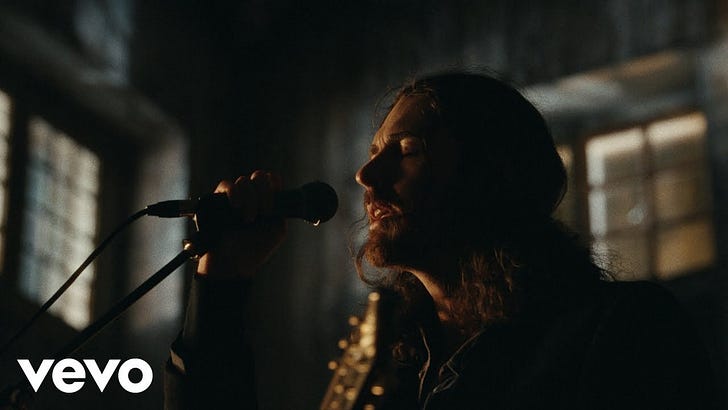
About this episode
In this episode, Father Wesley Walker and Dr. Junius Johnson are joined by Dante scholar Catherine Illingworth to navigate the harrowing depths of Dante’s Inferno. The conversation centers on the profound medieval understanding of sin not merely as a broken rule, but as a fundamental distortion of love and human nature. The hosts and their guest explore how the damned souls, such as Francesca and Paolo in Canto V, consistently refuse to take responsibility for their actions, instead blaming external forces like romantic love for their eternal demise. This introduces the foundational concept that hell is a realm where souls have misordered their affections, elevating earthly desires above their love for God and ultimately choosing their own ruin.
The discussion dives deeply into the mechanics of divine justice, specifically the concept of contrapasso, where the physical punishment seamlessly mirrors the internal reality of the sin. Through vivid examples like Capaneus, whose unyielding pride becomes his own internal and eternal torment , and Odysseus, whose final voyage represents the ultimate theological fraud of attempting to achieve salvation through human merit alone, the episode illustrates how sin deforms the human soul. The group also grapples with the modern reader’s severe discomfort with eternal damnation, contrasting contemporary universalist tendencies with Dante’s vision of a highly physical, meticulously structured afterlife where characters literally become the landscape of their own making.
Junius has a video on courtly love that may be helpful to understand some of the conversation.
Catherine Illingworth studied religion and literature at the Yale Divinity School before pursuing a PhD at UCLA in medieval literature with a specialized focus on Dante. She recently stepped away from the academic world after her young son, George, was diagnosed with a rare neurodegenerative genetic disease. In response to the immense financial barriers preventing children from accessing existing, life-saving gene therapies, she founded the Bradstreet Foundation to help families lacking a commercial pathway for treatment. You can learn more about her vital advocacy work at geneforgeorge.org, and follow her updates on TikTok and Instagram by searching for Catherine Illingworth.
Endnotes:
* Catherine: “The Waste Land” by T.S. Eliot
* Junius: No Exit by Jean-Paul Sartre
* Wesley: Unreal, Unearth by Hozier
This is a public episode. If you'd like to discuss this with other subscribers or get access to bonus episodes, visit www.theclassicalmind.com/subscribe
Get every episode summarized
Each time The Classical Mind publishes, we email you a written briefing from the transcript — the topics, who appeared, and any specific claims, with the ad reads skipped.
Email me new episodesFree for 3 shows. No card needed.
Hosts & guests


No transcript yet
This episode has not been transcribed. Request it and it moves to the front of the queue.
More episodes
More from The Classical Mind
The Two Towers by J.R.R. Tolkien
The Classical Mind
The Classical Mind Goes to the Movies: Christopher Nolan's Odyssey
The Classical Mind
Bonus Episode: The Forge of Friendship
The Classical Mind
The Lord of the Rings: The Fellowship of the Ring by J.R.R. Tolkien
The Classical Mind