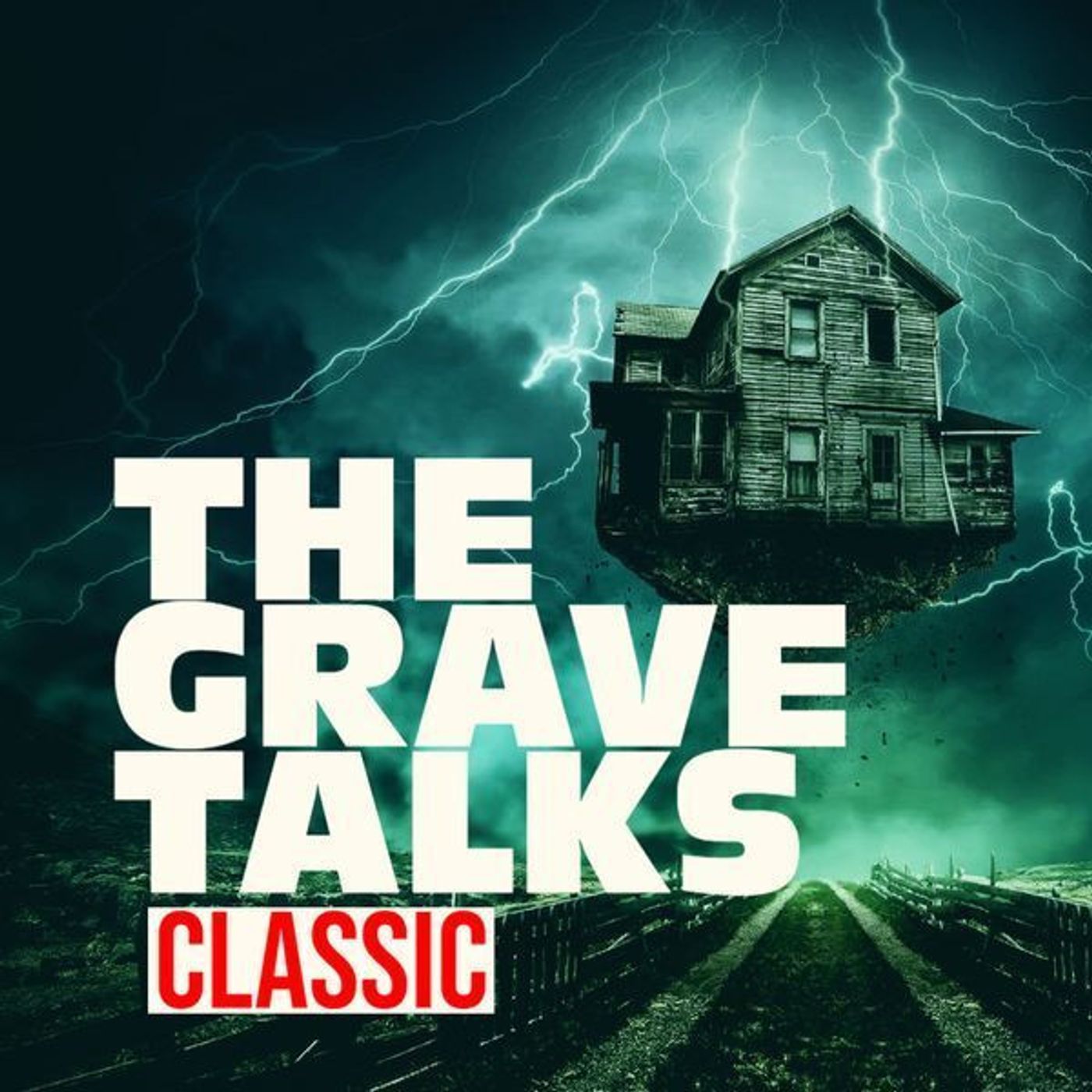
Inside St. Albans: A History That Still Haunts, Part One | Grave Talks CLASSIC
About this episode
This is a Grave Talks CLASSIC EPISODE!
St. Albans Sanatorium is one of those places where the walls seem to hold their breath. Long before it became known for its hauntings, it was a boys’ school infamous for harsh hazing and unchecked cruelty—experiences that left their mark on the young men who lived there. The building later shifted into a psychiatric facility, collecting even more layers of trauma, fear, and loss.
Today, investigators describe St. Albans as a place that doesn’t just feel haunted… it feels occupied. The hallways carry a weight, as if watching to see who walks them. Rooms grow unnervingly quiet. Shadows linger longer than they should. And while no one is ever guaranteed an encounter, those who visit often walk away with the sense that something walked with them.
In this episode of The Grave Talks, we explore the unsettling history and lingering presence of St. Albans Sanatorium—where past pain, residual energy, and intelligent hauntings may all converge in one place. Some locations whisper their stories. St. Albans never seems to stop speaking.
#StAlbansSanatorium #HauntedHistory #ParanormalInvestigation #TheGraveTalks #HauntedSanatorium #GhostStories #ResidualEnergy #HistoricHauntings #SupernaturalEncounters #ParanormalPodcast
Love real ghost stories? Don’t just listen—join us on YouTube and be part of the largest community of real paranormal encounters anywhere. Subscribe now and never miss a chilling new story:
👉 www.youtube.com/@realghoststoriespod
Want even more? Become a supporter and unlock exclusive extras, ad-free episodes, and advanced access:
🍏 Apple Premium: https://podcasts.apple.com/us/podcast/ad-free-advance-a-ghostly-playlist/id880791662?i=1000723754502
🤝 Patreon: https://www.patreon.com/realghoststories
Stay connected with us on social:
📸 Instagram: https://www.instagram.com/ghostpodcast/
🎶 TikTok: https://www.tiktok.com/@realghoststoriesonline
📘 Facebook Page: https://www.facebook.com/RealGhostStoriesOnline/
Get every episode summarized
Each time The Grave Talks | Haunted, Paranormal & Supernatural publishes, we email you a written briefing from the transcript — the topics, who appeared, and any specific claims, with the ad reads skipped.
Email me new episodesFree for 3 shows. No card needed.
Hosts & guests
Transcript ready
221 searchable segments. Every word is indexed and playable.
Full transcript
The Grave Talks | Haunted, Paranormal & Supernatural — Inside St. Albans: A History That Still Haunts, Part One | Grave Talks CLASSIC. Machine-transcribed; use the interactive transcript above to jump the player to any line.
Today on the Grave Talks, the haunted St. Olben's Sanatorium. There's never any guarantee that you're gonna find anything on a ghost hunt. Investigators often scoff at televised ghost shows and their enormous amounts of evidence that conveniently is just found just in time for the cameras. If you ever decide to enter the haunted St. Olben's Sanatorium, seeking to find the proof that you're looking for, it may just be your lucky day. Originally constructed as a boys school during a time when hazing, which is part of life and academics, St. Olben's Sanatorium saw its first years brimming with adolescent energy and poor choices. After falling on hard times and better education options in nearby cities, the school closed its doors. The building was then resurrected into a sanatorium in 1916.
At its time, the medicine and procedures practiced were thought to be very advanced for the day. In the perspective, prison of history though, they looked more like cruel and inhumane ways of treating the mentally ill. Today on the Grave Talks, we talk with paranormal investigator Jake Fife about the history of and his experiences at the haunted St. Olben's Sanatorium. Well, the building was built in 1892 by a man by the name of George Miles. And he wanted this building that could create a group of gentlemen that would be perfect for 20th century business. He wanted to create the next generation of leaders. And where he was at the time, he didn't feel like his vision was being met. And so he went to Rattford, which at the time was still called St. Olben's Depot. And he found this little land upon a ridge. And he thought, you know, it'd be perfect. It's away from the town.
They won't be distracted by, you know, getting into hygiene or getting into typical things that teenage guys typically do when they're away from home. And so he started construction on the building. And he collected some of the finest professors and teachers on the east coast that he knew. And this was when it came to that area, there weren't many places like this, aside from a college. Now, this was not a college. It was a prep school. But what's interesting is, in a lot of records, it's listed as being a high school technically designated. But during their athletic competitions, they would go up against high school and college school. So that's something that's kind of cool. And with him, he took somewhat of a militaristic mindset to you will do this. This is the discipline. It was at a military school. It was kind of strange how he had a set up very different, but it was very ahead of its time.
He had many different sports, really any sports and athlete could want to play. He had them there because he wanted to create the perfect balance of strong mind, strong physical body. And of course, he won in classic Southern gentleman. So I guess in his mind, he had this vision of what will the perfect gentleman of the 20th century, 20, 30 years from now look like. And that's what he tried to create with this building. But over time, it started to get a reputation as a very rough school. This was in some place where, you know, it was a nourishing environment. He kind of let the students rule themselves in a sense to where if there was a squabble, if there was a few and anything like that, he just let them deal with it amongst themselves. But those 18 years, if they learn how to solve their problems amongst themselves, they'll be better men in the long run. But of course, that didn't happen. There are a lot of stories that come out of there saying that there's multiple suicides, maybe even some accidental killing.
I have found no records to prove this, but that's a story that I've heard. But the fact that it did have a very rough reputation, that is true, that is documented. And something he would do to him is why they would give it to different cities, different towns, all of these, mainly the South. And he would recruit the best athletes, the best minds. And he just, he goes completely head first into this school. He gave everything into it. And eventually, he figured out, you know, in order to operate what I want to operate, we need more funds. And they weren't getting the funds that he likes. Now, school was very profitable. A lot of the highest-tooth families of the real estate center kids, they were considered a big honor and a huge deal, to get here from rent to this school. And at that time, it was known as the main ovens, Lutheran Boy School.
And so, him and his wife, they would go to different towns and recruit these people to send them there. And after a while, he figured out that athletics was starting to catch on huge in Virginia at that time, mainly baseball and football. In fact, in the U.S. 1895 or 1896, they had this picture for their baseball team that was known as the best baseball pitcher in on the East Coast of America, which was a huge deal. There's a few of red newspaper articles written about him. But he started pushing athletics a little bit more. What they did was that created a bit more of a hostile environment because there were people that, you know, they weren't as intelligent as some of the higher class kids that were being sent there. But they were in a way being given one of the schools because, you know, they were making the money. And as long as they were making the money, they could kind of do what they wanted. And so, that's when he had stories of hazing to come into play.
Some people supposedly committed suicide. There was actually this year's in a yearbook. You can go online and read this. It's from 1894, 1895. But there's a quote from one of the staff members that says this certain kid, I can't remember his name. He didn't return to school for the second semester, much to the dismay of his classmates because he featured predominantly as the football of their local games. So, it was a very rough environment. But at the time, I guess he saw the writing on the wall that, you know, there's other schools that have somewhat taken his model and have improved upon it. And so, some of the higher class people that were paying, you know, the larger tuition, they started pulling their kid down. And over 1903, he's starting to look at other counts of youth. He doesn't really want to be in record anymore. And so, around 1910, 1911, he decides to go ahead and close the school.
And right after that, he kind of disappears from records. I have not found anything about, you know, what he ended up doing. I did see one mention that he might have gone to Nashville. But between 1892 and 1911, there really wasn't anything in the early 1890s around where the school is. There was Santorimus. It was a road. And that was kind of about it. There might have been a house or two every so often. But once the school was built, it really started developing that area. And that was very, very key, or not just the town's economy, but also the county's economy. Because if you go by there now, that's a very busy road with a lot of businesses. And that was started pretty much because the school was put there. And then, of course, you had the Santorim, which came in 1913. Actually, that was started by George Presum. Got the names and it's up. But he was a director of another local Santorim.
And he had a different vision for treating people that were, I guess, mentally handicapped. He didn't really like the idea of having people, you know, strapped with these crazy machines that would shoot electricity into them, anything like that. Anything that he saw is in to me. He thought that being outside doing something, working your mind slowly back to where, you know, it might be at a level that may be being normal by their standards. That's what he wanted to create. And he designed the huge facilities that was going to be, I believe, a Southwestern Mental Inclusion. And what he wanted was this big facility that had gardens, tennis courts, and pools around. And his idea was this will not be worked by just staff members, but mainly by the patients themselves. We will give them, you know, little jobs. They will earn an allowance.
While they're getting treatments on the side, we have them, you know, doing kind of typical work that a work of the time would do. And his idea was, you know, slowly over time, their mind might go back to a normal level or how they deemed was normal. But the problem was when he pitched this idea to the board of supervisors, it cost a little too much money than they were willing to spend. And so they basically shot his idea down. And there was even one mention that said, you know, if their mind is broken already, why should we even try to fix it if it's going to cost us this much money? And so he got mad, he got kicked off, and he ended up resigning, and he still wanted to set up his own dream facility. But he couldn't find a place. So him and his wife, they were traveling looking for really anywhere, any vacant property to start building his dream. And then he stumbled into Radford. And when he stumbled into Radford, it was originally one to be, you know, just a quick one-off trip before they got back on the road.
But he sold the abandoned building up on the ridge. And for some reason, it just caught his eye. And he couldn't take his eyes off of it. So he took all their remaining funds that they had in their names, and he bought the building and started working on it, trying to restore it to where, you know, he could house patients. And so he created this little board of directors, and they raised actually a decent amount of money for, you know, kind of just being thrown together on the fly, not really anyone knowing what exactly they were going to do. And so when he first opened it in 1915, it only had less than 30 patients when it first opened. And the numbers really didn't climb the first few years. And so what he ended up doing was it was half sanatorium and half hospital. And one of the main things that he also knows was in the local area, the clinic wasn't the world's greatest.
And the cost of hospital was about 20-some-minutes per way in Christian's Burgundy Blacksburg. So he figured, you know, for the time being, this will bring in some money, and it will help people, you know, spread the word of mouth around the state. And it worked a little bit, not to the point where he wanted its work. But then something happened. There was a local arsenal that was built. And once the arsenal was built, he started getting more patients. Now, the reason for this was when you're working in an arsenal, these people, they work really long shifts. And I cannot remember the name of the chemical, but there is a chemical that when you are exposed to it for long periods of time, it messes with your mind. And it kind of makes you go a little crazy. And so, you know, people start acting weird and they would send them to Dr. Miles up at the sanatorium.
And after that happened, their numbers tripled out of nowhere. The problem with that was they didn't have enough nurses, enough staff members to take care of all these. And of course, George Miles and his wife, they were almost bankrupt. He's a point to where in order to get sued, sometimes for their family, they had to take sued from the garden and from the cows and chickens that the patients at the sanatorium next door were raising. And they would sell them at local markets. That was how tight it was. But him and his wife, they never wavered in their belief of what they were doing. And slowly, but surely it started becoming a straight up sanatorium. Now, he ended up dying in the 1920s. And after he died, his wife kept a watch on it, but it was kind of more of just, you know, Mrs. Miles. That was kind of how she didn't have full control of really anything. And this new board came in and they started coming up with a new idea.
Now, at that time, the eugenics movement was starting to pick up steam in Virginia. And some early forms of eugenics was used at St. Albin. But when the Stanton, the DGR net structure was built, that kind of took over most of their eugenics stuff. And St. Albin's sanatorium pretty much just became a sanatorium that would experiment with some of the latest ideas and theories about, you know, how to care for the mentally weak. And that's when you had the more experimentation, it more experimental messed up stuff like hydrotherapy, some advanced forms of a lecture shock. But they didn't hire more doctors and more nurses. So you would have a few thousand patients, but you may only have between 50 to 100 people on staff, which it sounds like a lot. But the way they did it to try and save money, it didn't work out. And so you had a lot of people that were neglected. They didn't have their needs met.
They worked in the two when they needed to be tended to because there was some other experiment that needed more staff on standby. And so you had a lot of people that died. These really tragic and sad deaths simply because, you know, the sanatorium was somewhat viewed by the people as it's a business that kind of sort of helps people. So it took them and told them 1960s actually be accredited by the state Virginia. What they were accredited by the state Virginia, they opened up two more facilities, one in Crescendoburg, which I believe still runs today. And there was one in Beckley, what's Virginia. Now what would happen is they would have people go to these facilities and they would do a first analysis. Okay, what level are these people in terms of, you know, if a lack of a better word, mental, mentally ill. And if they were deemed too severe, they would send them to the record facility. And if they weren't, they'd be treated there and then that was it.
But they started coming out with this new structure of handling patients. The D's are not facility and stand that was kind of seen as where the worst of the worst cases, the most violent, the kind of most far gone because there was, there was a lot of shady stuff going on at the standing facility. And you know, I could easily talk for an hour about that, but what they would do is they would siphon off different patients to different facilities. Like this one patient started here at this facility. They showed these signs when entered, but after a while, there's a condition has gotten better or worse. So we are transferring them to ex facility. And so many facilities for the Stanton, uh, sanatorium was St Albin. And so a lot of people who were not too severe and severe as in their mind, just there's not much to be done or in terms of violence. They would send about the mid-tier people down to St Albin because it was a worse than the town.
It was in an area that was starting to develop, but if something went wrong and people got out, they wouldn't really be able to hurt too many people. And that's when you started having a lot of death suicides at St. Torin. And that's actually why the bird cage was built, close to where the old classrooms were at St. Albin. And what they would do is they would send the toughest of the tough patients there, the what we may call serial killers. Now they would be sent to the bird cage and basically locked up there for recreation time. And I talked to a few people who have heard stories from people who experienced this that would be driving by or they'd be walking by and they could see 10 to 15 patients pounding on the cages until their hands were bloodied and bruised and screaming and screeching. Sometimes some people swear you could hear the screaming across the river in town. And that was an area that it saw a few deaths. And it just between the 60s until the 90s when it was finally sold, it didn't get too much better until of course the 70s, mid 70s when you'd been in this movement was pretty much they reversed everything.
And they said, we're sorry, this is insanely messed up. We don't know why we did this. But a lot of the eugenic stuff didn't really go away. It was on paper, went away. But a lot of the experiments were kind of put underground actually almost literally they would build basement levels underground levels and they would do the the experiments that they were doing before. They just didn't have the quote unquote sanctions of the state anymore. But that didn't mean that they could do something off the books because you know it's off the books. No one's going to ask. Most of the time the patients wouldn't survive. So it wasn't like the patients could say anything. And at St. Alman's Sanatorium some of these experiments did take place. Now once again a lot of the records of St. Alman's and they're kind of lost, slashed hidden. So when I'm talking about all this stuff, I go by what I've heard and by the records I have seen. So in terms of what exactly they used to do to patients, the experiments and death tolls things like that. We don't really know for 100% certainty.
But in the 1990s, the Crillion Health System bought St. Alman's Sanatorium and they're originally going to turn it into kind of a learning facility for rat for college. But they ended up building another structure next to St. Alman's and they made that the rat for college, pretty much learning center. And the main St. Alman's building, it was abandoned and left to rot. And that was kind of it. I told about the late 1990s when it said that a local faith panic group took over the building and started doing a bunch of really messed up summoning rituals. A lot of their, I guess, profitee, a lot of their symbols, what they were called doorways to hell literally is what they were trying to do. They were trying to set up certain places in St. Alman's. The alcoholics ward the, let's see, the dragon's room was for the recreation room or the patient there and the boy, the bowling alley. Those were the main areas where they set up these doorways where they were trying to summon the devil himself and Satan's Legion.
And I want to talk about that in greater detail. I want to get to the 90s and I want to talk about what happened with the group and what sort of bad energy may have been entered into the building before we go too far into the 90s. Let's take a step back into the area where you're talking about the doctors and them doing those experiments after the eugenics were essentially decommissioned and in off the books, but still somewhat practiced in secret. Why were the doctors still wanting to practice this type of medicine if it had already been kind of debunked for lack of a better term? Did they still believe in it? Did they still think that there was some purpose to it and what was their reasoning for continuing on that path? I think they still believed in it. I mean, you had a lot of these doctors that had been there 20 plus years and you had 20 plus years of studying something, devoting your life to learning this certain way, this certain craft.
And over time, the things that hundreds and maybe even thousands of patients that they worked on, sometimes, you know, spaces that they found, it would work. It would work. It would help the people get better. So, you know, for every 100 people that would die during these experiments, they would only remember and reference the ones that was sick, that was healed. And I believe that's mainly why they kept doing the experiments. They still had hope that it worked. And of course, you had some more people who were pretty sick and twisted people. And they just wanted to see what would happen because in their mind, what I think was going through their mind was, how will we know what would happen if you do this without trying this? Sure, it may sound statistic and cruel and it is statistic and cruel, but now we know what would happen if you tried this so that, you know, years from now, they know not to do this. I think it was those two ideas that kind of kept eugenics movement alive for some of these doctors.
You had also mentioned that they had placed the sanatorium in the certain area where the thought process was, if they escape, they're not going to get very far. It's, you know, it's not necessarily buy a lot of things at that point in time. How often did they have escapees? How often did they have to deal with that? To my knowledge, I have not read of any escapees actually making it out. The sanatorium, it changed in the way it did things from when it was open in 1915, technically was when it was open. Up until about the 1930s, which is basically when Dr. King had under his control, so he still had his vision going. The patients, they weren't really restricted in the sense that, you know, they're only within the building. They were watched very closely, but they were allowed to go outside, work the gardens, they had a working farm, they had the baseball field with still up, they had a few athletics for them to do.
And it was, and during that time, there wasn't, I guess, that sense of you are stuck here. You are not allowed to leave, which to the human mind would kind of make someone want to break out, want to leave. And Dr. King, he tried to make the patients as comfortable as he could. Of course, he couldn't really do much because, you know, they had limited funds, but he did everything he could to make the patients feel calm and comfortable. There, and so I don't think for the patient said there was as much of a sense of wanting to escape as there was, you know, starting in the 1940s when the new people took over and they started cutting a lot of the programs that he had set up like the gardens, the farm, the athletics, and pretty much kept the patients trapped inside that building. And I think that's where most of the animosity and the desire to escape came from. But my knowledge, there wasn't really any escape attempts.
Maybe people actually got outside before they were rushed, but that's that all I know. Okay, so let's go now over to the 90s where you said there was a satanic group that got in there and started performing rituals, almost trying to create a portal to hell. What was going on at that time? What was the public knowledge of this and what were some of the things that were found out about that group? Well, the public knowledge was the building is vacant. There's nothing going on there. It's just a creepy building that sitting there. That was it. That was all the public knew because there are many theories about why the group was able to be so hidden in some of the plain sight. It is we heard how a group, you know, supposedly they had people there all the time. I don't know how frequently they met there, but from some of the people I talked to, some of the things I've heard.
Now, mind you, these are stories I've heard, nothing concrete facts, but there was always that there presence there. And so they were kind of able to operate mainly under the cover of night. And also the building was somewhat of the local boogeyman story. You had this creepy building up on the hill that used to be an old sanatorium where crazy evil stuff used to happen and many people died violently. And supposedly if you went there, you never came back. It was that kind of story that pretty much every small town has that has its own boogey monster. And I guess for Radford, it was a building was its boogeyman. It's a lot of people, they steer clear of it. Now, the facility right next to St. Albans, which was a Radford College learning facility, it was still in use. There were people going to classes there, helping patients. For me, the fact that you had students there, doctors, patients, and even security there, literally within 50 yards of the St. Albans main building.
And they never really noticed anything. In my personal opinion, I always found that a little suspicious, a little strange that no one saw anything or heard anything. You know, that area after the Gina Renee Hall murder of an accident close by, that building it always had that cursed field to it. With the building like that, and almost gaining the reputation of kind of the local haunted place, and obviously with a very dark, dark history behind it. What then happens in history after that, once kind of some of the satanic stuff dies down, what is the incarnation of the building, if anything, moving out of the 90s into the early 2000s? Well, the building completely sat in the beginning. Starting in 1994, is when it was formally abandoned. And it actually stayed abandoned until I believe 2009, 2008, 2009. And that's when the people who currently own it now, they got the building as a haunted attraction.
And they opened it up as ghost tours and a place to host public investigation. So between roughly 1994 through 2008, the building was pretty much vacant. It was left a rock on its own. Nothing was going on there. What was the state of the building in about 2009, once it was purchased for investigations, haunted attraction, if you will. Obviously assuming not great rotting away, but can you paint that picture for us at what it was like? Well, the building, and a lot of billions of notices was sanatoriums that's turned to this century, they were built to last. You could tell when they built a lot of the sanatoriums, they didn't think that they would just stand for 50 to 100 years. They were looking long, long term, longer than that. So they tried to build these buildings to stand the test of time, as to where if they were to be left for a while, they won't completely fall in on those cells.
And so I don't know exactly what condition it is specifically in 2008, but I've talked to the owners a few times and they said, you know, it had a typical abandoned building problem, leaky pie, some certain floors were caving in problems like that. But aside from that, the building was in pretty good condition, given off to where not any drastic renovations had to be carried out in order to let people in. Once they took it over and began their operations, even before we get to that point, I want to ask, other than the rumors and the stories that have been going around of the people that were in their performing satanic rituals and such. What was the first that you're aware of story or encounter of something paranormal going on within the building? How far back does that trace? Does it trace to when it was actually in operation with some of the medical staff that was working there from the early 90s or earlier, or does that more so come into play after the building becomes abandoned?
I'll go you one further, the story of the building being haunted actually goes back to the 1890s. Okay. There were a few stories that were told between classics that, you know, at night they would see people walking and then disappear. They would hear voices. Now, these students going back to a boy school, they stayed on campus. So basically they were there at 24-7, never leaving, and so they were really well acquainted with the building. There were many stories of shadow people, phantom voices, mainly towards the turn of the century, there were a lot of stories of people seeing, you know, classmates that aren't there anymore and different things like that. And it slowly became, you know, almost like a school legend of, oh, don't go over here at night or the shadow boy will get you or you'll hear the moaning person going down the hall. It started as that, but there were claims of paranormal activity right from the get go. And as far as why this is, why the place had paranormal activity pretty much when it was just built.
I don't know, that's one of the mysteries I've always wanted to solve. Now, when it was a sanatorium, there aren't too many ghost stories aside from some of the doctors and or patients they've come out here in the last few years saying that there would be times they would see shadow people objects would move objects would be thrown across rooms. But different things like that there's actually one story I've never been able to authenticate, but I was on deep deep in the web. I'm doing a search looking for records of the place and I ran across this story of I believe what do they call him the shadow boy and what this was and I believe was 1960 1964 there was this little boy. And his parents had died and so he was sent to live with his uncle in Redford. Now this boy, he was very young, maybe six or seven years old and he missed his parents.
He I don't know exactly how they died if he was with them, but obviously their death had a huge effect on him. And every once in a while he would get into these violence bits of rage. And the thing that made these bits of rage different was when he would get angry, stuff would happen around the house objects would levitate stuff would be thrown up against the wall. But it took a darker turn one day when he started you know in another bit and his aunt went to go comfort the boy and the shadow being about seven feet tall showed up and allegedly controlled her away from him. And you know obviously at that point they didn't know what more they could do for the boy. So they sent him to this the facility on the hill which is St. Almond sanatorium were from what I've read. He was kept in the male isolation chamber and there's one story that according to the site was told by some nurses who you know helped treated the boy and they said one night they were down there and he started
to be given like this demonic scream coming from his room. And when they went in there. There was a shadow being standing over the boy with dark red eyes and they saw the boy start to levitate and then he would drop start to levitate then he would drop. And different things were having more fountains sounds of you know they sound like pops but you know nothing was popping and a few nurses went in and this being looked at them and somehow got them all out of the room about three or four nurses and then shut the door. And somehow locked it even though the only way you could lock it was on the outside. And so they tried and tried to open this door and then finally the boy stopped yelling this demonic yell and they went in and he started just switching into shaking uncontrollably and they started hearing voices within the room almost like they were in a cathedral with people talking all at once in the street.
But there was no one there. A part of the story is also there was this one staff member that would clean the areas at night and for some of the boy didn't like him and the staff member ended up dying. Now what's interesting there is a record I have found this is something you can find on the internet from the 1960s there was a staff member that did die. He actually fell out of window and as for whether or not that you know the death that they were referring to in the story I don't know but it is confirmed there was a staff member death around that time. So after about two weeks of the boy being in the facility and you know they couldn't control him pretty much he was the most severe case out of everyone he was in complete isolation 24 seven couldn't leave their own couldn't see anyone they end up transferring him to the stanton facility and then he stayed a little while there and then he ended up being transferred to a facility in West Virginia where it said the boy ended up dying about a year after everything started.
Now what's interesting is you know this is a pretty insane story and there are a few volunteers I've talked to that have heard mentionings of this story but it's not something that has been proven to have actually happened but it is also weird is there is a creature that's in the male isolation ward that does somewhat fit the description of just I guess incident and there was actually an investigation that's not going to be a good thing. My dad and I we did when we were at St. Albans a few years ago and when I asked about the little boy we received a spare box response that said here when we asked you know if it was true so as for whether or not it actually happened we don't know but it is a story of St. Albans. Mary's therapy treatments were employed here and thought to correct the behaviors of the mentally ill many of these treatments were on the verge of being proven ineffective they included isolation rooms cages procedures involving water and more once the version of medicine that they practiced was deemed ineffective some of the doctors took matters into their own hands practicing without oversight or records on their own and the lower floor and sub
basement of the facility allegedly human experiments were fair game and also likely very much a contributing factor to what would later be called the haunted St. Albans sanatorium because of their suicide was very comment at this treatment facility today the deceased patient seemed to still be confused and still run the halls of St. Albans sanatorium searching for a way to get better or to make the lives of those who visit hell if you want to hear the full story of these treatment options the torture the torment that many living people went through and why they may be back and what they're doing to the living until next time for the grave talks I'm Tony brusky thanks for listening
you
More episodes
More from The Grave Talks | Haunted, Paranormal & Supernatural
When the Shadows Linger, Part Two | Guest Paul R. Ost
The Grave Talks | Haunted, Paranormal & Supernatural
Haunted Identities: How Women’s Roles Become Ghost Stories, Part Two | Grave Tal...
The Grave Talks | Haunted, Paranormal & Supernatural

Who Was Having a Dinner Party in the Burned House? | Real Ghost Stories
The Grave Talks | Haunted, Paranormal & Supernatural
Haunted Identities: How Women’s Roles Become Ghost Stories, Part One | Grave Tal...
The Grave Talks | Haunted, Paranormal & Supernatural