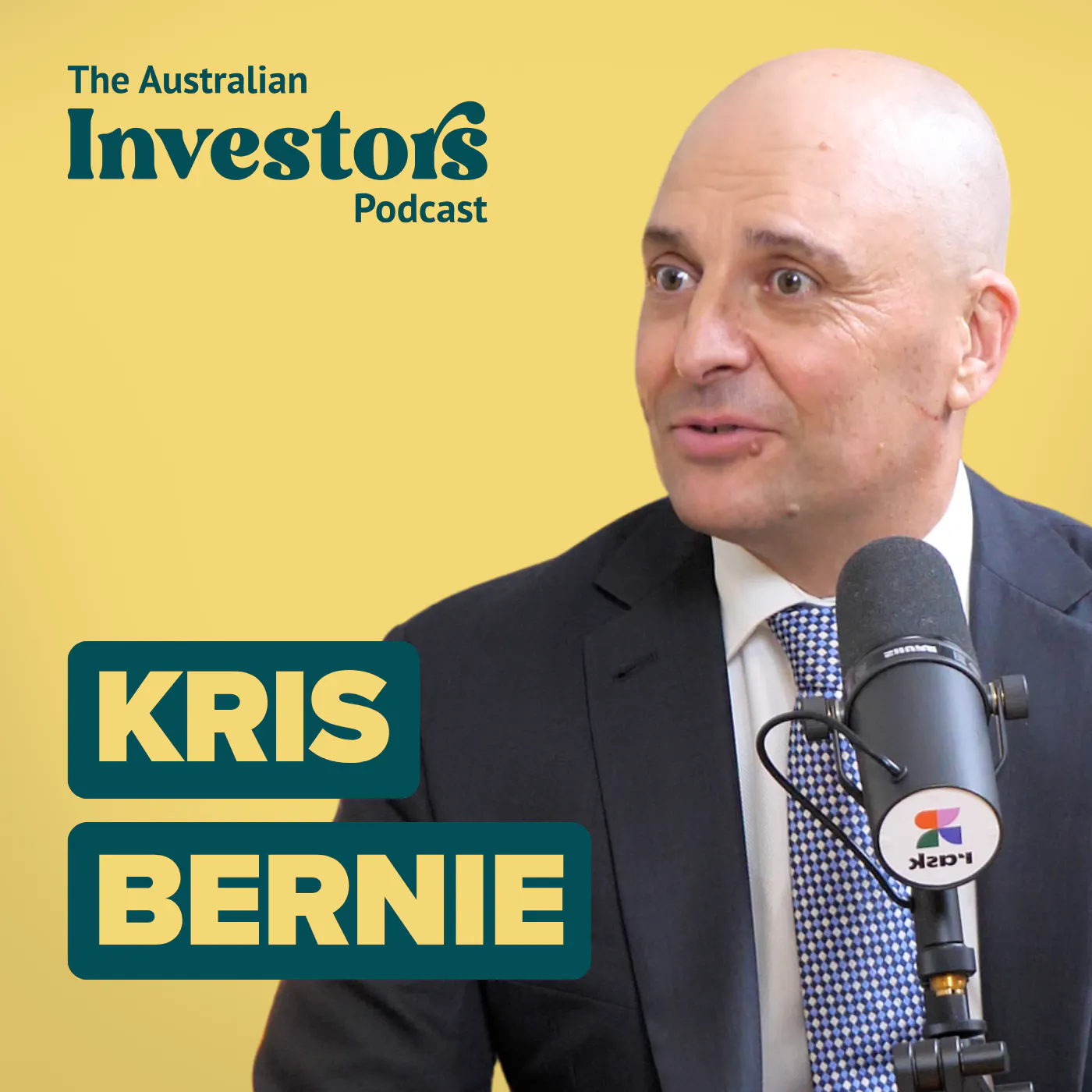
About this episode
Get every episode summarized
Each time Australian Investors Podcast publishes, we email you a written briefing from the transcript — the topics, who appeared, and any specific claims, with the ad reads skipped.
Email me new episodesFree for 3 shows. No card needed.
Hosts & guests
Transcript ready
350 searchable segments. Every word is indexed and playable.
Full transcript
Australian Investors Podcast — Inside Trump's pick to replace Jerome Powell. Machine-transcribed; use the interactive transcript above to jump the player to any line.
We know gold and silver continue to make headlines, but did you know GlobalX ETFs is Australia's largest commodity ETF provider? In fact, their flagship physical gold ETF, that's the ticker symbol G-O-L-D, was the first of its kind in the world. Whether you're looking for physical commodities or commodity miners, GlobalX has 12 options to choose from, including their newest silver miners ETF. Visit GlobalX ETFs.com.au to learn more. AFSL 466-778. Investing involves risk and returns are not guaranteed. Refer to the relevant PDS and TMD. Once a year, Term Plus runs the Money Mindset Index, tracking how everyday Australians are thinking about their money. Are we putting it to work? Or are we quietly avoiding the question? This year, they want your take. The survey takes about five minutes, and when you're done, you'll get a personalized Money Mindset score that you can compare to the rest of Australia once the results are published. Plus, you'll also be entered to win a $5,000 getaway. Head to termplus.com.au slash win to take part.
That's t-e-r-m-p-l-u-s.com.au slash win. The Term Plus Money Mindset prize is subject to terms and conditions, consider the PDS and TMD before making an investment in Term Plus. You can find those at termplus.com.au slash important information, penguard and capital limited AFSL 226-566. Hey there, here's a quick note. This podcast contains general financial advice only. That means it's not specific to you, you need goals, objectives, so don't act on the information until you've spoken with your financial advisor. You'll find our full disclosure, disclaimer, and link to our financial services guide in the show notes. In May, the chair of the US Federal Reserve will change. For most of his term, Donald Trump has thrown criticism at the outgoing chair, Jerome Powell. Trump has called Powell Mr. Too Late, a stubborn moron, a dishonest guy, and said it was like talking to a chair. The Department of Justice even launched a criminal investigation into Powell over the cost overruns in the renovation of
the Federal Reserve building. So, with this backdrop, how will the replacement Kevin Warsh fare and will he tow the Trump line? Joining me to break this down is Chris Bernie, a portfolio manager at Fixed Income Specialist cap stream. Not only is Chris a portfolio manager, but he is also responsible for macroeconomic research, asset allocation and interest rate and foreign exchange trading. Therefore, he keeps a close eye on the Federal Reserve. Chris, the US Federal Reserve, a little bit going to be happening over there in May. We've got Kevin Warsh coming in to replace Jerome Powell, whose Jerome Powell has been under fire from Donald Trump, of course. A lot of accusations have been thrown around at him, a lot of mud slung from Donald towards him. Why should Australian investors and Australian retirees and accumulators actually care about this? Sure. Firstly, it's not for the mud slinging element. The chair of the Federal Reserve actually has a huge influence on Australian investments,
whether it's equity markets. There's a global theme to risk sentiment, and when the US sneezes, Australia catches a cold, as you might have heard, and equity markets are a great example of that. Risk sentiment is a very global phenomenon, but it also has a direct impact on interest rates here in Australia. The US really sets that global risk-free interest rate off, which all other interest rates are based to some degree or another. It'll also have a pretty significant impact on interest rates here locally. That relativity in interest rates is really clear when it comes down to the currency. The Australian dollar will go up if Australian rates are higher than in the US, and vice versa will go down if Australian interest rates are lower than the US. What the Federal Reserve does in terms of official interest rates can impact everything from retirees, interest rates that they're earning on their term deposits, to it might impact if your firm is an import or an exporter, if they're going to be doing better or worse, and of course it can just affect the overall level of the risk markets as well. Equities will decline significantly if the Federal Reserve keeps rates
high too long and puts a break on the economy. Let's talk about Kevin Warsh. What do we actually know about Kevin coming into this? Well what I would say is that he's not the political or pointy that some might have expected from Trump. He's not a Fox News host that's now been put into a position of power. He is someone that I would classify as an insider. He's a former Fed governor. He was a Fed governor from 2006 to 2011, and he was really the market facing person for the Fed during the global financial crisis. So he's very well credentialed, very well respected in the space. He's been successful both inside and outside the Federal Reserve. So what I would say it's not really a question of competence or even experience. Both are very highly respected in the space. What I would say is that there are some philosophical differences between the two. Powell is a bit more flexible. He's a bit more about discretion when it comes to setting monetary policies. He's a bit more about balancing inflation and trying to get full employment in the US
economy. A dual mandate as they call it. Really, Kevin Worsh is a much more focused on inflation. He's not rules based, but he's a lot more about having a little less discretion, making sure that inflation is low and that the Fed remains credible as an inflation fighter. Can you explain when you say he's not rules based? What do you mean by that? Yeah, so there's some rules that you could have as a central banker that you might be able to apply as a matter of hand and there might not be any discretion at all. So there's one good example of that's the Taylor rule, which is a very common, very well known rule in economics, which basically says that the level of interest rates should be dialed up if inflation is above target and dialed up if unemployment is below the rate at which wages tend to be around the same rate from year to year and vice versa in return. There's a little rule that is very mathematical and prescribed. Now, discretion says that you don't follow those rules, that you do something that's a bit more touchy-feely. If you think inflation's
going up, you start to hike rates or if you're worried about the labour market and the risks around the outlook, even if they haven't materialised yet, you might actually look to cut rates. So there's a bit more discretion in the process and you can oscillate between the two, but really economics is an art. It's not a physical science. So no one really applies the logic that you should just be following hard and fast rules. There's always that element of touchy-feeliness to it in terms of how you can actually operate monetary policy for the best outcomes in the economy. And what kind of political pressure will wash beyonder? I think you'll be under significant pressure. We've already seen, as you said, there was some political pressure applied to put it politely on power to try and get him to reduce interest rates. And I think you'll see the same. I don't think the US president is necessarily going to fully respect the independence of the central bank at the way that they would like it. He will be trying to get interest rates as
low as possible for his political purposes. Now, the real question in my mind is actually what actual outcomes that political pressure will deliver. Because Kevin Wash, when he does come into being the Fed Chair in May of this year, he's just still going to be one vote or 12. Now, there is another vote that's already in Trump's pocket, if you want to put it that way. Stephen Moran was appointed a few months ago. And he was someone that was less experienced in monetary policy than than Governor Wash is going to be, for example. But yeah, there's going to be two people there that are more than likely going to be going for rate cuts when the US Federal Reserve Chair changes in May. So it's going to be interesting. There will be a lot of pressure. But I don't think it'll necessarily be the case that you're going to get a huge sway of rate cuts straight away. It's going to take some time for the new Fed Chair to influence the other members in the in the board. And what kind of, I was going to say then in that context, what kind of environment
is he inheriting from power? A very difficult one, I imagine, because he's going to be balancing a few different things. So, for example, he's been quite outspoken on the fact that he doesn't want the Fed's balance sheet to be as large as it is. Now, in plain English, what does that mean? It's how many of the US government's bonds or debt, the actual federal reserve, the central bank owns. He's been a bit more of a proponent of having that to be a lower number, whereas power's been a bit more activist, as I said, a bit more pragmatic earlier. And he's the balance sheet as shrunk, but not all the way to zero. I think wash will be a bit cleaner to try and reduce that. Now, what does that matter? Why does that matter? Is that the interest rates at the back end of the US yield curve, which are really relevant for the homeowners in the US. So unlike here in Australia, where it's a shorter term interest rate that matters, it's like a 10-year interest rate that matters for the US. That's actually going to push up those interest rates. So I dare say that what Kevin Walsh's plan is at the moment, or at least this is what the market is thinking, is that he'll lower
official interest rates in terms of the federal reserve rate, and that will actually help to offset this impact from reducing the amount of US government debt that the federal reserve owns. And you reckon he's going to be taking a bit of red pen to the renovations? I'm not a property developer, so perhaps I might steer clear of that one, but I'm sure he'll be reviewing it, but I imagine that those processes are quite expensive. I've never been. I presume it's a bit of a fixer opera. It sounds like it, and then some. Let's talk about the US and inflation or stagflation. Has Trump put the US between a bit of a rock and a hard place? I think he has economically. I won't talk about politically, and I won't talk about militarily, but in terms of the economics and markets, it's really interesting that the goals that he set out in terms of having low interest rates and low inflation and increased affordability
just haven't really been met by his policy. So tax cuts are great for the economy, but they add to inflation. The recent impact of the military action in Iran has pushed up oil prices, and if that's sustained, if the straits of a mood stay closed for an extended period, then that's going to push up gasoline prices in the US, which is not only going to hurt him politically in terms of the votes, but it's going to lead to higher interest rates and otherwise would be the case. So I think he has put himself in a bit of a corner economically with some of the other things that he's looking to pursue out of his presidency. And what impact does that have on the US consumer, the everyday person in the US? It's very much, is it already at very much a two-speed economy between the haves and the have-nots? Well, personal consumption in the US has been the main stage of the global economy for many years now. I'll be the first to say that it is much stronger than what you would have expected, given that interest rates went up by 5% in the United States.
Historically, that's almost always tended to lead to a recession. It hasn't yet. The US consumer has been very strongly buoyed by fiscal policy in the tax cuts that I mentioned, but there's a sticker shock that comes with petrol prices. Whenever you're out and about, you see those gasoline prices, as they call them in the US. You see the higher gasoline prices, it has a psychological impact, as well as the real impact on disposable incomes. It just eats up money that you would like to spend elsewhere. That is going to significantly negatively impact both the economy and add to inflation, leading to that nasty stagflation word that you introduced earlier. And also, though, it's got such a flow on effect to other areas of the economy as well. So, logistics, your goods just moving around the country, and that comes at the question of, does that cost then just also get passed on to the end consumer? Absolutely. And that is what the central bank is going to be worried about. So, when you have something like a big spike in all prices, even if the higher level is sustained, central banks tend to look through those one-off
impacts. It's what they call second-round impacts that tend to worry about. So, if it does flow on to other industries, packaging, or all these services economies, Uber Eats, you know, might have an impact on Uber Eats, if you're getting your food delivered by car. All of that is going to be impacted and you should see price increases that you wouldn't have otherwise seen. Also, there's this other really significant second-round impact that economists tend to worry about, which is that if people start to ask for higher wages to offset all those costs, then you can end up in these wage-price spirals that do demand an official interest rate response in terms of higher rates. So, there's definitely some risks out there that are worth monitoring. Well, that's also an interesting area as well at the moment when we're actually starting to see redundancies take place due to the progress of the two-letter word that seems to be coming up every single episode of AI.
It's funny, isn't it? I was thinking just today in preparation for this podcast, how often do I see corporation X cutting Y-thousand jobs because of AI? And it's at least weekly and at least a few times a week. It is becoming more prevalent. And we're at the start. And we're only at the start. And it does come to my mind that these corporations, though, can't I don't think have probably already made that progress? It might also be cutting some excess, trimming some excess fat. I think there'd be a little bit of that as well. But what I would say is that there's been a few anecdotes that have been floating around the financial markets, which have actually got quite a lot of attention, by the way. They're not just off-hand anecdotes, but they're written by quite prominent research analysts where they're talking about the job loss elements of AI. I'd caution a little bit about that. History is littered with technological advancements. Everything from the industrial revolution to the internet and what happened with the dot com bubble. For example, there is a range of experiences that can be drawn on that. Yes, there are some industries and some particular
jobs that are going to be impacted. But what happens is that the income and the benefits that flow from that very often lead to jobs somewhere else. So I'm not as negative on the overall impact of AI on jobs, but yes, the impact of AI on, for example, people that code. That's where I think you're actually seeing some of the more significant first round impacts. The AI is able now to do that as proficiently as some people are at a lot less time and a lot less cost. Here's something worth knowing if you've been meaning to make the switch to a better burger. To celebrate their fifth birthday, Perler are offering three free trades a month for five months. If you transfer your portfolio across with a minimum of $1,000 for anyone investing regularly, that's meaningful savings on brokerage that can stay invested instead. Perler is chest sponsored, built specifically for long term investors and now has over three billion dollars invested on the platform. If you've been with a platform that doesn't quite fit your strategy anymore, it might be time to take a look. You'll find all of the details at Perler.com slash LP slash
Rask. That's Perler.com slash LP slash Rask. Hey guys, it's Owen Rask. It's April 2026. And for me, being in a financial planning business, that means that there's only a few months until the end of the financial year. At which point, it will be too late to make positive changes for your tax affairs. What I would really like you to do and think about as you listen to this podcast is do I need financial advice or rather do I want financial advice? Because right now, if you're looking to make positive change, this financial year that leads into next financial year, now is the time to reach out to a financial advisor. If you want to see how we compare at Rask advice, we've just ticked over our first birthday, and it's been an absolute pleasure working with so many of you already, you can head to rask.au slash advice. One more time, that's rask.au slash advice. We'll tell you exactly how much it will cost to work with us in the very first call. It's totally free. And if we're not the right fit, we'll push you in the right direction and give you
as much helpful information on the way. I for one would absolutely love the chat with you. It's the highlight of my day. So head to rask.au slash advice to book in today. Continuing to focus on the US. So housing affordability is quite a factor over there. It's quite quite funny. We're sitting back here in Australia and thinking, well, they've just finally caught on. We're very used to this. But housing affordability is also becoming an issue in the US. And the consumer is becoming appearing to be more and more tapped out. So how does this impact than credit quality? It does have a big impact. I mean, there is a cultural difference between owning your own home here in Australia versus in the US. There is definitely some cultural differences there. And it is starting to bite over there. And interest rates remaining high is particularly that 10-year part of the curve is in debt that goes for 10 years, for example. That is actually what drives the homeowners affordability much more so than here in Australia. We're a bit more floating rate. There are a bit more longer term fixed rate in how they borrow for their housing.
So that's where you're getting the political pressure from President Trump and other to try and really keep this lower, to try and help homeowners with their requirements in that regard. It is going to be a significant test for the US consumer and the US economy. And then by extension the global economy, how they manage things like higher oil and petrol prices, if they are at that edge of affordability, it is going to sting a bit more. But as I said, if the US consumer falls over, we are definitely going to know about it here in Australia. So it's something to keep an eye out for. I think the risks are slightly overblown just at the moment, but it is a significant downside risk that we are monitoring for sure. What does that look like in the Australian context if the US consumer falls over? Sure. So consumption tends to be about two-thirds of the economy both here and in Australia. So hopefully that puts it into perspective straight away. If you have two-thirds of your economy not firing on all cylinders, it's very difficult for the other
one-third to make up the gap. So what that means is, well, Australia is seen as a small open economy. Now what does that mean? It means that our traded sectors are larger portion of our economy than what you might see overseas. So if the global economy slows, then there's less demand for our exports. Think about the demand for all of our mining. There's going to be a lot lower. You know what's going to need as much steel as much of our other things that we produce here as well, our beef. There's going to be lots of things that we export that there'll be less demand for. And our economy will slow down as a result. So which might be welcome given what's going on in inflation, but genuinely speaking, obviously if the global economy slows because the U.S. economy slows on the back of the consumer not having any money to spend, that could really have an impact on equity prices in particular given how correlated our equity prices are with the U.S. And this is the balancing act that wash will be facing. I don't envy his job in that respect.
It is going to be tough because he will be trying to balance inflation with what's going on in terms of the labour market and everybody having a job and all the risks around that in both directions. So it is going to be tough and there will be some pressure from the president no doubt to push it in a particular direction. And that's where he's going to have to tread very carefully to meet on. I don't know if commitment is the right word, but he would have definitely had to have said I would have thought that he was going to cut official interest rates before getting the job. He's going to have to balance that with the fact that inflation still being sticky, almost no central bank or no economy around the world has seen inflation return all the way to their target. And then we're already getting these other influences which are likely to add to inflation and Australia is unfortunately leading the way in that regard. Chris, let's move on to AI infrastructure and the debt part that's building up here with these mega caps who I've got, you know, did have cash
for days, but they're actually using debt now to build these infrastructure for AI. Can you tell us a bit about a bit about that? Yeah, sure. So there's a lot of hype. I think it's very easily described as can we meet the hype? There's a lot of hype about what AI is going to deliver. And the companies are certainly buying into it literally. There's a huge amount of investment in a whole range of things from hyperscale data centers as the buzz word is. It's basically just areas, rooms or indeed whole buildings that are set up full of service to meet the requirements of the AI. It's very processive intensive. So they have set up a whole range of these data centers that are just there for the new processing power that's going to be required. There's demand for microchips, a huge demand for microchips, including custom AI that are embedded with the microchips. So there's investments in that as well. We've also got a huge demand now
for building their own little power grids. So not only do you need more power for the building, but you need to upgrade the grid and a lot of the people, the companies are building their data and having to build a power generation complex side by side at the same time so that it doesn't impact on the rest of the economy's ability and access to electricity. So there's quite a huge range of actual investments going on that are not related to the actual development of the software and aren't related to actually making the AI better, which is what most people think the investments actually on. But this year is actually going to be the first year where the investment spending on those other items, on the data centers, on the power grids, on the chips is actually going to be more than the expenditure and investment on the software development. So things are definitely going at a pace there and there's a huge amount of investment going on. From a capstream perspective, is it an area that is attractive to you or is it something that it's
just not in your wheelhouse? It's not necessarily in our wheelhouse. So capstreams are fixed income investor. This is much more relevant for the equity side. The technology stocks are much bigger increasing in a huge share of these equity indices these days. So it has an indirect impact in that if those shares fall, global risk sentiment will fall and Australia is not going to be able to avoid that if that's what happens. So we do look into it very closely. It's not something that we're necessarily investing in directly. You can invest in data centers in the fixed income space. It's not necessarily where we focus our energy. We do think that there are risks there, but I have to say that the actual implementation of AI has been the bigger focus for us. It's definitely something that now that I'm interacting with on a daily basis and it's actually really significantly changing our day-to-day operations, which I appreciate is not what you're asking about. That's a random case. That is really the main focus for us. This is not like the .com bubble.
This is something that's already dramatically changed how we're doing things on a daily basis. From a fixed income side of things, how has that impact changed? Sure. Your actual work then. The most obvious one is it's a more advanced Google, but it's gone far beyond that now. So it is useful for looking up the difference between Kevin Walsh and Governor Powell. You could do that and do it for that, for example. But it's changing all the orminial tasks can now be automated farm. So is it getting into the research side of things for your team? Yeah, absolutely. We use it for, you can use it for drafting comments. I don't think it's at the stage yet, at least the versions that we have access to. It's an ever changing space and at the very sharp end, I'm sure they're a lot better than what is publicly available. But yeah, it can do anything from writing monthly communications pieces or at least the initial draft to coming up with plans on, so you could ask it a question of, for example, when the US
and Israeli attack of around happened, you could ask it to list what happened historically when there's been conflict in the Middle East in financial markets. So this is something that you can use to much more efficiently answer particular questions. But as I said, it's not 100% reliable as yet. It's an enhancement. It's something that you can use to make your life easier, but it's not it's not the replacement for the human oversight just yet. Hasn't crept into that analytical side of things? Not on our side. I'm sure it has in a number of industries from research consultants that actually look at and rate different fund managers. It has impacted that space a little bit, but not as directly as I think you're asking about. So Warsh also argues that AI productivity is a secret weapon that can help kill that tame that inflation. Can you see these productivity games coming quick enough to actually help him out there? I think they will come quite quickly.
As I said, if they're impacting my industry straight away already and already having a significant impact, I think there will be some pretty big productivity gains. And at least theoretically, that will look to lower inflation and might lower interest rates. There's another theoretical discussion around whether or not the huge amount of investment that's going on might raise interest rates. Obviously, if you need to borrow a lot of capital to invest in AI, that's a demand on funds, which tends to pull up the interest rate or the natural rate of interest if you want to think about it as a in a long run average sense. But if it lowers inflation, it might actually help lower interest rates in the shorter term. I don't think the full impact is going to be here for some time though. So yes, productivity gains are already coming through. I don't think the full extent will be felt for some time. And I think the more important question from my point of view in trying to assess where monetary policy is going to go is is it going to be the dominant influence? So the use of technology in the 2000s was and globalisation more generally was the dominant influence which
saw inflation remain below central bank targets for most of the 2000s. I'm not sure it's going to be the dominant influence just yet and particularly not here in Australia at the moment. In Australia, we've actually got a proper demand supply and balance. The economy is too hot for our ability to produce goods and services and inflation's gone up and that's why the reserve bank of Australia's been hiking rates. So I think AI will have use having and will have an influence. But I'm remain to be convinced that it's going to be the dominant influence in terms of trying to forecast central bank movements. If you had to have a guess at some of the things that could also be, if it's not going to be AI, some of those things that could have be that dominant influence, what would be there? So things like the spike in oil prices if it's sustained and starts feeding into those secondary and impacts that I mentioned earlier, that's going to be one of the more dominant influences in the near term. Events can change quite quickly in that front. But more broadly, what I would say is there's still that stickiness in inflation. As I said, we had that
big rise in inflation post the pandemic. Monetary policy and fiscal policy was so supportive, a bit too successful is a way of saying that we saw a significant amount of inflation and it just hasn't returned to target yet. And then in Australia, we're actually leading the world in a way. We've actually had the re-emergence of inflation. So elsewhere inflation's just not continued to go down towards the inflation target. But in Australia, it's gone back up. So it's about is fiscal policy and monetary policy together leading to demand that's too hot for the economy to be able to provide. And that I think is actually the dominant influence and will be for the next six to 12 months. Interesting then, how are you positioning your portfolios inside of this? Yeah, absolutely. So there are two key levers that we pull in fixed income. There's credit spread duration and rates duration. So can you explain duration and credit spread? Absolutely. So basically the credit spread duration and rates duration, I just tend to say
when you're thinking about the will you hear the word duration and a fixed income market context, just replace it with the word sensitivity. So when you're talking about credit spread duration, it's how sensitive is it to credit spread movements, which is highly correlated with equities if you'd prefer to think about it that way. And then obviously the interest rate duration is just the sensitivity to interest rate movements and bond yields. So you can dial that up or down in a fixed income portfolio. And there's actually a few things that we've been thinking about in terms of how we positioned. And the first one is that equities are up at record highs. Credit spreads have been down near their record lows. So we've actually, we've been wanting to have a low to moderate credit spread sensitivity duration because we're concerned that credit spreads can really only go one way over a medium term context. When they're at their lows, it's not really like equities. There's a big difference between equities can just kind of keep grinding higher. It's very difficult for credit spreads to continue making their new lows because they can't go
through zero and into negative territory for an honest sustained basis. So we just wanted to be a bit more defensively positioned in the credit space. In the rate space we've been quite neutral, which is to say that we can see that some economies are going to see higher interest rates like here in Australia. And prior to the recent military conflict, we'd been long regions like US and UK where we had been expecting rate cuts partly reflecting that we've got a new Fed governor coming in to be chair that is likely to push rates a little bit lower than otherwise would be the case. So we were a bit neutral overall on the rate side, but we were somewhat short here in Australia, which is code for we were positioned because we thought the RBA would hike rates because of this idiosyncratic or individual inflation problem that we have here in Australia. It was clear that the RBA was going to be hiking rates and we'll continue to do so. Just quickly round off, I know capstream's got a couple of listed products here on the ASX can tell us about those. Yeah, so we've got XCAP, which is basically an ETF for our main income
product. So capstream is a very conservative investor. So we'd really try and deliver on that coupon income without having too much of that sensitivity. We're a very low duration or sensitivity fund relative to some of our peers. So that is something that people can look at if they're looking to get involved in the ETF space. And that comes fits into that fixed income sleeve in the portfolio. Predominally, would you say predominantly used by retirees in the Australian market? retirees would be someone that would be reasonably well suited to this because it is about trying to consistently deliver coupon income rather than it's rather than it's meant to be a big diversifier against the equities part of your portfolio. Obviously, everyone should seek their own financial advice to make sure that it's appropriate for them, but that's really what we're trying to deliver on is a steady source of income and deliver returns in excess of the cash rate on the back of that. Fantastic. Well, we look forward to seeing what I'll make, Kevin.
Again, I get up to over in the US Fed and I really appreciate you coming into just to talk us through that and explain what we're most likely to see going forward. That's great. Thank you for having me. It's been a really good time. Thank you very much.
More episodes
More from Australian Investors Podcast

Advanced ETF portfolio construction - Ep 4: Portfolio Construction Series
Australian Investors Podcast

Why the best companies are scaling faster than ever - Ep 1: The Business Stack o...
Australian Investors Podcast

17 retirement mistakes Australians still make
Australian Investors Podcast

Property without the mortgage? Andrew Parsons on REITs and real assets
Australian Investors Podcast