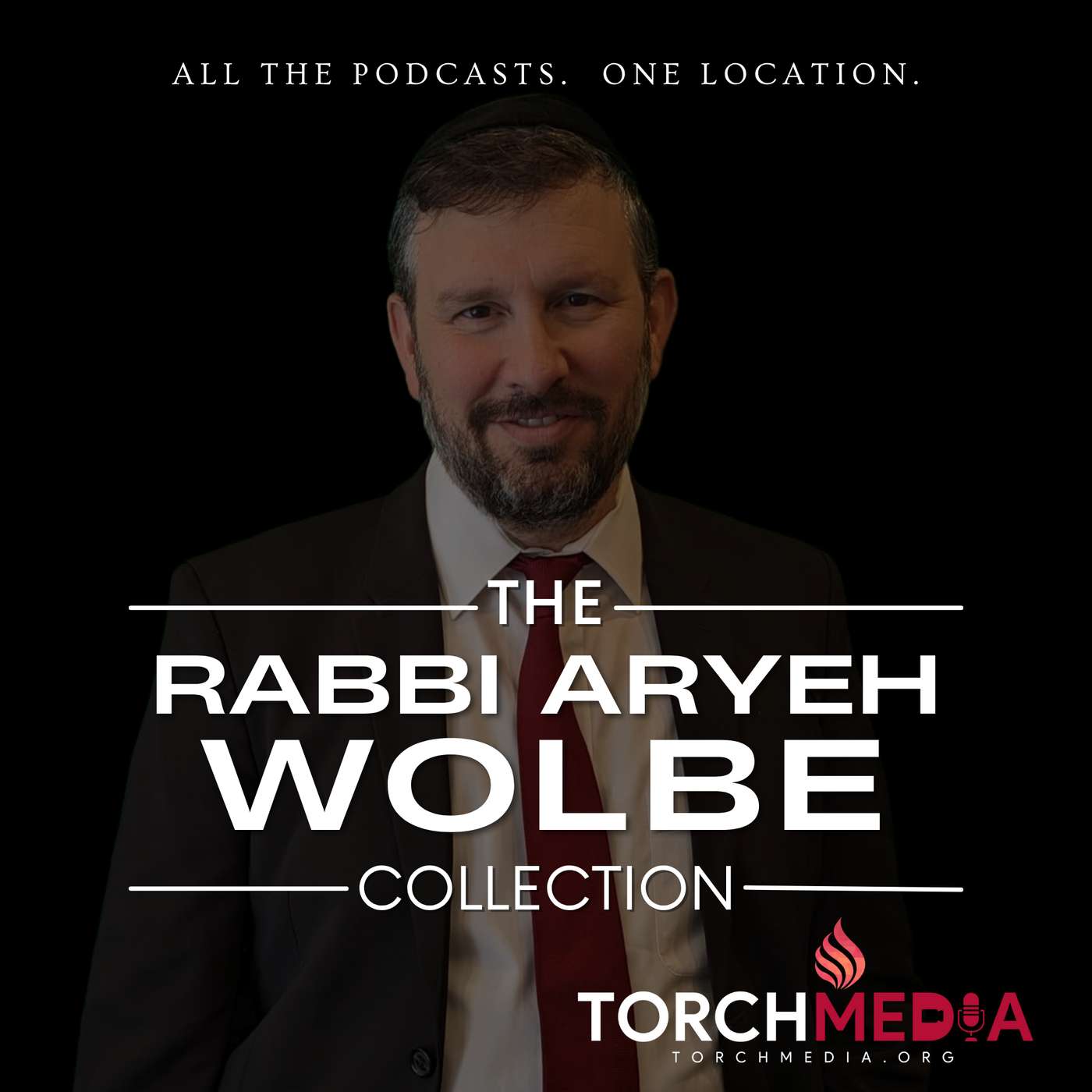
In Day 134 (p. 753, final section of the Gate of Flattery), Rabbi Aryeh Wolbe concludes the chapter with practical safeguards against Chanufah (flattery). To escape its snare, one must flee honor (Kavod) entirely—those unconcerned with status never need to flatter for gain. Avoid deriving benefit from others, as most flattery stems from expecting reciprocity (e.g., fake compliments for favors, business, or social access). Rabbi Wolbe shares his personal rejection of a book teaching manipulative "networking" flattery, emphasizing genuine relationships over disingenuous gain.
Flattery corrupts mitzvot (e.g., leading services for praise instead of L'shem Shamayim) and risks spiritual downfall through negative environments. One must intentionally surround oneself with the righteous and wise (Proverbs: "He who walks with wise men will be wise"), distancing from sinners, mockers, or corrupt cultures—even if it means solitude, caves, or desert isolation (as in Lamentations). In our generation of pervasive media, apps, social influence, and celebrity values (e.g., Golden Globes), be deliberate: delete harmful apps, limit exposure, choose uplifting company, and protect children from bad influences. The chapter's core lesson: intentionality in Avodat Hashem—curate environments for growth, reject flattery's traps, and prioritize purity over benefit.
_____________ This Podcast Series is Generously Underwritten by Peter & Becky Botvin
Recorded at TORCH Centre in the Levin Family Studios (B) to a live audience on January 12, 2026, in Houston, Texas. Released as Podcast on March 16, 2026 _____________ This series on Orchos Tzadikim/Ways of the Righteous is produced in partnership with Hachzek. Join the revolution of daily Mussar study at hachzek.com. We are using the Treasure of Life edition of the Orchos Tzadikkim (Published by Feldheim)
Share your questions at [email protected] or visit torchweb.org for more Torah content. _____________
About the Host: Rabbi Aryeh Wolbe, Director of TORCH in Houston, brings decades of Torah scholarship to guide listeners in applying Jewish wisdom to daily life. To directly send your questions, comments, and feedback, please email: [email protected]
_____________
Support Our Mission: Our Mission is Connecting Jews & Judaism. Help us spread Judaism globally by sponsoring an episode at torchweb.org. Your support makes a HUGE difference! _____________ Listen More Other podcasts by Rabbi Aryeh Wolbe:
So how many people do good deeds so that people acknowledge them, so that they get the
praise of others?
Vizel Anin Mikalke Kola Wada Saddam, all of the persons service of Asem becomes destroyed
because he's seeking that honor.
Kikama Baniyadam Shahim Ispala Lim Viyeshlam Kola R.
If how many people have a beautiful voice and they can lead the services, Ummehara Reem
Beliba Mishastatvila, and they're thinking while they're leading the services, Kamakoli
Aurefu.
Look what a beautiful voice they have.
Ubneadam Nanimimani Shoshomosian People are loving that I'm leading the services.
I'm such a great canter, I'm such a great person to lead the service.
Echin Dhākkoshipayetzara, and this is the way the Yatz-Aharā works.
O Seqeen Likhala Mitsu, he does this for all Mitsus, Lahapewal Adhmarishto to put a
person into the trap of the Yatz-Aharā and to cause him to now do it for the attention
for the people to acknowledge. So that his actions not be actually for the sake of heaven,
but rather for the sake of his own personal glory.
So too with pleasure, if you're a guest in someone's home, you can't now stand up and say just by the way what you're doing is wrong because don't kick you out of the house.
If you're enjoying from somebody, you're taking pleasure from you, enjoying a meal at their home, you've got to be very careful.
Kiyori Shalo Yaha Neyu, Oat, you're afraid he's going to kick you out of the house.
But in you know who, in you know who Takolas Tsas Khachme Hadorazir.
He says that in our generation sadly, this is how many years ago, this was written, but he says this is sadly the situation.
Kiyem Rhodes family, Lehenos Mino Am, Al-Keyn Yachhanifullah, because they want to benefit from someone so, from that person, from this person.
So they kiss up to them, and they chummy up to them, and they say nice things to them, so that they continue to carry favor with them.
Not only that they don't correct the person who's sinning, but they sit idly by and eventually become part of the sinners.
He says the way nature is, is that man is drawn to the ways of his people,
to the ways of his generation, to your friends, to your community, to your culture, to your country.
This is what we do in our country, this is what we do in Texas, this is what we do wherever a person is.
This is what we do here, a person gets drawn to it.
Ve'ech Shehem Osem Yasigamu, and the way they act, he acts, we're all influenced by our environment to some degree.
The fiqqaq, tsar, qad, umlis, qab, alas, adiqim, therefore a person has to ensure that he connects with the righteous.
Ve'le, shev'e, tsar, qaham, tamin, and to always sit with the righteous.
And to those who are wise, and those who are pious, they should yield madmimaaseem, to learn from their ways.
Ve'e, srakhik, minari, shayam, ha'ol, kheem, bakhoshech, and to distance oneself from the sinners,
who, and the evil doers, who are walking in darkness, they should low yield madmimaaseem in order not to learn from their ways.
We are all influenced, and this is an important thing for us to remember constantly.
If you think that your children are not being influenced in school, in college, in grad school, wherever they may be, they are being influenced by their environment.
And if all of the communities that you know conduct themselves in a way that's inappropriate.
O ain'o y'aahlele khlo-medinous shemin hageha-tovim.
Or if a person is too far from a place that has good, correct values and ways.
Me'pnea ghiyasos.
O me'pnea choli.
Yeh shayev levado yikhidi.
Either because of sickness or because of dangerous bands of thieves in order to get there.
So what is he going to do? He's too far.
Too far of a travel to get to a place which has wholesome people.
Yeh shayev levado yikhidi.
Such a person should dwell in solitude alone.
If you shanema yeh shayev badad ve'yidom kinat al-alaf.
Let him sit alone and be silent for he has taken it upon himself says,
lamentations.
Ve'e imha'im ra'im wa khatoyim.
Shae'in we nihin osolation we medinous.
Ella'im kan.
Miss Aravimoyin.
Hora'o yeh sila ma'oris wala khach'a.
Vachim.
Ve'le midboris.
Ve'al, yanig, atz mo'ududair khatoyim.
Kin'in shna'em ar mi'id, ne'nu.
Pemidbar, melon, orchim.
He says, and if you're in a place where they say,
sorry, you got to be part of our culture like Saddam and Gamora.
You have to do what we do.
We're all evil and you're going to be evil with us.
He says, what do you do then?
He says, then hide in the caves and the rocky cliffs.
The rocky cliffs in the desert do not be among those who are sinners.
My dear friends, this is such an important and fundamental lesson for us to learn in our generation
because I feel that we're living in a world of total influence.
And we're influenced in ways that in previous generations we weren't influenced that way.
Previously, okay, you can keep the television off.
But today you have apps, you have social media,
you have every kind of influence you can possibly imagine.
Media, so powerful.
And you look at what, you know, you have the Golden Globes yesterday.
And you have all of these things.
Are these the values that we value?
If not, we should keep ourselves distance from it.
We should avoid looking at it and hearing about it.
It means we have to have intentional direction
in what we, and how we want to live our lives.
And if a person wants to live their lives in a righteous way,
they're going to have to be intentional about it.
And delete the app that's causing you to waste time.
Delete the app that's causing you to have a negative influence.
Distance yourself from friends that are bad influence.
We have to be intentional about it.
We can't, and this, I think, the number one lesson from chapter 24
about slander, about about flattery
is to be intentional in your service of Hashem.
I want to do good, I need to be in a good place.
I want to be in a positive environment.
I want to be around people who are growing,
who are on a trajectory of growth.
Because if not, what's the result?
Heaven forbid, I'll hang around the people that are no good.
And if they're no good, I'm surrounding myself with no good.
I'll end up with that influence as well.
And the same goes for our children, obviously.
If we put our children in a good environment,
they will be on a very good path to be doing great things.
By dear friends, have a magnificent week.
Thank you so much.
You've been listening to Rabbi Arya
will be on a podcast produced by Torch,
the Torah Outreach Resource Center of Houston.
Please help sponsor an episode
so we can continue to produce more quality Jewish content
for our listeners around the globe.
Please visit torchweb.org to donate
and partner with us on this incredible endeavor.
Thank you, Rabbi.
I understand there's a fundraiser going on.
Why would listeners want to donate
to Torch versus other organizations?
So a very, very good question, very valid question.
I want to tell you something like this, okay?
Torch is here for one reason.
Torch is here to share the word of Torah with the world.
Any one of you listeners out there listening on a podcast,
listening in a video, last year alone,
our videos grew, our video exposure grew 295%.
If I told you that there was an investment
in the stock market that is going to grow 295%,
everyone would invest.
I am telling you, my dear listeners,
that last year our YouTube videos alone
grew 295% by our viewership.
Our podcast, there are many podcasts that grew
by well over 200% as well.
This is a great investment.
I really believe so.
I really feel this in my bones.
I know myself that I keep a very meticulous log
of all of our videos.
Last year in 2025, we published 1092 videos.
I don't know about you, but I think that's a lot of videos.
To me, it's an exceptional privilege to be able to teach
and learn Torah together with so many amazing people,
not only you here in the room,
and those of you on Zoom every day,
but also those listening on the podcasts,
and those of you watching live online,
or later online, a video on demand,
and we're on all these different platforms.
It's all because we have a foundation here in Houston, Texas,
where we learn, teach from our torch center
and share that Torah with the world.
That's just one component.
We have the torch center.
We have our torch media.
We also have torch wood, which is a torch community,
with now 15 families, robust programming,
for the men, for the women, for the children.
Every job is, there's over 100 people there,
for kiddish and for davening.
It's unbelievable what goes on over there.
And then we have our newest young professional division,
our unify.
It's just unbelievable the things that are going on,
and what we're trying to do is really open up for people
one time a year, where we ask everyone to invest in torch.
This is a time, get in on the ground floor,
because the midst of us that we're trying to do,
we cannot do without the support of the community.
That's the honest truth.
I don't say it as a cliche, oh, we're partners, da-da-da.
I really, we cannot do it.
We can't keep these lights on.
We can't record.
We can't have these cameras.
We can't do the broadcasting.
We can't do any of this without the support of our partners.
And therefore, this one week that you have,
you can go to givetorch.net.
Givetorch.net and contribute.
Every dollar that you contribute is matched by donors.
The entire week, the campaign will be up until we reach our goal,
because this is our budget for the year.
We do everything we can to not stop even a single program to raise money.
We continue, all of our classes will be on.
Our Monday lunch and learn will be on.
Our Monday night, Mr. Mondais will be on.
Our Tuesday morning classes will be on.
Tuesday night classes.
Wednesday and everything is on.
Because that's why we're here.
We're here not to raise money.
We're here to teach Torah.
So if y'all would be so kind and generous and support us,
we'll be able to end this campaign just like they did for the temple.
Right? What happened to the temple?
They said enough, enough donations.
I'm ready to do the same.
Please help us, my dear friends.
Givetorch.net.
Givetorch.net.
Thank you, Mark. I appreciate your question.
Now, I want to talk about giving to torch.
Okay.
We are so blessed that God has given us.
And it's not just for us.
It's for the whole world.
As a matter of fact, our choice being chosen is to be a light to the nations.
Bring Torah to everyone.
Okay.
They don't have to all do the commandments.
But this is, as you have often said, the owner's manual for living.
And for those of us who grew up at a time where a good Jewish education was not available to us.
Now, there's a little bit here, a little bit there.
I am so grateful that I get to come here four times a week.
But more importantly, as a good friend of mine once said,
if you could learn everything from a video or a book, there would be no universities.
And here at Torch, not only can you come and participate, but even if you can't come,
we take people on Zoom who ask questions.
And I don't know any other organization where you can't, you can actually participate long distance with a rabbi.
So studying torch is like trying to eat an elephant.
You do it one bite at a time.
How do you learn Torah one bite at a time?
And that's what you give to us.
And for all of you out there, not only is this invaluable, you couldn't put a dollar value on it.
But in addition to that, it's always free.
And the only way it is always free is if you help provide the funds that we need with the only ask once.
You go to some places every single week.
They pass the pot and try to get money out of you.
But here, they wait once a year.
They don't bother you.
They don't send out a, give me, give me, give me once a year.
That's all we ask, givetorch.net.
All my friends, or my friends from class, and my rabbis, they're my friends.
That is my solicitation from y'all to please contribute, givetorch.net.
Thank you for letting me speak.
Supporting torch is one of the best things you could possibly do.
It will change your life, Jewish, not Jewish.
Being part of torch will inspire you, will teach you life lessons, and will give you all the tools you need to be successful in life, marriage, family, and all areas of your life.
Support torch if you can.
We thank you very much.
I know with confidence that the Almighty will succeed our way, and we will raise all the money we need to continue to operate.
But I want you to be part of it.
And if you can please, whatever donation amount, the smallest, the largest, it doesn't make a difference.
I want you as a partner.
If you can please go to givetorch.net and donate so that you can be a partner in what we're doing.
I'd greatly appreciate it, and I hope you enjoy this episode.