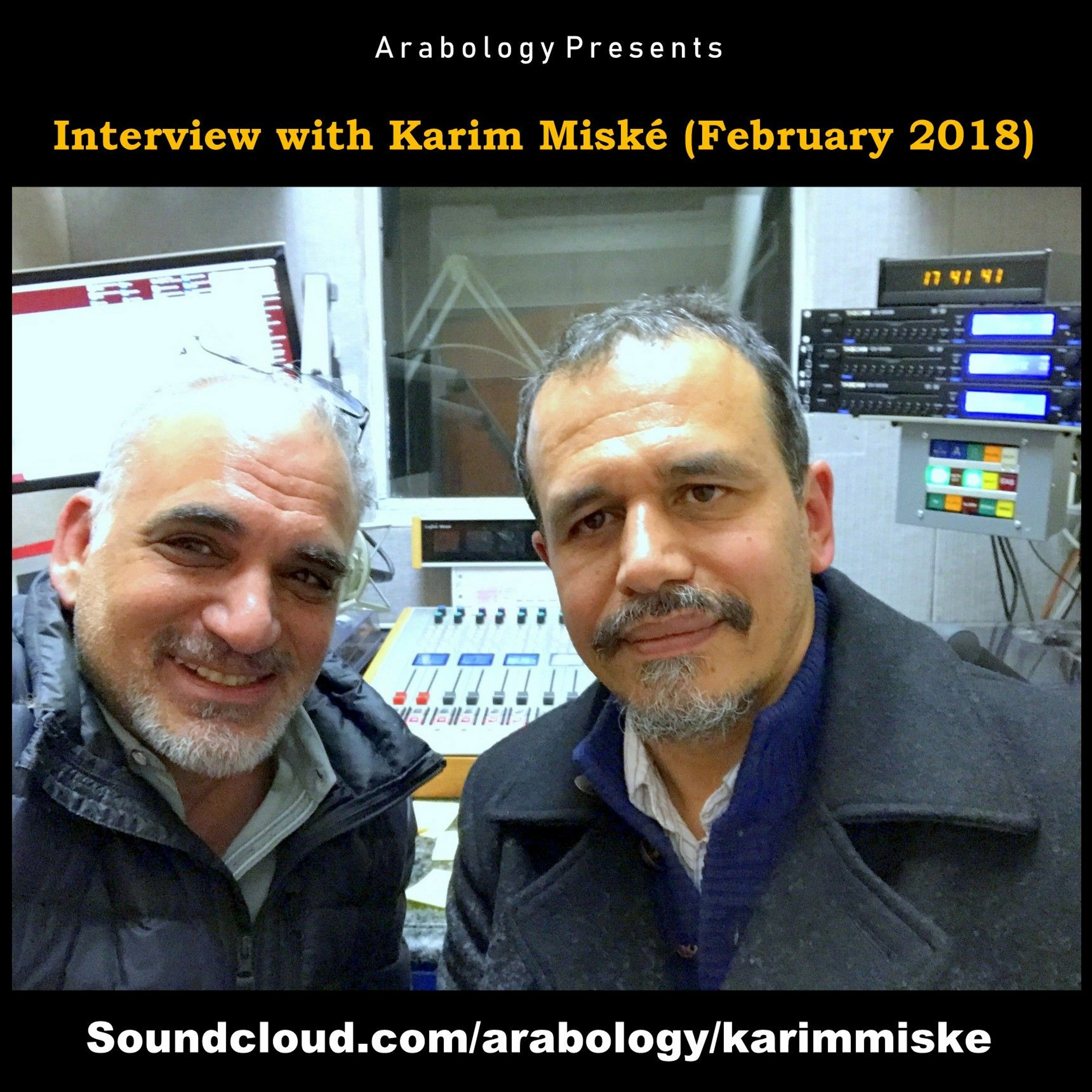
About this episode
Interview with Mauritanian-French filmmaker and writer Karim Miské, conducted by Stanford Lecturer Dr. Ramzi Salti and recorded on February 12, 2018 at KZSU Stanford 90.1 FM.
Karim Miské is a groundbreaking filmmaker and novelist who, over the past 20 years, has made a number of documentaries on a wide range of issues including colonial legacies, hip hop culture, informal economy, freedom of press, and bioethics. His widely-acclaimed debut novel Arab Jazz (2012) won the English PEN Award. Miské is FSI-Humanities Center International Visitor, 2017-18 and Aron Rodrigue International Visitor, 2017-18. Karim Miské has also received much critical acclaim for his documentary "Musulmans de France" [Muslims of France] which tells the history of Muslims in France, starting with the 1904 arrival of poor North African immigrants to the 2007 election of Muslim candidates to government offices. It asks the questions: what does it mean to be a Muslim in France today? How did Islam become the second religion in France?
Karim Miské's Stanford events were cosponsored by the Abbasi Program in Islamic Studies along with the France-Stanford Center for Interdisciplinary Studies, the Program on Arab Reform and Democracy, Mediterranean Studies Forum, The Europe Center, and the Markaz Resource Center.
More info at https://dlcl.stanford.edu/news/karim-misk%C3%A9-acclaimed-author-discusses-his-work-stanford-community
Get every episode summarized
Each time arabology publishes, we email you a written briefing from the transcript — the topics, who appeared, and any specific claims, with the ad reads skipped.
Email me new episodesFree for 3 shows. No card needed.
Hosts & guests

No transcript yet
This episode has not been transcribed. Request it and it moves to the front of the queue.
More episodes
More from arabology

Ramzi Salti Guests on Beat Breakfast with Diana Radio Show (June 2026)
arabology
Jun 27, 202646:44pending
Arabology Spotlights ReOrient Festival of Short Plays + Arab Film Festival (202...
arabology
Oct 15, 202324:57pending
Arabology Interviews Jordanian Artist Hiya
arabology
Sep 17, 20236:30pending
Ramzi Salti Interviews Amjad Al Rasheed, Director of "Inshallah A Boy" (2023)
arabology
Aug 22, 202318:31pending