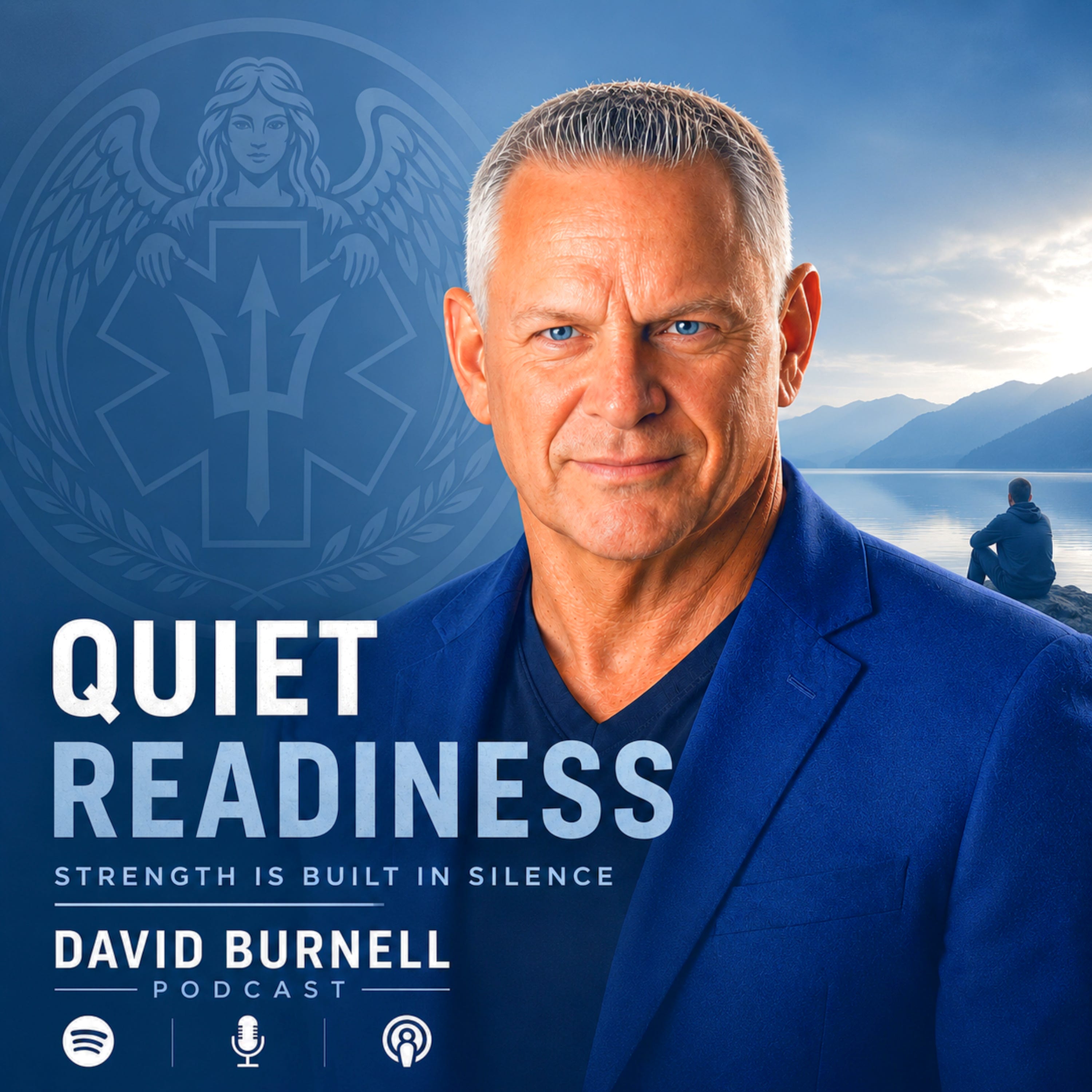
About this episode
Welcome to Quiet Readiness.
In this introductory episode, David Burnell explains the purpose behind this series and the philosophy that guides it — the idea that awareness, preparation, and calm thinking are the most important tools for navigating an uncertain world.
Drawing on decades of experience in military service, rescue operations, tactical training, and humanitarian missions, David shares why he created Quiet Readiness and what listeners can expect from future episodes.
This series is not about fear, panic, or extreme survivalism.
It is about developing the quiet habits that help ordinary people stay aware, prepared, and capable when situations become unpredictable.
In this episode, you will learn:
• why awareness is the foundation of personal safety• how preparedness begins long before emergencies occur• the mindset that guides Quiet Readiness• what topics and lessons the series will explore
Future episodes will cover situational awareness, self-defense mindset, disaster readiness, practical preparedness, and lessons drawn from real-world experience.
If you value clear thinking, practical preparedness, and calm strength in uncertain times, you are in the right place.
Make sure to follow or subscribe for more Quiet Readiness insights on awareness, preparedness, and practical self-defense thinking.
Stay aware.Stay prepared.Stay quietly ready.
Get full access to David Burnell at davidburnell.substack.com/subscribe
Get every episode summarized
Each time Echo Valor Podcast publishes, we email you a written briefing from the transcript — the topics, who appeared, and any specific claims, with the ad reads skipped.
Email me new episodesFree for 3 shows. No card needed.
Hosts & guests

Transcript ready
48 searchable segments. Every word is indexed and playable.
Full transcript
Echo Valor Podcast — Quiet Readiness: Introduction. Machine-transcribed; use the interactive transcript above to jump the player to any line.
This is quiet readiness, practical awareness, preparedness, and self-defense, thinking for uncertain times. I'm David Brinnell. There is a quiet truth about safety and survival that most people only learn after something goes wrong. Danger rarely arrives without warning. It whispers first, a strange feeling in the back of your mind. A situation that doesn't quite make sense. A place that suddenly feels wrong. The problem is that most people today have been trained to ignore those signals. We are distracted. We are rushed. We assume that someone else is responsible for our safety. But the world has never worked that way, and it never will. Quiet readiness is about returning to a very old understanding. The idea that awareness, preparation, and calm thinking are the first line of defense in an uncertain world, not fear, not panic, preparation, why I created quiet readiness.
I'm creating this series because of the life I've lived and the lessons I've learned along the way. I've spent decades working in environments where awareness and preparation were not theoretical ideas. They were the difference between success and tragedy. I served in the United States Air Force in intelligence and combat communications roles connected to special operations and close air support. After that, much of my life was spent in rescue operations, tactical training, and humanitarian missions around the world. I have worked in disaster zones. I have trained people responsible for protecting others. I have been present in situations where seconds mattered, and preparation mattered even more. What I learned from those experiences is something surprisingly simple. Most crises are survivable, but only if people are ready before they begin. The problem is that modern life has quietly trained many people to live without that readiness,
and that is a mistake, not a moral mistake, and a practical one, quiet readiness exists to correct that. What you will find here. Every episode in this series will focus on practical awareness and preparedness, not complicated survival theories, not extreme scenarios, but the everyday habits and ways of thinking that help people stay safe in a complicated world. We'll talk about subjects like situational awareness, how to recognize danger before it develops. Self-defense mindset, why avoiding violence is always the first victory, disaster readiness, simple preparation for the first 72 hours of a crisis. Tactical lessons. Real-world principles drawn from military, rescue, and operational experience. Prepared families. How ordinary households can quietly become stronger and safer. These ideas are not about becoming paranoid or living in fear. They are about living
awake, prepared, and capable. Why this is more than just useful. Preparedness is often treated like a hobby. Something interesting, something optional. But the truth is that preparedness is not optional at all. It is part of responsible living. Every generation eventually faces moments where systems fail, storms, disasters, violence, confusion, and when those moments arrive, the difference between chaos and stability is almost always the same thing. People who were ready, people who had thought ahead, people who knew how to stay calm and act with clarity. Quiet readiness is about becoming that kind of person. Not loudly, not dramatically, quietly. The philosophy behind quiet readiness. The word quiet and quiet readiness matters. Preparedness should not be loud. It should not be performative. It should not be about showing off gear or projecting toughness. Real readiness is
almost invisible. It lives in habits, in awareness, in the quiet confidence that comes from knowing you have prepared yourself and your family for uncertainty. It is the calm strength of people who think ahead. A personal commitment. Everything in this series will be presented in first person. Not as theory, but as lessons drawn from real experience, things I have learned, mistakes I have made, principles I have seen work in the real world. My goal is not to alarm people. My goal is to help people become calm, capable, and aware in a world that can sometimes be unpredictable. Because preparedness is not about expecting the worst. It is about being ready for whatever comes. This is quiet readiness with David Bernal. If you value calm thinking, practical preparedness and quiet strength in uncertain times, follow and subscribe so you never miss an episode.
Stay aware, stay prepared, and stay quietly ready.
More episodes